
A bird pecking at your car is almost always doing one of two things: attacking its own reflection because it thinks a rival bird is staring back, or picking insects off the surface of the car. why is a bird pecking at my house. The reflection scenario is by far the most common, especially in spring and early summer, and it involves species like Northern Cardinals, American Robins, bluebirds, California Towhees, and various sparrows. The fix is straightforward once you understand what is driving the behavior. If your bird preens you instead of reacting to a mirror, that behavior can be a sign of bonding or nesting instincts rather than aggression why does my bird preen me.
Why Is a Bird Pecking at Your Car? Causes and Fixes

Marcus Chen
12 Jun 2026
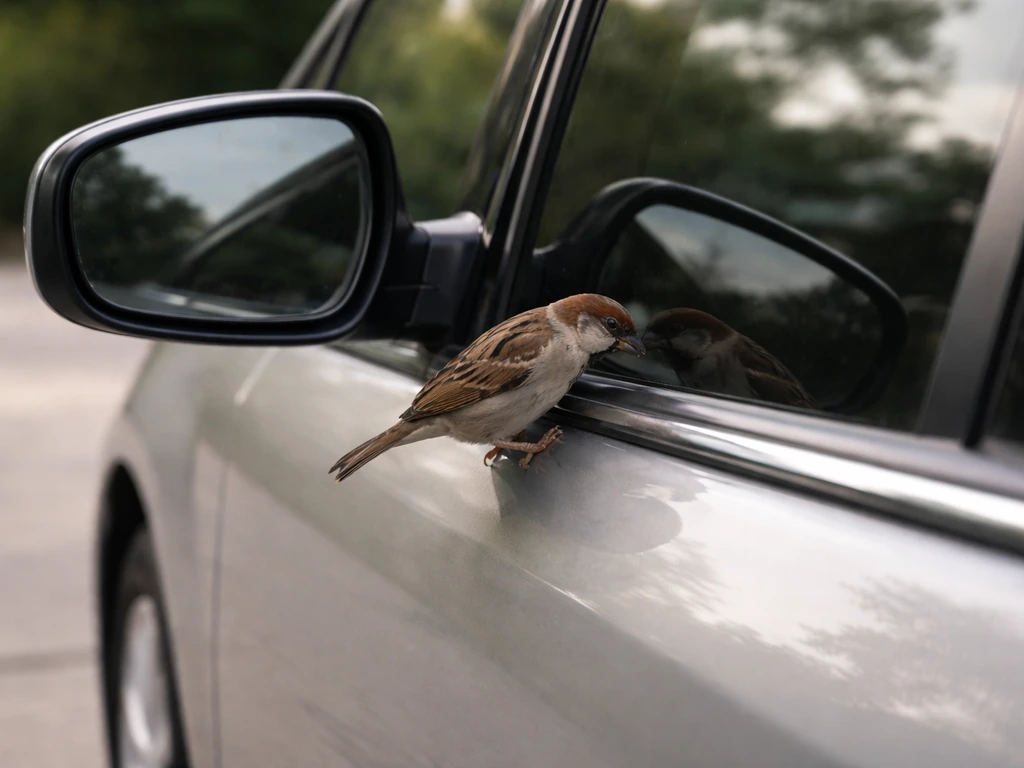
Why a bird is pecking at your car in the first place
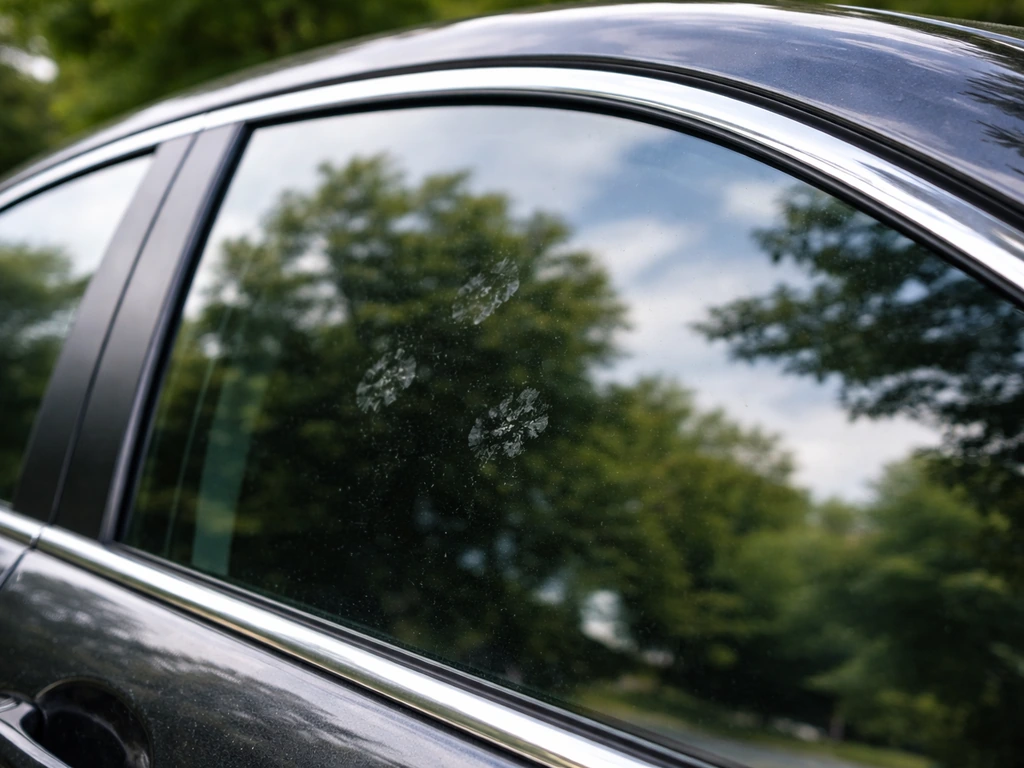
Cars are surprisingly good mirrors. The glass in your windows, and even the shiny painted panels, can reflect the surrounding trees, sky, and vegetation well enough to fool a bird into thinking it is looking at open habitat or, more relevantly, another bird. When a bird in breeding condition catches a glimpse of its own reflection, it does not recognize itself. It sees an intruder that refuses to back down, and it reacts the way it would with any territorial challenge: it pecks, lunges, and keeps coming back.
Beyond reflection aggression, there are a few other reasons a bird might be working over your car. A peer-reviewed study documented multiple urban bird species foraging for insects on the front panels of parked cars, particularly in parking areas where vehicles sit for more than a few minutes. Bugs collect on bumpers, grilles, and windshields, and some birds have learned that a parked car is a reliable snack spot. Less commonly, a bird might be investigating gaps around doors or trim pieces as potential nesting spots, or simply exploring a novel shiny object out of curiosity.
Reflection vs. territory: recognizing the "repeated pecking" pattern
The clearest sign that reflection is the issue is repetition. A bird that is foraging for bugs will move around, peck in different spots, and eventually leave. A bird in territorial mode will return to the same spot on your car, sometimes within seconds of being chased off, and will focus specifically on areas where the reflection is strongest, often side mirrors and windows. Wildlife experts have noted this behavior in Illinois and similar temperate climates from roughly late April through early August, which lines up almost perfectly with peak breeding season.
If the bird is going after your side mirror with particular intensity, that is a near-certain territorial reflection response. Side mirrors are small, highly reflective, and positioned at about a songbird's eye level, which makes them especially effective at triggering this behavior. The bird genuinely believes it is fighting an intruder, and from its perspective, that intruder just keeps showing up every time it returns. This is the same mechanism behind why a bird keeps pecking at a window on your house, and the solutions overlap significantly.
Conditions that make it worse: insects, heat, surfaces, and sunlight

Several conditions can either intensify the reflection problem or create a separate attractant issue entirely. Strong, low-angle morning or evening sunlight can sharpen the mirror-like quality of a car window and make the reflection more vivid and provocative to a territorial bird. Dark-colored cars and freshly waxed paint panels can also produce a stronger reflection than older or matte-finish vehicles.
On the insect side, cars that are parked near lights at night, near flowering plants, or in areas with standing water tend to accumulate more insects on their surfaces. That makes them more attractive to foraging birds. A dirty windshield with smeared bug residue is also a draw. If your car sits in the same spot for extended periods, particularly in warm weather, both the insect load and the territorial reflection problem can compound.
What to do right now to stop the pecking today
The fastest fix is to break up the reflection. Here are the most practical things you can do immediately, in rough order of how quickly you can pull them off: Tufts Wildlife Clinic recommends temporarily taping paper or cardboard to the inside of window panes to reduce transparency until you can implement a better fix.
- Cover the side mirrors. Slip a plastic bag, a sock, or a small cloth over each mirror. This eliminates the most common trigger spot almost instantly.
- Tape paper or cardboard to the inside of windows. This reduces the transparency of the glass enough to break the reflection. Tufts Wildlife Clinic recommends this as a temporary measure while you arrange something more durable.
- Apply non-reflective material to the outside of windows. A strip of painter's tape, non-reflective cellophane, or cling film placed on the exterior glass is more effective than interior-only coverage because it interrupts how the bird perceives the surface from outside.
- Move the car if you can. Even shifting it 10 to 15 feet can change the angle of reflection enough to break the trigger. Parking in a garage, under a carport, or in denser shade reduces reflectivity significantly.
- Clean off bug residue on the hood, grille, and windshield. If foraging is a factor, removing the attractant removes the reason to hang around.
One thing that does not work well: placing a single predator decal on the window. The U.S. National Park Service is explicit on this point. One or two raptor stickers are not effective. Birds habituate to static images quickly and the spacing of any visual markers matters far more than the image itself.
How to prevent this going forward
Timing and parking habits
Since territorial reflection attacks are concentrated in the breeding season (roughly late April through early August in most of North America), you only need to be vigilant for a few months. Outside that window, the behavior tends to taper off on its own as hormones settle. If you have a covered parking option, using it during peak season is the easiest long-term prevention. Adjusting when you park in exposed spots can also help: early-morning territorial behavior is typically the most intense, so moving your car before the bird's peak activity window can interrupt the pattern.
Deterrents worth using long-term
If you park in the same spot regularly and the same bird keeps returning, a more durable deterrent is worth installing. The U.S. Fish and Wildlife Service recommends placing window decals in a dense pattern with markers no more than 2 inches apart both vertically and horizontally. This geometry is what matters. At that spacing, the pattern breaks up the bird's perception of the surface as either a passable space or a clear reflection. Critically, any film or decal treatment needs to go on the exterior surface of the glass to work properly. Films applied only on the interior side do not affect how birds perceive the window from outside.
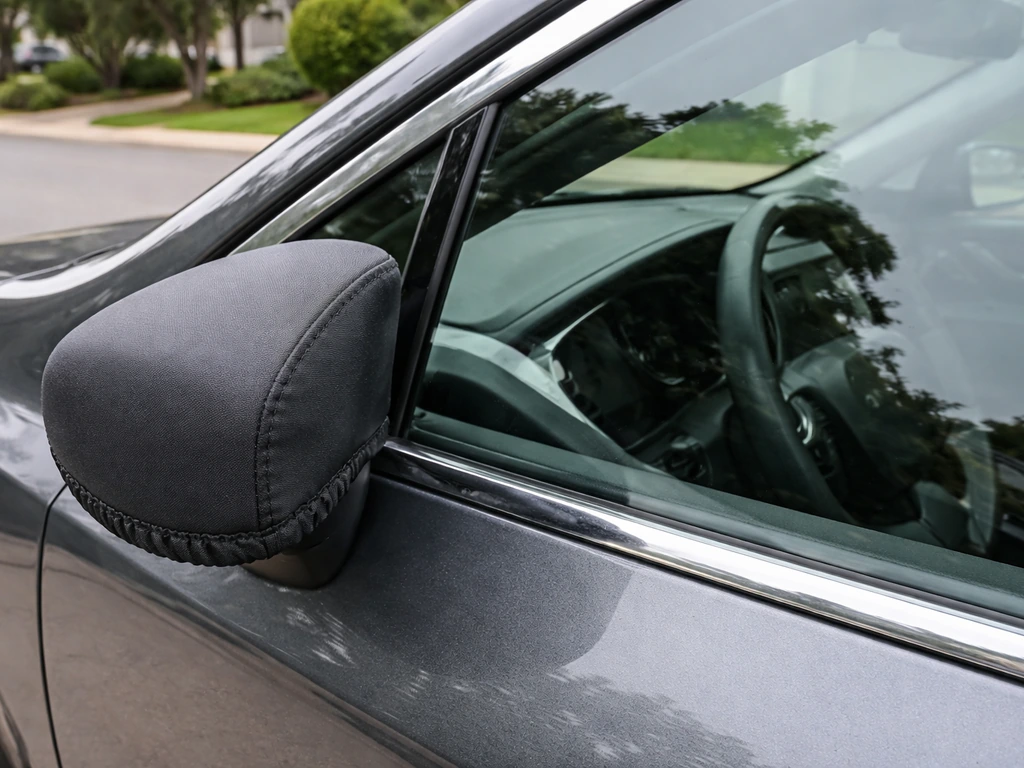
For side mirrors specifically, soft mirror covers (the kind people use in car washes) are a cheap and easy seasonal solution. Some people also hang a simple visual deterrent like strips of reflective ribbon or a windsock near their usual parking spot to introduce movement and break up the predictability that makes a parked car an attractive territorial target.
Reducing insect attractants
If you suspect foraging rather than territory, keep the front of the car cleaner during warm months, park away from insect-heavy zones like standing water and dense flowering shrubs when possible, and avoid parking directly under lights that attract bugs at night.
When to be genuinely concerned
Most of the time, a bird pecking at your car is a nuisance rather than an emergency, and the bird is at low risk as long as it is not crashing hard into the glass repeatedly. If you are also seeing rubbing behavior, it can help to check for common causes like skin irritation, mites, or hormonal changes. But there are a few situations where you should pay closer attention. If you are dealing with a different pecking behavior, such as a bird nibbling on you, the best next step is to compare it with why does my bird nibble on me so you can target the correct cause.
- The bird is repeatedly flying at the window with force rather than just pecking. Hard, repeated collisions can cause concussions and internal injuries. If you find a bird on the ground near your car and it is not recovering after a couple of hours, contact a licensed wildlife rehabilitator.
- You notice obvious injury signs: difficulty breathing, a wing held at an asymmetric angle, blood, or obvious deformity. The Northern Colorado Wildlife Center advises treating any of these as an immediate escalation, not a wait-and-see situation.
- There is an active nest very close to where you park. Nesting birds are operating in a heightened state of territorial defense, and the behavior will be more intense and persistent. In this case, the most humane thing you can do is temporarily move where you park until the nesting cycle finishes, which typically takes three to four weeks.
- The behavior has continued for weeks despite your attempts to reduce the reflection. This level of persistence occasionally signals a bird under significant stress. It is worth reaching out to a local wildlife rehabilitator or your state's wildlife agency for species-specific guidance.
The bird is not being aggressive toward you personally, and it is not a sign that anything is wrong with the bird's health in the usual sense. It is simply doing what its instincts demand during breeding season, and those instincts are very hard to override. Humping can have different causes in birds, so understanding your bird’s behavior and triggers can help you respond appropriately why does my bird hump me. Your job is just to remove the trigger, and once you do that, the bird will redirect its energy somewhere else. If the behavior is happening on your hands or cage, it can also be a similar comfort or irritation issue like a bird rubbing his face on everything why is my bird rubbing his face on everything. This same kind of repetitive, instinct-driven rubbing and pecking can also show up in pet birds for reasons like stress, irritation, or natural beak maintenance why does my bird rub his beak on me. Most people who break the reflection feedback loop find the problem resolves within a day or two.
FAQ
How can I tell if the bird is pecking for insects or because of territorial reflection?
Watch how it behaves over time. For reflection, it tends to return to the same spots on windows or mirrors and comes back quickly after you shoo it. For insects, it usually moves around the car, pecking different points, and then leaves without repeatedly targeting the same “hot spot.”
Will a sticker or decal like a hawk image stop the pecking?
Usually not if it is just one or two widely spaced images. Birds habituate to static pictures, and what matters is breaking the surface into many small, confusing visual segments. If you use decals, dense spacing matters, and the treatment must be on the exterior side of the glass to affect how the bird sees it.
Do I need to treat the whole window, or will a small area work?
More area is generally better because the bird is often keying in on where the reflection is strongest, commonly side mirrors and certain window panels. If the bird keeps focusing on one region, start by treating that specific panel, but expect to expand coverage if the bird shifts to adjacent reflections.
If my car is dark-colored, is the problem worse?
Often, yes. Dark paint and freshly waxed panels can reflect differently and look more mirror-like, especially in low-angle sunrise or sunset light. If the pecking is only intense at certain times of day, adjust parking or add a seasonal deterrent during those hours.
What should I do if the bird is attacking only one side mirror?
That pattern strongly points to reflection. Use a soft mirror cover seasonally, or introduce a moving visual near the mirror (for example, a windsock or ribbon near your parking routine) to break up predictability. Avoid relying on a single fixed sticker on the mirror.
Can I reduce insect-pecking without deterring birds from the area?
Yes. Wash the front surfaces more often during warm months, especially the windshield and bumper areas that hold smeared residue. Also, if you can, park away from standing water, dense flowering shrubs, and bright night lights that attract insects.
How long should I expect deterrents to take before it stops?
Most people see improvement within a day or two once the trigger is removed, especially during breeding season. If the bird keeps coming, it may be shifting to a different reflective panel, so re-check windows and mirror areas rather than assuming the deterrent failed.
What if the bird keeps hitting the glass hard, is that ever a safety issue?
It is usually still a nuisance rather than a medical emergency, but you should be more cautious if it repeatedly crashes into the glass. In that case, increase disruption quickly by fully addressing the reflective surfaces (not just one sticker spot), and consider covering or blocking the most reflective panels during peak activity.
Could this behavior mean anything is wrong with the bird itself?
Typically no. Car-pecking is usually instinct-driven during territorial breeding or routine foraging, not a health problem. The key indicators are whether the bird is repeatedly targeting reflections and returning to the same areas, rather than showing signs like inability to perch or abnormal behavior beyond pecking.
Is there a time of year when I should stop worrying about it?
If the behavior is reflection-based, it often peaks roughly late April through early August in many temperate regions and then tapers as breeding hormones settle. If it persists outside that window, it may be more insect-foraging than territorial, so switch your focus to cleaning and parking location.
Next Articles
Why Does My Bird Hump Me? Causes and What to Do Today
Find why your bird humps, what it means, and today steps to reduce it safely, plus vet warning signs.
Why Does My Bird Preen Me? Causes and What to Do
Learn why your bird preens you, distinguish bonding from grooming issues, and follow quick checks plus vet red flags.
Why Does My Bird Nibble on Me? Causes and What to Do
Learn why your bird nibbles fingers or hands, what to do now, how to stop it, and red flags for health issues.