
Most of the time, a bird rubbing his bum on you is hormonal behavior: he's treating you like a mate, which is completely normal for a sexually mature bird, even if it feels weird. But it can also be your bird's way of telling you something is irritating his vent area, from dry skin or feather issues to parasites or something more serious. Knowing which one you're dealing with comes down to watching a few specific signs, and this guide walks you through exactly what to look for and what to do about it today.
Why Does My Bird Rub His Bum on Me? Causes and What to Do

Marcus Chen
26 Apr 2026
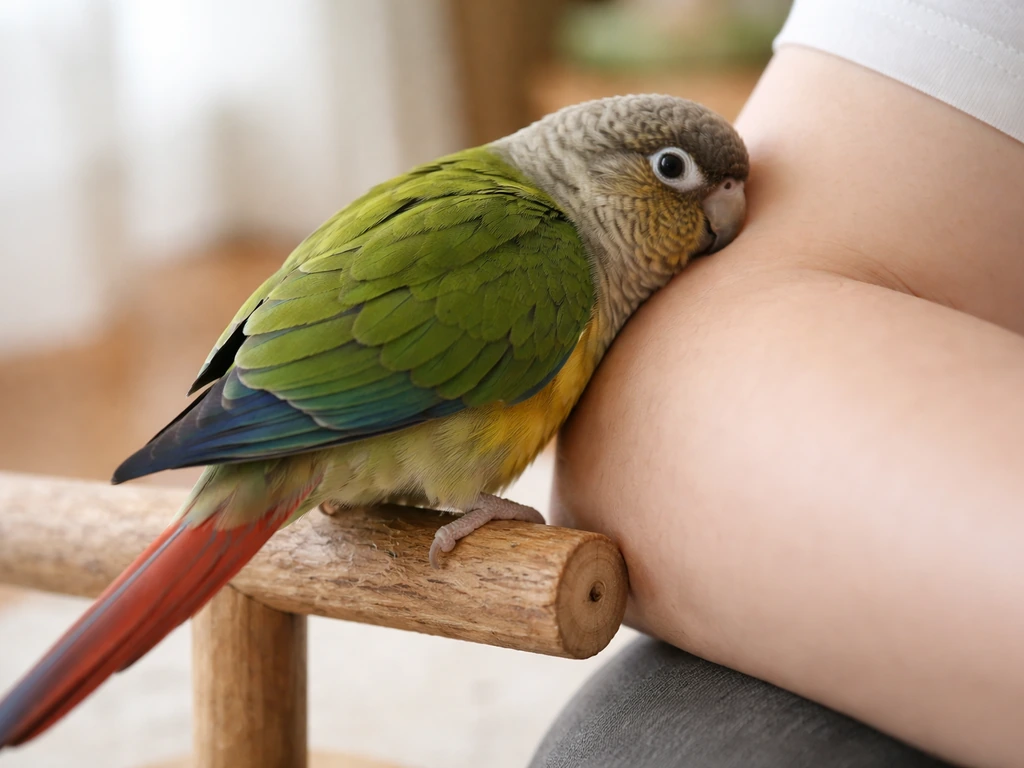
Common reasons birds rub their bottom on people
Sexually mature parrots and other pet birds routinely rub their cloaca (the vent area at the base of the tail) against people, perches, or toys as a form of mating behavior. Hormonal surges, especially during breeding season in spring, drive this. Your bird may see you as his mate, and rubbing is his way of initiating contact. This is probably the most common reason you're seeing this, and it's not a medical problem on its own.
Beyond hormones, birds sometimes rub their bottom on you simply for comfort or attention. They learn quickly that this gets a reaction, and some birds use it as a reliable way to get you to engage with them. You might also see it when your bird is being lifted or shifted around, where the movement causes incidental contact. This kind of situational rubbing is usually brief and doesn't come with any other signs of distress.
- Hormonal mating behavior triggered by breeding season or long daylight hours
- Treating you (or your hand/arm) as a bonded mate
- Comfort-seeking and attention-getting, especially in birds that have learned it works
- Incidental contact during handling, stepping up, or being repositioned
- Boredom or stress-driven displacement behavior
Normal behavior vs sexual and territorial mounting
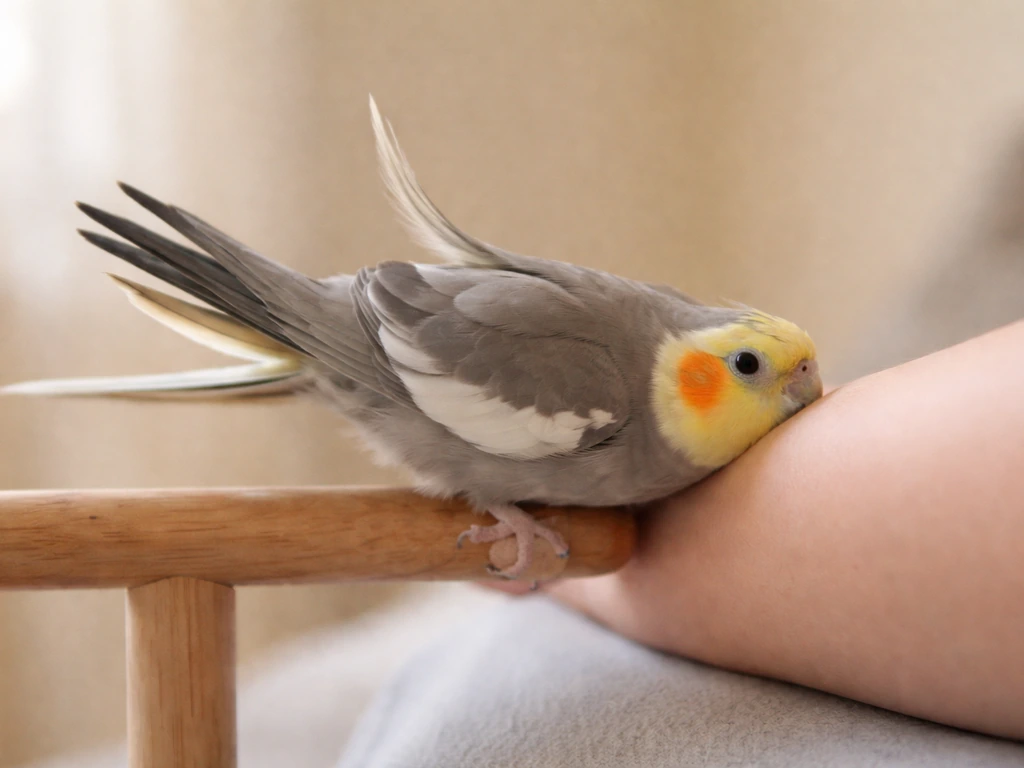
Hormonal rubbing looks pretty specific once you know what to watch for. Your bird will crouch low, lift or fan his tail, and press his vent against your hand, arm, or leg. You might notice increased screaming, biting, or general territorial behavior around the same time. This cluster of signs points squarely at hormones, not illness. Conures, cockatiels, and Amazon parrots are especially prone to this, though it can happen in almost any species.
The timing matters too. If the rubbing ramps up in late winter or early spring, or any time you've recently extended the bird's exposure to natural or artificial light, hormones are almost certainly the trigger. Birds are photosensitive, meaning light cycles directly drive reproductive behavior. Long days signal the body to prepare for breeding, and that's when mounting and vent-rubbing against owners tends to peak.
One thing to know: persistent hormonal behavior isn't just annoying. Over time, repeated mounting and straining can increase the risk of cloacal prolapse and stress-related feather damage, and in female birds it can contribute to chronic egg laying. Addressing the underlying hormonal trigger is worth doing even when the behavior itself seems harmless.
Situational or attention-seeking rubbing is usually less deliberate. There's no obvious crouching posture, the bird isn't fixated, and it happens randomly rather than in a sustained way. If your bird rubs his bum on you briefly while you're handling him and then moves on without any of the other hormonal cues, it's likely just incidental contact or a comfort behavior, not a mating drive.
Irritation, parasites, or skin and vent issues that cause rubbing
If your bird is rubbing his vent area persistently, frequently, or in a way that looks more frantic or scratchy than deliberate, you need to think about physical discomfort. The vent area can become irritated from several causes, and the bird rubs trying to relieve the sensation, not because he's in a mating mood.
Mites and lice are the most common parasitic culprits. They can infest the feathers around the vent and cause significant itching. You may notice your bird pecking at that area more than usual, not just rubbing against you. If you keep seeing pecking around the vent or elsewhere on your bird, it can help to narrow down what is triggering the irritation pecking at that area.
If you are dealing with pecking at the house too, the cause can be different, so it helps to review why a bird pecking at your house why is a bird pecking at my house. If your bird keeps pecking at your window, the same idea applies: check for irritation or underlying triggers and watch for other signs pecking at that area. Skin infections, both bacterial and fungal, can also affect the vent region.
A yeast infection, for example, can cause irritation that looks behaviorally similar to hormonal rubbing but comes with other signs like redness, discharge, or changes in droppings.
Dry skin, feather loss around the vent, or a minor injury can also cause rubbing. If the feathers around your bird's vent look thin, ragged, matted, or absent, that's a physical sign worth investigating. Constipation or GI upset can cause straining that makes a bird repeatedly press or drag his vent area.
IVIS notes that cloacal prolapse can occur secondary to chronic straining, including from masturbation, egg laying, and other causes such as space-occupying abdominal masses and inappropriate weaning or social behavior straining that makes a bird repeatedly press or drag his vent area. And in some birds, holding feces for extended periods combined with repeated straining raises the risk of the cloaca beginning to prolapse, which is a medical emergency.
Red flags that point to a medical problem
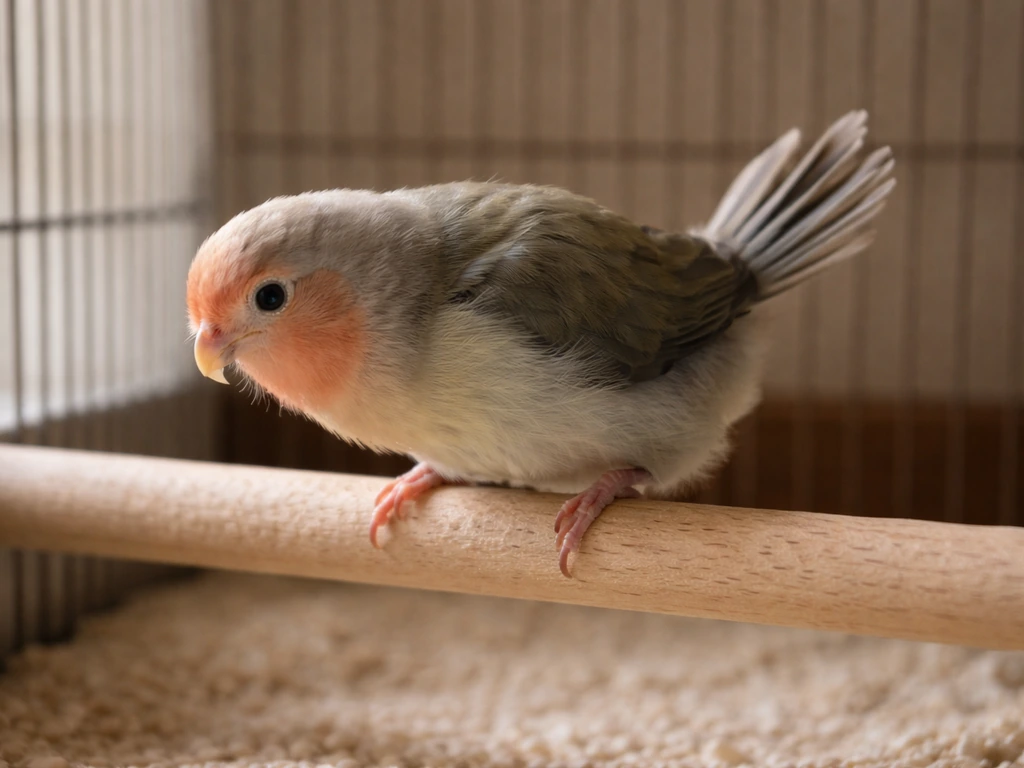
Behavioral rubbing by itself, especially when it's clearly hormonally driven, doesn't require a vet call. But certain signs alongside the rubbing mean you should stop waiting and get professional help. Here's what to watch for:
- Straining or repeated pushing at the vent without passing droppings or urates
- Any tissue visibly protruding from the vent
- Swelling, redness, discharge, or crusting around the vent area
- Feather loss specifically around the vent
- Changes in droppings: blood (red or black), unusual color, watery consistency, or no droppings at all
- Tail bobbing with each breath (a sign of respiratory effort)
- Panting, open-mouth breathing, or labored breathing
- Lethargy, fluffed feathers, or sitting low on the cage floor instead of perching
- Loss of appetite or a sudden drop in activity
- Persistent scratching or pecking at the vent area beyond brief grooming
A normal dropping has three parts: solid dark feces, white or cream urates, and a small amount of clear urine. If your bird's droppings look wrong, that's always worth noting. Red or black coloring in droppings can indicate internal bleeding or serious GI issues. Any combination of abnormal droppings, straining, and visible vent changes is a call-the-vet-now situation, not a wait-and-see one. If your bird is actively straining and producing nothing, or if tissue is protruding from the vent, treat that as an emergency.
What to do today: safe checks and environmental fixes
A quick home check you can do right now
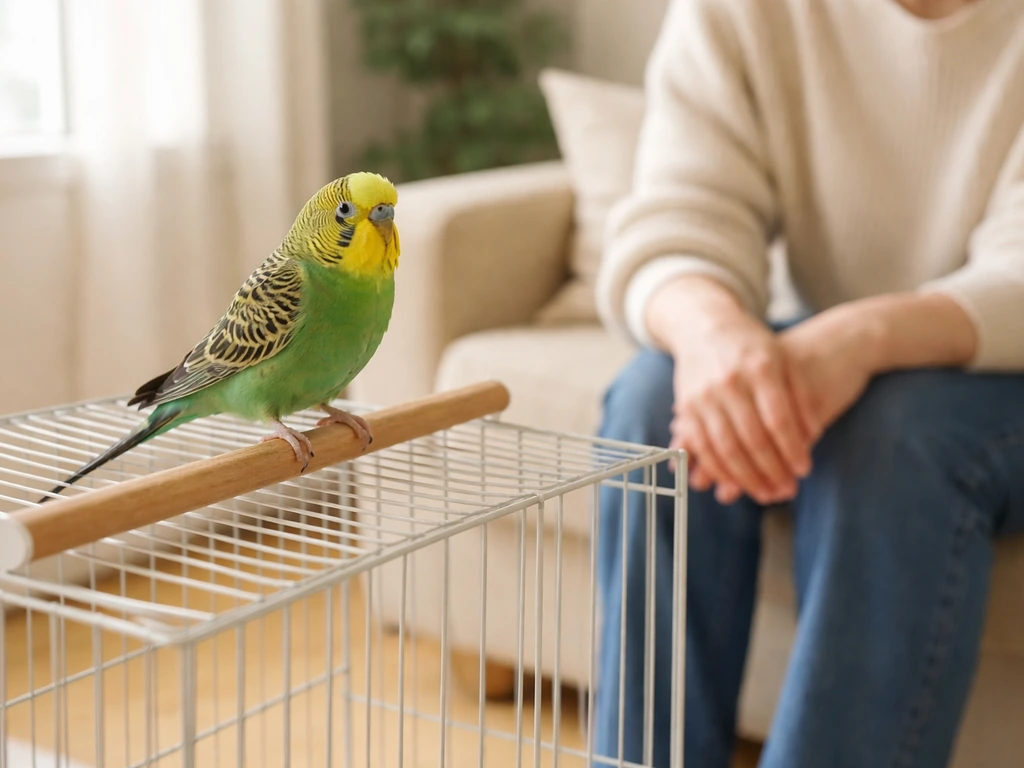
Start by observing your bird calmly before touching him. Look at his posture: is he perching normally at his usual height, or is he sitting low or on the cage bottom? Watch his breathing for any tail bobbing or effort. Then, with good lighting, take a close look at the vent area. The feathers should be clean and intact. Look for any matting, missing feathers, redness, swelling, or anything unusual around the opening. Check his most recent droppings in the cage lining for color and consistency.
If everything looks normal physically and your bird is alert, eating, and behaving normally except for the rubbing, you're most likely dealing with a behavioral issue rather than a medical one. That doesn't mean you ignore it, but it does mean you can focus on the environmental and behavioral fixes below before escalating to a vet call. If you are wondering why your bird humps you, the same environmental and behavioral fixes below can often reduce it quickly.
Environmental fixes that make a real difference
Light management is the single most effective intervention for hormonally driven rubbing. Your bird should be getting 12 to 14 hours of complete darkness every night. Complete means no light leaking in around the cage cover, no TV glow, no night lights. Even a small amount of light during the dark period can prevent it from working. Use a thick, opaque cage cover and keep the room genuinely dark. This is the most evidence-backed at-home step you can take.
Review your handling habits. Petting your bird on the back, under the wings, or around the tail area mimics how a mating partner would touch him and directly triggers hormonal behavior. Limit petting to the head and neck. This one change, combined with better light management, often significantly reduces mounting behavior within a few weeks.
Make sure your bird has no nesting opportunities. Remove any boxes, enclosed spaces, tents, or cozy hammocks from the cage. Birds that can find a nest-like spot are much more likely to stay in a hormonal state. Rearranging the cage periodically can also help disrupt nesting routines.
Offer more foraging, puzzle toys, and perch variety. Boredom and understimulation make hormonal and stress behaviors worse. A bird that's busy working for his food has less mental space for repetitive mating behaviors.
How to respond in the moment
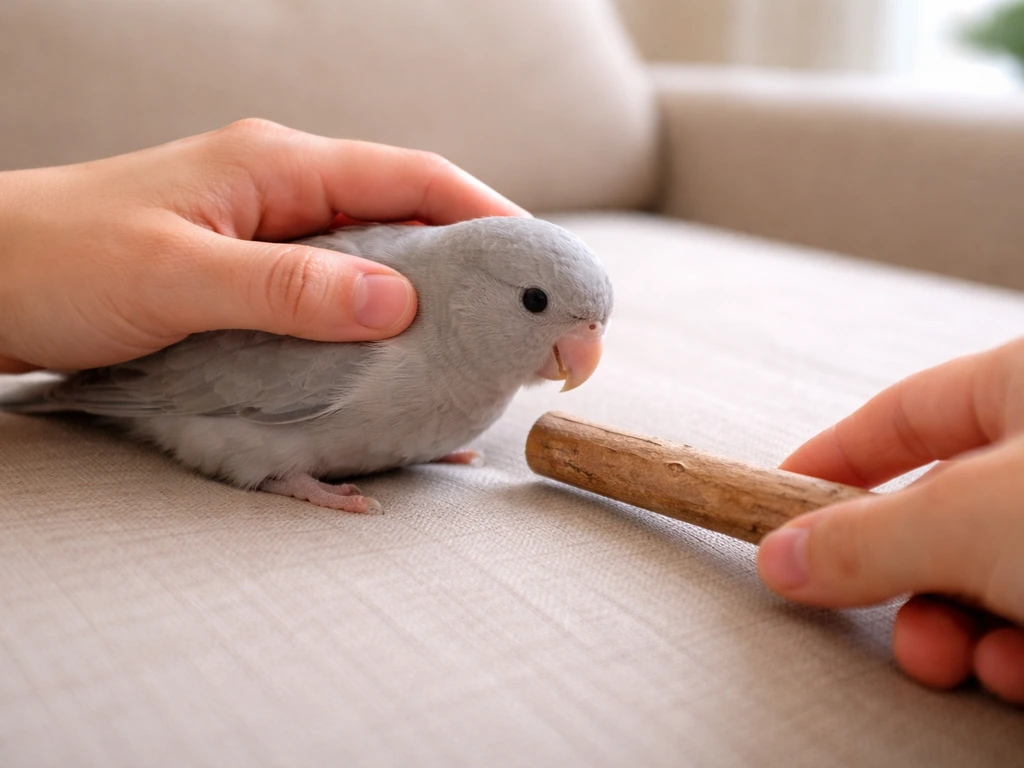
When your bird starts rubbing his bum on you, the instinct is usually to react: move him away, say something, or make eye contact. Any reaction, even a negative one, can accidentally reinforce the behavior. Instead, calmly and without drama, return your bird to his cage or a neutral perch and walk away for a few minutes. No scolding, no extended eye contact, no big movements. You're not punishing him, you're just removing the opportunity and the audience.
For vent irritation that seems physical rather than hormonal, giving your bird regular access to bathing water can help. A shallow dish or a gentle mist spray a few times a week keeps skin and feathers around the vent area clean and reduces dryness. Keep his cage substrate and perches clean, since dirty surfaces can contribute to skin and vent irritation over time.
When to call an avian vet and what to tell them
If you see any of the red flags listed above, especially straining without producing droppings, visible tissue protruding from the vent, or a combination of lethargy, fluffing, and appetite loss, call an avian vet immediately. The Petsitters.org PDF urges urgent contact with an avian veterinarian for signs such as persistent straining without producing droppings and visible tissue protruding from the vent call an avian vet immediately. The general guidance from avian health resources is that if concerning signs like straining, respiratory changes, skin abnormalities, or appetite loss are present together, you have about an eight-hour window to get professional evaluation, not days.
When you call or arrive at the clinic, bring as much information as you can. Here's what to have ready:
- Photos or video of the rubbing behavior and any vent changes
- Photos of recent droppings (close-up, with good lighting)
- When the behavior started and how frequently it's happening
- Any recent changes to diet, environment, or schedule
- Your bird's age and species
- Whether you've noticed any other behavioral or physical changes
An avian vet evaluating vent and skin issues will typically do a full physical exam including palpation of the abdomen and careful inspection of the cloaca, crop, and oropharynx. Depending on what they find, they may run fecal tests to check for parasites (including flotation and saline preparations for internal parasites, and skin scrapings for mites), cloacal cytology using a saline-moistened swab to look for abnormal cells or organisms, or blood work to assess organ health and rule out nutritional deficiencies or yeast infection. Culture swabs from the cloaca or skin may be taken if infection is suspected. This is all standard avian diagnostics, nothing to be alarmed by.
Prevention tips to reduce future episodes
Consistent light management is your best long-term prevention tool. Once you establish a reliable 12 to 14 hour dark period and stick to it year-round, hormonal cycles tend to be milder and more predictable. Seasonal spikes in spring are normal, but they'll be less intense if your bird isn't being overstimulated by extended light exposure.
Keep your handling boundaries consistent. The head-and-neck-only petting rule isn't just for peak hormonal season, it's a good everyday habit that keeps your bird's baseline hormonal state lower and your relationship calmer overall.
- Maintain 12 to 14 hours of complete darkness nightly, every night, not just during breeding season
- Limit petting to head and neck only, avoid the back, wings, and tail area
- Remove all enclosed spaces, tents, and nesting-type accessories from the cage
- Rearrange cage perches and toys periodically to disrupt nesting routines
- Provide regular bathing opportunities to keep the vent area clean and comfortable
- Keep cage substrate and perches clean to reduce skin irritation risk
- Increase foraging and enrichment activities to reduce boredom-driven behavior
- Schedule an annual avian wellness exam so vent and skin health are checked proactively
If you're also noticing your bird rubbing his beak on you, preening you, or nibbling at you alongside the vent rubbing, that's usually a cluster of bonding and mating behaviors rather than separate problems. If your bird is also preening you along with the vent rubbing, it often points to the same bonding or mating behavior cluster.
If your bird is nibbling at you along with the vent rubbing, it often fits the same bonding and mating behavior cluster. If your bird also rubs his beak on you, it can be part of the same bonding and mating behavior cluster, but check for irritation if you see redness or frequent scratching rubbing his beak on you.
If you also notice rubbing around the beak, that often points to the same bonding and mating behavior cluster rubbing his beak on you. The same hormonal management approach applies across all of them. The line to watch is always the same: behavior plus normal physical signs means manage it at home, behavior plus any physical changes or distress means call the vet.
FAQ
Is it normal for my bird to rub his vent on me every day, or does that mean something is wrong?
Daily rubbing can be normal if it is clearly mating-like (crouch, tail lift or fan, vent pressing) and your droppings and vent skin look normal. If it becomes frantic, more frequent than usual, or you notice redness, swelling, feather loss around the vent, extra pecking, or straining, switch to the “possible irritation” mindset and consider an avian vet check.
What difference should I look for between hormonal rubbing and vent irritation from mites or infection?
Hormonal rubbing usually comes with a consistent mating posture and tail movements and happens in specific contexts (like longer light exposure). Vent irritation often shows extra independent behaviors, especially repeated scratching or pecking at the vent even when you are not present, plus visible changes like matting, redness, discharge, or a persistently dirty-looking vent.
My bird rubs his bum on me more when he is being pet or handled, does that change what I should do?
Yes. If the behavior reliably starts when you touch or reposition him, it is more likely reinforcement and hormonal trigger from handling. Implement the head-and-neck-only petting rule, avoid touching under the wings or around the tail, and when he starts rubbing, calmly return him to a neutral perch without scolding or prolonged eye contact.
How can I tell if the rubbing is tied to light, especially if I’m not sure about the room lighting?
Assume light exposure can be the trigger if the behavior spikes during longer days, late winter into spring, or after you used new lamps, a brighter room, or a TV across the room. Check for light leaks during the dark period by turning off overhead lights and watching the cage area from the bird’s sleeping spot, use a thick opaque cover and keep the room genuinely dark.
Should I stop my bird from touching me entirely if he rubs his vent?
You should stop the audience and opportunity, not punish him. The best approach is to redirect immediately by moving him back to his cage or a neutral perch and stepping away for a few minutes. Avoid physical restraint around the vent because that can increase stress and may worsen vent irritation if a medical issue is present.
What if my bird rubs his bum on me but also seems itchy or keeps pecking at other parts of his body?
If there is broader itch behavior (pecking at the body, increased preening, feather disturbance), mites, lice, or skin irritation become more likely than hormones. In that situation, don’t rely only on light and handling changes, schedule an avian vet visit and ask about skin scrapings or parasite testing.
Can constipation or straining cause vent rubbing, and what signs mean it’s not just hormones?
Yes. If you see straining along with reduced or abnormal droppings, or the bird repeatedly presses his vent while looking uncomfortable, treat it as possible GI or cloacal trouble rather than mating. If he is producing nothing, has visible vent changes, or tissue protrudes, that is urgent and requires prompt avian care.
How soon should I expect improvements after changing light and petting habits?
For hormone-driven behavior, you often see noticeable reduction within a couple of weeks after consistent dark periods and handling boundaries. If there is no improvement after several weeks, or the behavior escalates, reassess for unresolved skin issues, parasites, infection, or other medical causes.
My bird rubs his vent but doesn’t show crouching, tail fanning, or mating posture. What does that suggest?
Lack of mating posture makes incidental comfort behavior or physical irritation more likely. Pay close attention to the vent skin, look for irritation or feather damage, and check whether rubbing happens randomly or whenever the vent area seems uncomfortable, not just in a consistent mating context.
If I need to take my bird to the vet, what information helps most and how should I prepare droppings?
Bring fresh photos or samples if possible, note timing of the rubbing episodes, recent changes in lighting, diet, and handling, and record whether he is straining. For droppings, observe color and consistency in the cage lining before cleaning so the vet can see what is normal versus abnormal, and collect any concerns about urates or blood-tinged droppings if visible.
Next Articles
Why Does My Bird Rub His Beak on Me? Causes and Fixes
Learn why your bird rubs his beak on you, plus quick checks, safe fixes, and when to see an avian vet.
Why Does a Bird Keep Pecking at My Window? Causes and Fixes
Learn why birds peck windows and follow step-by-step fixes to stop reflections, territory, light confusion, and nesting
Why Is My Bird Making Whimpering Noises? What to Check
Find reasons for whimpering bird noises, quick home checks, and red flags for urgent vet care plus tracking tips.