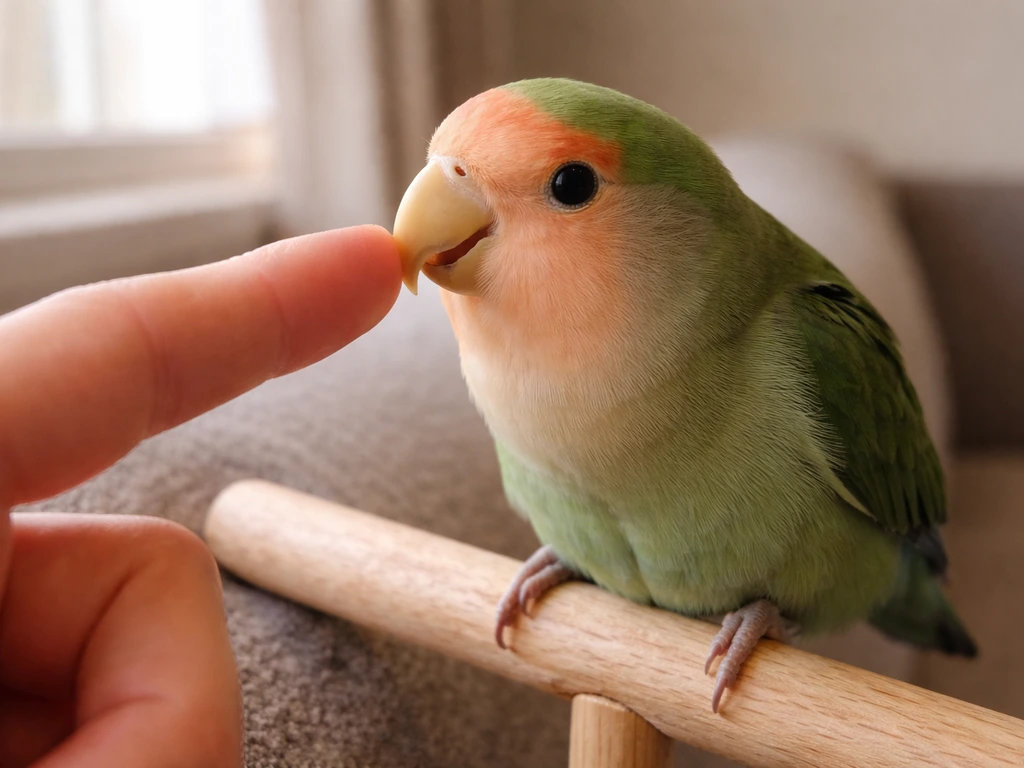
When your bird preens you, it almost always means they like you. Preening is a trust behavior that birds normally share with their closest flock companions, and in your home, that flock is you. Your bird is essentially grooming you the same way they would a bonded mate or cagemate, which is actually a pretty big compliment. That said, not every nibble or rub against your skin is classic preening, and occasionally what looks like preening is really your bird using you as a scratching post, seeking attention, or showing signs of irritation worth a closer look.
Why Does My Bird Preen Me? Causes and What to Do

Marcus Chen
13 May 2026
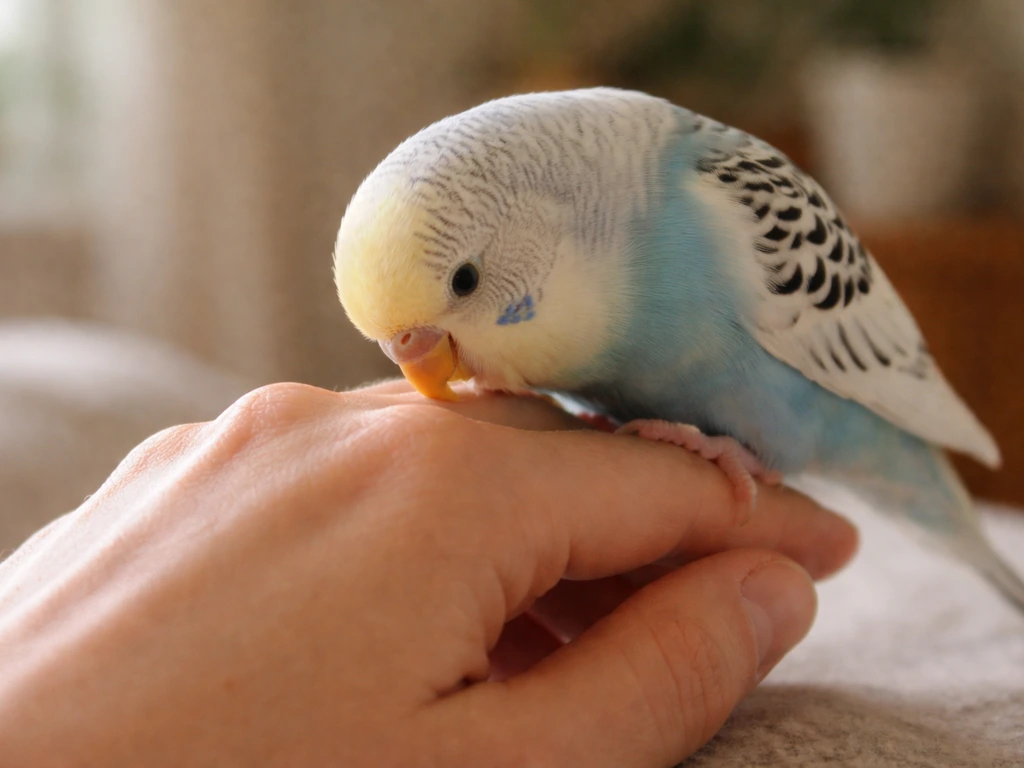
How to tell real preening from other bird behavior
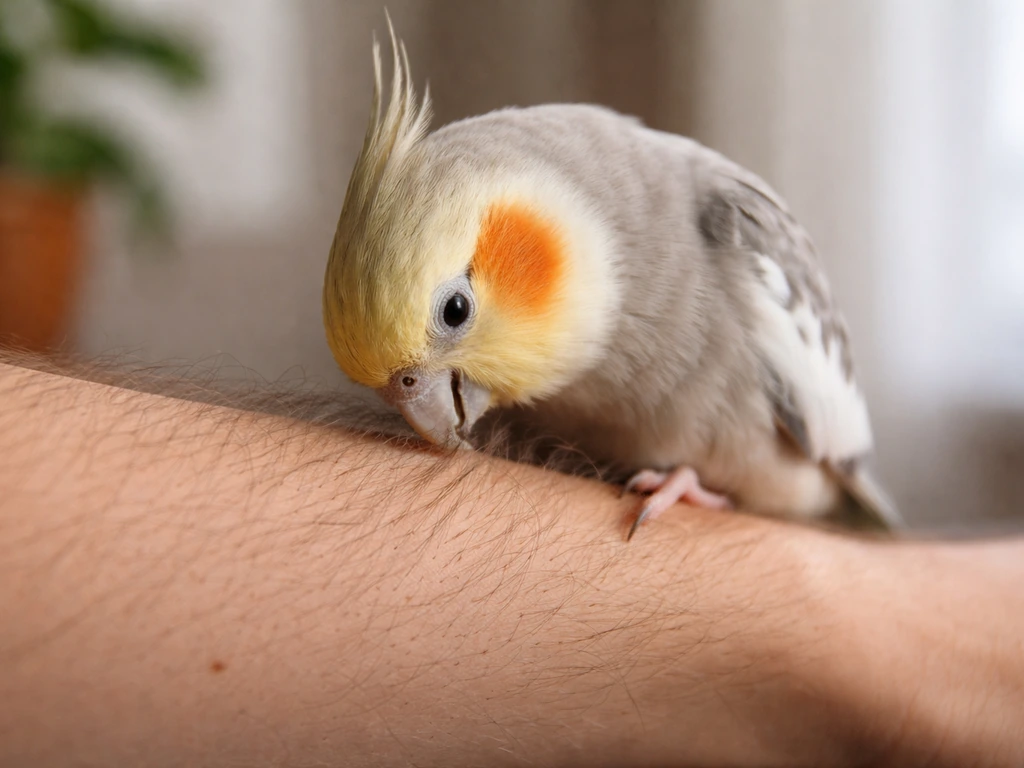
True preening has a pretty recognizable look once you know what to watch for. Your bird will use its beak to sort through your hair, eyebrows, or the fine hairs on your arm, nibbling and combing in short, deliberate strokes. They may also gently scratch at you with a foot, especially around the head and neck area, since that is exactly what they do to reach spots their beak cannot access on themselves. The mood is calm and focused, not frantic.
Contrast that with other interactions that can look similar. Beak rubbing on your skin is a different behavior, often related to marking or cleaning the beak after eating. Nibbling that involves pressure, or that your bird repeats when you react, is more likely attention-seeking or testing. Beak wiping after a meal, head bobbing, and regurgitating food onto you are all separate behaviors with their own meanings. The key distinction for preening is that calm, methodical grooming motion, often paired with slightly fluffed feathers and half-closed eyes, which signals a fully relaxed bird.
Normal reasons your bird preens you
Birds are flock animals, and within a flock, mutual preening (sometimes called allopreening) is one of the strongest bonding behaviors they have. They do this with mates and trusted companions to reinforce social bonds and help each other reach hard-to-groom spots. When your bird starts preening you, they are treating you as a member of that inner circle.
Here is what is usually going on when a bird preens you:
- They trust you enough to get close and stay relaxed, which is not a given for every bird
- They are expressing affection the way birds naturally do, through physical contact and grooming
- They see you as a flock companion or bonded partner and want to maintain that social connection
- They are in a good mood and simply feel like engaging with you
This kind of preening is a genuinely positive sign. Birds only really settle into preening when they feel safe. If your bird is preening your hair or eyebrows while perched on your shoulder with a relaxed posture, that is textbook affection and bonding behavior, nothing to worry about.
When your bird might be preening himself on you
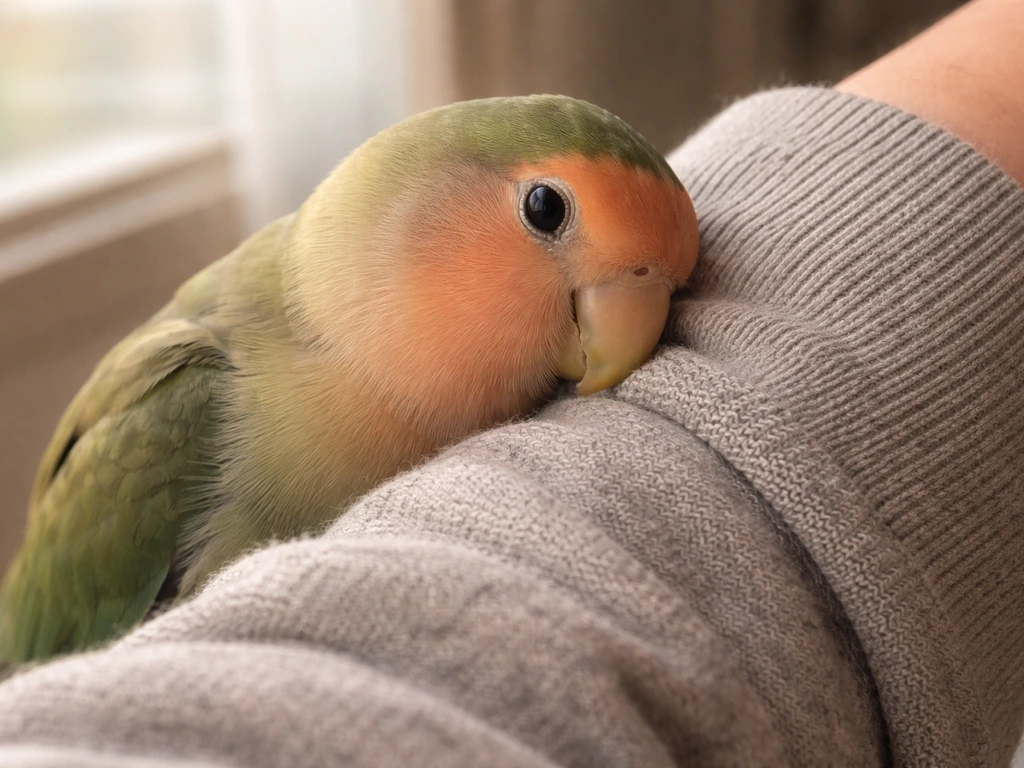
Sometimes a bird is not really grooming you, they are using you as a surface or a prop for their own comfort routine. This happens more often than people realize. A bird that rubs its face or body against your hand, arm, or clothing repeatedly might be dealing with an itch they cannot reach, working through a stress response, or simply following a habitual routine that started as bonding and became a coping mechanism. If the rubbing becomes constant or seems driven by discomfort, see why is my bird rubbing his face on everything for more targeted causes.
Attention-seeking plays a role here too. If your bird figures out that rubbing or nibbling on you gets a big reaction, whether you laugh, pull away, or make a fuss, they will keep doing it because it works. If you are wondering why does my bird rub his bum on me, the same attention and reassurance logic can be at play, especially when the behavior is repeated and you respond rubbing or nibbling on you. Birds are sensitive to how people respond to them, and even a reaction that seems negative to you can feel like a reward to a bird that just wants interaction. If your bird’s “humping” behavior seems sexual or hormonal, the approach is a bit different than everyday preening and rubbing humping behavior.
Stress and boredom can also push birds toward repetitive self-grooming, and if you happen to be nearby when that happens, you become part of the routine. LafeberVet notes that using foraging enrichment and increasing complexity can help prevent and reduce psychogenic feather picking Stress and boredom can also push birds toward repetitive self-grooming. A bird that is under-stimulated or anxious may use grooming (on themselves or on you) as a self-soothing behavior, similar to how people fidget when they are nervous.
Health and itch possibilities that can look like preening
In most cases, a bird that preens you is just showing affection. If your bird’s nibbling seems more like discomfort than bonding, it can help to look at possible itch or irritation causes why does my bird nibble on me. If you are seeing a bird pecking at your house, the pattern can be similar, but it often points to territorial, nesting, or stress-related behavior rather than affection toward you. But there are situations where what looks like preening is actually your bird trying to relieve irritation, and those are worth knowing about.
Skin and feather irritation can prompt a bird to scratch, rub, or groom more than usual. Dry skin from low humidity, insufficient bathing, or environmental irritants like cigarette smoke can all cause discomfort. Ectoparasites like mites or feather lice are less common in well-kept pet birds but do occur occasionally, and they cause itching that drives increased grooming behavior. If your bird is rubbing itself against you with more urgency or scratching repeatedly at the same spots, it is worth looking more closely at their feathers and skin.
Abnormal feather grooming that crosses into feather destructive behavior is a different category entirely. That can range from mild over-preening to actual feather plucking or chewing, and it can have both physical and psychological causes. The distinction matters: if your bird is calmly grooming you as a social act, that is normal. If your bird is intensely or compulsively grooming itself and then rubbing against you in a distressed way, that is a different picture that deserves attention.
What to check today
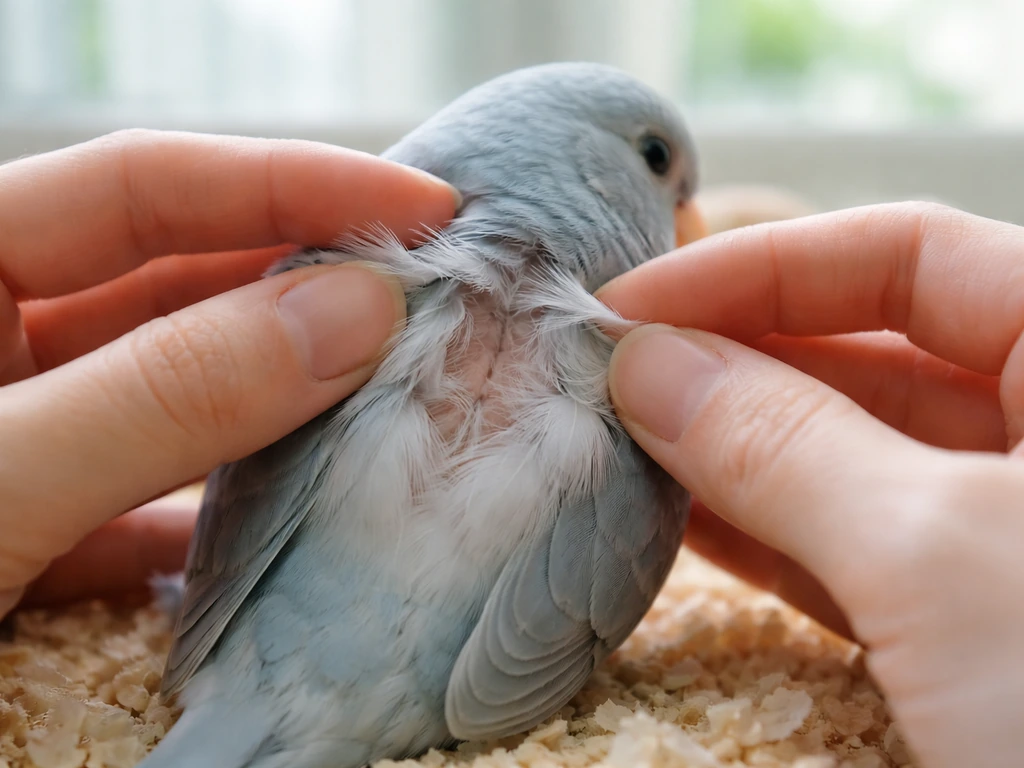
If you are wondering whether what you are seeing is normal preening or something to look into further, here is a practical checklist you can work through right now.
Check your bird's body condition
- Are the feathers smooth, intact, and lying normally? Damaged, missing, or chewed feathers are a flag
- Look for bare patches, especially on the chest, wings, or legs
- Check for any redness, flaking, or visible irritation on exposed skin
- Are there any abnormal pin feathers (constricted, clubbed, or with visible blood in the shaft)?
- Is your bird's posture upright and alert, or fluffed and hunched?
Check the environment
- Is the humidity reasonable? Very dry air can irritate skin and feathers
- Is your bird getting regular bathing or misting opportunities?
- Are there any strong smells, smoke, or aerosols (cleaning products, candles, cooking fumes) in the air?
- Are there other pets or people causing your bird stress?
- Is the cage clean and sized appropriately for your bird?
Check the routine and stimulation
- Does your bird have consistent daily interaction at predictable times?
- Are there foraging opportunities, toys, and activities to keep them mentally engaged?
- Has anything changed recently: your schedule, a new pet, a move, a new person in the house?
- Is the preening behavior calm and occasional, or repetitive and intense?
How to respond: encourage good bonding and set fair boundaries
If your bird is genuinely preening you as a bonding behavior, the best response is to let it happen and stay calm and relaxed yourself. Your bird is reading your body language, and a tense or reactive response can confuse or discourage them. If you enjoy it, you can gently reciprocate by scratching around their head and neck, which is often where birds most want help grooming.
That said, some birds get a little too enthusiastic and start nibbling harder than feels comfortable, or they fixate on preening your face in a way that feels invasive. If your bird is pecking at you or pecking your car, watch for the same kind of repeated, attention-driven behavior and look for signs of stress or irritation nibbling harder. It is completely fine to set limits. The key is to redirect rather than punish. Calmly move the bird to a different perch or offer a toy when the behavior gets too intense. Avoid pulling away dramatically or making a big deal out of it, because a strong reaction, even a negative one, can accidentally reinforce the behavior by giving the bird exactly what they wanted: your full attention.
Using positive reinforcement consistently works much better than corrections. Reward calm, gentle interaction with quiet praise or a treat. If your bird tends to use preening as a way to demand attention, build in structured daily interaction time so they are not spending all day waiting for you to react to their behavior.
When to worry and call an avian vet
Most of the time, a bird that preens you is healthy and happy. But there are specific warning signs that mean you should contact an avian veterinarian rather than wait and see.
Get in touch with a vet promptly if you notice any of the following:
- Fluffed feathers that stay fluffed, especially combined with a hunched posture or lethargy
- Feather loss in areas the bird could not reach to pluck itself (which suggests a different cause than self-grooming)
- Damaged, chewed, or missing feathers in multiple areas
- Abnormal pin feathers with blood in the shaft
- Any open-mouth breathing, wheezing, tail bobbing with each breath, or labored breathing
- Changes in droppings color, consistency, or volume
- Loss of appetite or sudden weight loss
- A sharp, sudden change in behavior, becoming unusually aggressive, withdrawn, or frantic
- Visible sores, redness, or skin damage under or around feathers
If the preening behavior is compulsive, meaning your bird is grooming intensely and repetitively in a way that looks distressed rather than relaxed, that also warrants a vet visit. Feather destructive behavior is a symptom, not a single condition, and an avian vet can help rule out physical causes like parasites, infections, nutritional deficiencies, or hormonal issues before assuming it is purely behavioral.
For breathing emergencies specifically, open-mouth breathing and pronounced tail bobbing with every breath are same-day situations. Do not wait on those.
The bottom line on bird preening
A bird that preens you is almost certainly expressing trust and affection, and that is a good thing. The behavior fits naturally alongside other gentle contact behaviors, and understanding it helps you read your bird's overall mood and intentions more clearly. If instead your bird is pecking at your window, the motivation can be different, and it helps to know why that behavior happens preening. As long as your bird looks healthy, is eating normally, has smooth intact feathers, and the preening feels calm and social rather than frantic or compulsive, you can feel good about what it means. Do the quick checks above, respond warmly but with reasonable limits, and you will have a solid handle on exactly what your bird is telling you.
FAQ
Is it safe to let my bird preen me, even if they sometimes nibble my skin?
Usually yes, as long as the beak contact is gentle and your bird seems calm (relaxed posture, methodical grooming, not frantic). If you notice broken skin, bleeding, or they apply strong pressure, redirect to a toy or a different perch and have your bird checked if the behavior seems compulsive or linked to skin irritation.
How can I tell the difference between affection preening and an itch or irritation issue?
Affection preening looks deliberate and social, often with slightly fluffed feathers and half-closed eyes. Itch-related behavior tends to be more repetitive, targeted at the same area, and can escalate quickly, especially if your bird is also scratching, rubbing their face on objects, or grooming themselves excessively.
Why does my bird only preen me in certain places, like on my shoulder or near the face?
Birds often choose “reach” positions where they can groom hard-to-access spots on you (hairline, eyebrows, neck). If preening happens mainly when you sit still or when your face is at their preferred angle, it can be bonding plus convenience, not a medical problem, but intensity changes (sudden fixation, distress) should be monitored.
Can preening be a sign of mating or hormones, not just bonding?
It can. If your bird’s behavior shifts to more persistent mounting, rapid chasing, or intense focus on the head and neck with heightened arousal, it may be hormonal. In that case, use less face-to-face encouragement, avoid reinforcing the behavior with lots of attention, and consider discussing hormonal management with an avian vet or bird behavior specialist.
What should I do if my bird preens my face and I feel uncomfortable or get pecked?
Set limits without dramatic reactions. Calmly move them to a different perch, stop face contact, and redirect to a hand target or toy. Reward gentle behavior immediately, so they learn that calm grooming gets positive reinforcement while pecking too hard does not.
Why does my bird preen me, then suddenly stop and act restless or aggressive?
Sometimes they overdo contact when they are excited, then get overstimulated. Other times the “stop” can reflect discomfort (dry skin, irritants, mites) or anxiety. If you see fast escalation, tail changes, pinned eyes, or repeated hard pecks, re-check their skin and consider a vet if it persists.
My bird preens me but also seems to groom themselves more than usual. Could the problem be physical?
Yes. Increased self-grooming along with targeted rubbing against you often points to discomfort, such as dry skin, environmental irritants, or parasites. If you also see feather thinning, patchy areas, scabs, or greasy-looking feathers, seek an avian vet evaluation rather than assuming it is only bonding.
How can I reduce the chance my bird reinforces the behavior by getting a reaction?
Keep responses consistent. If they nibble and you react with pulling away or fussing, that reaction can become a “reward” for attention. Use a neutral cue, redirect to a toy or perch, and then praise/treat only for gentle, calm grooming.
Does preening me mean my bird is bonded to me, and will it get better over time?
It usually indicates trust, especially if they do it in a relaxed, regular way. Bonding often improves as their overall comfort increases (safe routine, predictable handling, and adequate daily enrichment). However, growth is not guaranteed, and changes in intensity can signal stress or health issues, so keep watching their baseline behavior.
When should I contact an avian vet urgently even if the bird is otherwise acting “normal”?
Go same-day if there are breathing emergencies such as open-mouth breathing or pronounced tail bobbing with each breath. Also contact promptly if grooming becomes compulsive, if you see feather-damaging chewing or plucking, if there are signs of parasites or skin lesions, or if their appetite and droppings change.
Next Article
Why Does My Bird Nibble on Me? Causes and What to Do
Learn why your bird nibbles fingers or hands, what to do now, how to stop it, and red flags for health issues.