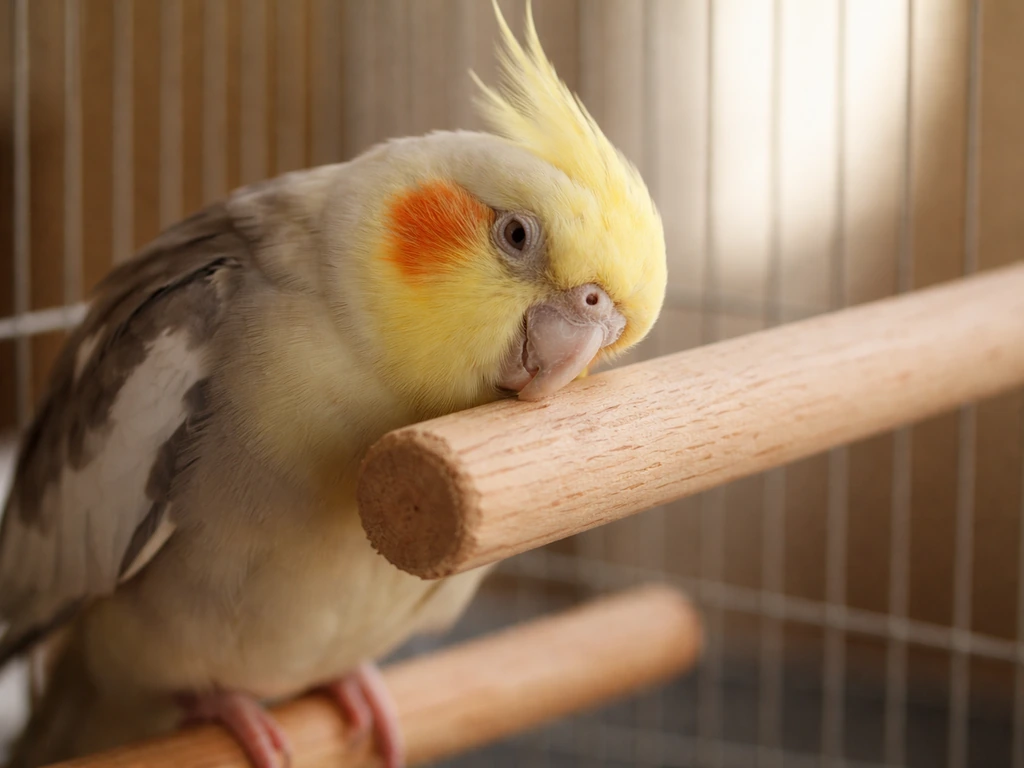
A bird pecking at your house is almost always doing one of three things: hunting food (insects, spiders, or scraps on your siding), gathering nesting material (loose caulk, wood fibers, or debris), or fighting its own reflection in a window or shiny surface. Once you figure out which one applies, the fix is usually fast and free.
Why Is a Bird Pecking at My House? Fixes and Prevention

Marcus Chen
1 May 2026
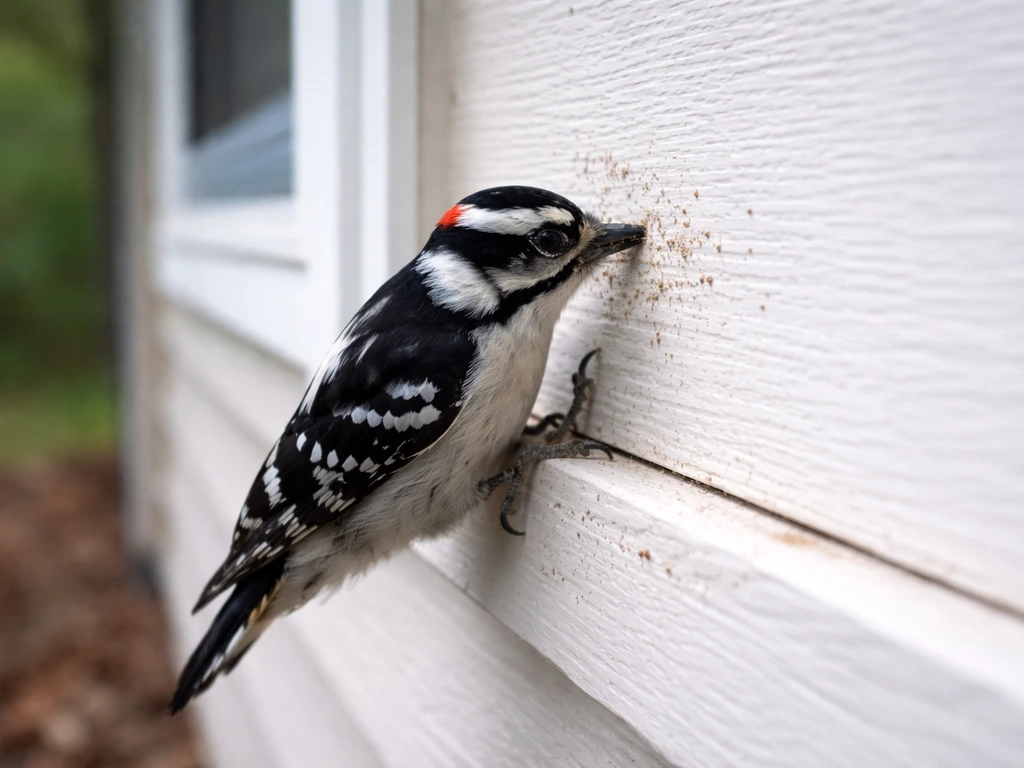
The main reasons birds peck at houses
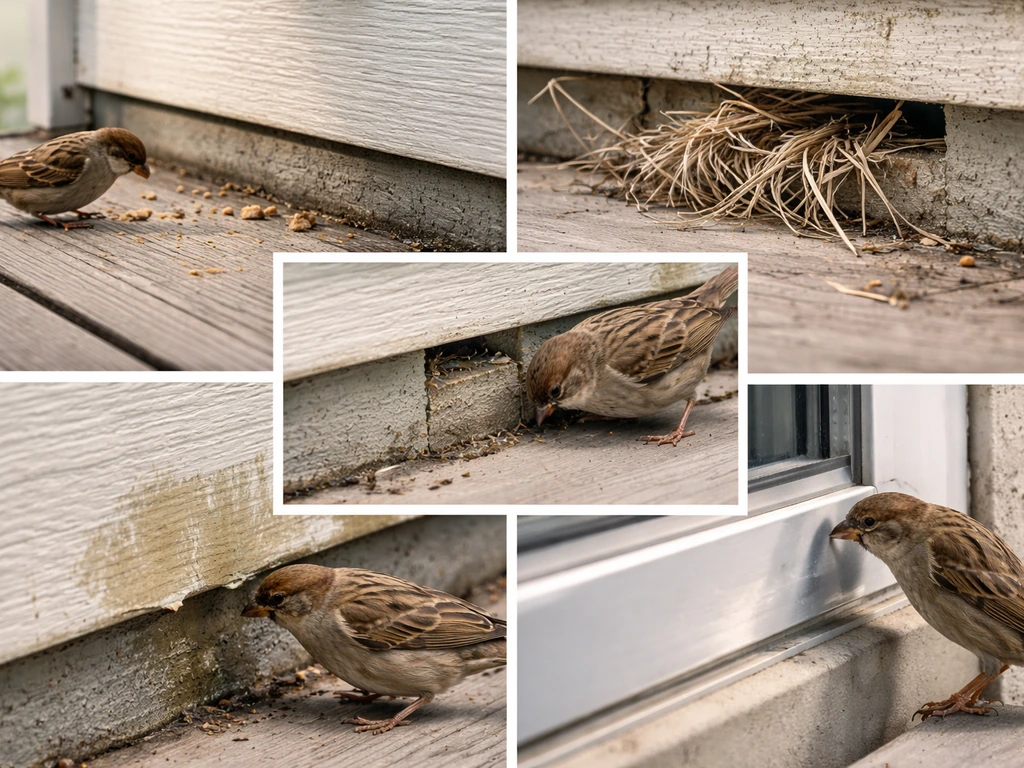
Most pecking comes down to food. If you're trying to pinpoint the cause for a specific case like that, the detailed breakdown in why birds peck at houses can help you narrow it down quickly. Insects and spiders love to nest in small gaps around window frames, siding seams, eaves, and wood trim. Woodpeckers, nuthatches, and wrens are especially good at detecting them through sound and vibration. If your siding has a hollow resonance, woodpeckers may actually blank" rel="noopener noreferrer">drum on it to communicate, not just to eat. This is distinct behavior from focused food-hunting, but both lead to the same result: a bird working away at your exterior.
Nesting material is another big one, especially in spring. Birds pull at loose weatherstripping, dried plant fibers, wood chips from painted or weathered siding, and even chunks of insulation foam if they can reach it. Small birds like hummingbirds also collect spider silk from around window edges and under eaves, since it acts as a flexible binding agent in their nests.
Finally, curiosity and territorial behavior drive a lot of pecking near doors and windows. A bird that sees movement or its own reflection in glass may peck or tap repeatedly, not because anything physical is there to eat, but because it perceives a rival. This is especially common in spring during breeding season.
Window reflections and territorial triggers
If the pecking is happening on or right next to a window, there's a good chance territorial aggression is involved. Northern Cardinals, American Robins, titmice, and California Towhees are among the species most commonly reported doing this. What's happening is simple: the bird sees its own reflection and reads it as a rival intruder. It then tries to drive the "other bird" away by pecking and fluttering at the glass.
The pattern is pretty recognizable. The same bird returns to the same window at roughly the same time each day, often in the morning when the light angle makes reflections strongest. It may hop back and forth, posture, sing aggressively, and then peck. It doesn't stop because the "rival" never retreats. This behavior is strongly tied to breeding season, so it can go on for several weeks before the bird's hormones settle and it loses interest.
This is closely related to the behavior described in articles about why a bird keeps pecking at a window specifically. If you want the quick, window-specific explanation, see why a bird keeps pecking at my window. The key difference when it's the house exterior rather than just glass is that the bird may also be responding to shiny metal trim, painted surfaces with a slight sheen, or reflective hardware around doors.
Figure out what's causing it fast
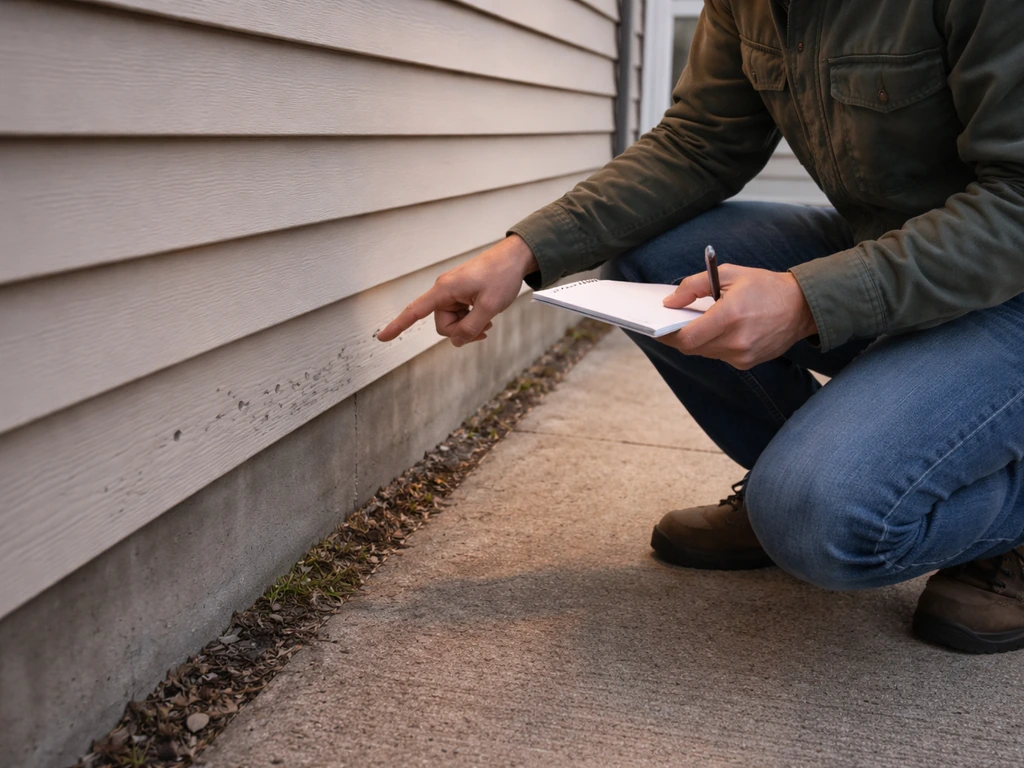
You don't need to observe for long to get a clear answer. Just track three things: where exactly on the house the pecking is happening, what time of day it occurs, and what the bird looks like and what it's doing when it arrives.
| Clue | What it likely means |
|---|---|
| Pecking low on siding, near ground level | Foraging for insects or spiders in cracks |
| Pecking near eaves or soffit gaps | Investigating nesting sites or pulling material |
| Pecking directly on a window, repeatedly returning | Territorial response to reflection |
| Drumming fast on metal flashing or hollow siding | Woodpecker communication or mate attraction |
| Pecking early morning, same spot daily | Territorial or mating-season reflection behavior |
| Pulling at loose caulk or foam insulation | Nesting material gathering |
| Intermittent pecking across multiple areas | Food foraging (insects in siding gaps) |
If you're seeing any pulling motion, look for loose or deteriorating material nearby. If the bird is facing the window and posturing, it's almost certainly a reflection issue. If it's systematically working along a seam, it's after food.
Things you can remove or change today
Before adding any deterrents, remove what's attracting the bird. A few quick checks can make a significant difference.
- Check siding seams and window frames for insect nests or webs and clear them out.
- Remove any loose caulk, weatherstripping, or peeling paint that a bird could pull at for nesting material.
- If you have a bird feeder near the house, move it at least 30 feet away from windows. Feeders close to windows increase the chance of both collisions and territorial encounters.
- Pick up any food scraps or pet food near entrances, especially if you've noticed sparrows or starlings hanging around.
- Cover or seal any small gaps in soffits, vents, or eaves that a bird might investigate as a nesting spot.
- Remove anything shiny near the problem area: reflective door hardware, wind chimes with metallic surfaces, or decorative mirrors.
Humane deterrents that actually work
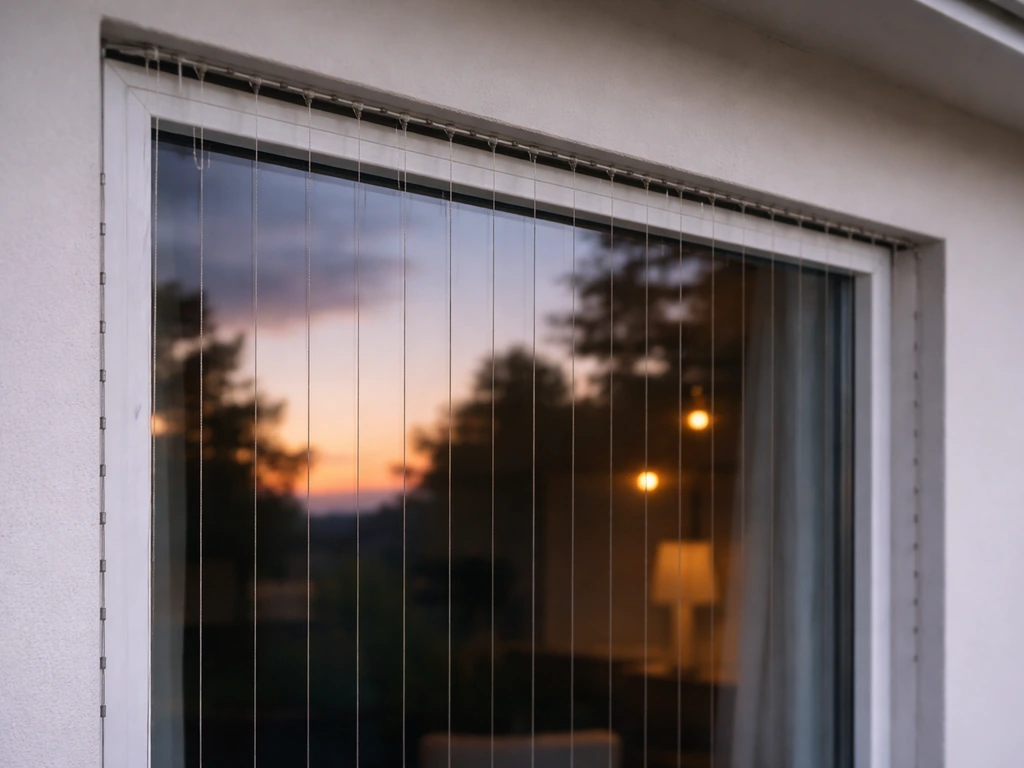
Once you've removed the attractant, deterrents stop the habit from reforming. The goal is always to break the visual trigger or make the surface less appealing, not to harm the bird.
For windows and reflective surfaces
The most effective method is to break up the reflection on the outside of the glass. Hanging strips of 1/8-inch paracord spaced less than 4 inches apart from the top of the window works well and is very inexpensive. The movement of the cords also signals to birds that something is there. Alternatively, you can apply a pattern directly to the outside of the glass using tempera paint or stencils. The key measurement is a 2-inch by 2-inch grid spacing, which birds recognize as a barrier. Patterns on the inside of the window don't work as well because the reflection on the exterior surface is what the bird is reacting to.
External insect screens are worth mentioning too. They reduce the mirror effect of glass significantly and act as a physical reminder that a solid barrier exists. If you already have screens and a bird is still pecking at the window, check whether the screen is fully in place and whether there are uncovered panes nearby.
For siding, eaves, and trim
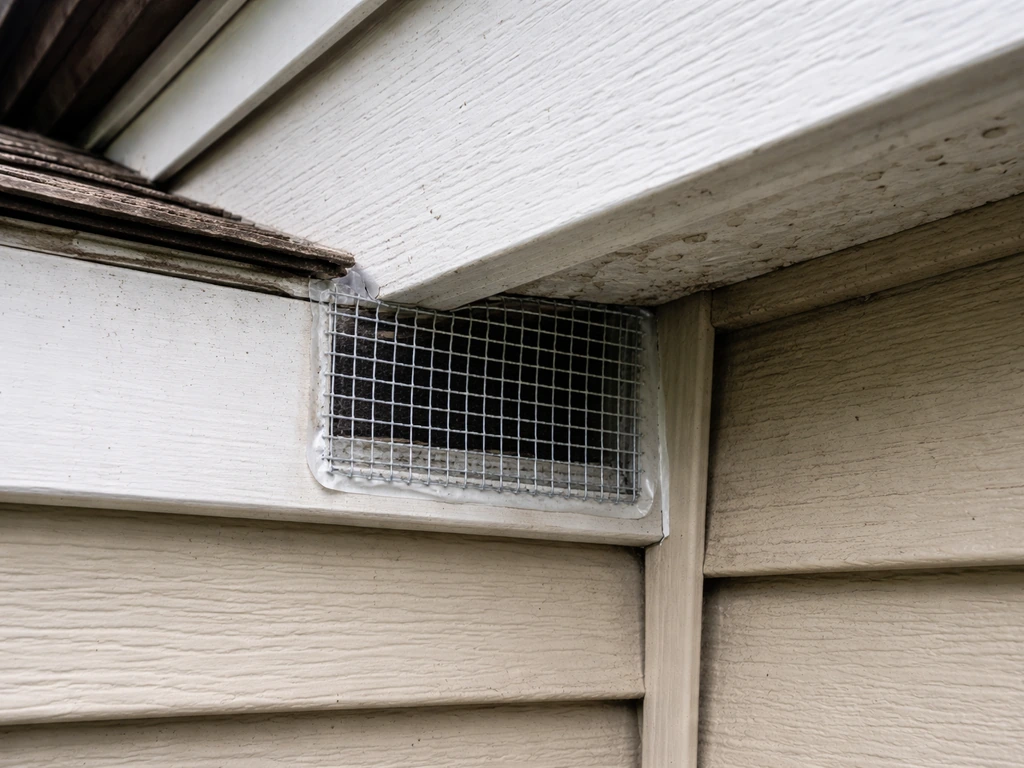
For areas being pecked for food or material, physical exclusion is the most reliable fix. Cover gaps with hardware cloth or use silicone caulk to seal entry points. Foam backer rod pushed into larger seams is both cheap and effective. Hanging visual deterrents like reflective tape or pinwheels near the problem area can also reduce visits, though these work better when combined with removing the underlying attractant.
Avoid using sticky gels or glue-based repellents on any surface a bird might land on. These can trap feathers and cause injury.
When it's more serious than just pecking
Repeated impacts against glass are a different concern from territorial pecking. When a bird is flying into a window rather than calmly tapping at it, it's experiencing a collision, and that's potentially dangerous. The Smithsonian National Zoo notes that reflected scenery like sky and trees can look like a safe flight path, and making windows more visible can reduce bird collisions reflected scenery can be mistaken for a safe flight path. Window strikes can cause internal injuries, concussions, and brain trauma that aren't visible from the outside. If you find a bird on the ground after hitting a window, don't assume it's fine just because it's still moving.
The immediate step is to place the bird in a small, dark container like a shoebox with air holes, and keep it somewhere warm and quiet away from pets, traffic, and noise. Minimize handling and avoid eye contact, since even well-intentioned interaction adds stress to a wild animal. Some birds revive within a few minutes. If it doesn't recover quickly, or if it's in an area with predators or bad weather, contact a licensed wildlife rehabilitation facility. They're equipped to assess internal injuries that you can't see.
Persistent, aggressive pecking at the same spot day after day, without any clear food or nesting trigger, can occasionally point to a distressed or disoriented bird. If you notice a bird that seems confused, off-balance, or unable to fly normally in addition to the pecking behavior, that's a sign to call your local wildlife control or rehab center rather than trying to manage it yourself.
If your pet bird is the one pecking at doors or windows
Pet birds pecking at windows, doors, or interior walls is a separate situation entirely, and it's one that bird owners on this site deal with pretty often. The motivations overlap somewhat with wild bird behavior, but the context and the response are different.
Reflection behavior happens with pet birds too. Pet birds can show the same reflection-driven behavior, which is often confused with other scratching or humping behaviors pet bird humping. A bird that can see itself in a window or glass door may peck at it repeatedly, especially during breeding season. This can look aggressive or obsessive, but it's driven by the same territorial instinct seen in wild cardinals and robins. Covering the reflective surface or relocating the bird's perch to break the sightline usually helps.
Pet birds also peck at surfaces out of boredom, curiosity, and the need to forage. A bird that isn't getting enough environmental enrichment will find things to do on its own, and pecking at a door frame or window ledge is a fairly natural outlet. This is related to behaviors like beak-rubbing and nibbling at objects around the house, which birds use to explore their environment. If you notice this kind of face-rubbing from a pet bird, it can also be related to normal beak-rubbing and object-nibbling used to explore the environment. Beak-rubbing and nibbling can also be a sign that your bird is exploring, self-soothing, or responding to stress. This type of beak-rubbing and nibbling is also a common clue when you’re wondering why your bird rubs his bum on you. Providing appropriate foraging toys and rotating enrichment items is usually the most effective long-term solution.
Where it's worth involving an avian vet is when the pecking is compulsive and directed at the bird's own body rather than surfaces, when it's accompanied by other behavioral changes like lethargy, appetite loss, or feather changes, or when it escalates suddenly without an obvious trigger. If you are wondering why your pet bird preens you, the cause is often a behavior cue, a bonding habit, or sometimes stress why does my bird preen me. Those combinations can point to hormonal imbalance, nutritional gaps, or an underlying health issue that needs a professional assessment. Behavioral pecking at objects is usually normal and manageable at home. Pecking paired with health red flags is the line where you call the vet.
FAQ
How can I tell if the bird is looking for insects versus pecking at a reflection?
Look at the bird’s position and the motion pattern. Food-related pecking usually targets seams, cracks, and specific rough spots (window trim edges, siding joints, eaves) and often progresses along a line. Reflection pecking is more front-facing and repetitive at one pane, often with posturing, hopping, or fluttering at the same exact spot.
What if the pecking is happening on the roof edge or gutters instead of the windows?
That still often points to insects or nesting material. Gaps under shingles, loose fascia boards, and junctions where trim meets the wall can hide prey-rich spaces. Check for wasp nests, spider activity, and any flaking wood or deteriorated sealant, then seal access points with hardware cloth or caulk once you remove loose attractants.
Do noise deterrents like motion sprinklers or recordings work for birds pecking at a house?
They can reduce visits temporarily, but many birds habituate quickly, especially if the food or nesting gaps remain. If you use motion-activated sprinklers, test them where water won’t damage siding, plants, or electrical fixtures. Best results usually come from removing the attractant first, then using deterrents as a short-term support.
Is it safe to use reflective tape or pinwheels on the areas birds peck for food?
They may help the reflection side of the problem, but they do not reliably stop pecking when the bird is actually finding insects, spiders, or loose materials. Treat them as an add-on. For food/material cases, the long-term fix is sealing gaps and physically excluding entry points.
How long should I expect after I seal gaps or add reflection blockers for the pecking to stop?
If it’s reflection-driven, the behavior often changes within days because the bird no longer sees a clear rival or starts perceiving a barrier. For food or nesting material, it can take a week or two for birds to give up if the area is still accessible from another entry point, so re-check surrounding seams and nearby uncovered panes.
Can I trap or relocate a wild bird that keeps pecking at my house?
It’s usually not practical and can be illegal depending on where you live, plus relocation can worsen the bird’s condition if it is actually injured or disoriented. For persistent pecking, focus on exclusion (sealing gaps, covering entry spaces) and reflection control, and involve a licensed wildlife professional if the bird appears confused or can’t fly normally.
What should I do if I see a bird tapping calmly versus flying full speed into the same window?
Calm tapping often indicates territorial or reflection behavior and can be addressed by breaking up exterior reflections. Full-speed flying into the glass is a window strike risk, which can cause internal injury even when the bird looks okay. If a bird is on the ground, place it in a small dark ventilated container, keep it warm and quiet, and contact a wildlife rehab facility if it does not recover quickly.
My window is covered with film inside, but the pecking continues. Is that expected?
Yes. The bird is often reacting to the exterior reflection that shows on the outside-facing surface. Interior-only changes frequently fail. For best results, apply patterns or barriers to the outside of the glass, or use an external insect screen that reduces the mirror effect from the bird’s perspective.
Are sticky repellents or glue products ever appropriate to stop pecking?
Avoid sticky gels or glue-based repellents on any surface a bird could land on. They can trap feathers and lead to injuries. Safer approaches are physical barriers (hardware cloth, sealing gaps), exterior reflection break-up, and deterrents that do not create a hazardous landing surface.
If I have pet birds, how do I tell when pecking at windows is “reflection aggression” versus stress or boredom?
Reflection-driven behavior is usually tied to a specific sightline, often directed toward the same pane or door at certain times of day, and may include repeated tapping or aggressive posturing. Boredom or stress pecking is more variable and may involve chewing on nearby objects or ledges. If your pet is pecking compulsively at its own body or shows other health changes, contact an avian vet.
What are the first three checks I should do before buying deterrents?
First, note exactly where the pecking hits (seams, trim, roofline, a specific pane). Second, check timing, is it always in the morning or aligned with light angles. Third, watch the bird’s behavior when it arrives (posture and face-to-glass suggests reflection, repeated work along seams suggests food or nesting). These three observations usually identify whether you should seal gaps, break reflections, or address a window-strike situation.
Next Article
Why Is My Bird Rubbing His Face on Everything? Causes and Fixes
Bird face rubbing causes and fixes, from bonding and itch relief to allergies, mites, and eye beak irritation with next