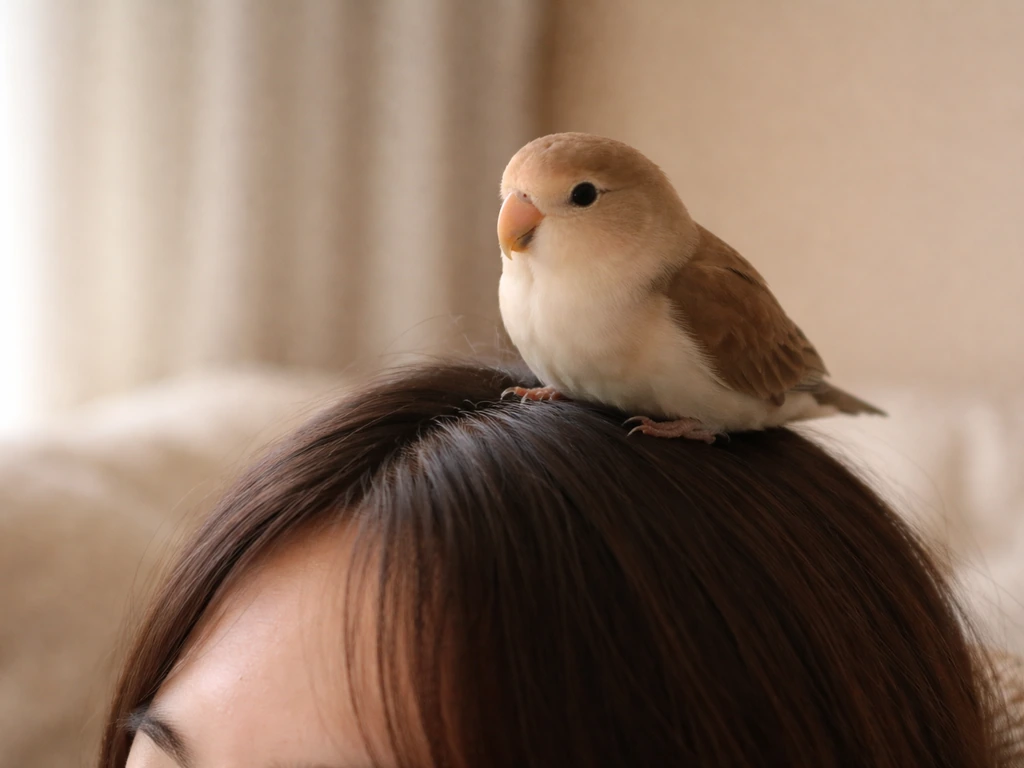
A bird biting his leg can be totally normal preening, or it can be a sign of real discomfort, pain, or a skin/health problem that needs attention. Soft, gentle biting can also be a sign of discomfort or irritation, so look for changes in skin and behavior why does my bird bite me softly. The key is figuring out which one you're dealing with in the next few minutes, because the right response is very different depending on the cause. Most of the time you can get a strong read on the situation just by watching closely for two or three minutes and doing a quick physical check.
Why Is My Bird Biting His Leg? Causes and What to Do

Marcus Chen
9 Jun 2026
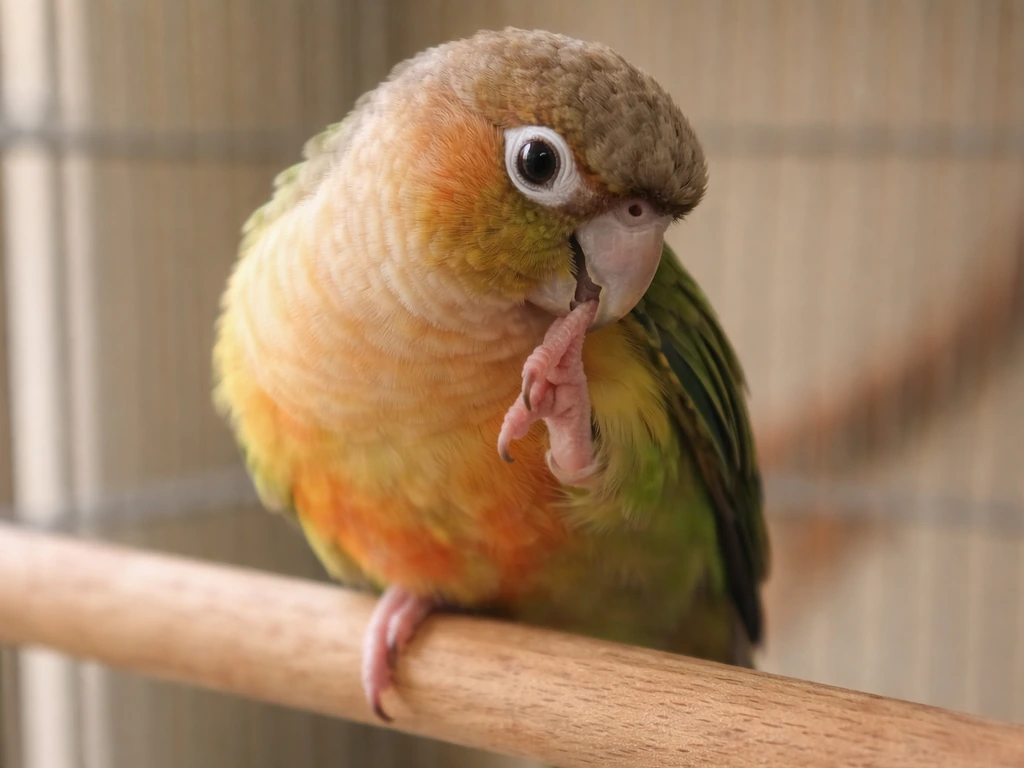
What 'leg biting' usually means: habit vs. pain
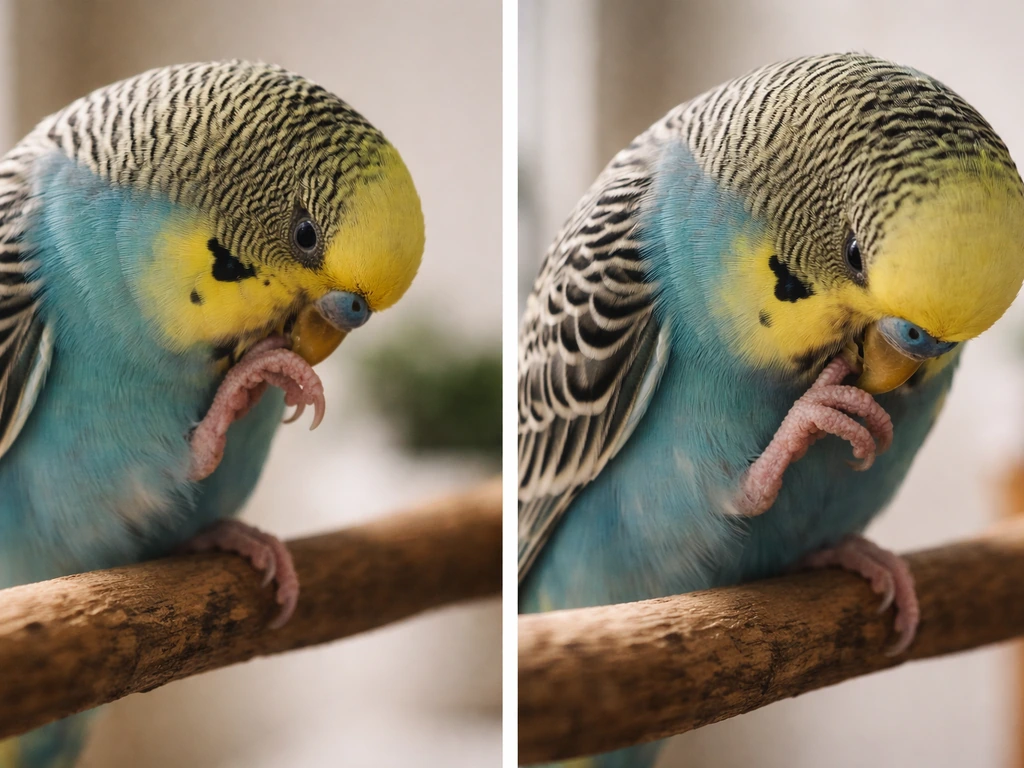
Birds spend a significant chunk of their day preening, and that naturally includes nibbling and grooming their legs and feet. A parakeet or cockatiel working its beak along its leg in a calm, relaxed posture, with smooth feathers and normal behavior otherwise, is almost certainly just keeping clean. This is the bird equivalent of scratching an itch or picking lint off your sleeve. It's brief, unhurried, and doesn't repeat obsessively.
The pattern shifts when the biting becomes focused on one spot, intense, repetitive, or hard to interrupt. A bird that keeps going back to the same area of the same leg, especially if it looks agitated or tense while doing it, is telling you something is wrong there. Same goes for any bird that's doing it so much you noticed and started searching for answers. Normal grooming doesn't usually catch an owner's attention.
Pain is often the driver, and birds are wired to hide it. In the wild, showing weakness attracts predators, so pet birds can look surprisingly 'normal' even when they're hurting. This makes your observation skills especially important. Watch for limping, holding one leg up when both should be down, uneven grip on the perch, or reluctance to move around the cage.
Any of those alongside leg biting shifts this from 'probably fine' to 'needs a closer look. If your bird is limping or can't use a limb, treat it as potentially painful or injured and seek veterinary advice promptly, since birds often hide illness and injury [Watch for limping, holding one leg up when both should be down, uneven grip on the perch, or reluctance to move around the cage. ](https://www. msdvetmanual.
com/bird-owners/disorders-and-diseases-of-birds/injuries-and-accidents-of-pet-birds? ruleredirectid=458). '
Quick home assessment: look, listen, and check function
Before you do anything else, run through this short check. It takes about five to ten minutes and gives you the information you'll need whether you decide to manage this at home or call an avian vet.
- Watch the leg being bitten for visible changes: redness, swelling, scabbing, broken skin, missing feathers around the leg, crusting near the scales, discoloration, or any wound. Good lighting helps a lot here.
- Check both feet and toes: look for swelling at the joints, a sore on the bottom of the foot (this can be bumblefoot), overgrown or misshapen nails, constricted toes (a thread or fiber wrapped around a toe is a genuine emergency), or toes that look a different color than normal.
- Watch your bird walk and grip: is it bearing weight on both feet equally? Does it limp, avoid landing on one foot, or hold a leg up while perched? Holding one leg tucked up consistently points to pain rather than grooming.
- Listen while it bites: distressed vocalizations, hissing, or flinching when the leg is touched all suggest the area is painful.
- Check for systemic signs: is the bird eating, drinking, and acting normally otherwise? Lethargy, fluffed feathers, reduced appetite, or open-mouth breathing alongside leg biting means something more serious is going on.
- Note how long and how often: has this been happening for an hour, a day, a week? Is it constant or occasional? This timeline matters when you talk to a vet.
Common causes: skin irritation, mites/parasites, and infections
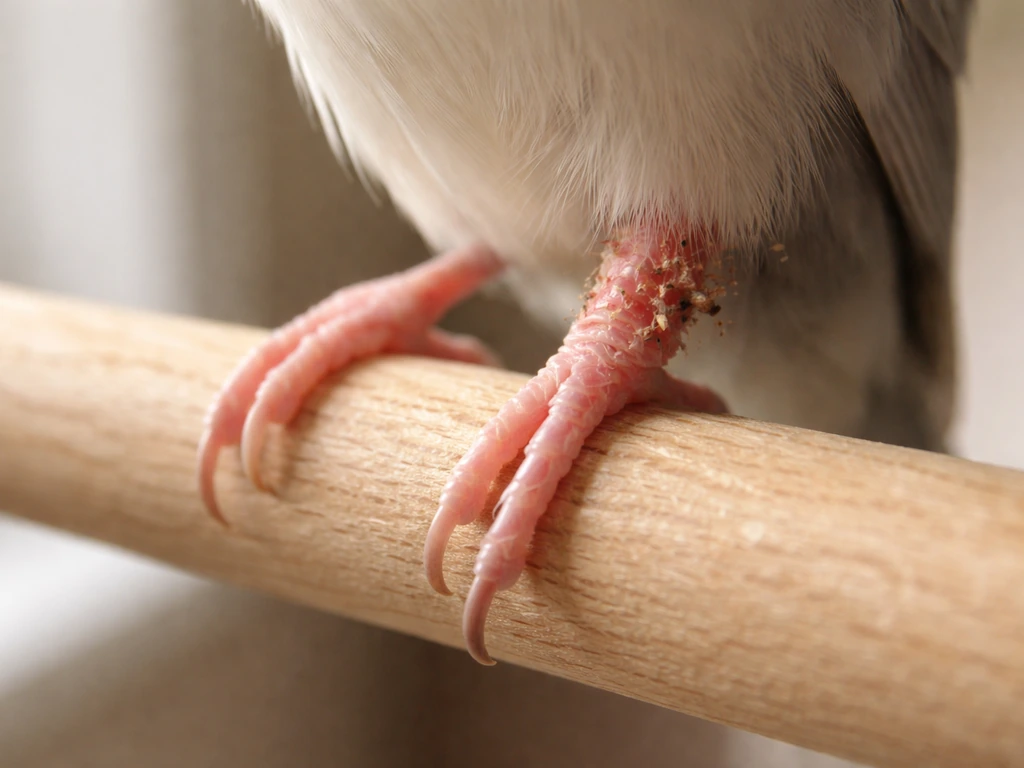
Skin irritation is one of the most common reasons a bird focuses on a specific leg. This can come from contact with a rough or chemically treated perch surface, cleaning products used near the cage, or even dry air during winter months. The leg may look slightly pink, dry, or scaly without being overtly injured. The bird bites because it itches or is uncomfortable, not because it's in acute pain.
Mites and lice are real possibilities, especially in birds that have had contact with other birds or were recently acquired from a pet store or breeder. Scaly face and scaly leg mites (Knemidocoptes) cause a distinctive crusty, honeycomb-like buildup on the legs and feet. You can usually see this with the naked eye. If the legs look thicker than normal with a rough, layered surface instead of smooth scales, mites are likely. Other external parasites can cause general itching that leads to biting and scratching anywhere on the body.
Bacterial or fungal skin infections can develop after even a small wound on the leg, especially if the cage isn't cleaned regularly. These can look like redness, crusty spots, or weeping sores. A bird that had a small cut that went unnoticed can end up with a localized infection that is genuinely uncomfortable. If you see broken skin, pus, or a spreading reddish area, this needs veterinary treatment and isn't something to manage at home with guesswork.
Common causes: injury, perch/cage issues, and foot/toe problems
A physical injury to the leg is easier to miss than you'd think. A bird can catch a nail on cage bars, land badly, or get a leg caught briefly and sustain a small cut or bruise that isn't immediately obvious. After the fact, the bird bites at the area because it hurts or itches as it heals. Check the whole leg carefully, parting any feathers to look at the skin underneath.
Perch problems are genuinely underrated as a cause of leg and foot issues. A perch that is too smooth (like a dowel rod of a single diameter) doesn't allow the foot to flex properly, leading to pressure sores and fatigue. A perch that's too rough or made of abrasive material like sandpaper can cause irritation and cracking on the foot pads. If your bird has only one perch type in the cage, that's worth changing today. Natural wood perches of varying diameters and textures let the foot muscles work properly and reduce contact pressure.
Bumblefoot (pododermatitis) is a pressure sore on the bottom of the foot that starts as a reddish swollen area and can worsen into a painful abscess. Birds with bumblefoot will bite at their feet, shift their weight constantly, and show reluctance to perch normally. It's more common in heavier birds or birds kept on flat, hard surfaces, and it needs veterinary treatment once it progresses past mild redness.
Thread or fiber entanglement around a toe is an emergency. A single carpet fiber, piece of string, or toy fraying wrapped tightly around a toe can cut off circulation within hours, and the toe can be permanently damaged or lost. If you see a swollen, discolored toe with any thread around it, remove the thread gently and carefully right now (curved scissors or a seam ripper work well), and call your vet regardless. The leg biting in this case is the bird's distress response to the pain and pressure. If you are wondering why your bird is biting the cage, this kind of distress or pain response can be part of what you are seeing why is my bird biting the cage.
Common causes: joint pain, arthritis, and nerve discomfort
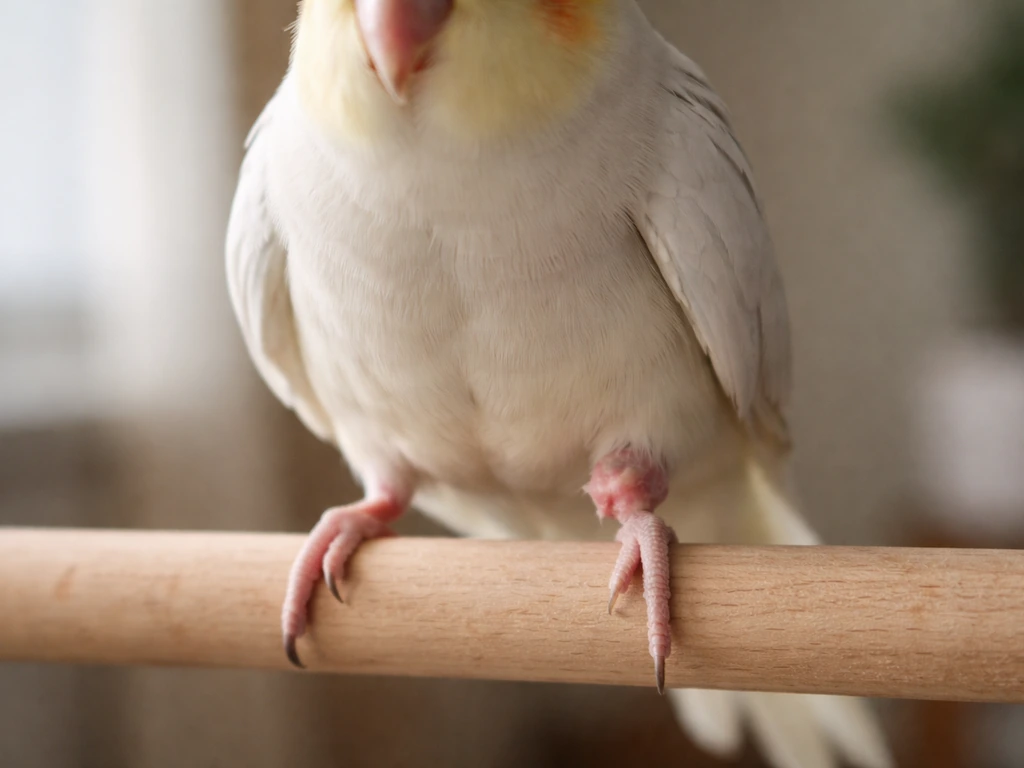
Older birds, particularly cockatiels and parakeets in their middle and senior years, can develop arthritis in their joints. The hock joint (the visible 'knee' on a bird's leg) and the toe joints are common spots. A bird with achy joints will sometimes bite or rub at the area, especially after rest, much like how stiff joints feel worse when you first get up in the morning. The joint may look slightly swollen or feel warm to a gentle touch. If your bird is older and has been slowing down generally, this is worth discussing with a vet.
Gout is another possibility in birds that have been on an unbalanced diet or have kidney issues. Uric acid crystals deposit in the joints, causing painful swelling, often visible as white or chalky deposits under the skin near the joints. This is a medical condition, not something you can manage at home, and it tends to get worse without treatment.
Some birds experience a kind of nerve-related discomfort, particularly if there's been pressure on nerves from a past injury, nutritional deficiency (vitamin B deficiency can affect nerve function), or internal mass. The bird may bite or pick at the leg not because of surface pain but because of a strange sensation in the limb. This is harder to assess at home, but it's a reason to involve a vet if you've ruled out all the more obvious causes.
Stress, boredom, and compulsive behavior
Not every leg-biting bird is in physical pain. If you notice your bird hiding in your hair, that can also point to stress, fear, or seeking comfort rather than a leg-specific problem. Not every leg-biting bird is doing it for pain, which is why it helps to figure out the trigger for why is my bird biting the cage Not every leg-biting bird is in physical pain. .
Birds are intelligent, social animals, and when they're understimulated, lonely, or anxious, they sometimes develop repetitive self-directed behaviors. This is similar to feather plucking, which many bird owners are familiar with, but it can show up as chewing or biting at the legs or feet instead. The bird isn't trying to hurt itself. If you are dealing specifically with biting itself, the stress and compulsive behavior section can help you pinpoint whether this is self-soothing or a health issue.
If you find yourself wondering why your bird bites your hair, that can be a sign of attention-seeking, stress, or a redirected compulsion rather than only physical pain. It's self-soothing or redirecting pent-up energy.
Stress triggers can include a new pet in the house, a recent move, a change in your schedule, a new bird added to the household, or even changes in sounds and smells around the cage. Sometimes a bird that feels insecure about its place in the household will develop repetitive behaviors as a coping mechanism. If the behavior started around the same time as a life change, that's a meaningful clue.
Attention-seeking can also play a role, especially in birds that have learned that doing something unusual gets a big reaction from their owner. If you've consistently rushed over and fussed whenever you've seen the behavior, the bird may have learned to do it to get your attention. This isn't the same as compulsive behavior, and the management approach is different. Reducing the dramatic response while increasing proactive engagement (talking, training, out-of-cage time) tends to help.
True compulsive behavior, sometimes called stereotypy, can develop in birds with a long history of neglect, inadequate enrichment, or significant trauma. It's harder to stop once it's established and often benefits from a combination of environmental changes and veterinary behavioral guidance. If your bird's leg biting has been going on for weeks or months despite a stimulating environment, mention it specifically when you see your vet.
What to do today and when to call an avian vet
Start by completing the home assessment above. Based on what you find, here's how to think about your next steps.
If everything looks physically normal, the bird is acting fine otherwise, and the biting is mild and occasional, start with environmental adjustments: vary the perches, check for any irritants, add some enrichment, and monitor closely for 24 to 48 hours. Document what you're seeing, including photos if possible, so you have something concrete to share if things don't improve.
If you see any of the following, contact an avian vet today. Behavior change along with pain signs such as open-mouth breathing, weakness, loss of balance, collapse, bleeding, seizures, or inability to perch can be warning signs that warrant immediate veterinary assessment Bird Behavior Guide. Do not wait and see.
- Bleeding from the leg, even if minor
- Open wound, spreading redness, or any sign of infection (pus, foul smell, swelling that's grown)
- A swollen, discolored, or cold toe (especially with any thread or fiber present)
- The bird is not bearing weight on the leg or is limping
- The bird is lethargic, fluffed up, or not eating
- Open-mouth breathing, loss of balance, or collapse alongside the leg biting
- Visible mite crusting, joint swelling, or white chalky deposits near joints
- The behavior came on suddenly and is intense or constant
When you call or visit the vet, bring your documentation: when it started, how often it happens, any physical changes you've noticed, recent diet or environment changes, and any photos or short videos you've taken. This dramatically shortens the diagnostic process and helps the vet prioritize the most likely causes.
If you're not sure whether what you're seeing warrants a call, call anyway. Avian vets are used to helping owners triage over the phone, and it costs nothing to ask. Birds can deteriorate faster than mammals when something is genuinely wrong, so erring toward action is the right call.
Prevention and long-term care: perches, hygiene, and enrichment

Once you've addressed the immediate issue, set your bird up so this is less likely to happen again. Most leg and foot problems in pet birds are preventable with the right setup.
Perch setup
Offer at least two or three perches of different diameters and textures. Natural wood perches (manzanita, java wood, or safe fruit woods) are ideal because they have irregular surfaces. Rope perches add a soft option. Avoid plain sandpaper perch covers, which cause abrasion, and remove any perch that looks cracked, splintery, or has rough edges that could catch on a nail. Place perches at different heights so the bird has options and isn't always gripping the same way.
Cage and hygiene routine
Clean the cage floor and perches regularly, since droppings on perches are a direct route to foot infections. Do a quick spot clean daily and a full clean weekly. Check the cage interior for any sharp edges, exposed wire ends, or fraying toys that could catch a toe. Any fabric toys that are visibly fraying should be removed because the loose fibers are a strangulation risk. Wash and dry perches thoroughly before putting them back.
Enrichment to prevent compulsive behavior
A mentally occupied bird is far less likely to develop repetitive self-directed behaviors. Rotate toys every week or two so there's always something new to investigate. Foraging toys, where the bird has to work to get food, are especially effective at channeling energy constructively. Out-of-cage time for social interaction, even just 30 minutes a day, makes a meaningful difference for birds that live alone. Training short, positive sessions using target training or trick training gives the bird a mental workout and strengthens your bond.
Ongoing monitoring
Get in the habit of doing a quick visual check of your bird's legs and feet a few times a week, especially as it ages. Catching early mite crusting, a small cut, or the beginning of bumblefoot when it's mild makes treatment far simpler and less stressful for everyone. Nail trims on a regular schedule (usually every four to six weeks depending on growth rate and perch texture) prevent the overgrown nails that can catch on cage bars or curl into the foot.
If your bird bites at other things as well, like wings or even at you, the underlying cause might have a behavioral or stress component worth addressing broadly. The same principles of enrichment, routine, and predictable social interaction apply across all of those situations.
FAQ
How can I tell the difference between normal leg preening and something that needs urgent care?
Soft, occasional nibbling during relaxed preening is usually brief and your bird’s posture stays calm. If the biting ramps up in intensity, targets the same exact spot repeatedly, or your bird tenses up while doing it, treat it as more than normal grooming and move to an exam for skin, parasites, and injury.
If my bird keeps biting, does it matter whether I can interrupt it?
Do a one-time interruption test: gently offer a perch change or light distraction for a few seconds while watching whether the bird immediately resumes the same spot. If it returns to the identical area right away, especially with agitation, that pattern is more consistent with localized irritation or pain than with random grooming.
What are the signs that I should not wait 24 to 48 hours before calling a vet?
Yes, because many serious problems start subtle. If you see thickened or crusty buildup, broken skin, a spreading red patch, pus, an obvious change in toe color, or limping, that is not a “monitor for a few days” situation. Contact an avian vet same day or within 24 hours.
Can I treat my bird’s leg bites with over-the-counter creams or antiseptics?
Avoid medicating by guessing. Do not apply human creams, antiseptics, or steroid ointments to the leg unless your avian vet specifically instructs you, since some products can irritate skin, interfere with healing, or mask infection.
If I clean the cage more, will mites or infections go away?
If you suspect mites or fungal issues, isolate the “problem” cage items and replace/clean perches and toys thoroughly, then keep notes on changes over 24 to 48 hours. However, diagnosis and the correct treatment depend on what you see, so still plan on a vet call rather than relying only on cleaning.
How do I check for early bumblefoot at home?
Bumblefoot is often associated with pressure on the foot pad, so check whether your bird spends most time on a flat, hard surface or grips only one perch. Also look for mild swelling or a change from smooth pad texture to a thicker, reddened area, which may be an early stage.
What should I do right now if I find a string or fiber wrapped around a toe?
Thread, string, or carpet fiber can tighten as your bird moves, so remove it immediately and gently while keeping the toe supported. If the toe is swollen, discolored, or you cannot remove the fiber cleanly, call the avian vet urgently, because circulation damage can happen fast.
What photos or videos are most helpful when I contact an avian vet?
Take clear photos from the front and side in good light, then take one “wide” photo showing the foot on the perch. Short videos that capture how the bird grips, shifts weight, or limps are especially useful, because they show pain behavior that a still image can miss.
Could overgrown nails be causing the biting, and how often should I trim?
Yes, nail length changes pressure and can alter foot posture, which can contribute to irritation and even injury. Aim to trim on a schedule recommended for your bird, and stop trimming midstream if the bird bleeds or seems overly stressed, then get guidance from your vet or an experienced groomer.
If perch irritation is the cause, how quickly should things improve after I change perches?
Switch from abrasive perch covers to natural wood or a mix of safe perch textures, and add a second perch at a different height or diameter so the bird can alternate how it grips. If biting continues on the same spot after the change, it points more toward skin, parasites, or injury than perch irritation alone.
Can stress or boredom cause my bird to bite his leg even if the skin looks normal?
If the bird is also doing repetitive behavior elsewhere, or acting unusually afraid, bored, or attention-seeking, the leg biting may be stress or redirected compulsive behavior rather than a purely physical issue. Keep the evaluation broad, and if the behavior persists despite good enrichment and no visible problems, bring it up with your avian vet.
Next Article
Why Does My Bird Hide in My Hair? Causes and Fixes
Find why your bird hides in your hair, how to tell stress vs health issues, and step-by-step fixes.