
Most of the time, a bird hiding in your hair is completely normal. It's a sign of trust and comfort, not a problem. Birds are naturally drawn to warm, sheltered spots, and your hair ticks both boxes. That said, context matters a lot. If your bird is also acting lethargic, eating less, breathing oddly, or seems frightened rather than playful, hiding in your hair can sometimes be a signal worth paying closer attention to.
Why Does My Bird Hide in My Hair? Causes and Fixes

Marcus Chen
8 Jun 2026
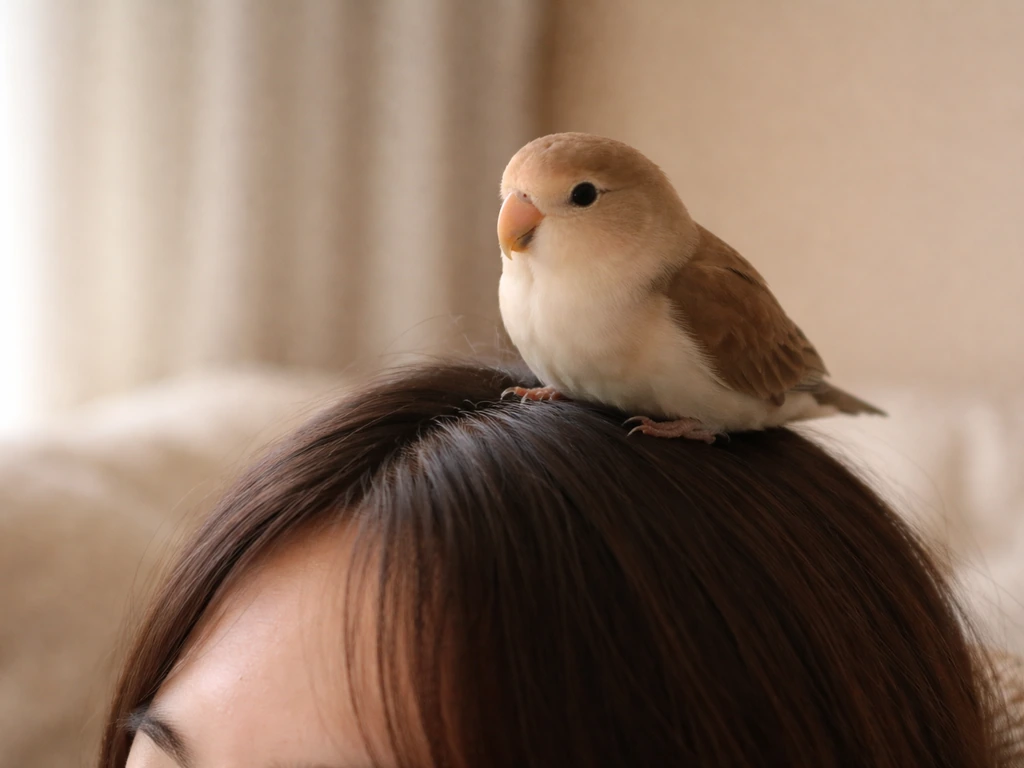
Is bird hair-hiding normal or a warning?
For the vast majority of pet birds, burrowing into a human's hair is a comfort and bonding behavior. It's the same instinct that drives flock birds to huddle together or to preen each other in the wild. When a bird chooses your hair, it's essentially saying you're safe and familiar. This is not a behavior you need to worry about on its own.
The behavior only becomes worth investigating when it changes in character. A bird that suddenly starts hiding in your hair far more than usual, or that seems to be doing it out of anxiety rather than contentment, is worth watching more carefully. The same goes for a bird that hides in your hair and also shows other signs like puffed feathers, reduced appetite, or labored breathing. Those combinations shift the picture from 'normal bonding' to 'possible stress or illness.'
What to look for in body language and timing
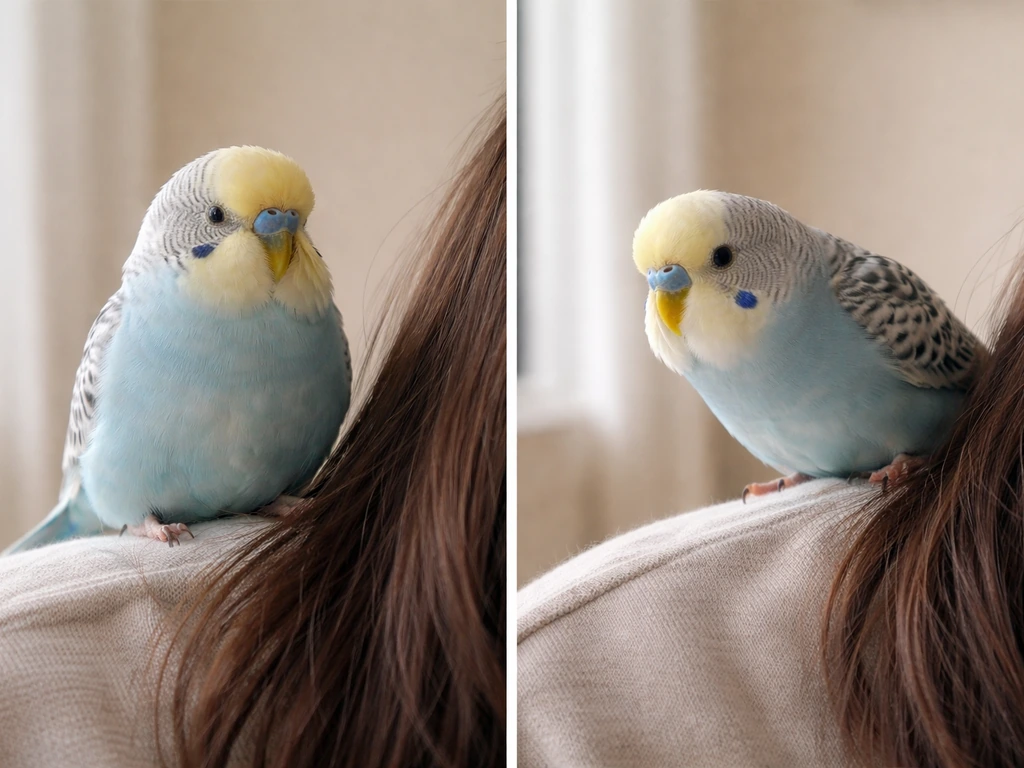
Reading your bird's body language while it's in or around your hair tells you most of what you need to know. A relaxed bird will have smooth, slightly held-in feathers, soft eyes, and may even grind its beak or make quiet chattering sounds. If your bird bites or claws at your nails, it can still be communication through comfort, curiosity, or stress grind its beak. It might groom itself or you. That's contentment. If you’re also seeing biting behavior, it can help to understand why your bird is biting itself and what those self-directed bites might mean.
A stressed or fearful bird looks very different. Watch for feathers flattened tightly against the body (rather than relaxed), wide or pinned eyes, a crouched or hunched posture, trembling, or panting. For example, the Avian Welfare Coalition’s guide lists fear behaviors such as cowering or trembling and lunging, along with hyperactivity and anxiety signs like hissing or panting and fear-related postures such as holding the tail or wings away from the body crouched or hunched posture, trembling, or panting. Lafeber's avian body language guidance emphasizes that no single cue tells the whole story: a crest raised high can mean excitement or alarm depending on what else the bird is doing. Always read the full picture.
Timing matters too. A bird that hides in your hair during a noisy household moment, right after a scare, or when a stranger is present is likely seeking shelter. A bird that does it casually during quiet evening time while grinding its beak is just comfortable. Noticing when it happens helps you sort the two apart quickly.
- Relaxed body language: smooth feathers, soft slow blinks, beak grinding, gentle vocalizations
- Alert but content: slightly raised crest, active exploration of your hair, preening
- Stressed or fearful: feathers pinned flat, crouching, trembling, panting, wide eyes, alarm calls
- Possibly unwell: fluffed feathers combined with sleepiness, sitting low, or labored breathing
Common triggers: comfort, bonding, warmth, and curiosity
Birds are flock animals hardwired to seek warmth and closeness. Your hair is warm, textured, and smells familiar. For a bonded bird, it's genuinely one of the coziest spots in the room. This is especially common in highly social species like cockatiels, lovebirds, budgies, and conures, which tend to form strong pair bonds and look for that closeness with their person.
Curiosity plays a role too. Hair has texture, movement, and structure to explore, much like bark or foliage in the wild. Some birds treat it like a foraging or nesting project, tugging at strands and weaving through it. It's enriching for them even if it's a little inconvenient for you. (This behavior often overlaps with why birds bite or preen human hair, which is its own related topic. If you are wondering about cage biting specifically, the same stress, fear, or hormone triggers can show up as aggressive or repetitive behavior why birds bite. If you notice biting along with preening or hair-hiding, it can help to understand why birds bite or preen human hair and what it means. )
Seasonal or hormonal cycles can also increase hair-hiding. During breeding season, birds may become more nest-seeking and will look for enclosed, sheltered spaces. If your bird is nesting-age and suddenly very interested in burrowing under hair, clothing, or into dark corners, that's likely hormonally driven rather than a problem.
Stress and fear causes (handling, environment, routine changes)
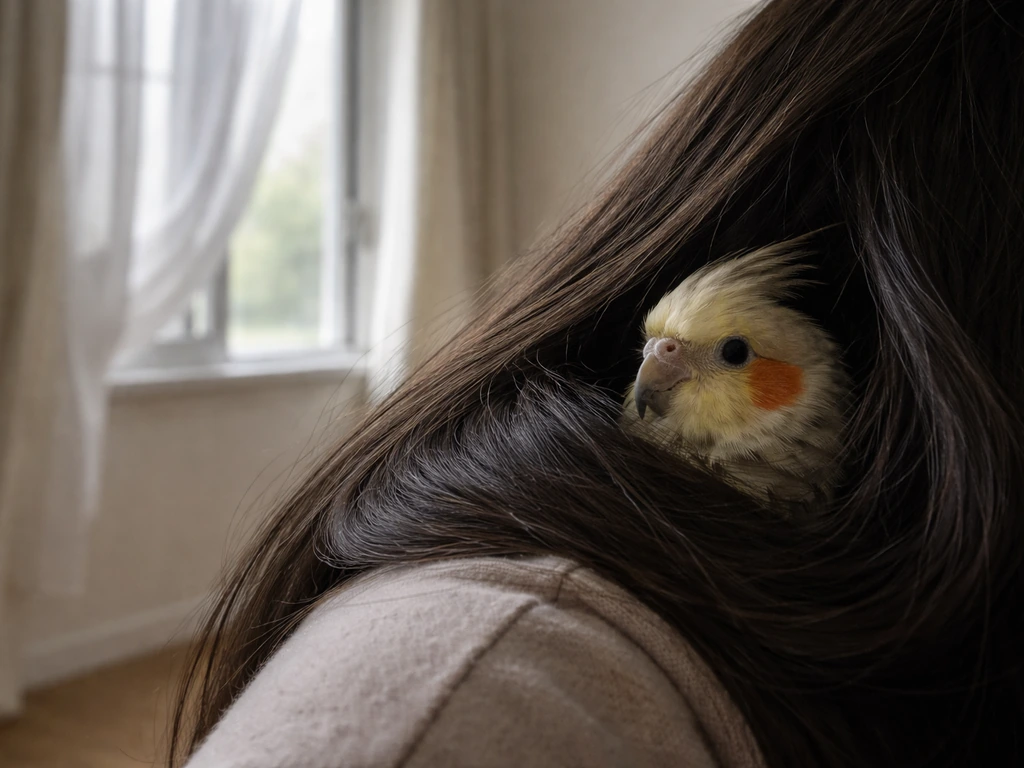
When a bird hides in your hair because it's frightened, the trigger is usually something that changed. Birds are highly routine-dependent, and even small disruptions can prompt avoidance or shelter-seeking behavior. Common culprits include new people in the home, a change in furniture layout, a different work schedule, or even something as simple as you getting a haircut or wearing a brightly colored shirt. One veterinary resource specifically notes that new facial hair or clothing changes can unsettle birds.
Environmental stressors are also worth checking. Drafts near the cage, inconsistent lighting, a cage that's too small, or sudden loud noises (construction, appliances, a new pet) can all push a bird toward seeking cover. RSPCA guidance recommends lighting as close to natural daylight as possible and positioning perches so birds can move toward or away from the light source on their own terms.
Handling itself can be a stressor if done in a way that feels threatening to the bird. Chasing, grabbing, or forcing a bird off a perch teaches it that hands are unpredictable. A bird that runs to your hair when you reach for it might actually be trying to get away from your hand, not toward your head. If your bird also bites your hair or scalp when it’s doing this, treat it as a sign of stress or discomfort rather than simple bonding a bird runs to your hair when you reach for it. This is worth distinguishing, because the fix is different: improve how you approach your bird rather than just redirecting it away from your hair.
Health red flags that come with hiding
This is the section to take seriously. Birds are instinctively wired to hide illness because showing weakness in the wild makes them a target. If your bird is biting his feet, that can point to irritation or pain and is worth having an avian vet assess, especially if it comes with scratching, swelling, or changes in behavior. That means by the time you notice something is off, it may have been going on for a while. If your bird is hiding in your hair AND showing any of the following signs, it's time to contact an avian vet rather than wait and see.
- Fluffed feathers that persist outside of normal sleep time
- Sitting low on the perch or spending time at the bottom of the cage
- Tail bobbing while breathing (not just after eating, but ongoing)
- Open-mouth breathing, wheezing, or any audible respiratory effort
- Reduced appetite or sudden disinterest in favorite foods or treats
- Unusual droppings: watery, discolored, or significantly reduced in quantity
- Lethargy or reduced responsiveness to your voice and presence
- Sudden change in vocalizations: unusually quiet or suddenly screaming
A fluffed bird that's also lethargic and hiding is one of the most common presentations in avian emergencies. These signs together mean the bird is no longer just seeking comfort. Weight loss is also significant, though harder to spot by eye. Regularly weighing your bird on a gram scale is one of the best health-monitoring habits you can build, because it catches decline before visible symptoms appear.
What to do today: safe redirection, enrichment, and setup
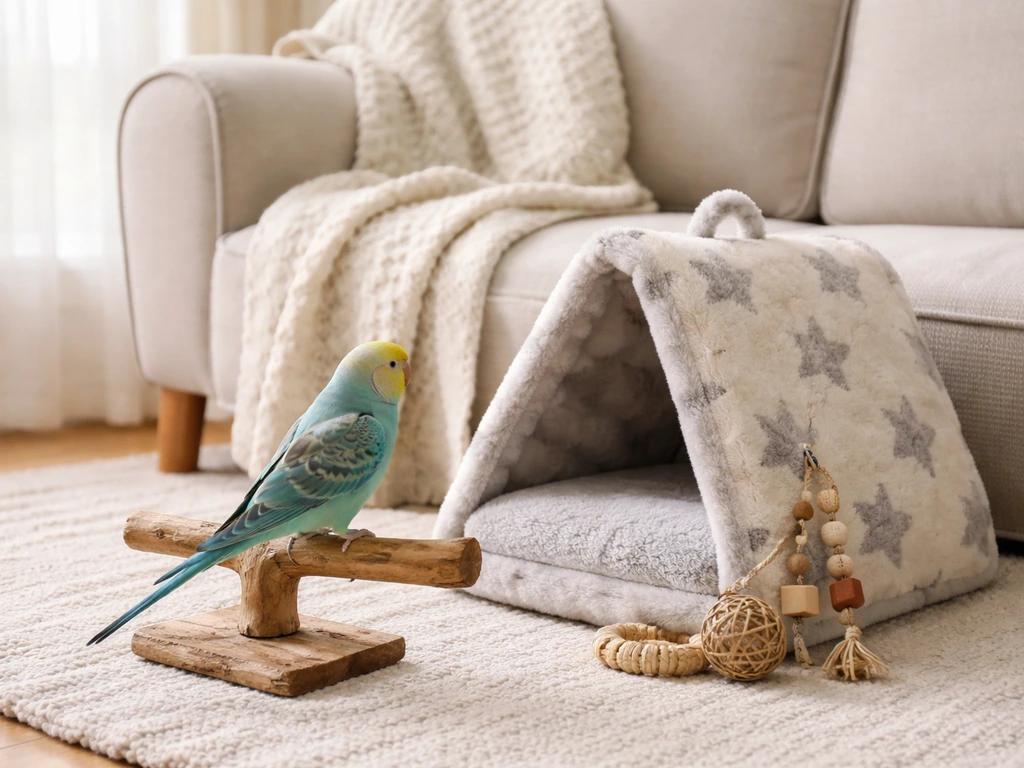
If the hair-hiding is normal comfort behavior but you'd prefer to redirect it, the approach is simple: give your bird an equally appealing alternative rather than saying no and pushing it away. RSPCA bird behaviour advice also cautions that discouraging certain behaviours can unintentionally increase stress, so it's important to focus on the underlying drivers rather than only stopping the behaviour saying no and pushing it away. Forcing or chasing the bird away from your hair will create stress, not solve the problem. Instead, offer a better option.
- Place a small, bird-safe tent or snuggle hut near your usual sitting spot so the bird has a cozy enclosed option that isn't your head.
- Use the 'step up' cue consistently to move your bird from your hair to your hand or a perch, rewarding with a treat. Make it a positive exchange rather than a removal.
- Offer a foraging toy or textured foot toy during lap time to give curious beaks something to explore other than your hair.
- Check the cage setup: make sure there are perches at different heights and at least a few enclosed or partially sheltered spots where the bird feels safe. A well-enriched cage reduces the urgency of seeking cover on you.
- Review recent changes in the household: new sounds, smells, people, or rearranged furniture. If something changed recently and the hiding increased, try addressing the change (gradual introductions, moving the cage back, adding white noise).
- During handling, always use a calm, slow approach and offer your hand or a perch first. Never chase or grab. If your bird regularly runs to your hair when your hand approaches, spend a few days doing approach-and-retreat exercises with treats to rebuild trust around hands.
For birds that hide in hair because they're overstimulated or stressed rather than just comfortable, reducing the length and intensity of handling sessions can help. Shorter, more predictable interactions are less overwhelming than long sessions that escalate unpredictably. Keep sessions positive and always end before the bird gets restless.
When to contact an avian vet (and what to document)
Contact an avian vet promptly if the hiding behavior comes with any of the health red flags listed above, particularly fluffed feathers plus lethargy, breathing changes, or appetite loss. Don't wait to see if it gets better. Birds mask illness well, and by the time symptoms are obvious, the situation can be urgent.
Even if you're not sure whether something is wrong, it's worth calling the clinic and describing what you're seeing. A good avian vet will help you decide whether to come in right away or monitor for another 24 hours. The RSPCA recommends consulting a specialist bird vet rather than relying on general practice for bird-specific concerns.
Before or during your vet visit, document as much as you can. Vets work better with specifics, and birds often look deceptively normal in a clinical setting because the stress of the visit can mask or exaggerate signs.
- When the behavior started and how it has changed over time
- Any changes in appetite, droppings, or water intake
- Recent household changes: new people, pets, furniture, diet, or schedule
- Current weight if you have a gram scale (weigh before the visit and record it)
- Short video clips of the behavior, breathing pattern, or any unusual posture
- Photos of droppings if they look abnormal
- A list of anything the bird has been exposed to: new foods, sprays, candles, cleaning products, or fumes
If your bird's hair-hiding is simply a bonding behavior and everything else looks normal, there is nothing urgent to act on. Enjoy it, redirect it gently if needed, and keep an eye on the full picture. The goal is knowing the difference between a bird that trusts you enough to hide in your hair and a bird that's hiding because something is wrong. Most of the time it's the first one. If your bird is biting his wings instead of just using your hair for comfort, that can be a separate behavior linked to stress, irritation, or feather-related issues, so it's worth looking at the specific causes bird biting his wings.
FAQ
How can I tell if hair-hiding is normal bonding or stress?
If your bird is relaxed in your hair (smooth feathers, quiet eyes, normal appetite), it is usually comfort. If it looks fearful, fluffed, breathes oddly, refuses food, or seems lethargic, treat it as a health concern and contact an avian vet. The quickest decision aid is to check for changes from its usual routine, not just the hair-hiding itself.
What is the safest way to redirect my bird if it gets stuck in my hair?
Stop trying to “pull” the bird out. Instead, wait for a calm moment, then offer a more desirable alternative (a favorite perch, a small towel nest in a safe spot, or a treat). Forcing removal can turn hair-hiding into a fear response and may increase biting next time.
Can hair-hiding be hormonal or nesting behavior?
Yes. During active nesting or hormone-driven periods, birds may seek enclosed, dark, sheltered spaces. If the behavior ramps up with other nesting signals (more chewing on household items, intensified preening, guarding you, or irritability), expect it to be partly hormonal and manage the environment and handling accordingly rather than treating it as random comfort.
Is there any danger my bird could get tangled or hurt in my hair?
Hair can be a problem if it includes loose strands, ties, or elastic that the bird can tug on, or if your bird repeatedly clamps down while trying to explore. Tightly secured hair, avoiding hair ties and dangling accessories, and trimming very long, loose strands reduces accidental tangles and the risk of skin irritation.
When should I stop monitoring at home and call an avian vet?
If you start seeing changes in the frequency of the behavior, plus body-language red flags (puffed feathers, pinned eyes, trembling, crouching) or health changes (reduced appetite, labored breathing), that is a “call the vet” situation. If none of those are present and it is consistent with your bird’s usual daily pattern, monitoring is often reasonable.
My bird hides in my hair when I reach for it, does that mean it likes me?
Some birds hide in hair to reduce stimulation, especially around handling or loud household activity. If your bird only does it when you approach, reach toward, or initiate contact, the likely issue is discomfort with the way the interaction happens. Adjust your approach, shorten sessions, and let the bird choose whether to engage.
Why does my bird look normal sometimes, then suddenly worse?
Yes, and it matters. Avian illness can look subtle early, birds also mask weakness, and stress from fear or a vet visit can temporarily shift behavior. If hair-hiding comes with any red flags, do not wait for “proof” like more dramatic symptoms. Document timing, what happened right before it started, and any changes in breathing or eating.
How do I use weighing to decide whether this is medical or just comfort?
Weighing helps because weight loss is often an early sign even when appetite seems “mostly okay.” Use the same scale and time of day, weigh consistently (for example weekly at minimum, more often if you recently noticed changes), and track grams over time rather than single-day fluctuations.
What if my bird also bites or plucks feathers while it’s hiding in my hair?
Many birds are also attracted to grooming routines. If hair-hiding overlaps with self-directed biting, feather disturbance, or irritated skin, it may indicate stress, irritation, or feather-related discomfort rather than only bonding. Consider checking for changes to droppings, skin condition, and feather quality, and ask your avian vet if symptoms persist.
Could my new shampoo, perfume, or haircut be causing this behavior?
If you have recently changed shampoo, hair products, perfume, or even switched to a brighter or differently colored shirt, your bird may react to scent or appearance. Also watch for new people, furniture changes, or different lighting near the cage, these can all turn hair-hiding into “shelter-seeking.”
Next Articles
Why Does My Bird Bite His Feet? Causes and Fixes
Learn why your bird bites feet and what to do for itch, injury, bumblefoot, or behavioral biting.
Why Does My Bird Bite My Nails? Causes and What to Do
Learn why your bird bites nails and what to do now, from stress and triggers to foot health and vet red flags.
Why Is My Bird Biting Itself? Causes and What to Do
Learn why your bird bites its feathers or itself, how to spot stress or medical causes, and what to do today.