Birds bite fingernails because nails are interesting. To your bird, your nails look and feel a lot like another beak or claw, and that makes them worth investigating. It's usually curiosity or social grooming instinct, not aggression. That said, if your bird is biting its own nails rather than yours, the reasons shift toward discomfort, overgrowth, or stress, and those cases deserve a closer look.
Why Does My Bird Bite My Nails? Causes and What to Do

Marcus Chen
23 May 2026
What nail biting usually means for pet birds
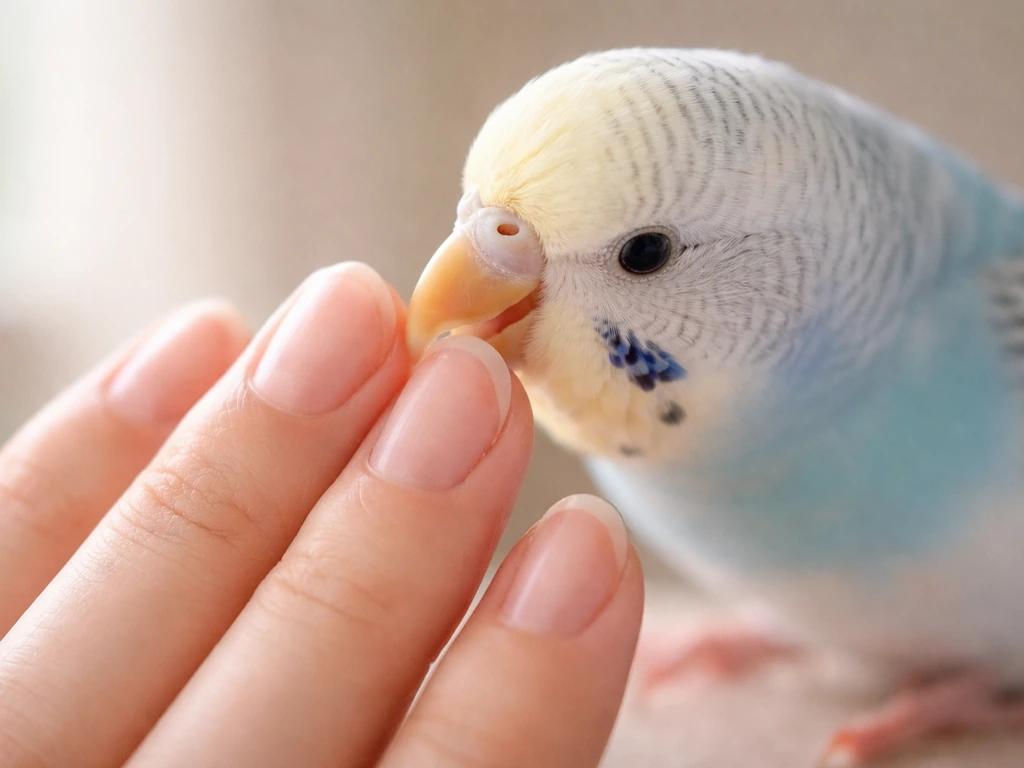
A bird's beak is its main tool for everything: climbing, playing, touching, tasting, grooming, and communicating. VCA notes that the beak functions almost like a third foot, which is why birds routinely mouth and peck at objects (and people) as a way of gathering information. When your bird zeroes in on your fingernails specifically, it's often because nails have a texture and hardness that resembles something familiar, like bark, a perch, or another bird's talons.
This behavior sits in a broad category of normal exploratory and social behaviors. It's worth separating from more urgent biting problems, where fear or pain drives the action. Nail-targeting is often gentle and repetitive, more of a nibble than a bite, and many birds do it during calm lap time or when they're in a good mood. In some cases, gentle, soft biting can be a communication or curiosity signal rather than aggression.
Your bird biting your nails vs. biting its own nails: key differences
These two behaviors sound similar but usually come from very different places, and it's important to keep them separate in your head.
| Behavior | Most likely cause | Urgency |
|---|---|---|
| Bird biting your fingernails | Curiosity, social grooming, attention-seeking, exploratory mouthing | Low — usually normal, but address if it escalates or hurts |
| Bird biting its own nails lightly | Self-grooming, mild overgrowth, normal preening routine | Low — watch for frequency and any distress signs |
| Bird chewing its own nails repeatedly or frantically | Nail overgrowth, foot irritation, injury, pain, stress, or skin condition | Medium to high — warrants closer inspection and possibly a vet visit |
| Bird biting nails alongside limping or swelling | Potential infection, injury, or bumblefoot | High — contact an avian vet soon |
If your bird bites your nails in a relaxed, curious way, that's a very different situation from a bird frantically gnawing at its own foot. If your bird is biting the cage, it can also point to stress, boredom, or a need for safer outlets for its chewing and foraging instincts, so it helps to look at the triggers and daily care routine nails. The context and body language tell you a lot more than the action alone.
Why birds do this: the most common reasons
Curiosity and exploration
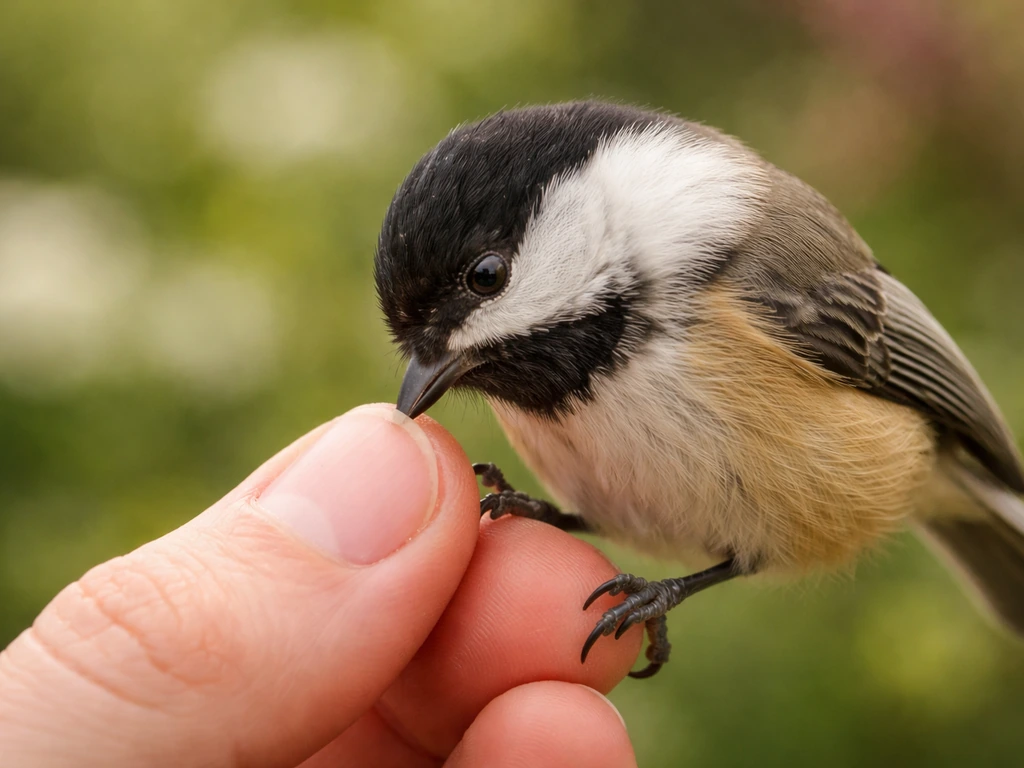
This is the most common reason a bird nibbles your nails. Birds investigate their world with their beaks, and your nails are an odd, hard surface that probably looks pretty interesting up close. It's the same instinct that makes them chew pencils, tap at jewelry, or shred paper. There's no bad intention here, just a bird doing what birds do.
Attention-seeking
Birds are smart enough to notice what gets a reaction. If nibbling your nails made you laugh, pull your hand away, or talk to your bird the first few times, your bird may have filed that away as a reliable way to get your attention. This is one of the more manageable causes because you can change it by changing your response.
Boredom
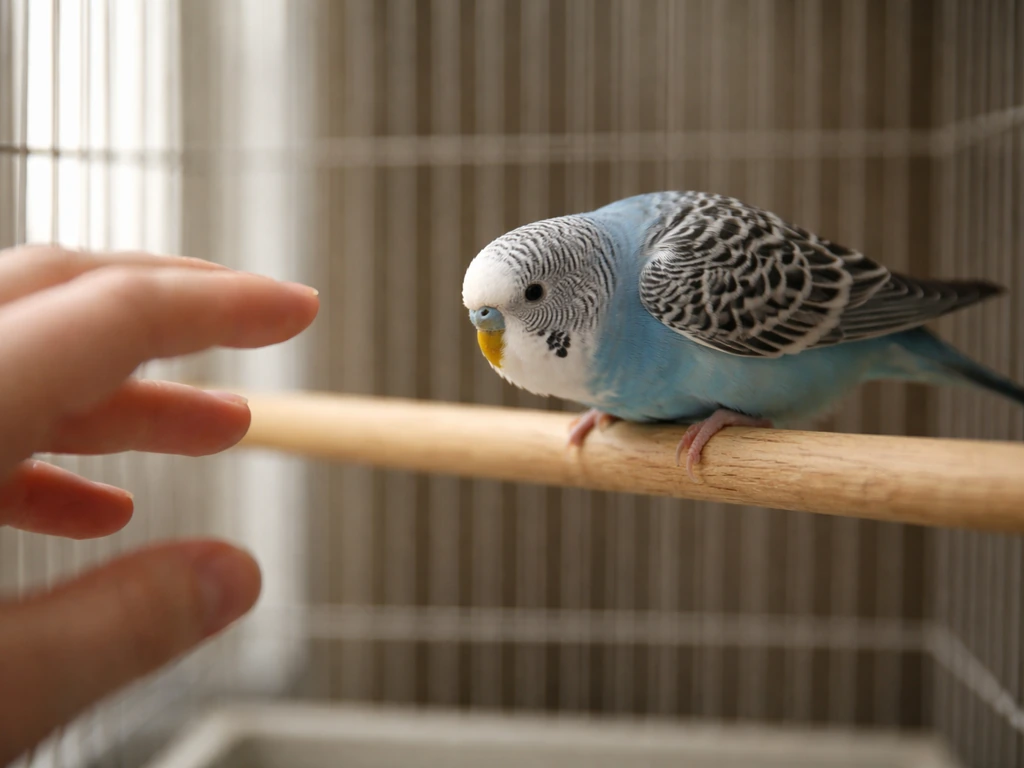
Merck's veterinary guidance on bird behavior is clear: boredom is a major driver of unwanted behaviors in pet birds. A bird without enough mental stimulation will find its own entertainment, and that can include fixating on your fingers, nails, jewelry, or hair. Boredom can also explain why your bird hides in your hair, because it is looking for stimulation and a comfortable place to settle. If the nail biting only happens during long stretches of inactivity or when the bird hasn't had much interaction, boredom is a strong candidate.
Stress or fear
PetMD points out that many birds learn to associate human hands with fear, and biting (including nail-targeting) can be a stress response rather than playfulness. Vetstreet also notes that fear is one of the most frequently misread causes of biting in pet birds. If nail biting happens when you approach quickly, during loud or chaotic moments, or when the bird has been recently startled, stress may be the root cause. Watch the body language alongside the behavior.
Overgrown or irritated nails (when the bird bites its own)
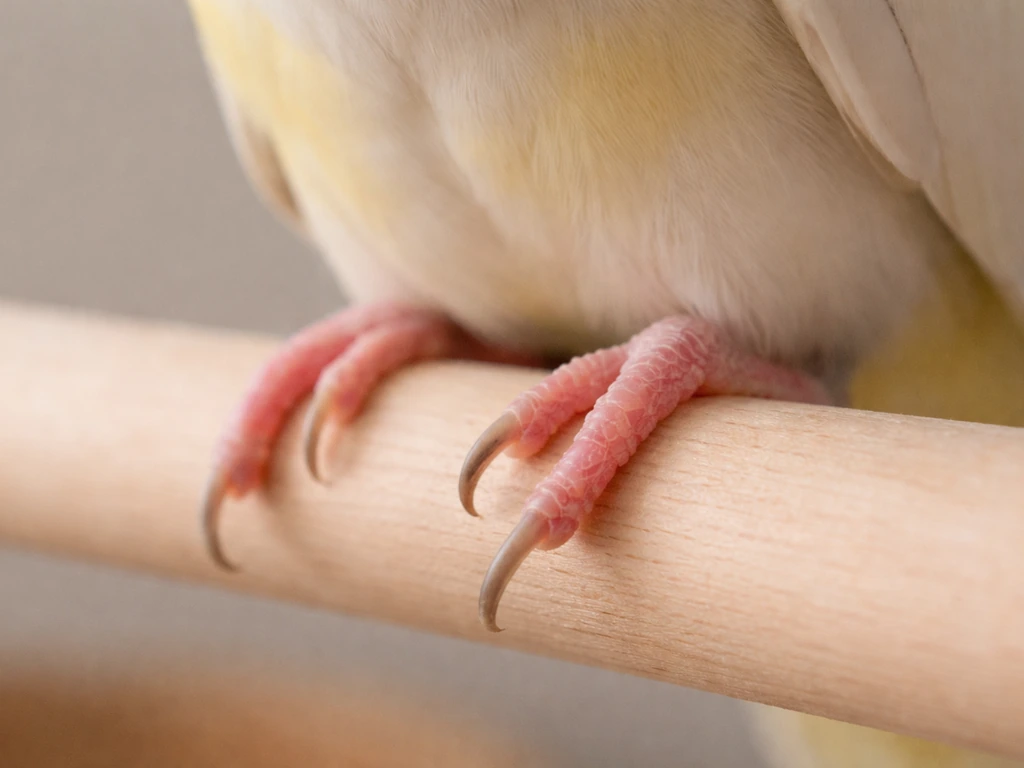
If your bird is chewing its own nails, the most obvious physical cause is overgrowth. Nails that are too long catch on things, feel uncomfortable, and can curl in ways that irritate the foot. A bird that can feel something wrong with its nail will try to fix it the only way it knows how. Perch type matters here too: birds on smooth dowel perches don't wear their nails naturally the way birds on varied, textured perches do.
A quick checklist to run through today
Before you do anything else, spend 10 to 15 minutes watching and assessing. You don't need to be a vet to gather useful information. Here's what to look for:
- When does the biting happen? Note the time of day, what you were doing, whether it followed handling, cage cleaning, or a household change.
- Is the biting your nails or its own? Confirm which behavior you're actually dealing with before troubleshooting.
- What does the bird's body language look like before and during? Relaxed feathers and playful posture suggest curiosity. Puffed up, pinned eyes, or tense posture suggests stress or fear.
- Is your bird eating, drinking, and producing normal droppings? Changes in appetite or droppings alongside nail biting can signal a health issue.
- Is your bird sleeping normally and at normal times? Excessive sleep or lethargy alongside nail biting is a red flag.
- Look at the feet and nails directly. Are the nails overgrown, discolored, cracked, or bleeding? Is there any swelling around the toes or foot pads?
- How varied is your bird's daily life? Count the toys, foraging opportunities, and out-of-cage time available right now.
This checklist helps you separate a healthy, curious bird from one that might need more than a behavioral fix. The RSPCA's guidance is worth keeping in mind here: it's easy to jump to 'boredom' or 'attention-seeking' as an explanation, but a physical problem can look exactly the same from the outside. If anything in the checklist raises a flag, treat it as a health concern first.
Environment and care fixes to make right now
Perch variety and foot comfort
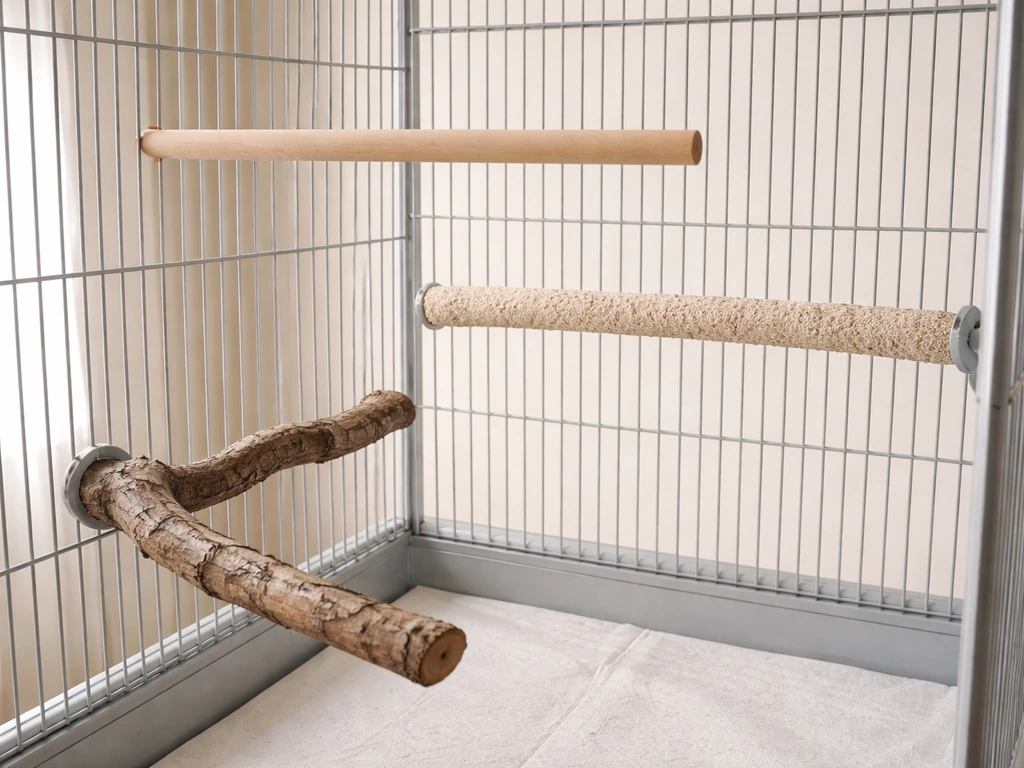
If your bird is biting its own nails, the single best environmental change you can make is upgrading the perches. Smooth, same-diameter dowel perches keep the foot locked in one position all day and don't wear nails naturally. Swap in perches of varied diameter, texture, and material: natural wood branches, rope perches, and cement or mineral perches all encourage different foot positions and gentle, natural nail wear. This alone can reduce nail-related discomfort significantly.
Nail length and grooming
Check nail length by having your bird stand on your hand. If the nails curve noticeably or catch on fabric, they probably need a trim. This is something an avian vet or experienced bird groomer can do safely. Home trimming is possible with proper bird nail clippers, but knowing where the quick (blood supply) is takes practice, and cutting too short causes pain and bleeding. If you're not confident, don't guess.
Diet
Poor nutrition affects nail and feather quality. A bird on an all-seed diet is likely missing vitamins and minerals that support healthy skin, nails, and beaks. A pellet-based diet supplemented with fresh vegetables is the standard recommendation from avian vets. If your bird's diet is mostly seeds, that's worth changing gradually regardless of the nail-biting issue.
Enrichment and mental stimulation
Merck specifically calls out boredom as a major cause of unwanted bird behaviors. If your bird doesn't have foraging toys, destructible items to chew, or regular out-of-cage interaction, address that today. Rotate toys every few days so the cage feels fresh, hide food in foraging puzzles, and make sure your bird gets daily structured interaction rather than just passive time in the room.
How to redirect or stop the behavior safely
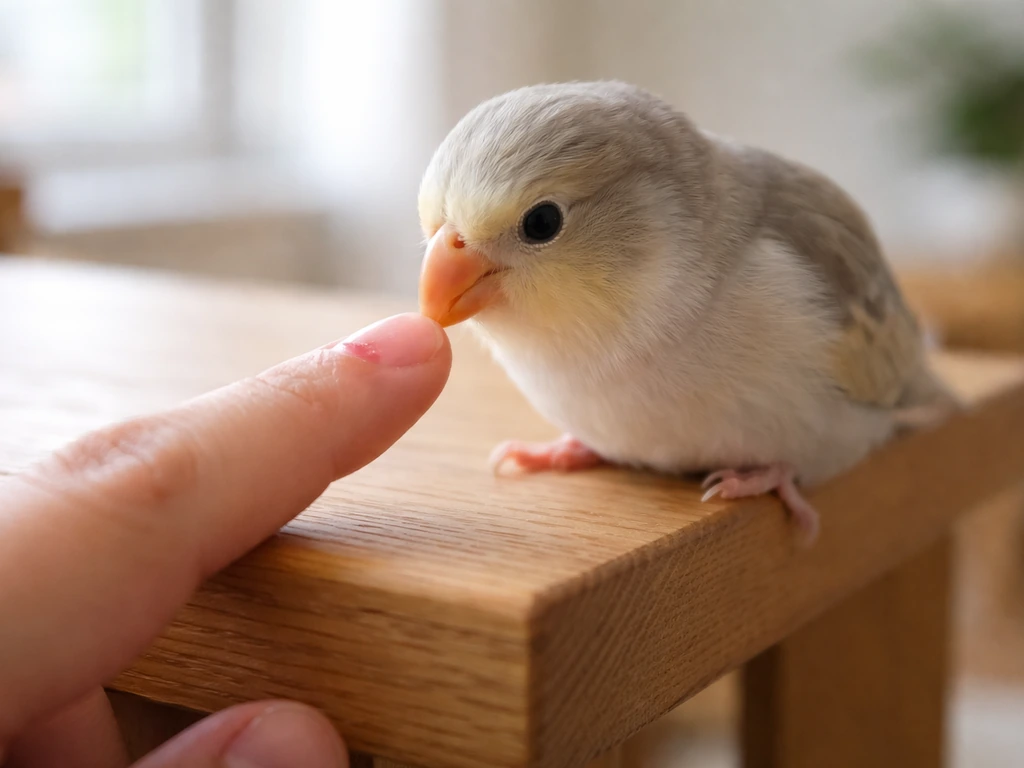
If your bird bites your nails and you want it to stop, the most important rule is: don't reinforce it. Pulling your hand back dramatically, laughing, or reacting with a lot of energy can accidentally reward the behavior. The RSPCA is direct about this: doing nothing and waiting rarely works either. You need an active, consistent response.
- Stay calm when it happens. No yelping, no big hand movements. A flat, neutral reaction removes the entertainment value.
- Gently remove your hand from reach without drama. Just move it out of range.
- Immediately redirect to something appropriate: a toy, a foraging item, or a training session. Give the bird something better to do with its beak.
- Reward the alternative behavior. If your bird starts chewing its toy instead of your nails, that's the moment to say 'good bird' and offer a small treat or positive attention.
- Be consistent. If four out of five times you let the nail nibbling happen because it feels harmless, the behavior stays reinforced. Consistency is what teaches the bird.
If stress or fear is driving the biting, redirection alone won't fix it. You need to also work on building trust through calm, predictable handling. Approach slowly, let the bird come to you when possible, and avoid forcing interactions. PetMD notes that many birds develop hand-fear from early negative experiences, and rebuilding that trust takes time and patience.
It's worth noting that nail biting is part of a broader family of biting and self-directed behaviors. If your bird is also biting the cage bars, biting its own feet or legs, or biting its wings, those behaviors share some of the same roots (boredom, stress, discomfort) and can usually be assessed together. If your bird is biting his own leg, it can point to discomfort or irritation and it is worth checking the underlying cause biting its own feet or legs. If your bird is also biting the cage bars, you may be seeing a related stress or boredom behavior that deserves the same kind of assessment.
When nail biting is a warning sign, not just a quirk
Most nail biting is benign, but some of it isn't. Here are the signs that mean you should stop troubleshooting at home and call an avian vet instead:
- Bleeding from the nail or toe, whether from the bird's own biting or an injury
- Swelling, redness, or a crusty discharge around any toe or the foot pad
- Limping, favoring one foot, or refusing to perch on one leg
- Frantic, repeated chewing at its own nails or feet that your bird can't seem to stop
- Nail discoloration (dark, yellow, or black where it shouldn't be)
- Any combination of nail biting plus other symptoms: lethargy, reduced appetite, abnormal droppings, or ruffled feathers
- Nails that look cracked, misshapen, or that appear to be growing at an unusual angle
The RSPCA's guidance on bird behavior emphasizes not oversimplifying unusual behaviors. The RSPCA knowledgebase also cautions that it is simplistic or inaccurate to assume boredom or fear/anxiety is the cause without a thorough investigation by an avian vet to rule out physical problems first [not oversimplifying unusual behaviors](https://kb. rspca. org.
au/knowledge-base/why-do-birds-chew-and-pull-out-their-feathers). What looks like stress or boredom can actually be a physical problem that needs medical attention. Conditions like bumblefoot (a foot pad infection common in birds on hard, smooth perches) or nail-bed injuries can cause exactly the kind of repeated foot-focused behavior that owners sometimes write off as a habit.
If you are also seeing wing-biting, it can point to irritation or stress, so it helps to look for the underlying cause behavior that owners sometimes write off as a habit. If any of the signs above are present, an avian vet visit is the right next step, not more behavioral troubleshooting.
For the straightforward cases where your bird is just nibbling your nails out of curiosity or mild attention-seeking, you now have everything you need to redirect it safely. Observe the triggers, address the environment, stay consistent with your response, and keep an eye on overall health. Most birds respond well once their needs are met and the behavior stops getting rewarded.
FAQ
How can I tell the difference between gentle nail nibbling and a painful beak issue?
Watch intensity and restlessness. Curious nibbling is usually slow, repeatable, and happens when your bird is relaxed, while pain signals include frantic gnawing, pulling the foot away, flinching when the area is touched, droppings changes from stress, or continued chewing that interrupts normal preening and sleep.
Should I punish my bird for biting my nails to teach it to stop?
No. Punishment and high-energy reactions often make fear and biting more likely. Instead, use a consistent redirect (offer a safer chewing target) and manage your response so the behavior does not reliably produce contact, talking, or dramatic hand movement.
What’s the fastest way to stop nail biting during nail care or when I’m holding my hand still?
Prepare in advance: keep a perch or handheld play stand close, use a chew item in the same hand (or on the nearest perch) before your bird targets your fingers, and cover or remove your hands from reach if the bird fixes on them. Consistency matters more than one-time interventions.
If my bird only bites my nails when I’m wearing rings or nail polish, what does that usually mean?
It often points to texture and smell, not your nails themselves. Rings and polish add shine, temperature differences, and scents the bird finds interesting. Try switching to plain, unpolished nails for a week and temporarily remove rings to see if the trigger disappears.
Could my bird be trying to groom me, and if so, how do I respond?
Yes, some birds mouth hands as social grooming or bonding. If the behavior is gentle, offer acceptance without reinforcement by redirecting to a toy or a safe part of your clothing, and keep your reactions calm so your bird learns what gets attention instead of your fingers.
What if my bird bites nails even when it seems bored, how do I rule out stress or fear?
Compare patterns to your approach. If it happens more when you move quickly, lean over, or your house is loud or chaotic, stress is more likely. If it increases after changes (new cage, new person, illness in the home), treat it as a trust and routine issue, not just boredom.
How long should I try environmental changes before concluding it’s something medical?
If your bird’s nail biting is due to length, perches, or irritation, you should see improvement within a couple of weeks after perch and diet changes. If behavior is escalating, your bird’s feet look swollen, or you notice discharge, bleeding, or visible nail damage, stop waiting and contact an avian vet sooner.
Is it safe to trim my bird’s nails at home?
It can be safe only if you know where the quick is and you have the right tools and restraint plan. If you’re unsure, use an avian vet or experienced groomer, because cutting too short causes bleeding and pain that can worsen foot-related biting.
What perch setup works best if my bird keeps fixing on nails?
Use multiple perch textures and diameters so the feet move throughout the day. Include natural branch perches and rope or varied wood, and avoid having only smooth, identical dowel perches. Also ensure the perch is positioned so the bird can comfortably step and shift without strain.
Can diet changes alone stop nail biting?
Diet helps, especially when nail quality is poor, but it usually is not the only factor. Many birds need both better nutrition and more chewing and foraging opportunities. Transition gradually to a pellet-based diet with fresh vegetables to avoid digestive upset.
My bird also bites its feet, is that related to the nail biting at all?
Often yes, the shared link is discomfort or learned coping behavior. If the bird targets its feet repeatedly, check for nail overgrowth, pad irritation, rough surfaces, and signs of bumblefoot or injury, and do not rely solely on behavior changes.
When should I stop troubleshooting and book an avian vet urgently?
If you see bleeding, limping, swelling, a foul odor from the foot, curled nails that catch or break, repeated frantic gnawing, or any new behavior paired with wing biting or abnormal posture, contact an avian vet promptly. Also seek help if the behavior continues despite perch, diet, and enrichment improvements.
Next Articles
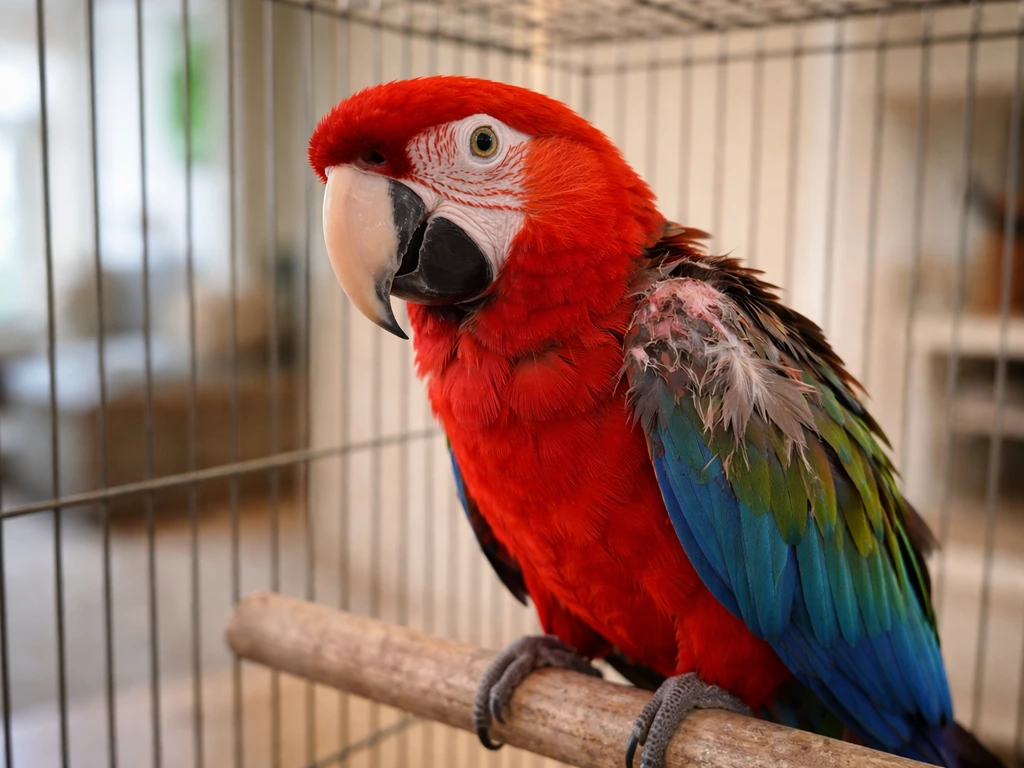
Why Is My Bird Biting Itself? Causes and What to Do
Learn why your bird bites its feathers or itself, how to spot stress or medical causes, and what to do today.
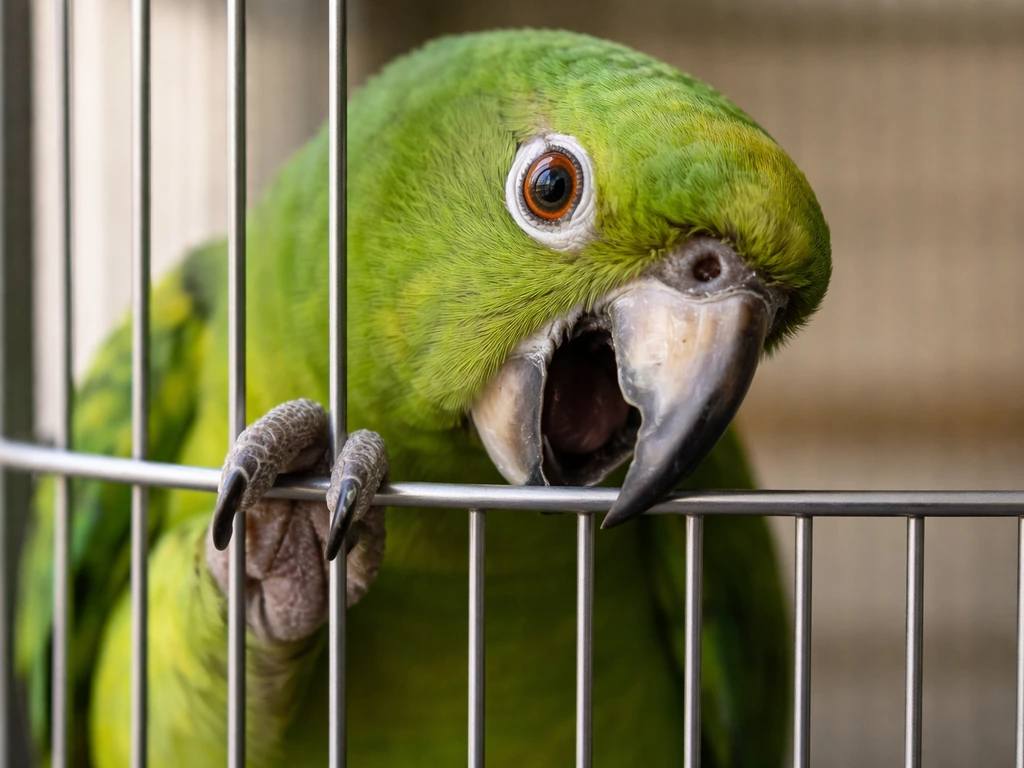
Why Is My Bird Biting the Cage? Causes and What to Do
Find why your bird bites cage bars and get today steps to reduce stress, boredom, hormones, and check health red flags.
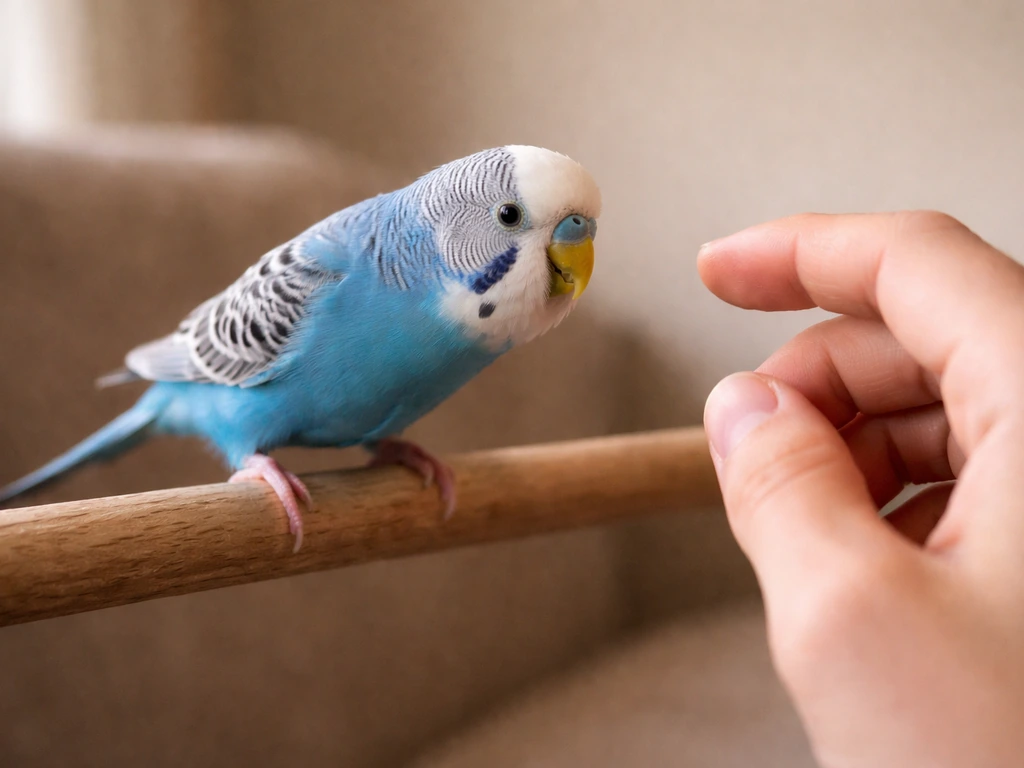
Why Does My Bird Bite Me Softly? Causes and Fixes
Learn why your bird softly bites, how to spot body-language causes, and do step-by-step fixes for safer handling.