
If your bird is biting itself, the most likely explanation is one of two things: it's either normal preening that looks more intense than you expect, or it's true feather-destructive behavior driven by stress, boredom, a medical issue, or some combination of all three. The tricky part is that both can look similar at a glance, and one can slide into the other if left unchecked.
Why Is My Bird Biting Itself? Causes and What to Do

Marcus Chen
22 May 2026
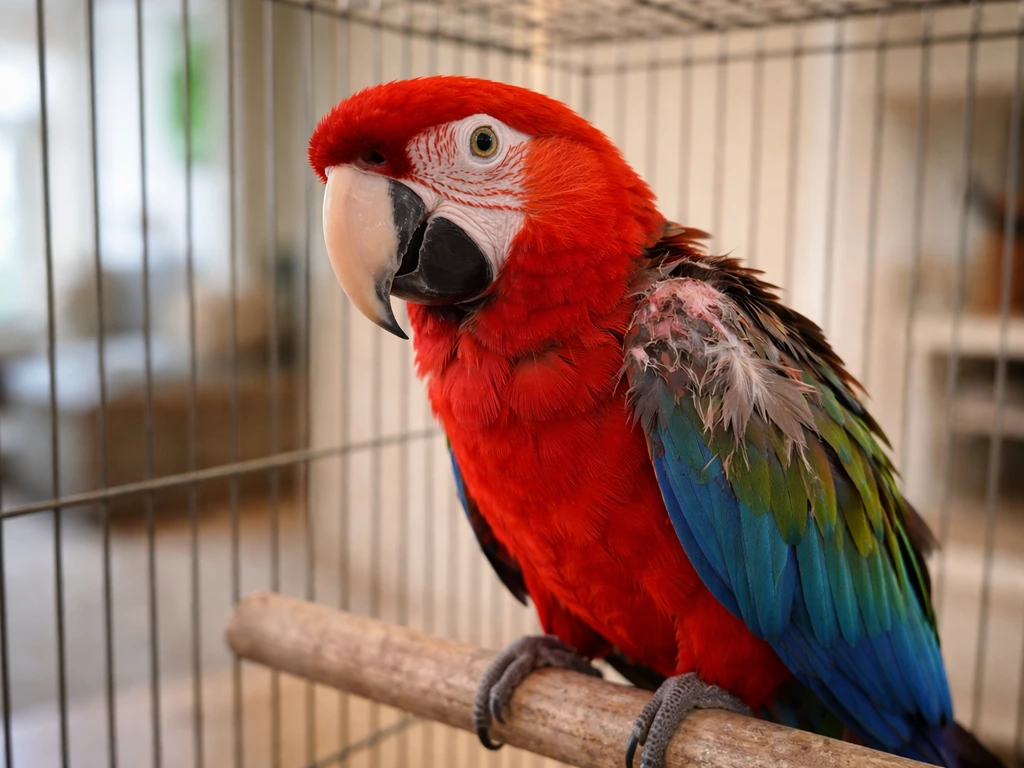
The good news is that with a little observation you can usually narrow down the cause quickly and take real steps today. If you are wondering why is my bird biting the cage, start by checking whether the behavior is actually feather-directed or a separate cage-related stress signal. If you are trying to figure out why your bird bites his wings, start by deciding whether this looks like normal preening or true feather-destructive behavior.
Normal preening vs. true feather biting
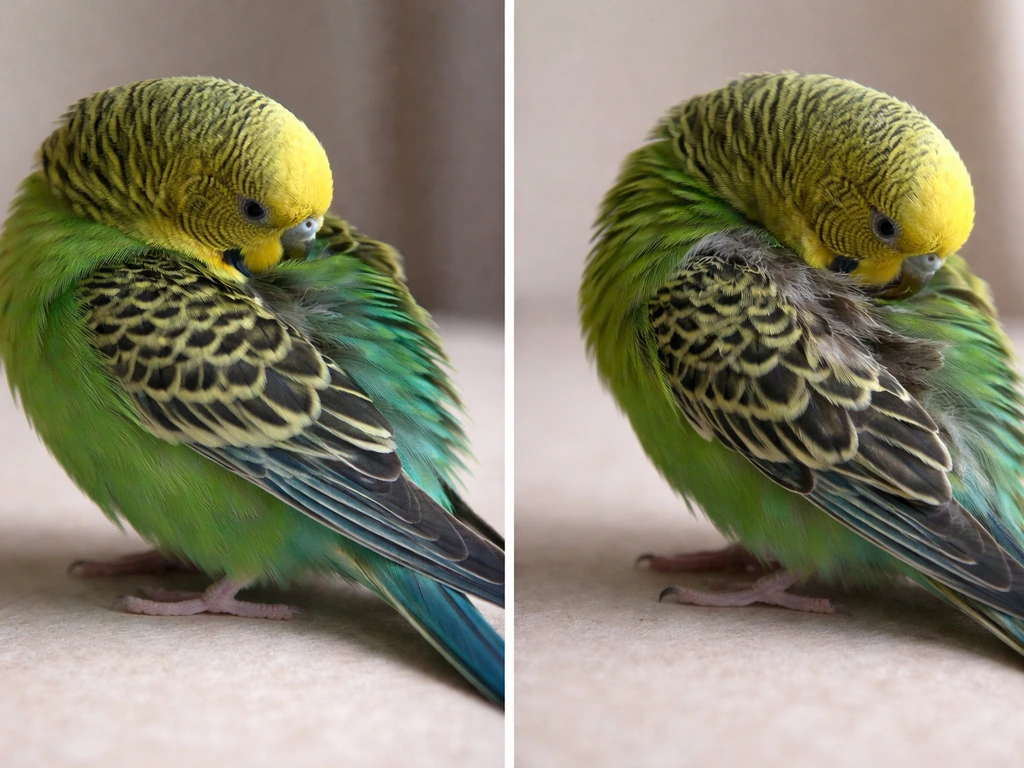
Preening is completely normal and healthy. Birds use their beak to zip feathers back together, remove the keratin sheaths from new pin feathers, spread preen oil from the uropygial gland, and keep everything aligned. It can look vigorous, and it can involve nibbling, tugging, and even some soft vocalizations. That's fine.
True feather biting or feather-destructive behavior is different. The bird is actually damaging feathers, pulling them out, shredding the barbs, or chewing them down to frayed stubs. The clearest sign is physical evidence: broken feathers, bare patches, or feather debris at the bottom of the cage. Another tell is location. Birds can only reach areas their beak can access, so they can't damage the feathers on the top of their own head. If you see a bare patch the bird can physically reach, that's a red flag. Normal preening doesn't leave bald spots.
The spectrum also matters. Over-preening is the mild end, where the bird grooms more than usual but feathers stay mostly intact. Full feather plucking or self-mutilation where the bird reaches the skin and draws blood is the severe end, and that's an emergency. Most birds showing new self-biting behavior fall somewhere in the middle, which gives you time to investigate without panic, but not time to ignore it.
Common behavioral causes: stress, boredom, and frustration
Boredom is one of the most frequently cited reasons a parrot starts plucking or biting its feathers. Birds in the wild spend most of their waking hours foraging, flying, and socializing. A bird sitting in a cage with nothing to do channels that energy inward. One avian veterinary program has described boredom as the most common reason parrots pluck when they're not being stimulated by their environment. If your bird's cage is sparse, the daily routine is predictable and unstimulating, and handling is minimal, this is your first suspect.
Stress can cut the other way, too. Both under-stimulation and over-stimulation can drive feather-destructive behavior. A bird that's constantly exposed to loud noise, unpredictable household activity, other pets, or an aggressive cagemate may start biting itself as a coping response. Territorial behavior, especially in breeding season, is another trigger. Birds going through hormonal cycles can become sexually frustrated and redirect that frustration into self-biting.
Compulsive behavior is worth mentioning too. Some birds, especially those that had inadequate social interaction early in life or were never taught normal preening by their parents, develop repetitive self-grooming patterns that tip over into feather destruction. Once it becomes a habit, it can continue even after the original trigger is gone, which is why catching it early matters.
Medical causes you need to rule out
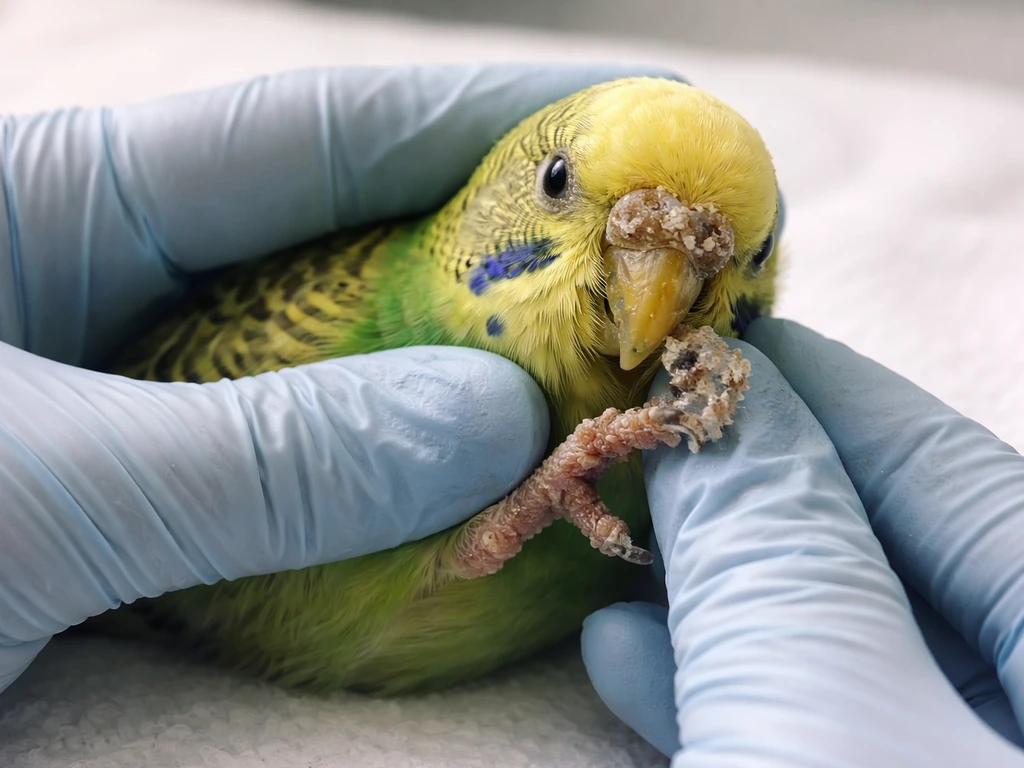
Never assume it's purely behavioral until you've considered medical causes. Skin inflammation, infections, parasites, allergies, malnutrition, toxin exposure, and systemic illness can all make a bird bite or scratch at itself. A quick way to tell whether this is more likely a behavior issue or a health problem is to understand the medical causes and symptoms behind nail biting in birds. The bird isn't being neurotic; it's responding to real physical discomfort.
- Mites and external parasites: Knemidokoptes mites cause scaly face and leg disease and can contribute to feather loss and skin irritation. Red mites feed at night, which means you may not see them during the day even if they're present. Parasite diagnosis usually requires a skin scraping examined under a microscope.
- Skin infections and inflammation: Bacterial or fungal skin infections can cause intense itching that drives self-biting. You may notice redness, flaking, or unusual skin texture around affected areas.
- Allergies and irritants: Reactions to new foods, cleaning products, air fresheners, or even certain cage materials can trigger skin irritation. Birds are sensitive to airborne compounds.
- Feather cysts and abnormal feather growth: Damaged or ingrown feathers can be uncomfortable, and a bird will try to remove them by biting.
- Nutritional deficiencies: A poor diet, especially one heavy in seeds and low in vitamins, can cause skin and feather problems that provoke self-biting.
- Systemic illness: Cancer, liver disease, and other internal conditions can manifest as feather-destructive behavior. This is less common but important not to dismiss.
A practical note on parasites: the RSPCA points out that external parasites are often overestimated as a cause of feather-damaging behavior and can be genuinely difficult to find. Don't assume your bird is parasite-free just because you can't see anything crawling around during the day.
Environmental factors that trigger or prevent feather biting
The cage setup and daily environment play a bigger role than most owners realize. Here are the areas that most commonly contribute to self-biting and what you can do about each.
Cage size and perch variety
A cage that's too small limits movement and increases frustration. Perches that are all the same diameter can cause foot discomfort over time, which may contribute to foot and leg biting. Offer perches of different textures and diameters so the bird's feet and grip muscles get varied use.
Enrichment and foraging opportunities
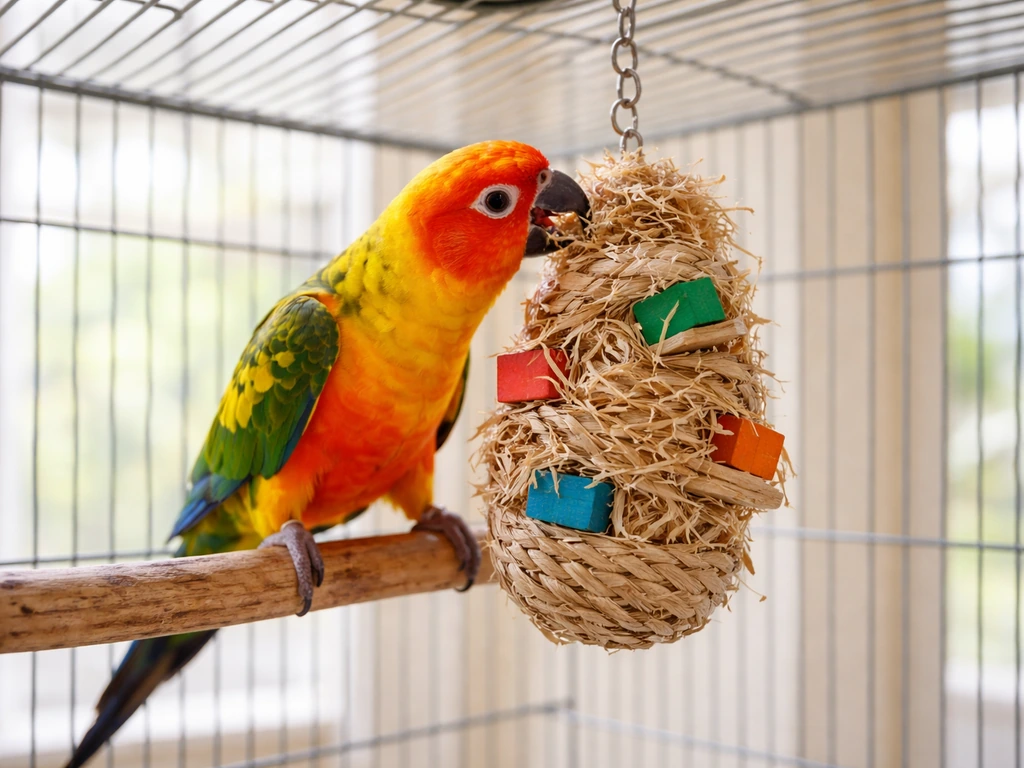
If the cage offers nothing to destroy, manipulate, or forage through, the bird will find something else to occupy its beak, and that something might be its own feathers. Rotate toys regularly. Use foraging toys that hide food and require effort to access. Shreddable materials like soft wood, palm fronds, and paper give birds a healthy outlet for their beak.
Sleep schedule and light exposure
Most birds need about 10 to 12 hours of uninterrupted dark sleep each night. Too much light, especially irregular or extended artificial light, can disrupt hormones and contribute to behavioral problems including feather biting. If your bird's cage is in a room that stays lit late into the evening, cover it at a consistent time each night. A predictable light-dark cycle also reduces hormonal stress.
Bathing and humidity
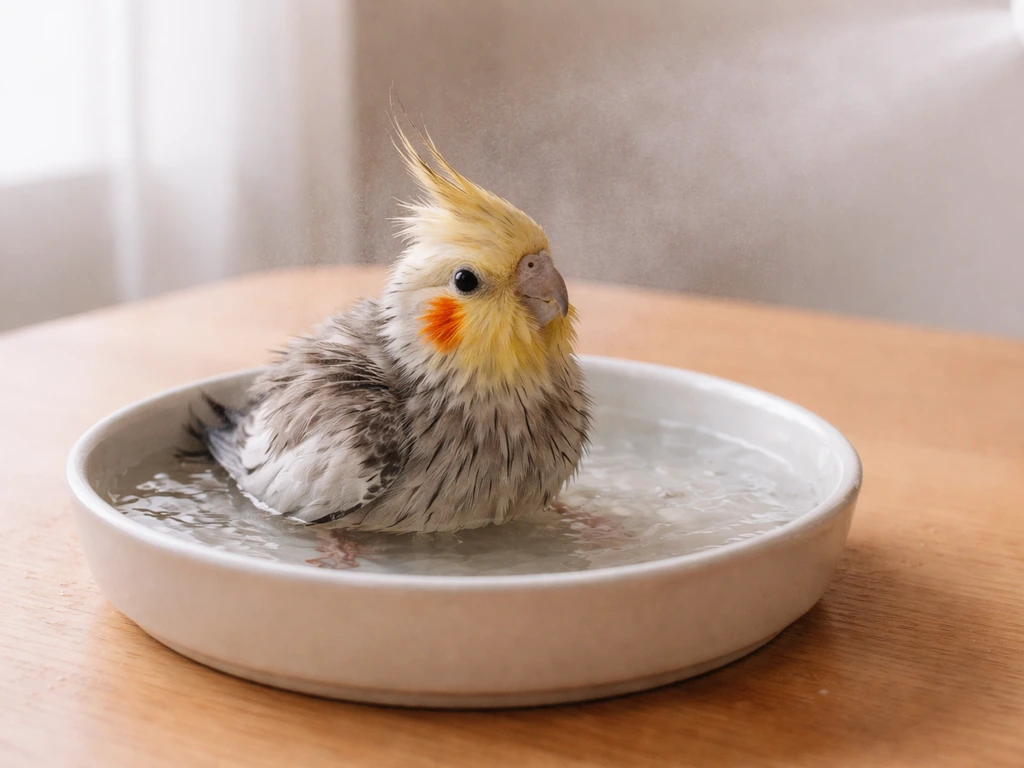
Dry skin and dry feather condition can increase the urge to over-groom. Offer regular bathing opportunities, either a shallow dish in the cage, a misting spray, or a supervised shower depending on your bird's preference. For most species, a few times per week is reasonable.
Air quality and household irritants
Birds have highly sensitive respiratory and skin systems. Non-stick cookware fumes, scented candles, air fresheners, cigarette smoke, and strong cleaning products can all irritate skin and airways. If you've recently introduced anything new into the environment, that's worth noting.
Social dynamics
If the bird shares a cage, check whether a cagemate is doing the biting. Sometimes what looks like self-biting is actually barbering by a companion. Aggression and stress from incompatible cage mates can also trigger self-biting in the stressed bird. Related to this, some birds bite specific body parts like legs, feet, or wings as a stress response to cage-mate friction, which overlaps with the kinds of specific body-area biting covered in related topics on this site.
If your bird is biting your hair specifically, treat it like a targeted biting behavior and review similar triggers such as stress, lack of stimulation, and social dynamics hair biting. Since birds can target legs, feet, or wings as a stress response, it helps to look closely at what triggers the biting during the day.
How to observe and document what's actually happening
Before you change everything at once, spend two or three days actively observing and writing things down. A vet will ask you these questions, and having answers ready makes a huge difference in getting to a diagnosis faster.
- Which body areas are targeted? Note whether the bird is biting its chest, abdomen, wings, legs, feet, or around the vent. The location gives clues about cause, and whether the area is completely bald versus sparsely feathered also matters.
- When does it happen? Is it more frequent in the morning, evening, or during specific activities like handling or after you leave the room? Time-of-day patterns can point toward hormonal, social, or anxiety-related triggers.
- How intense is it? Is the bird briefly nibbling and moving on, or sitting and repeatedly working the same spot for minutes at a time?
- What's the feather condition? Are feathers frayed, broken, or missing entirely? Are you finding feathers at the bottom of the cage?
- Any changes in droppings, appetite, or energy? A bird that's eating less, has watery or discolored droppings, or sits fluffed and quiet may have a medical problem driving the behavior.
- Recent changes in the environment? New food, new cage location, new household member, a change in your schedule, or new cleaning products all count.
- Is the skin intact, or is there redness, swelling, or bleeding?
If you can, take short video clips during active self-biting episodes. A short clip showing the behavior, the targeted area, and the feather condition is far more useful to a vet than a verbal description alone.
What to actually do, starting today
Here's a practical sequence. Work through it in order rather than making five changes at once, which makes it impossible to know what helped.
- Check for bleeding or broken skin immediately. If the bird has broken skin, active bleeding, or has reached muscle tissue, stop reading and call an avian vet now. This is an emergency.
- Remove any new environmental additions from the last two to four weeks: new toys, foods, cleaning products, or anything that changed near the time the biting started.
- Improve sleep. Cover the cage at a consistent time each evening to give 10 to 12 hours of dark, quiet sleep. Do this starting tonight.
- Add enrichment within 24 hours. Put a foraging toy or shreddable item in the cage today. If you don't have one, roll a small piece of food inside a bit of paper. The goal is to give the beak something else to do.
- Offer a bath. Mist the bird or offer a shallow dish. Dry skin itches, and bathing often gives immediate relief.
- Assess the diet. If your bird is eating mostly seeds, that's a problem worth addressing. A seed-heavy diet is nutritionally incomplete and can cause skin and feather problems. Introduce pellets, fresh vegetables, and varied whole foods gradually.
- Look at the cage environment for stress triggers: proximity to windows where predators (cats, hawks) are visible, location near loud appliances, or a cagemate that might be the actual source of the biting.
- Book an avian vet appointment if the behavior hasn't improved within a week, if it's getting worse at any point, or if you notice any of the red flags below.
When to contact an avian vet, and how urgently
Some situations need a vet today, not next week. The Royal Veterinary College factsheet on feather plucking specifically notes that when self-biting reaches muscle tissue, the bird should be seen as an emergency. Don't wait to see if it resolves on its own.
| Situation | Action |
|---|---|
| Active bleeding that doesn't stop quickly | Emergency vet visit now |
| Broken skin, open wound, or exposed muscle | Emergency vet visit now |
| Bird is fluffed, weak, or unresponsive | Emergency vet visit now |
| Blood on cage walls or feathers with no obvious source | Urgent vet visit same day |
| Bald patches appearing and spreading over days | Vet appointment within the week |
| Behavior started suddenly with no clear trigger | Vet appointment within the week |
| Dropping changes, appetite loss, or lethargy alongside biting | Vet appointment within the week |
| No improvement after one to two weeks of environmental changes | Schedule a vet appointment |
At the vet, expect them to do a physical exam, ask about your observations and history (this is where your notes and video come in), and potentially do a skin scraping, blood work, or a culture depending on what they find. The goal is to rule out or confirm a medical cause before landing on a behavioral diagnosis. A good avian vet will not just say 'it's probably stress' without at least ruling out the physical stuff.
If medical causes are ruled out or treated and the biting continues, an avian behaviorist can be a genuinely useful next step. Behavioral feather plucking, especially when it's become compulsive, often needs more than environmental tweaks to resolve. Patience and consistency matter more than any single fix. Soft, gentle biting can still be part of feather-destructive behavior or a stress response, so it helps to assess the bird's underlying cause soft biting.
FAQ
How can I tell when “self-biting” is serious enough to see an avian vet immediately?
A quick safety check is whether the bird is damaging feathers enough to create exposed skin, blood, or a rapidly expanding bare patch. If you see any of those, treat it as more than typical grooming and plan an avian vet visit promptly, especially if the bird is also lethargic or not eating normally.
What should I look for in my bird’s feathers or cage to distinguish preening from true plucking?
Watch where the beak goes and what happens afterward. Normal preening usually leaves intact feather shafts and no feather fragments, while feather-destructive biting often produces broken feathers and small bits that collect under the favorite perch. Use that “before and after” pattern across a few episodes.
Can my bird’s “self-biting” actually be cage-mate barbering?
Yes. If two birds share a cage, confirm who controls the beak. Try to observe during the exact time it happens, and if possible, separate them for a short trial under vet guidance. If the “plucking” continues only in one bird even when alone, it is more likely self-directed.
How do I identify what’s triggering the biting if it doesn’t happen all day?
Compare the timing to daily routines. Feather biting that spikes right after certain events (feeding change, cleaning, visitors, vacuuming, new pets, or a noisy appliance) points to a specific trigger. Recording the time for 3 days usually reveals a repeatable pattern your vet will ask about.
If the bald patch is on an unexpected body area, does that change the likely cause?
If the bird is targeting an area you cannot reach yourself, it still may be self-directed, but location helps narrow possibilities. Preening cannot reach every spot, so a new bald patch in a spot the beak can access is more consistent with self-damage than with unreachable “mystery” wear.
What’s the safest first set of changes to try at home without making things worse?
After ruling out illness, improve stimulation before increasing handling. Many birds pluck when routines suddenly involve more stress, less sleep, or a lack of quiet time. Start with foraging options, shredding materials, and consistent dark sleep, then add training gradually.
Could household products or air quality be causing my bird to bite itself?
Yes, and it matters when you clean. Avoid scented or chemical cleaners, disinfectants with strong fumes, and aerosol products during episodes, then observe whether the behavior decreases within a day or two. Also ensure ventilation, especially if you use any non-stick cookware or run air fresheners.
If I can’t see parasites, could parasites still be the problem?
Don’t assume “no visible parasites” means “no parasites.” Some infestations are subtle, and skin irritation can persist even when the organisms are hard to spot. If your bird is biting with new feather loss or skin changes, ask the avian vet about skin scraping or appropriate testing.
How long should I wait to see if it improves before seeking help?
If the bird bites until it reaches muscle tissue, that is an emergency. If it is limited to feather shredding, it still warrants a veterinary call soon, but you can usually use the 2 to 3 day observation window first. The key is whether the condition is worsening, spreading, or affecting appetite and energy.
What kind of photo or video evidence is most useful for a vet?
Use videos showing the targeted area, the presence or absence of feather debris, and any other birds in the cage. A short clip is usually more informative than long narration, because vets can spot whether it is repetitive grooming, redirecting, or aggressive cage-mate behavior.
If the vet says it’s behavioral, what should I realistically expect from treatment?
When medical causes are ruled out, an avian behaviorist often helps with a plan tailored to the bird’s patterns, including what to do during an episode. Expect adjustments to be gradual, because compulsive feather biting can persist even after the original trigger is gone.
What if the biting gets worse during breeding season or when hormones seem elevated?
If your bird bites while hormonal or breeding-season behaviors are present, prioritize stable routines, consistent sleep, and avoid triggers that intensify mating behavior (like prolonged cuddling, nest-like setups, or very late light). These steps can reduce redirected frustration while you address the environment and any medical contributors.