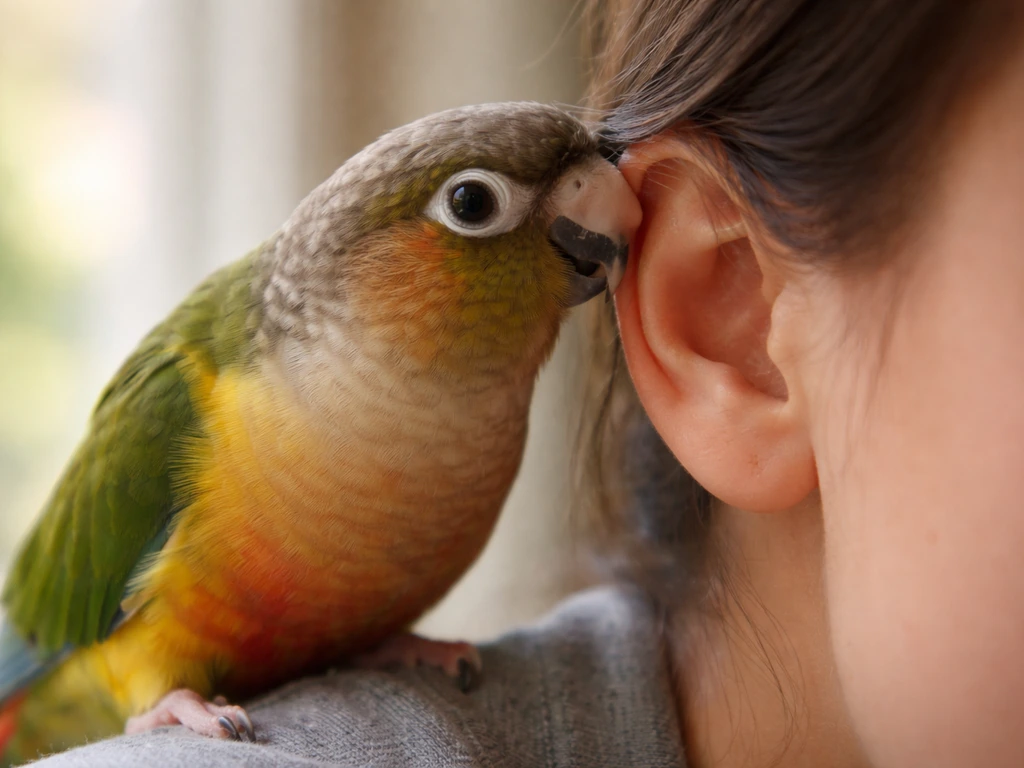
Your bird nibbling on your lips is almost always a sign of affection, curiosity, or bonding. Birds explore the world with their beaks the same way we use our hands, and your face is one of the most interesting, scent-rich, expressive parts of you. For most birds, gentle lip nibbling is a social behavior, not aggression. That said, the same motion can also signal hormonal behavior, boredom, or a reaction to something on your skin, so it's worth knowing what to look for.
Why Does My Bird Nibble on My Lips? Fix Today

Marcus Chen
3 Jul 2026
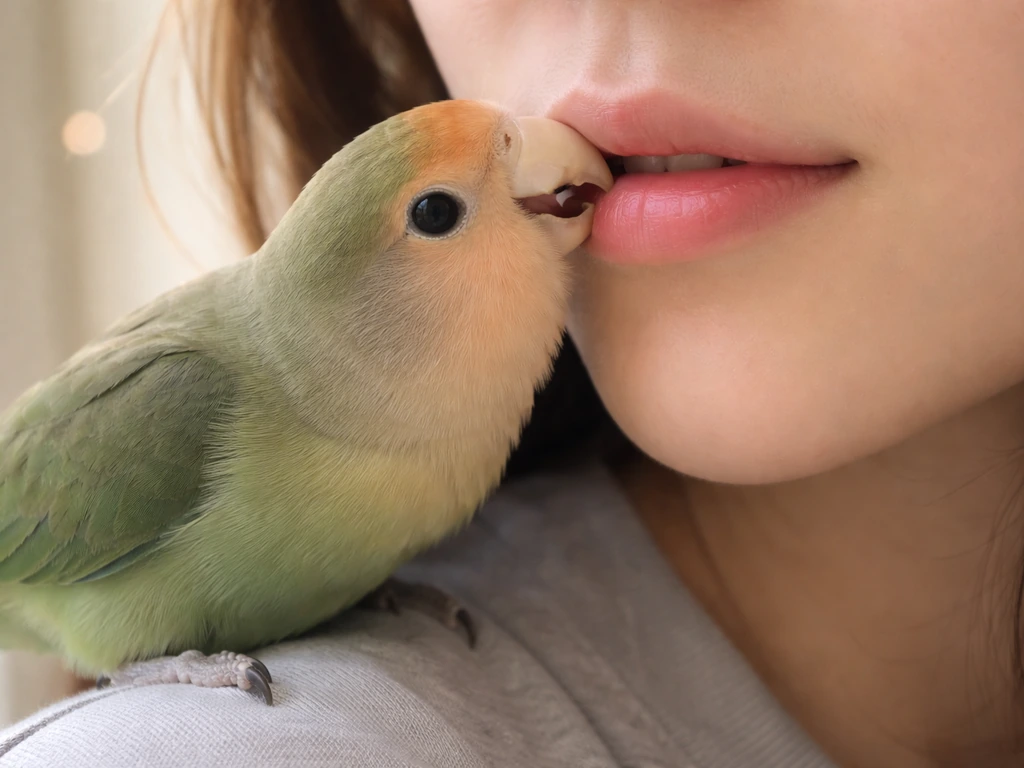
Why birds are drawn to your lips in the first place
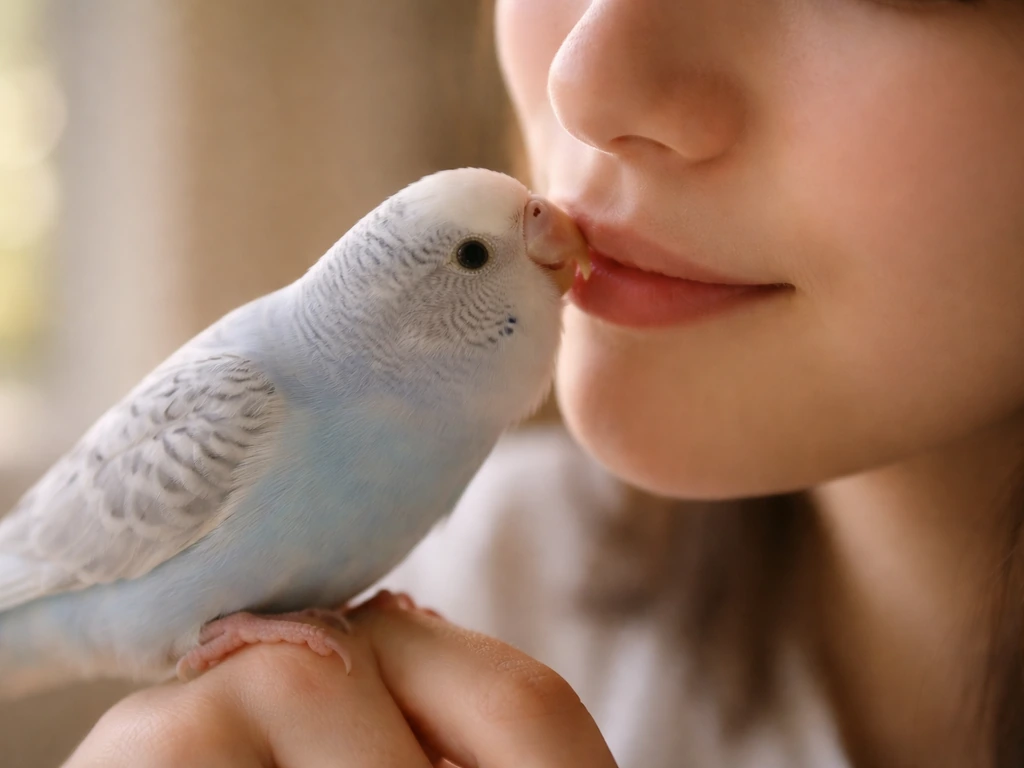
Birds that are bonded to their owners treat them like flock members. In a bird's world, mutual grooming and beak contact are how flock mates show trust and affection. When your bird nibbles your lips, it's often doing exactly what it would do to a bird it cares about. This is sometimes called allopreening, and your bird may also do it to your ears, eyebrows, or hairline for the same reason.
Curiosity is another big driver. Lips move constantly, they make sounds, and they carry all kinds of interesting smells. If you've recently eaten, applied lip balm, or even just had coffee, your bird picks up on that immediately. Parrots and cockatiels especially will investigate anything that smells different or interesting.
Attention-seeking rounds out the top three reasons. If nibbling your lips has ever made you laugh, react, or pull back dramatically, your bird learned that this behavior gets results. Birds are smart, and they repeat what works.
When it's hormonal: what that looks like and what to do
Lip nibbling that suddenly becomes more persistent, intense, or paired with other behaviors can signal that your bird is in a hormonal phase. This is especially common in cockatiels, parrots, and lovebirds during spring and fall, or when daylight hours are long.
The signs that separate hormonal nibbling from affectionate nibbling are usually pretty clear once you know what to look for. Watch for your bird regurgitating food onto you (that's a pre-mating behavior, not sickness), crouching with wings slightly spread when you touch its back, becoming territorial around a favorite spot in the cage, or becoming more nippy and possessive overall. If your bird tries to feed your lips by bringing up food, that's a textbook mating behavior, not just bonding.
The most effective way to dial down hormonal behavior is to manage light exposure. Limiting your bird to about 8 to 10 hours of light per day can significantly reduce reproductive hormone levels. Covering the cage earlier in the evening and keeping the room dim in the morning makes a real difference. It's also worth reassessing how you handle your bird during this period. Petting along the back, under the wings, or near the tail can stimulate hormonal responses, so stick to head and neck scratches instead.
Gently discourage regurgitation and mating postures without punishing your bird. Calmly set it down or redirect it to a toy rather than making it a dramatic event. Consistency here matters more than intensity.
Stress, boredom, and overstimulation: the behavior patterns to watch
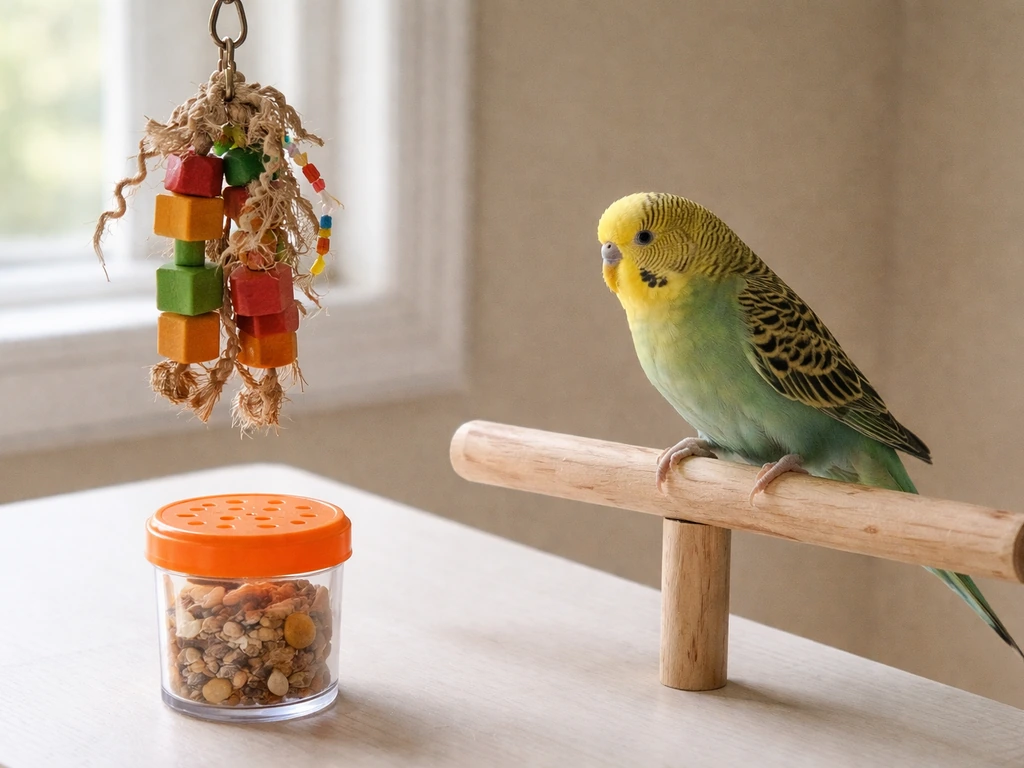
A bird that isn't getting enough mental stimulation or social interaction can start using lip nibbling as an outlet, but the quality of the nibbling changes. Boredom-driven nibbling tends to feel more persistent and compulsive, less playful. Overstimulation looks different: your bird may be excited and engaged one moment, then nip harder than usual when it hits a threshold.
Stress-related behaviors to watch for alongside the nibbling include repetitive movements like pacing or head-swinging, feather plucking or barbering, excessive screaming, and unusual clinginess or sudden withdrawal. If you're seeing more than one of these at the same time, the nibbling is probably a symptom of something broader going on emotionally for your bird.
Overstimulation during face-to-face time is one of the most common triggers owners overlook. Long sessions of close interaction, especially involving your mouth (talking, laughing, kissing the bird), can wind a bird up to the point where it loses impulse control and nips harder. Short, calm sessions work better than long, high-energy ones.
Scents and skin: how your lips might be triggering the behavior
This one surprises a lot of owners. Your lips are a hotspot for scents. Lip balm, lipstick, flavored gloss, toothpaste residue, food, coffee, and even the natural chemistry of dry or chapped skin all register as interesting (or strange) to your bird. If the nibbling seems particularly focused or frantic, it's worth thinking about what you had on your lips recently.
Scented lip products deserve extra attention because some ingredients are genuinely risky around birds. Essential oils in particular are a real concern: birds are especially sensitive to them and can be harmed through inhalation or skin contact. Citrus-based ingredients are also on the list of items that should be kept away from birds. If your lip balm or lip care product has a strong essential-oil-based scent and your bird is drawn to nibbling it off your lips, that's a situation worth changing immediately. Switch to an unscented product before face time with your bird.
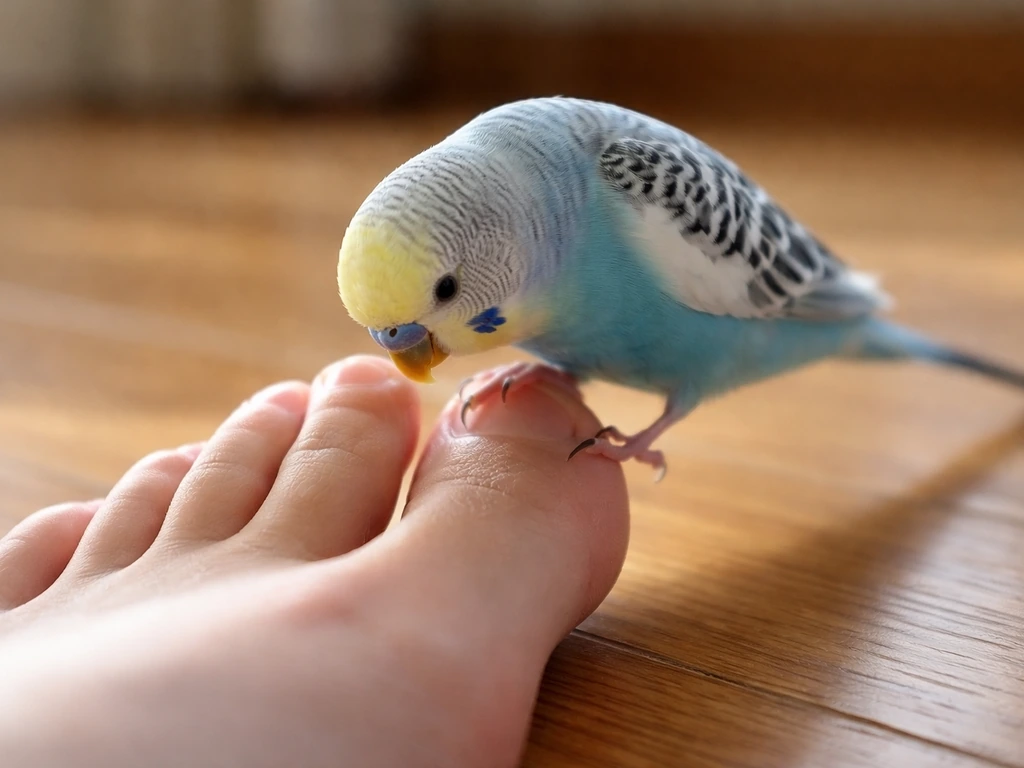
Dry or chapped lips create a different kind of texture that birds sometimes find interesting to explore with their beaks. It's not dangerous on its own, but if your bird is picking at cracked skin, it can cause small injuries to you even when the bird isn't trying to bite. If your bird is blank" rel="noopener noreferrer">nibbling or pinching your skin around the face, consider whether it might target sensitive areas like eyes and lips, and it may be best not to allow that behavior. If your bird also targets your feet, the same basics apply: check for scents on skin, watch for stress or hormonal behavior, and make sure you are using bird-safe products your bird targets your feet.
Normal nibbling vs. a sign something's wrong

Most lip nibbling is normal, but here's how to tell the difference between affectionate behavior and something that needs attention.
| What you're seeing | What it likely means |
|---|---|
| Gentle, soft nibbling with relaxed body posture | Bonding/affection, normal |
| Nibbling paired with preening your hair or eyebrows | Allopreening, normal |
| Harder nips when you've been interacting a while | Overstimulation, redirect and take a break |
| Regurgitating onto your face or lips | Hormonal mating behavior, gently discourage |
| Sudden increase in biting with no clear trigger | Possible medical cause, worth a vet check |
| Nibbling alongside fluffed feathers, lethargy, or appetite changes | Health concern, see an avian vet |
| Frantic or compulsive beak contact with aggression | Stress or hormonal, needs management |
| Bird seems obsessed with your mouth area all day | Could be hormonal or attention-trained, assess both |
Pay attention to the rest of your bird's body and behavior when it's nibbling. A bird that is happy and well will have smooth, intact feathers, clear bright eyes, normal droppings, and a healthy appetite. It will be alert and engaged without being frantic. If the nibbling comes packaged with any signs that your bird isn't feeling well physically, those symptoms take priority over the behavior question. If your bird seems to be doing more than just lip nibbling, you may also want to look into why is my bird sticking his tongue out for tongue-specific causes.
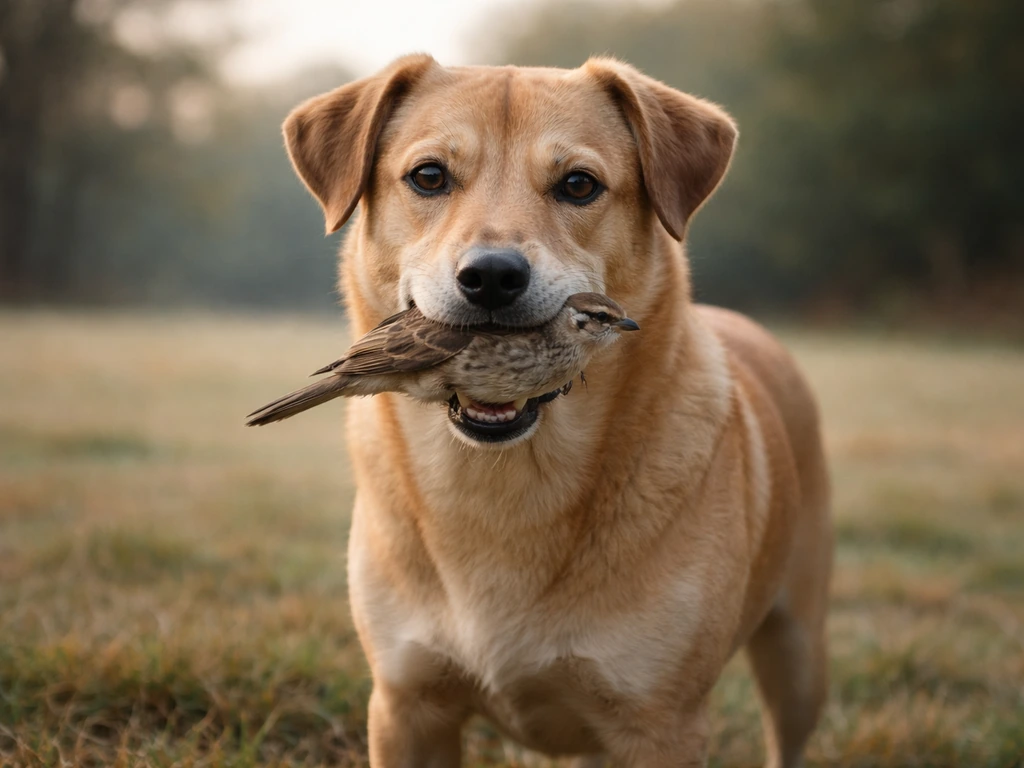
It's also worth knowing that birds can't tell us when something hurts. If your dog ever has a bird in his mouth, treat it as an urgent safety situation and contact your veterinarian or an emergency animal hospital my dog has a bird in his mouth. A sudden change in how your bird interacts with you, including a new or intensified biting pattern, can sometimes be the first clue that something is physically wrong. That's why sudden biting changes should be taken seriously, not just treated as a training issue.
What you can do today to manage lip nibbling
You don't need to wait to make things better. Here are concrete steps that work starting now.
- Remove scented lip products before handling your bird. Switch to unscented balm or nothing at all during bird time.
- Redirect the nibbling to an appropriate target. Offer a wooden chew toy, a foraging toy, or a safe texture your bird can explore with its beak instead of your lips.
- Don't jerk away or react dramatically when your bird nibbles. A big reaction rewards the behavior and can also startle your bird into biting harder. Calmly and smoothly redirect.
- Shorten face-to-face sessions. If your bird regularly gets overstimulated, keep close contact to a few minutes at a time, then give it space before it reaches its threshold.
- Stop letting your bird practice the behavior on your lips. Each time you allow it, the habit gets stronger. Be consistent about redirecting every single time.
- Limit light exposure if you suspect hormones are involved. Aim for 8 to 10 hours of light per day and cover the cage the rest of the time.
- Stick to petting the head and neck only during hormonal periods. Avoid touching the back, wings, and tail area.
- Add foraging and enrichment to the cage so your bird has something to do when it's not with you. A bored bird will always look to you to fill that gap.
On the reinforcement side, the goal is to make lip contact unrewarding and toy/perch contact interesting. You don't need to punish your bird at all. Just be consistent about not letting the nibbling happen and offering something better in its place. Over a week or two of consistency, most birds shift their focus.
If your bird is also nibbling your ears, licking your face, or seems fixated on your mouth area in general, those behaviors come from the same root causes and respond to the same approach. Consistent redirection and adjusting how much face-level access your bird gets will help across all of them.
When to call an avian vet and what to track beforehand
Most lip nibbling doesn't need a vet visit. But there are situations where you should contact an avian vet rather than just working on the behavior at home.
- The biting started suddenly and intensely with no obvious trigger or change in your routine
- Your bird is biting hard enough to break skin consistently, especially if this is new behavior
- The nibbling is paired with other health signs: fluffed feathers, sitting on the cage floor, changes in droppings, reduced appetite, unusual quietness or excessive vocalization
- You notice changes in feather condition alongside the behavior changes
- The bird seems to be in discomfort, restless, or uncharacteristically aggressive across all interactions
- You applied a scented product (especially an essential-oil-based one) near your bird and it has since acted differently or seems unwell
When you call the vet, it really helps to come prepared. Track the behavior for a few days before the appointment: write down when the nibbling happens, how long it lasts, how hard the pressure is, what you'd been doing just before, whether your bird had eaten or slept normally, and any products or foods that were around. Note your bird's droppings (color, consistency, frequency), its weight if you have a scale, and any other behaviors that seem off.
This kind of log helps an avian vet narrow things down quickly, especially when the concern is whether the behavior is behavioral or medical. PetMD similarly notes that bites can be misunderstood as a bird’s intent to bite when the real issue may be something else, so looking at your bird’s cues matters for deciding whether it is behavioral or medical.
If the biting is chronic, escalating, or making you hesitant to handle your bird, that's worth a conversation with a vet too, even without other health symptoms. Some birds benefit from an avian vet's guidance on behavior-specific management, especially when hormonal cycles are playing a role. Fear Free’s avian training materials also emphasize observing body language to prevent triggering aggressive behavior during handling and step-up procedures behavior-specific management. You don't have to figure it all out on your own.
FAQ
Is lip nibbling ever a sign of pain or illness, not bonding or hormones?
Yes. If the nibbling increases alongside changes in appetite, droppings (especially diarrhea, unusual color, or straining), fluffed posture, lethargy, or rapid weight change, treat it as a possible medical issue first. Also note if the nibbling becomes mainly one-sided or your bird seems to target areas of irritation on your skin.
What should I do in the moment when my bird starts nibbling my lips?
Interrupt without wrestling. Calmly stop the face contact, redirect to a favored toy, treat, or perch, and then resume only brief, low-energy interactions. If your bird regurgitates even once during the moment, end the session immediately and switch to a non-face-based cue until the behavior cools.
How can I tell if it is hormonal mating behavior versus playful affection?
Hormonal behavior tends to come with mating-type postures (crouching, tail or back feeding attempts), food-begging or regurgitation, and heightened territorial guarding of a spot. Affectionate nibbling usually stays relaxed and exploratory, with normal body language, no feeding behavior, and your bird can still be redirected to other activities.
My bird only does this when I wear lip balm or lipstick, does that mean the product is unsafe?
It often means scent or texture is driving the behavior. If your product contains essential oils or citrus-based ingredients, change products before continuing face-time because sensitivity can be triggered by inhalation or skin contact. Even “natural” scents can be an issue, so switch to an unscented, bird-safe lip product and observe if the nibbling drops within a few days.
Can I train my bird to stop lip nibbling long-term?
Usually, with consistent redirection. Make lip contact a dead end (no laughs, no dramatic reaction) and immediately offer an alternative that your bird values, like a chewing toy, target training, or a specific perch reward. Use short sessions and repeat the same routine every time, because inconsistent reactions teach the behavior works.
Why does my bird seem to get “worse” when I pull away or tell it to stop?
Many birds interpret pulling back, shouting, or strong attention as part of the game, which increases arousal. Aim for neutral, calm removal of face contact and then redirect. If you need to protect your skin, use a physical barrier like a chew toy between you and your mouth rather than sudden hands-on correction.
Should I worry if my bird nibbles but doesn’t draw blood?
If it stays gentle, your bird looks otherwise healthy, and the behavior is occasional, it is usually not urgent. Still, check your lip skin for chapping or sores because nibbling damaged skin can prolong irritation. If it becomes more forceful over time or you notice bruising, skin breaks, or persistent fixation, address the trigger and consider an avian vet consult.
How much sleep and light should I target if hormonal nibbling is likely?
A common goal is roughly 8 to 10 hours of light per day, with earlier cage coverage in the evening and dim or dark mornings. Keep the routine steady, because irregular schedules can reactivate cycles. If you are changing light schedules, do it gradually over several days to avoid additional stress.
What if my bird also nibbles my ears, brows, or hairline at the same time?
That pattern usually points to the same root cause, bonding, curiosity, or hormonal arousal, rather than a separate issue. Treat it as one behavior cluster: reduce face-level access during higher-arousal times, use redirection consistently, and consider switching any scented products on your face to unscented options.
When should I contact an avian vet even if my bird seems normal?
Contact an avian vet if the behavior escalates quickly, you see new aggression, regurgitation repeatedly tied to escalating postures, or any health red flags (dropping changes, breathing changes, feather disruption, reduced appetite, or persistent lethargy). Also call if you cannot safely handle your bird without increasing risk, since a behavior plan may need medical and environmental adjustment.