Your bird licking your face is almost always a sign of affection and trust. Birds groom the flock members they feel closest to, and if you're their person, your face is fair game. That said, if the licking tips into persistent picking, nibbling at your skin, or obsessive contact, it's worth pausing to figure out whether your bird is simply bonding with you or signaling something else, like stress, boredom, or physical discomfort. If you are wondering why your bird cleans your teeth, the same bonding and stress signals that drive face-licking can be involved why does my bird clean my teeth.
Why Does My Bird Lick My Face? Causes and What to Do

Marcus Chen
29 Apr 2026
Normal affectionate licking and nibbling
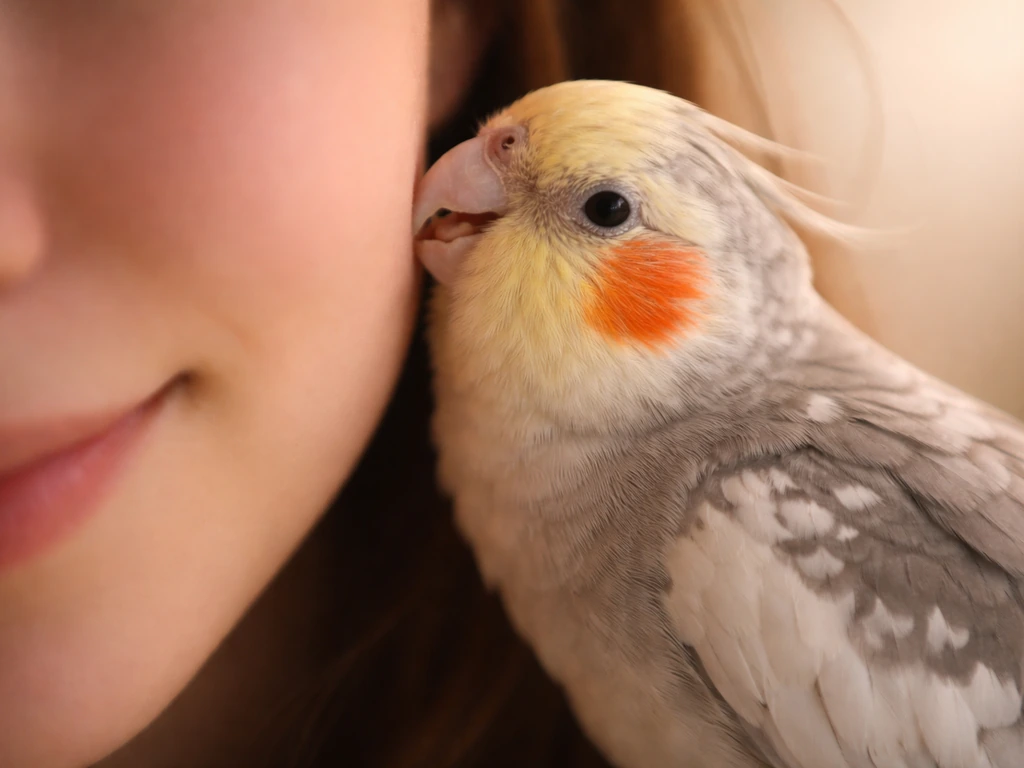
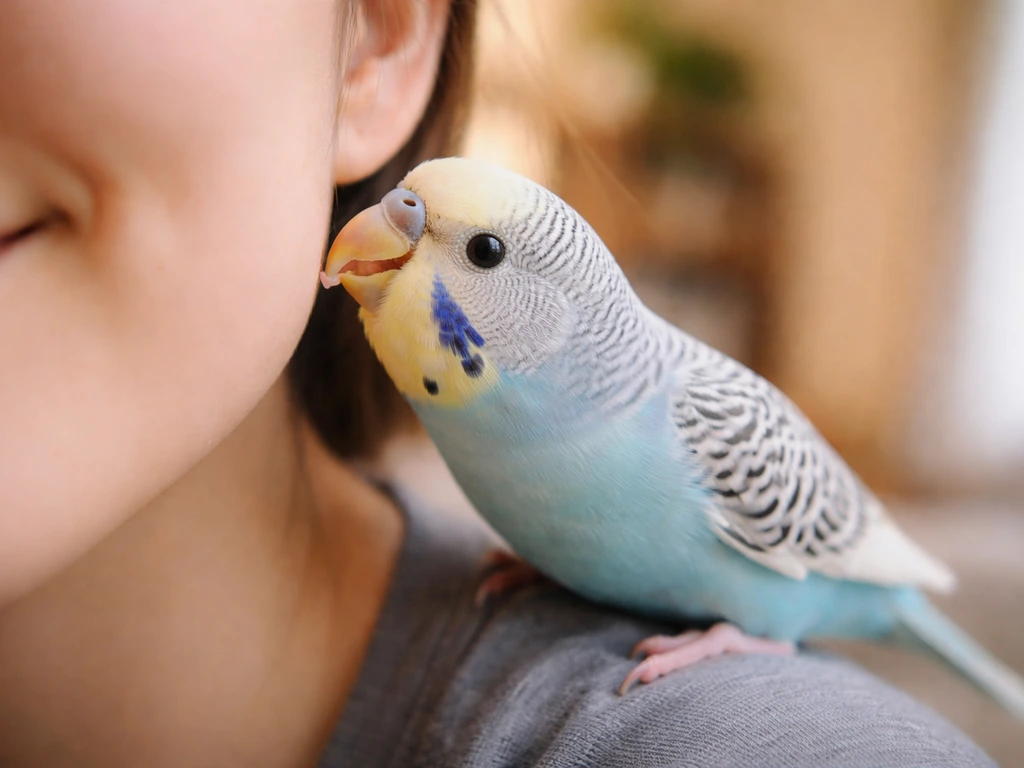
In the wild, birds allopreen, meaning they groom each other's head and face feathers, the spots they can't reach themselves. When your bird licks or gently nibbles your face, eyebrows, hairline, or ears, it's usually doing exactly that. It's including you in its social group and treating you like a trusted flock mate.
This kind of contact tends to feel gentle and rhythmic. Your bird will look relaxed, its feathers slightly fluffed in a comfortable (not sick) way, its eyes soft or half-closed. It may chirp softly, click its beak, or lean into you while it works. That's normal, healthy bonding behavior and nothing to discourage unless it becomes too intense or starts involving actual skin picking.
Curiosity also plays a role, especially in younger birds or newly bonded parrots. Your face has interesting textures, smells, sounds, and movements. A bird exploring your nose, lips, or chin with its tongue is often just investigating its environment. This overlaps with behaviors like nibbling on ears or probing around your mouth, which are all part of the same social curiosity package. If you notice your bird nibbling on ears more than usual, it can be the same social curiosity showing up in a specific spot.
Bonding and attention-seeking reasons
Birds are highly social animals that need regular interaction to stay emotionally healthy. If your bird has learned that licking your face gets a big reaction from you (laughing, talking, pulling away), it may do it more often simply because it works. Attention-seeking licking is especially common in birds that don't get enough daily one-on-one time or live in quieter households.
Watch for patterns. Does the licking ramp up right when you sit down, when you're on your phone, or after a period where you've been away from home more than usual? That timing is a clue. The behavior is your bird's way of saying it wants to reconnect with you. It's not manipulative, it's just how birds communicate need.
Some birds also lick or groom their owners as a form of comfort-seeking rather than purely giving affection. A bird that presses close to your face and licks repeatedly may actually be looking for reassurance, especially in new environments or after a change in routine.
When licking signals stress, boredom, or discomfort
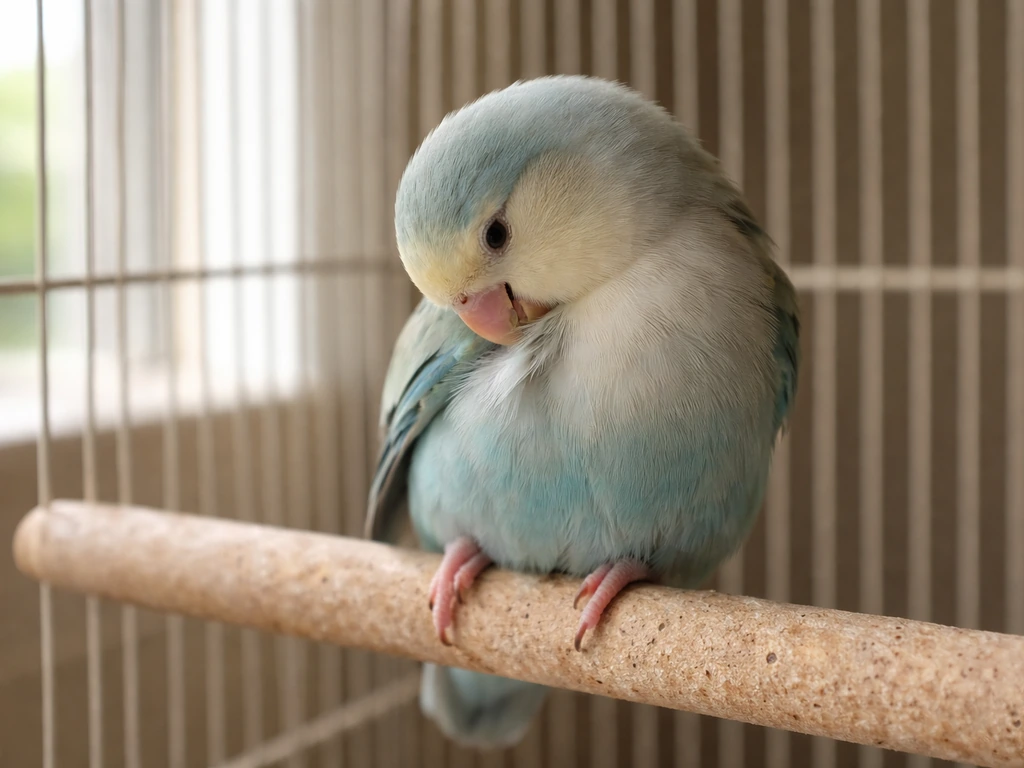
This is where it gets worth paying closer attention. When gentle licking shifts to persistent picking at your skin, pulling at your eyebrows, or fixating on one spot on your face repeatedly, that pattern can mirror the same behaviors that lead to feather plucking in birds. Known contributors include boredom and lack of mental stimulation, sleep deprivation, sexual frustration, and general stress from changes in the environment or routine.
If your bird is also picking at its own feathers, over-preening specific areas, or showing other repetitive behaviors, the face-picking is likely part of a broader stress response rather than just affectionate grooming. Check the rest of its behavior: is it eating normally, sleeping well (10 to 12 hours of dark, quiet rest is the standard recommendation), and spending time playing on its own? Disruptions in any of those areas can show up as obsessive contact behaviors.
Some birds also pick at their owner's skin when they themselves are experiencing itchiness or physical irritation. You might also notice the same feet-or-hand focused nibbling, which can come from similar stress, attention needs, or skin irritation triggers why does my bird like my feet. The itch response is a powerful behavioral driver, and a bird that's uncomfortable in its own skin may direct that picking outward as well as inward.
Health-related causes worth ruling out
If the face-licking or picking is intense, frequent, or accompanied by any changes in your bird's appearance or routine, it's worth considering a few health-related causes before assuming the behavior is purely behavioral. The general clinical principle is to rule out medical causes first.
- Mites: Knemidokoptes (scaly face/beak mites) burrow into skin and feather follicles, causing crusty, thickened areas around the beak, cere, eyes, and legs. A bird bothered by mites may be itchy and restless, which can show up as excessive grooming of both itself and you.
- Skin infections: Bacterial or fungal infections, including yeast-associated inflammation like Malassezia, can cause skin irritation that makes a bird pick at itself and anything within reach.
- Respiratory or sinus issues: Look for debris, crustiness, or discharge around the nares (nostrils). A bird dealing with a sinus infection or respiratory problem may paw at or rub its face more than usual.
- Pain or internal discomfort: Birds in pain from infections, internal disease, or toxin exposure sometimes redirect that discomfort into repetitive picking behaviors. This is one reason you can't always tell from behavior alone whether the cause is medical.
- Poor diet: Nutritional deficiencies weaken skin and feather condition, which can cause or worsen picking behaviors. A seed-only diet is the most common culprit.
Also look at the skin and feathers on your bird itself. Are there bald patches, broken feathers, or areas of redness or irritation? Is the beak looking unusually rough or overgrown? Those physical signs alongside face-licking behavior are a stronger signal that something medical may be going on.
Environment, diet, grooming, and handling: what to check today
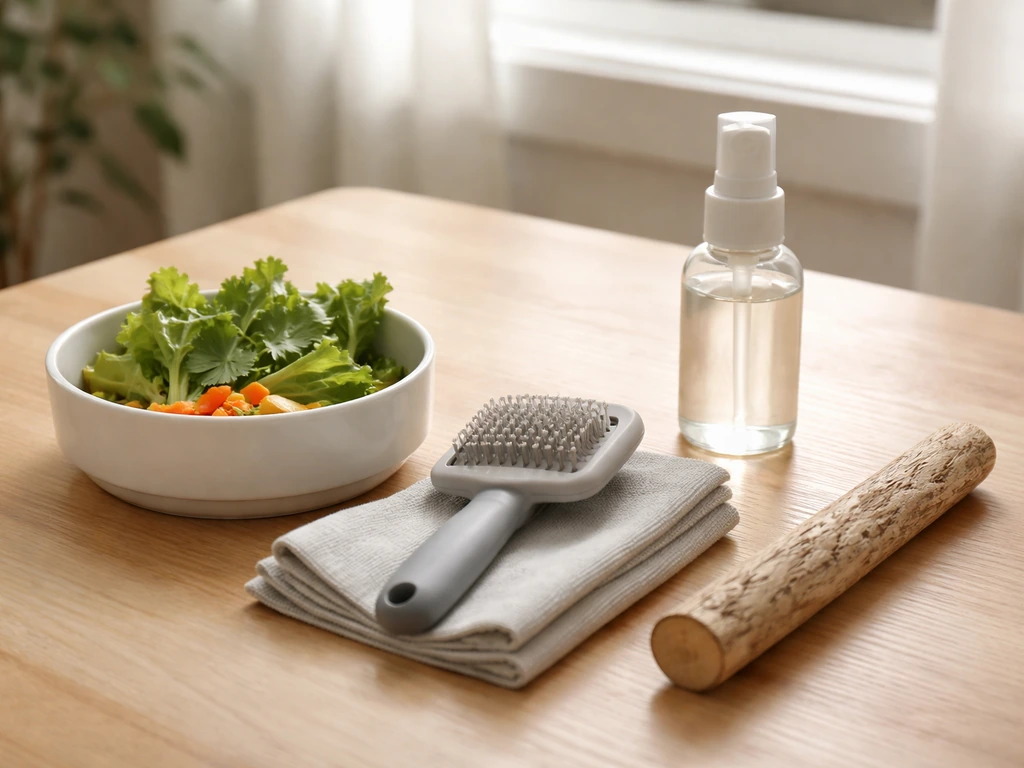
Before assuming the behavior needs professional intervention, do a quick audit of the basics. Many face-licking and picking behaviors improve when the fundamentals are solid.
| Area | What to check | Target standard |
|---|---|---|
| Diet | Seed-only diet, missing fresh produce or pellets | Varied diet: pellets, fresh vegetables, limited seed |
| Sleep | Less than 10 hours of dark, quiet rest per night | 10 to 12 hours of undisturbed dark time |
| Cage enrichment | Few or no foraging toys, no rotation of new items | Multiple toys rotated weekly, foraging opportunities daily |
| Handling routine | Irregular or infrequent interaction, or overly intense handling | Calm, predictable daily interaction sessions |
| Cage placement | High-traffic, noisy, or drafty areas | Quiet corner, away from kitchen fumes and temperature extremes |
| Grooming | Overgrown nails, beak irregularities, dirty feathers | Regular nail trims, clean feathers, no visible mite signs |
If your bird is on a seed-heavy diet, that alone is worth addressing. Seeds are high in fat and low in the vitamins and minerals birds need for healthy skin and feathers. Transitioning to a pellet-based diet with fresh vegetables can make a real difference in feather and skin condition over time, which may reduce irritation-driven picking.
What to do right now: safe responses and redirecting the behavior
If the licking is gentle and your bird seems calm and content, you don't need to do anything except enjoy it. But if it's becoming too intense, turning into real picking, or making you uncomfortable, here's a practical approach.
- Don't jerk away or react dramatically. A big reaction rewards the behavior and often makes it more likely to happen again. Instead, calmly move your bird to a perch or a toy without making a fuss.
- Keep the bird at chest level or lower during handling. A bird at shoulder or face level has easy access to your face, which makes the behavior harder to interrupt. Dropping to chest level gives you more control and reduces the temptation.
- Redirect to a toy or foraging activity when picking starts. The moment the licking tips into picking, quietly offer a toy, a piece of food, or a foraging puzzle to shift the focus.
- Give consistent, scheduled interaction time. If attention-seeking is a driver, predictable daily one-on-one sessions can reduce the frantic face-grabbing that happens when a bird feels under-stimulated.
- Move slowly and speak quietly during all handling. Calm handling reduces overall stress levels, which in turn reduces stress-driven picking behaviors.
- Introduce new enrichment. Rotating foraging toys, puzzle feeders, and novel textures into the cage gives your bird something to do with that same investigative, tactile energy it's directing at your face.
If your bird tends to go straight for your face on the shoulder, that's a positioning problem as much as a training one. Working at chest level while you build better habits is the fastest fix.
When to call an avian vet
Some face-licking is just love. But there are clear signs that warrant a vet visit rather than more home adjustments. Contact an avian vet if you notice any of the following. If you are wondering why your bird cleans your teeth with licking, a quick check for normal bonding behavior can help you decide whether any health issues need attention why does my bird clean my teeth.
- The picking has escalated to the point of breaking skin on you or self-injury on the bird
- You can see bare patches, redness, scaly or crusty areas, or broken feathers on your bird
- There's discharge, crustiness, or debris around the bird's nares or eyes
- Breathing sounds have changed (clicking, wheezing, tail bobbing with each breath)
- Droppings have changed in color, consistency, or frequency
- Appetite or energy has dropped noticeably
- The behavior appeared suddenly rather than gradually developing
- The bird is picking at its face or head area obsessively in addition to picking at you
Before the appointment, keep a short log for a few days. Write down how often the face-licking or picking happens, how long each episode lasts, what was happening right before it started, and anything else you've noticed that seems off. Note whether the bird is eating, how its droppings look, and what the blank" rel="noopener noreferrer">feathers and skin around the face and cere look like. That information helps the vet narrow down whether this is a behavioral issue, a nutritional problem, a parasitic infection like mites, or something else entirely.
The key point is that behavioral explanations and medical explanations are not mutually exclusive. If you are worried about a related issue like my dog has a bird in his mouth, that is a separate safety concern from normal face-licking. A bird can be bored and have mites. It can be stressed and have a nutritional deficiency making its skin itchy. When in doubt, a vet check gives you a clean baseline and rules out the things you genuinely cannot see or diagnose at home.
FAQ
How can I tell if my bird is just grooming me versus irritating my skin?
Look for skin changes on you and behavior changes on your bird. Gentle grooming usually stays rhythmic with no escalating intensity, and your skin shows no redness, welts, or broken areas. If the bird fixates on one spot, starts biting repeatedly, or ramps up until it seems hard to interrupt, treat it like a potential itch, stress, or compulsive behavior rather than affection alone.
Should I discourage face-licking if my bird is pulling my eyebrows or nibbling my lips?
Stop the behavior when it becomes skin-focused, but avoid sudden reactions that can accidentally reward it. A better approach is to redirect, for example offer a preferred perch or training target at chest level, then reward calm contact. If eyebrow or lip nibbling continues despite redirection, that pattern is a reason to consider vet advice for skin comfort or mites.
Does face-licking mean my bird is bonded to me, or could it be dominance?
In most cases it is social bonding or comfort-seeking, especially if your bird seems relaxed (soft eyes, leaning in, normal posture). Dominance displays are usually paired with other signals like guarding a space, aggressive lunging, or refusal to be handled. If licking is the only behavior and your bird otherwise acts calm, bonding is the most likely explanation.
How do I know if my bird’s face-licking is linked to stress or boredom?
Check timing and total routine. If it spikes when you leave, when you are on your phone, or when the bird has fewer interaction hours, it often relates to attention needs or overstimulation. Also consider the absence of outlets, if play time, foraging, and novelty are low, licking and picking can become a repetitive comfort routine.
What health signs in my bird should make me contact an avian vet sooner?
Seek an avian vet check if you notice broken or overgrown beak, redness or crusting around the face, bald patches on the head, changes in droppings, reduced appetite, lethargy, or increased scratching and preening of the face or feet. These can point to parasites, skin irritation, or other medical issues that behavior changes cannot fully fix.
Could face-licking happen because my bird is itchy or has parasites like mites?
Yes. Birds that are uncomfortable may direct preening and nibbling toward their own skin and then redirect that behavior to their owner’s face. Clues include fluffed posture outside of sleep, frequent head scratching, scaly skin, broken feathers near the face, or increased nighttime restlessness. A vet can confirm mites or other causes and recommend safe treatment.
What’s a safe way to redirect my bird when it goes to my face?
Use a consistent substitute contact. Bring your hand or a perch to chest level, offer a target stick, or present a chew-safe item, then reward when your bird engages with the alternative. Avoid pulling your face away repeatedly, since that can turn your movement into part of the interaction and increase the behavior.
Does diet affect face-licking and skin picking?
It can. If your bird is mostly seed, skin and feather conditions may worsen because of lower micronutrients. Gradually increasing pellet quality and adding fresh, bird-safe vegetables can improve overall skin comfort over weeks. If picking is intense or persistent, diet changes alone may not address the root cause.
How much sleep does my bird need to reduce repetitive picking behaviors?
Most companion parrots do best with about 10 to 12 hours of dark, quiet rest. If your bird’s sleep is interrupted (light at night, frequent household noise), stress can show up as repetitive behaviors like obsessive contact or preening. Adjusting the sleep environment often reduces compulsive patterns.
Can I treat face-licking as a training issue if it seems behavioral?
Sometimes, but start with a full basics audit first. If your bird lacks daily one-on-one time, foraging, or stable routine, training alone often fails because the behavior is meeting an emotional or physical need. When fundamentals are solid and the licking is mild, consistent redirection with rewards can work, but stop and involve an avian vet if skin picking escalates.