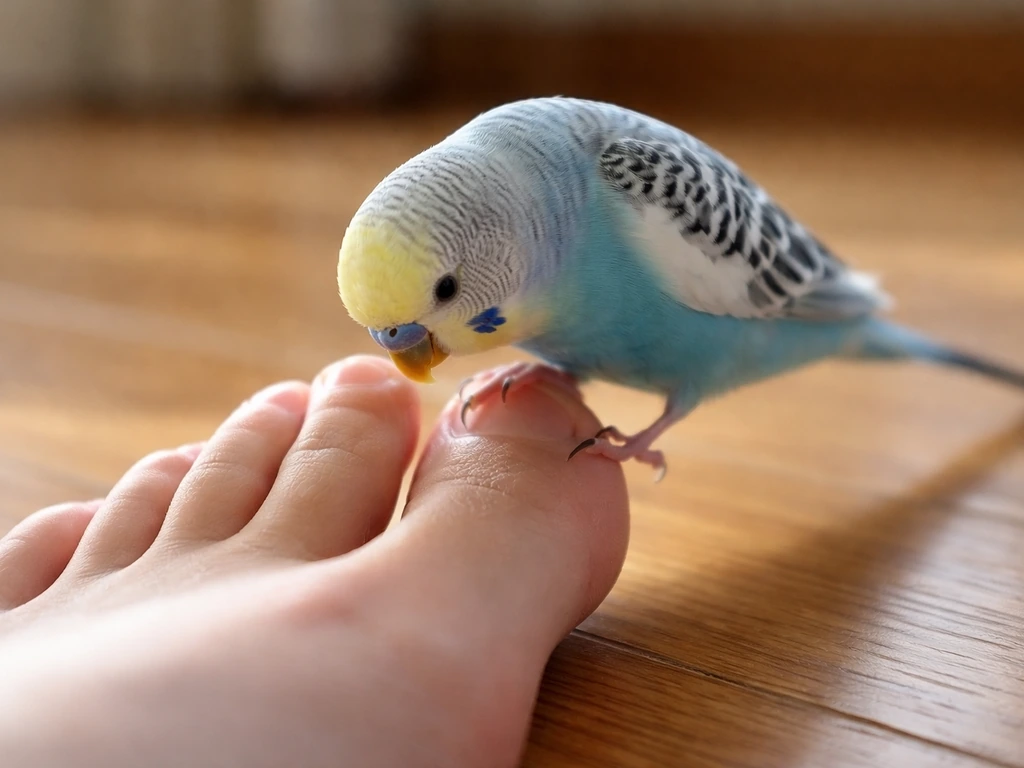
Your bird nibbles your ear because it's treating you like a flock mate. If your bird is also sticking its tongue out, that can be a sign of excitement, stress, or a need to self-soothe, so it helps to compare body language and context. Ear nibbling is almost always a sign of affection, curiosity, or attention-seeking, not aggression.
Why Does My Bird Nibble or Bite My Ear? Fixes Today

Marcus Chen
2 Jul 2026
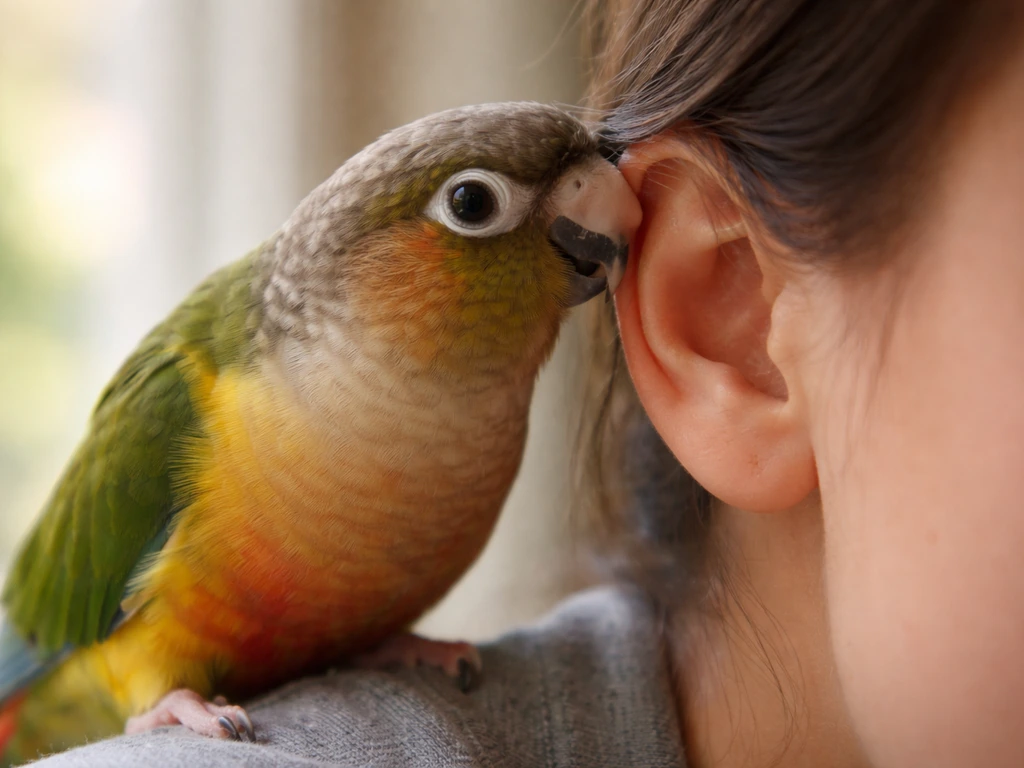
Birds explore the world with their beaks the same way we use our hands, and your ear is warm, textured, and full of interesting details like earrings, hair, and skin folds. That said, gentle nibbling can cross into real biting when a bird is overstimulated, scared, or in pain, and those two things feel very different. Here's how to tell which one you're dealing with and what to do about it today.
Normal nibbling vs concerning biting
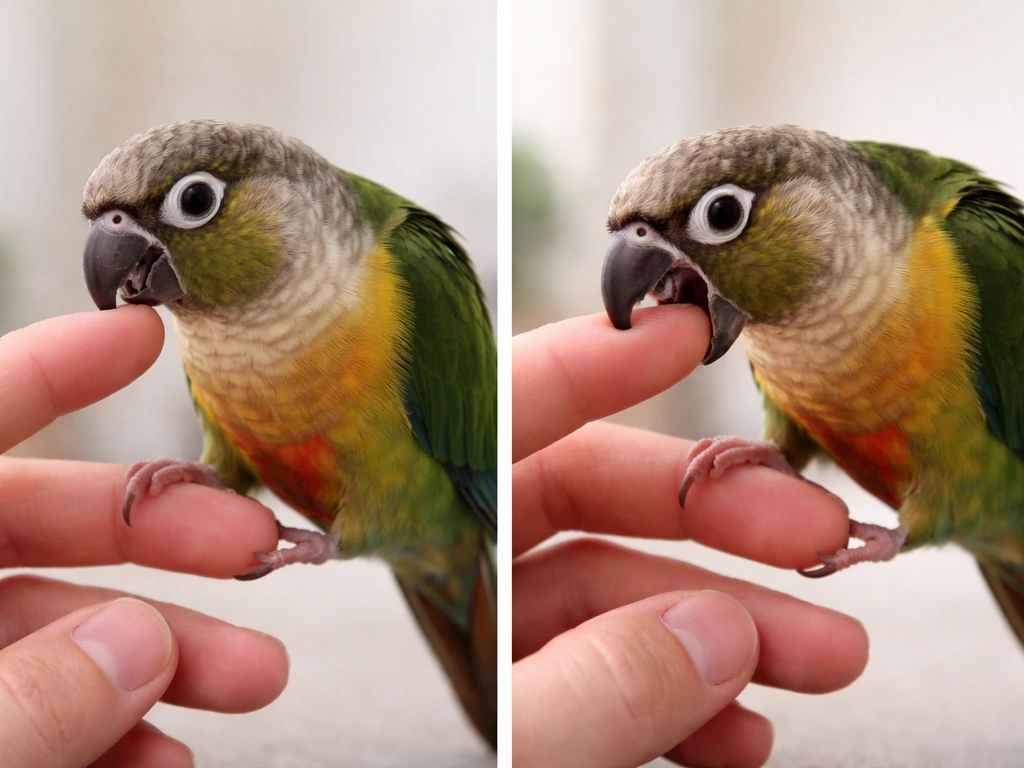
There's a genuine difference between a bird "beaking" you and a bird biting you. Beaking or nibbling is gentle, exploratory contact where your bird is essentially tasting, preening, or investigating. If you are wondering why your bird nibbles on your lips, the same body-language and trigger cues usually explain it nibbling. It usually feels like soft, even pressure. The bird's body is relaxed, feathers are smooth, and the whole thing feels curious rather than tense.
A true bite is sudden, harder, and often accompanied by a change in the bird's posture right before it happens. The bird may pin its pupils rapidly (called eye flashing), hunch forward, fan its tail feathers, or flatten its body into a low, crouched position. These are all warning signs that something has shifted from playful to uncomfortable.
The distinction matters because the response is different. Gentle nibbling can be managed with redirection and light training. Escalating biting that comes with body-language warnings usually means the bird has hit a limit and needs space, not more engagement.
Why birds are obsessed with ears specifically
Ears are an irresistible target for most birds, and there are a few overlapping reasons why.
Curiosity and exploration
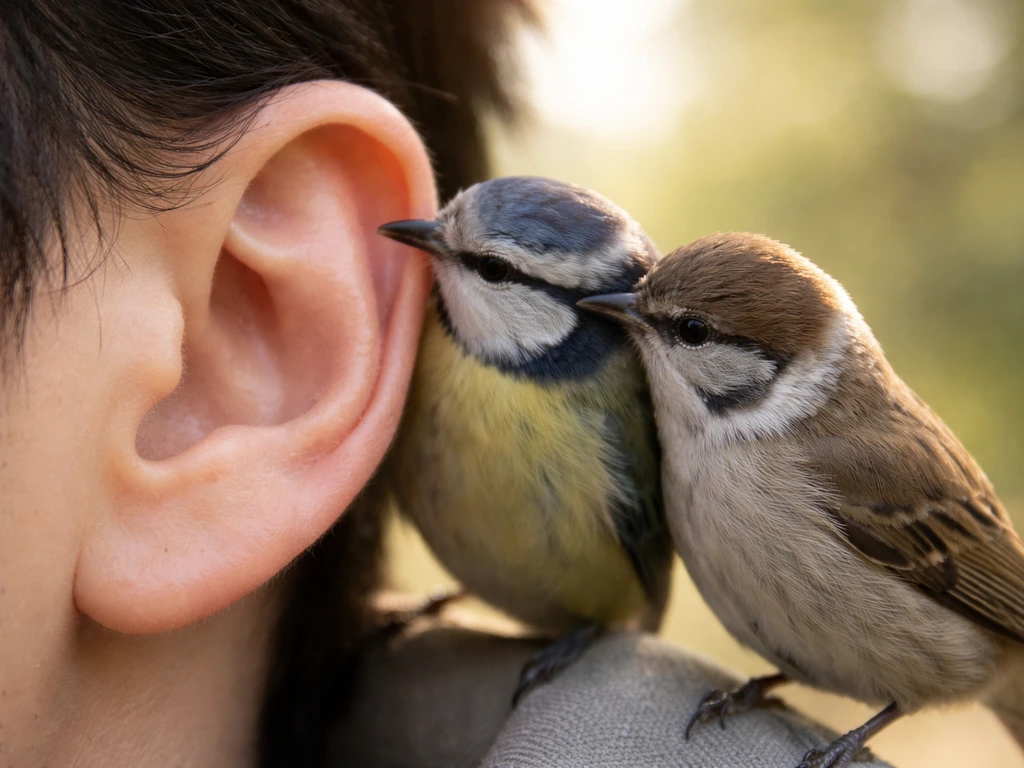
Birds investigate everything with their beaks. Your ear has texture, a hole, earrings, and it moves when you react. That reaction is especially interesting to them. The moment you flinch, laugh, or pull away, you've made the ear the most entertaining object in the room. The bird files that information away and comes back.
Social bonding and flock grooming
In the wild, birds preen each other as a social bonding activity. When your bird gently nibbles around your ear, hairline, or even explores your lips and face, it's performing the same ritual it would do for a flock mate it trusts. This is genuinely affectionate behavior. Similar behavior shows up when birds lick your face or try to clean hard-to-reach spots on your skin. If you’re wondering why your bird licks or nibbles your face, it’s usually a mix of bonding, curiosity, and attention-seeking. The ear canal and the area behind the ear are spots that feel, to your bird, like the perfect place to offer a little grooming.
Attention-seeking
Birds learn fast. If nibbling your ear once made you squeal, turn your head, or engage with the bird, it learned that the behavior gets a result. That reaction, whether positive or negative, can accidentally train the bird to keep doing it. Even pushing the bird away counts as attention in a bird's mind. This is one of the most common ways ear nibbling becomes a habitual or escalating behavior.
Territorial or possessive behavior
Some birds, especially during hormonal seasons in spring and fall, become more possessive about their favorite people. Your ear may become "theirs" in their mind. If another person comes close or you turn your head away, the nibble can turn sharper. This type of behavior is often paired with puffing up, wing spreading, or vocalizing when others approach.
When fear, stress, or overstimulation is behind it
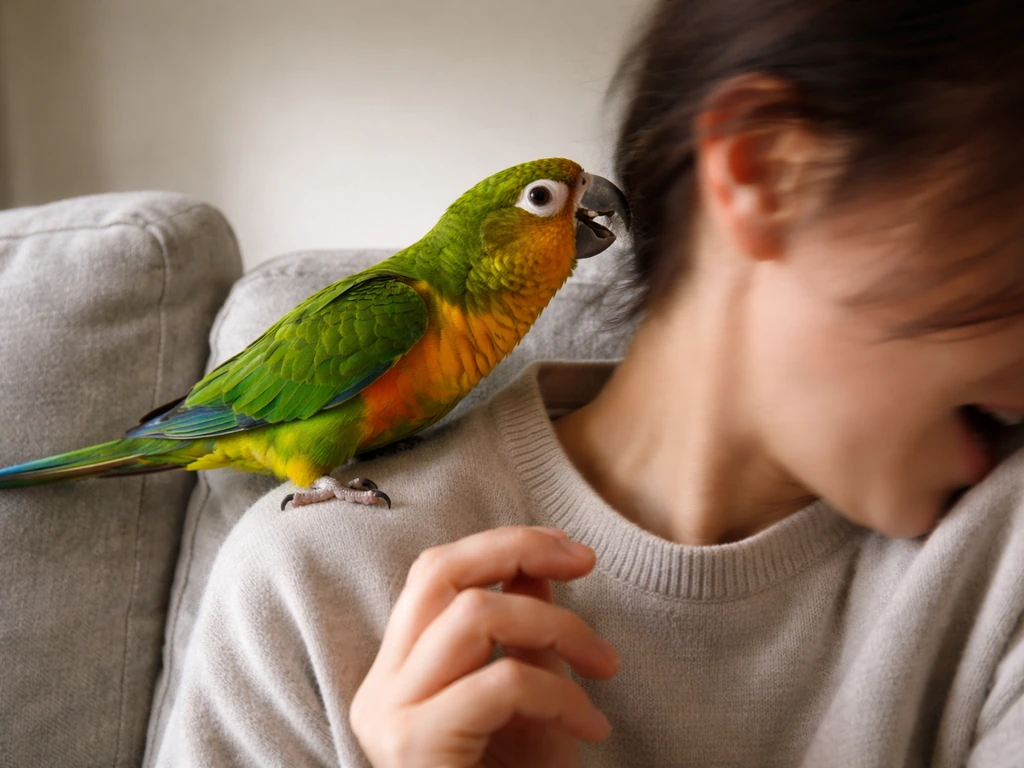
Not every ear nibble comes from a happy, confident bird. Some birds bite the ear because they're overstimulated and the ear happens to be the closest thing. Others do it out of fear, especially if they feel trapped or cornered near your face. Reading your bird's full body language, not just one signal, is the only reliable way to catch this. Chewy advises that petting a bird’s feathers can simulate flock preening and bonding, but you should watch body language to confirm the bird is receptive since it can change quickly watch body language to ensure the bird is receptive.
Here are the body-language warning signs to watch for before or during ear contact:
- Rapid eye flashing (pupils dilating and contracting quickly): can signal strong emotion and may precede a bite
- Feathers slicked tight against the body: a sign of fear or tension, not relaxation
- Nape feathers raised or neck feathers puffed up: often means the bird is agitated or on alert
- Tail feathers fanned out or rapidly wagging: paired with other signs, this can signal aggression
- Body leaning or lunging forward with beak open: a clear pre-bite posture
- Low crouched or flattened horizontal posture: can indicate fear or defensive aggression
- Hissing, growling, or beak clicking: the bird is telling you to back off
Eye flashing alone isn't always a red flag. Some birds pin their eyes when they're excited about a treat or a favorite toy. The key is reading all the signals together. A bird with pinned eyes, raised nape feathers, and a forward-leaning posture is very different from one with pinned eyes whose body is loose and tail is waggling in a relaxed way.
Overstimulation is a real and common issue. Many bird owners don't realize that extended handling sessions, especially near the face, can push a bird past its comfort threshold. When that happens, biting isn't aggression in any meaningful sense. It's the bird's only available way to say "I've had enough."
Quick checklist: figure out your bird's trigger today
Before you change anything, spend a day or two just observing. Ask yourself these questions and note your answers:
- When does it happen? First thing in the morning, after a long absence, or randomly throughout the day? Morning nibbling often signals excitement or attention-seeking. Nibbling after you've been away often signals bonding.
- What was the bird doing right before? Was it calm and preening, or was it already riled up from something in the environment?
- What's the body language like? Relaxed feathers and quiet posture suggest affection. Tight feathers, raised crest, or forward leaning suggest stress or overstimulation.
- How do you react? Do you flinch, laugh, or pull away? If yes, your reaction is almost certainly reinforcing the behavior.
- Is the nibbling getting harder over time? Escalating pressure suggests the behavior is being inadvertently rewarded or that the bird is pushing a boundary.
- Is there a pattern around certain people, sounds, or times of year? Seasonal hormonal spikes in spring and fall can shift calm nibbling into harder biting.
- Has anything changed recently? A new pet, a moved cage, a schedule change, or even a new piece of jewelry can trigger unusual behavior.
Once you've noted the pattern, you'll have a much clearer picture of whether this is affectionate habit, accidental training, or stress-driven behavior. That determines the right fix.
What to do in the moment
The most important rule: don't make a big reaction. Yelling, jerking away, or dramatically turning your head is exactly what the bird wants to see if it's attention-seeking, and it can also reinforce a fear-biting cycle if the bird learns the bite ends the scary situation. If your bird seems especially focused on your feet, the same attention, stress, and overstimulation clues can help you figure out what to change first attention-seeking, fear-biting cycle.
Here's how to interrupt ear nibbling without making things worse:
- Stay calm and still for one second before responding. Don't gasp or flinch.
- Calmly move the bird away from your ear by presenting your hand or forearm in front of its belly, just below chest height. This triggers the step-up reflex. The hand should come from in front, not from above or behind the head, which can startle the bird.
- Once the bird steps up, redirect it immediately to a chew toy, foraging item, or perch. The goal is to give the beak something acceptable to work on.
- If the bird bit hard or is visibly agitated (pinned eyes, raised feathers), bring it back to its cage, place it inside, and leave it alone for 10 to 15 minutes without fuss. This is not punishment. It's decompression.
- Do not put the bird back on your shoulder or near your ear again during that session. That's the reset point.
One thing to actively avoid: jerking your hand or head away sharply during a bite or a strike. It can reinforce the behavior and occasionally escalate it. A slow, deliberate, calm removal is always more effective.
Training and enrichment to reduce ear nibbling long-term
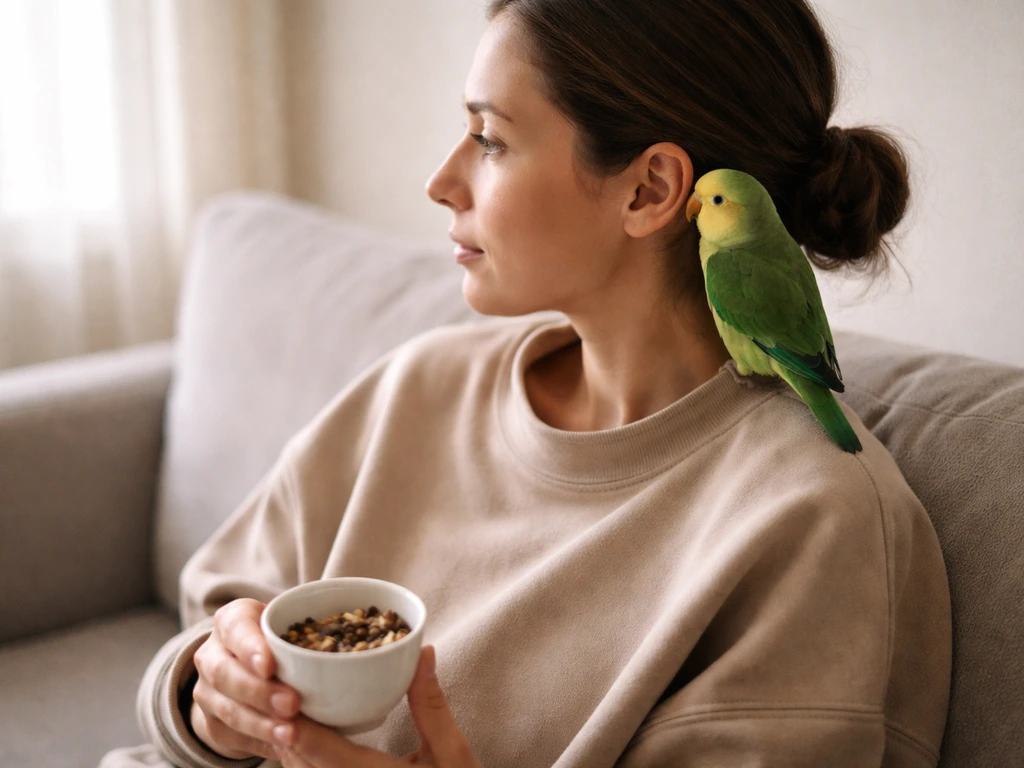
Once you understand the trigger, training gives you a way to replace the behavior rather than just stopping it in the moment.
Reinforce the step-up command consistently
A reliable step-up cue is your single most useful tool. Practice it daily in calm, low-stimulation settings so the bird responds automatically. When the bird steps up on cue without biting or hesitation, reward it immediately with a small treat or verbal praise. Over time this becomes your "exit strategy" whenever the bird is near your ear.
Teach the bird where the beak is welcome
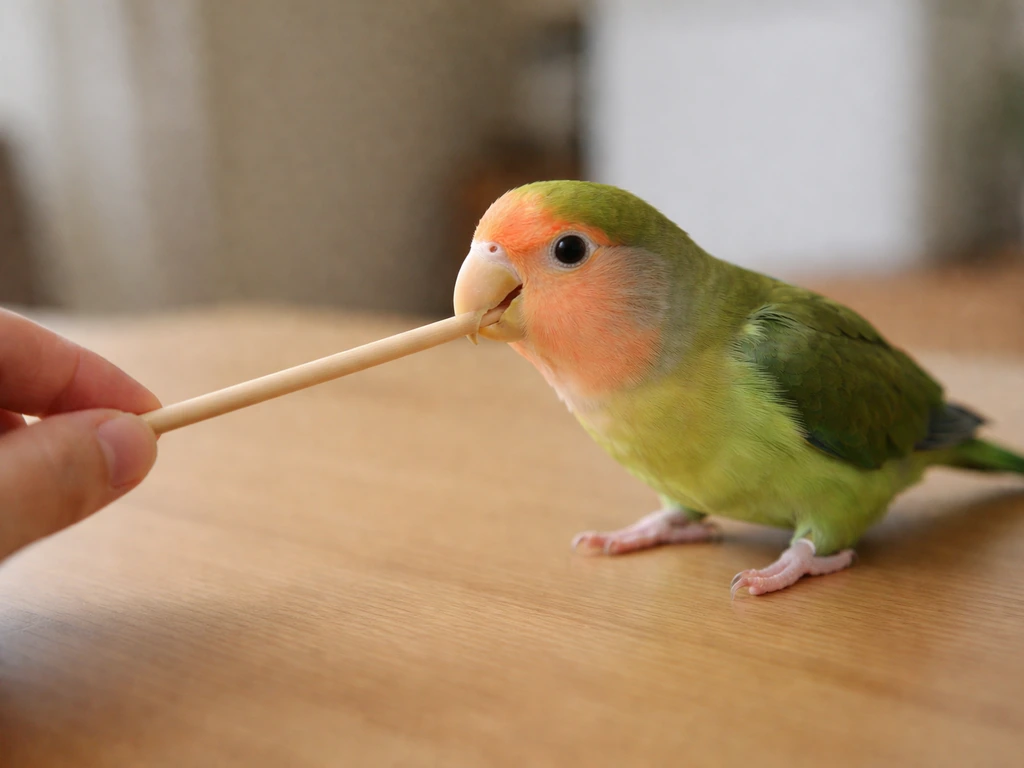
Use target training to redirect beak activity to appropriate objects. A simple target stick (even a chopstick) can be touched with the beak on cue, which channels the nibbling instinct into a controlled, rewarded behavior. This approach separates beak activity from your body and gives the bird a "legal" way to use its beak actively.
Desensitize gradually if the bird is fear-biting
If your bird bites the ear out of anxiety, the fix is gradual exposure, not avoidance. Introduce face and ear proximity slowly, rewarding calm behavior at each small step. Let the bird choose to approach rather than placing it near your face. Keep sessions short (two to three minutes) and always end on a calm note.
Increase enrichment to reduce attention-seeking
A bored bird will find its own entertainment, and that often means your ear. Make sure the bird has foraging toys, puzzle feeders, and rotating objects in the cage so it has outlets for beak activity that don't involve you. Rotate toys every few days to keep novelty high. More foraging time means less need to seek stimulation from your body.
Keep training sessions short and consistent
Training works better in multiple short sessions (five minutes, two or three times a day) than in one long daily block. Birds have good days and off days, and pushing through a session when the bird is unresponsive usually backfires. If the bird isn't engaged within the first minute or two, end the session and try again later.
A prevention plan that actually works
Once you've identified the pattern and started training, these daily habits will keep ear nibbling from becoming a default behavior again: These same training and behavioral-stress steps can also help if you are wondering why your bird clean your teeth why does my bird clean my teeth.
- Avoid putting the bird on your shoulder until it has a solid step-up and you can read its body language confidently. Shoulder perching puts the bird at ear level with no easy way to remove it quickly.
- Keep handling sessions to a comfortable length and end them before the bird shows stress signals, not after.
- Never reinforce a nibble or bite with a big reaction, even a laugh or a squeal.
- Provide a fresh foraging opportunity each morning so the bird starts the day with its beak occupied.
- If the bird is in a hormonal period (spring or fall, sometimes involving increased biting, territorial displays, or regurgitation), reduce face-level handling temporarily and increase enrichment activities instead.
When to call an avian vet
Most ear nibbling is behavioral, not medical. But there are situations where biting or unusual oral behavior signals something that needs a professional look. If you notice your dog carrying or showing a bird, keep them separated and get your vet or a wildlife professional involved right away unusual oral behavior.
Contact an avian vet if you notice any of the following: The American Association of Avian Veterinarians lists multiple illness red flags that should prompt veterinary attention, including blood loss or injury, discharge from the nostrils, eyes, or mouth, and abnormal respiratory sounds Contact an avian vet if you notice any of the following.
- A sudden change in bite intensity or frequency with no clear environmental trigger, especially in a previously calm bird
- The bird is biting itself, feather-plucking, or showing other self-directed behaviors alongside the ear biting
- Any discharge from the bird's nostrils, eyes, or mouth
- Abnormal breathing sounds, open-mouth breathing, or tail bobbing with each breath
- The bird seems lethargic, is eating less, or has fluffed-up feathers outside of normal resting
- The bird's bite broke your skin and the wound is deep, gaping, or not healing normally (birds carry bacteria that can cause infections in humans)
- Eye symptoms in the bird after biting near the face: swelling, redness, discharge, or one eye staying closed
A sudden shift to biting in a previously gentle bird, especially one that also seems quieter than usual or is losing weight, is worth a vet visit even if nothing else looks obviously wrong. Birds hide illness well, and behavioral changes are sometimes the first visible sign that something physical is going on.
If training isn't making a dent after several consistent weeks, or if the biting is causing injury or significant stress in the household, a certified parrot behavior consultant can do a one-on-one assessment that goes beyond what any general guide can offer. If you are dealing with persistent, tooth-related pain or recurring biting, that kind of specialist assessment can help you figure out why it is happening and what to change one-on-one assessment. The combination of a clean bill of health from a vet and targeted behavior support from a specialist handles the vast majority of persistent biting cases.
FAQ
Is ear nibbling ever a sign my bird is in pain or ill, not just affectionate?
Yes. If the behavior starts suddenly, ramps up, or comes with quieter demeanor, appetite change, weight loss, fluffed feathers, or trouble perching, treat it as a possible medical issue. Schedule an avian vet visit and keep training sessions short to avoid stressing the bird further.
What should I do if the nibbling leaves scratches or broken skin?
Stop any face-area contact and focus on distance management until the skin heals. Use a consistent redirection plan like step-up to move the bird away, then resume only when the bird is calm and stepping up without leaning toward your face. If bites are frequent enough to break skin, a behavior consult is a good next step.
How can I tell the difference between fear biting and overstimulation biting?
Fear biting often happens when your bird feels trapped near your face, you see avoidance behaviors beforehand (leaning back, body turning away, crouching), and the contact is tense. Overstimulation usually looks like a bird that was engaged and then got “too much” handling, with escalating body-language warnings and a fast switch from curious to uncomfortable. If you are unsure, treat it as fear and reduce proximity immediately.
Does pulling my head or flinching really train my bird to bite?
Often, yes. Even negative reactions can be reinforcing because the bird gets what it wants most (your attention and movement). Use calm, minimal reaction, remove contact slowly, then replace the moment with a cue-based behavior like step up or a target touch to teach an alternative outcome.
Should I punish my bird for biting my ear?
Avoid punishment, especially verbal scolding or sudden hand movements. Birds usually learn timing and predictability, so punishment can increase fear, worsen biting during handling, or shift the behavior to other targets. The more effective approach is consistent redirection plus short, positive training in calm settings.
My bird only nibbles when I wear earrings or when my hair moves, what does that mean?
That pattern usually points to exploration and stimulus sensitivity. The bird is keying in on shine, texture, and motion. Try keeping earrings covered or switching to a non-dangling style during training, then reward calm behavior while the bird investigates objects you offer (a target stick or approved toy) instead of your ear.
Why does my bird bite more during certain seasons or around other people?
Hormonal or territorial states can make a preferred person “claimed,” so the ear becomes the easiest target when you turn away or someone else approaches. Watch for puffing, wing spreading, guarding posture, and vocalizing, then reduce face contact and use step-up and exit strategies before the bird reaches its limit.
How long should training sessions be if ear nibbling is happening daily?
Keep sessions brief and high-success. Start with about 2 to 5 minutes, two or three times a day, ending while the bird is still responding well. If the bird is not engaged within the first minute or two, stop and try later, because pushing through often makes biting more likely.
What if my bird steps up fine on cue, but still lunges at my ear once it’s near my face?
That suggests the “exit strategy” cue is not reaching the same moment of temptation. Practice step-up and then immediately position the bird at your shoulder or farther away before your face is in range. Pair the cue with consistent handling boundaries, then reward only when the bird stays relaxed around face proximity for a few seconds.
Can target training or foraging toys actually reduce ear nibbling, or is it just a distraction?
It can do more than distract because it gives the bird a rewarded, repeatable way to use its beak. Offer a foraging toy or puzzle feeder before you have face contact, and redirect any reaching behavior to the target stick. Reward the beak to object behavior consistently so the bird learns “beak activity goes here,” not on your ear.
When should I contact an avian vet versus a parrot behavior consultant?
Contact an avian vet first if the change is sudden, the bird seems unwell, or there are signs of pain, weight loss, or unusual oral behavior beyond typical nibbling. If the bird is medically stable but training shows little improvement after several consistent weeks, or the biting causes ongoing injury or major household stress, a certified parrot behavior consultant can tailor an assessment and plan.
Next Article
Why Does My Bird Like My Feet? Causes and What to Do
Understand why your bird fixates on feet and get step-by-step actions to reduce stress, redirect, and spot health risks.