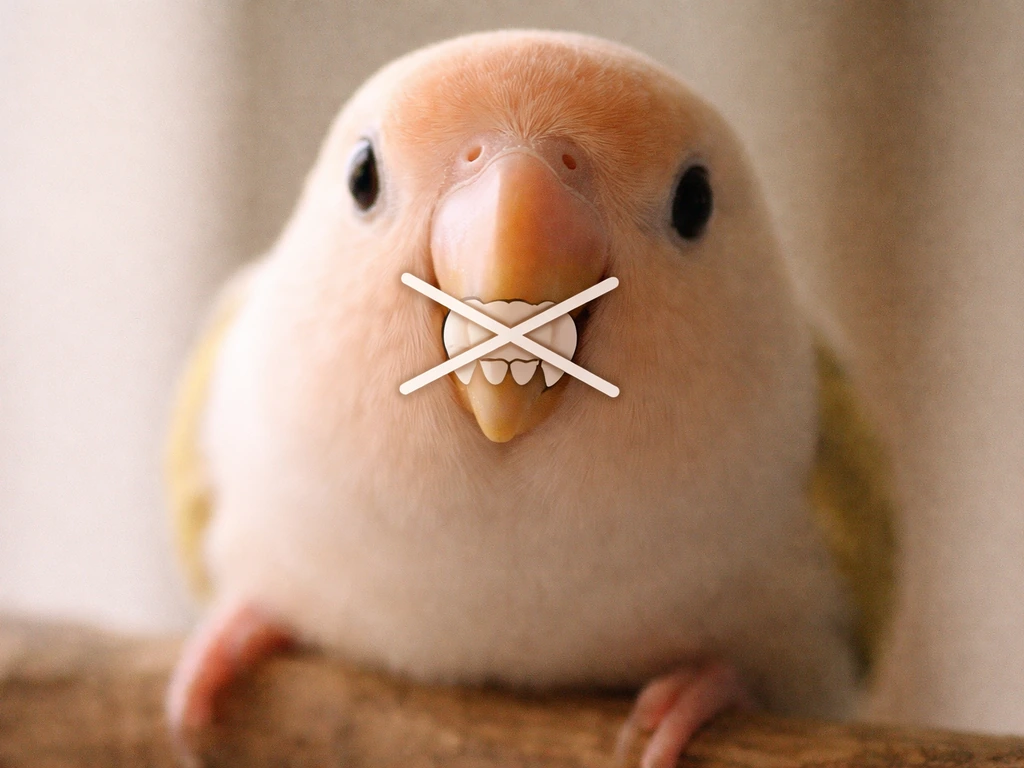
Birds don't have teeth. That's the core of the confusion. If you're asking why your bird (or a bird named Bird Brown) isn't getting her "teeth" fixed, the answer is that there are no teeth to fix. What you're likely seeing is a beak problem, an oral cavity issue, or something going on inside the mouth that looks a bit like what we'd call a dental problem in humans. Once you shift from "teeth" to "beak and mouth," suddenly the right path forward becomes much clearer.
Why Doesn’t Bird Brown Fix Her Teeth and What to Do

Marcus Chen
21 May 2026
Fixing the confusion: do birds even have teeth?
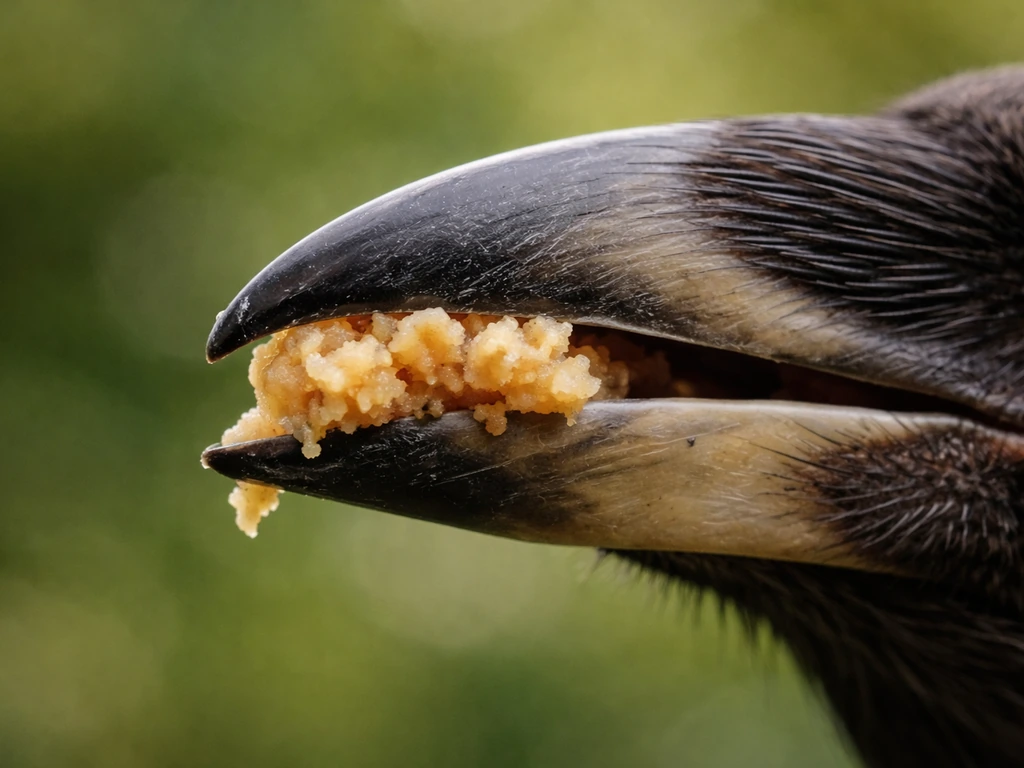
No bird alive today has teeth. What does all the cutting, crushing, and cracking that teeth would normally do? The beak. It's made of keratin, the same protein that makes up human fingernails, and it grows continuously throughout a bird's life. It's tough, functional, and surprisingly complex inside, with blood vessels and nerve endings running through it.
Birds also have an oropharyngeal cavity (their mouth and throat area), a tongue, and a structure called the choana, which is a slit-like opening connecting the nasal cavity to the upper throat. If your question is really about tongue behavior, see the section on oral problems and infections, since the tongue and throat can be involved there tongue and throat area. Problems can develop in any of these areas and look strange or alarming to an owner who has never seen them before. None of it is "dental" in the human sense, but it absolutely can need veterinary attention.
So when someone searches "why doesn't Bird Brown fix her teeth," the real question is almost always one of these: why does her beak look wrong, why is there something unusual in her mouth, or why isn't the problem being addressed? All of those have real answers.
What owners usually mean by "teeth" in pet birds
Most of the time when an owner says "teeth," they're pointing at one of a handful of actual conditions. Birds may also nibble or investigate your feet, which can be normal curious behavior or a sign of stress or training needs. Getting the right label matters because the treatment, urgency, and even the vet you need can differ significantly between them.
Beak overgrowth or deformity
This is probably the most common thing people mistake for a tooth problem. The beak gets too long, crosses over itself, curves abnormally, or just looks misshapen. Overgrowth can happen because the bird isn't wearing the beak down naturally (often from a soft-food-only diet or lack of chewing opportunities), but it can also signal something more serious like avian keratin disorder (AKD), liver disease, scaly mites (Knemidocoptes), fungal infection in the beak layers, prior trauma, or even cancer. You can't tell which just by looking.
Oral plaques or white patches in the mouth
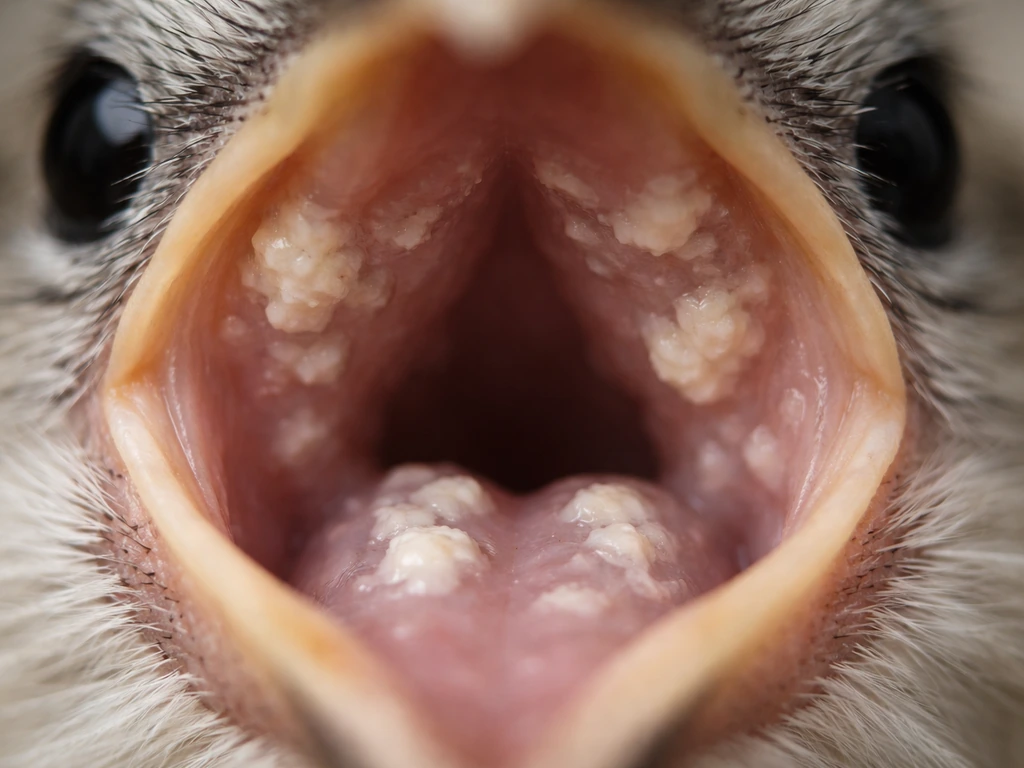
If you see white, cheesy-looking material inside the mouth or throat, that's not a tooth or a loose filling. Because mouth lesions can look confusing at first, it helps to describe exactly what you see and whether your bird is chewing or working her mouth more than usual. It's usually a sign of yeast overgrowth (candidiasis, sometimes called thrush) or a protozoan infection like trichomoniasis. Candidiasis can show up as white oral plaques that progress to ulcers, and in more advanced cases it spreads into the crop and digestive tract, causing regurgitation, crop distension, and weight loss. Trichomoniasis can produce lesions in the choana, tongue, and pharyngeal mucosa along with a foul odor and moisture around the beak.
Beak injuries or splits
Sometimes the beak cracks, chips, or bleeds from impact with a toy, cage hardware, or a fall. An owner who isn't familiar with avian anatomy might describe this as a tooth problem because the bird is clearly having trouble eating or is in discomfort around the mouth area.
Common reasons the problem isn't improving
There are a few recurring reasons why a bird's beak or oral problem lingers without getting better, and most of them come down to access, knowledge, and timing.
- Wrong terminology leads to the wrong help: Searching for bird dental care or teeth problems doesn't always surface the right avian vet resources. If you've been looking for someone to "fix the teeth," you may have been pointed toward the wrong professionals or given advice that doesn't apply to birds.
- No avian vet nearby: Regular small-animal vets often aren't trained in avian medicine. Beak problems, especially overgrowth trimming and oral disease, really need someone who specializes in birds or exotic animals. A lot of owners don't realize this until they're already frustrated.
- Delayed treatment hoping it will resolve on its own: Beak overgrowth doesn't self-correct, and oral infections don't clear up without treatment. Waiting it out usually means the problem gets worse and the underlying cause (like liver disease or a systemic fungal infection) progresses unchecked.
- Husbandry gaps that keep feeding the problem: If the root cause is a soft diet, wrong perch surfaces, or nutritional deficiencies, even a vet visit only helps temporarily. Without fixing the environment, the beak grows back too fast, or the infection recurs.
- Owners attempting home fixes: Trying to trim the beak at home or clean oral lesions with human products can cause serious harm, including profuse bleeding, pain, or chemical burns. This can set back proper treatment significantly.
At-home checks and what to observe safely
You can gather a lot of useful information before you even get to the vet, and doing so will help you describe the problem accurately. The goal here is observation, not intervention.
What to look at
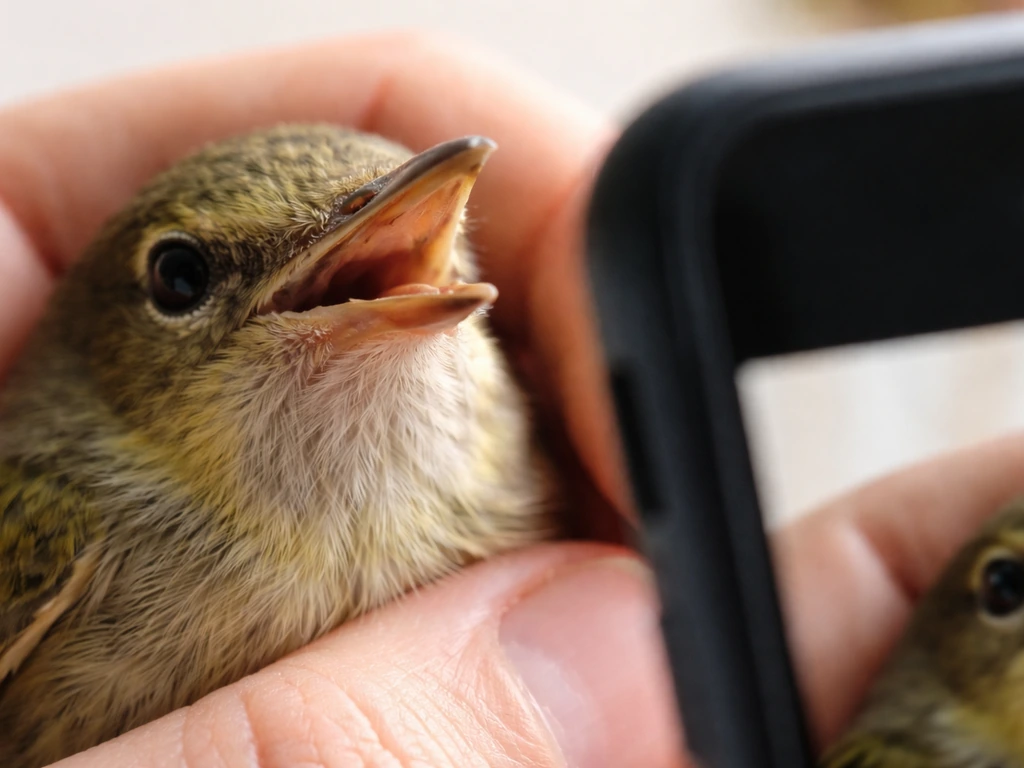
- Beak shape and length: Is the upper beak (rhinotheca) or lower beak (gnathotheca) noticeably longer than normal? Is it crossing over to one side? Does it look layered, flaky, or crusty?
- Beak surface texture: A healthy beak is smooth and solid. Pitting, scaling, or a honeycomb texture can indicate mite infestation (scaly face/beak). Soft or spongy areas may suggest infection.
- Inside the mouth: Gently and carefully observe if the bird opens its mouth. Look for white, yellow, or gray patches, unusual mucus, swelling, or anything that looks like it doesn't belong. A foul smell from the mouth is also a red flag.
- Eating and drinking behavior: Is the bird dropping food, eating less, tilting its head oddly to pick up food, or avoiding hard items it used to eat? These are signs the beak or mouth is causing discomfort.
- Weight and body condition: Run a finger along the keel bone (the ridge down the center of the chest). If it feels sharp and prominent, the bird may be losing weight, which can point to a systemic problem.
- Behavior changes: Lethargy, fluffed feathers, sitting low on the perch, or reduced interaction are general illness signs that make any beak or mouth issue more urgent. You might also notice your bird obsessively working at its beak or rubbing its face, which can accompany oral discomfort.
Document what you see
Take short video clips or clear photos of the beak and any oral abnormalities. Note when you first noticed the problem, whether it's getting worse, any recent changes in diet or environment, and all behavioral symptoms. This becomes the history your avian vet will need.
Immediate practical steps to support beak health safely
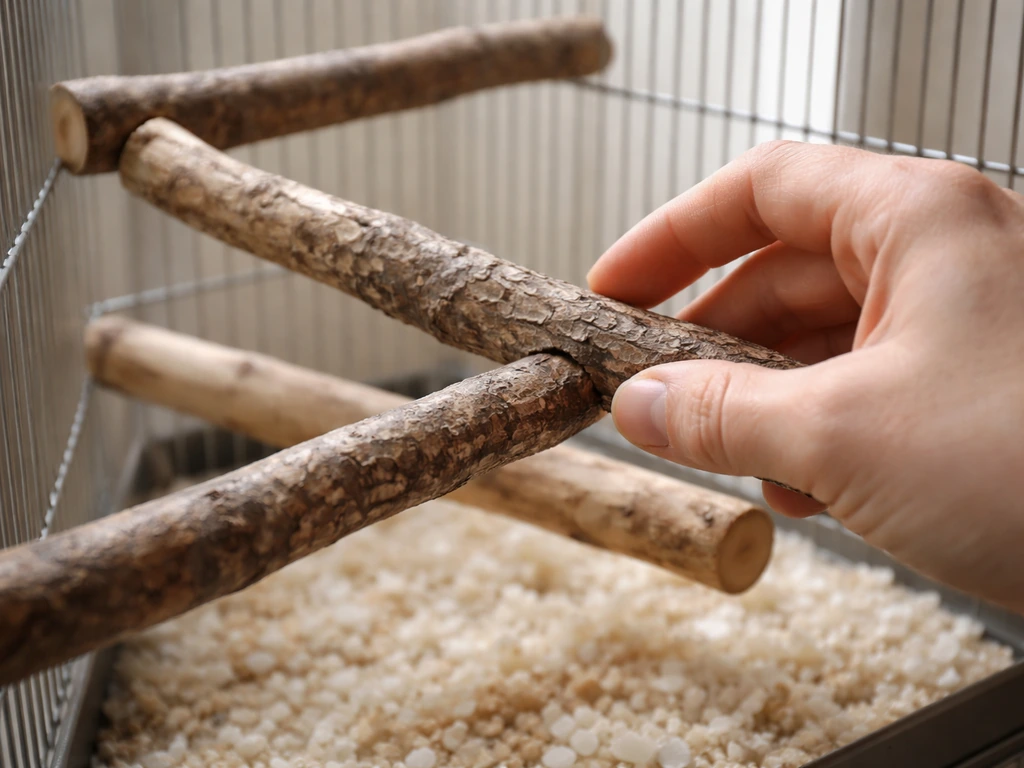
While you're arranging a vet visit, there are things you can do that genuinely help and things you should absolutely avoid. If you’re worried your dog has a bird in his mouth, keep a safe distance and seek guidance from a professional about immediate first aid and infection risk While you're arranging a vet visit, there are things you can do that genuinely help.
What actually helps
- Provide proper perches: Natural wood perches with varied diameters (like manzanita or java wood) help with beak and nail wear. Avoid sandpaper-covered perches, which can damage the feet without providing real beak benefit.
- Offer species-appropriate chewing materials: Hard foods like pellets, raw vegetables, and safe nuts give the bird natural opportunities to wear the beak. Cuttlebone or mineral blocks can help with the sides of the beak. This matters most if the bird has been on an all-seed or soft diet.
- Review the diet: A seed-only diet is nutritionally poor and contributes to hyperkeratosis and beak overgrowth over time. Moving toward a balanced diet with quality pellets, fresh vegetables, and limited fruit supports overall integumentary health including the beak.
- Keep the environment clean: If there's an oral or crop infection involved, reducing moisture buildup around food and water dishes, cleaning the cage regularly, and removing spoiled food promptly all reduce conditions that favor yeast and bacterial growth.
- Maintain normal routines: Stress suppresses immune function in birds. Keep the environment calm, maintain consistent lighting cycles, and minimize disruptions while the bird is unwell.
What to avoid completely
- Never attempt to trim the beak at home: There is a blood vessel running down the center of the beak, and nicking it can cause profuse bleeding that is very difficult to control. Even experienced handlers don't do this at home.
- Don't use human antifungal or antiseptic products in or around the mouth: These aren't formulated for birds and can be toxic.
- Don't force-feed or try to manually remove oral plaques: This causes pain and stress, can spread infection, and doesn't address the underlying cause.
- Don't delay because the bird "seems okay otherwise": Birds are prey animals and instinctively hide illness. By the time behavioral changes are obvious, the problem is often already advanced.
When to see an avian vet urgently and what to ask for
Some beak and oral problems are routine and can wait a few days for a scheduled appointment. Others need same-day or emergency care. Here's how to tell the difference.
Go immediately if you see any of these
- Active bleeding from the beak that doesn't stop within a few minutes of gentle pressure
- The bird is unable to close its beak or is holding it open continuously
- Severe respiratory distress (tail bobbing, open-mouth breathing, clicking sounds)
- The bird is not eating at all and appears lethargic or fluffed
- Visible trauma: the beak is cracked through, partially detached, or severely misaligned after an injury
- Rapid weight loss or a keel bone that suddenly feels very prominent
Schedule an appointment soon (within a few days) for
- Gradual beak overgrowth with no bleeding or acute distress
- White or discolored patches inside the mouth that have appeared recently
- Unusual texture or scaling on the beak surface
- Behavioral changes around eating (dropping food, tilting head, avoiding hard items)
- Any concern you can't clearly identify through observation alone
What to ask the vet and how to describe the problem
When you call, use the language that will get you taken seriously: say "beak overgrowth" or "oral lesions" or "something abnormal inside the mouth," not "teeth problems." Tell them the species, approximate age, diet, and when you first noticed the issue. Ask specifically for an avian veterinarian or a vet experienced with exotic birds, not a general practice.
At the appointment, expect the vet to take a full history, weigh the bird, and do a physical exam before deciding on any beak trimming. For beak overgrowth, the vet will want to find the underlying cause first, because trimming a beak that's overgrown due to liver disease without treating the liver disease is just a temporary patch. For oral lesions, diagnosis often involves cytology or fungal culture, not just a visual check.
For significant beak trimming or correction, some birds need light anesthesia to do it safely and without pain. For example, the Niles Animal Hospital beak-trimming PDF warns that trimming too aggressively can cause bleeding and pain and discusses safety considerations for avian anesthesia light anesthesia to do it safely and without pain.
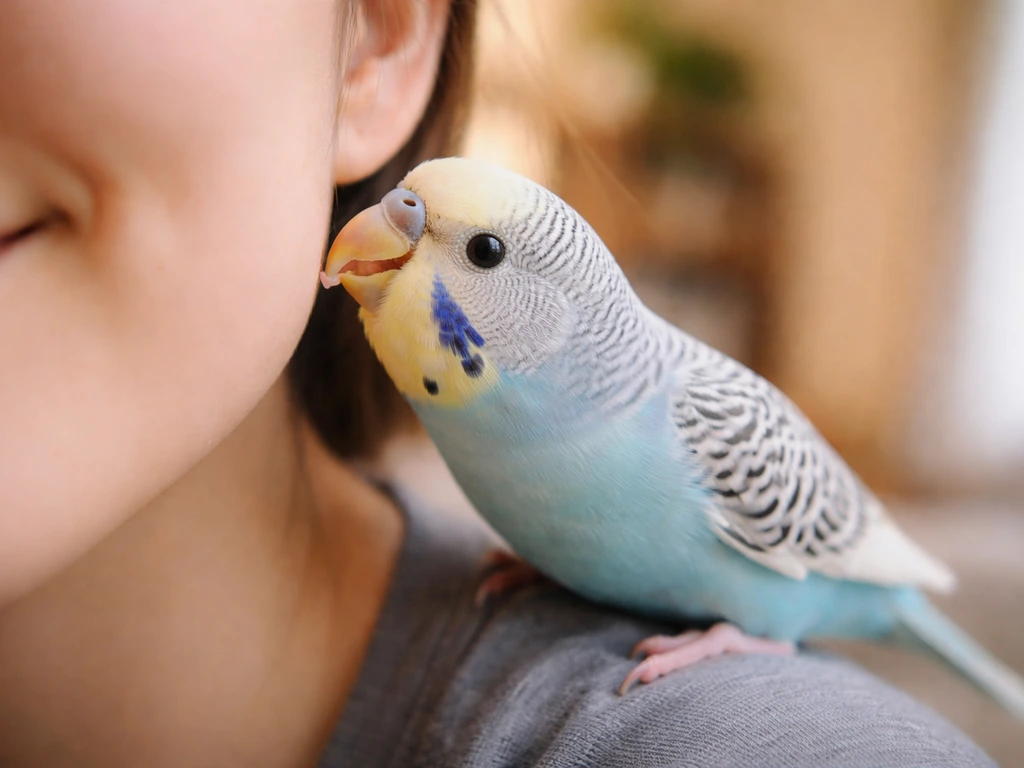
It's also worth knowing that beak and oral health connect to broader mouth-focused behaviors. Bird nibbling on your ear often comes down to what the bird is actually trying to do, like exploring, seeking comfort, or showing an oral or beak-related issue. Birds that are constantly working at something with their beaks, licking or nibbling at faces and lips, or fixating on their owner's mouth may be communicating discomfort or seeking sensory feedback.
If your bird fixates on your feet, it can be a beak-driven curiosity or a beak discomfort issue rather than anything “to do with teeth. ”. If your question is really why does my bird lick my face, the behavior can be related to beak or oral discomfort. If your bird has been unusually focused on mouths (yours or her own), that behavioral piece is worth mentioning to the vet as part of the full picture.
Your action plan while you wait for the appointment
- Write down everything you've observed: when it started, what it looks like, and any behavior changes.
- Take clear photos or short video of the beak and any mouth abnormalities.
- Note the current diet and any recent changes to food, environment, or routine.
- Switch to softer foods temporarily if the bird seems to be struggling to eat, but don't go to an all-liquid diet without vet guidance.
- Keep the environment calm, clean, and at a stable temperature.
- Find an avian-experienced vet if you don't already have one: search for "avian veterinarian" or "exotic bird vet" plus your location, or check the Association of Avian Veterinarians directory.
- Do not attempt any home trimming, product application, or manual removal of anything in or around the beak or mouth.
The bottom line is this: what looks like a "teeth" problem in a bird is a beak or oral health issue that almost always needs a professional to properly diagnose and treat. The good news is that once you know what you're actually looking at, the right help is much easier to find.
FAQ
Can I trim or file Bird Brown’s beak at home if it looks “too long” or “uneven”?
Avoid DIY trimming unless an avian vet has identified the cause. The beak contains living tissue, trimming too far can cause bleeding and pain, and if overgrowth is driven by AKD, liver disease, or mites, cutting only the tip usually fixes nothing long term.
How do I tell whether an “oral problem” is urgent or can wait for a scheduled visit?
Urgency rises if there is regurgitation, weight loss, difficulty swallowing, open-mouth breathing, foul odor, bleeding, obvious ulcers, or inability to eat normally. If your bird is eating less than usual for more than 24 hours, err on same-day advice because mouth and throat infections can worsen quickly.
What should I bring or document before I call the avian vet?
Bring the bird’s species, age estimate, diet details (especially pellet vs seed vs soft foods), and any recent changes in cage materials or cleaning products. Also note the timeline (when you first saw it), whether it is spreading, and behavior changes like increased quietness, head bobbing, drooling, or unusual nibbling of toys.
Is white, cheesy material in the mouth always thrush, or could it be something else?
White plaques strongly suggest candidiasis, but similar-looking debris can occur with other infections or irritation. The vet may use swabs for microscopy (cytology) and culture or testing, because treatment differs and delaying diagnosis can allow spread into the crop and digestive tract.
Why does overgrown beak happen even if Bird Brown eats and seems active?
Overgrowth can develop without immediate behavior changes, especially if the bird’s beak is not naturally worn down. Soft-food-only diets, limited foraging, lack of appropriate chewable items, and underlying disease can all contribute, so “she looks mostly normal” does not rule out serious causes.
Could scaly mites or AKD look like a tooth or gum issue from a distance?
Yes. Mites like Knemidocoptes can create crusting, roughness, and changes that resemble oral damage, and AKD can cause abnormal beak and keratin quality. Because appearance alone cannot separate these causes, the vet may check skin/beak texture and use diagnostic testing as needed.
My bird’s beak chipped after a fall or toy injury, what’s the safest first step?
Check for active bleeding and reduce handling until you speak with an avian vet. Keep the bird warm and minimize stress, offer easy-to-eat soft foods only if she can swallow comfortably, and avoid any attempts to grind or pull loose beak fragments.
Bird Brown keeps licking or chewing my lips or face, is that always an oral problem?
Not always. Some birds lick or nibble for exploration, bonding, comfort, or sensory feedback, but if the behavior ramps up alongside mouth changes, odor, white plaques, or reduced eating, it can reflect beak discomfort. Mention the full pattern to the vet, including frequency and whether it coincides with other symptoms.
If the vet says “beak overgrowth,” why do they focus on underlying disease before trimming?
Because beak trimming can be a short-term cosmetic fix. If overgrowth is secondary to liver issues, AKD, infections, or mites, cutting the beak without treating the cause can lead to rapid regrowth or new injury risk.
What diagnostic tests might an avian vet use for “mouth lesions” beyond a visual exam?
Expect the possibility of cytology (to identify infection type), fungal testing or culture when indicated, and a careful look at the choana and throat area for lesions. For significant corrections, the vet may also evaluate whether light anesthesia is needed for safety and accurate alignment.
Next Article
Why Does My Bird Lick My Face? Causes and What to Do
Learn why your bird licks your face, spot stress or skin issues, and get steps to redirect and when to see an avian vet.