
Your bird is obsessed with your mouth because it sees your lips, teeth, and the sounds you make as a fascinating social focal point. Sometimes owners notice their bird cleaning or working on their teeth and gums, which raises the question why does my bird clean my teeth. Most of the time this is a bonding behavior rooted in flock instincts, curiosity, or mate-like attachment. It becomes a problem when it escalates into biting, won't stop on your terms, or shows up alongside health warning signs. The good news: you can redirect it starting today, and most cases don't need a vet.
My Bird Is Obsessed With My Mouth: Causes and Fixes

Marcus Chen
18 Jun 2026
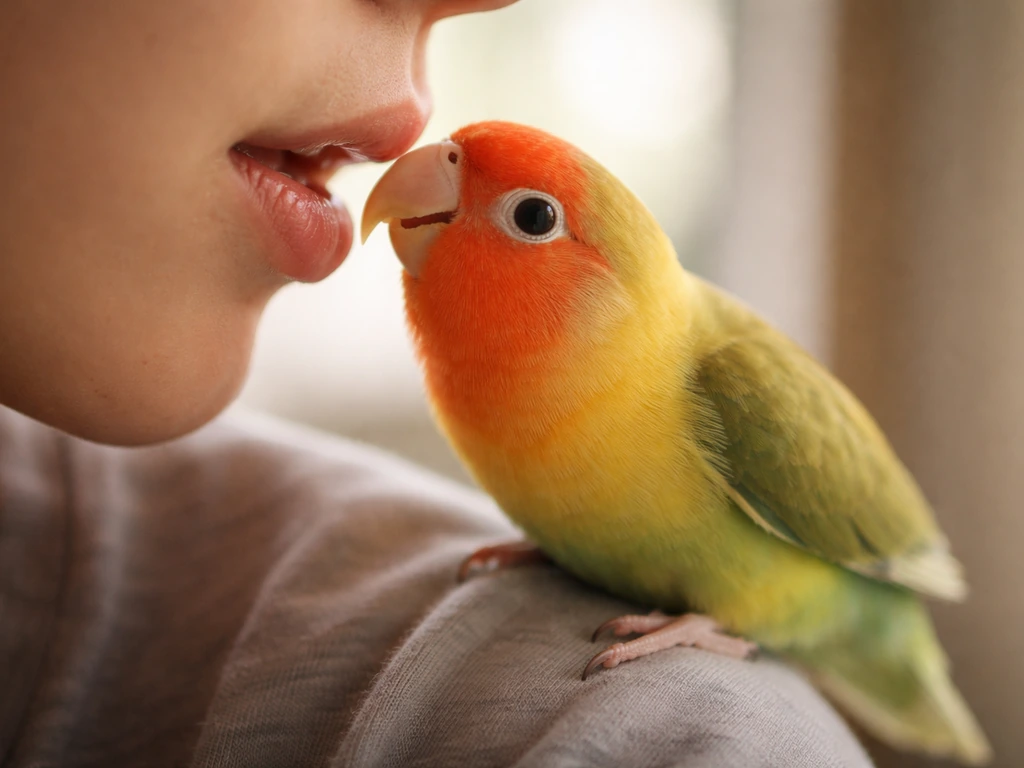
Why your bird targets your mouth in the first place
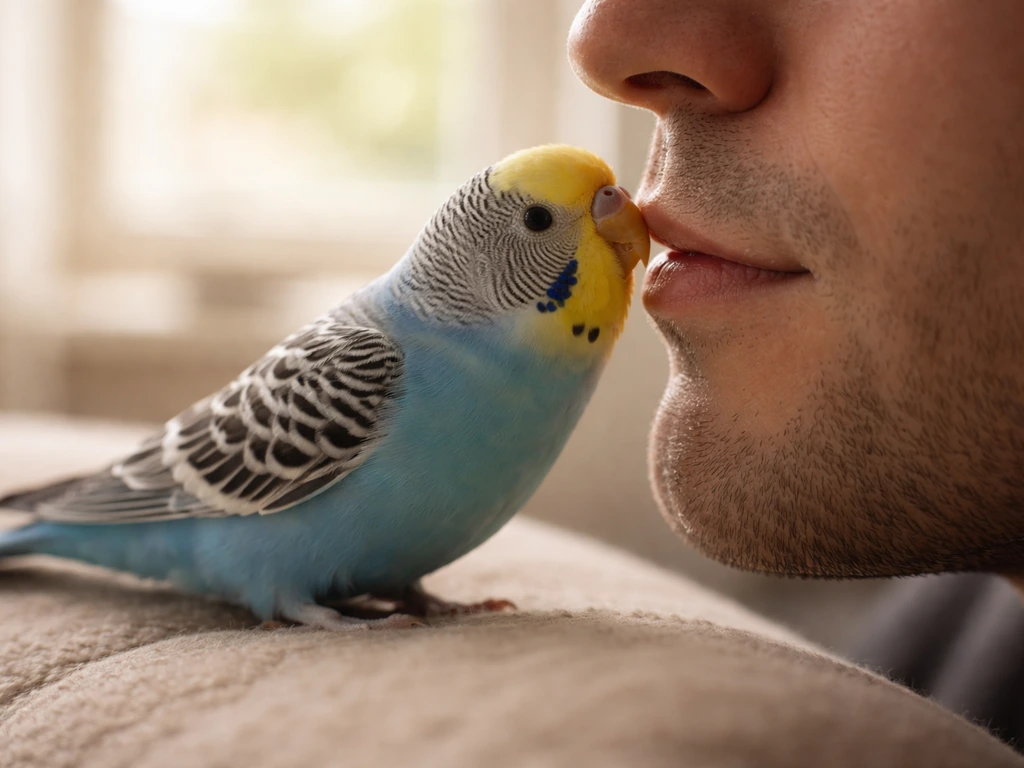
Birds in a flock spend a lot of time on each other's heads and faces. They preen around the eyes, tap beaks as a greeting, and even regurgitate food for a bonded mate. When your bird fixates on your mouth, it's usually translating that same flock logic onto you. Your lips move, make sounds, and are warm and interesting. To a budgie or parrot, your mouth is basically the most interactive part of your face. If your bird is nibbling on your ear, the same causes behind mouth-fixating apply, like bonding, hormones, boredom, or accidental reinforcement your mouth.
Gentle beak tapping on your lips is often what budgie owners call a 'budgie kiss.' It's the same light tap birds exchange with flockmates as a greeting and bonding signal. That kind of behavior is not aggression. It's your bird telling you it considers you part of its inner circle.
But curiosity plays a role too. If your bird is also sticking its tongue out, you may want to look at common causes and what to do next why is my bird sticking his tongue out. Your mouth opens, closes, and makes sounds your bird finds genuinely puzzling. Many birds will investigate anything novel and mobile on your body. If your bird tilts its head and gently touches your lips when you're talking, that's exploration as much as affection.
Where it shifts from 'sweet' to 'obsessive' is when the behavior becomes persistent, demanding, or escalates into nipping that breaks skin. At that point something is reinforcing the behavior or driving it hormonally, and it needs to be addressed.
What to watch for alongside the mouth fixation
Most mouth-obsessed birds are completely healthy. But a sudden new fixation on your face, especially if it comes with other physical changes, is worth paying attention to. Here's what to watch before you decide whether this is purely a behavior issue or something that needs a vet.
Body language that tells you what's going on
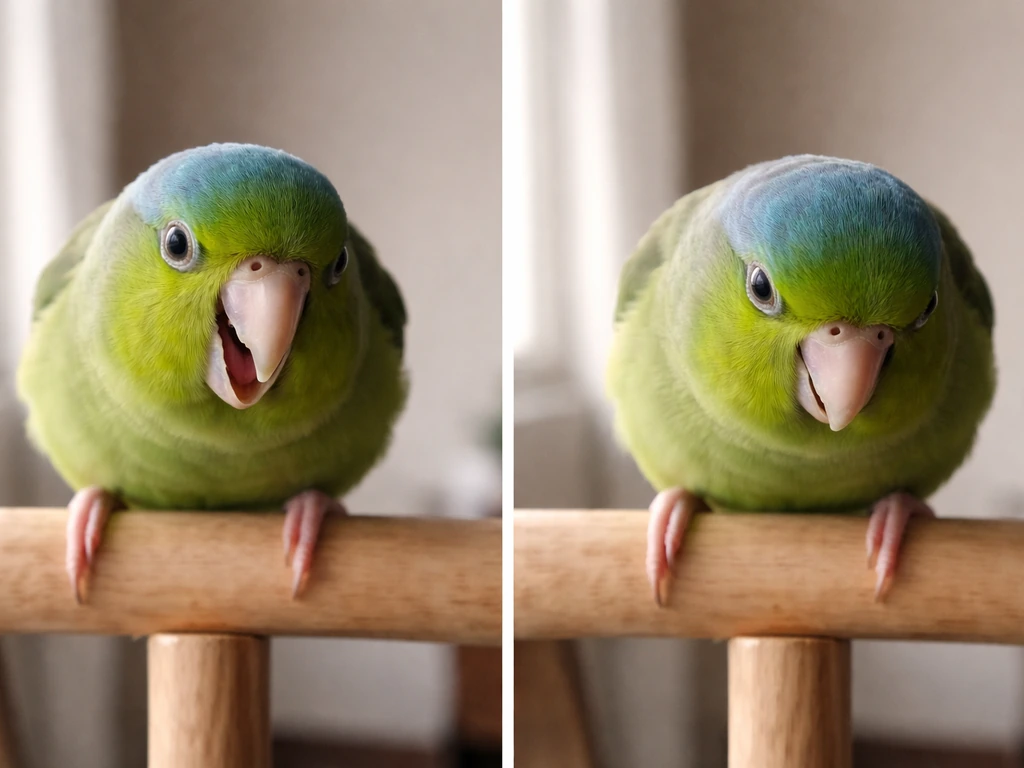
Eye pinning (rapid dilation and contraction of the pupils) can mean excitement or irritation, and you need posture to read which one it is. A bird that's leaning forward with slicked-down feathers and pinning eyes is probably worked up and could bite hard. A bird with relaxed, fluffed posture that's lightly tapping your lips is almost certainly bonding. Tail fanning similarly signals either excitement or aggression depending on the full picture. Pay attention to the whole bird, not just the beak.
Physical red flags that mean call the vet
If your bird's mouth-targeting behavior is new and sudden, look for these signs before assuming it's purely behavioral. Any one of them warrants a call to an avian vet rather than a wait-and-see approach, because birds often hide illness for days or weeks before things look obviously serious.
- Open-mouth breathing or labored breathing at rest (normal resting respiratory rate for small birds under 300g is roughly 30 to 60 breaths per minute; if your bird is breathing hard and fast without exertion, that's a red flag)
- Tail bobbing with every breath, which signals respiratory effort
- Nasal discharge, crusty nares, or discharge from the mouth or eyes
- Debris or wet material around the head and face, which can indicate vomiting or regurgitation
- Crop that hasn't emptied within 6 hours of a feeding
- Droppings that have changed in color, consistency, or frequency
- Noticeable weight loss or a keel bone that feels sharper than usual
- Lethargy, fluffed feathers, or sleeping more than normal
- Abnormal beak texture, flakiness, or visible lesions around the mouth
It's worth knowing that if your bird is showing open-mouth breathing or wheezing, that is an urgent situation. Birds in respiratory distress should be kept warm and calm, handled as little as possible, and seen by a vet the same day if you can manage it.
What's actually driving the obsession
Understanding the trigger makes fixing the behavior much easier. Here are the most common ones.
Mate bonding and hormones
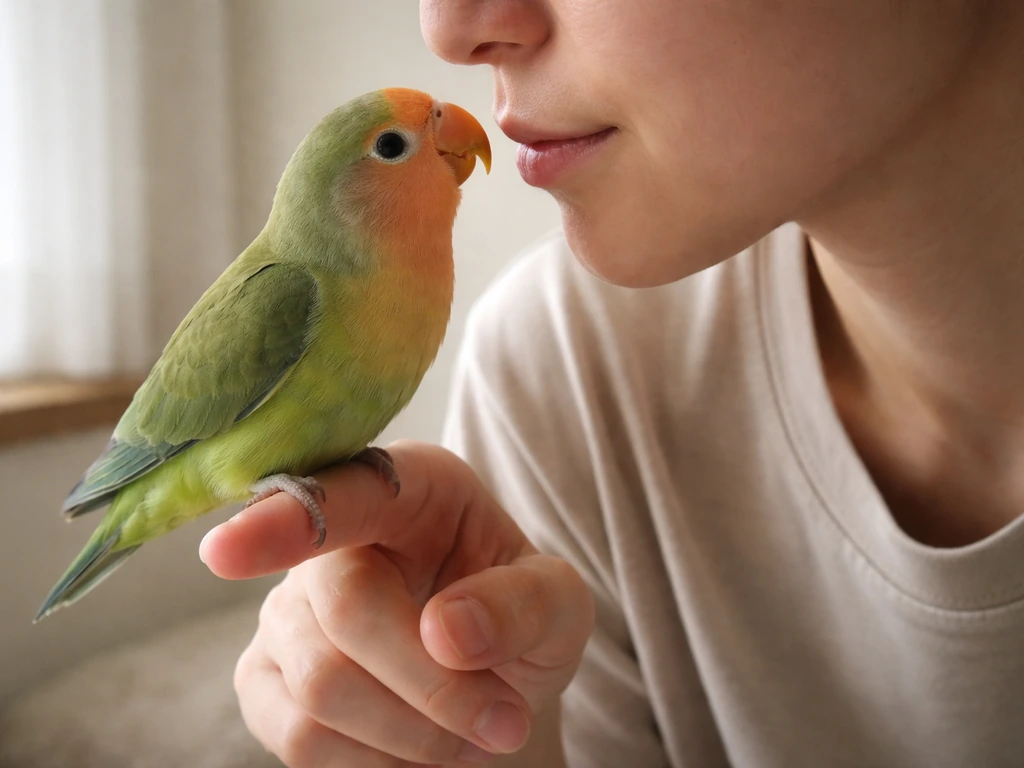
Pet birds can form pair-bond attachments to their human owners. To a hormonally active bird, your mouth, with its warmth and movement, can become a courtship target. If you are wondering why this starts, it often comes down to how hormonal courtship targets get learned and repeated your mouth. Psittacines are influenced by photoperiod (how many hours of light they get each day), available nesting sites, and food. If spring is approaching and your bird is suddenly much more intense about your face, hormones are a likely driver. Parrots and cockatiels are especially prone to selecting unusual 'mates,' including mirrors, cage furniture, and yes, human faces. Stroking a bird along its back or under its wings can also sexually stimulate it and make hormonal behavior worse.
Boredom and under-stimulation
A bird that doesn't have enough to do will find something interesting to fixate on, and your face is endlessly stimulating. If your bird is spending hours in the cage without foraging opportunities, varied toys, or out-of-cage time, boredom is a real contributor.
Accidental reinforcement
This is probably the most common driver of the 'obsessive' part. Every time your bird goes for your mouth and you laugh, pull back, talk to it, or react in any noticeable way, you've rewarded the behavior. Your reaction is attention, and attention is exactly what the bird wanted. Even negative reactions like saying 'no' or turning your head away can accidentally reinforce it if the bird finds your response interesting.
Stress or loneliness
Birds that are under-socialized, recently rehomed, or in an environment with unpredictable noise and handling can become clingy about specific interactions, including face contact. It can look like affection but is sometimes an anxious attachment.
Simple curiosity
Sometimes there's no deeper cause. Young birds in particular go through phases of investigating everything. If the behavior is gentle, occasional, and not escalating, curiosity is the most likely explanation.
Fixes you can start today
You don't need a behavior specialist to get started. These steps work for most birds and most owners right away.
Stop rewarding the behavior
The single most important thing you can do today is stop reacting when your bird targets your mouth. Don't laugh, don't pull back dramatically, don't say 'no' in an animated voice. Instead, turn your head away calmly and look elsewhere. No eye contact, no reaction. This removes the attention reward that's been sustaining the behavior.
Redirect to an acceptable target
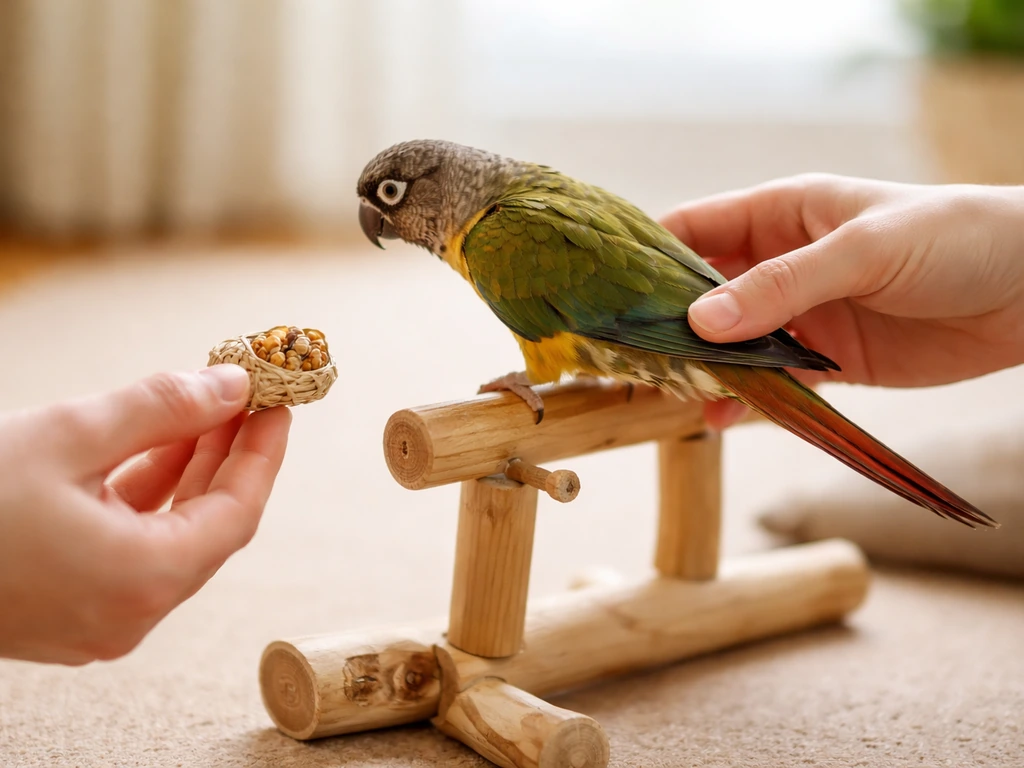
As soon as your bird moves toward your face, cue a 'step up' and move it to a nearby perch or play stand. Then offer a foraging toy, a chew item, or a piece of food to focus on. You're not punishing the bird, you're just replacing the mouth-target with something else. Do this every single time, consistently. Inconsistency is what keeps these behaviors going.
Manage where the bird is during bonding time
If your bird is on your shoulder and constantly going for your face, move it to your hand or a perch in front of you where you can see it and intervene easily. Shoulder time is a privilege that works better once the face-targeting is under control. For now, keep bonding interactions on a hand perch or play stand at chest level.
Keep sessions short and end on your terms
End every interaction before the bird gets demanding. Put it back on its perch while it's still calm and engaged, not after it's already trying to climb your face. This teaches it that calm behavior keeps the interaction going, and that demanding behavior ends it.
How to train safer, alternative behaviors
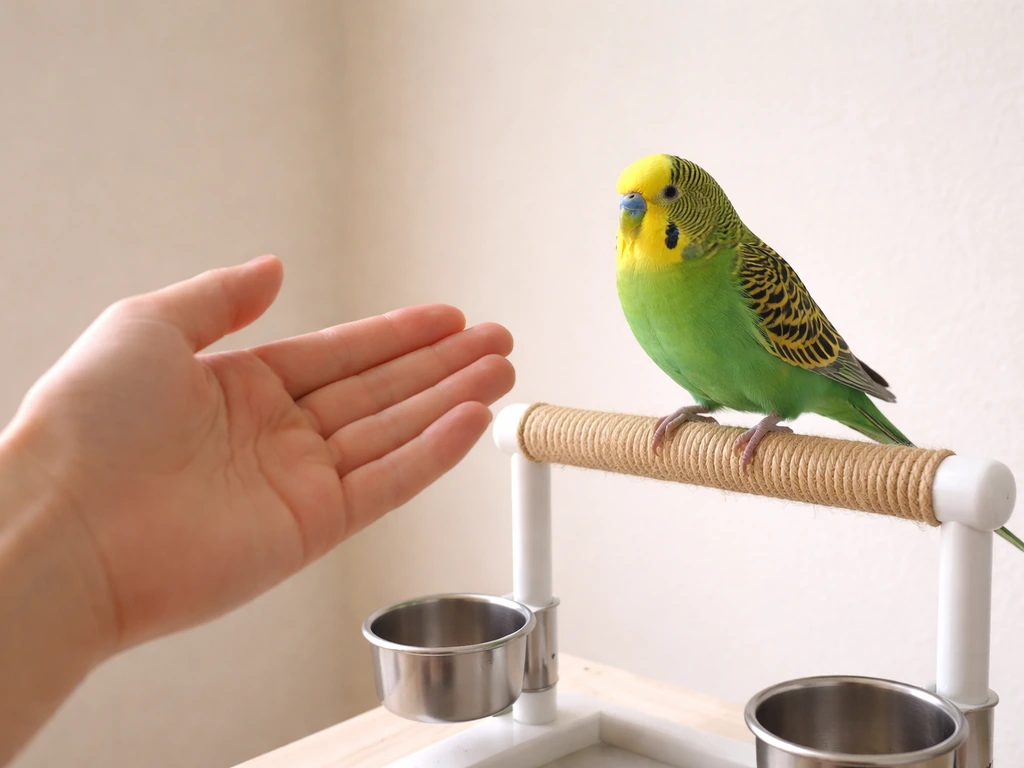
Management gets you through the day. Training is what actually changes the pattern. You don't need to be an expert to do this, but you do need to be consistent.
Reinforce the 'step up' cue strongly
If your bird reliably steps up onto your hand or a perch on cue, you have a safe off-switch for face-targeting behavior. Work on this separately from the problem behavior: hold out your hand or a perch, say 'step up,' and reward the moment both feet land on it. Do short 2 to 3 minute sessions a couple of times a day. Once the cue is solid, use it proactively the moment your bird starts heading for your face.
Teach a 'go to spot' station behavior
A station behavior is simple: you teach the bird that perching on a specific stand or spot on cue earns a reward. Stand near the perch, cue 'go to spot' or whatever phrase you want to use, and reward with a small treat the moment it steps onto it. This gives you a reliable way to redirect your bird to a location that's not your face, and it gives the bird a clear 'right answer' to offer instead.
Use desensitization if the bird is very face-fixated
If your bird immediately dives for your mouth every time you bring it close, work on gradually reducing its arousal around your face. Start interactions at a greater distance than usual. Reward calm behavior. Slowly decrease the distance over multiple sessions, always rewarding calm. If the bird starts to get agitated or moves toward your face, you've moved too fast: go back a step. The goal is to make your face less exciting by pairing proximity with calm rewards rather than with dramatic reactions.
Avoid aversive or punishment-based approaches
Flicking the beak, spraying water, or using any physically aversive response tends to backfire with birds. It can create fear, generalized avoidance of handling, or make biting worse. Behavior fundamentals materials distinguish punishment variants such as positive punishment and time-out, and they note side effects can include escape or avoidance, fear, or reduced behavior depending on the procedure. Positive reinforcement, redirecting, and removing attention are safer and more effective over the long term.
Is this a job for a vet or a behavior specialist?
Most cases of mouth obsession don't need professional intervention. But some do, and it's worth knowing where the line is.
Go to a vet if you see
- Any of the physical red flags listed above, especially open-mouth breathing, discharge, weight loss, or droppings changes
- Sudden onset of intense face-targeting in a bird that wasn't doing it before, with no obvious environmental trigger
- Regurgitation directed at your face or mouth repeatedly (this can be normal mate-bonding in birds, but it can also indicate digestive issues, and a vet can tell you which)
- Biting that is escalating in frequency or severity and doesn't respond to two or three weeks of consistent redirection
When you call an avian vet, ask specifically: 'Is there a health reason this could be happening, including hormonal or reproductive issues? Should I bring in a recent weight measurement? Does this bird need a physical exam or bloodwork?' Bring your bird in its own cage if possible, so the vet can see the droppings and environment. VIN (WSAVA2011) notes that gastrointestinal presentations may include regurgitation, vomiting, or diarrhea, and it discusses crop stasis as common while emphasizing evaluation using droppings when brought down in their own cage crop stasis is common and droppings can help evaluation.
Consider a bird behavior specialist if
- The behavior has been going on for months and isn't improving with consistent management
- The bird shows sustained aggression toward your face or other people's faces, not just attention-seeking
- You're not sure whether what you're seeing is bonding, fear-based, or hormonal, and need help reading your specific bird
- The bird has other behavior issues (screaming, feather-destructive behavior, phobias) that suggest a broader stress or enrichment problem
Keeping this from coming back long-term
Once you've got the immediate behavior under control, these habits will keep it from rebuilding.
Manage light exposure to reduce hormonal triggers
If your bird gets more than 10 to 12 hours of light per day (including artificial light in the evening), it may be running in a permanently 'breeding season' hormonal state. Cover the cage earlier in the evening to give 10 to 12 hours of darkness. Remove any dark, enclosed spaces in or around the cage that could feel like a nest site. These simple changes can meaningfully reduce hormonally driven face-targeting, especially in cockatiels and budgies.
Build an enrichment routine
A bird with enough mental and physical stimulation is less likely to fixate on your face as its primary source of entertainment. Rotate foraging toys every few days so they stay novel. Provide opportunities to shred, chew, and forage for food rather than having everything available in a bowl. Out-of-cage time with a variety of perches and activities matters more than the amount of time you spend interacting face-to-face.
Set consistent 'allowed attention' rules
Decide where on your body the bird is allowed to be and be consistent about it. If you allow shoulder perching sometimes and not others, the bird can't learn the rule. If you sometimes let the 'kissing' go because it's cute and other times redirect it, the behavior stays unpredictable and persistent. If your bird also seems fixated on your feet, the same approach of removing accidental reinforcement and redirecting to a safe target can help. Consistency across every person in the household is especially important: one person undoing the training is enough to reset weeks of progress.
Avoid over-petting in hormonal zones
Stick to petting your bird on its head and neck area. Stroking the back, wings, or under the tail can be sexually stimulating for many species, particularly cockatiels, and contributes to the hormonal state that drives mate-bonding behaviors toward your face. Avoid over-petting in hormonal zones so your bird's mate-bonding instincts are less likely to target your face mate-bonding behaviors toward your face. Head scratches are bonding without the hormonal side effects.
Your bird's obsession with your mouth is almost always a sign that it trusts you and considers you part of its flock. That's genuinely a good thing. The goal isn't to stop the bond, just to redirect it into behaviors that work for both of you. Start with the management steps today, add the training over the next few weeks, and you'll have a much more manageable routine within a month.
FAQ
How can I tell if my bird is bonding gently or actually being aggressive when it goes for my mouth?
A “budgie kiss” or gentle beak tap is usually brief and your bird stays relaxed. Stop and assess if the beak-contact becomes repeated climbs toward your face, you feel sudden fear, or skin is broken. If behavior is new, escalating, or paired with posture changes like forward leaning, persistent tail fanning, or pinning, treat it as “possibly more than bonding” and consider an avian vet call.
Could my reactions be training my bird to keep targeting my mouth?
Yes, mouth-targeting can be a habit that becomes self-reinforcing, even when your intention is good. If your bird gets attention for approaching (laughing, talking louder, pulling back, making a big show of “no”), you are training the approach. The fix is removing that reward, redirecting immediately to a step-up or chew/foraging target, and keeping reactions low-key every time.
What should I do if my bird’s mouth obsession is starting to draw blood?
If your bird is already breaking skin, manage risk first: keep shoulder contact off limits, intervene early by moving the bird to a hand perch before it reaches your face, and use thick clothing or a barrier (like staying behind a perch line) until the redirect habit is established. Then work on consistent step-up and station training, because punishment-based responses tend to increase fear or biting.
How long does it usually take to reduce the mouth-fixating behavior, and what schedule works best?
You can start training the same day, but you will likely need a few weeks of consistency. Use very short sessions (2 to 3 minutes), reward calm step-ups, and redirect before your bird gets frantic. If you notice the bird “warming up” within a predictable time of day (for example, evenings), schedule the most structured training right before that window.
Should I test whether my bird wants interaction by opening my mouth or making exaggerated expressions?
Avoid testing by opening your mouth, wiggling your face, or “playing chase,” because novelty can increase arousal and reinforce the target. Instead, practice calm proximity at a distance where your bird can stay steady, reward that calm, and only reduce distance when it stays relaxed.
My bird targets my mouth most when I eat or wear certain scents. Is that still the same issue?
If your bird targets your mouth only when you are eating, talking, or wearing strong scents, the behavior may be driven by curiosity plus reinforcement (movement, smell, attention). Separate the triggers: use a foraging chew toy during meals, avoid face contact while eating, and keep a consistent redirect phrase and routine so the bird learns “mouth time equals toy time.”
Does the same fix apply if my bird is obsessed with my ears or cheeks instead of my lips?
Generally, yes. The same logic applies to other face parts, like ears or cheeks, and the same “no reaction plus redirect to a safe target” plan works. If the pattern is shifting to a new target quickly, or you see sudden behavior changes, check for health or discomfort first rather than assuming it is only bonding.
When should I stop trying behavior fixes and contact an avian vet?
You should call for an avian vet when the change is sudden or comes with red flags like open-mouth breathing, wheezing, persistent lethargy, abnormal droppings, or significant changes in weight or appetite. Also get help if the behavior is paired with new aggressive posture or constant body tension, because pain or illness can make birds more reactive.
What cues should I look at in my bird’s body language so I know when to intervene?
Watch how the bird behaves before it reaches your face. If it leans forward with slicked feathers and rapidly intensifies, intervene earlier with step-up or the station behavior. If it fluffs and seems calmer while lightly tapping, that is more consistent with bonding and you can focus on redirecting gently without escalating.
If it seems hormonal, do I still need a vet, or can I rely on lighting and enrichment changes?
Not always. If your bird shows persistent reproductive or hormonally influenced behavior, adjusting light exposure and removing nest-like spots can make a meaningful difference. If you have already managed light and distractions and the behavior is still intense, ask the vet specifically about hormonal or reproductive causes and whether bloodwork or an exam is warranted.
How do I get other people in my household to help without slowing down training?
Make the rule household-wide: decide which body areas are allowed (for example, hand perch, not shoulder), and when your bird approaches your face, everyone uses the same neutral redirect and stops giving attention. One person laughing or “letting it slide” can restart learning and delay progress.
Next Articles
Why Is My Bird Sticking His Tongue Out? Causes & What to Do
Learn why your bird sticks its tongue out, spot harmless vs illness signs, and get a step-by-step do-this-now checklist.
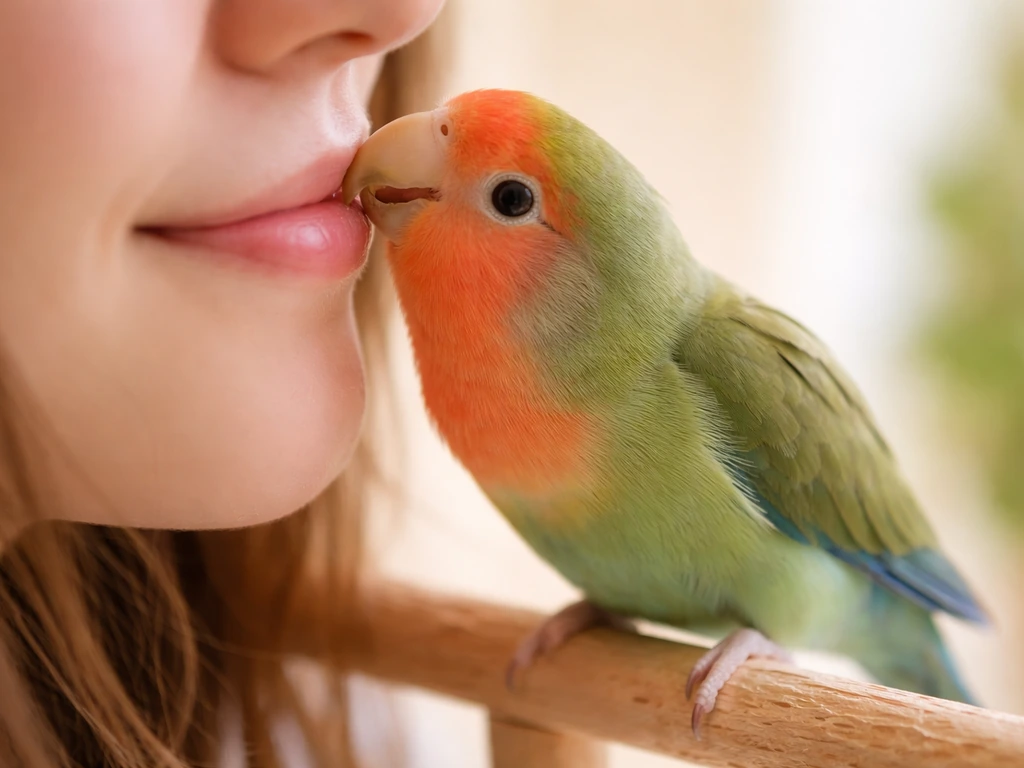
Why Does My Bird Clean My Teeth? Normal vs Red Flags
Understand why your bird grooms your mouth and beak, what’s normal, red flags, and safe checks to do today.
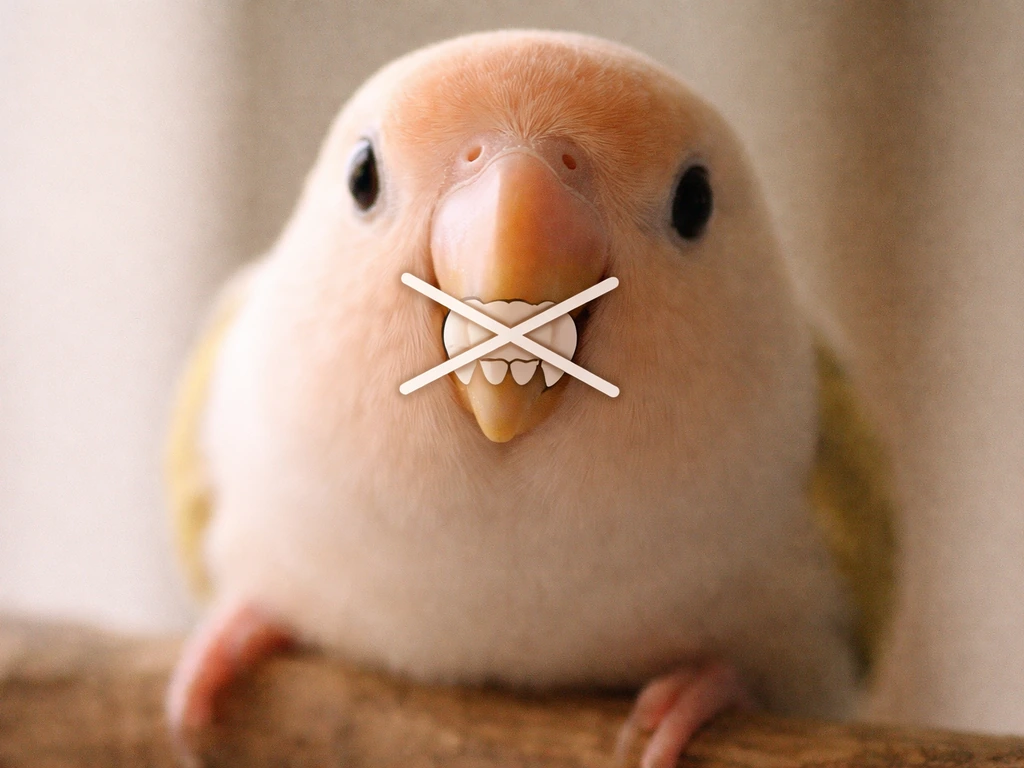
Why Doesn’t Bird Brown Fix Her Teeth and What to Do
Birds rarely need tooth fixing. Learn why Bird Brown isnt treated, what you may be seeing, and next steps.