
A bird sitting on the ground is sometimes completely normal, but it can also be one of the earliest signs that something is seriously wrong. The key is reading the whole picture: what your bird looks like, how it's breathing, whether it responds to you, and what the droppings look like. If your bird is fluffed up, unresponsive, or breathing with visible effort, treat it as an emergency right now. Birds that lay on their back often show discomfort or severe illness, so it helps to look at posture, breathing, and responsiveness why does my bird lay on its back. If it looks relaxed, is breathing quietly, and moves away when you approach, it's most likely resting or exploring.
Why Would a Bird Be Sitting on the Ground? Signs and Steps

Marcus Chen
30 May 2026
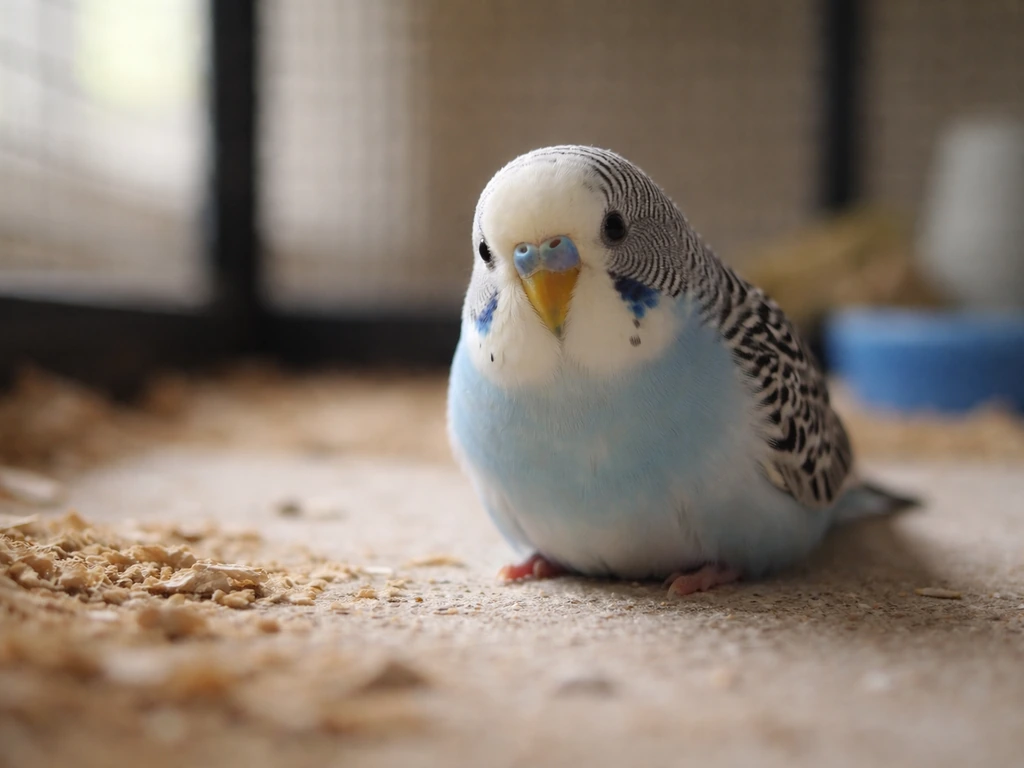
Common reasons a bird sits on the ground
There's a wide range of reasons a pet bird ends up on the cage floor or the bottom of an enclosure, and they fall into two broad camps: normal behavior and causes that need attention.
Normal reasons (usually nothing to worry about)
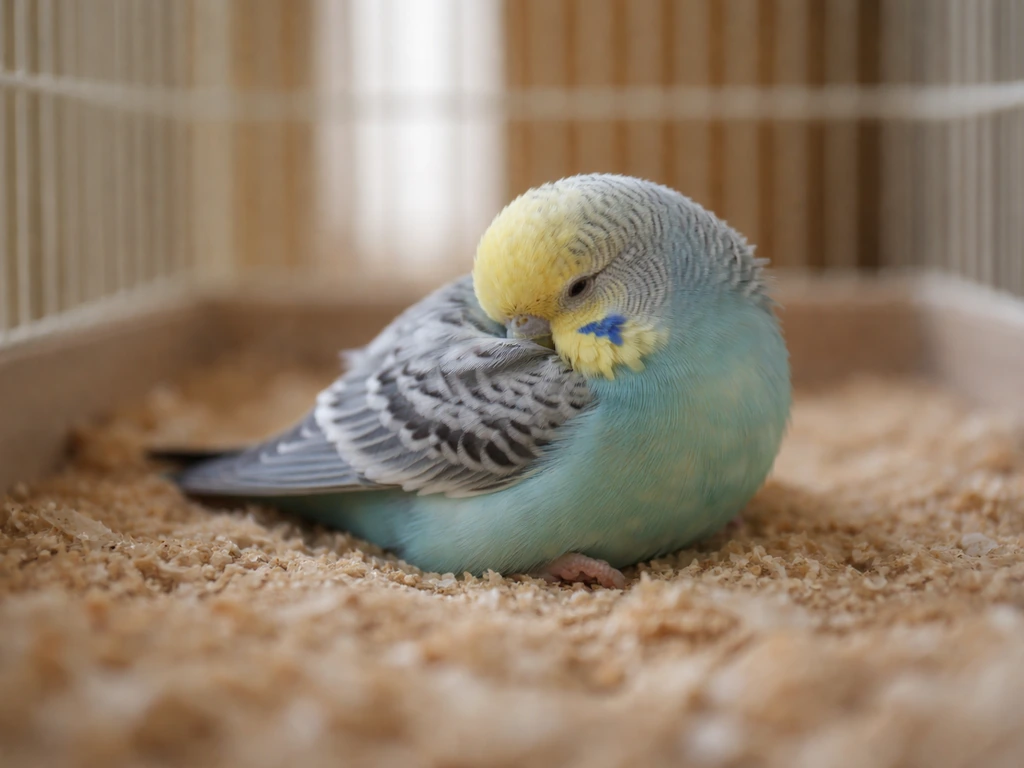
- Resting or napping: Many birds, especially budgies, will drop to a lower perch or the cage floor to sleep, often with one foot tucked up and the head tucked into back feathers.
- Post-handling warm-up: Birds can feel slightly unsteady or prefer to sit low right after being held or startled.
- Exploration: Curious birds, especially young ones, sometimes forage or investigate the cage bottom.
- Molting: During a molt, birds can be quieter and less active than usual. Some will sit on the floor for extended periods as feather regrowth makes movement temporarily uncomfortable.
- Temporary stress or adjustment: A new environment, a loud noise, or a sudden change in routine can make a bird sit low and still for a short period.
Concerning reasons (needs your attention)
- Injury or trauma: Falls, collisions with walls or windows, or getting a foot caught can leave a bird unable to perch properly.
- Pain or weakness: Illness of almost any kind can rob a bird of the energy or strength to stay on its perch.
- Respiratory distress: A bird struggling to breathe will often drop to a lower position and may stretch its neck or breathe with an open beak.
- Overheating or chilling: Temperature extremes cause birds to sit low and still. Drafts from HVAC vents are a common overlooked cause.
- Gastrointestinal illness: Infections, crop problems, or GI upset can cause lethargy and floor-sitting.
- Toxin exposure: Heavy metal poisoning from lead or zinc (from pennies minted after 1982, hardware cloth, costume jewelry, or mirror backings) can cause neurological signs including weakness, staggering, and sitting on the floor.
- Neurological problems: Seizure activity or other CNS issues can cause sudden loss of balance and inability to perch.
- General systemic illness: Birds are prey animals and instinctively hide sickness, so by the time a bird is visibly sitting on the floor and not responding normally, it may already be quite unwell.
How to read the behavior cues right now
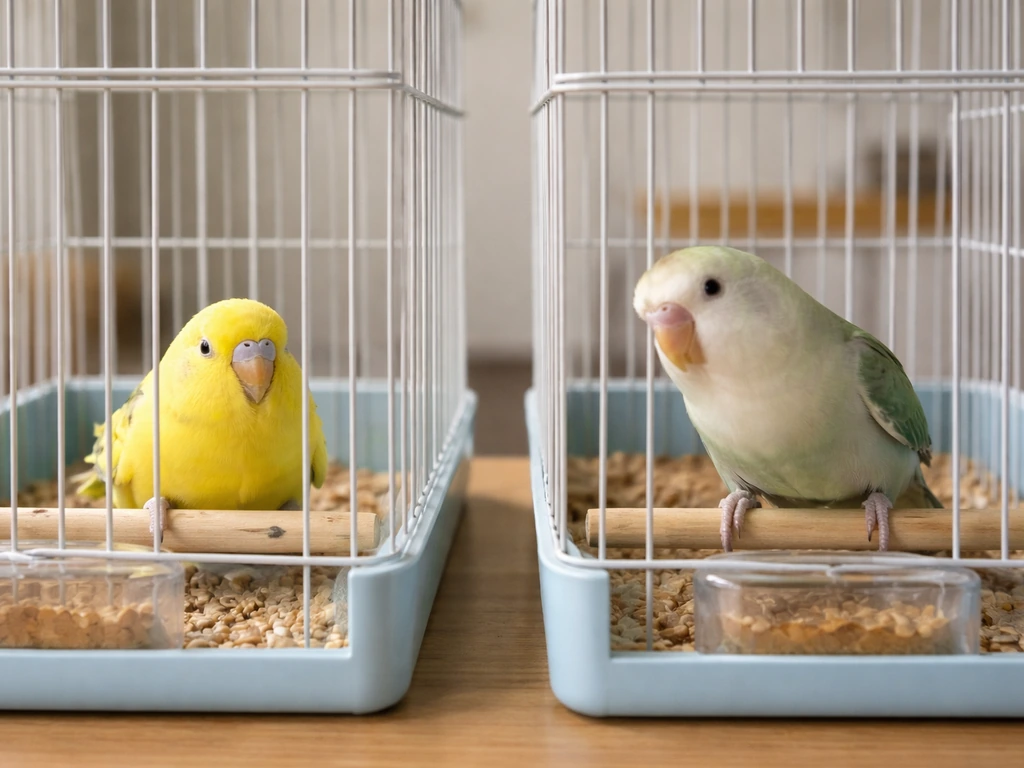
Before you open the cage or pick your bird up, just watch for a minute or two. This observational check is actually the most useful thing you can do first, and it's what avian vets do before handling too. You're looking at posture, breathing, alertness, and response to your presence. If your bird is standing still and not responding normally, check posture, breathing, and whether it can move away from you.
| What you see | Likely meaning |
|---|---|
| Sitting low, eyes open, moves away when you approach | Probably resting or exploring — relatively normal |
| One foot tucked, head turned back into feathers, eyes closing | Normal resting or sleep posture |
| Feathers fluffed up, eyes partly closed, slow or no response to you | Stress, illness, or injury — needs closer attention |
| Tail bobbing up and down with every breath | Respiratory effort — serious, contact a vet |
| Open-mouth breathing or gasping at rest | Respiratory emergency — act now |
| Leaning to one side, falling over, uncoordinated | Neurological sign or severe weakness — emergency |
| Sitting quietly but alert, normal droppings, eating as usual | Likely fine — monitor over the next hour or two |
| Sitting on the floor during molt, less chatty than usual | Normal molt behavior if all other signs are fine |
Molting birds often sit for long periods and interact less than usual, which is normal. But if your bird is molting and also looks fluffed, isn't eating, or has abnormal droppings, don't chalk it up to the molt. But changes in color, frequency, volume, wetness, or character of droppings can indicate a problem that needs immediate veterinary attention, and urates are usually white in healthy birds abnormal droppings. Those extra signs matter.
Related posture behaviors like standing on one leg, laying down flat, or just standing completely still can overlap with what you're seeing here. The key difference with ground-sitting is that being on the floor specifically often signals the bird no longer has the balance or energy to stay on a perch, which raises the concern level considerably. If your bird can't stand up or can't keep balance, treat it as a serious red flag and contact an avian vet right away my bird can't stand up. If you also notice your bird lifting one leg, it can be a clue to discomfort or balance issues, so it is worth checking alongside the ground-sitting signs why does my bird lift one leg up.
Health red flags that go along with sitting on the ground
Any of the signs below, combined with sitting on the ground, pushes this out of "probably fine" territory and into "call a vet today" territory.
- Open-mouth breathing or visible neck stretching to get air
- Tail bobbing: a rhythmic back-and-forth or up-and-down motion of the tail at rest is a sign the bird is using its whole body to breathe
- Fluffed feathers combined with closed or partially closed eyes and no response to stimulation
- Wheezing, clicking, or increased noise with each breath
- Greenish, lime-colored, or very watery droppings (can be a sign of heavy metal toxicity or GI infection)
- No droppings, or droppings that are much more or less frequent than usual
- Urates that look thick, pasty, or yellow instead of normal white (may indicate dehydration or kidney stress)
- Regurgitation (not the normal social regurgitation that bonded birds do, but repeated vomiting)
- Tremors, seizure activity, or loss of balance
- Limping, holding a wing awkwardly, or inability to grip a perch at all
- No interest in food or water for more than a few hours
- Huddled, unresponsive, or unable to move away from your hand
The Merck Veterinary Manual is direct on this: a bird that is huddled, lethargic, and unresponsive on the bottom of the cage should be treated as an emergency. Birds have very high metabolic rates, and they go downhill fast once they stop hiding symptoms.
What to check right now
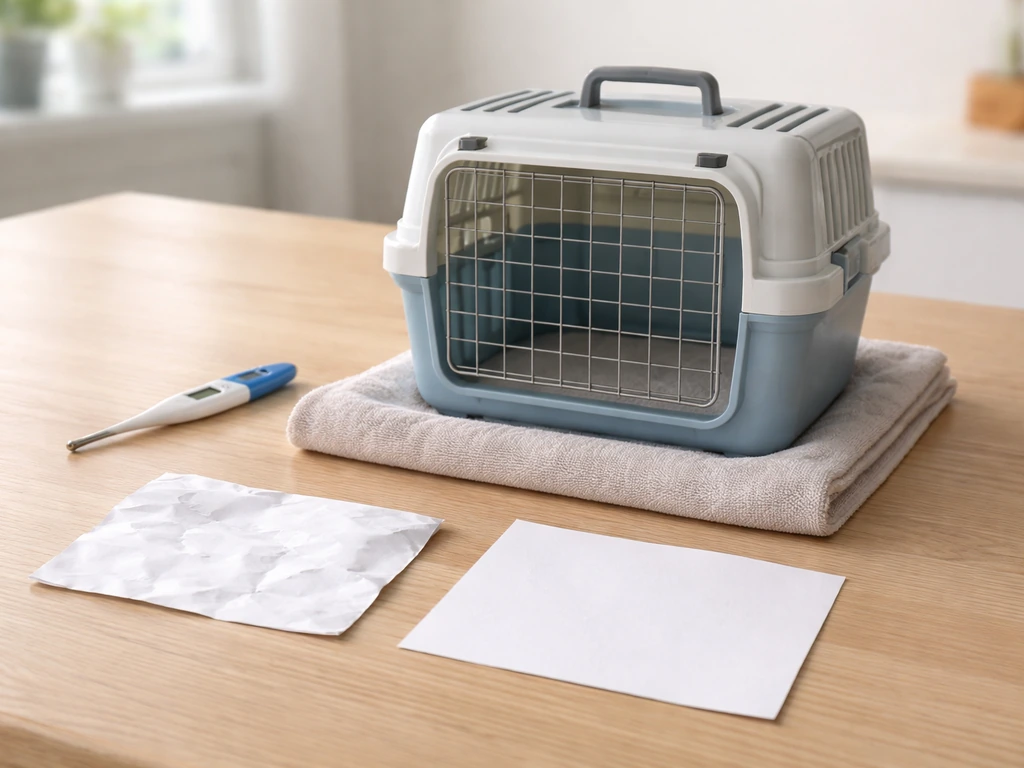
Run through this checklist before you do anything else. You can do most of this without touching the bird. If you notice a band on your bird's leg, make sure it is not too tight or causing irritation, and ask an avian vet about what it means leg bands.
- Breathing: Is the beak closed at rest? Is the tail still, or is it bobbing with each breath? Any open-mouth breathing, clicking, or wheezing?
- Posture: Is the bird upright and alert, or hunched with feathers puffed out? Can it grip the perch at all, or is it sprawled on the floor?
- Eyes: Are they bright and open, or dull, half-closed, or sunken?
- Droppings: Look at the cage floor. Are droppings normal in volume and color? Greenish, very watery, absent, or bloody droppings are red flags.
- Appetite: Has your bird eaten or drunk anything recently? Reject food and water is a serious sign in a bird.
- Environment: Check the temperature near the cage. Is there a draft from an air vent, window, or fan? Has anything changed in the last 24–48 hours, including new foods, cleaning products, candles, non-stick cookware used nearby, or new cage accessories?
- Recent events: Did the bird fly into a wall or window? Fall off the perch? Have access to any metal objects, coins, or painted/coated items?
The environment check matters more than many owners realize. Temperature swings from HVAC systems, fumes from overheated non-stick coatings, and even scented candles can make a bird suddenly very ill. If your bird lifts one leg up along with sitting on the ground or acting off, it can point to pain or an injury, so it is worth getting avian guidance quickly why does my bird lift one leg up. If you used anything new or cooked with non-stick cookware recently, mention it to the vet.
Immediate steps and home support
If your bird is clearly in distress or showing any of the red flags above, your main job at home is stabilization for transport, not treatment. Here is what to do while you arrange care.
- Warm the bird: Move the bird (in its carrier or a small, secure container) to a quiet, warm room. Aim for a temperature around 85°F (29°C). You can place a heating pad set on LOW under one half of the carrier only, insulated with a folded towel between the pad and the carrier, so the bird can move away from the heat if needed. Never trap a bird on top of a heat source with no escape.
- Keep it calm: Cover three sides of the carrier with a towel to block visual stimulation. Dim the lights. Keep noise low.
- Minimize handling: Every time you pick up a sick bird, you add stress that costs it energy it may not have. Limit handling to what's needed to move it safely.
- Do not force food or water: Syringe or tube feeding at home risks aspiration and can make things worse. If the bird is alert enough, you can offer food and water in the enclosure, but do not force it.
- Note everything: Write down when you first noticed the behavior, what the droppings look like, what the bird has had access to, and any recent environmental changes. This information is extremely helpful for the vet.
- Watch for changes: If you're in a monitoring situation (bird seems mildly off but is eating and breathing fine), check on your bird every 15–30 minutes for the first two hours.
Do not offer any new foods, supplements, or home remedies without veterinary guidance. Some human foods and even certain herbs can be harmful to birds. Your job right now is to keep the bird warm, calm, and safe until you can get professional guidance.
When to contact an avian vet
Some situations require you to act within minutes. Others give you a window of a few hours, but there is no version of "wait and see until tomorrow" that is safe when a bird is sitting on the floor and showing any of the signs below.
Call or go to an emergency avian vet immediately if:
- Your bird is breathing with an open beak, gasping, or has a visibly bobbing tail at rest
- Your bird is unresponsive or cannot move away from your hand
- You suspect toxin exposure (heavy metals, fumes, cleaning chemicals, non-stick cookware)
- Your bird is having tremors or seizure-like movements
- Your bird cannot grip a perch or stand at all
- Your bird has been fluffed, lethargic, and sitting on the floor for more than two hours without improvement
Contact a vet within a few hours (same day) if:
- Your bird has signs of respiratory stress (open-mouth breathing, tail bobbing, wheezing) even if not yet in obvious collapse
- Droppings are greenish, very watery, bloody, or absent
- Your bird has not eaten or drunk for several hours and is sitting low
- You notice limping, a drooping wing, or any sign of physical injury
- Your bird is fluffed and non-interactive but still breathing normally
Birds hide illness until they can no longer manage it. By the time the symptoms are visible to you, the bird has often been unwell for longer than it appeared. Pet Poison Helpline notes zinc toxicosis can occur through incidental ingestion of metal objects such as pennies minted after 1982. This is why same-day care is so often the right call, not a next-week appointment.
How to prevent this and spot problems earlier
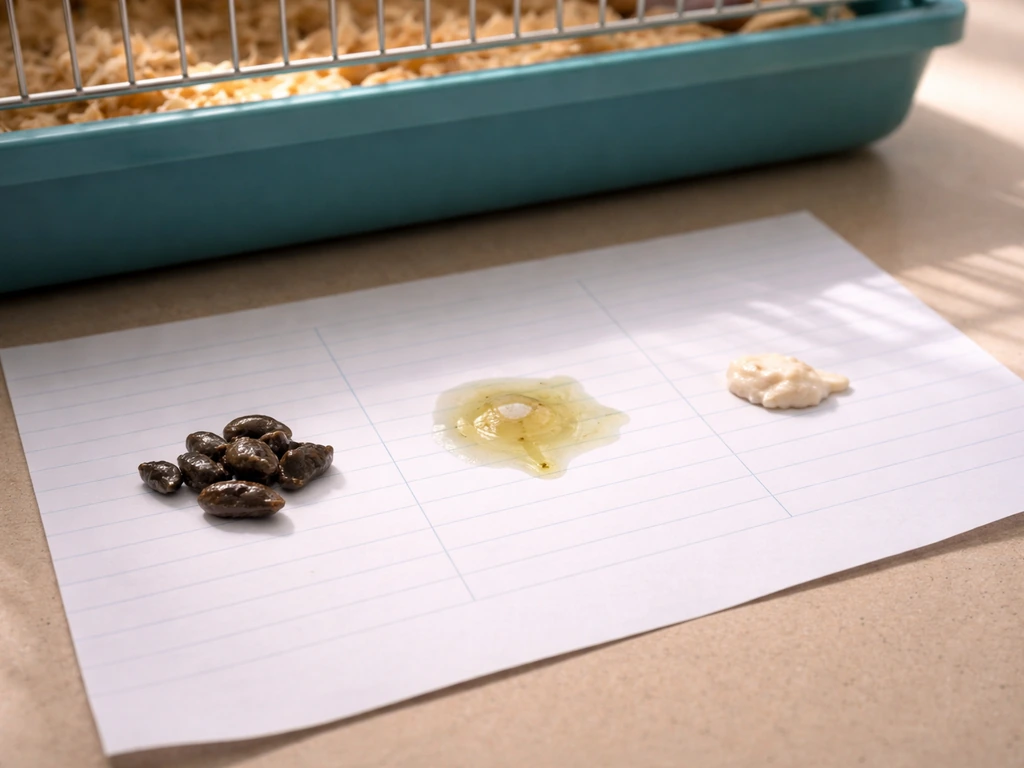
You can catch most problems before they become emergencies by building a few simple habits into your daily routine.
- Check droppings every morning: Healthy droppings have three distinct parts (dark feces, liquid urine, and white or off-white urates). A change in color, consistency, or volume is often the first hint that something is off, sometimes before behavioral changes show up.
- Watch food and water intake daily: A bird that suddenly loses interest in a favorite food or isn't drinking normally is telling you something. Reduced appetite is one of the earliest signs of illness.
- Maintain stable temperatures: Keep the cage away from direct drafts, air conditioning vents, and windows. Stable temperatures between around 65–80°F suit most pet birds and reduce the immune stress of constant temperature swings.
- Audit the environment for toxin risks: Identify and remove access to metal objects (especially old pennies, hardware cloth, and coated wire), lead-based paint, and any products that produce fumes (non-stick cookware, scented candles, aerosols, cleaning sprays).
- Schedule annual vet checkups: Avian wellness exams catch weight loss, early signs of infection, and other issues before they become emergencies. Many birds can look perfectly normal to an owner while already having a developing health problem.
- Know your bird's normal: The single best early warning system is familiarity. Birds that are handled and observed daily are much easier to assess when something is off. Know your bird's usual posture, vocalization level, activity patterns, and droppings so any deviation stands out immediately.
If you notice your bird spending more time at the bottom of the cage, that's the moment to start going through this checklist, not after another day passes. Ground-sitting by itself isn't always an emergency, but it's always worth a second look.
FAQ
How can I tell if a bird is just resting on the cage floor versus being unwell?
Look for breathing ease and mobility. Resting usually comes with relaxed feathers, quiet breathing, and the bird moving away or changing position when you approach. Unwell birds often look fluffed, stay in the same spot, breathe with visible effort, or cannot regain balance when gently encouraged to stand.
Should I pick the bird up immediately if it is sitting on the ground?
If it is alert and can move, it is often safer to watch from a few feet away first, then offer a familiar perch or carrier option without handling. If it is fluffed, unresponsive, or struggling to breathe, prioritize rapid transport planning over repeated handling, because stress and delays can worsen outcomes.
What breathing signs are most concerning in a bird that is on the ground?
Concern signs include open-mouth breathing, tail bobbing with each breath, visible chest or abdominal effort, wheezing or clicking sounds, and prolonged time with breathing that looks strained. If breathing looks like it requires effort, treat it as urgent regardless of other symptoms.
Could this be related to balance or injury even if the bird seems alert?
Yes. A bird that stays on the floor because it cannot keep footing can be dealing with trauma, weakness, or neurologic issues, even if it briefly reacts to you. If it cannot climb back onto a perch or keeps losing its balance, contact an avian vet the same day.
My bird is molting and sits on the bottom sometimes. When is molt no longer the likely explanation?
Molt becomes suspicious when it combines with reduced appetite, abnormal droppings, fluffed posture that lasts, reduced responsiveness, or breathing that changes. Molting birds may sit more, but they should still be able to perch and show at least some normal interest in their environment.
What droppings changes should I look for right away when a bird is on the ground?
Check color, consistency, and frequency. Watery output, very dark or pale stools, and marked changes combined with lethargy or fluffed posture are more concerning than normal day-to-day variation. If you cannot see a usual amount of droppings, or the bird is not eating, call for same-day advice.
Are toxins like candles and cooking fumes something I should think about even if I did not see the bird worsen instantly?
Yes. Some exposures can cause delayed decline, and birds can deteriorate quickly once symptoms become obvious. If you used scented products, overheated cookware, or non-stick pans recently, tell the vet, include the timeframe, and mention any noticeable smells or smoke.
If I used non-stick cookware recently, what details should I provide to the vet?
Share what type of cookware it was, whether it was heated without food, any overheating or smoke, and how long ago the bird’s symptoms started. Also note whether you noticed sudden distress, rapid breathing, or the bird going off food soon after the exposure.
What should I do to keep the bird safe while I arrange a same-day appointment?
Keep the bird warm and reduce handling and noise. Use a secure, low-stress transport setup (like a ventilated carrier) to prevent falls. Do not start home treatment, because the wrong supplement or remedy can worsen breathing, gut function, or hydration.
Can a tight leg band cause ground-sitting, and how should I check it safely?
A band can contribute to irritation, swelling, or nerve problems. Check for the ability to slide a finger-breadth under the band and watch for redness, swelling, or changes in toe position. If you suspect constriction, call an avian vet for instructions, do not remove the band unless a professional tells you to.
My bird is on the ground but seems mostly responsive. Should I still call today?
If it is staying on the ground longer than usual, seems weaker than normal, or is not regaining balance when you encourage movement, it warrants same-day guidance. If the bird is fully alert, breathing normally, and can perch reliably, monitor closely, but ground-sitting plus any added abnormal sign should push you toward calling.
Is there any safe first aid I can do at home besides keeping the bird warm?
Avoid food, water dosing, supplements, and herbal remedies unless your avian vet specifically directs it. The safest actions are gentle stabilization (warmth, quiet, minimal handling) and getting prepared for transport. If breathing is difficult, prioritize immediate veterinary contact over attempts to manage symptoms at home.
What daily habit helps catch ground-sitting problems early?
Do a quick spot-check routine. If you notice the bird spending more time on the bottom, treat that as the trigger to run your checklist immediately, rather than waiting for another day. Consistent observation makes it easier to notice changes in breathing, posture, and droppings before the situation becomes an emergency.
Next Articles
Why Is My Bird Just Standing Still? Causes and What to Do
Find out why your bird stands still, spot normal resting vs illness, check posture, breathing, droppings, and get vet he
Why Does My Bird Lift One Leg Up? Normal vs Health Signs
Learn normal reasons and red flags when your bird lifts one leg, plus an at-home checklist and next steps.
Why Is My Bird Laying Down? Causes and What to Do Today
Find why your bird lays down and follow a today checklist to spot normal resting vs illness, stress, or emergencies.