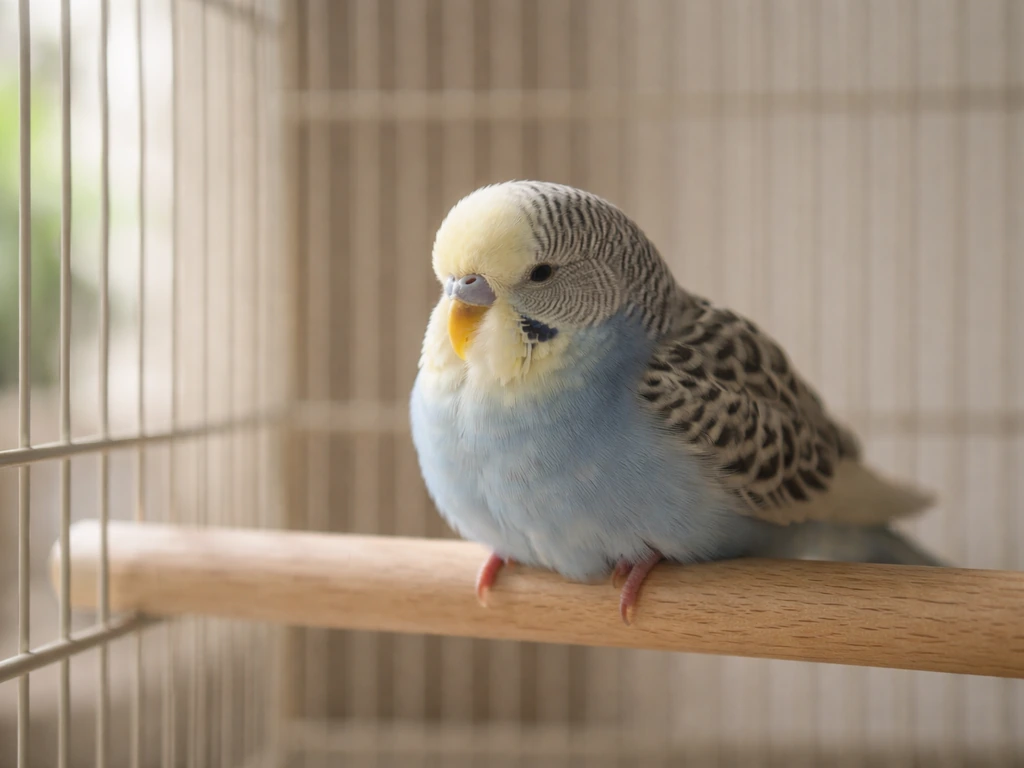
Most of the time, a bird lifting one leg up is completely normal. Sometimes, what looks like a bird resting can actually be related to discomfort or illness, which is also a common reason people search for why is my bird laying down. Birds tuck a foot up into their belly feathers to conserve warmth and reduce heat loss, and they'll casually switch between feet throughout the day. If your bird is alert, eating, and can put weight on that foot when it wants to, you're almost certainly looking at healthy resting behavior. But if the leg stays up constantly, the bird can't or won't bear weight on it, or you're seeing swelling, limping, or a change in mood and appetite, that's a different situation and worth taking seriously.
Why Does My Bird Lift One Leg Up? Normal vs Health Signs

Marcus Chen
7 May 2026
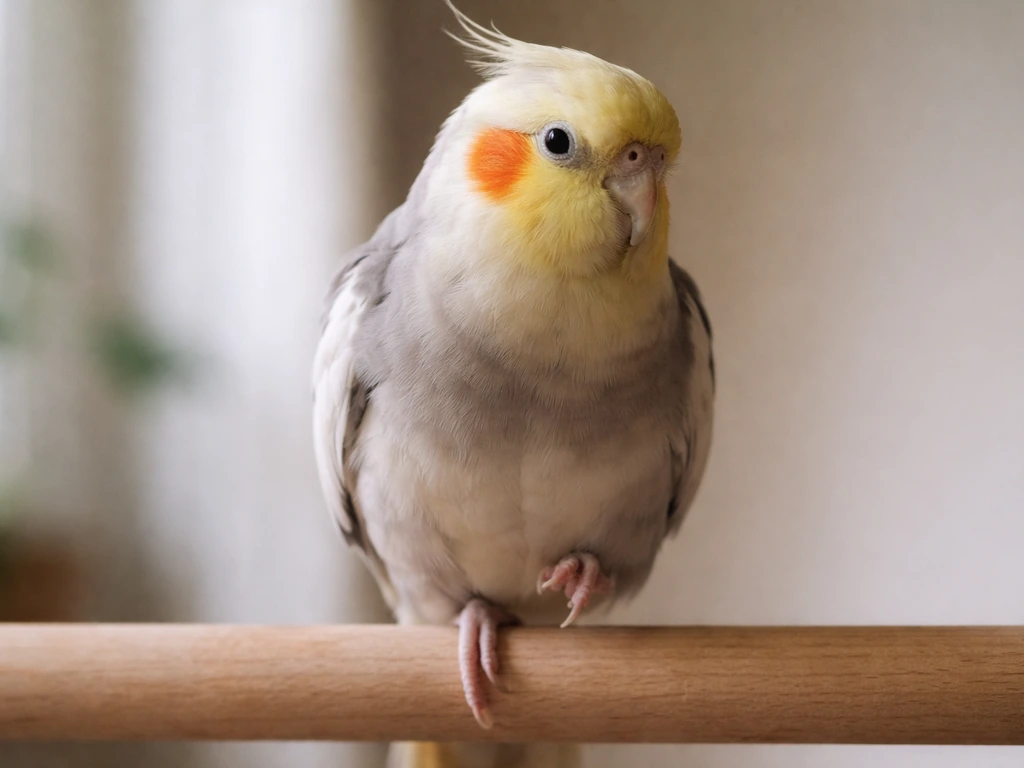
Normal reasons birds lift a leg
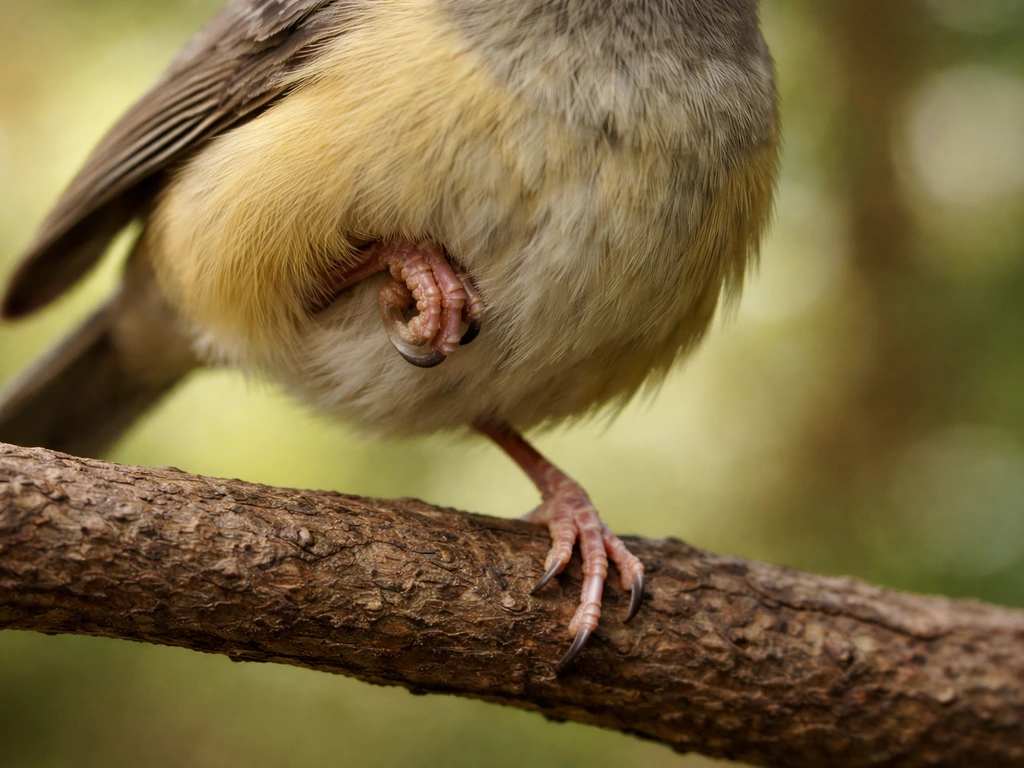
The most common reason is thermoregulation. Birds lose body heat through their legs and feet, which aren't covered in insulating feathers. By pulling one leg up and tucking it against the warm belly, a bird cuts the exposed surface area in half. It's a simple, elegant way to stay warm, and wild birds do it constantly. The tucked leg gets insulated by the surrounding feathers, and the bird switches sides periodically to give each foot a rest.
Beyond warmth, birds also lift a leg just to rest. Their tendons are designed to lock the foot into a gripping position automatically, so standing on one leg takes very little effort. Think of it like a human shifting their weight to one hip while standing at a counter. It's comfortable, not a sign of distress.
You might also notice this behavior more right after waking up, during a quiet midday nap period, or when your bird is very relaxed and feels safe. A bird that's one-leg-standing with smooth feathers, bright eyes, and normal vocalizations is a content bird.
Health causes that can look exactly the same
The tricky part is that a bird in pain will also hold a leg up, and from across the room it can look identical to normal resting. Here are the health issues most likely to cause this posture.
Bumblefoot (pododermatitis)
This is one of the most common foot conditions in pet birds and a frequent reason a bird will hold a foot off the perch entirely. blank" rel="noopener noreferrer">Bumblefoot is an inflammation and infection of the skin on the bottom of the foot, often starting as a small pressure sore that gets infected. In more advanced cases (Grades 3, 4, and 5), birds show marked lameness or hold the affected foot up constantly because bearing weight is too painful. In pet birds, bumblefoot (pododermatitis) commonly causes lameness, and if a bird is lame on one leg it may shift more weight to the other leg, leading to bumblefoot developing on the contralateral foot as well blank" rel="noopener noreferrer">lameness; birds that are lame on one leg. It often develops when a bird has been on inappropriate perching for too long, or when an existing injury on one foot forces the bird to shift all its weight onto the other foot, which then also breaks down under that extra pressure.
Injury or trauma
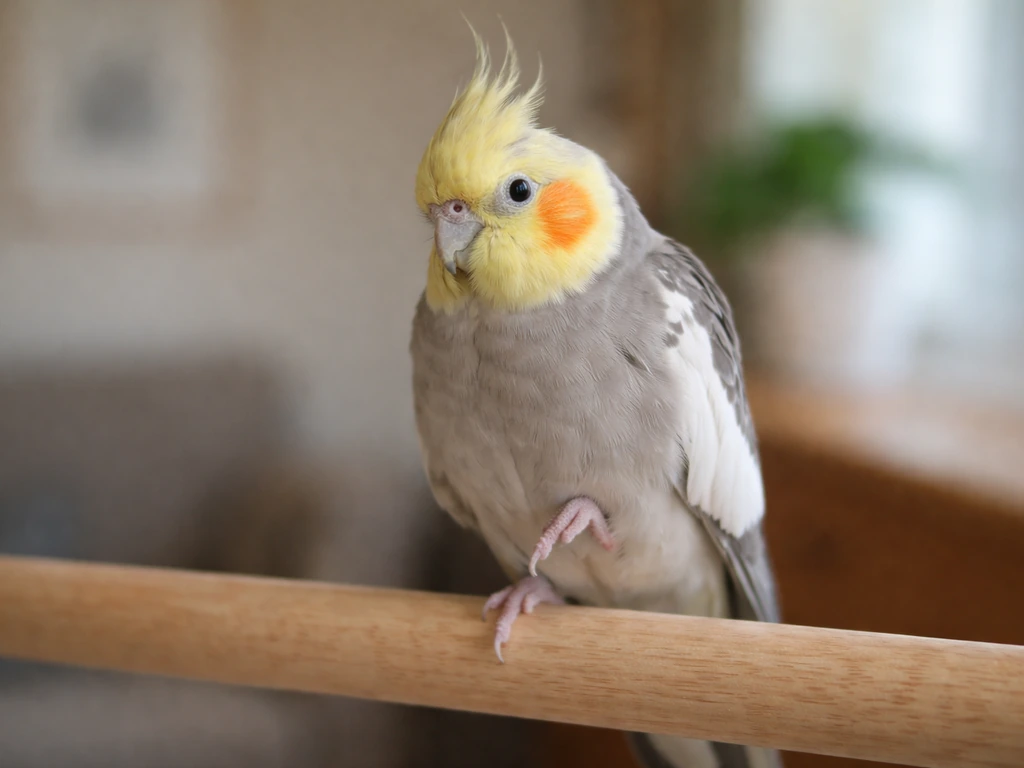
A sprain, fracture, or soft-tissue injury will cause a bird to avoid putting weight on a leg. This can happen from a fall, getting a toe caught in a toy or cage wire, or even a rough landing. Fractures can be surprisingly subtle on the outside, so don't assume an injury is minor just because you can't see a visible break.
Joint pain and arthritis
Older birds especially can develop joint stiffness or arthritic changes that make gripping a perch uncomfortable. This tends to show up gradually, and you might notice your bird choosing lower perches, moving around the cage less, or holding a leg up more often than before.
Gout
Gout causes uric acid crystals to build up in the joints, often the feet and legs. It's painful, and affected birds will often hold the painful leg up to avoid pressure. You might notice swollen, lumpy-looking joints around the toes or hock. This needs veterinary diagnosis and management.
Neurological issues
Sometimes leg-lifting or weakness is caused by something higher up, like a spinal issue, a tumor pressing on nerves, or certain nutritional deficiencies (particularly Vitamin A or Vitamin D3 deficiencies). These cases often come with other signs like poor coordination, wing drooping, or falling off the perch.
Perch-related irritation
A perch that's too thin, too thick, too slippery, or too abrasive can cause ongoing foot discomfort. Concrete perches used as the only perch option can grind down the foot pads over time. Plastic perches that are too smooth cause the foot muscles to work overtime just to stay on. A bird on a painful perch will shift around and hold a foot up more than usual.
Pain or injury vs. normal balancing: what to look for

These two situations can look identical at a glance, but there are specific things to watch for that clearly separate them.
| Sign | Likely normal | Possible health concern |
|---|---|---|
| How long the leg is held up | A few minutes, then switches feet | Held up for hours or all day without switching |
| Weight bearing when approached | Puts foot down easily when moving or stepping up | Refuses to put foot down or limps when it does |
| Posture | Upright, feathers smooth or slightly relaxed | Fluffed up, hunched, or leaning to one side |
| Appetite and energy | Eating and drinking normally, active and vocal | Less interest in food, quiet, withdrawn |
| Foot and leg appearance | No visible changes to skin, scales, or joints | Swelling, redness, sores, scabs, or deformed toes |
| Response to handling | Calm or curious, steps up normally | Pulls the leg away, vocalizes in pain, resists stepping up |
| Droppings | Normal color and consistency | Changes in color, volume, or consistency |
The single most telling sign is whether the bird can and will put weight on that foot when it needs to. A bird napping comfortably will pop both feet down the moment you open the cage or offer a treat. A bird in pain will do everything it can to keep that foot off the ground.
What to check at home right now
Before you call anyone or panic, take five minutes to do a calm, systematic look at your bird and its environment. If you are also seeing a band on a bird’s leg, it can sometimes be a clue that the bird needs an extra look at its foot and comfort band on its leg. You'll gather exactly the information a vet would ask you for anyway.
- Watch the bird for a few minutes without disturbing it. Is the leg switching sides, or is the same leg always up? Does the bird look relaxed and alert, or fluffed and quiet?
- Offer a treat or open the cage door. Does the bird step normally onto your hand or a perch? Can it bear weight on that foot without flinching or limping?
- Look at the foot itself. Check the bottom of the foot pad for any redness, swelling, sores, scabs, or crusty areas. Look at the toes for swollen joints, missing nails, or anything caught around them (a loose thread or piece of wire can tourniquet a toe quickly).
- Check the skin around the ankle and lower leg. Any heat, puffiness, or discoloration compared to the other leg?
- Look at the perches. Are they appropriate for your bird's size? A cockatiel, for example, does well on perches roughly half an inch to one inch in diameter. Are there different textures available, or is it all the same smooth dowel?
- Check the room temperature. Is the cage near a vent, window, or drafty area? A cold environment makes normal leg-tucking more frequent.
- Think about recent changes. New cage, new food, new household member, recent accident or fright? Stress and environmental changes can show up as behavioral shifts.
- Check the droppings at the bottom of the cage. Any unusual color (very dark, red-tinged, or bright green), very watery urine portion, or lack of droppings?
This is also a good moment to compare what you're seeing to related resting postures you might notice in your bird. A bird that's not just lifting a leg but is actually lying down flat, sitting on the cage floor, or completely unable to grip a perch is dealing with something more urgent, and those situations warrant faster action. If you notice more than just a tucked or lifted foot, like your bird lying on its back, that can be a different issue and is covered in why does my bird lay on its back as a related consideration. Sitting on the cage floor can happen for normal reasons, like resting, but it can also be a sign of discomfort why would a bird be sitting on the ground.
What to do next, and when to call an avian vet
If everything looks normal
If the bird switches feet, bears weight fine, is eating well, and there are no visible changes to the foot or leg, you're almost certainly watching normal behavior. Keep an eye on it over the next 24 to 48 hours, make note of how often it happens, and make sure the environment is warm enough and the perches are appropriate.
If something seems off
If you're not fully reassured after your home check, here's what to do right now while you figure out next steps:
- Make the bird comfortable. Temporarily lower the perches so the bird doesn't have far to fall if it loses its grip. A shorter drop is safer.
- Keep the environment warm. If the bird seems unwell, a temperature around 80 to 85°F in the bird's immediate area helps support recovery until you can get to a vet.
- Don't try to splint, bandage, or medicate the leg yourself. Home treatment of foot or leg problems can make things significantly worse, and first aid for birds is supportive care, not a substitute for a vet visit.
- Don't force the bird to step up or grip a perch if it's clearly in pain. Let it rest somewhere low and safe.
- Note everything you've observed so you can tell the vet clearly: which leg, how long it's been happening, whether the bird is eating, and any changes you noticed in the foot or leg.
Call an avian vet the same day if you see any of these
- The bird cannot or will not put any weight on the leg at all
- The leg looks like it's dangling or at an odd angle
- You can see a wound, open sore, or active bleeding
- There is visible swelling, heat, or redness in the foot, ankle, or leg
- The bird is falling off the perch or unable to perch at all
- The bird looks generally sick: fluffed feathers, eyes closed, not eating, lethargic
- The situation has rapidly gotten worse over a few hours
- You notice any sores or raw areas on the bottom of the foot pad
With conditions like bumblefoot especially, early treatment genuinely improves outcomes. A small lesion caught early is far easier to treat than an advanced infection. If you see anything on the foot pad, even something that looks minor, an avian vet visit sooner rather than later is the right call.
How to prevent this from becoming a recurring problem
Get the perches right
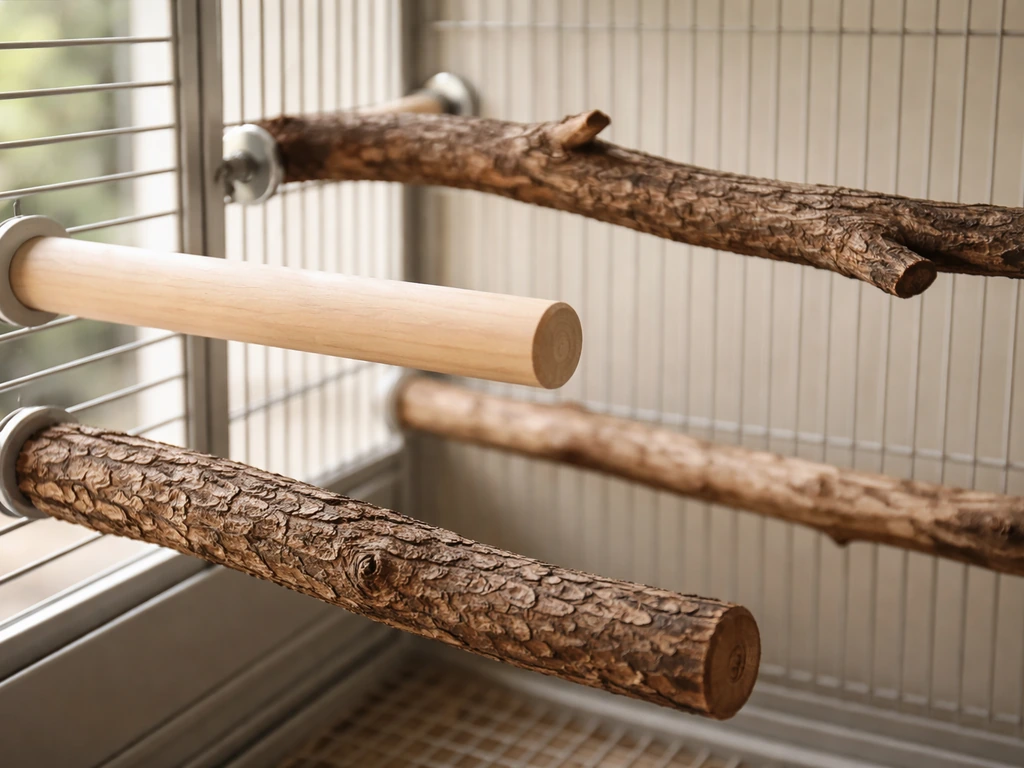
Perch setup is one of the biggest controllable factors in foot health. Your bird needs variety: different diameters, different textures, and different materials. This prevents the foot from always gripping in the exact same position and distributes pressure across different parts of the foot over the course of the day. Concrete or mineral perches are fine as one option (they help naturally wear down nails) but should never be the only perch, and they shouldn't be positioned where the bird sleeps since that's too much abrasive contact for one area. Avoid plain smooth dowels as the only perch style too. Natural wood branches of varying thickness are an excellent choice.
Check the feet weekly
Make a habit of looking at the bottom of your bird's feet every week. You're looking for any redness, thickening, sores, or changes to the scales. Catching a pressure sore or early bumblefoot lesion early is the difference between a simple vet visit and a prolonged treatment process.
Keep nails trimmed appropriately
Overgrown nails change how a bird grips a perch, which shifts pressure to areas of the foot that aren't designed for it. This can contribute directly to foot pad problems over time. If the nails are curling or catching on things, it's time for a trim, ideally done by your avian vet or an experienced groomer.
Daily monitoring as a habit
You don't need to do a formal inspection every day, but making a habit of actually looking at your bird, not just glancing at it, goes a long way. Notice how it's standing, whether it's moving around the cage normally, and whether its droppings look right. Birds are prey animals and very good at hiding discomfort until it becomes serious. The owners who catch problems early are the ones who know what their bird's normal looks like.
If you've also noticed your bird standing completely still for long periods, sitting on the cage floor, or showing other unusual posture changes alongside the leg lifting, those behaviors together give a clearer picture and are worth discussing with an avian vet as a combined pattern rather than isolated events. If you’re wondering why your bird is just standing still, focus on whether it can bear weight and whether the posture changes over time standing completely still.
FAQ
How can I tell if my bird is resting normally or avoiding pain when it lifts one leg?
Often it means warmth or comfort if your bird is alert and can place the tucked foot down when it wants to. A helpful test is to open the cage or offer a treat and watch whether both feet come down normally within a few seconds.
Is it a problem if my bird lifts the same leg every time?
Compare the foot position over time. If the lifted leg stays the same side for hours, or your bird consistently favors one leg even after it has had time to relax, that pattern leans more toward a foot or joint problem than simple thermoregulation.
What if my bird lifts one leg up while sleeping?
Yes, depending on the context. Birds may tuck a foot during sleep or quiet rest, but you should still see periodic switching and normal gripping when awake. If your bird wakes and cannot stand on that foot, or the leg is held up all the time while awake, contact an avian vet promptly.
Should I try to touch or move my bird’s leg to check what’s wrong?
Make a quick “weight-bearing check” without forcing anything. Wait for a moment when your bird is already relaxed on the perch, then observe whether it can step or shift and whether the lifted foot ever comes down to regain balance.
What visual signs on the foot mean I should not treat this as normal resting?
If the toes or foot look puffy, bumpy, or the bottom of the foot looks red or thickened, assume discomfort could be present even if your bird is otherwise friendly. Bumblefoot can start small, so “it doesn’t look that bad” is not a reliable indicator.
Can the cage perch setup cause one-leg lifting?
Perch texture and placement matter a lot. If your bird’s feet are often on one specific perch or that perch is too abrasive or too smooth, foot discomfort can trigger one-leg lifting. Rotate perch options and ensure there are multiple safe landing spots at different levels.
Could one-leg lifting mean a problem not with the foot itself?
Yes, leg-lifting can be caused by issues higher up (coordination or nerve-related problems), especially if you also see slipping, wing droop, falling, or trouble climbing. If multiple postures change together, treat it as more than a simple rest habit.
Could nutrition deficiencies cause my bird to lift one leg, and should I supplement?
If Vitamin A or Vitamin D3 deficiency is involved, you usually see other changes over time, not just a single tucked-leg moment. Review the diet and supplement practices, and do not start random supplements without an avian vet plan, since excess can be harmful.
How long should I monitor it before I call an avian vet?
Track it for 24 to 48 hours with a simple note: which leg, time of day, whether the bird switches feet, and whether it can bear weight. Escalate to an avian vet sooner if it worsens, becomes constant, or you notice limping or mood and appetite changes.
What environmental changes should I consider if my bird lifts one leg most when the room is cooler?
Do a quick environment check: is the cage drafty, is it near an AC vent, and is the room cooler at night? Thermoregulation is more likely if the behavior increases in cooler areas and decreases with gentle warmth and consistent perch options.
Next Article
Why Is My Bird Laying Down? Causes and What to Do Today
Find why your bird lays down and follow a today checklist to spot normal resting vs illness, stress, or emergencies.