
A bird lying down isn't always an emergency, but it's never something to shrug off. The most important thing you can do right now is watch closely for about two to three minutes: is your bird alert, responsive, and breathing normally? If yes, there's a good chance this is rest, a temperature response, or mild stress. If your bird is fluffed up, breathing hard, unresponsive, or can't hold itself upright, that's a different situation entirely and warrants urgent attention.
Why Is My Bird Laying Down? Causes and What to Do Today

Marcus Chen
6 May 2026
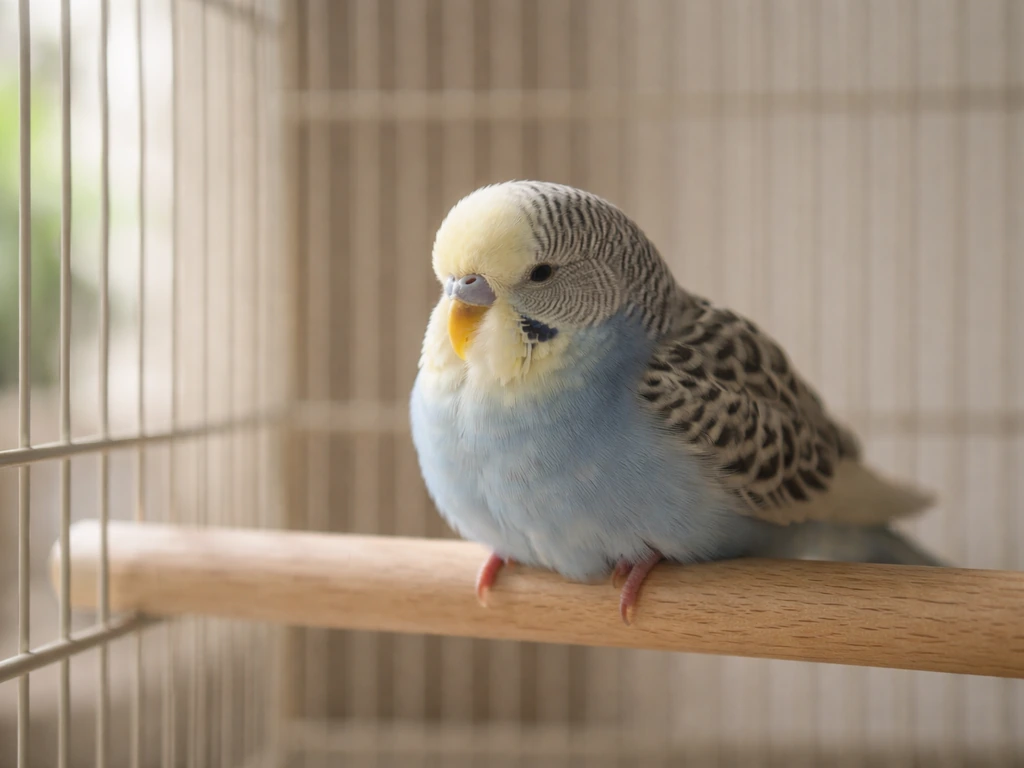
Normal vs. concerning: what to look for first
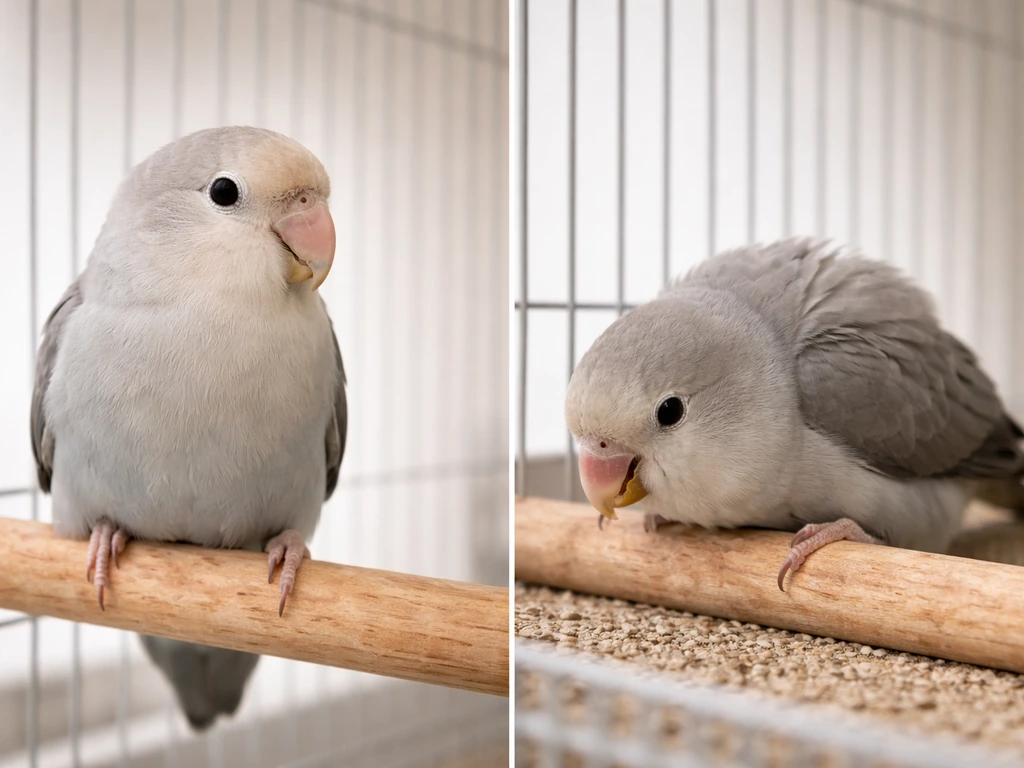
Not every bird that lies down or crouches low is sick. Some birds, especially parrots and doves, will flatten themselves against a perch or the cage floor during naps, when basking in a warm patch of sunlight, or simply while relaxing. Young birds and recently fledged birds do this more often. A bird that is just resting will typically have smooth or only slightly puffed feathers, eyes that open when you approach or make a noise, normal-colored droppings nearby, and a posture they shift out of within a few minutes.
What you don't want to see is a combination of signs. The Merck Veterinary Manual specifically lists sitting low on the perch or at the bottom of the cage as a clinical illness indicator, particularly when paired with fluffed feathers, labored breathing, or tail bobbing with each breath. One of those signs alone might mean nothing. Two or more together, especially if they appeared suddenly, tells you something is wrong.
| Sign | Likely Normal | Potentially Concerning |
|---|---|---|
| Posture | Low crouch or flat rest, changes when disturbed | Collapsed, can't hold upright, stays flat when touched |
| Feathers | Smooth or slightly fluffed during sleep | Persistently puffed, hunched, or ruffled all day |
| Eyes | Close during rest, open quickly when approached | Half-closed, dull, slow to respond |
| Breathing | Quiet, steady, no visible effort | Open-mouth breathing, tail bobbing, wheezing or clicking sounds |
| Droppings | Normal color and consistency nearby | Absent, runny, discolored (green, yellow, bloody) |
| Appetite | Eating and drinking when active | Ignoring food and water for hours |
| Responsiveness | Reacts to sound, movement, your voice | Doesn't respond, feels limp, no grip strength |
Quick at-home checks you can do right now
Before you do anything else, run through this short checklist. It takes five minutes and gives you a much clearer picture of what you're dealing with.
- Check the room temperature: Birds are comfortable between roughly 65 and 85 degrees Fahrenheit. If the room is below 60°F, your bird may be lying down because it's cold. If it's above 90°F or the cage is in direct sunlight, overheating is a real possibility.
- Look at the cage setup: Is there fresh food and water within easy reach? A bird that is weak may have dropped to the floor because it can't make it to the perch. Check whether perches are stable and not obstructing movement.
- Observe breathing for 60 full seconds: Count breaths, watch the tail, and listen for any wheezing, clicking, or rattling. Healthy birds breathe quietly and steadily, around 25 to 40 breaths per minute for most parrots.
- Assess posture and grip: Gently offer your finger or a perch. A healthy bird grips firmly and rights itself. A sick bird may miss the perch, grip loosely, or not try at all.
- Check the droppings: Look at what's on the cage floor near the bird. Green or yellow urates, very watery or absent droppings, or blood are all red flags. A pile of normal droppings nearby is reassuring.
- Test responsiveness: Speak to your bird, move near the cage, or tap gently. A resting bird wakes quickly. An ill bird may barely react.
Health reasons birds lie down or stop perching
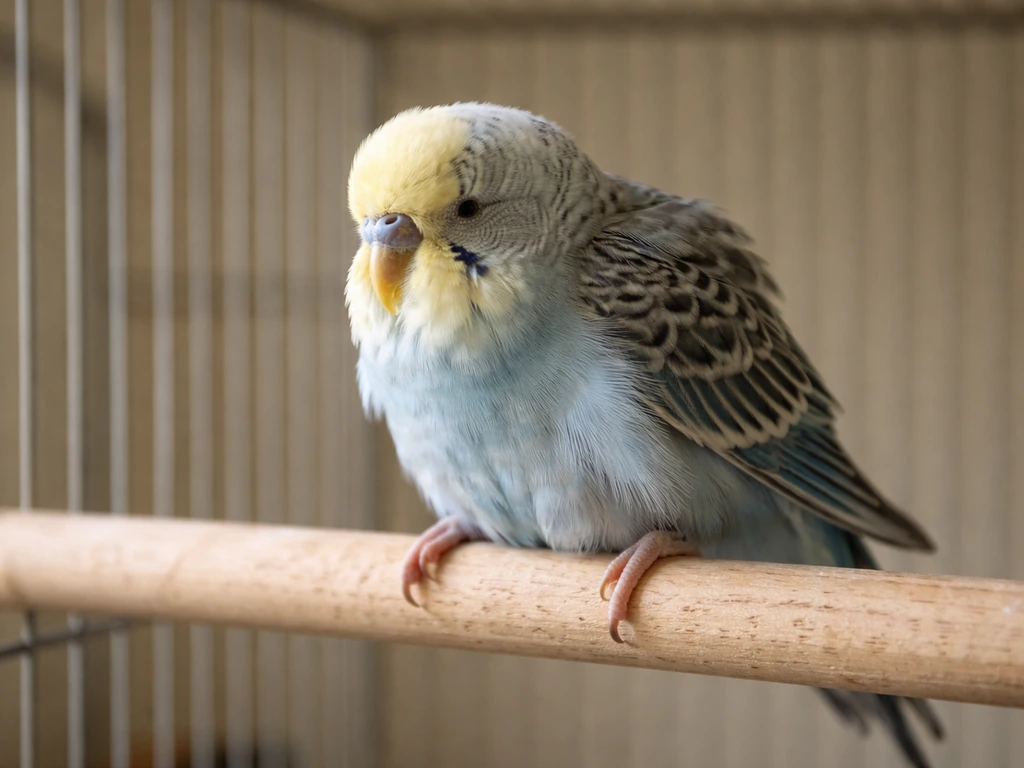
When a bird is genuinely sick, lying down or dropping to the cage floor is often one of the first visible signs. Birds instinctively hide illness for as long as possible, so by the time you notice them lying down, they may already have been unwell for a while.
General weakness and infection
Bacterial, viral, or fungal infections can drain a bird's energy quickly, leaving it too weak to maintain its normal perching posture. A bird with an active infection often looks puffed and dull, stops vocalizing, and loses interest in food. These birds may move to the floor simply because holding onto a perch takes effort they don't have.
Respiratory problems
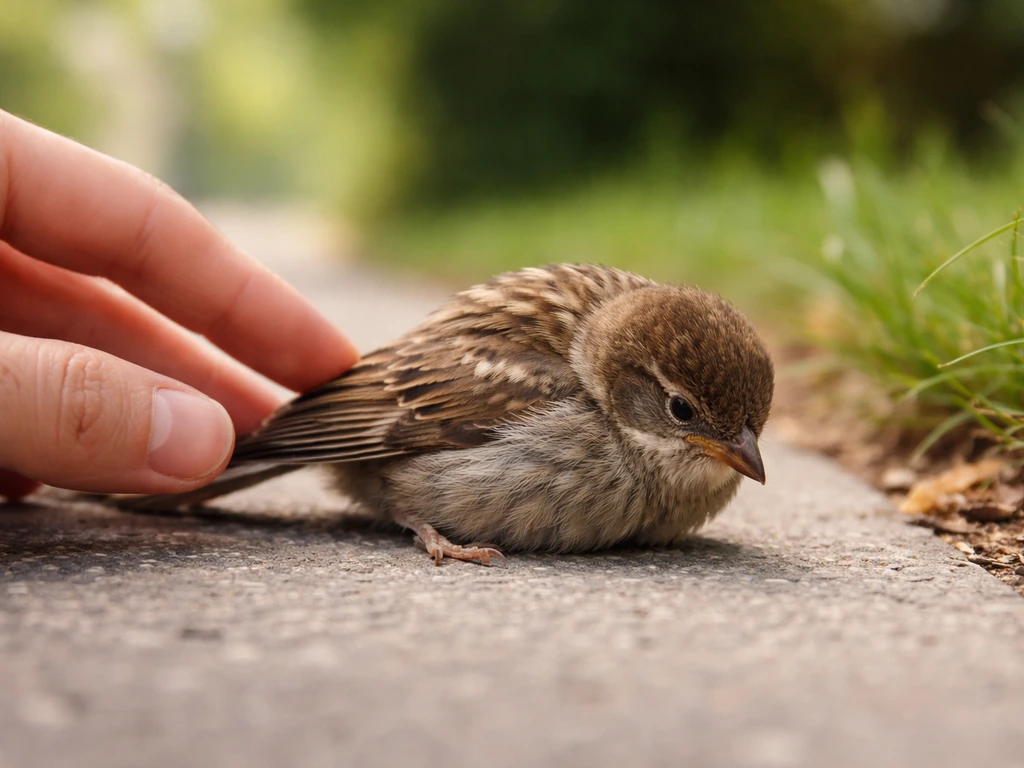
Respiratory illness is one of the more serious causes and is also one of the most visible. Watch specifically for open-mouth breathing (in a bird that isn't overheated or exercising), blank" rel="noopener noreferrer">tail bobbing with each breath, a clicking or wheezing sound, and any discharge from the nares. Avian triage training materials from veterinary teaching programs describe these exact signs, including tail bobbing and open-beak breathing, as classic signs requiring urgent evaluation. A bird breathing this hard is working extremely hard just to get air, and it can deteriorate rapidly.
Pain or physical injury
A bird that has been injured, whether from a fall, a collision with a window, a bite from another animal, or a caught toe or wing, may crouch or lie flat because movement is painful. Look for any visible swelling, asymmetry in the wings or legs, or bleeding. One question to consider is whether the band on your bird’s leg could be causing pressure, irritation, or injury. A bird holding one wing lower than the other, limping, or unable to stand is likely dealing with physical trauma.
Gastrointestinal problems
GI issues including impaction, parasites, or crop problems can cause significant discomfort and lethargy. Birds with GI problems often have abnormal droppings, may regurgitate (not the same as social regurgitation, which is voluntary and aimed at a person or toy), and may crouch low with a visibly distended or firm abdomen.
Temperature extremes
A bird that is too cold will puff up and crouch low to conserve heat, sometimes settling on the floor near a heat source or simply collapsing if the temperature is severe enough. An overheated bird will hold its wings away from its body, breathe with an open mouth, and may flatten itself in an attempt to cool down. Both situations can become dangerous fast if the temperature isn't corrected.
Stress and non-medical reasons
Not every bird lying down needs a vet. Sometimes birds also sit low on the ground as part of normal resting behavior, so the key is checking for other warning signs. There are several normal, non-medical reasons this happens, and learning to recognize them saves a lot of unnecessary anxiety.
- Sleep and rest: Many birds, especially parrots, will crouch flat on a perch or even the floor during a midday nap. If they're alert when you approach and return to normal behavior shortly after, this is almost certainly just rest.
- Molting fatigue: Growing new feathers is physically demanding. During a heavy molt, birds are often more tired than usual, may be crankier, and may rest more frequently and in unusual positions.
- Boredom or depression: A bird that lacks stimulation or social interaction may become lethargic and spend more time sitting low or motionless. This is often accompanied by reduced vocalization and less activity overall.
- Recent handling or territorial stress: A new cage setup, a new bird in the household, changes in your schedule, or even rearranging furniture near the cage can cause short-term stress that shows up as unusual stillness or low posture.
- Being startled or frightened: A bird that was recently scared, by a predator outside a window, a loud noise, or a rough handling experience, may sit low and quiet for a period afterward. This usually resolves within an hour or two.
If your bird is just standing unusually still without lying down, or standing on one leg more than usual, those are separate behaviors worth understanding on their own. If your bird is standing on one leg more than usual rather than lying flat, that can point to an adjacent issue like foot or leg discomfort, which is worth checking alongside why a bird lifts one leg up.
If your bird is standing unusually still, look for breathing changes, fluffed feathers, and whether it can comfortably balance, since those can point to illness rather than normal rest. If your bird is standing on one leg, it can point to pain, stress, or a more serious health issue, so it helps to understand the common causes. Lying flat, though, is a step beyond those and warrants a closer look.
If you are wondering why your bird lays on its back, these same warning signs and context around resting versus illness are what you should compare.
Egg-laying and reproductive factors in female birds
If you have a female bird, lying down or sitting very low can be directly related to egg production, even in birds that have no mate. Hens preparing to lay often crouch low, may sit on the cage floor, and can seem unusually still or subdued. This is usually temporary and resolves once the egg is laid.
The situation becomes urgent if your bird has been straining to lay for more than 24 to 48 hours with no egg appearing. [Egg binding, where an egg becomes stuck, is a genuine veterinary emergency. ](https://www. merckvetmanual.
com/mvm/poultry/disordersofthereproductivesystem/egg-boundorimpactedoviductsin_poultry. html) Signs include visible straining, a visibly swollen or distended lower abdomen, labored breathing, and a bird that can't perch or stand. Merck Veterinary Manual also notes egg-binding signs such as sitting on the cage floor, weakness or low energy, straining, bloody droppings, tail bobbing, difficulty breathing, a sudden stop in egg laying, and a swollen abdomen [Egg binding can cause visible straining and a swollen lower abdomen](https://www. merckvetmanual.
com/bird-owners/disorders-and-diseases-of-birds/reproductive-disorders-of-pet-birds). If your bird can't perch or stand, treat it as a red flag and get veterinary advice right away. Egg-bound birds can deteriorate very quickly, so don't wait on this one.
Reproductive conditions like chronic egg laying, ovarian cysts, or reproductive tract infections can also cause a hen to crouch low, lose condition, and seem persistently lethargic. If you suspect any of these, an avian vet visit is the right move, ideally sooner than later.
Red flags: when to call an avian vet urgently
Some situations don't need a wait-and-see approach. Call an avian vet or emergency animal clinic right away if your bird shows any of the following:
- Open-mouth breathing, tail bobbing with each breath, or any audible wheezing, clicking, or gurgling
- Complete unresponsiveness: doesn't react to sound, touch, or your voice
- Can't grip a perch or stand, feels limp or floppy when you pick it up
- Visible bleeding, swelling, a drooping wing, or obvious physical trauma
- A female bird straining to pass an egg for more than several hours with no result
- Seizures, loss of balance, falling from the perch repeatedly
- No droppings for more than 12 hours, or droppings that are bloody, completely absent, or bright yellow or lime green
- Has not eaten or drunk anything in more than 12 to 24 hours and is also lethargic
- Sudden onset of symptoms, meaning the bird was fine this morning and is now lying flat and unresponsive
Birds decline fast. Unlike dogs and cats, they don't have a lot of physiological reserve when they're truly sick. If your gut says something is wrong, treat it as wrong. A vet visit that turns out to be unnecessary is a much better outcome than waiting too long.
What to do right now while you arrange help
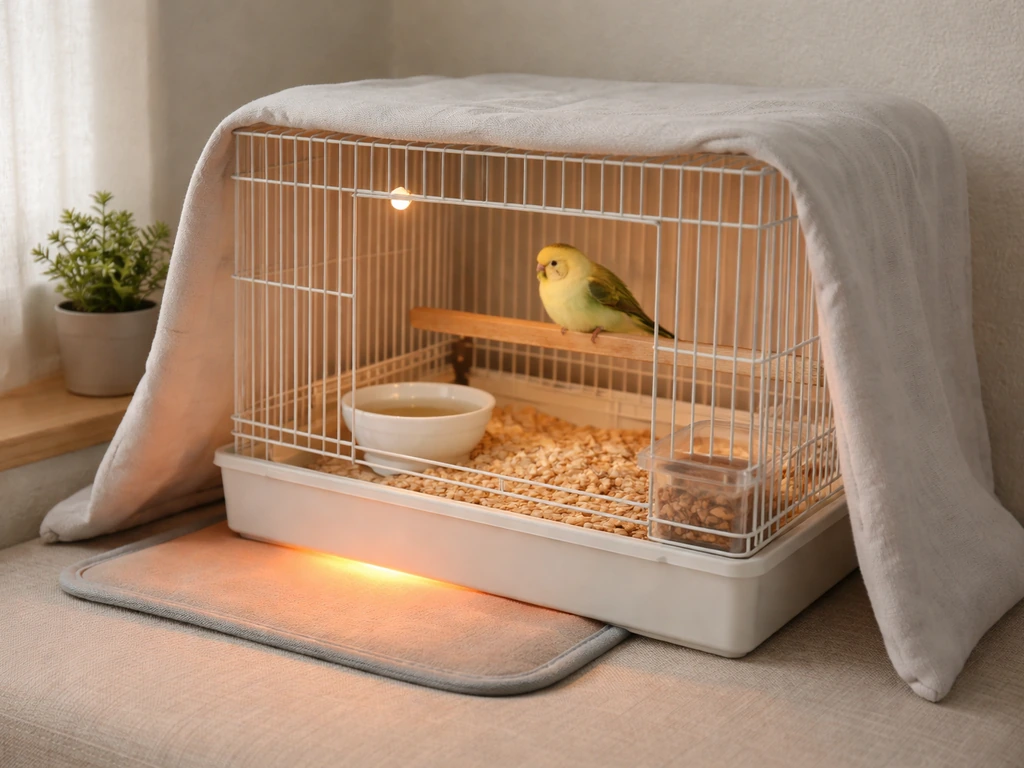
If you're waiting for a vet appointment or on hold with an emergency clinic, here are safe, practical steps you can take immediately.
- Warm the environment: Move the cage to a draft-free spot and aim for a room temperature of around 80 to 85°F if the bird seems cold or puffed. You can place a heating pad on the lowest setting under one side of the cage (not the whole bottom) so the bird can move away from it if needed. Never use a heat lamp directly on a small cage.
- Lower perches or add floor padding: If the bird is weak and falling, remove high perches temporarily and add a clean towel or paper on the cage floor so it has a soft, flat surface.
- Ensure food and water are accessible at floor level: A weak bird may not be able to climb to where food and water are normally positioned. Place a shallow dish of water and soft food directly on the cage floor.
- Minimize stress: Cover three sides of the cage, keep the room quiet, and reduce handling. Stress makes sick birds worse. Resist the urge to keep picking the bird up to check on it.
- Record a short video: Capture 30 to 60 seconds of your bird's posture, breathing, and movement. This is genuinely useful for a vet and can be shared before or during your appointment.
- Note the timeline: When did you first notice the lying down? Did anything change recently, a new food, new cage item, exposure to another bird, fumes from cooking or cleaning, or temperature change? Write it down.
- Check droppings and bring a sample if possible: Place fresh paper on the cage floor so you can monitor droppings. If you can collect a fresh sample in a clean container or bag, bring it to the vet.
Do not give your bird any over-the-counter medications, vitamins, or home remedies without veterinary guidance. Some products marketed for birds can mask symptoms or cause additional harm. Warmth, quiet, accessible food and water, and prompt professional contact are the safest things you can offer right now.
When you do speak with a vet, be ready to describe: how long the bird has been lying down, whether it's eating and drinking, what the droppings look like, any changes in breathing, the bird's age and species, whether it's a female and if it could be related to egg laying, and anything unusual that happened recently in the environment. The more specific you can be, the faster they can help you.
FAQ
How can I tell if my bird is just resting versus actually sick when it’s lying down?
Do a quick check of three things together: responsiveness (does it look up or react within a few seconds?), breathing effort (no tail bobbing, no open-mouth breathing, no wheeze), and posture recovery (a resting bird usually shifts or stands up within a few minutes). If it cannot return to a normal posture, or breathing looks labored, treat it as illness rather than sleep.
What should I do with the cage right now if my bird is lying down?
Keep the room quiet and dim, and make perches and food easier to reach. Remove obstacles that could force it to struggle, but avoid moving it repeatedly. If temperature might be off, adjust the ambient warmth gradually toward a comfortable range rather than blasting with a heat source that could overheat it.
Should I offer extra warmth or extra heat if my bird is crouched low?
It depends on breathing. If the bird is fluffed and breathing normally, gentle warmth can help. If it is overheated (wings held away from the body, open-mouth breathing, rapid panting), adding heat can worsen things. If breathing is open-mouth, tail bobbing, or clicking, prioritize urgent veterinary input over temperature changes.
My bird is lying down but still moving around a bit. Is it safe to wait for an appointment?
Waiting can be reasonable only if breathing is normal, the bird is alert enough to respond, and droppings and appetite are not worsening. If any respiratory signs appear, if the bird cannot hold itself upright, or if it stays down and subdued for more than a short observation window, do not wait. Birds can decline quickly once they do not have reserves.
Can stress or a recent change in the home cause my bird to lie down?
Yes. Birds may flatten and crouch low during mild stress, after handling changes, after loud disruptions, or during travel. A key detail is recovery, if the bird perks up after the environment is calm and stable. If stress-related, breathing should remain effortless and there should be no tail bobbing, discharge from the nares, or progressive fluffed lethargy.
What does tail bobbing with breathing mean when my bird is lying down?
Tail bobbing usually signals increased breathing effort. In a bird that is not overheated or exercising, it is a strong red flag for respiratory distress. Combine it with other signs you might notice, open-mouth breathing, clicking, wheeze, and any nasal discharge, and seek urgent avian evaluation.
Could my bird’s lying down be related to a foot, wing, or band issue?
Yes. Pain can cause a bird to crouch or lie flat to reduce movement. Watch for favoring one side, reluctance to step up, limping, swelling, or a wing/leg held differently. If there’s a leg band, check for tightness, redness, or rubbing that could be compressing tissue, but do not remove it unless a vet instructs you, especially if the band is fixed.
If my bird is female, how can I tell if it’s egg-laying versus illness?
Egg-laying can cause low crouching and unusual stillness, and it is often temporary. Egg-related situations typically match reproductive signs like repeated settling and mild straining without severe respiratory distress. If she shows ongoing straining for more than 24 to 48 hours, visible lower belly swelling, inability to perch, or labored breathing, treat it as possible egg binding and get veterinary help immediately.
My bird seems to be straining and lying down. What’s the fastest decision point for egg binding?
The fastest decision point is duration and severity: straining with no egg after 24 to 48 hours, especially with a distended lower abdomen, labored breathing, or inability to stand or perch. Those patterns mean do not wait, contact an avian vet or emergency clinic right away because deterioration can happen quickly.
Are there any home remedies or supplements I should avoid while I’m trying to get help?
Avoid over-the-counter medications, vitamins, and “bird home remedies” unless an avian vet specifically tells you to use them. Some products can mask symptoms, worsen conditions, or delay correct treatment. The safest immediate supports are quiet, gentle warmth when appropriate, accessible food and water, and rapid professional contact.
What information should I write down before calling the vet?
Note when the lying down started, whether the bird is eating and drinking, what droppings look like (color, consistency, presence of urates), and exactly what breathing looks like (open-mouth breathing, tail bobbing, wheeze or clicks, nasal discharge). Also include the bird’s species and age, and whether you suspect a reproductive issue if it’s a hen. This helps the vet triage faster.