
If your bird is standing on one leg, there's a good chance it's doing exactly what healthy birds do every day. Single-leg standing is one of the most natural resting postures in birds, and for most pet birds most of the time, it just means they're comfortable and relaxed. That said, it can also signal pain or illness, and the difference matters. Here's how to read what you're seeing right now.
Why Is My Bird Standing on One Leg? Causes and Next Steps

Marcus Chen
22 Apr 2026
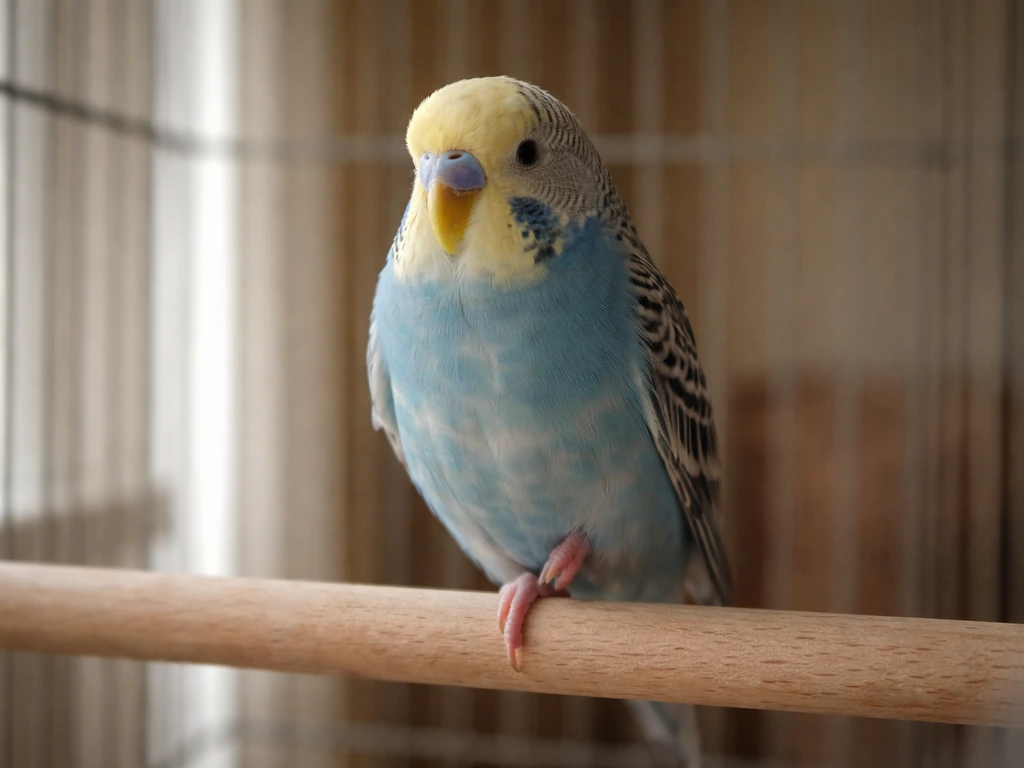
What single-leg standing usually means in pet birds
Standing on one leg is deeply hardwired bird behavior. It's not a quirk or a sign that something went wrong. In the wild, birds do it constantly while roosting and sleeping. Pet birds, including cockatiels, budgies, conures, and parrots of all sizes, carry that same instinct into your home. When a bird is calm, safe, and comfortable, it often pulls one foot up into its belly feathers and balances effortlessly on the other. If your bird is doing this and acting otherwise normal, that's a very reassuring sign.
The behavior shows up most often when a bird is winding down, napping, or just hanging out quietly. Some birds do it multiple times a day. It tends to look relaxed rather than strained, and the bird switches legs easily and responds normally to sounds or movement around it.
Everyday reasons your bird stands on one leg
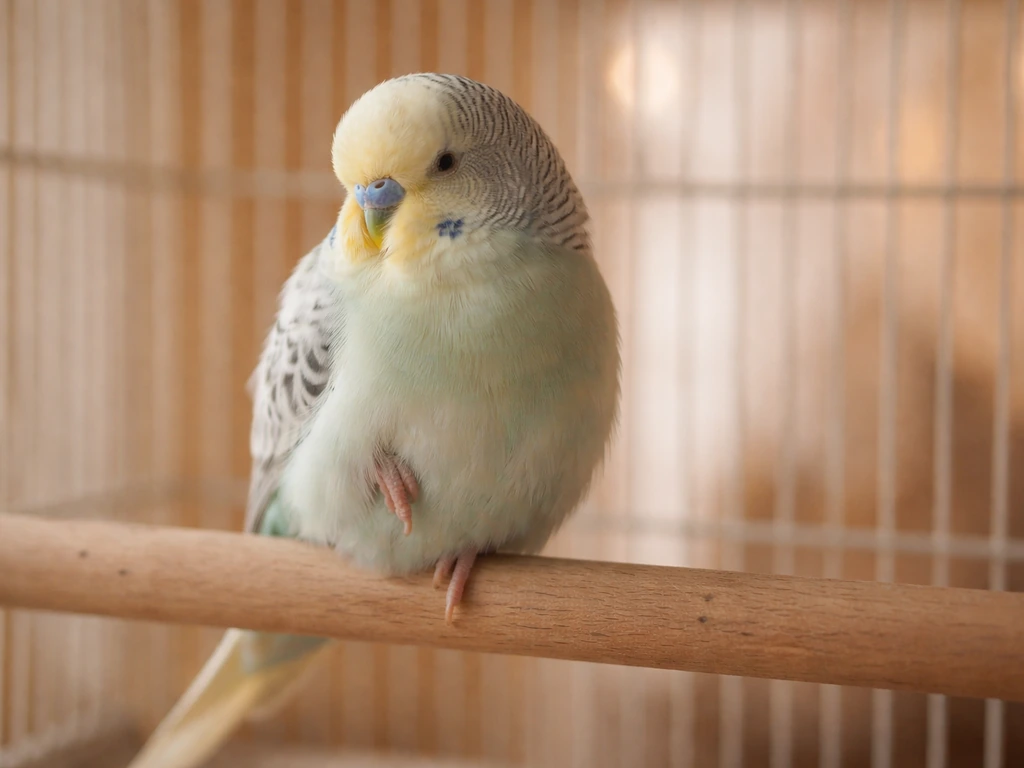
Most of the time, one of these completely normal causes is what you're looking at:
- Resting or napping: Birds tuck one foot up when they're dozing or resting between activity bursts. It's their version of kicking back on the couch.
- Thermoregulation: Tucking a foot into belly feathers reduces heat loss from an exposed leg. This is especially common if the room is on the cooler side. Most pet birds do best between 65–80°F, so if your home is drafty or cooler than that, one-leg standing might just mean your bird is conserving warmth.
- Pure comfort: Some birds stand on one leg simply because they feel secure and relaxed. It's a posture of ease, not distress.
- Sleep posture: Roosting on one leg while sleeping is a well-documented bird behavior. If your bird does it at night or during quiet daytime rest, that's completely normal.
- Balance and body management: Birds naturally shift their weight and posture throughout the day. One-leg standing is part of that normal repertoire.
The key thing to look for in normal one-leg standing: the bird switches legs, responds alertly to its surroundings, eats and drinks normally, has normal droppings, and doesn't seem distressed or in pain when it moves.
When one-leg standing is a health red flag
The behavior itself isn't the problem. What matters is the full picture around it. If the reason seems different, you may also be looking at clues for why your bird lifts one leg up one-leg posture. If your bird is standing on one leg and also showing other symptoms, the cause may be pain, injury, or illness rather than simple comfort. Here are the conditions that can drive a bird to favor one leg:
Foot or leg injury
Sprains, fractures, and soft tissue injuries can all cause a bird to hold one foot up to avoid putting weight on it. Unlike the relaxed posture of a resting bird, an injured bird often looks uncomfortable, may flinch or vocalize when the foot is touched, and won't casually switch legs. Watch for limping, reluctance to bear weight, or a foot that's held in an awkward position.
Bumblefoot (pododermatitis)
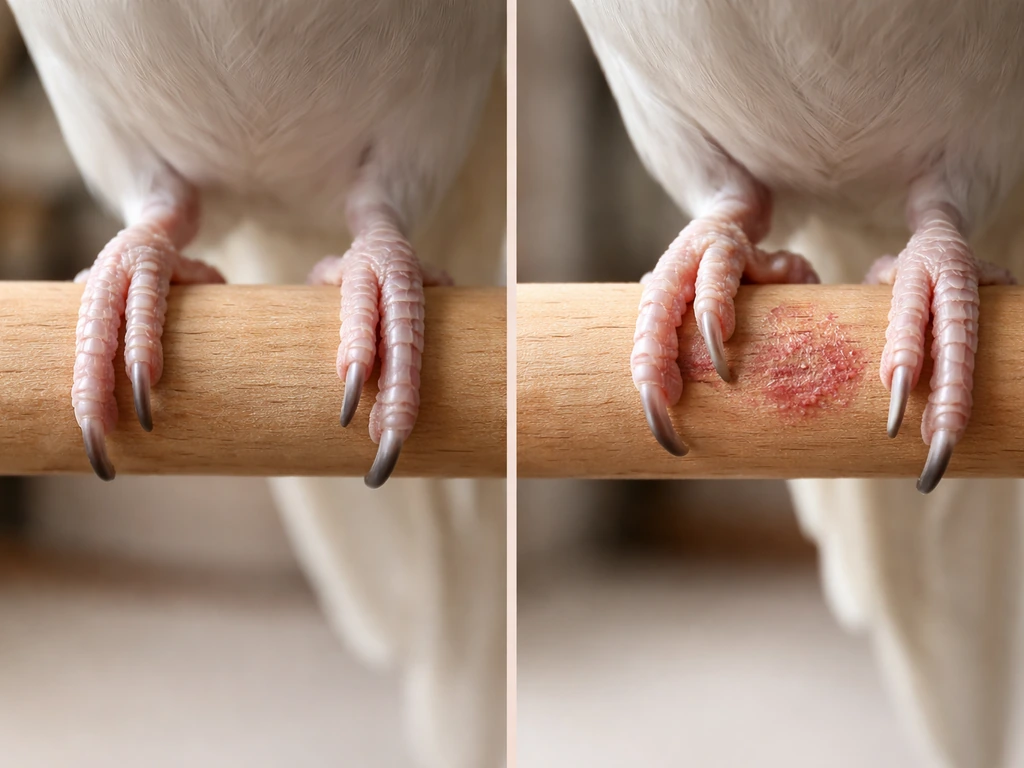
Bumblefoot is an inflammatory and often infectious condition affecting the bottom of the foot pad. In early stages, you might see reddening or thinning skin on the sole of the foot. As it progresses, swelling, sores, or even abscesses can develop, and the bird may show clear lameness or hold the affected foot up almost constantly. This is a condition that needs veterinary attention, especially once lesions are visible.
Gout
blank" rel="noopener noreferrer">Articular gout causes painful uric acid crystal deposits in the joints of the feet, legs, and wings. A bird with gout may blank" rel="noopener noreferrer">prefer to sit on a flat surface rather than grip a perch because gripping is painful. You might notice swelling in the joints, reluctance to move, and a general hunched or miserable appearance. Gout is a serious condition and needs prompt veterinary diagnosis.
Arthritis and joint disease
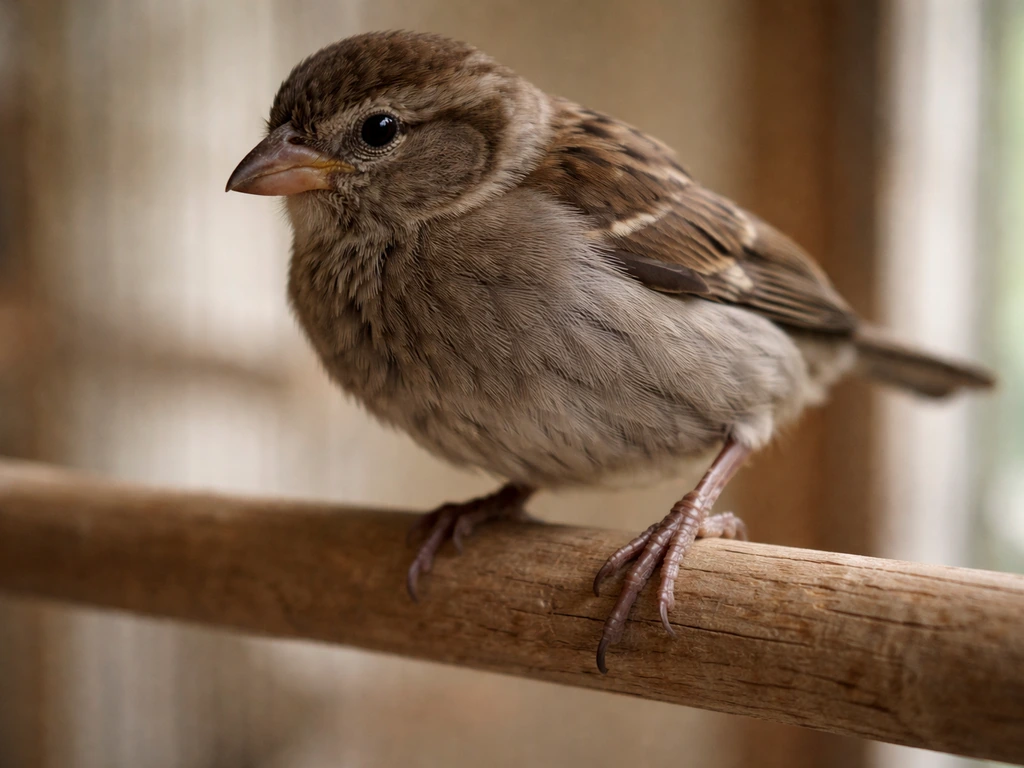
Older birds, or birds on poor diets or with genetic predispositions, can develop joint disease. This shows up as stiffness, favoring one leg, difficulty gripping perches, and sometimes visible joint swelling. It's gradual and progressive, so you might notice it creeping in over weeks rather than appearing suddenly.
Neurological problems
Sudden inability to use a leg properly, dragging a leg, or loss of grip on a perch can indicate a neurological issue or paralysis rather than a simple musculoskeletal problem. If this is happening to your bird, especially to the point that it can't stand up, treat it as urgent and seek an avian vet right away Sudden inability to use a leg properly. This is an emergency scenario. If your bird can't perch, is falling, or is dragging a limb, get veterinary help the same day.
General illness
A sick bird will often fluff up, become lethargic, and shift its posture in ways that look like comfort-seeking but are actually signs of feeling unwell. If the one-leg standing is paired with fluffed feathers, closed eyes during the day, changes in droppings, loss of appetite, or breathing changes, treat it as a potential illness signal rather than normal rest behavior.
How to do a quick at-home check right now
You don't need any special equipment for this. Just observe carefully and methodically for a few minutes before drawing conclusions.
Watch the bird's overall behavior
Is your bird alert and responsive, or dull and withdrawn? Does it react when you approach, speak, or make noise? Is it eating, drinking, and vocalizing normally? A bird that's just resting on one leg will perk up quickly when you engage with it. A sick or painful bird often stays hunched and disengaged.
Check the foot and leg visually
Look closely at both feet. You're checking for redness on the bottom of the foot, swelling in the toes or joints, sores, scabs, or anything that looks inflamed or abnormal. Check whether the bird grips the perch symmetrically with both feet or avoids gripping with one. Gently observe the leg for any visible deformity, and notice if the bird reacts with pain to light, careful touch.
Check breathing and appetite
Watch your bird breathe for about a minute. Normal breathing is quiet, even, and invisible in terms of effort. Red flags include open-mouth breathing, visible tail bobbing with each breath, noisy or labored breathing, or a stretched neck. Also look at the food dish and water. Has your bird been eating? Any change in droppings? Unusually watery, discolored, or absent droppings alongside one-leg standing is a meaningful combination.
Notice whether the bird switches legs
A relaxed, healthy bird shifts legs periodically. If your bird is consistently keeping only one specific leg up and never bearing weight on it, or if it flinches or vocalizes when the leg touches the perch, that points toward pain rather than comfort.
When to call an avian vet urgently vs monitor at home
This is the question that matters most. Here's a straightforward way to think about it:
| What you're seeing | What to do |
|---|---|
| Bird stands on one leg, is alert, eating, and switches legs freely | Normal behavior, monitor as usual |
| Bird stands on one leg more than usual but is otherwise acting normal | Watch for 12–24 hours, check environment temperature |
| Bird consistently favors one leg but is still eating and alert | Schedule a vet appointment within a few days |
| Redness, swelling, sores, or lesions visible on the foot or leg | Vet appointment soon, same week if possible |
| Bird is lethargic, fluffed, not eating, or droppings have changed | Call an avian vet today |
| Open-mouth breathing, tail bobbing with breaths, or noisy breathing | Emergency, seek veterinary care immediately |
| Bird cannot grip the perch, is falling, or dragging a leg | Emergency, seek veterinary care immediately |
| Active bleeding that won't stop | Emergency, seek veterinary care immediately |
Breathing changes are never something to wait on. If your bird is breathing with visible effort or with its mouth open while also holding one leg up, don't monitor at home. That combination needs to be seen by a professional right away.
What you can do right now
Adjust the temperature and eliminate drafts
If your home is below 65°F or there's a cold draft near the cage, that's an easy fix that might immediately reduce one-leg standing driven by chill. Move the cage away from windows, air conditioning vents, and exterior doors. Aim for a stable 65–80°F room temperature in the area where the bird spends most of its time. Avoid covering the cage in a way that cuts off airflow completely, but use a light cover to block drafts if needed.
Check and improve the perches
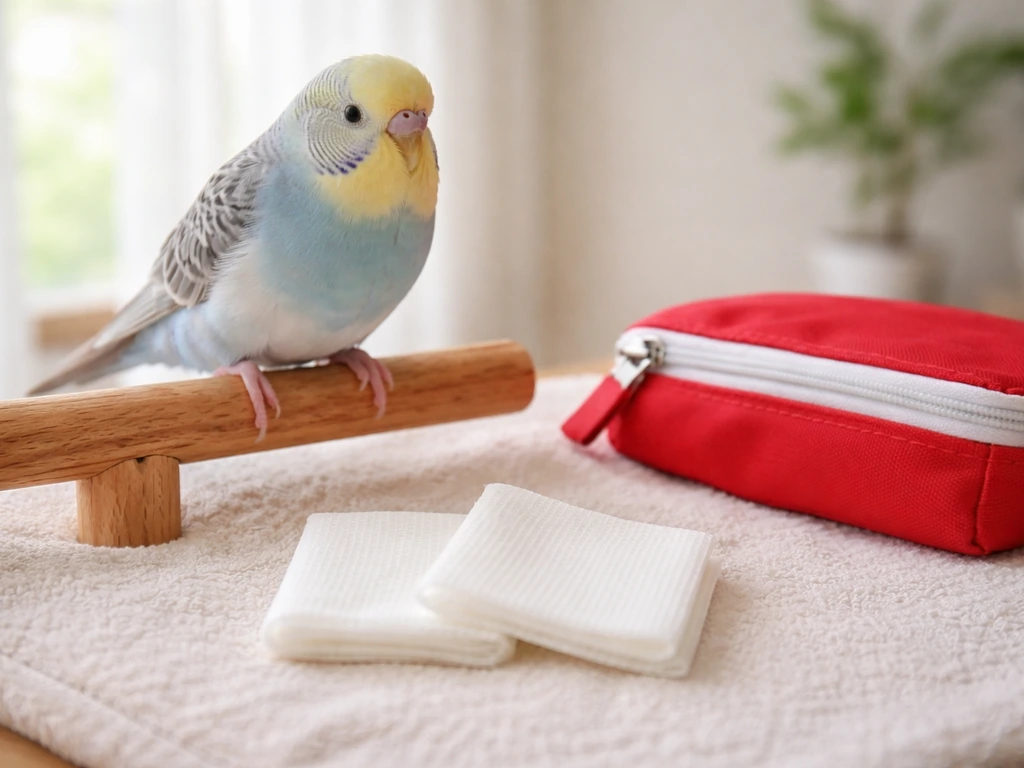
Smooth, slippery, or overly narrow perches put unnecessary stress on feet and can contribute to soreness. Make sure your bird has perches of varying diameters so different parts of the foot are engaged. Natural wood perches with irregular texture are ideal for grip and foot health. If all your perches are the same size and material, that's worth changing. A softer, flat perching surface can help if a bird is already showing foot soreness.
Basic injury first aid
If you notice a minor wound or abrasion on the foot with no deep tissue involvement, keep the area clean and dry and monitor it closely. Don't apply ointments or creams without veterinary guidance because many products safe for mammals are toxic to birds. If there's active bleeding, apply gentle pressure with a clean cloth and contact a vet. Do not try to splint or bandage a leg or foot at home without professional direction.
Reduce stress in the environment
A stressed or overstimulated bird may adopt unusual postures. If there's a lot of noise, new pets, or disruption in the household, give your bird a quieter, calmer space for a few hours and see if the behavior normalizes. Stress alone won't cause a persistent one-leg posture, but it can make existing discomfort worse.
Preventing recurrence and tracking patterns
Once you've ruled out an urgent problem, the best thing you can do is pay attention to patterns. Note when one-leg standing happens: is it always in the evening, always on the same perch, or always after certain foods? A simple log of what you observe and when can be genuinely useful if you eventually need to talk to a vet. It's the kind of information that helps a professional narrow things down quickly.
For prevention, the biggest factors are perch quality, diet, and environment. Varied perch diameters and textures keep feet healthy. A nutritionally complete diet reduces the risk of gout, joint disease, and immune weakness. Stable, draft-free temperatures reduce cold stress. And regular check-ins on your bird's feet, specifically looking at the soles for early redness, are an easy habit that catches bumblefoot before it becomes serious.
It's also worth knowing that one-leg standing is closely related to other postures that can look concerning, like a bird sitting unusually low, lying down on the cage floor, or being completely still. If your bird is sitting low on the ground instead of resting on a perch, it can indicate a different kind of problem than typical one-leg comfort bird sitting on the ground. If your bird is laying down instead of standing, that can point to a different situation than relaxed one-leg resting why is my bird laying down. If your bird is laying on its back instead of standing, that posture can have different causes and is worth checking laying down instead of standing. If you're noticing any of those alongside the leg behavior, they're worth paying attention to together rather than in isolation, because combinations of posture changes often tell a clearer story than any single behavior on its own.
Bottom line: if your bird is standing on one leg and acting like its normal self, you're probably fine. If anything else is off, trust that instinct and look closer. Birds hide illness well, so when something feels wrong, it's always better to check than to wait.
FAQ
How long is it normal for a bird to stand on one leg?
If your bird stands on one leg mainly at rest and switches legs quickly when you offer interaction (voice, gentle approach, or a mild change in movement), it is usually not an emergency. If the bird never puts the raised foot down, or it grips only with one foot, that pattern shifts the odds toward pain, bumblefoot, or a joint problem and should be checked by an avian vet.
What if my bird keeps doing it but the feet look normal?
Keep an eye on breathing and general posture rather than trying to “catch” a foot injury. Even if the foot looks okay, repeated one-leg resting plus fluffed feathers, reduced appetite, or droppings changes are better treated as a sign to investigate further, not something to watch for only a day or two.
Could one-leg standing be neurological instead of pain in the foot?
Do not assume it is a muscle issue if the leg behavior is paired with trouble gripping. If the bird avoids perching with one foot, has trouble stepping up, or seems weaker on one side, neurological or severe joint causes move higher on the list. When weakness, dragging, or falling is involved, it is a same-day avian vet situation.
How can I tell if it is the temperature versus an injury or bumblefoot?
Cold can trigger intermittent one-leg resting, but it is not the only cause. Even in a draft-free room, pay attention to whether the bird flinches when the foot touches the perch or if there is persistent lameness. If it is consistently worse on one specific perch, that can point to perch soreness or foot pad issues rather than temperature alone.
If my bird seems to breathe oddly, what should I do?
Signs that warrant urgent care include open-mouth breathing, visible tail bobbing with each breath, noisy or labored breathing, stretched neck, or fluffed and lethargic behavior that appears unwell. If those breathing red flags show up alongside one-leg standing, do not wait for it to “pass.”
Can I treat a minor foot scratch at home if my bird is standing on one leg?
Yes, but the approach differs. If you find a small scrape or minor abrasion, you can keep the area clean and dry and monitor changes. Avoid antiseptics or ointments not specifically cleared for birds, and do not bandage or splint, because many products and wraps can worsen tissue damage or restrict circulation.
What if my bird only stands on one leg on a specific perch?
One-leg standing can happen on a particular perch if the surface is too smooth, too narrow, or too slick, or if the perch size makes it hard to grip comfortably. Try swapping to natural wood perches with varied diameters and irregular texture, then observe whether the bird resumes using both feet within a day or two.
Does diet alone explain one-leg standing, or should I worry about gout?
A diet imbalance can contribute to gout and general joint health, but gout pain usually shows up as persistent favoring of one foot or reluctance to grip, sometimes with joint swelling. If you also notice swelling around the toes or joints, or the behavior is progressing over weeks, schedule an avian vet exam rather than only changing diet.
What should I do if the one-leg behavior is happening with other unusual postures?
If your bird is sitting low on the cage floor, lying down more than usual, or unusually still, treat it as a combination situation rather than a normal “resting” posture. Those changes can accompany illness or serious pain, so take note of how long it lasts and whether it can perch or move normally afterward.
Next Articles
Why Is My Bird Making Whimpering Noises? What to Check
Find reasons for whimpering bird noises, quick home checks, and red flags for urgent vet care plus tracking tips.
Why Does My Bird Make Crunching Noises? Causes and What to Do
Learn why your bird crunches, spot normal beak chewing vs breathing or crop issues, and what to do next.
Why Do Guinea Pigs Make Bird Noises? Listen and Look
Learn why guinea pigs make bird like chirps and whistles, how to spot normal vs stress or illness, and when to see a vet