
If your bird is lying on its back and you just discovered it, the first thing to check is whether it can right itself. A healthy bird playing or stretching will flip back upright quickly and look alert. A bird that stays down, seems confused, breathes hard, or can't get up is a different situation entirely and needs your attention right now.
Why Does My Bird Lay on Its Back? Vet Triage Guide

Marcus Chen
20 Jun 2026
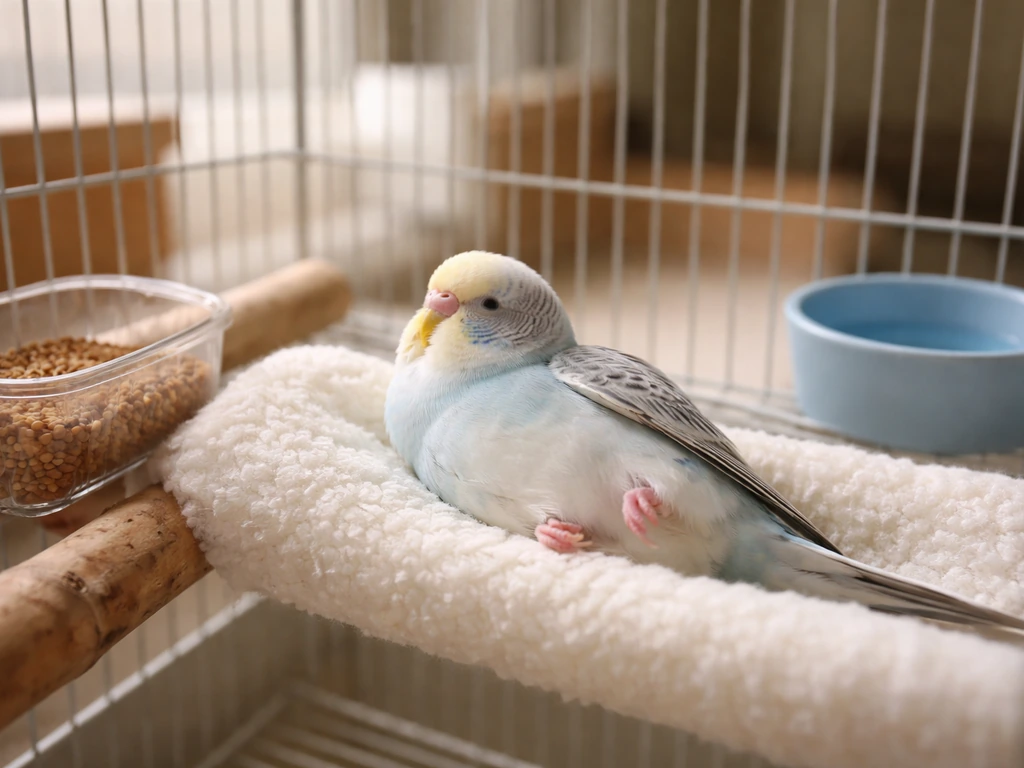
Normal vs. concerning: what resting on the back or stomach actually looks like
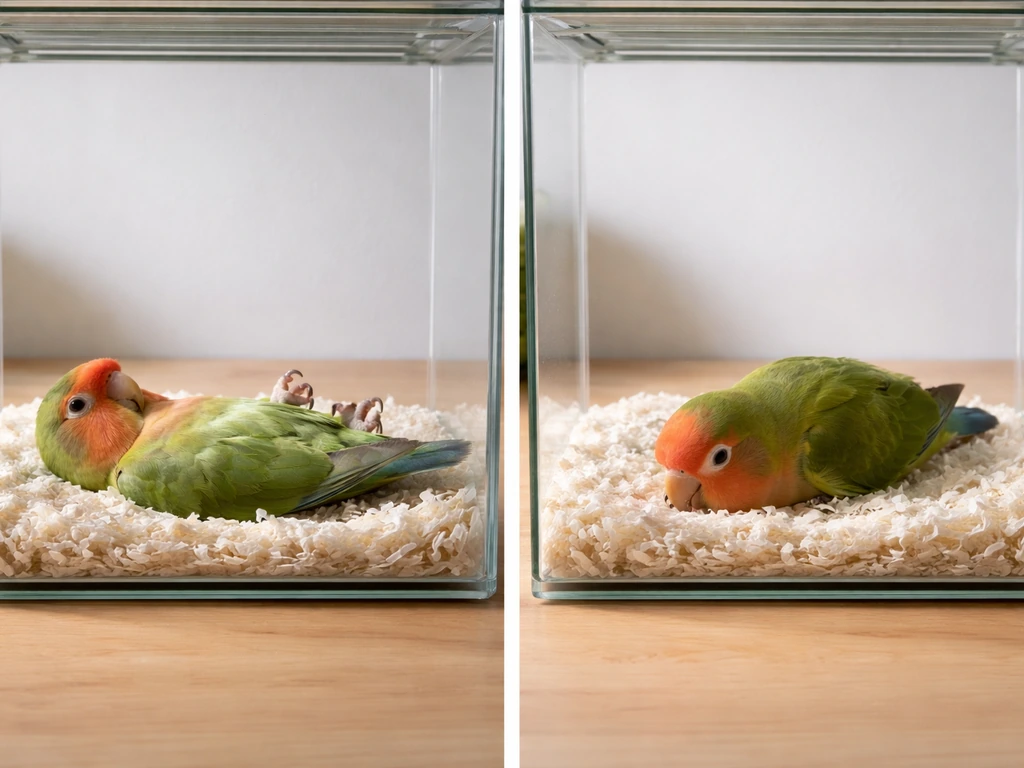
Some birds lie on their backs on purpose, and it's completely fine. Certain species do it as a comfort or play behavior. Lovebirds, for example, are known to crawl under cage liners or flat surfaces and sleep lying on their stomachs on a flat perch. Baby parrots and hand-raised birds sometimes flop onto their backs during handling because they feel totally safe and relaxed. A bird doing this will have bright eyes, normal feathers, steady breathing, and will pop back upright without hesitation when it decides to.
The concerning version looks very different. The bird stays down longer than a few seconds without choosing to get up. If your bird keeps standing still without choosing to settle, it can signal illness, stress, or injury and should be checked right away why is my bird just standing still. It may have dull or half-closed eyes, ruffled feathers, blank" rel="noopener noreferrer">labored or open-mouth breathing, or it might seem unable to coordinate its movements at all. That shift from voluntary to involuntary lying down is the key distinction you're trying to make.
Lying on the stomach (on the cage floor rather than a perch) is also worth separating from back-lying. A sick bird often sinks to the cage bottom and stays there because it no longer has the strength or stability to perch. Healthy cockatiels and budgies sleep upright on a perch, typically with one foot tucked up and the head rested into ruffled back feathers.
A bird sitting flat on the cage floor during normal hours is already outside the range of typical behavior and deserves a closer look. This is different from birds that lay down while on a perch as a relaxed resting posture. A budgie behavior guide describes a common resting posture where the head is tucked into the back feathers with one leg tucked up under the feathers, which can help you compare normal behavior to weakness [Budgie Behaviour](https://www. budgiebreeders.
asn. au/pdf. php? artlang=en&cat=3&id=316).
Common reasons a bird lies on its back or stomach
Normal causes
- Play and trust behavior: hand-tamed birds, especially young ones, sometimes roll onto their backs during interaction because they're relaxed and confident around you.
- Stretching: a quick roll or wing stretch while lying sideways is normal and usually lasts only a moment.
- Species-specific sleep postures: lovebirds and some other small parrots rest in unusual positions, including lying flat, that would look alarming in other species.
- Temperature regulation: a warm bird may flatten itself or spread wings slightly to release heat. This is different from heat stroke, which includes panting and visible distress.
- Post-bath drying: some birds lie or crouch with wings spread after bathing while they dry off.
Concerning causes
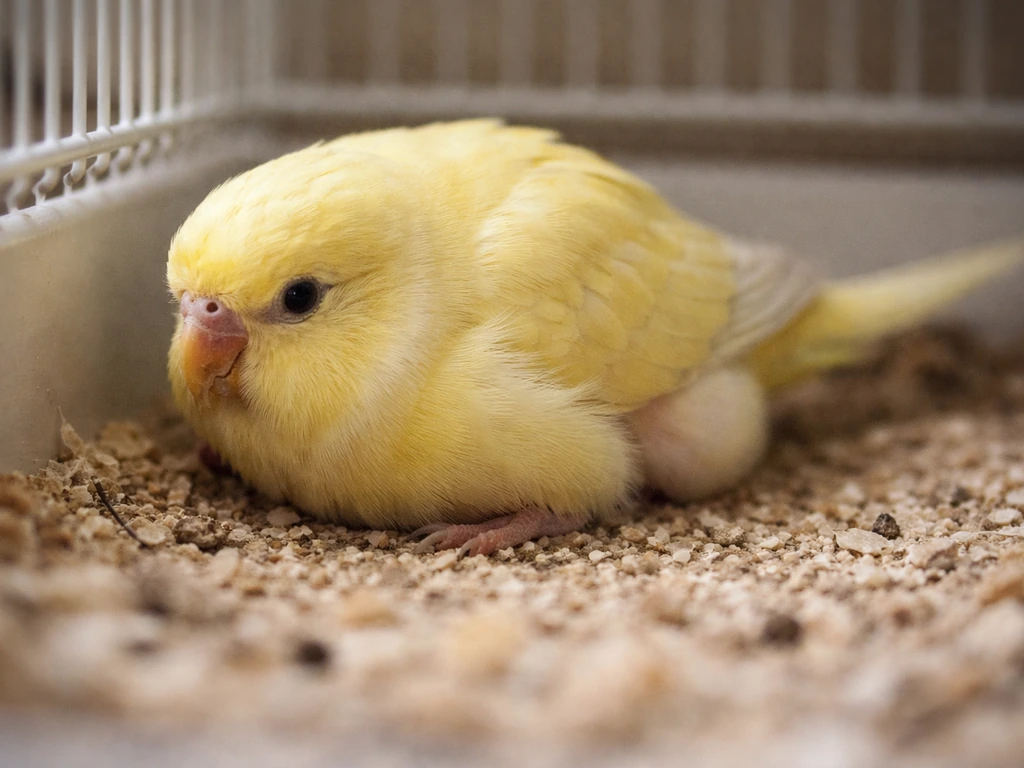
- Egg binding: female birds, especially during spring and summer, can become egg-bound. Signs include sitting on the cage floor, tail bobbing, straining, labored breathing, abdominal swelling, and visible weakness. This is an emergency.
- Neurological issues: trauma, toxins, or conditions like avian bornavirus can cause tremors, ataxia, head tipping, seizures, or an inability to right the body. A bird that flops over and can't correct its posture may be having a neurological event.
- Respiratory distress: a bird lying down because it's struggling to breathe is a critical emergency. Open-mouth breathing at rest, exaggerated chest movement, and tail bobbing with each breath are the key signs.
- Weakness and lethargy from illness: systemic illness, heavy metal poisoning, or infections can cause general collapse-like weakness where the bird simply can't maintain normal posture.
- Injury: a fall, collision with a window, or rough handling can cause internal injury, fractures, or head trauma that leaves a bird unable to stand.
- Overheating or heat stroke: a bird exposed to direct sun or a hot environment may flatten out, pant, and become unresponsive.
- Hormonal and breeding behavior: in some species, reproductive hormonal surges change posture and behavior significantly, and can sometimes trigger egg-laying attempts on cage floors.
Quick self-checks: what to observe right now
Before you do anything else, spend 60 seconds just watching your bird without touching it. You'll get the most honest picture of what's happening before it's startled by handling. Run through this checklist mentally as you watch.
| What to check | Normal sign | Concerning sign |
|---|---|---|
| Can it right itself? | Flips upright easily and quickly | Stays on back or side, struggles, or can't get up |
| Eyes | Bright, open, reactive | Half-closed, dull, glazed, or shut |
| Breathing | Quiet, rhythmic, no visible effort | Open-mouth breathing, tail bobbing with each breath, audible wheezing |
| Feathers | Smooth or mildly puffed during rest | Persistently fluffed, clamped, or disheveled |
| Energy and response to you | Reacts, moves toward or away from you | Minimal response, ignores movement near cage |
| Droppings | Normal color and consistency for this bird | Watery, absent, bloody, or very dark green |
| Appetite (recent hours) | Eating and foraging as usual | Ignoring food, not visiting food dish |
| Abdomen | Flat and smooth | Visibly swollen or distended (especially females) |
| Tremors or twitching | None | Head tremors, muscle twitching, shaking, or seizure-like movements |
| Recent events | No falls, no new foods, no chemicals nearby | Recent fall, window strike, new household chemicals, candles, or cookware use |
If you see two or more concerning signs from that list together, stop the observation phase and move into action. Don't wait to see if it gets better on its own.
What you can safely do right now: warmth, environment, and handling
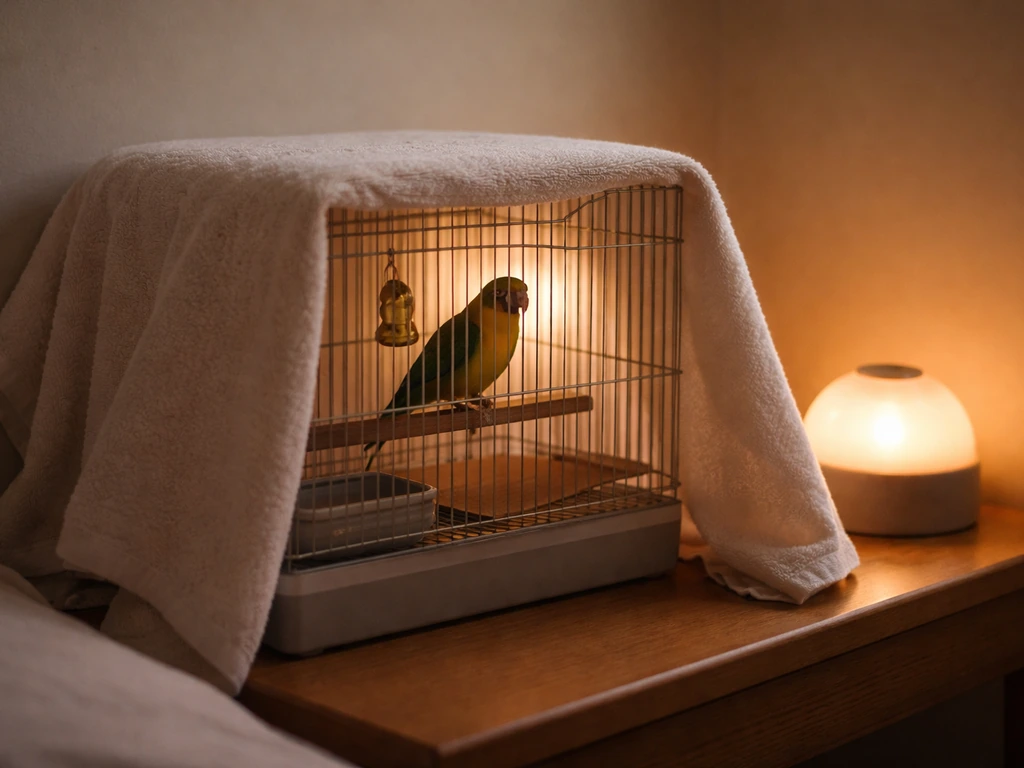
If your bird looks unwell but you aren't yet sure how serious it is, the single most helpful thing you can do immediately is provide warmth and reduce stress. Sick birds lose body heat fast due to their high metabolic rate, and a cold, frightened bird deteriorates quickly. The target for a supportive environment is around 85°F (29.4°C). You can achieve this with a heating pad set on low placed under half the cage (so the bird can move away if it's too warm), or a small space heater pointed toward the cage from a safe distance. Never place the bird directly on a heating pad, and check frequently to make sure the environment doesn't overheat.
Cover three sides of the cage with a light towel to reduce drafts and visual stress. Move the cage to a quiet, dim room away from household activity, noise, and other pets. Dim lighting helps a stressed or unwell bird feel less exposed and can reduce panic-induced energy burn.
Make food and water easy to reach. If the bird is on the cage floor and can't reach the normal food dish, put a small dish of food directly on the floor next to it. The same goes for water. Don't force food or water into its beak.
On handling: if the bird is conscious and reactive, minimize handling to reduce stress. If it's unresponsive, you can gently cup it in your hands to transfer it to a smaller, warmer container like a ventilated box lined with a soft cloth. Support the body and don't squeeze the chest. A bird's chest movement is how it breathes, so any pressure there is dangerous. Do not shake, restrain forcefully, or try to force the bird upright if it keeps falling over. That falling may be neurological, and forcing it will add injury risk.
If you suspect overheating, move the bird to a cooler area first rather than adding warmth. Offer cool (not cold) water. Don't immerse the bird in water.
When it's time to call an avian vet: red-flag symptoms
Some situations don't have a wait-and-see option. Call an avian or exotic animal vet immediately if you see any of the following, and tell them your bird cannot stand or is lying flat so they understand the urgency. If your question is specifically why your bird is laying down or cannot get up, treat these as urgent red flags your bird cannot stand or is lying flat.
- Open-mouth breathing at rest, even for a short period. This is always serious in birds.
- Tail bobbing with each breath, which signals the bird is working hard just to move air.
- Any seizure activity: falling, convulsing, uncontrolled wing flapping, muscle twitching, or loss of consciousness.
- Inability to right itself at all, especially if combined with any other symptom on this list.
- A female bird that is straining, has an obviously swollen abdomen, or has been spending time on the cage floor during breeding season. Egg binding can be fatal within hours without treatment.
- Neurological signs including head tipping, uncoordinated movement, circling, or eyes moving involuntarily.
- Known or suspected exposure to toxins: non-stick cookware fumes (PTFE), candle smoke, cleaning chemicals, heavy metals, or any new food that could be harmful.
- Complete refusal to eat or drink for more than 24 hours combined with any change in posture or energy.
- Droppings that are absent, bloody, or extremely dark green (bile-stained), which suggest the bird is not processing food.
- A bird that was fine and then suddenly collapsed or fell from its perch without an obvious physical cause.
If you cannot reach an avian vet immediately, look for an emergency exotic animal clinic. General practice vets often have limited avian experience, so if you can locate an avian specialist or exotic emergency clinic, that's worth the extra travel. While you're arranging transport, keep the bird warm and quiet as described above.
Preventing recurrences and supporting comfortable posture going forward
Once you've ruled out or treated an urgent cause, it's worth thinking about what conditions in your bird's environment or routine might be contributing to repeated posture changes or floor-sitting. A few areas tend to come up most often.
Perch setup and physical comfort
Perches that are too smooth, too large in diameter, or too narrow for your species can cause foot fatigue and instability. If your bird has a leg band, you may wonder why it was placed there and what to check for fit, age, and safety. A bird that struggles to grip will eventually spend more time on the cage floor. Use perches of varying textures and diameters so the feet exercise properly. Arthritis in older birds can also make perching painful, so lower perch heights or add a flat shelf-style perch as an accessible resting spot.
Temperature and environment
Keep the cage away from drafts, air conditioning vents, windows with direct afternoon sun, and areas where cooking fumes can accumulate. Sudden temperature drops overnight are a common hidden stressor, especially for tropical species. A stable ambient temperature between 65 and 80°F suits most pet birds, with gradual rather than sudden changes.
Diet and nutrition
Nutritional deficiencies are a long-term contributor to weakness, immune problems, and abnormal behavior in birds. A seed-only diet is a common culprit. Gradually transitioning to a pellet-based diet supplemented with fresh vegetables and limited fruit gives your bird the nutrients it needs to maintain muscle tone, immune function, and overall energy. A bird that's chronically undernourished may start showing posture and floor-sitting changes long before other obvious symptoms appear.
Hormonal and reproductive management
If you have a female bird and she repeatedly lays eggs or shows hormonal behavior, talk to an avian vet about management strategies. Chronic egg-laying depletes calcium and can lead to egg binding over time. Reducing daylight hours to under 10 per day, removing nesting materials, and limiting high-fat foods can help reduce the hormonal drive. This is a longer conversation to have with your vet, but it's worth it if you've had a scare with egg binding.
Regular health monitoring
Birds instinctively hide illness until they can't anymore, so by the time a bird is lying on its back and can't get up, it has often been unwell for longer than the behavior suggests. Weighing your bird weekly with a small gram scale gives you an early warning system: a drop of even 5 to 10 percent of body weight is significant before other symptoms become visible. Annual or biannual wellness checks with an avian vet are the other piece of this. A vet who knows your bird's baseline will spot changes much faster than one seeing it for the first time in a crisis.
If you've noticed your bird is also spending time standing still, sitting on one leg more than usual, or having difficulty with general balance, those behaviors are worth watching together as a pattern. If you’re wondering why your bird is standing on one leg, it can sometimes point to pain, weakness, or a balance issue that deserves the same careful attention standing still, sitting on one leg more than usual. Each on its own may mean little, but combined with posture changes like floor-sitting or lying down, they can point to a developing condition that's easier to treat when caught early.
FAQ
How long is it safe to watch before I treat back-lying as an emergency?
If the bird chose to lie down and can right itself promptly, brief observation is reasonable. If it stays down without choosing to get up for more than a few seconds, especially with any breathing effort, dull eyes, or disorientation, treat it as urgent and move to warmth, quiet, and a vet call.
What should I do if my bird is on its back but still responding to me?
Keep interaction minimal, dim the room if your bird seems exposed or stressed, and watch breathing and eye alertness from a short distance. Avoid trying to flip the bird upright, if it is not struggling, because you can turn a mild stress posture into a fall or additional injury.
Is it normal for a bird to lay on its back during sleep?
Some birds do a relaxed back-lying posture as a comfort or play behavior, but true sleep patterns should be consistent with your bird's usual habits and look calm, with steady breathing and bright eyes when it wakes. If it is new, happens during normal activity hours, or the bird cannot reposition itself, assume it is not just sleeping.
My bird falls onto its back repeatedly when handled. Is that still safe?
Occasional flopping can happen in hand-raised or very relaxed birds, but repeated loss of balance, delayed righting, or any open-mouth or labored breathing suggests a medical issue. If it happens more than once or you notice coordination problems, stop handling and contact an avian vet.
How can I tell if my bird is too cold versus too hot when it lies on its back?
Cold birds often look tucked, weak, and quiet, and they may benefit from gentle warmth to the low target zone. Overheating is a different risk, so if you notice panting, drooping posture, or very fast breathing, move the bird to a cooler area first, offer cool water, and avoid adding heat until you can speak with a vet.
Should I offer food or water while the bird is lying on its back?
Offer small amounts in an accessible dish if the bird is awake enough to swallow normally. Do not force feeding or put water directly into the beak. If the bird cannot reach items or is too uncoordinated, prioritize warmth and veterinary guidance over trying to manage hydration yourself.
What does it mean if my bird is lying on its back and has open-mouth breathing?
Open-mouth or labored breathing is a concerning sign because it can indicate respiratory distress or pain, and birds can deteriorate quickly. Use warmth and quiet as immediate support, then seek urgent avian or exotic emergency care rather than waiting to see if it improves.
Could back-lying be related to a leg or foot problem?
Yes. If grip or balance is impaired, a bird may end up on the floor or topple and then struggle to right itself. Perch and foot issues, arthritis, or band fit problems can contribute, so if posture changes are repeated, ask the vet to check gait, joints, and any leg band safely.
My bird keeps sitting on the cage floor flat, but sometimes it seems alert. Is that still urgent?
Floor-sitting during normal hours is outside typical resting posture for most pet birds, even if the bird looks intermittently alert. It can reflect weakness, balance issues, or ongoing stress, so it warrants prompt evaluation, especially if the bird also has ruffled feathers, unusual breathing, or repeated inability to perch.
Can hormonal egg-laying cause back-lying behavior?
Hormonal behavior can lead to weakness indirectly, and egg binding risk becomes an emergency if the bird cannot get comfortable, breathe well, or move normally. If a female bird is repeatedly trying to nest, shows discomfort, or has any inability to stand or get up, contact an avian vet right away rather than trying home management.
What measurements can help my vet understand what is going on?
If you can do it safely, note your bird’s temperature, breathing pattern (steady versus open-mouth), eye state (bright versus half-closed), and how quickly it can right itself. If possible, provide the timeline (when it started, how long it stays down) and your recent weight trend, since even a modest drop can be significant.