
A bird that can't stand up needs your attention right now. This is one of those situations where the range of causes goes from "needs a vet visit today" all the way to "needs a vet in the next 10 minutes," so the first thing to do is a quick visual check before you even open the cage. Look at the bird from a short distance and assess whether it's conscious, breathing normally, and responsive to you. That 30-second look will tell you whether you're dealing with a true emergency or something serious but slightly less urgent.
My Bird Can’t Stand Up: Emergency Triage and Care Steps

Marcus Chen
5 Jul 2026
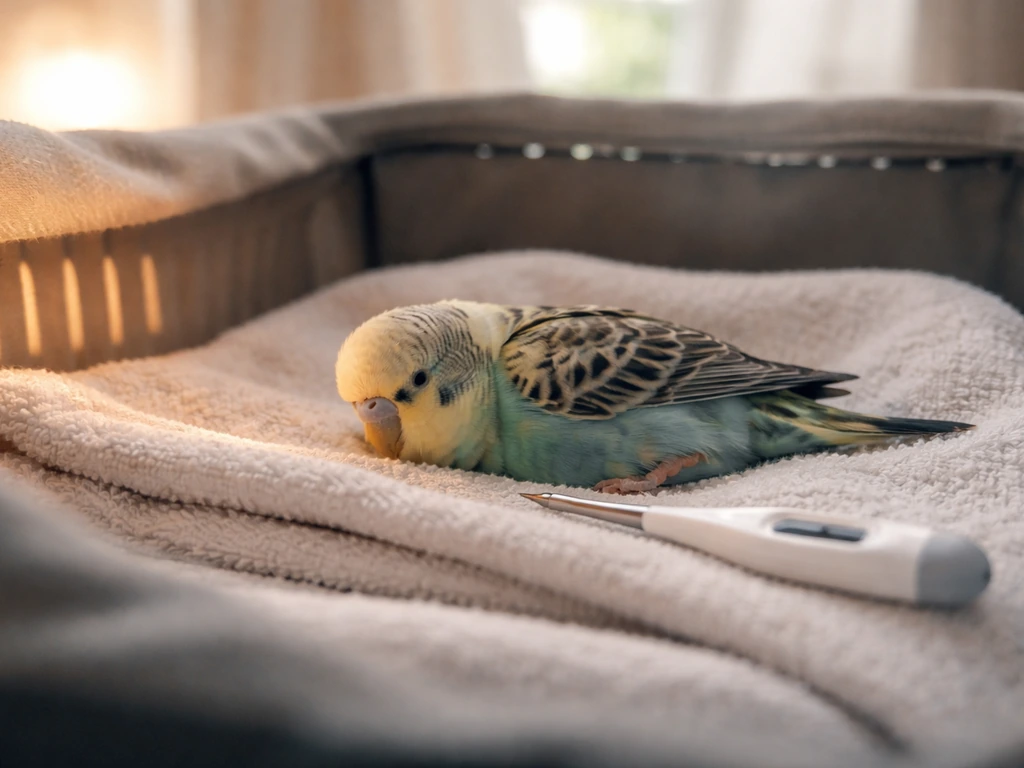
Immediate triage: is this an emergency right now?
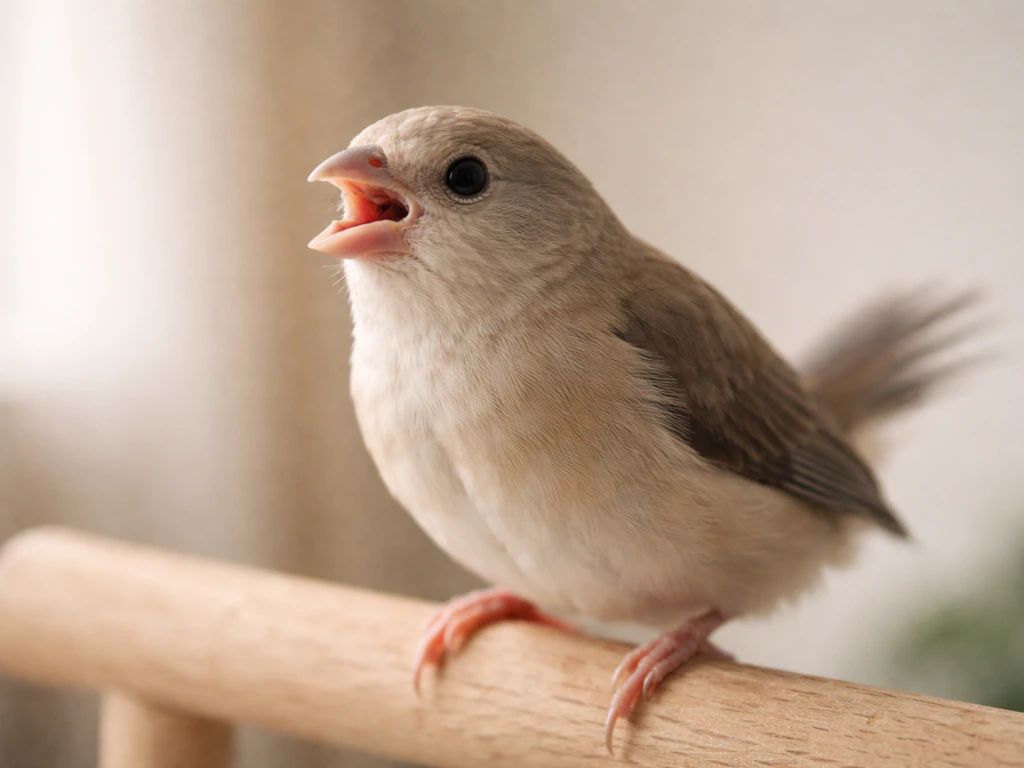
Some signs mean you should be calling an avian vet or emergency exotic animal clinic while you're reading this. If your bird is showing any of the following, stop and act immediately:
- Open-mouth breathing, gasping, or visible tail bobbing with every breath
- Unconscious, unresponsive, or actively seizing/convulsing
- Bleeding that has been going on for more than 5 minutes and won't stop
- Complete collapse with no ability to lift the head
- Suspected toxin exposure (chewed on a metal object, inhaled fumes, got into something toxic)
These are not "wait and see" situations. Birds hide illness extremely well as a survival instinct, so by the time they're showing these signs openly, things are already serious. Get the bird into a small, secure carrier lined with a soft towel, keep it warm and dark and quiet, and get moving toward veterinary care while you call ahead.
If none of those red flags apply and your bird is conscious, alert to sound, and breathing with a closed beak, you still need a vet but you have a little more time to do a careful assessment. Use that time wisely.
What to check in the body: breathing, alertness, balance, and pain
Do this assessment calmly and quickly. Stress makes everything worse for a sick bird, so keep your movements slow and your voice low.
Breathing
Watch the bird's chest and tail from the side. Normal breathing is subtle and quiet. Any bobbing of the tail with each breath, any clicking or wheezing sound, any open-beak breathing, or any flaring of the nostrils is abnormal and puts this firmly in the emergency category.
Alertness and responsiveness
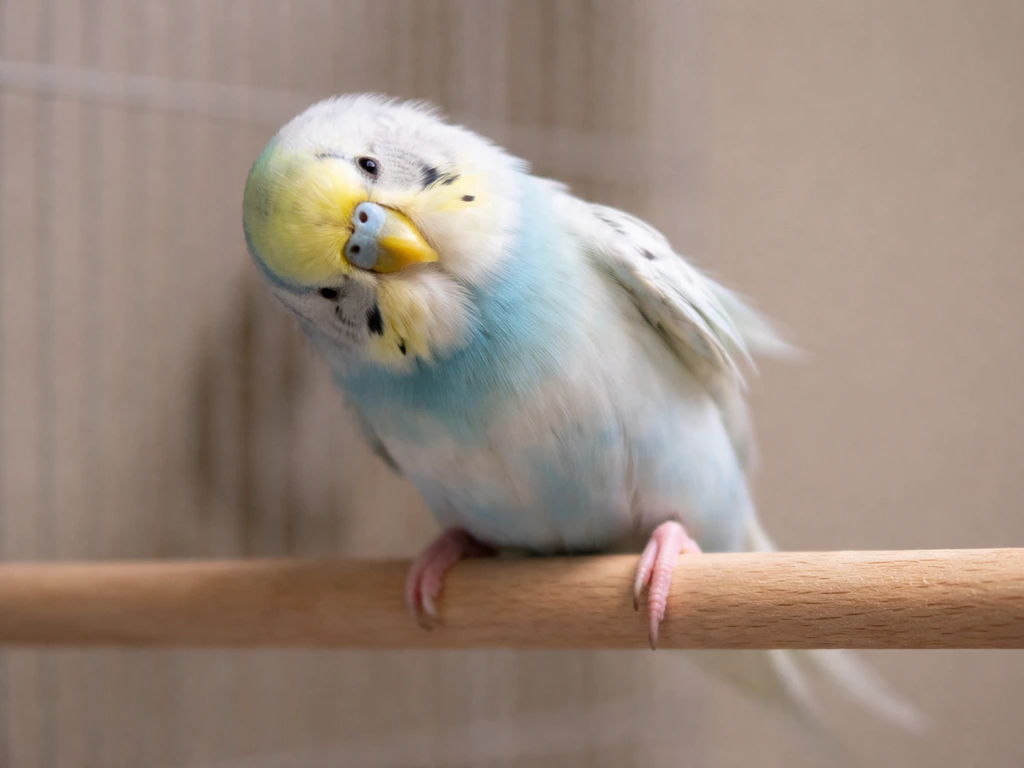
Does the bird track your movement with its eyes? Does it react when you approach? A bird that is glassy-eyed, completely still, not tracking movement, or that doesn't blink or flinch when you come close is in a much more serious state than one that's struggling to stand but is clearly aware of what's going on around it.
Balance and posture
Is the bird leaning to one side? Is the head tilting or rotating? Is it falling over repeatedly, or does it seem to have no control over one side of its body? These are neurological red flags. blank" rel="noopener noreferrer">Neurologic disease can present with leg paralysis progressing to lateral recumbency and blindness, and may include findings such as ataxia, torticollis, opisthotonus, tremors, and seizures or convulsions in avian CNS cases. A bird that's sitting low and wobbly but upright is different from one that keeps rolling onto its side or has its head twisted at a strange angle. Why your bird lays on its back often comes down to balance, neurological issues, or pain, so use the signs below to guide your next steps why does my bird lay on its back.
Grip and leg response
If you can safely and gently allow the bird to grip your finger or a soft perch, check whether it can grip at all, whether grip is equal in both feet, and whether it pulls away or vocalizes when you gently touch each leg and foot. Flinching or crying out when a specific area is touched suggests localized pain, which is a different situation from general weakness affecting the whole body.
Leg/foot vs whole-body weakness: common causes and clue matching
The pattern of how the bird is down matters a lot. Here's how to think about what you're seeing:
| What you observe | Most likely category | Key clues |
|---|---|---|
| One leg affected, other leg normal | Localized leg/foot injury or bumblefoot | Swelling, heat, dark scab, hard lump on foot pad, limping on one side |
| Both legs weak, bird is alert and reactive | Nutritional deficiency, egg binding, or early systemic illness | Female bird, swollen abdomen, or diet history lacking variety |
| Both legs weak or paralyzed, bird seems confused or has tremors | Neurological cause: toxin (lead/heavy metal), viral CNS disease, or stroke-like event | Access to metal toys, old cage hardware, or no known cause |
| Can't stand, very puffed up, eyes closing, quiet | Systemic illness, infection, or advanced disease | Weight loss, changes in droppings, recent appetite drop |
| Fell from perch suddenly, previously fine | Trauma, fracture, or sudden neurological event | Impact sound heard, visible swelling or deformity on a limb |
Bumblefoot (pododermatitis)
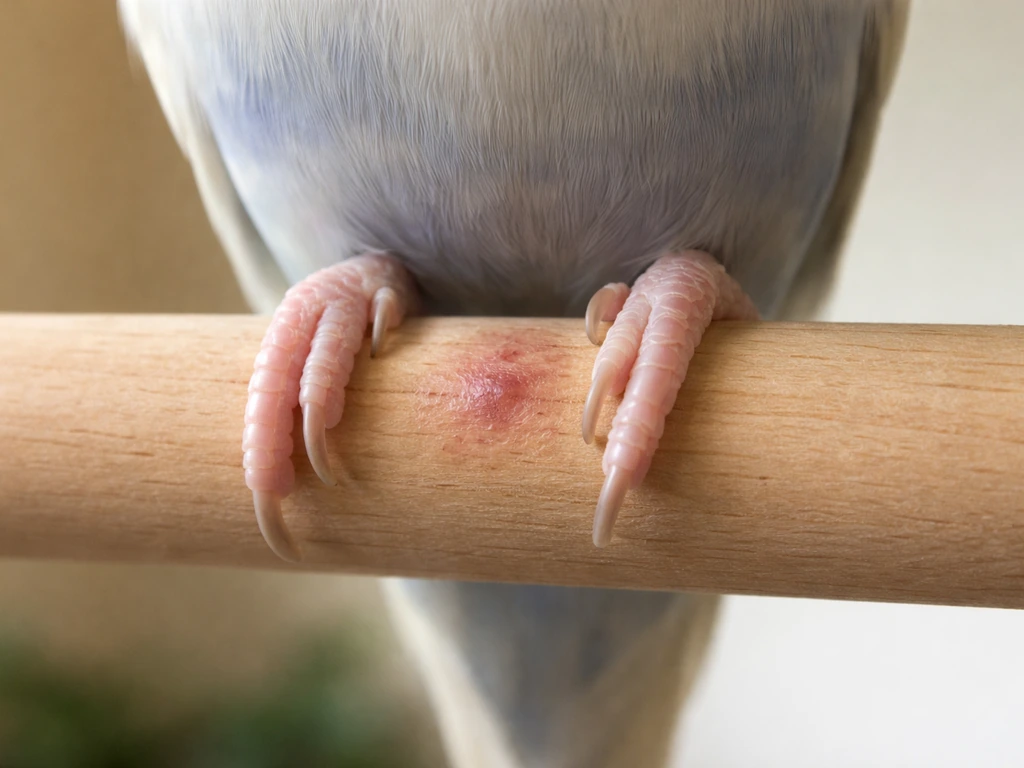
This is one of the more common foot-specific causes. It's an infection and inflammation of the skin on the bottom of the foot, often caused by rough or hard perch surfaces, obesity, or spending too much time on the cage floor. You'll usually see swelling, heat, redness, or a dark scab or hard lump on the foot pad. The bird may bear weight on one foot but refuse the other, or stand awkwardly to take weight off the affected area. If you notice this pattern, you may be dealing with a foot issue like bumblefoot or a neurological problem, and knowing the exact cause helps you choose the right next step one leg. It needs veterinary treatment, especially if there's already ulceration or an abscess forming.
Egg binding
If you have a female bird that suddenly can't stand, egg binding is high on the list. When an egg gets stuck, it can press on the nerves that control the legs, making the bird unable to grip a perch or bear weight. Within 12, 24 hours of supportive care, if the bird is not in distress, is an approach discussed in the MSPCA/Angel handout for egg binding and dystocia, and it also notes that nerve compression from an stuck egg can contribute to inability to lay or neurologic issues blank" rel="noopener noreferrer">egg binding can press on nerves and cause neurologic issues. You might notice a swollen, rounded abdomen, and the bird may be straining. This is genuinely life-threatening and can become fatal within a day or two without treatment. Don't wait.
Heavy metal toxicity (lead and zinc)
Lead poisoning is more common in pet birds than most owners realize. Old cage hardware, weighted toys, stained glass, certain paints, and some jewelry are common sources. A blood lead level above 50 micrograms per deciliter is diagnostic. Signs include profound weakness, leg paralysis, circling, tremors, and general neurological deterioration. If your bird is laying down because of sudden leg weakness, heavy metal toxicity is one adjacent possibility to consider alongside other causes of inability to stand why is my bird laying down. The tricky part is these signs overlap with many other conditions, so diagnosis requires blood testing and often X-rays to check for metal fragments in the digestive tract. This is a vet-required diagnosis, not something you can determine at home.
Nutritional deficiencies
A diet consisting mostly of seeds is the single biggest nutritional problem in pet birds. Deficiencies in Vitamin A, Vitamin D3, and calcium can lead to muscle weakness, poor coordination, and an inability to grip or stand properly over time. This tends to develop gradually rather than suddenly, so you'll often see a history of the bird being "a bit off" for a while before it becomes obvious.
Other causes worth knowing
Fractures from falls or trauma, viral neurological diseases like avian encephalomyelitis (which causes tremors, ataxia, and progressive weakness), bacterial infections, and even arthritis in older birds can all present as an inability to stand. The common thread is that none of these are something you can manage fully at home, and all of them need a veterinarian involved.
Safe at-home support while you arrange vet care
The goal here is to keep the bird stable, minimize stress, prevent further injury, and maintain warmth without overheating. Here's what to actually do:
- Move the bird to a small, low carrier or box lined with a soft towel. Remove perches or lower them to floor level so the bird can't fall and hurt itself further.
- Keep the environment warm. A sick bird loses heat fast. A heating pad set on low placed under one half of the carrier (not the whole base) gives the bird a way to regulate by moving toward or away from the warmth. Aim for roughly 75 to 85 degrees Fahrenheit (24 to 29 degrees Celsius). Put a folded towel between the heating pad and the carrier to avoid direct contact.
- Keep it dark and quiet. Cover the carrier with a light cloth. Darkness reduces stress significantly in birds.
- Don't force any food or water into the bird's beak. Forced liquids can go into the lungs (aspiration), which can be fatal. If the bird is alert and moving around, you can place a shallow water dish within easy reach.
- Don't attempt to splint a leg, bandage a wound, or manipulate any limb unless you've been specifically instructed by a vet. You can cause more damage.
- Don't give any medications, pain relievers, or supplements without veterinary guidance. Human pain medications like ibuprofen and acetaminophen are toxic to birds.
If you noticed any of the neurological warning signs described earlier (head tilt, circling, seizures, or tremors), be cautious about supplemental heat in some cases. If there's any chance of head trauma or brain injury, excessive heat can cause additional harm. When in doubt, call the vet and describe what you're seeing before applying heat.
How an avian vet will evaluate (tests, questions, what to report)
When you get to the vet (or when you call ahead), the more information you can give them, the faster they can help. Here's what they'll typically want to know and what they're likely to do:
Information to gather before you call
- Species, age, and sex of the bird (female birds and egg binding history matter a lot)
- How long the bird has been unable to stand and whether it came on suddenly or gradually
- Any recent changes in droppings, appetite, activity, or posture
- The bird's current diet (seed-based diets are a major flag)
- Whether the bird has had access to metal objects, new toys, old cage parts, or anything it might have chewed
- Any chance of trauma (fall, flew into a wall, cat or dog contact)
- Whether any other birds in the home are showing similar signs
- Any recent changes in the home (new cookware, scented candles, air fresheners, cleaning products used nearby)
What the vet examination involves
The vet will do a full physical exam including checking grip strength in both feet, looking for swelling, deformity, or heat in the legs and feet, assessing neurological responses, and listening to the chest. For a bird that can't stand, X-rays are very commonly needed, both to check for fractures and to look for metal fragments in the digestive tract (which would suggest lead or zinc poisoning). Blood work is often recommended to check for infection, organ function, blood lead levels, and nutritional status. For female birds, the vet will assess whether egg binding is involved. Don't be surprised if they want to run several tests at once because the signs of many of these conditions overlap significantly.
Feeding, hydration, and comfort: do's and don'ts

A bird that can't stand is often also not eating or drinking normally, which creates a secondary problem quickly. Birds have fast metabolisms and can deteriorate from dehydration and low blood sugar in hours.
| Do | Don't |
|---|---|
| Place a shallow water dish flat on the carrier floor within easy reach | Force water or food into the beak — aspiration risk is real and serious |
| Offer a small amount of a familiar food the bird normally eats | Introduce new foods or supplements during a crisis |
| Keep the bird warm (75–85°F / 24–29°C) using a heating pad under one side of the carrier | Cover the entire bottom with heat — the bird needs a cooler side to move to |
| Keep the environment dim and very quiet to reduce stress | Handle the bird repeatedly to check on it — every handling episode is stressful |
| Call your vet and ask about supportive care options specific to your bird | Give any human medications, vitamins, or herbal remedies without veterinary guidance |
| Remove high perches so the bird can rest on the floor without risk of falling | Leave the bird in a large cage unsupervised where it could fall from height |
If the bird is severely debilitated and has been refusing to eat for more than a day, tube or gavage feeding might be needed. This is something only a vet or trained rehabilitator should perform because it carries serious risks including aspiration and esophageal injury if done incorrectly.
Warning signs that often come before a bird can't stand
Most of the time, a bird doesn't go from perfectly normal to unable to stand without showing some earlier signs. These early indicators are easy to miss or explain away, but knowing them can help you catch problems before they become emergencies. Common patterns that often precede an inability to stand include:
- Sitting lower on the perch than usual or gripping the perch less firmly
- Reluctance to fly or jump between perches
- Spending more time on the cage floor (this is a significant red flag on its own)
- Wings held slightly away from the body or drooping on one side
- Tail bobbing with breathing even when resting
- Changes in droppings including increased urine, greenish color, or undigested food
- Reduced vocalization or unusual quietness
- Puffed-up feathers, especially combined with eyes partially closed during the day
- Reduced appetite or interest in food over several days
Birds that are sitting on the ground, standing unusually still, or holding one leg up may be showing earlier-stage versions of the same problems that eventually lead to complete inability to stand. Catching these signs early gives you and your vet a much better window for intervention.
Prevention and when to seek follow-up even if they improve
If your bird recovers and seems back to normal, it's still worth a vet follow-up visit unless the cause was completely identified and resolved. A bird that bounced back from apparent weakness without a clear diagnosis could have an underlying condition that will come back, sometimes worse the next time.
Nutrition and supplements
A seed-heavy diet is one of the most preventable contributors to weakness, poor coordination, and long-term health decline in pet birds. Work with an avian vet to transition your bird to a balanced pellet-based diet supplemented with appropriate fresh vegetables and limited fruit. Don't add supplements without guidance because fat-soluble vitamins (like A and D3) can cause toxicity if over-supplemented.
Cage and perch setup
Rough or inappropriate perch surfaces are a primary driver of bumblefoot. Vary perch textures and diameters so the foot doesn't grip the same spot in the same way all the time. Avoid sandpaper perch covers, which cause abrasion. Make sure perches are at appropriate heights to reduce fall risk. Check cage hardware periodically for rust, flaking paint, or old zinc-coated parts.
Toxin awareness
Audit the bird's environment for potential lead and zinc sources: old cage hardware, weighted curtain hems, certain paints, stained glass, costume jewelry, and some imported toys. Non-stick cookware fumes (PTFE/Teflon), scented candles, air fresheners, and cleaning product residue are inhalation hazards that can cause rapid neurological and respiratory collapse. Keep these away from bird spaces.
Routine monitoring
Get your bird weighed regularly on a kitchen gram scale. Weight loss is often the first measurable sign of illness, and catching even a 10 to 15 percent drop early makes a real difference in outcomes. Annual wellness exams with an avian vet are the single best investment for catching problems before they become emergencies. A bird that seemed fine yesterday and can't stand today is often one that had small, missed signs building for weeks. If your bird is just standing still, use these same emergency triage and body-check steps to figure out whether it needs urgent avian care can't stand today.
FAQ
My bird is not standing, but it can grip and seems alert. Is this still an emergency?
It can still be urgent even if it looks aware. If it cannot bear weight, the cause could be pain, a fracture, neurologic impairment, or a toxin, all of which can worsen quickly. Call an avian vet the same day, and prioritize immediate transport if it is breathing abnormally or not eating.
How warm should the carrier be, and what if I get too much heat?
Use gentle warmth, not hot surfaces. Place a heat source outside the carrier or use a warm (not hot) towel, and keep the bird in a darker, quiet area. If the bird is showing head tilt, tremors, seizures, or possible brain injury, avoid extra heat unless the vet instructs you, because overheating can worsen outcomes.
Should I offer water or force-feed it to get it strength back?
Do not force-feed. You can offer water (and only small amounts of preferred food) if the bird is fully conscious and can swallow normally. If it is refusing food or cannot stand reliably, the safer move is vet evaluation, since aspiration risk rises when birds are weak or neurologically affected.
My bird can still sit upright, but it keeps collapsing. What is the fastest way to tell if it is one-sided versus whole-body weakness?
Watch from the side and note whether one leg shows less grip or a distinct abnormal angle, or whether both legs fail at once. Equal loss in both feet suggests systemic weakness, while repeated rolling to one side, head tilt, or consistent one-foot impairment points to localized pain or neurologic or orthopedic issues that need different assessment.
If it seems like bumblefoot, can I treat it at home with ointment or bandages?
Avoid home bandaging or closing wounds with tight wraps. Bumblefoot can involve deeper infection, and incorrect pressure can worsen tissue damage. If there is swelling, heat, a scab, or the bird avoids one foot, plan for veterinary treatment, especially if there is any ulceration or pus-like discharge.
What details should I tell the vet to speed up diagnosis?
Bring a clear timeline, what changed first (not eating, stumbling, head tilt), and whether the bird is breathing normally. Also mention recent cage or toy changes, any new hardware, jewelry, paint or cleaning products used, and whether the bird is a female with any recent nesting or unusual abdominal swelling.
Could it be lead poisoning if the cage looks clean?
Yes. Lead exposure can come from older hardware, weighted or coated components, stained glass, certain toys, or flaking/aging surfaces that are not obvious. Even when the bird is not eating, weakness can progress from neurological impairment, so vet testing (blood work, and often imaging) is needed to confirm.
How do I transport a bird that cannot stand without causing further injury?
Use a small, secure carrier lined with a soft towel so the bird cannot slide. Keep it warm and dark, and avoid moving it repeatedly. If it is rolling, position the towel so the bird has a stable base, and do not try to straighten the legs or force it onto a perch.
My bird keeps standing still and holding one leg up before it got worse. What mistakes delay care?
Common delays include assuming it is “sleeping,” waiting for it to “warm up,” or only checking the feet without evaluating breathing and neurologic signs. If it is holding one leg up, you should contact a vet promptly because early signs can be orthopedic pain, neurologic problems, or infection that become non-ambulatory.
When should I call emergency rather than a regular appointment?
If there are any respiratory red flags, if it is unresponsive or glassy-eyed, if it is head-tilted or circling, if it cannot stand at all, or if it is deteriorating over minutes to hours, treat it as an emergency. Also escalate quickly if the bird is not eating, since dehydration and low blood sugar can become dangerous rapidly in birds.
After it improves, do I still need a follow-up even if I cannot find an obvious cause?
Yes. Improvement does not rule out fractures, toxin exposure, neurologic disease, or nutritional deficiencies that can recur. Ask the vet what they tested for, whether further work is needed, and whether you should adjust diet, perch surfaces, or remove potential toxin sources right away.
Next Articles
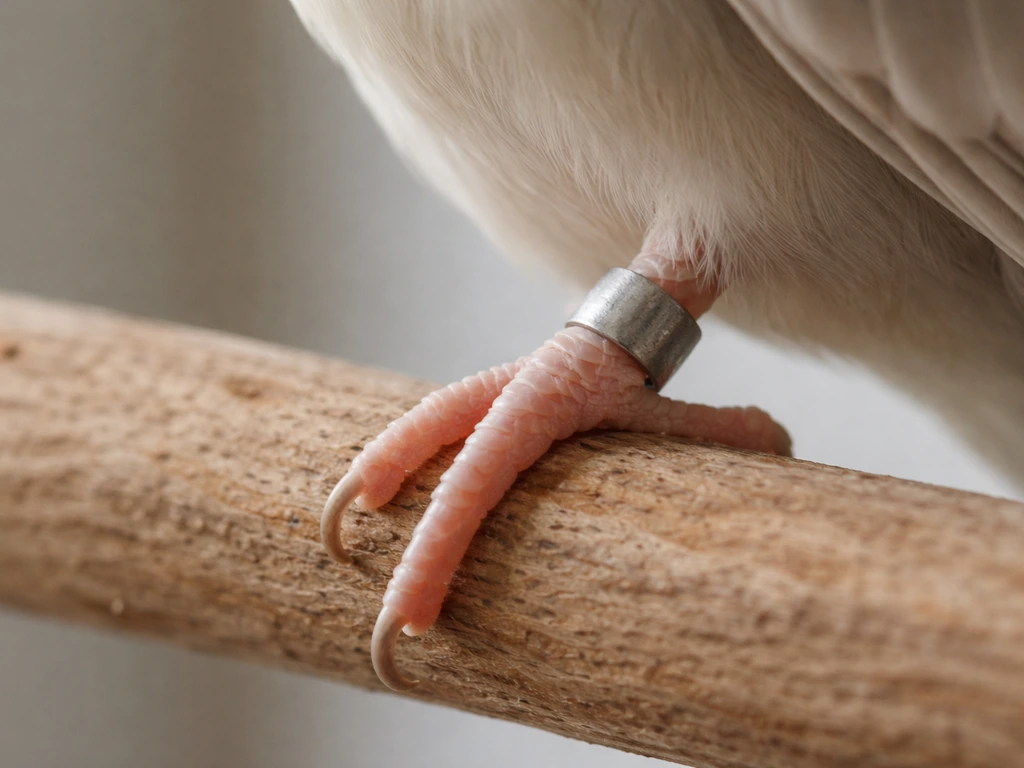
Why Does My Bird Have a Band on Its Leg? Reasons and What to Do
Learn why your bird has a leg band, how to check fit safely, spot red flags, and when not to remove it
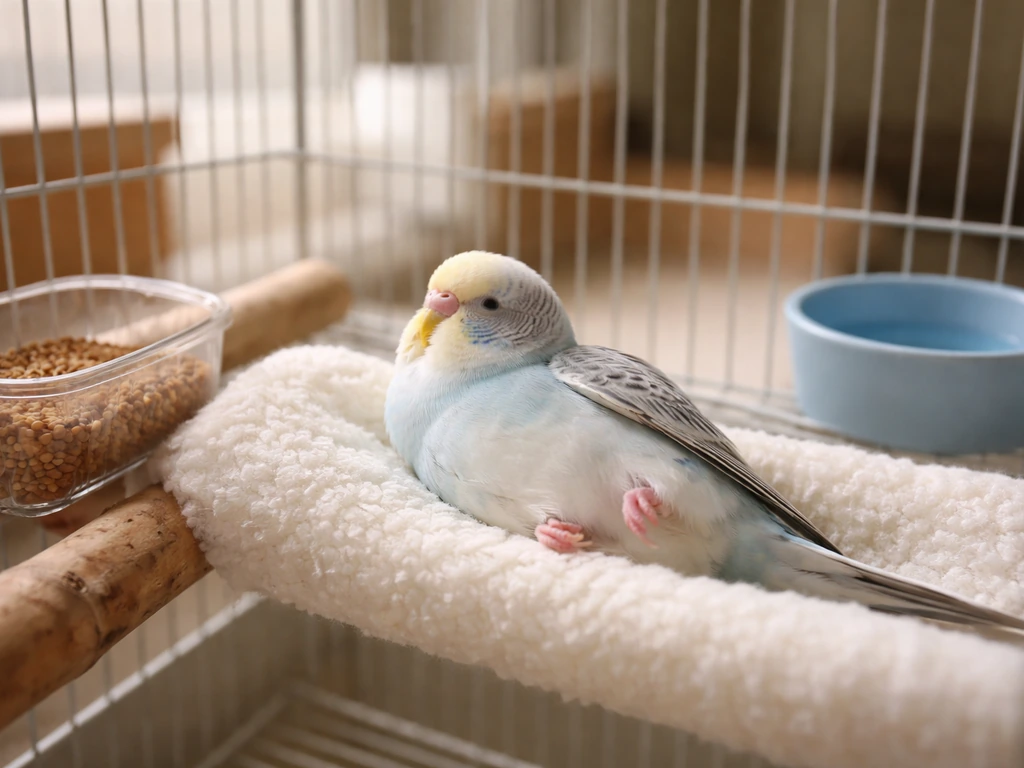
Why Does My Bird Lay on Its Back? Vet Triage Guide
Learn why your bird lays on its back or stomach, run a quick vet triage checklist, and spot red flags fast.
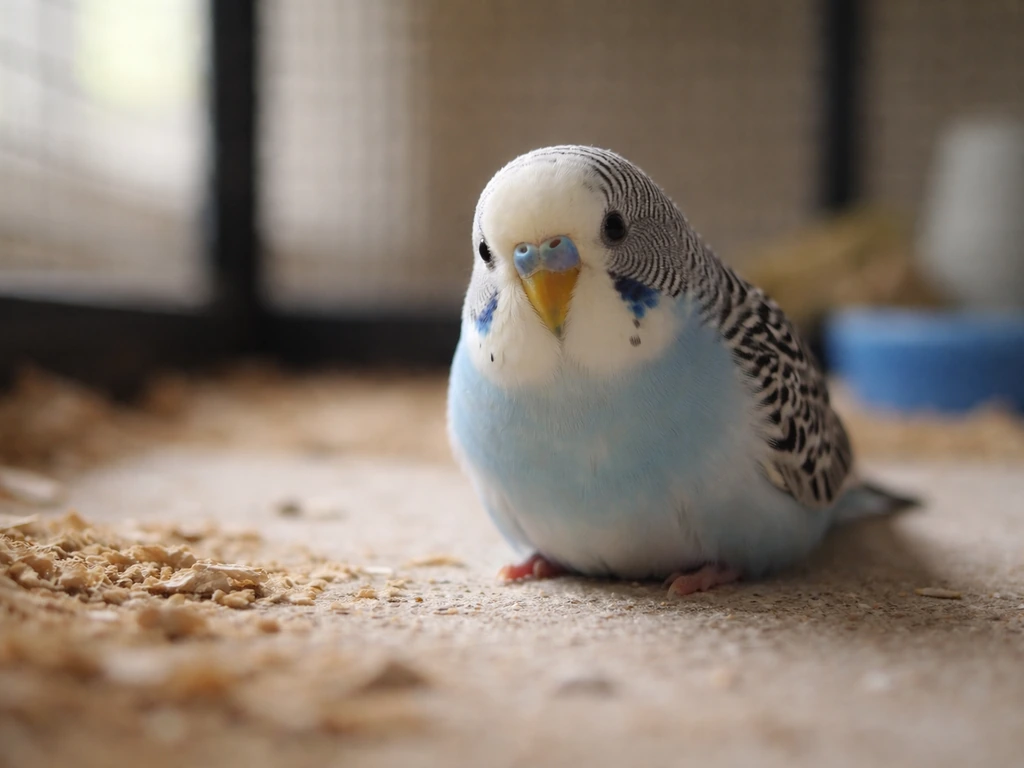
Why Would a Bird Be Sitting on the Ground? Signs and Steps
Discover why a bird sits on the ground, how to spot normal vs illness signs, and what to do now.