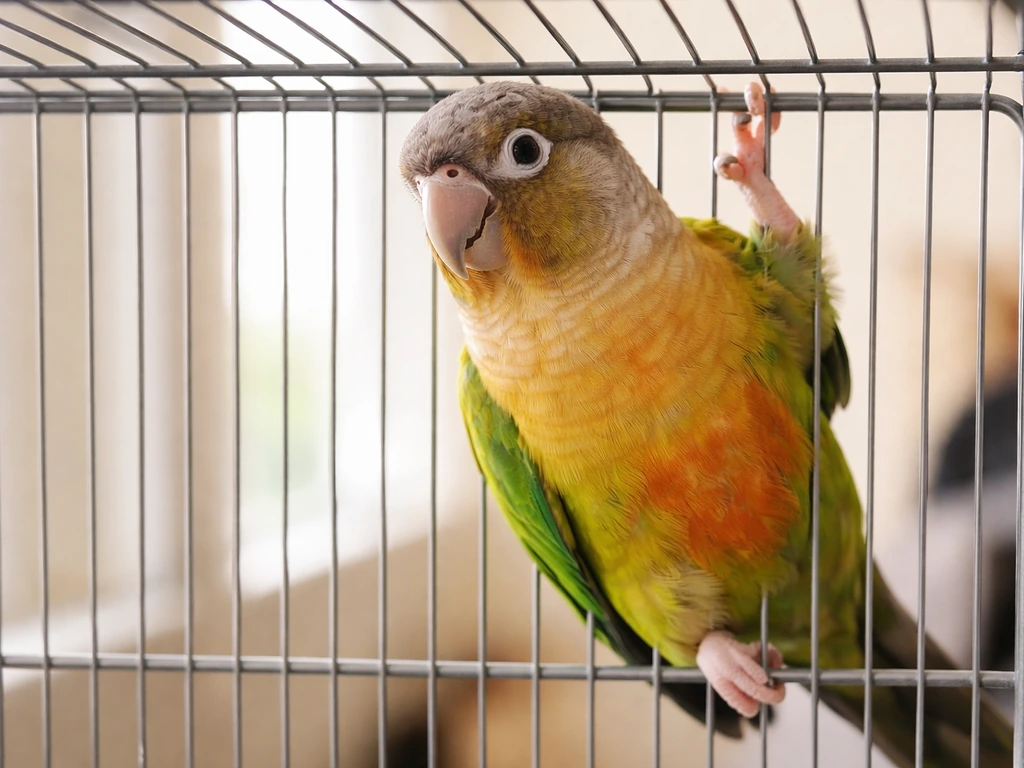
Your bird won't come out of the cage most likely because it doesn't yet feel safe enough to do so. That could be fear of you, fear of the room, territorial instincts around the cage itself, a recent change in environment, or a health issue making movement uncomfortable. The good news is that almost all of these have a clear fix once you know which one you're dealing with.
Why Won’t My Bird Come Out of the Cage? Troubleshooting
Marcus Chen
22 Jun 2026
Normal reasons birds avoid the cage door
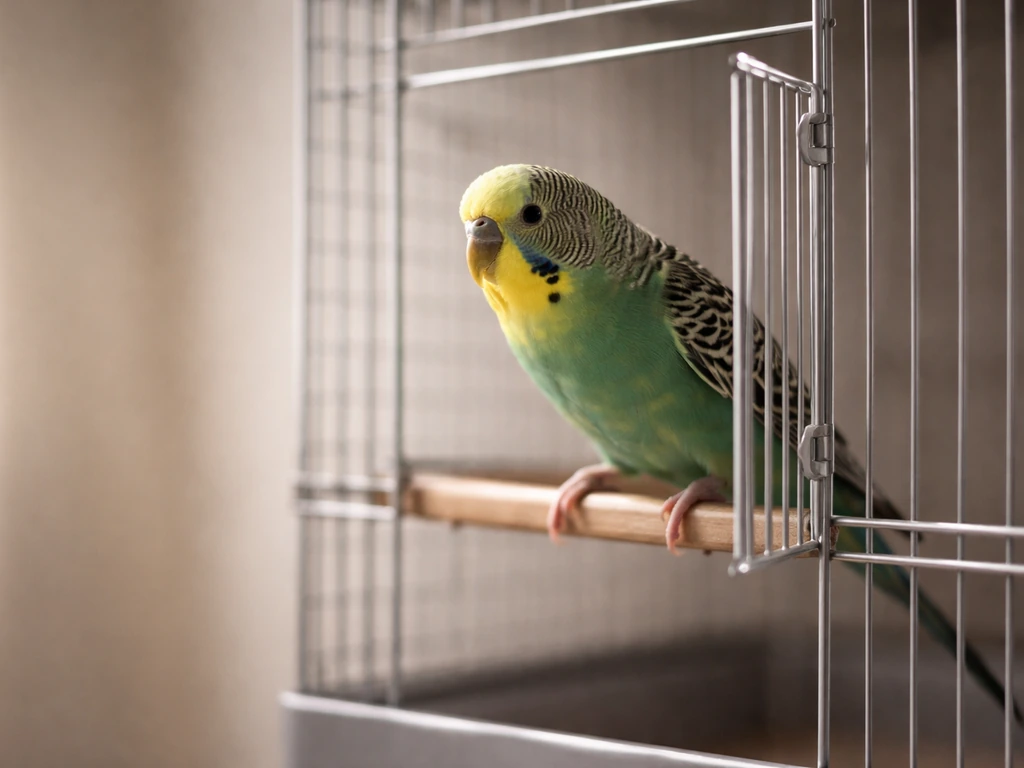
Not every bird that won't leave the cage is sick or traumatized. Some birds are just naturally cautious, and that caution gets amplified right at the cage door because the cage is the one place they feel completely secure. This is often called cage territoriality or cage defensiveness, and it's one of the most common reasons owners describe a bird that seems perfectly happy inside but won't budge when the door opens.
Other completely normal triggers include recent changes like a new cage, a move to a different room, a new person in the home, or even rearranged furniture in the bird's line of sight. Birds are creatures of routine. If something looks or smells different, they need time to decide the space outside is still safe. A bird that was coming out freely last week and suddenly won't may just be recalibrating after a change you might not have even noticed.
- Natural shyness or cautious personality (some species and individuals are simply more reserved)
- Cage defensiveness, where the bird treats the inside as its territory and the door as a threat threshold
- Unfamiliarity with the room, new objects, sounds, or people
- Lack of a consistent daily routine for out-of-cage time
- No clear signal that it's safe or rewarding to step out
- Social uncertainty around other pets or people in the room
- Inadequate enrichment inside the cage, paradoxically making the bird less motivated to explore outside it
If your bird was never really trained to step up or come out voluntarily, that's also a factor. Many birds simply were never shown that leaving the cage leads to good things. They default to staying put because nothing has made going out worth the risk.
Do a quick safety and environment check first
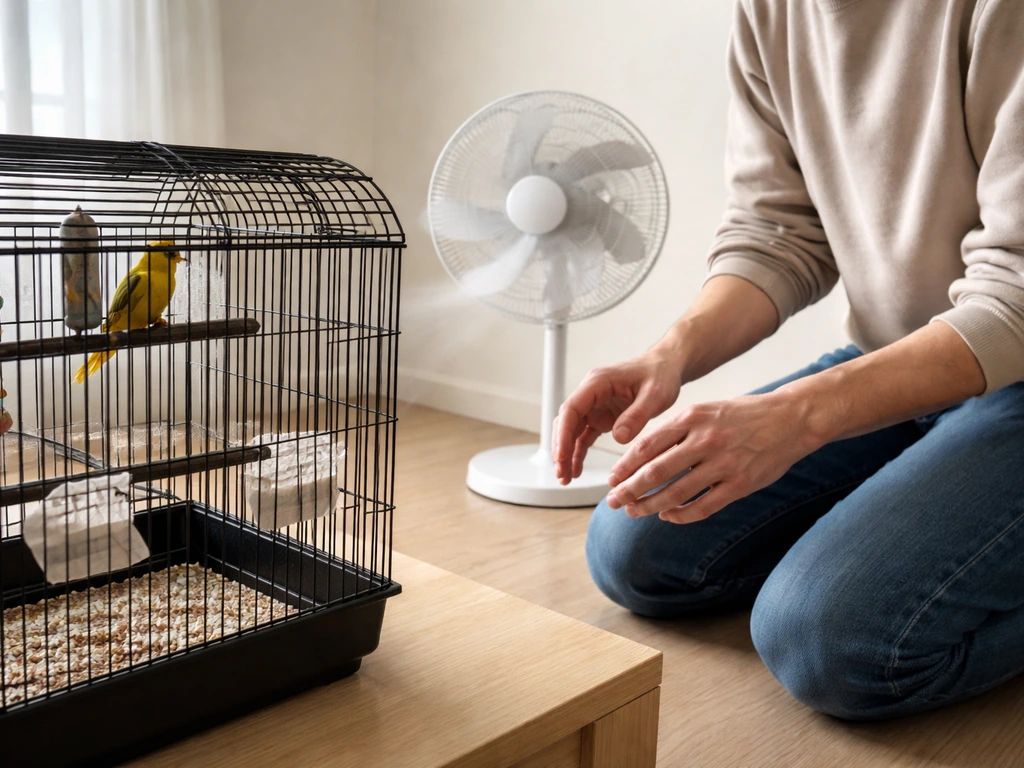
Before you start working on training or trust-building, spend five minutes checking the room itself. Environmental factors can make a bird refuse to step out even if it's otherwise well-socialized and comfortable with you.
- Drafts: Is the cage near an air vent, open window, or fan? Birds feel drafts acutely and will avoid stepping into moving air.
- Noise level: A loud TV, music, or people talking nearby can be enough to make the area outside the cage feel threatening.
- Lighting: Harsh direct light aimed at the cage door or a dark room with no visual anchor points can both cause hesitation.
- Predator cues: Cats, dogs, or even large shadows moving in the room are a hard stop for most birds.
- Cage door placement: If the door opens awkwardly, swings toward the bird, or is placed at a height that makes stepping out feel like a drop, the bird may simply be avoiding the physical discomfort of the exit.
- Dominant cage placement: A cage positioned too low means the bird has to step down to exit, which feels vulnerable. Eye level or slightly above is ideal.
- Other birds: If there's a dominant bird nearby, a more submissive bird may not feel safe leaving even when the door is open.
Fix whatever you can right now. Move the cage away from vents and direct drafts. Lower the volume in the room. Give the bird a clear, unobstructed exit path with a perch placed just outside the door so it has somewhere obvious to land. These small changes sometimes solve the problem the same day.
What your bird's body language is telling you
Your bird is communicating constantly, and reading its posture at the cage door tells you a lot about why it won't come out. If you are wondering why is my bird climbing its cage, this same body-language clue can help you decide whether the bird is fearful, defensive, or responding to the environment why it won't come out. Fear looks different from territorial aggression, and both look different from illness. Getting this right matters because your response to each one should be different.
Signs of fear or stress
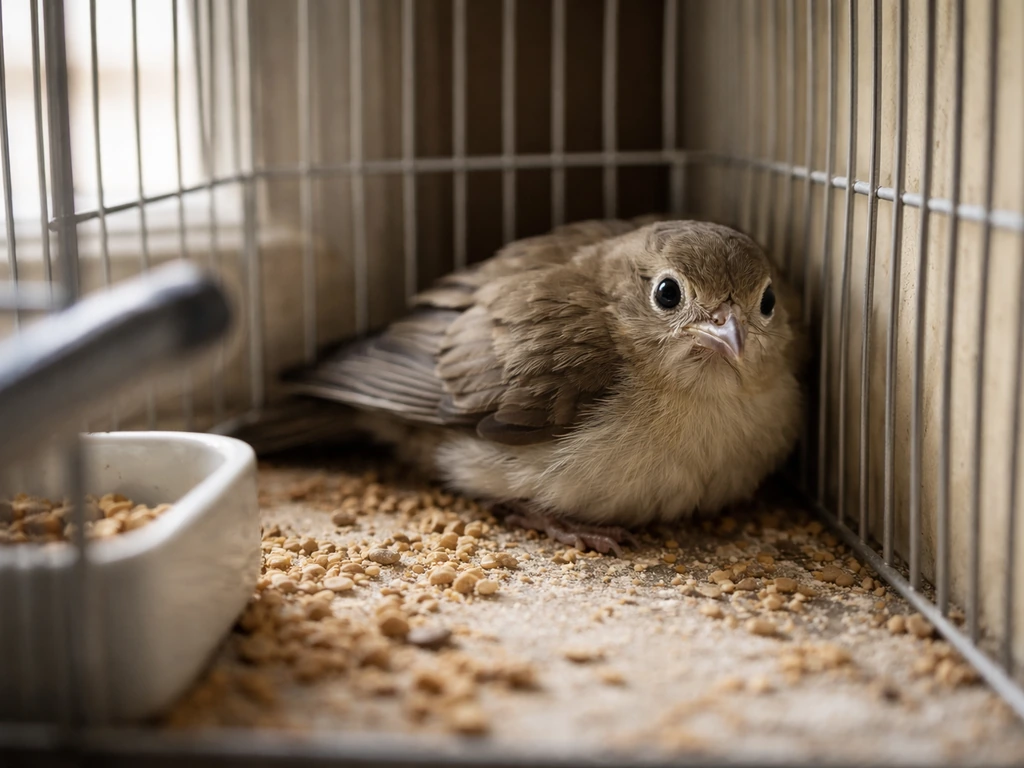
- Retreating to the back of the cage when the door opens
- Freezing in place, wide eyes, feathers pulled tightly against the body
- Rapid breathing without physical exertion
- Avoiding eye contact with you or turning the head away
- Crouching low on the perch rather than standing upright
- Biting when a hand comes close, out of defensive fear rather than aggression
Signs of territorial cage behavior
- Confident posture inside the cage but immediate aggression when a hand enters
- Lunging at the cage door or bars when you approach
- Regurgitating on perches or toys (a bonding behavior that signals "this is mine")
- Being perfectly friendly outside the cage but defensive the moment you try to put it back or reach inside
- Active patrolling of the cage interior while watching you
Signs worth watching but not panicking over
Tail pumping (rhythmic tail bobbing), mild feather fluffing, or soft chattering near the door can all be signs of mild uncertainty rather than full-blown fear. These birds are often just on the edge of stepping out and may respond well to a calm presence and a treat placed just outside the door. If you see these, you're likely dealing with a bird that's curious but not yet confident, and that's very workable.
Health red flags that may be keeping your bird inside
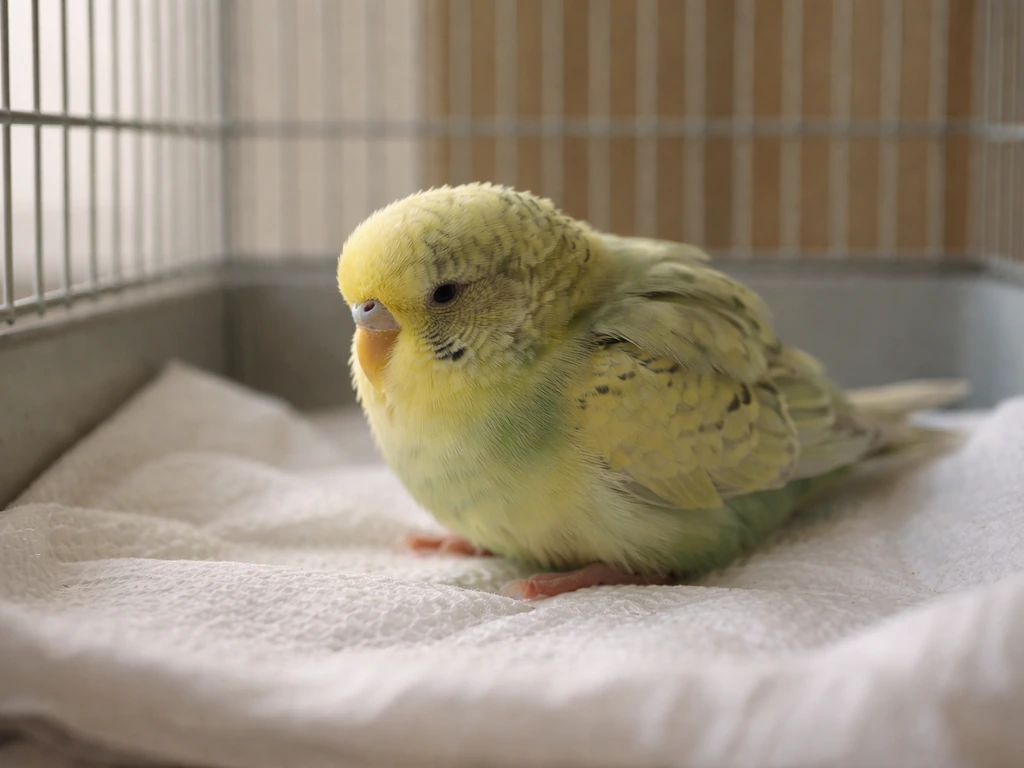
A bird that suddenly stops coming out after having done so routinely, or one that seems reluctant to move even inside the cage, may be dealing with a health issue. Birds instinctively hide illness, so by the time you notice something is off, it may have been building for a while. Don't dismiss a sudden change in cage behavior as a mood. If you are noticing pacing back and forth in the cage, it can help to look at the pattern and timing so you know whether it is fear, territorial behavior, or a health issue cage behavior.
| Possible cause | What to look for | Urgency |
|---|---|---|
| Injury (leg, wing, foot) | Favoring one side, not perching normally, wing drooping | High — vet same day or next day |
| Respiratory issue | Tail bobbing at rest, open-mouth breathing, clicking or wheezing sounds | High — vet same day |
| GI upset or pain | Fluffed posture, loss of appetite, loose or discolored droppings | Moderate to high — monitor and call vet |
| Weakness or lethargy | Sleeping more than usual, unable to hold upright posture, unresponsive to stimulation | High — vet same day |
| Overheating or cold stress | Panting and wings held away from body (heat) or extreme fluffing with shivering (cold) | Moderate — adjust environment immediately, call vet if no improvement |
| Feather or skin pain | Excessive preening of one area, flinching when touched, not wanting to be handled | Moderate — schedule vet visit |
The key distinction between a behavioral reason and a health reason is usually the pattern and the onset. A bird that has always been cautious about the cage door is almost certainly a behavioral issue. A bird that used to come out eagerly and has stopped in the last day or two warrants a much closer look.
A step-by-step plan to build trust and get your bird out voluntarily
Forcing a bird out of the cage almost always makes the problem worse. Research in avian behavioral medicine is pretty clear on this: forcing retrieval can maintain or worsen refusal behavior, especially in birds that are already cage-defensive. Instead, the goal is to make stepping out the bird's idea. Here's a practical plan that works for most pet birds over one to four weeks, depending on how fearful the bird is.
- Start with presence, not interaction. Sit near the cage quietly for 10 to 15 minutes each day. Don't reach in, don't try to coax the bird out. Just be nearby and calm. Read a book, talk softly to yourself. Let the bird get used to you being there without anything demanding happening.
- Open the door and step back. Once your bird is comfortable with your presence, start opening the cage door and moving away. Don't hover. Give the bird space to investigate the open door on its own terms. Place a treat just inside the door opening so it has a reason to approach that spot.
- Add a perch just outside the door. Position a standalone perch or T-bar directly in front of the open cage door. This gives the bird an obvious, safe landing spot so stepping out doesn't feel like stepping into the void.
- Use targeting to build approach behavior. Hold a target (a chopstick, a spoon, or a commercial target stick) near the door and reward the bird with a small treat every time it touches it. Over several sessions, move the target progressively further outside the cage to guide the bird out voluntarily.
- Introduce the step-up cue inside the cage first. Practice "step up" on a perch or your hand inside the cage where the bird feels safe. Once that's reliable, repeat the same cue at the cage door, then just outside it.
- Keep sessions short. Five minutes of productive, low-stress interaction is worth more than 30 minutes of frustrated attempts. Always end on a success, even if that just means the bird moved closer to the door.
- Build a consistent daily routine. Open the cage at the same time each day. Birds learn schedules quickly, and predictability makes the cage door feel less like a random event and more like a normal part of the day.
- Reward generously for any movement toward the exit. The moment the bird steps to the cage door threshold or puts a foot on the outside perch, that gets your best treat and calm verbal praise. You're reinforcing the direction of travel, not just the full exit.
Be patient with this process. Some birds respond in a few days. Others, especially those with a history of being grabbed or frightened, may take several weeks. The progress will feel slow at first and then suddenly click. Don't skip steps to speed it up.
When to call an avian vet or behaviorist
Most cage reluctance is behavioral and trainable, but there are clear situations where you should pick up the phone rather than continue working through a training plan.
- The bird stopped coming out suddenly with no obvious environmental change and has also changed its eating, droppings, or activity level inside the cage
- You see any of the physical health red flags listed above: open-mouth breathing, tail bobbing at rest, lethargy, drooping wing, or significant posture change
- The bird appears to be in pain when it moves or perches
- You've been working consistently on the training plan for four or more weeks with zero progress
- The cage aggression or fear is escalating rather than improving, or the bird has begun feather plucking or self-injuring
- You're dealing with a recently adopted bird and you have no history on it — an avian vet check is a smart first step before assuming it's purely behavioral
An avian vet can rule out pain, illness, or neurological issues that mimic behavioral problems. A certified parrot behaviorist can do a functional behavior assessment, which looks at what's triggering the avoidance and what's reinforcing it, and build a plan specific to your bird. If a standard avian vet isn't available in your area, look for a veterinarian with exotic animal experience as a starting point.
Mistakes that accidentally keep birds in the cage
A lot of well-meaning owners make things harder without realizing it. If your bird seems restless and keeps circling, it's often related to cage stress, fear, or uncertainty rather than random behavior circling around the cage. If your bird isn't progressing, check whether you're doing any of these.
- Reaching into the cage to grab the bird when it won't come out. This confirms to the bird that the open door means something scary is coming and makes future exits even harder.
- Hovering at the door. Standing right at the open door, staring at the bird and waiting, is pressure. Birds read that body language as a threat posture. Step back after you open it.
- Inconsistent routine. Opening the cage at random times teaches the bird nothing predictable. Stick to a regular schedule.
- Giving up too fast and closing the door. If you open the door, wait two minutes, and close it because the bird didn't come out, you've taught the bird that doing nothing works. Leave the door open longer during training sessions.
- Punishing aggression at the door by shouting or tapping the cage. This increases anxiety and makes the cage feel like an unsafe place, which makes leaving it feel even riskier.
- Making out-of-cage time unpredictable or stressful. If every time the bird comes out it gets chased by a cat, rushed back in, or handled roughly, it will learn that inside is safer than outside.
- Skipping positive reinforcement entirely. Some owners expect birds to just come out because the door is open. Most birds need a clear reason. High-value treats (a small piece of fruit, a favored seed) make the difference.
- Moving too fast through the training steps. Skipping the early stages because the bird seems "almost there" is one of the most common ways to stall progress.
If your bird is showing other active behaviors like pacing, jumping, climbing, or going crazy inside the cage, those are separate signals worth understanding on their own, but they often share the same root cause: a bird that has energy, curiosity, or anxiety and no clear outlet. Working on out-of-cage time through patient trust-building addresses many of those connected behaviors too.
Start today with the environment check and the first step of the trust plan. Open the door, step back, and just sit nearby. That single low-pressure session is enough to begin shifting how your bird sees the cage door, and it costs you nothing except a few minutes of calm presence. If you have been wondering why your bird wants to stay put, focus on safety, routines, and gradual trust-building instead of forcing the issue shifting how your bird sees the cage door.
FAQ
Should I open the cage door every day to encourage my bird to come out, or will that make it worse?
Open the door at quiet times and only do it for a short, low-pressure session (a few minutes), then close it if your bird clearly becomes more distressed. Repeated calm, consistent access teaches that the doorway is safe, but extended staring or long forced exposure can increase cage defensiveness.
My bird steps just one foot out of the cage, then retreats. Is that progress or a sign of fear?
That partial approach is often workable progress, especially if the bird is calm once it is out even briefly. If the bird immediately fluffs hard, pumps tail rapidly, freezes with eyes locked on you, or flees repeatedly the same way, slow down, reduce stimulation, and increase the “step down” cues using an easy perch placement just outside the door.
How can I tell the difference between cage territoriality and fear of me?
If the bird only avoids the doorway when you approach or make eye contact, it is likely fear of people. If the bird repeatedly targets or guards the doorway when you are not near it, it is more likely cage defensiveness. Also notice whether the bird accepts treats from your hand near the cage, that can help separate the two.
What should I do if my bird refuses to come out but seems fine once it is already out?
That pattern usually means the barrier is specifically the cage door decision point, not overall comfort. Use the door as the training target: open the door, step back, offer a treat or favorite cue from the outside, then reward any forward movement or brief landing near the doorway without reaching toward the bird.
Can other pets in the home cause my bird to stay in the cage?
Yes. Even if your bird is not directly chased, dogs, cats, or even another bird can create a persistent threat signal. During training sessions, place the cage in a calmer area and manage sightlines so your bird is not watching another animal through the room, especially from the doorway height.
Should I cover the cage or the bird when it is not coming out?
Avoid covering the cage in a way that blocks normal light and airflow during training. If your bird is highly reactive, you can dim the room slightly or reduce visual clutter, but keep the doorway visible and do not use covers to “trap” the bird into exiting. If you must adjust lighting, do it gradually.
What if my bird keeps climbing the bars near the door instead of leaving?
Repeated climbing near the door often reflects high arousal, uncertainty, or a blocked route to safety. Confirm that there is a clear, stable landing spot just outside, and that your bird is not being prevented from stepping to it by your body position, the furniture layout, or sudden noise.
Does forcing the issue, like gently grabbing my bird or pushing it toward the exit, help long-term?
Usually it worsens it. Even if it seems to “work” immediately, forced retrieval can increase avoidance by linking the cage doorway with capture or stress. Focus on making leaving the bird’s choice, and reward calm steps toward the exit rather than moving the bird yourself.
How do I set up the environment so the first step is easiest?
Place a perch just outside the door so your bird can choose a simple next step, ensure the perch is stable and not wobbly, and keep the path free of obstacles. Also remove drafts (vents, fans), reduce loud audio, and keep other distractions minimal so the doorway has the lowest possible perceived risk.
How long should I wait before assuming the refusal is not just behavioral?
If the refusal is new and your bird previously came out normally, watch closely for rapid changes in the last day or two. If you do a consistent, low-pressure plan for one to two weeks with no softening at all, or the bird is also less active inside the cage, that is a good point to get a health check rather than only continuing training.
What urgent signs mean I should call an avian vet right away?
Contact an avian vet promptly if you notice sudden posture changes, difficulty moving or gripping, fluffed and quiet behavior that persists, labored breathing, tail bobbing with breathing effort, reduced appetite, or refusal to step up even onto surfaces inside the cage. Birds often hide illness, so “behavior change” can be the first sign.
Will a behaviorist help if the main problem seems like my bird is just cautious?
Yes, especially if you cannot identify a clear trigger or your bird is not responding to a basic trust plan. A functional behavior assessment can pinpoint what the bird is avoiding (doorway, your approach, the room) and what is reinforcing staying in (security, distance from people, lack of safe landing), then tailor a step-by-step plan.
What is the safest first “trust plan” step if I’m nervous about stressing my bird?
Start with short sessions where you open the door, step back, and sit or stand still so your bird can observe without pressure. Keep your face and hands neutral, avoid reaching toward the cage, and reward calm curiosity only. If the bird shows strong distress, end the session and try again later rather than holding the exposure longer.
Next Article
Why Is My Bird Climbing Its Cage? Causes and Fixes
Learn why your bird climbs the cage and get step-by-step fixes plus vet warning signs to watch today.