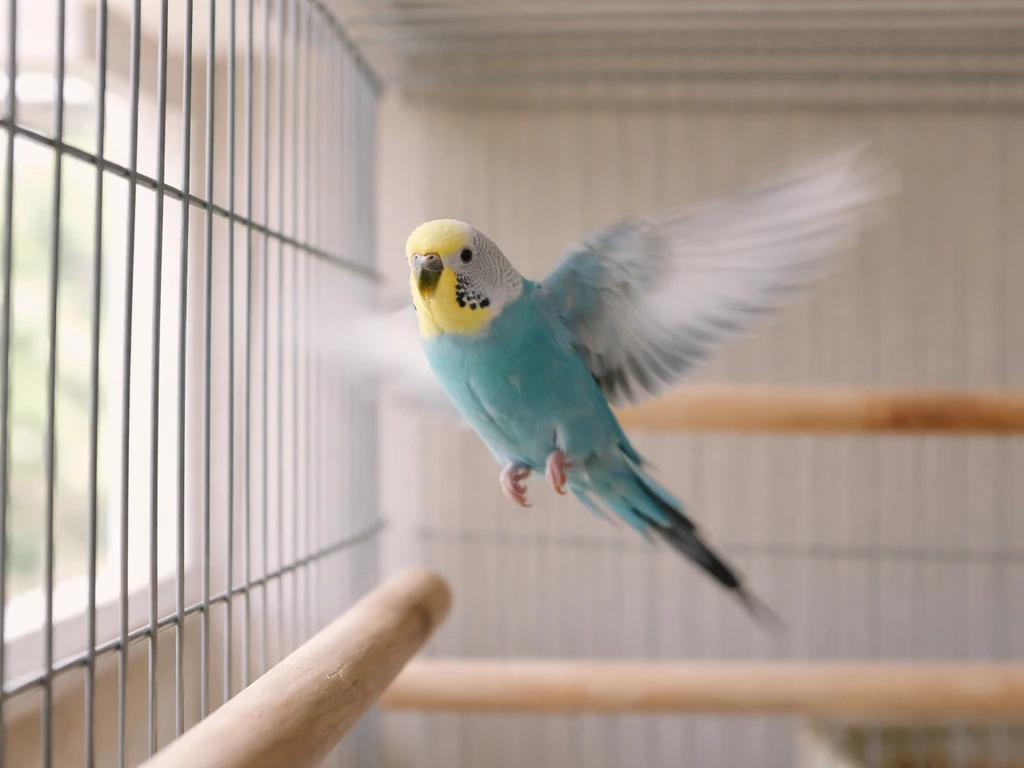
A bird spinning in circles can mean a few very different things: it might be a stress-related habit, a hormonal display, or a sign that something is physically wrong with your bird's balance, inner ear, or neurological system. If your bird is also flying around the cage, it can be a sign of concerning spinning or circling that needs prompt attention why is my bird flying around the cage. The most important thing to figure out right now is whether the spinning looks intentional and contextual (your bird chooses to do it at certain moments) or whether it looks involuntary and your bird seems confused, wobbly, or unable to stop. That distinction is what tells you whether to watch and adjust the environment or get to a vet today.
Why Does My Bird Spin in Circles? Causes and Next Steps

Marcus Chen
28 May 2026
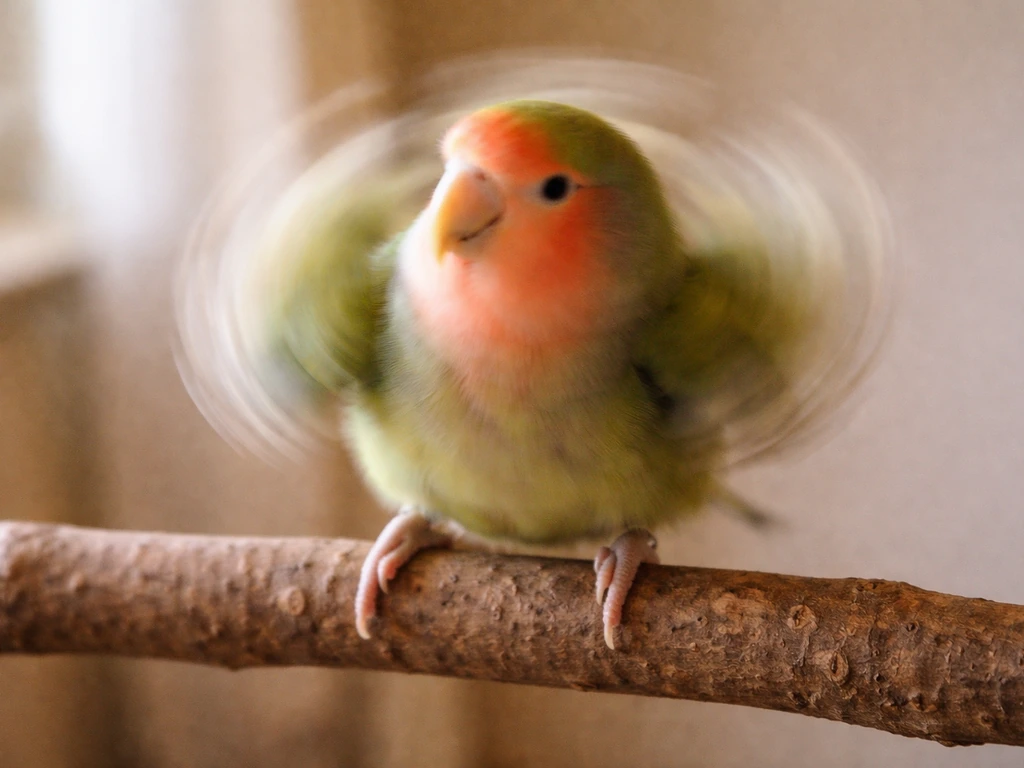
Normal spinning vs. concerning behavior
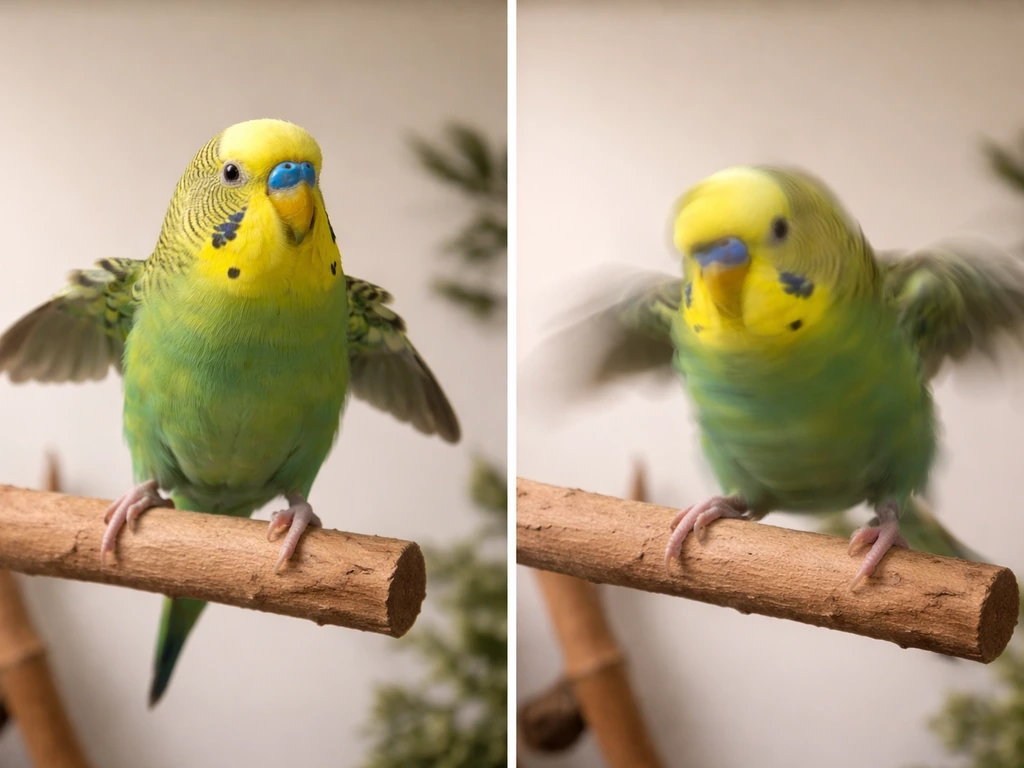
Some birds spin or twirl as a learned trick, an excited display, or a repetitive self-soothing behavior. If your bird spins on cue, spins when it sees you, or does a quick excited twirl and then goes back to normal perching and eating, that is behaviorally motivated spinning. It looks controlled. Your bird lands cleanly, eats normally, and has no other symptoms.
Concerning spinning looks different. The bird seems disoriented, can't stop, loses its footing, falls off the perch, or tilts its head to one side while it spins. It may spin in one consistent direction, which is a neurological red flag. If there are any accompanying signs like fluffed feathers, labored breathing, loss of appetite, or obvious confusion, that stops being a behavioral quirk and becomes a health emergency. Purdue's veterinary guidance specifically flags incessant or habitual spinning as something that warrants examination by a vet, not a wait-and-see situation.
Common causes: stress, hormones, and attention-seeking
Repetitive, functionless behaviors like spinning, pacing, head-swinging, and rocking are well-documented in birds kept in poor welfare conditions. Pacing back and forth in a cage can also be a sign of stress, boredom, or insufficient enrichment, especially if it is repetitive and your bird otherwise seems normal. The root causes are usually chronic stress, boredom, social isolation, or inadequate enrichment. Birds are highly intelligent and spend hours in the wild foraging and problem-solving. When they have nothing to do and limited contact with people or other birds, repetitive motion can become a coping outlet. If your bird only has passive access to a food bowl and not much else in the cage, that is worth addressing regardless of anything else.
Attention-seeking is also real. Some birds learn that spinning gets a reaction from you, and they repeat it because it works. Watch whether the spinning happens more when you walk into the room or when you're ignoring them. That context matters.
Hormonal behavior is another possibility, especially in spring. During breeding season, birds can become unusually active, restless, and physically expressive. Males especially may bob, fluff, raise a foot, and twirl as part of a mating display. If your bird is also showing other hormonal signs like regurgitating food at you, guarding a corner of the cage, or becoming nippy and territorial, hormones are likely a factor. For parakeets in particular, female birds may even begin nesting behavior and lay eggs without a male present, which shows how strongly hormones can drive behavior changes. Avoid stroking the back or sides of a hormonally active bird, as that can reinforce mating behavior and make the cycle worse.
Common causes: neurological issues, balance problems, and vertigo
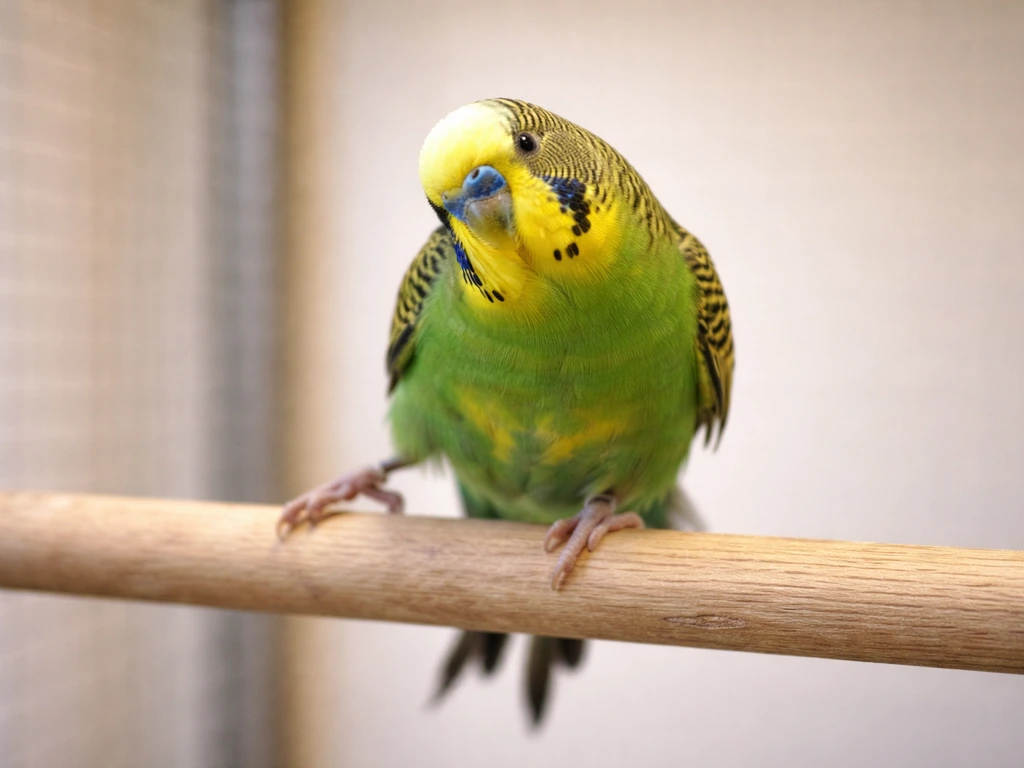
This is where circling becomes genuinely serious. Neurological and vestibular problems are among the most common medical reasons a bird will spin or circle, and the circling often has a directional bias, meaning the bird consistently goes left or right. That directionality suggests a lesion or problem on one side of the brain or inner ear.
Vestibular dysfunction (essentially avian vertigo) causes a bird to feel like the world is spinning. You may see a head tilt alongside the circling, abnormal eye movements (where the eyes flick back and forth involuntarily), the bird missing the perch entirely, leaning hard to one side, or falling and rolling. These are textbook vestibular signs. The causes can range from middle or inner ear infections to brain disease to trauma to heavy metal toxicity. A new head tilt combined with circling is not something to monitor at home. It is a same-day vet call.
Other neurological causes include infections (bacterial, viral, fungal), West Nile virus, tumors, or stroke-like events. West Nile in birds, for example, can produce ataxia, head tilt, tremors, and seizures alongside lethargy and fluffed feathers. You can't diagnose any of these at home, but you can recognize the pattern and act on it quickly.
Common causes: respiratory or ear problems affecting balance
The inner ear and respiratory tract in birds are closely connected. Upper respiratory infections can affect the middle ear and produce vestibular signs including spinning, head tilt, and balance loss. If your bird has been showing any blank" rel="noopener noreferrer">sneezing, nasal discharge, swelling around the eyes or face, open-mouth breathing, or tail bobbing while breathing, a respiratory infection may have spread or extended into the ear.
Even without obvious discharge, head shaking, beak rubbing, and yawning can signal discomfort in the airway or ear. Middle and inner ear inflammation directly causes the same loss-of-balance symptoms as a neurological problem, because the balance-sensing hardware of the bird lives in the inner ear. Any infection there disrupts balance signals to the brain. Birds with respiratory illness can deteriorate fast, so if breathing is involved in any way, don't wait.
Common causes: illness, pain, seizures, or toxin exposure
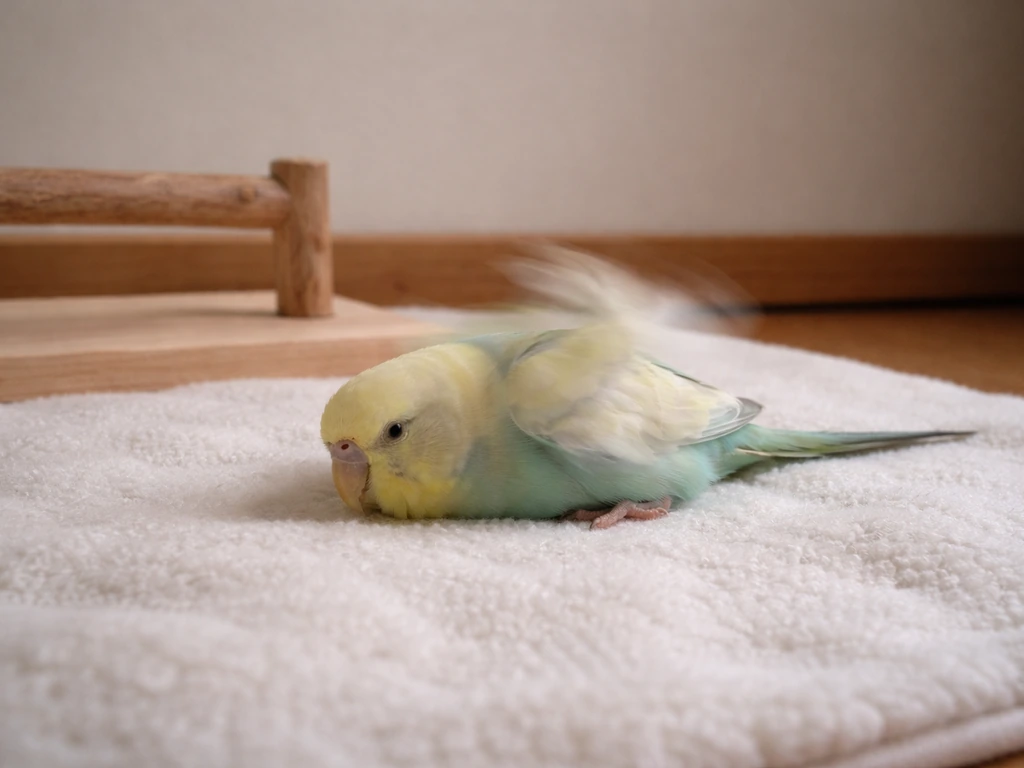
Birds hide illness extremely well. By the time a bird looks obviously sick, it may have been unwell for one to two weeks already. Spinning or loss of coordination can be an early sign of systemic illness, pain, or metabolic problems before other symptoms are obvious. Heavy metal poisoning (from lead or zinc, often from cage hardware or toys) is a known cause of neurological signs including circling in pet birds.
Seizures can also look like spinning. A bird mid-seizure may fall from the perch, paddle or jerk its legs, stiffen, vocalize, and defecate. After the episode, it may be confused, exhausted, and uncoordinated in a post-ictal phase. If you're not sure whether what you saw was a seizure or something else, try to video the next episode. Weakness, fainting, and tremor disorders can look very similar to seizures on casual observation, and a video clip helps a vet enormously.
PTFE (polytetrafluoroethylene) fume poisoning deserves its own warning. Overheating nonstick cookware above about 280 degrees Celsius releases fumes that are extremely toxic to birds, often fatally so. Clinical signs include respiratory distress, incoordination, weakness, wobbling, tremors, and sudden collapse. If you've recently used nonstick pans, a self-cleaning oven, or any other PTFE-coated appliance and your bird is now spinning or seems distressed, move the bird immediately to fresh air and contact a vet or animal poison control right now. This is a genuine emergency with a narrow window of time.
What to check right now: environment, cage setup, and routine
Before calling a vet or after ruling out an emergency, go through this checklist of environmental factors that can contribute to spinning or repetitive motion behaviors. If your bird is also climbing its cage, that can point to stress, frustration, or attention-seeking that you may be able to address right away spinning or repetitive motion behaviors.
- Perches: Are they appropriately sized and textured? Slippery or wrongly-sized perches can cause a bird to scramble and fall, mimicking balance problems.
- Cage placement: Is the cage near a drafty window, an air vent, or in a kitchen where fumes from cooking could reach it? Kitchen placement is a real hazard year-round.
- Smoke and fumes: Any recent candles, aerosol sprays, air fresheners, cleaning products, or overheated pans? Birds are extremely sensitive to airborne chemicals.
- Temperature: Is the cage warm enough? Cold birds can become lethargic and uncoordinated. Aim for 65 to 80 degrees Fahrenheit for most pet bird species.
- Enrichment: Does your bird have foraging toys, varied perch heights, and opportunities to problem-solve? Bored birds with nothing to do are far more likely to develop repetitive behaviors.
- Social contact: How much daily interaction does the bird get? Social deprivation limits a bird's natural behaviors to just preening and sleeping, which is a welfare problem that shows up as abnormal movement.
- Cage floor: Is there anything the bird could have ingested? Check for loose hardware, paint chips, or any foreign material. Also look at the droppings on the cage floor for changes in color, volume, or consistency.
- Recent changes: New food, new toys, new household members, moved furniture near the cage, or a change in your schedule can all be stressors.
While you are checking, observe your bird directly. Note whether it is eating and drinking, whether it can grip a perch normally, whether it is sitting low or fluffed, and whether the spinning is getting worse, staying the same, or only happened once. All of this matters when you talk to a vet.
Red flags and when to call an avian vet
Some of these situations mean call today, and some mean call right now. Know the difference before you need it.
| Sign | How urgent |
|---|---|
| New, severe, or continuous circling with no obvious behavioral trigger | Call today |
| Head tilt (torticollis) alongside circling or rolling | Call immediately |
| Falling off the perch or inability to stay on a perch | Call immediately |
| Abnormal eye movements (eyes flickering or flicking involuntarily) | Call immediately |
| Open-mouth breathing, tail bobbing, labored breathing | Call immediately |
| Lethargy, fluffed feathers, sitting on the cage floor | Call today |
| Reduced or absent appetite or water intake | Call today |
| Suspected PTFE or chemical exposure | Call immediately, move bird to fresh air first |
| Seizure-like episode (stiffening, paddling, falling, post-episode confusion) | Call immediately |
| Repeated episodes over multiple days | Call today |
| Any circling in a very young, old, or already unwell bird | Call today |
If your bird is falling, circling, and cannot stay on a perch, act before calling if possible: remove high perches so the bird can't fall far, place it low in the cage or in a small transport carrier lined with a towel, keep it warm and quiet, and minimize handling stress while you get to a vet. Dyspneic (struggling to breathe) birds can deteriorate quickly just from the stress of being handled, so calm and fast is the goal.
Preventing repeats and tracking behavior for the vet
If this was a one-time behavioral episode and your bird seems otherwise fine, start a simple behavior log. Write down when it happened, how long it lasted, what direction the bird spun, whether there was a head tilt, what the bird did immediately before and after, and what the droppings looked like that day. A log like this is genuinely useful at a vet appointment because it helps distinguish a pattern from a one-off incident.
Video is even better. If the spinning happens again, record it on your phone if you can do so without disturbing the bird further. Avian vets use structured neurological observation checklists that include circling direction, nystagmus, ataxia, and falling, and a 30-second video clip can answer several of those questions at once.
For prevention on the behavioral side, the most effective changes are increasing foraging opportunity (hide food in toys, vary locations, use foraging puzzles), increasing supervised out-of-cage time, and reducing environmental stressors like loud noise, irregular schedules, or cage placement in high-traffic chaotic areas. If your bird is trying to leave the cage, that same checklist approach can help you figure out whether it is stress-related, hormonally driven, or a balance issue. For birds with hormonal spinning, reduce stroking to the head and neck only, avoid letting the bird burrow into blankets or clothing, and if the behavior is severe or persistent, talk to a vet about whether hormone management is appropriate.
Similar movement behaviors like pacing back and forth, jumping around restlessly, or flying repeatedly around the cage often share the same root causes as spinning: boredom, stress, hormones, or the early stages of a health problem. If your bird is also doing other frantic, repetitive cage behaviors, the same causes behind circling and spinning can help explain why it might seem like it is “going crazy” in its cage. If your bird is showing any of those alongside spinning, the pattern strengthens the case for both an environmental overhaul and a vet check. The goal is to get ahead of the problem while your bird is still eating, alert, and on its perch. If your bird will not come out of the cage, check for stress or illness and make sure you have the setup and handling approach right why won t my bird come out of the cage.
FAQ
How can I tell if my bird’s circling is really a seizure, not vestibular disease?
Watch for stereotyped whole-body signs, not just direction. Seizures often include stiffening, paddling or jerking, loss of awareness, and a post-event confused or exhausted period (post-ictal). Vestibular episodes more often look like ongoing imbalance with head tilt and incoordination while remaining alert. If you are unsure, video the next episode and keep the bird in a safe, low-sided space afterward to prevent falls.
Should I remove my bird from the cage right away if it starts spinning?
If the bird is stable, eating, and can perch normally, avoid grabbing it mid-episode since handling can worsen stress or territorial behavior. If it is falling, unable to grip, or struggling to stay on a perch, then safety overrides everything, move to a small carrier or low enclosure to prevent injury, and keep it warm and quiet. If breathing looks hard, prioritize urgent veterinary care over home observation.
Does circling in one direction automatically mean neurological damage?
Directional bias is concerning, but it is not a diagnosis by itself. One-sided circling strongly suggests an inner ear or one-sided brain issue, yet some toxins and severe respiratory-related inner ear inflammation can also create one-sided patterns. The practical next step is the same: treat it as medical if the circling is persistent, involuntary, or paired with head tilt, nystagmus, falling, or weakness.
Can stress or boredom cause circling that looks involuntary?
Yes, repetitive motion can look automatic. However, stress-driven circling typically happens in a predictable context (for example, when you enter the room or during certain parts of the day), the bird remains coordinated enough to land and perch normally, and it resumes baseline behavior afterward. If the bird seems disoriented, wobbly, or unable to stop, assume a health cause first and seek veterinary evaluation.
What if my bird spins only when it’s excited, but also has a head tilt sometimes?
A brief excited twirl can be behavioral, but adding head tilt changes the risk. Even occasional head tilt alongside spinning can indicate vestibular involvement or ear/neurologic irritation. If the tilt is new, consistent, or accompanied by missed perching, falling, or abnormal eye flicking, arrange same-day veterinary advice rather than treating it as purely hormonal or social.
Could my bird’s cage setup be causing balance problems rather than illness?
Yes, poor footing and unstable surfaces can mimic balance issues. Check for slippery perches, narrow or worn dowels, ramps or ladders that wobble, and gaps where toes slip. Also ensure there is adequate lighting (birds use vision for balance) and that the bird is not dizzy from a recent change like a new cage location with loud noise or fumes. Note, though, that true vestibular signs like nystagmus, falling, or consistent one-direction circling are still medical red flags.
What should I record for the vet, besides a video?
In addition to a short clip, note the exact trigger (time of day, interaction, loud sounds), whether the spinning direction is left or right, whether the head tilts, and how long it takes to return to normal. Also record appetite and water intake that day, droppings appearance (size, color, firmness), and any breathing symptoms (open-mouth breathing, tail bobbing) since ear and respiratory infections can overlap.
Is there anything I should not do at home while I wait for a veterinary visit?
Avoid forcing movement or repeated handling to “test balance,” since struggling can worsen stress and breathing. Do not use nonstick cookware or heat sources if PTFE fume exposure is a possibility. If your bird seems hormonally driven, avoid stroking it in ways that reinforce mating behavior (especially along the back and sides), but do not dismiss medical signs if there is wobbling, falling, or head tilt.
How urgent is it if my bird is spinning but still eating?
Eating is reassuring, but it does not rule out serious illness, especially early stages. Treat it as urgent if spinning is increasing, lasts more than a short episode, is involuntary or repetitive without context, or comes with any vestibular or neurologic signs like head tilt, involuntary eye flicking, falls, fluffed posture, lethargy, or breathing changes. If you are seeing any of those, contact a vet the same day.
Could household fumes or aerosols cause circling?
Yes. Beyond PTFE nonstick fumes, many birds are very sensitive to airborne irritants and toxins. If you recently used aerosol sprays (disinfectants, cleaners, air fresheners), heated paints or plastics, or switched to a new home fragrance, consider that as a potential trigger. If circling started soon after exposure and the bird shows respiratory distress or sudden weakness, treat it as an emergency and seek veterinary help immediately.