
Most of the time, a bird jumping around its cage is doing exactly what a healthy, alert bird does. Excitement when you walk into the room, anticipation before feeding time, play behavior, or even a little courtship display can all look like energetic bouncing or hopping. But jumping can also be a sign of foot pain, stress, a respiratory problem, or in rare cases something neurological. The difference usually comes down to context: what else is the bird doing, and does the jumping stop when the trigger goes away?
Why Is My Bird Jumping Around? Causes and What to Do

Marcus Chen
11 May 2026
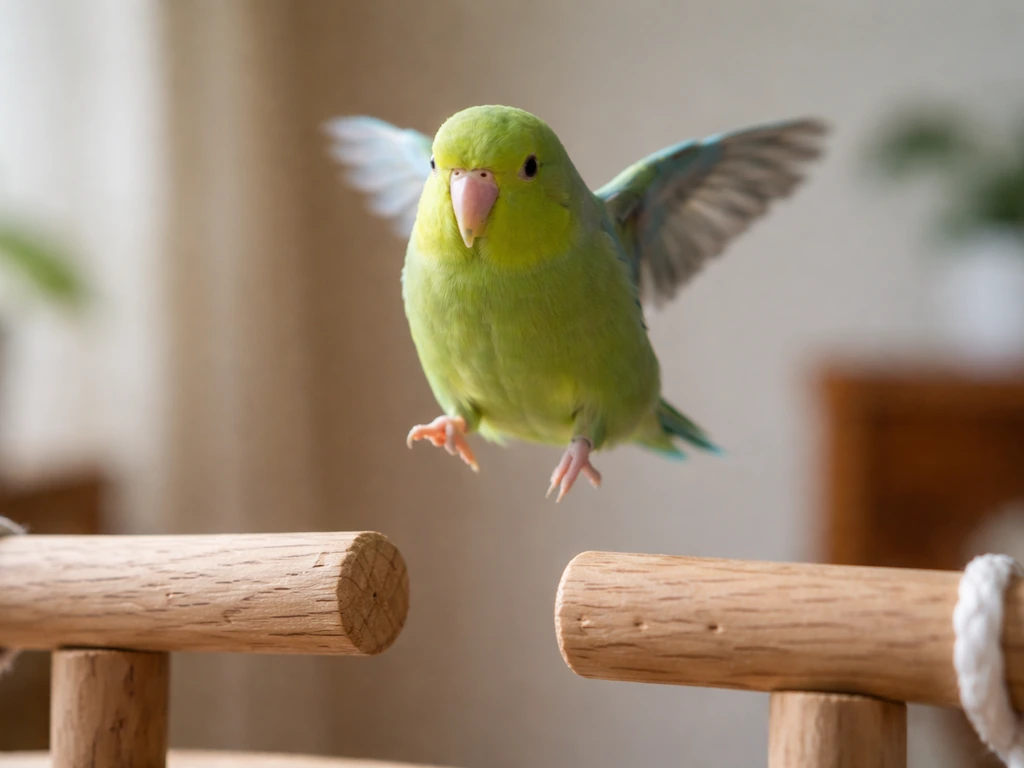
Normal reasons birds jump around
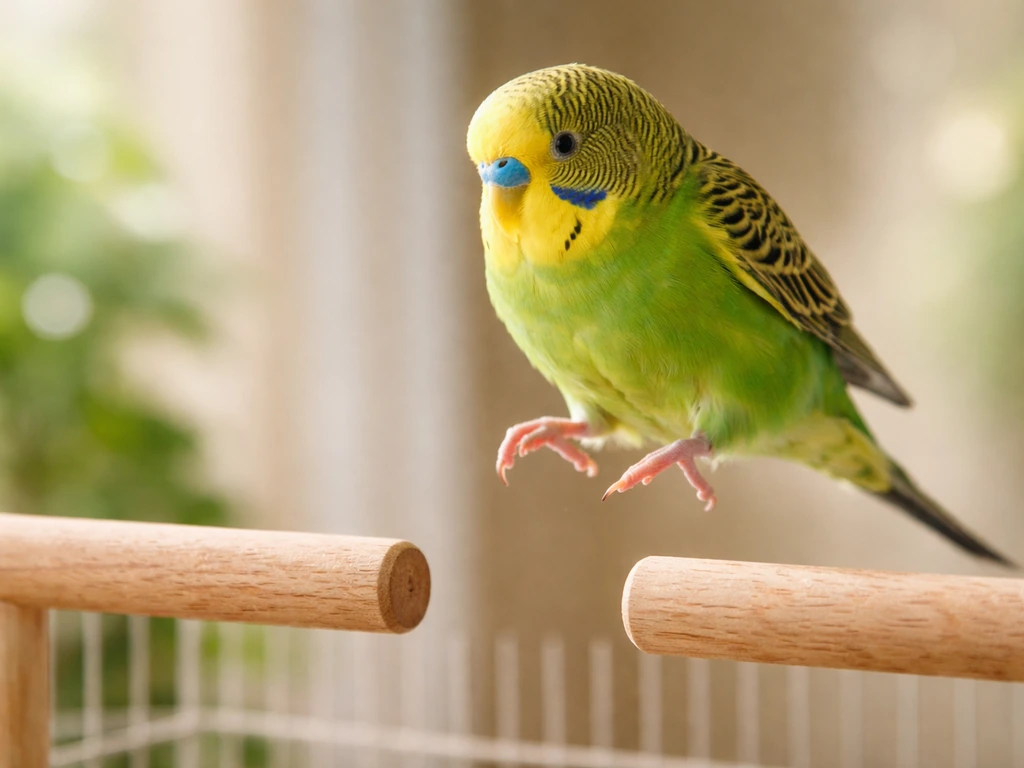
Healthy birds are surprisingly physical. Parakeets, cockatiels, conures, and most parrots hop between perches, bob their heads, rock side to side, and bounce around simply because they feel good. If your bird jumps toward you when you approach the cage, that is almost always attention-seeking or excitement. It is the bird equivalent of a dog wagging its tail at the door.
Playful jumping often comes with other positive signals: bright eyes, smooth feathers held close to the body, active vocalizations, and an obvious trigger like your arrival, the sight of food, or a favorite toy. Rocking back and forth, hanging upside down, and head bobbing can all be part of the same playful energy. Young birds especially tend to be bouncy and theatrical about everything.
Courtship behavior is another common driver, particularly in spring or when days get longer. A bird that bobs, hops, and displays toward a mirror or toward you is not in distress. It is feeling the seasonal urge to show off. This kind of jumping is rhythmic, repetitive, and usually paired with specific vocalizations or feather displays.
- Jumping toward you when you approach: attention-seeking or greeting behavior
- Bouncing before meals or treat time: anticipation and excitement
- Hopping between perches while vocalizing: active play
- Rhythmic bobbing or rocking: courtship or contentment display
- Short bursts of frantic movement followed by calm: normal zoomie-style energy release
Health causes to rule out first
If the jumping looks less like play and more like the bird cannot get comfortable, pain or illness needs to be on your radar. Birds are hardwired to hide weakness, so by the time a health problem becomes obvious in their movement, it has often been building for a while.
Foot and leg problems
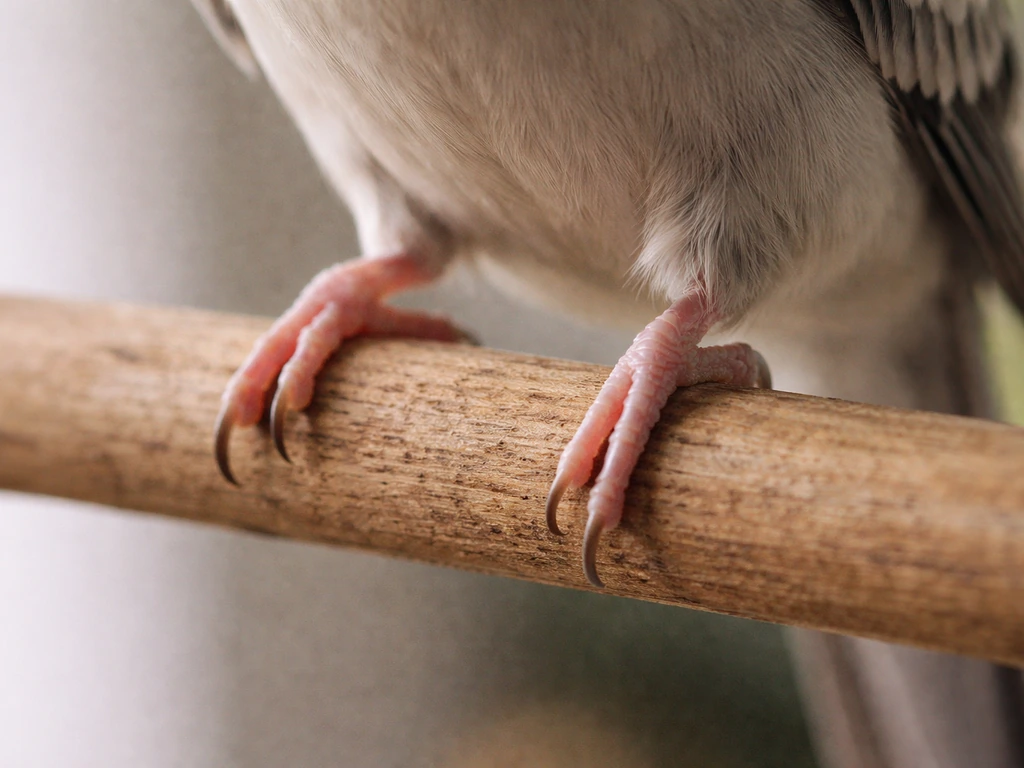
A bird that keeps shifting weight, hopping on one leg, or repeatedly lifting one foot off the perch may be dealing with foot pain. blank" rel="noopener noreferrer">Bumblefoot (pododermatitis) is a common culprit, especially in birds that spend most of their time on hard, smooth, or incorrectly sized perches. It starts as inflammation and can progress to infection and serious lameness. Signs include reluctance to stand, limping, blank" rel="noopener noreferrer">swollen or discolored foot pads, and depression. If your bird also seems less interested in food or is unusually quiet, that combination alongside unusual movement patterns is worth a vet call.
A leg or toe injury can also cause hopping or erratic jumping. Birds may land badly from a perch or get a toe caught in cage bars or toys. Pain changes their vocalization too, so a bird that suddenly goes quieter or vocalizes differently while moving around is giving you important information.
Stress and anxiety
Stress-driven movement looks different from happy jumping. A stressed bird tends to pace, repeat the same route along a perch, or rock incessantly without an obvious trigger, and it does not calm down the way a playful bird does.
If the behavior seems nonstop in the cage and you are wondering what is driving it, see the guide on why is my bird going crazy in his cage for the most likely causes and next steps stress-driven movement looks different from happy jumping. If your bird is climbing its cage, check whether the movement is triggered by something specific or looks tense and repetitive like stress climbing jumping.
If your bird is spinning in circles without a clear playful trigger, stress and anxiety are a common reason to investigate next. Loud noises, a change in routine, a new pet in the home, or even rearranged furniture can set this off. The movement tends to be tense and repetitive rather than varied and engaged.
Boredom can tip into the same territory. A bird with nothing to do and nowhere to direct its energy may develop stereotypic behaviors that look like constant restless movement. If this is a recent change, think about what else changed at the same time. Keeping a short log of when the jumping happens and what was going on in the room is genuinely useful, both for your own assessment and for any vet conversation.
General illness
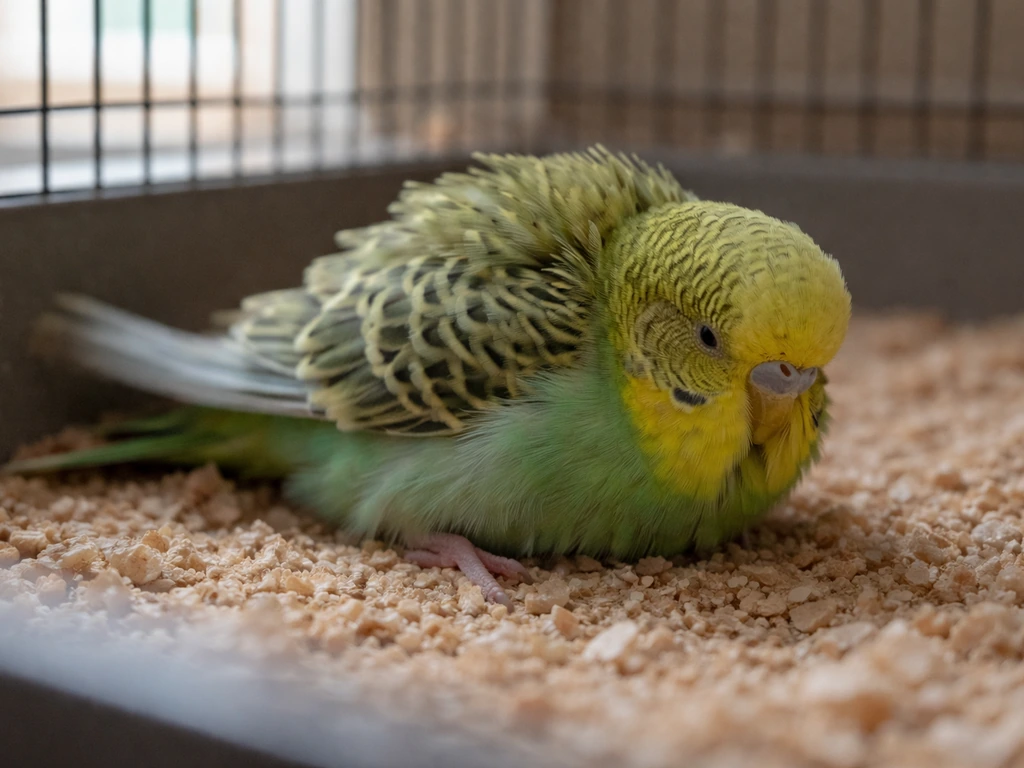
A sick bird sometimes moves erratically because it feels unwell and cannot get comfortable. Watch for the classic illness bundle: fluffed or ruffled feathers, changes in droppings (color, consistency, or volume), reduced appetite, and unusual quietness or lethargy. If you see any of these alongside the jumping, treat it as a health concern rather than a behavioral quirk.
Respiratory and infection clues that come with jumping
Sometimes a bird that seems restless or is jumping around is actually struggling to breathe. Respiratory distress drives movement because the bird is trying to find a position that makes breathing easier. This is one of the combinations you really do not want to miss.
The clearest respiratory red flag is tail bobbing that happens with every single breath. Normal tail movement during play or excitement is irregular. Respiratory tail bobbing is rhythmic and synchronized with the breathing cycle, and it does not stop when the bird settles. Open-mouth breathing when the bird is not hot or recently active, wheezing or clicking sounds, and any change in the color of the tissues around the beak or in the mouth (gray, dark pink, or bluish) are all serious warning signs.
Air sac mites and lower respiratory infections like airsacculitis can produce this combination of restless movement, tail bobbing, and open-mouth breathing. These conditions tend to worsen quickly in birds, so if you are seeing any of these alongside the jumping, this moves into urgent territory rather than wait-and-see.
| Sign | Likely Meaning | Urgency |
|---|---|---|
| Tail bobbing with every breath | Respiratory distress | Urgent: call vet today |
| Open-mouth breathing at rest | Breathing difficulty or overheating | Urgent: assess immediately |
| Wheezing or clicking sounds | Lower respiratory infection or mites | Urgent: call vet today |
| Blue or pale tissue color | Possible cyanosis (oxygen issue) | Emergency |
| Irregular tail movement during play | Normal excitement | Not concerning on its own |
Seizure-like behavior vs. normal jumping
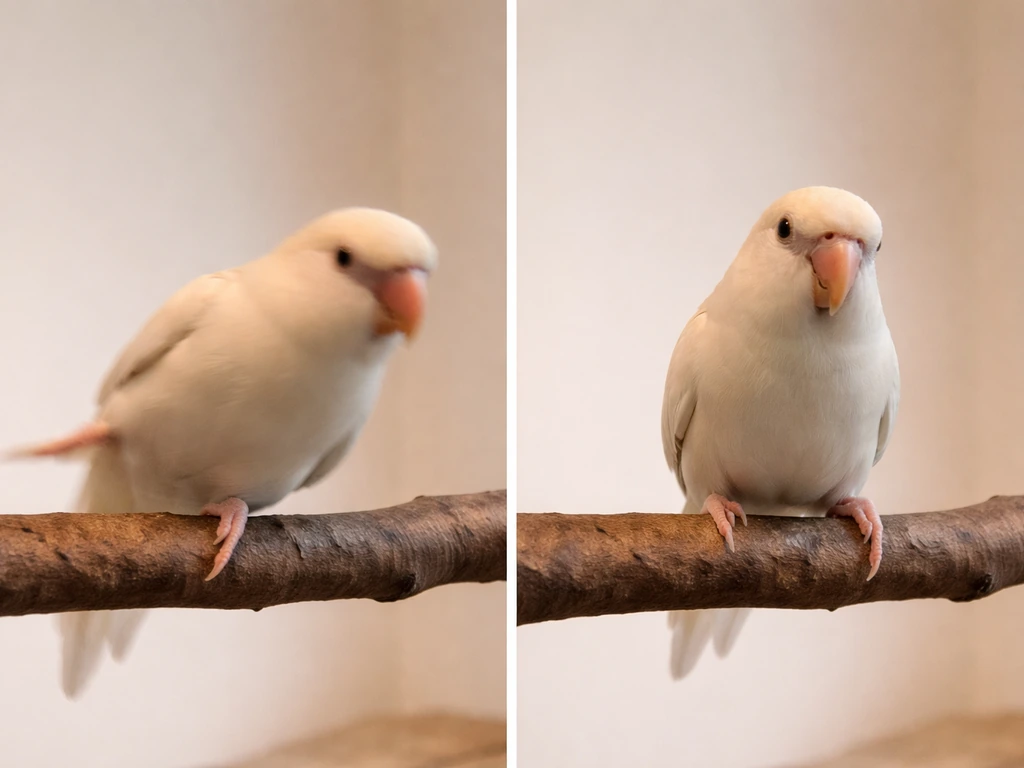
This is the question that worries owners most, and it is worth knowing what to actually look for. Playful jumping is coordinated and purposeful. The bird lands where it intends to land, recovers balance quickly, and responds to you. Seizure-like or neurological episodes look completely different.
A seizure in a bird may involve sudden loss of balance or falling off the perch, uncontrolled jerking or twitching of the body or limbs, a rigid or stiffened posture, paddling movements of the feet, or a period of disorientation and unresponsiveness after the episode ends. The bird looks like it has lost control of its body rather than chosen to move.
Causes of seizures in birds include poisoning (from fumes, heavy metals, or toxic foods), heatstroke, calcium deficiency, infections, trauma, or serious organ disease. A single brief episode that the bird recovers from quickly still needs a vet call. Repeated episodes, continuous seizure activity, collapse, or difficulty breathing after an episode are emergencies.
If you think you are watching a seizure right now: stay calm, dim the lights, remove anything in the cage the bird could injure itself on (food dishes, hard toys), and place soft material on the cage floor. Do not put your hand in to grab the bird mid-episode. Once it stabilizes, contact an avian vet immediately.
What to check today
Before calling anyone or drawing conclusions, do a quick but systematic look at your bird and its environment. Most of the time, a five-minute observation check gives you the answer.
Watch the bird itself
- Posture: Is the bird sitting upright and alert, or is it hunched, fluffed, or leaning?
- Balance: Does it land steadily on perches, or is it wobbling, falling, or clinging for support?
- Breathing: Count breaths for 30 seconds at rest. Is the tail moving with each breath? Any open-mouth breathing or sounds?
- Feet and legs: Is the bird using both feet equally? Any swelling, discoloration, or reluctance to stand?
- Eyes: Bright and open, or partially closed, dull, or watery?
- Feathers: Smooth and held close, or fluffed out and ruffled when not sleeping?
- Appetite: Did it eat normally this morning? Is it showing interest in food or turning away?
- Droppings: Any changes in color, texture, volume, or the ratio of solid to liquid portions?
Check the cage and environment
- Perch condition: Are perches the right diameter for your bird's feet? Hard or slippery surfaces stress the feet and encourage constant repositioning
- Temperature: Is the cage near a vent, drafty window, or in direct sun? Overheating or cold drafts both cause restlessness
- Light cycle: Has the amount of daily light changed recently? Longer days can trigger hormonal jumping and display behavior
- New stressors: New pet, moved furniture, construction noise, a different routine, or a change in who is home?
- Toxic exposure: Any new candles, non-stick cookware fumes, air fresheners, cleaning products, or smoke near the bird?
Note the pattern
When does the jumping happen? If it starts when you walk in and stops when the bird gets attention, that is behavioral. If your bird is circling or flying around the cage a lot, treat it as part of the same jumping and restless-movement pattern and check for the triggers and warning signs above.
If your bird still will not come out of the cage, use the same pattern of behavior and triggers to narrow down possible causes that is behavioral. If it happens at random, particularly in the early morning or evening, or if the bird cannot seem to stop and settle, that changes the picture. Note the time, what was happening in the room, and how long it lasted. This information is exactly what an avian vet will ask you about.
It is also worth knowing that jumping, pacing along a perch, and frantic cage movement can sometimes be related behaviors. If your bird is trying to leave the cage as well, check whether the behavior is linked to stress, boredom, or a discomfort trigger. If your bird is also moving repeatedly back and forth along the same route, that pacing pattern can be its own clue about what is driving the restlessness.
When to call an avian vet and what to tell them
If you checked everything above and the bird seems happy, responsive, and is otherwise acting normally, you probably do not have an emergency on your hands. But there are specific situations where calling an avian vet today (not next week) is the right move.
Call today if you see any of these
- Open-mouth breathing at rest or tail bobbing synchronized with every breath
- Wheezing, clicking, or any abnormal breathing sound
- Loss of balance, falling off the perch, or inability to stand
- Uncontrolled twitching, jerking, or rigid posture during or after a movement episode
- Sudden and complete loss of interest in food for more than 24 hours
- Significant change in droppings combined with lethargy or fluffed feathers
- Swollen, discolored, or obviously painful feet or legs
- Blue, pale, or grayish tissue color around the beak or in the mouth
- Known or suspected exposure to fumes, toxic foods, or heavy metals
What to tell the vet
Avian vets are used to working with second-hand observations because birds cannot describe their symptoms. The more specific you can be, the faster they can help. Before you call, have this information ready:
- When the jumping or unusual movement first started and whether it came on suddenly or gradually
- How often it happens and how long each episode lasts
- Whether it seems triggered by something specific or happens randomly
- Any other symptoms you noticed: breathing changes, posture, appetite, droppings, feather condition
- Any recent changes to the cage, routine, environment, diet, or household
- Your bird's species, age, and whether it has had any previous health issues
- Whether you have any video of the behavior (even a short phone clip is extremely helpful for distinguishing seizure-like movement from normal jumping)
Bird health can change quickly, and avian vets are specifically trained to assess what a general vet might miss. If you are unsure whether what you are seeing is serious, it is always better to make the call and describe what you observed than to wait and hope it resolves on its own.
FAQ
How can I tell normal excitement jumping from something that’s actually wrong?
Jumping can be normal, but “normal” usually looks consistent with your bird’s usual personality and settles when the trigger ends (you leave, feeding finishes, or the toy is removed). If the jumping becomes more frequent over days, lasts longer each time, or starts happening at random times without any excitement cue, treat it as a potential health or environment problem and call an avian vet.
What should I check at home first if my bird started jumping more suddenly?
If your bird is hopping more but eating, preening, and vocalizing normally, first check husbandry changes made in the last 1 to 3 days, like perch changes, new toys with rough surfaces, recent cage cleaning products (even if they smell “mild”), or switching seed brands. Small irritants can cause foot or respiratory irritation, especially if the behavior started after the change.
My bird jumps, but also sometimes lifts one foot. Could it be foot pain, and what should I look for?
Foot pain is one of the most common causes of “bouncy but uncomfortable” movement. Look for whether your bird shifts weight, keeps one foot off the perch, prefers one side of the cage, or has discolored, swollen, or cracked foot pads. If any of these are present, don’t try to treat it by soaking or trimming at home, because bumblefoot can become infected and requires proper assessment.
When is jumping a respiratory emergency rather than just restlessness?
Respiratory distress needs a lower threshold for action because birds can worsen quickly. Tail bobbing on every breath, open-mouth breathing, wheezing or clicking, or color changes around the beak or mouth are urgent signs. If you see any of these together, call an avian vet immediately rather than waiting to see if the jumping “passes.”
What practical steps can I take to reduce stress-related jumping?
If you suspect stress or boredom, remove variables you can control: cover the cage briefly during loud household events, keep consistent feeding and sleep times, and add simple foraging or shredding opportunities. Also check for a “stimulation mismatch,” if the room is overly crowded or there is constant sudden movement around the cage.
Could this be hormonal or courtship jumping, and how do I tell it apart from illness?
Courtship and play can look similar to other behaviors, but courtship usually has a pattern, like repeating bobs toward a specific person, reflection, or nest-like spot, often with certain vocalizations. If the jumping stays the same for months and is seasonal or tied to daylight changes, it’s more likely hormonal behavior. If it starts suddenly and is paired with illness signs (quietness, fluffed posture, droppings changes), prioritize health assessment.
My bird jumps toward the bars and seems restless. What cage-related factors should I review?
If your bird keeps jumping toward cage bars or looks like it cannot settle, first evaluate whether the cage setup could be contributing, perch spacing and footing are common issues. Perches that are too smooth or too evenly sized can increase foot problems, and toys positioned so they force awkward landings can increase pain. An avian vet or avian-experienced groomer can also help confirm perch-related discomfort.
What symptoms would make you suspect a seizure rather than just active behavior?
Seizure-like episodes often include sudden collapse or loss of balance, jerking or twitching, rigid posture, paddling, and then confusion or unresponsiveness afterward. A key difference is that seizure movements are not goal-directed and your bird seems to lose control. If you ever suspect poisoning or heat exposure, the urgency is higher, and you should call emergency avian care.
What information should I gather for the vet so I do not miss something important?
Before an avian vet visit, do a quick timeline note: when it happens, what you were doing, how long it lasts, and whether the bird settles when you stop the trigger. Also record any changes in appetite, droppings, sound level, sleep, and whether tail bobbing or open-mouth breathing is present. These specifics help the vet decide if this is behavioral, orthopedic, respiratory, or neurologic.
If my bird is jumping and also seems quieter or has droppings changes, should I wait or call?
If jumping is paired with sudden quietness, fluffed feathers, or droppings changes, treat it as illness rather than “just acting weird.” Birds hide symptoms, so err on the side of calling. It can be tempting to wait after the first odd day, but the combination of signs is a reason to contact an avian vet promptly.
Next Articles
Why Is My Bird Going Crazy in His Cage? Triage Guide
Triage checklist for frantic pacing, screaming, biting in a cage: causes, safe at-home checks, and when vet care is urge
Why Is My Bird Making Whimpering Noises? What to Check
Find reasons for whimpering bird noises, quick home checks, and red flags for urgent vet care plus tracking tips.
Why Does My Bird Make Crunching Noises? Causes and What to Do
Learn why your bird crunches, spot normal beak chewing vs breathing or crop issues, and what to do next.