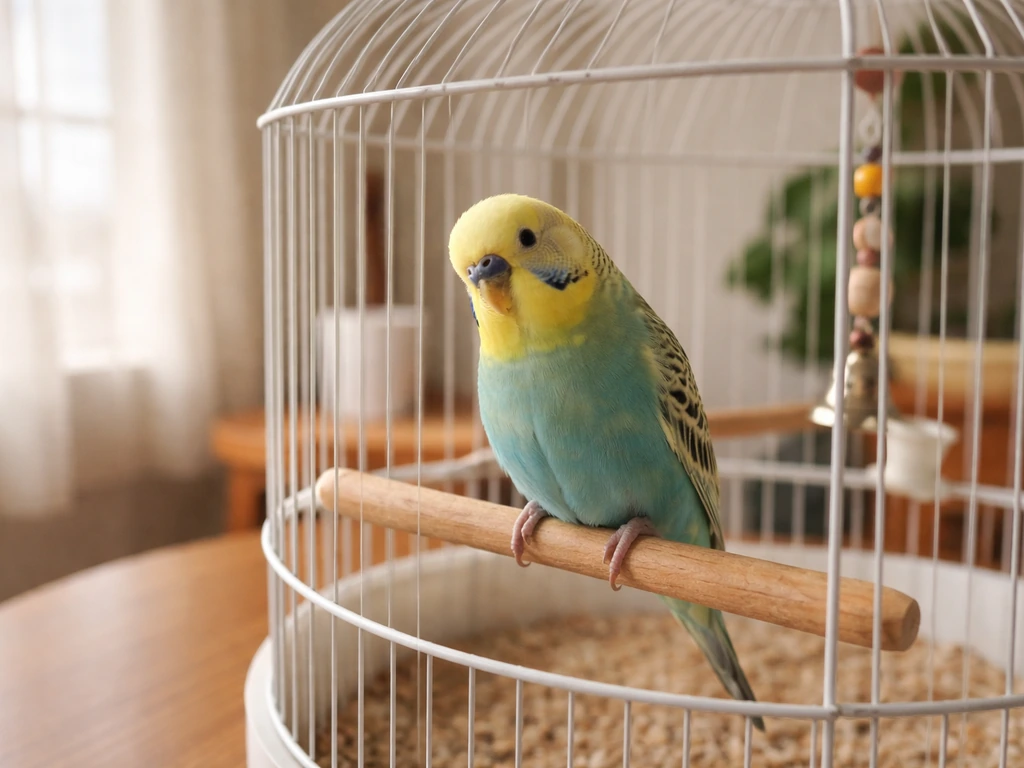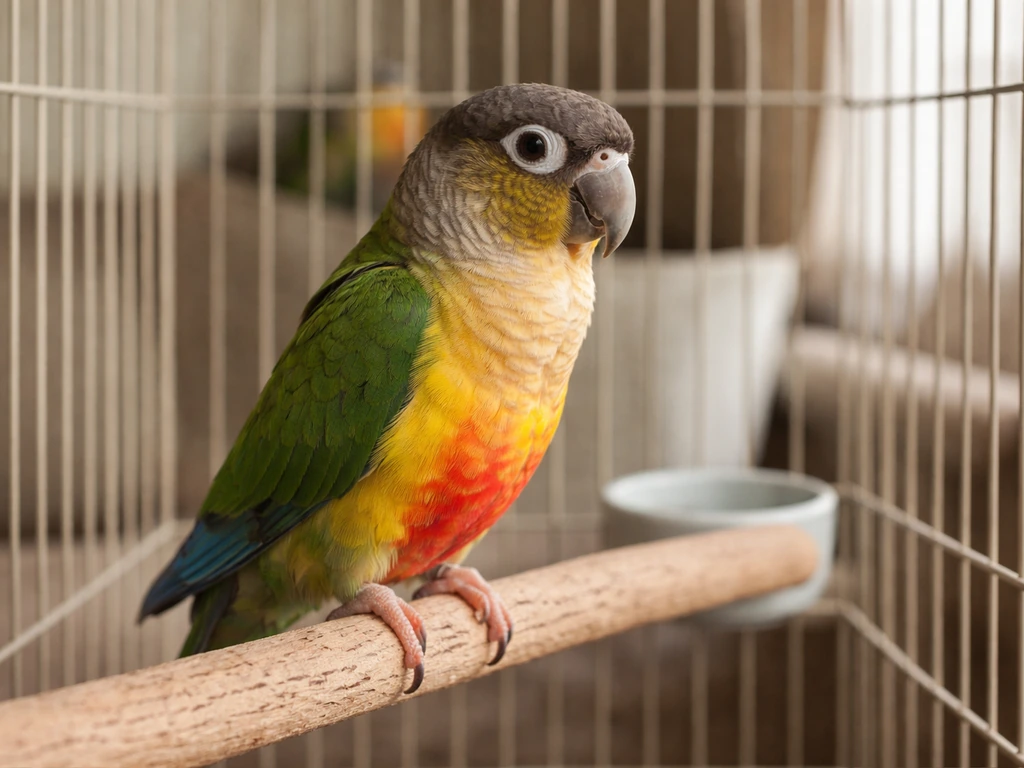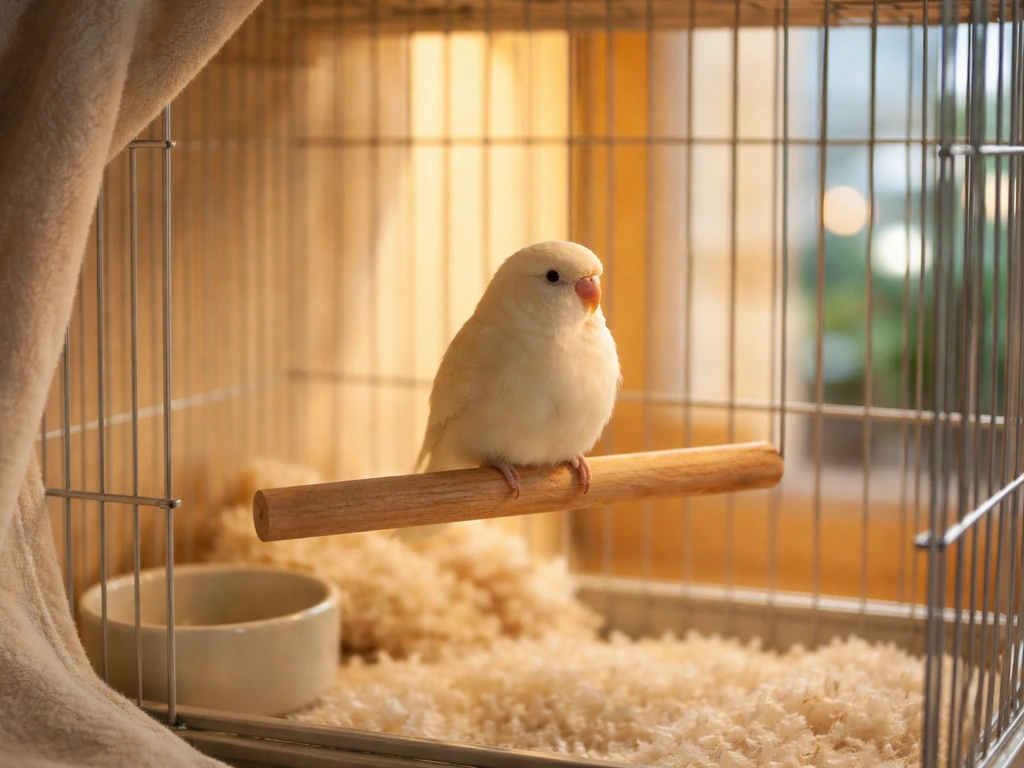
Leaving the TV on for your bird during the day is generally fine, and many birds genuinely seem to enjoy the background noise and visual stimulation. The key is keeping the volume moderate (think conversational level, not action-movie loud), placing the TV far enough away that your bird can move away from it if it wants, and turning it off at night so your bird gets 10 to 12 hours of proper sleep. If your bird is quiet, active, eating normally, and showing no signs of tension, the TV is not hurting anything. If you notice alarm calls, crouching, hiding, or changes in eating, that's your cue to dial things back.
Should I Leave the TV On for My Bird? Safety Tips

Marcus Chen
15 Jun 2026
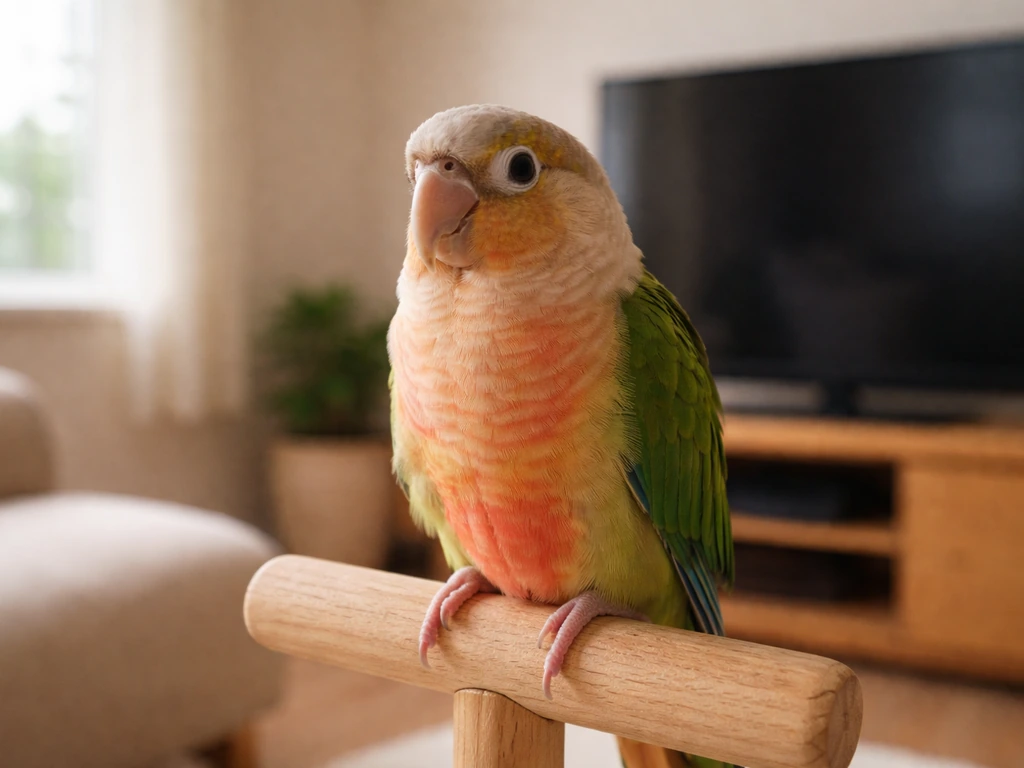
How birds typically respond to TV noise and light
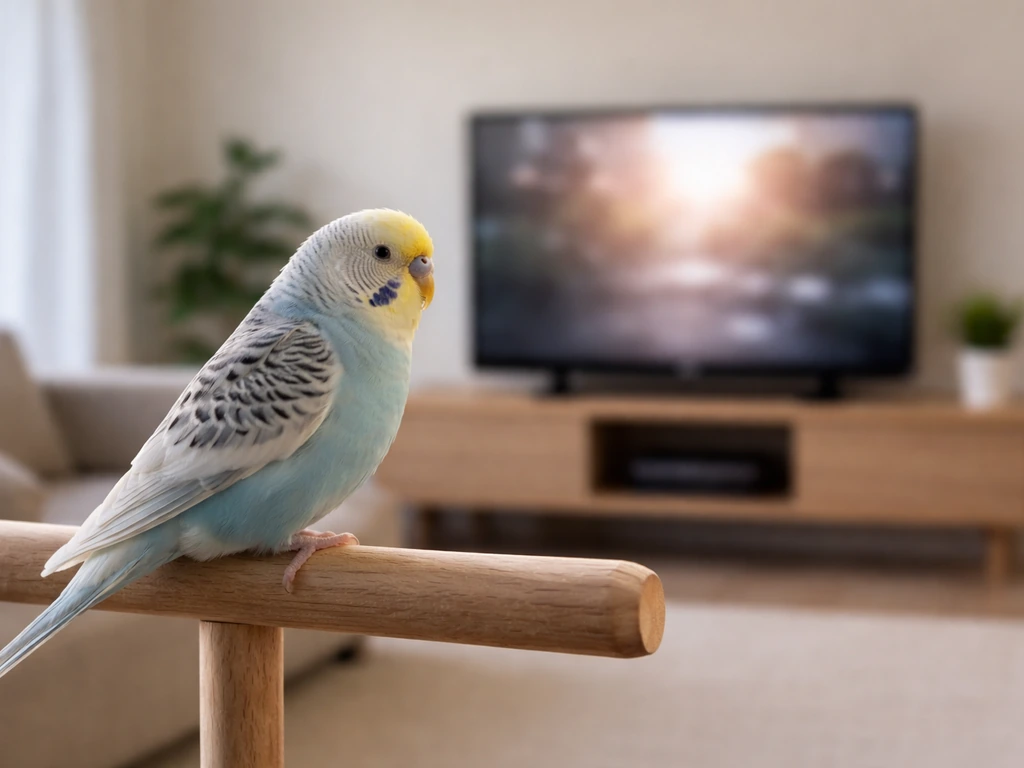
Birds are highly alert animals. Their senses evolved to detect predators and communicate in complex environments, so they notice things we barely register. A TV produces a constant mix of sound, flickering light, and sudden movement on screen, and your bird processes all of that in real time.
Most pet birds settle into the background hum of a TV without much trouble, especially birds that have grown up with it. Some will chirp along, mimic sounds they hear, or orient toward the screen with obvious interest. Others largely ignore it. What birds are not good at tolerating is sudden, loud, or jarring stimuli. Research using zebra finches has shown that fast reactions to sudden intense sounds are essentially hardwired startle-and-flight responses, the same protective instinct that would help a wild bird escape a predator. A commercial with a sudden horn blast or an action scene with explosions can trigger that same response in your living room.
The type of content also matters. Studies on auditory enrichment in captive birds have found that different sound types produce different behavioral responses. Naturalistic sounds (rain, other birds, gentle ambient noise) tend to produce calmer, more normal behavior, while loud or jarring music can increase stress-related movement and vocalization. This is a useful guide for picking what to leave on.
When it's usually fine vs. when to turn it off
In most cases, keeping the TV on during the day is a perfectly reasonable form of enrichment, especially if you are away from home and your bird would otherwise sit in silence. Silence can actually be its own stressor for social species like cockatiels, parrots, and conures that are used to flock noise. Background human voices from a nature documentary or a talk show can make your bird feel less alone.
That said, there are clear situations where you should turn the TV off or at least change what is on.
- It's evening and your bird should be winding down for sleep
- The content is loud, fast-paced, or full of sudden sound effects (news alerts, action movies, horror content)
- Your bird is showing stress signals like alarm calls, crouching, or hiding near the back of the cage
- Your bird has just come home, is recovering from illness, or is already anxious for other reasons
- You cannot monitor your bird's response and the setup has not been tested before
For most healthy, settled birds in a stable home environment, a TV on at a moderate volume with calm content during daytime hours is a green light.
What to watch for: stress and wellness warning signs
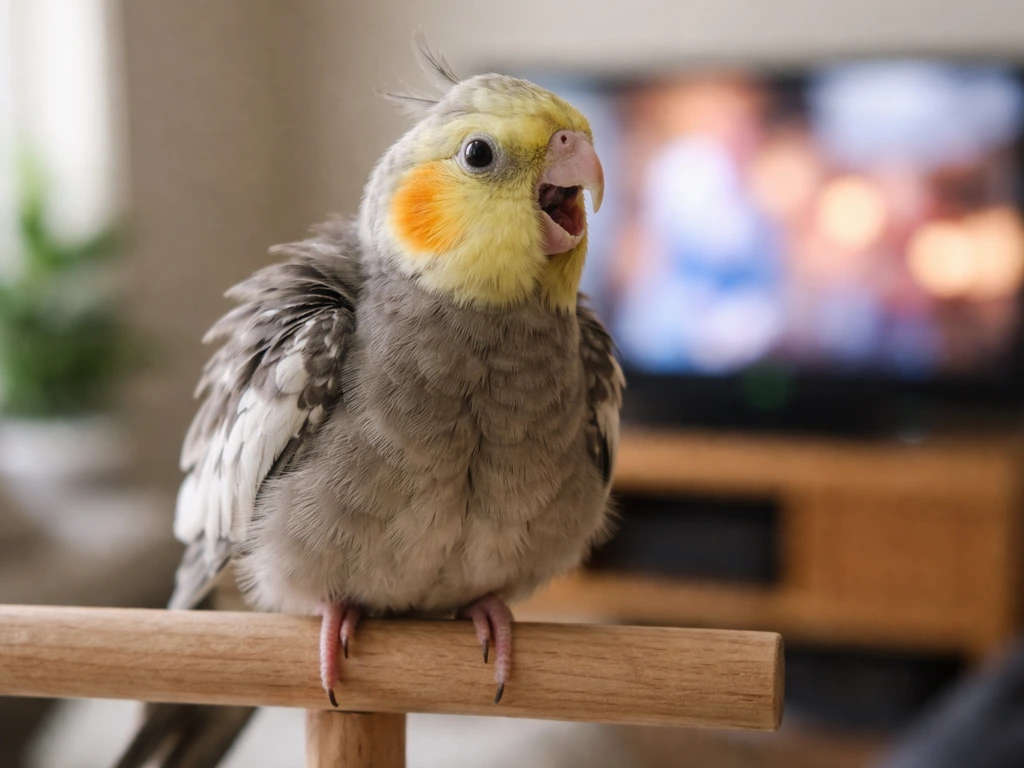
Your bird cannot tell you the TV is bothering it. { how to know if a bird is thirsty. If you're wondering about supplements, talk with an avian vet before adding vitamins to your bird's diet, since needs vary by species and health. You have to read the signals. Some are obvious and some are easy to miss, especially if you are used to your bird's baseline. If you suspect your bird is depressed, focus on overall changes in mood, energy, and appetite, and consider checking with an avian vet your bird's baseline.
Vocal changes are one of the clearest indicators. A sudden spike in screaming, repetitive alarm calls, or distress chirping in the direction of the TV is a direct stress signal. Just as telling is the opposite: a bird that goes unusually quiet when the TV is on may not be relaxed. If your bird seems persistently down or withdrawn, it is worth considering whether it could be depressed rather than just reacting to TV noise. PetMD also notes that a sudden decrease in vocalizing can indicate an underlying medical issue that should be checked by a vet blank" rel="noopener noreferrer">Just as telling is the opposite: a bird that goes unusually quiet when the TV is on may not be relaxed.. It may be shutting down, which can be a sign of fear or, in some cases, an underlying health issue worth monitoring.
Physical posture tells you a lot too. Watch for crouching low on the perch, feathers fluffed and held tight to the body, a tucked head, or a bird retreating to the corner farthest from the TV. These are fear or discomfort postures. On the other end, a bird that is pacing repetitively, rocking, or spinning incessantly is showing a stress behavior that should be taken seriously regardless of what is on the TV.
Breathing is another thing to check. If your bird is panting, breathing with an open beak, or showing a rapid respiratory rate in response to something on screen, that warrants attention. Avian Welfare’s shelter stress checklist also flags excessive vocalization or alarm calls along with increased respiratory rate and panting/open-mouth breathing as concerning signs blank" rel="noopener noreferrer">panting, breathing with an open beak, or showing a rapid respiratory rate. These signs can indicate acute stress or a more serious health concern.
- Sudden increase in screaming or alarm calls directed at the screen
- Unusual quietness or complete withdrawal from activity
- Crouching, feather-clamping, or retreating to the far side of the cage
- Repetitive pacing, rocking, or swinging that is out of character
- Open-mouth breathing or panting near or during TV time
- Changes in appetite or eating less than usual
- Disrupted sleep or restlessness at night if the TV ran late
- Feather-related changes like increased plucking or ruffled appearance
If your bird is happy overall, eating well, vocalizing normally, and interacting with you, a little extra alertness around an exciting scene on TV is not a red flag. Even if your bird seems happy overall, keep watching for patterns and any new stress signs when the TV content changes is my bird happy. You are looking for patterns, not one-off reactions.
How to keep the TV on safely
Getting the setup right makes a real difference. These are the practical variables to get dialed in. If you want more guidance beyond TV timing and volume, check out my bird tips for practical, day-to-day routines practical variables.
Volume
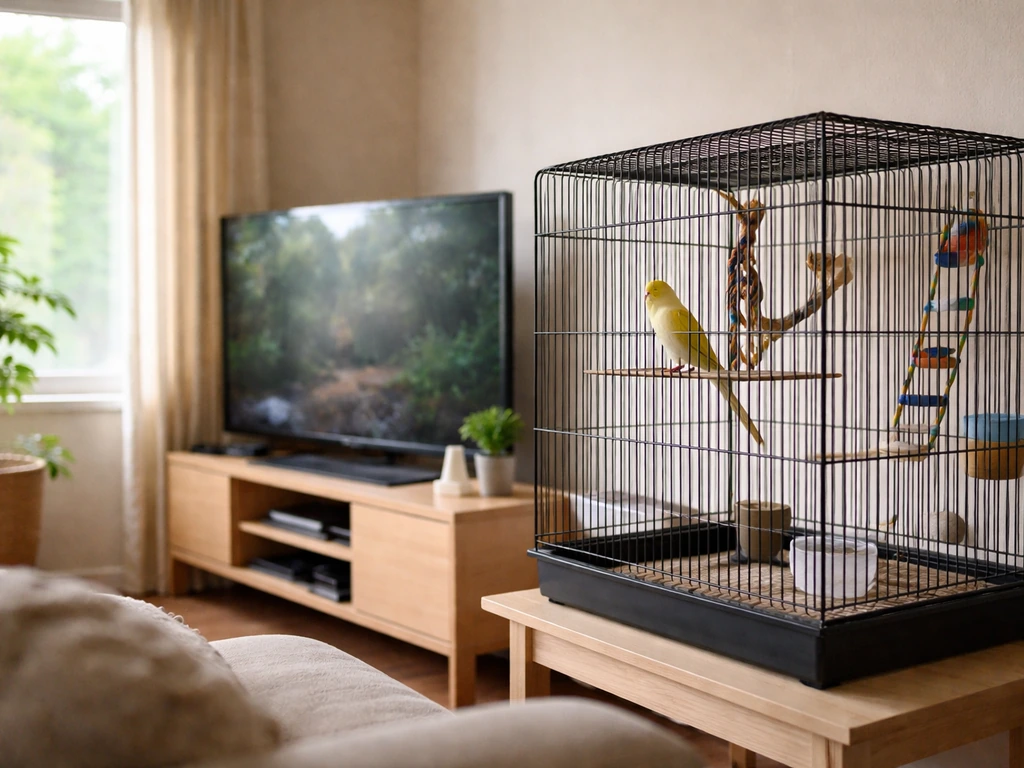
Keep it at or below a normal conversational level. A good benchmark: if you have to raise your voice slightly to talk over the TV, it is too loud for a bird to be comfortable with it for hours at a time. Turn it down a few notches and see how your bird responds. Most birds do best when the TV is background noise, not the dominant sound in the room.
Distance and placement
Your bird's cage should not be directly in front of the screen. Place the cage to the side or across the room so the bird can see and hear the TV without being blasted by it. Crucially, position the cage so your bird can move away from the screen within its space. If the only perch is directly facing a large TV at close range, the bird has no choice but to be exposed to it. Give it options.
Content
Nature documentaries, calm talk shows, and ambient music channels are solid choices. Avoid channels that run frequent loud advertisements, news alerts with sudden audio cues, or content with rapid visual cuts and loud sound effects. If you want to be specific about it, channels with natural sounds, birdsong, or gentle human conversation tend to produce the most relaxed responses.
Duration
There is no hard rule that the TV must be off after X hours during the day, but giving your bird some quiet time each day is a good habit. An hour or two of quiet, especially mid-afternoon, lets your bird decompress. Think of it like giving yourself a break from background noise, even if you enjoy it generally.
| Setting | Recommended | Avoid |
|---|---|---|
| Volume | Low to moderate, conversational level | Loud enough to compete with talking |
| Distance | Across the room or to the side, not directly in front | Close range, directly facing the cage |
| Content | Nature docs, ambient music, calm talk shows | Action movies, news alerts, horror, loud ads |
| Duration | Daytime hours with some quiet breaks | Running all night or through sleep hours |
| Placement | Bird can face away or move from screen | Only perch locked in front of screen |
Day/night sleep routines and TV timing
This is where a lot of owners accidentally create problems without realizing it. Birds need 10 to 12 hours of uninterrupted sleep in a dark, quiet environment every night. That is not optional. Chronic sleep deprivation in birds leads to grumpiness, increased aggression, immune stress, hormonal issues, and behavioral problems over time. If your TV runs late into the evening and your bird's cage is in the same room, your bird is not getting the rest it needs.
The practical fix is to establish a consistent sleep routine. When the sun goes down or at a set time each evening (say, 8 or 9 PM), cover the cage with a breathable cover, move the bird to a quieter room if needed, and either turn the TV off or move your viewing to another space. Consistency matters here as much as the act itself. Birds thrive on routine, and a predictable lights-out time helps regulate their internal clock.
During the day, a TV that is on from morning through evening while you are out is generally not a problem as long as the setup follows the guidelines above. The concern is specifically nighttime exposure. A bird that is half-asleep, constantly jolted awake by TV noise, is going to show the effects of that over days and weeks.
Troubleshooting if your bird seems bothered
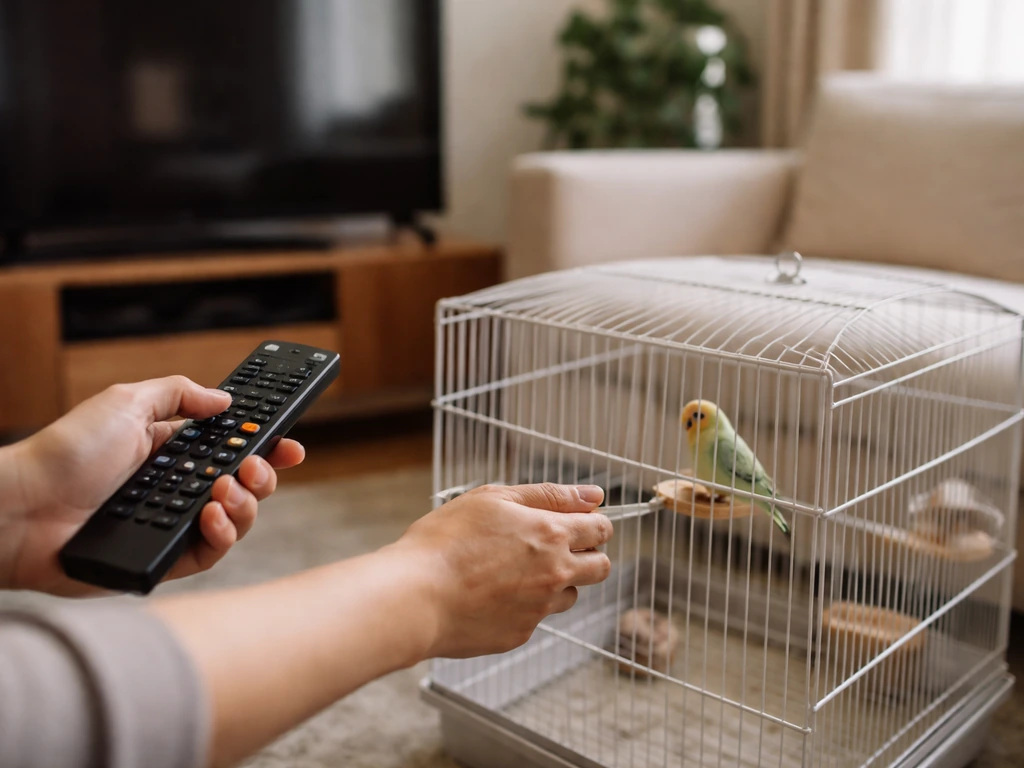
If you notice stress signals while the TV is on, work through these steps before assuming there is a deeper problem. Most cases resolve quickly once you adjust the environment.
- Turn the volume down immediately. Start lower than you think necessary, around background-music level, and observe your bird for 15 to 20 minutes.
- Change the channel to something calmer. Switch from fast-paced or loud content to a nature documentary, ambient sounds, or soft music.
- Move the cage or reposition it so your bird is not facing the screen directly and has perch options away from the TV.
- Give your bird a full quiet day with no TV. Note whether the stress behaviors disappear. This tells you whether the TV is the cause.
- Reintroduce the TV gradually. Start with 30 minutes at low volume, calm content, and watch closely. Increase duration slowly over several days.
- Check for other stressors at the same time. Is there a new pet, a change in schedule, different food, or a recent move? TV may be a factor alongside something else.
- Monitor for a full 24 to 48 hours after adjustments before deciding whether the change helped. Birds sometimes need a day to settle after stress.
If the stress signals disappear when the TV is off and return when it is on, you have your answer: this particular bird, at this volume or with this content, does not do well with it. That does not mean no TV ever, just that you need to experiment more carefully with the settings.
A note on species and individual temperament
Not every bird reacts the same way. Larger parrots like African greys and macaws are often more sensitive to environmental changes and may need a quieter setup than a budgie that has lived with a noisy household its whole life. Cockatiels and conures tend to be social and often enjoy background chatter, while some smaller finch species may prefer quieter, more naturalistic sounds over TV noise.
Individual history matters just as much as species. A bird that was hand-raised in a busy home with the TV always on is going to have a very different baseline than a rescue bird that had limited human contact. Always use your bird's specific reactions as your guide, not just general species advice.
When to seek avian vet or behavior help
Most TV-related stress resolves once you adjust the environment. But there are situations where what looks like a TV response is actually pointing to something more serious.
Contact an avian vet if your bird has any of the following, especially if they persist after you have removed the TV as a variable.
- Open-mouth breathing, panting, or labored breathing at rest
- Complete loss of vocalization or sudden, dramatic quietness lasting more than a day
- Refusal to eat or drink for more than 24 hours
- Repetitive stereotypic behaviors like incessant pacing, rocking, or head bobbing that do not stop when the TV is off
- Feather destruction or plucking that has started or significantly worsened
- Visible physical changes like discharge from the eyes or nares, abnormal droppings, or sudden weight loss
- Extreme aggression or self-injury
If the physical symptoms check out fine but the behavioral issues continue, an avian behavior specialist is worth consulting. Some birds develop anxiety or chronic stress responses that go beyond simple environmental fixes, and a professional can give you a structured plan tailored to your bird.
Keeping an eye on the bigger picture of your bird's wellness, including whether it seems happy, whether it shows signs of being cold, overheated, or dehydrated, and whether its mood and energy are consistent, gives you the context to judge whether a TV habit is one piece of a larger issue or a standalone easy fix. Overheating can look like panting or open-mouth breathing, fluffed feathers, lethargy, and hot-to-the-touch skin overheated. In most cases, a few adjustments are all it takes.
FAQ
At what distance should I place the TV from my bird’s cage?
There is no single measured distance, but use a practical rule: if your bird cannot comfortably choose to move away to another perch area inside the cage, it is too close. Aim for the cage to be positioned so the bird can retreat without having to face the screen constantly, and keep bright glare off the cage (direct reflections can be as stimulating as sound).
Can I use subtitles or lower the sound instead of changing the TV content?
Lowering volume helps, but silent video with fast visuals can still overstimulate. If you notice stress only when certain footage appears (sports, explosions, rapid cuts), switch to calmer programming or reduce brightness, not just sound. Subtitles can help with sudden audio cues, but they do not remove visual startle risk.
Is it ever okay to leave the TV on all day while I’m at work, even if I’m not sure how my bird reacts?
You can start with a conservative trial, moderate volume, and content you would tolerate yourself (steady background talk or nature ambience). Then review behavior for patterns in eating, quietness, crouching, pacing, and sleep quality later that evening. If you cannot supervise, err on the shorter exposure windows (for example, mid-day only) until you have baseline reassurance.
My bird seems calm with the TV on, but sleeps less. Should I turn it off anyway?
Yes. Even if the bird looks relaxed during the day, inadequate nighttime sleep is a separate red flag. Birds need consistent darkness and uninterrupted sleep, and chronic sleep loss can show up later as irritability, hormonal behavior changes, or reduced immune resilience.
What should I do if my bird only reacts to certain shows or channels?
Treat it like a content sensitivity, not a blanket TV issue. Create a shortlist of “safe” programming (steady narration, ambient nature, gentle music) and avoid segments with sudden audio peaks, horn-like sounds, or very rapid visual motion. When you test a new show, change only one variable at a time so you know what helped or hurt.
Does playing bird sounds or podcasts count as “TV noise,” and is it safer?
Bird sounds and steady ambient audio are often easier for birds than TV with sudden effects, but “safer” depends on how abrupt the audio is. Avoid recordings with frequent volume spikes, crowd noise, or alarm-like calls. A good approach is to keep the sound at conversational level and monitor for any new stress signals, especially during evening transitions.
How can I tell the difference between TV excitement and fear or shutdown?
Excitement usually looks like normal posture, regular eating, and vocalization that matches the bird’s usual patterns. Fear or shutdown tends to include alarm calling or distress in the direction of the TV, crouching with tight feathers, retreating to the farthest corner, sudden silence that is out of character, or increased repetitive stress behaviors like relentless pacing or spinning.
Should I cover the cage sometimes while the TV is on during the day?
If your bird is visibly overstimulated (crouching, frantic movement, breath changes), a partial cover or moving to a quieter room can give the bird a visual and noise break. Use breathable coverings and avoid creating a fully dark, sleep-like environment during the day, since the goal is decompression, not stealing daytime light cues.
My bird panics when commercials start. Is there a workaround besides turning the TV off?
Yes. Try using ad-free streaming, lowering the volume further, and choosing content with fewer sudden audio cues and less abrupt music stings. If you cannot avoid ads, consider keeping the TV in standby when commercials begin, or switch to a calmer audio-only source (continuous ambience) so you remove those sharp startle peaks.
When should I contact an avian vet if I suspect the TV is involved?
Contact an avian vet if you see breathing changes (open-mouth breathing, panting, rapid respiratory rate), persistent posture problems, ongoing loss of appetite, or symptoms that continue even after removing the TV variable. Also get help if the bird’s baseline behavior never returns to normal after you adjust content and volume, because stress can mask underlying illness.