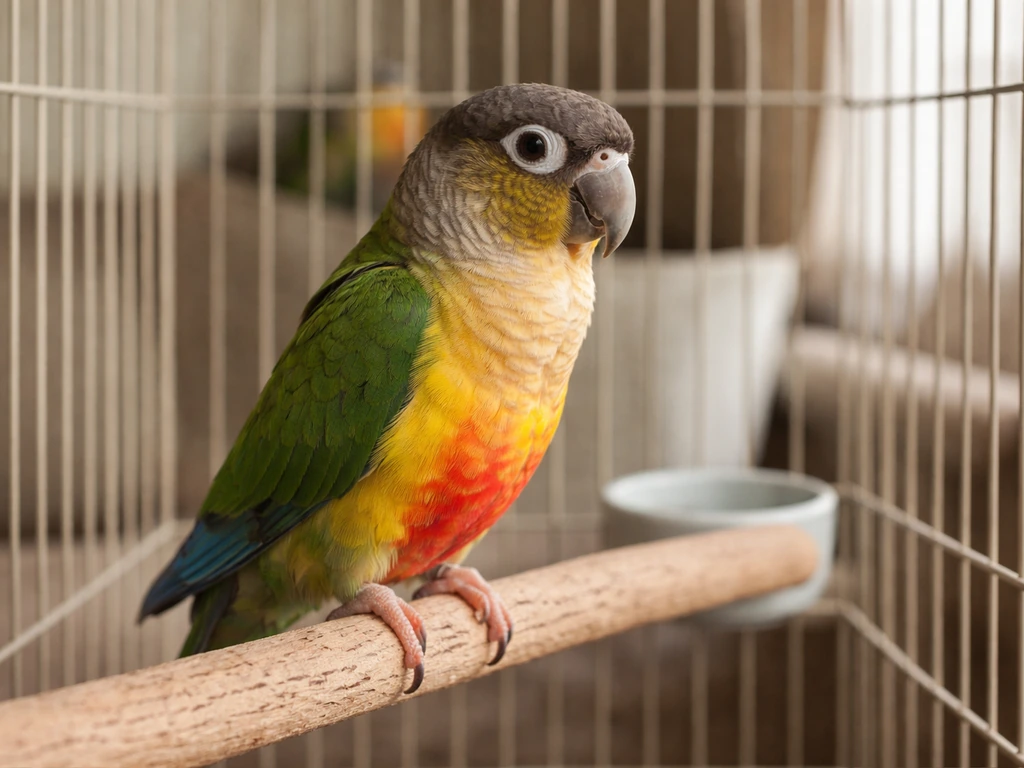
A happy bird is active, curious, and vocal. They hold their feathers smooth and close to their body, engage with you or their environment, eat and drink normally, and produce regular droppings. If your bird is doing most of those things right now, you can breathe easy. If something feels off, this guide walks you through exactly what to look for, what it means, and when it's time to call an avian vet.
Is My Bird Happy? Signs, Checklist, and What to Do

Marcus Chen
13 Jun 2026
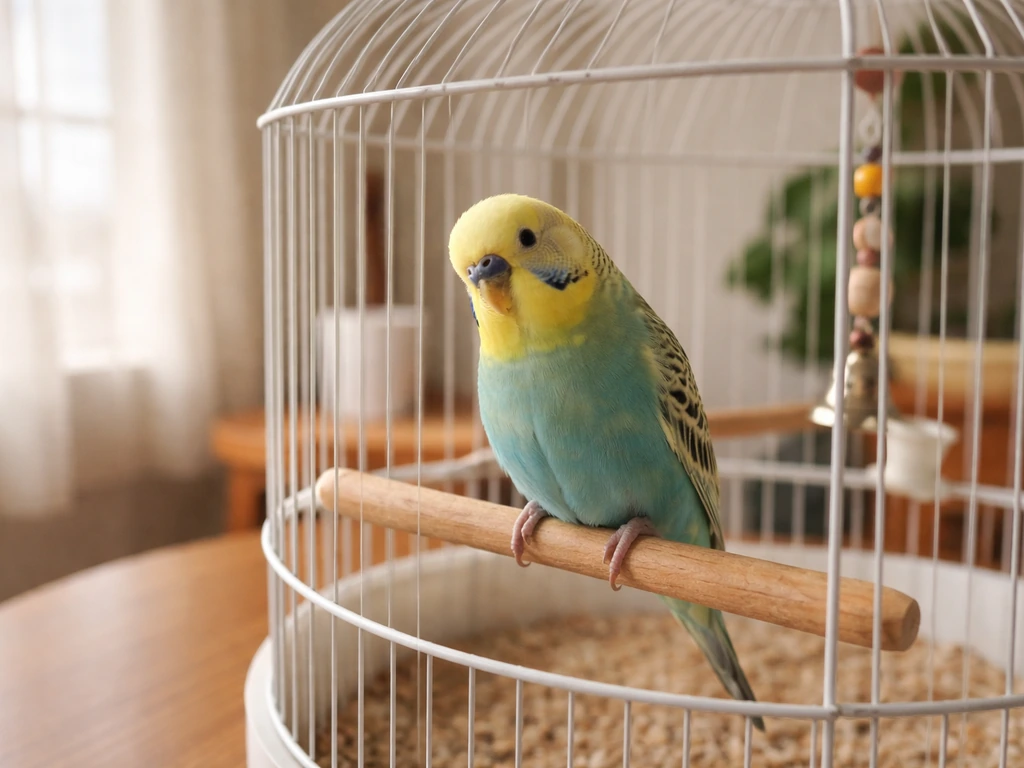
What a happy, comfortable bird actually looks like
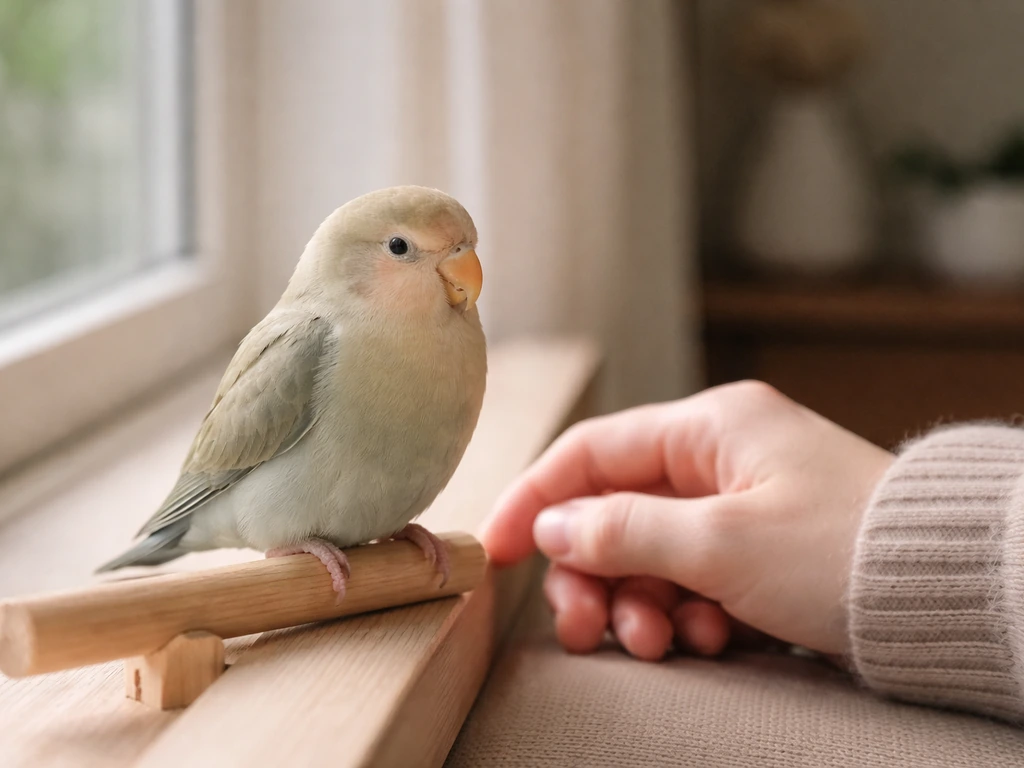
A content bird isn't always loud or performing tricks. Sometimes they just sit quietly near you, watching the room. That's fine. What you're looking for is a combination of signals that, together, tell you your bird feels safe and well.
- Feathers are smooth and lying flat against the body (occasional puffing right after waking up or during preening is normal)
- Eyes are bright, fully open, and reactive to what's happening in the room
- Posture is upright, perching on both feet, with weight evenly distributed
- Bird is alert and notices movement, sounds, and you walking by
- Vocalizing regularly: talking, whistling, chirping, or singing throughout the day
- Eating and drinking at predictable times, picking up food with interest
- Preening themselves neatly and occasionally grooming you or a cage mate
- Droppings are regular in number, with a dark fecal portion, white or beige urate, and a small clear liquid portion
- Playing with toys, foraging, or exploring their cage space
- Body language is open toward you: leaning in, making eye contact, stepping up willingly
No bird checks every box every hour. But if your bird is doing most of these things across a normal day, they're telling you they feel good. The concern starts when several of these things disappear at once, or when something feels noticeably different from their personal baseline.
Quick check: read your bird's body, voice, and activity right now
You don't need a vet visit to do a useful wellness scan. Do this check in a calm moment, ideally when your bird doesn't know you're watching. Natural behavior tells you more than behavior performed for you.
Posture and feathers
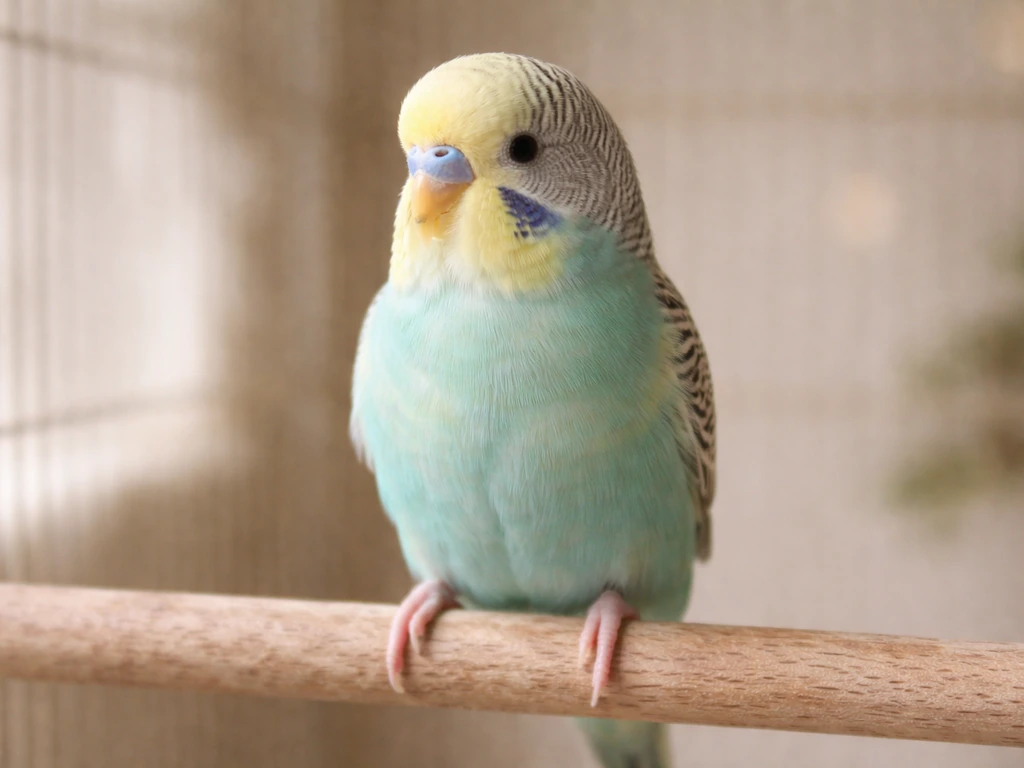
Look at how your bird is sitting. Upright on both feet, feathers smooth? Good sign. Feathers puffed up for more than a few minutes, head tucked, or sitting low on the perch rather than gripping it normally? That warrants closer attention. A bird holding one foot up while awake and alert can be resting normally, but a bird that looks hunched, fluffed, and still for extended periods is not just napping.
Breathing
Watch the tail. In a healthy bird at rest, the tail stays relatively still. If the tail bobs up and down with each breath, that's a respiratory red flag. Also watch for open-mouth breathing when the bird isn't hot, hasn't just exercised, and isn't vocalizing. The Avian Triage resource from Penn Vet also notes respiratory signs such as tail bobbing and open-beak breathing blank" rel="noopener noreferrer">open-mouth breathing. Any wheezing, clicking, or wet-sounding breathing is serious. Breathing is one of the most important things to check because birds hide illness well, and respiratory distress can escalate quickly.
Voice and activity
Think about what's normal for your bird. Some birds are naturally quiet; others narrate their whole day. What you're listening for is a change from their baseline. A normally chatty bird going silent, or a calm bird suddenly screaming repeatedly, both deserve attention. blank" rel="noopener noreferrer">Stress can show up as either extreme: too much noise or unusual silence.
Droppings
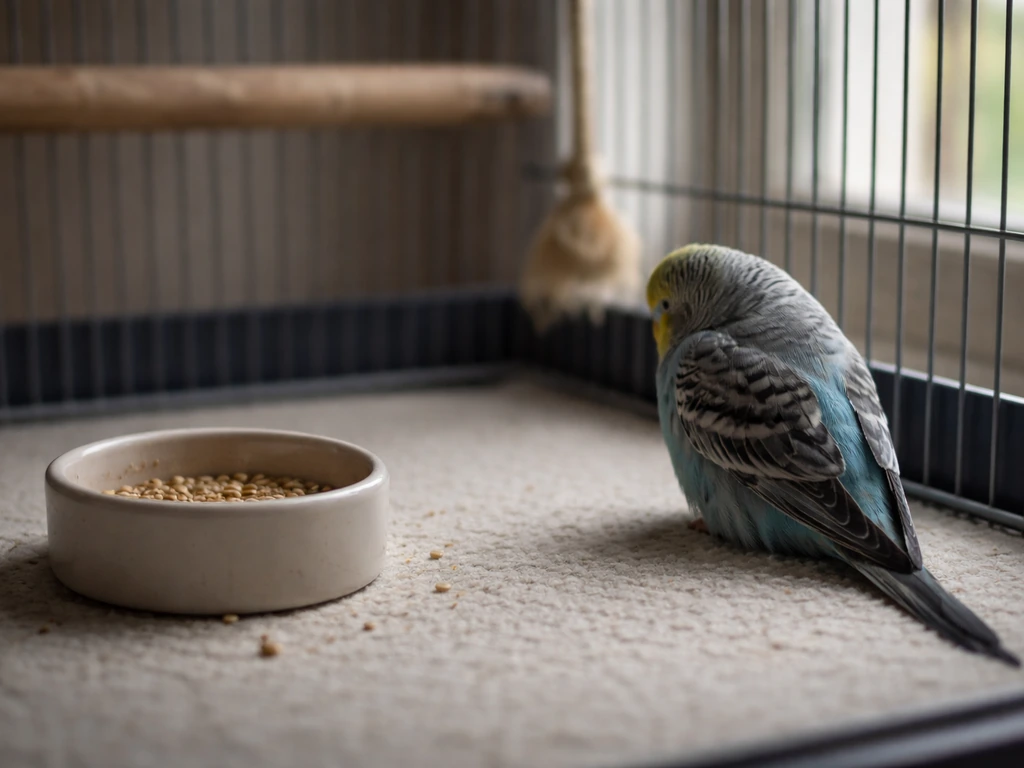
A quick look at the cage floor or tray tells you a lot. Normal droppings have three parts: a dark solid portion (feces), a white or beige chalky portion (urates), and a small amount of clear liquid (urine). The color and consistency can shift with diet and water intake, so a blueberry breakfast can produce dark-colored droppings without anything being wrong. What you want to watch for is a significant drop in the total number of droppings, very watery or entirely liquid droppings, or droppings that look green and watery when your bird hasn't changed their diet.
Appetite
Is your bird approaching their food bowl with normal interest? A bird that's ignoring food they usually eat, or sitting near the bowl without actually eating, is worth monitoring. If appetite drops, you'll usually see a corresponding drop in droppings within hours.
Common reasons birds seem 'off' when nothing is medically wrong
Before assuming illness, it's worth running through the most common non-medical reasons a bird acts subdued, grumpy, or disengaged. These are genuinely the most frequent causes of a bird seeming unhappy on any given day.
Boredom and under-stimulation
Birds are intelligent animals that need mental activity throughout the day. A bird with nothing to do will often become withdrawn, repetitive in behavior, or start over-preening. Rotate toys regularly, offer foraging opportunities by hiding food in paper or puzzle feeders, and make sure your bird gets enough direct interaction time with you. The amount needed varies by species, but most companion birds need at least a couple of hours of active engagement daily.
Stress from the environment
Something as simple as rearranging furniture near the cage, a new pet in the home, an unfamiliar visitor, or a change in your routine can throw a bird off. Birds are creatures of habit, and they notice everything. Stress signs include excessive screaming, hissing, fanned tail, wings held slightly away from the body, raised head feathers, or cowering in a corner of the cage.
Sleep disruption
Most birds need 10 to 12 hours of uninterrupted, dark, quiet sleep per night. If your household stays up late, has a TV on near the cage, or if there's irregular light exposure, your bird may be chronically under-slept. A sleep-deprived bird often becomes irritable, less vocal, and more prone to feather picking. Covering the cage at a consistent time each night makes a real difference.
Temperature and drafts
A bird that's cold will puff up to trap heat. That's normal if the room is genuinely chilly, but it becomes a problem if it persists or if you can't identify a clear temperature reason for it. Most companion birds do best between 65 and 85 degrees Fahrenheit. Drafts from air conditioning vents, open windows, or fans positioned near the cage can cause discomfort even when the room feels fine to you. If your bird is puffed up consistently and the room feels cool, move the cage away from any draft sources first.
Loneliness and social needs
Some birds, especially highly social species like cockatiels, conures, or African greys, can become genuinely despondent when left alone for long stretches. If your schedule has recently changed and your bird is getting less interaction, that's a likely explanation for a behavioral shift. This overlaps with depression-like presentations, which is worth exploring separately if you notice your bird consistently withdrawn or disengaged. If you suspect your bird is depressed, start by comparing their behavior to what is normal for them and rule out health red flags depression-like presentations.
Health red flags that can look like low mood
This is the part that matters most if you're worried. Birds are hard-wired to hide signs of illness, an instinct that protects them in the wild but makes them genuinely difficult to read as pets. By the time a bird looks obviously sick, they've often been unwell for a while. Small changes are meaningful. Here's what to take seriously.
| Sign | What it looks like | Urgency level |
|---|---|---|
| Tail bobbing with breathing | Tail moves visibly up and down with each breath at rest | Call vet today |
| Open-mouth breathing | Beak held open without vocalizing, not after exercise or in heat | Call vet today |
| Wheezing or clicking sounds | Audible noise during breathing | Call vet today |
| Sitting on the cage floor | Bird not perching, sitting low or flat | Call vet today |
| Prolonged fluffed posture | Feathers puffed for more than 30 minutes outside of sleep | Call vet soon |
| Significant drop in droppings | Noticeably fewer droppings than normal over several hours | Call vet soon |
| Very watery or discolored droppings | Entirely liquid, bright green, or bloody (not diet-related) | Call vet soon |
| Not eating for 24+ hours | Food untouched, no interest in treats | Call vet soon |
| Feather plucking or bald patches | Missing feathers, damaged shafts, visible skin | Schedule vet visit |
| Sudden silence in a vocal bird | Bird that normally talks or sings has stopped entirely | Monitor closely; call if persists 24–48 hrs |
| Discharge from eyes or nares | Wet, crusty, or swollen nostrils or eyes | Call vet soon |
| Mucus or slime in or around the beak | Wet or sticky appearance around the mouth | Call vet today |
Any combination of these signs together is more urgent than a single sign alone. A bird that is fluffed, quiet, not eating, and sitting on the cage floor all at once needs veterinary attention today, not a wait-and-see approach.
Feather plucking deserves special mention because it straddles the line between behavioral and medical. It can come from boredom, loneliness, anxiety, or poor diet, but it can also be caused by skin infections, parasites, or internal disease. If you're seeing feather plucking or large bare patches, an avian vet should be involved from the start, not as a last resort.
The environment and routine factors that affect wellbeing most
Happiness in birds isn't just about mood. It's a result of daily conditions adding up. These are the factors that have the biggest impact.
Cage placement and size
Birds feel most secure when their cage is at or above eye level, against a wall on at least one side, and positioned where they can see the room's activity without being in the middle of chaos. Drafty hallways, kitchens (where cooking fumes are dangerous), and spots with heavy foot traffic and noise are poor choices. A cramped cage where a bird can't fully extend their wings contributes directly to stress and feather problems.
Light and sleep schedule
Consistent light and dark cycles matter enormously to birds. Natural or full-spectrum lighting during the day, followed by 10 to 12 hours of darkness, keeps their hormonal and behavioral patterns stable. Irregular schedules, or a TV left on near the cage at night, disrupts sleep and can contribute to everything from irritability to hormonal aggression. Covering the cage at the same time every night is one of the single easiest things you can do for your bird's wellbeing.
Diet and hydration
A diet that's mostly seeds is nutritionally deficient for most companion birds. A variety of fresh vegetables, appropriate fruits, pellets, and limited seeds gives birds the nutrients they need to feel and look their best. Water should be changed daily and the bowl kept clean. If you're wondering should i give my bird vitamins, it's best to ask an avian vet first, because supplements are easy to overdo and can interfere with a balanced diet. Dehydration can affect droppings, energy levels, feather condition, and mood.
Enrichment and interaction
Foraging is one of the most important forms of enrichment for pet birds because it mimics how they'd spend most of their day in the wild. Wrapping food in paper, hiding pellets in toys, or using puzzle feeders gives them something mentally engaging to do. Combine this with daily out-of-cage time and direct interaction with you, and you have a bird that has real outlets for their intelligence and social drive.
Temperature comfort
Keep an eye on both ends of the scale. A bird that's too cold will puff up and may become lethargic. A bird that's overheating will pant, hold wings away from the body, and in serious cases will have feet and a beak that feel hot to the touch. If your bird is panting with hot feet and beak, that's an emergency: contact a vet immediately. Comfortable temperature for most companion birds is in the 65 to 85 degree Fahrenheit range, away from direct drafts.
Do this today: a step-by-step plan and when to call the vet
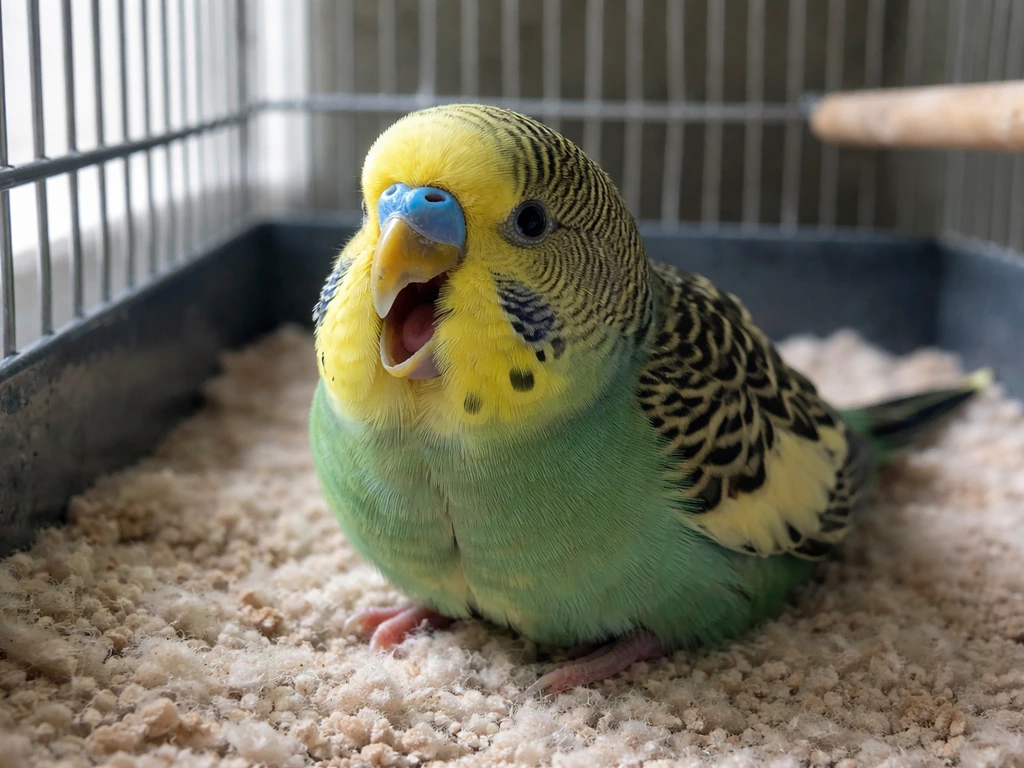
If you're worried about your bird right now, work through this in order. Don't skip to the end and panic, but don't dismiss real warning signs either.
- Do the quick body check right now: posture, feathers, breathing, eyes, and beak. If you see open-mouth breathing, tail bobbing with breathing, wheezing, or a bird sitting on the cage floor, stop here and call an avian vet or emergency animal hospital today.
- Check the cage floor for droppings. Count roughly how many you see from the past few hours. Are there fewer than normal? Are they watery, very green, or bloody (unrelated to recent food)? If yes, call the vet today.
- Observe your bird for 10 to 15 minutes without interacting. Are they alert and watching the room? Did they eat this morning? Are they making any sounds? Make a mental note of what you observe.
- If no urgent red flags are present, look at what changed recently: new pet, new person, schedule shift, rearranged furniture, diet change, late nights, or temperature shifts. Changes like these explain the majority of behavioral dips.
- Address the most obvious environmental issue first. If the cage is near a draft, move it. If sleep has been irregular, cover the cage at a consistent time tonight. If your bird hasn't had much interaction lately, spend 30 minutes with them actively.
- Monitor over the next 24 to 72 hours. Keep a simple mental or written log: is your bird eating? How are the droppings? Is vocalization returning? Is posture normal?
- If the bird improves within 24 to 48 hours after an environmental fix, you've likely found the cause. If nothing improves, or if things get worse at any point, call an avian vet. Don't wait beyond 72 hours for any unexplained behavioral change in a bird.
When to call the vet immediately (don't wait)
- Open-mouth breathing when the bird isn't hot or vocalizing
- Tail bobbing with every breath
- Wheezing, clicking, or any audible respiratory noise
- Bird sitting on the cage floor and not perching
- Panting with hot feet and beak (heat emergency)
- No droppings for several hours
- Bloody or entirely liquid droppings
- Visible injury, bleeding, or trauma
- Seizure or loss of coordination
- Complete loss of appetite for more than 24 hours with other signs present
Birds can decline quickly once they stop hiding illness. If your gut says something is seriously wrong, trust that instinct and call. An avian vet consultation is always better done too early than too late.
One final note: this guide is educational, not a diagnostic tool. It can help you make sense of what you're seeing, but it doesn't replace an exam from an avian veterinarian. If you're not sure, make the call. Your bird's wellbeing is worth a five-minute phone conversation.
FAQ
My bird is quiet but otherwise normal. Is that enough to say they’re happy?
Yes, but use it as a clue, not a verdict. A bird can look alert and “normal” yet be sick, especially early on, because they hide illness. If you notice any respiratory change (open-mouth breathing, wheeze, clicking) or a sudden drop in droppings plus behavioral change, prioritize a vet call.
What should I do if my bird isn’t eating, but they seem calm?
Feed them in a way that lets you monitor appetite without adding stress. Try offering a favorite food at the usual time, then step back. If they approach but don’t eat, or they only nibble once and then ignore the bowl, that pattern matters even if they still look “calm.” Track what they ate and when, for your vet.
My bird’s droppings look different. How can I tell diet-related changes from a health problem?
Start with the “why now” checklist. Look for diet changes, new cage liners or paper scents, household cleaners, unusual odors or smoke, and temperature or draft changes near the cage. Also check whether the droppings changed in number and texture, not just color, since color can vary with foods like berries.
My bird is acting extra quiet or extra loud. Could it just be personality?
Cockatiels and some other flock species may show “stress posture” differently depending on personality, but the goal is comparison to their baseline. If there’s also any respiratory symptom, prolonged puffing, reduced eating, or changes in droppings, treat it as a red flag regardless of normal loudness.
How long is puffed-up behavior normal before I should worry?
If the bird is awake, responsive, and only briefly fluffed while tucked into a comfortable spot, that can be normal. Persistent fluffed posture, head tucked for extended periods, sitting low and not gripping normally, or staying fluffed despite you offering usual food are stronger reasons to escalate.
Can household smells or fumes make my bird seem unhappy even if they’re not obviously sick?
Household fumes can be a hidden trigger even when a room feels “not that smoky.” Avoid Teflon-type overheating, strong aerosols, scented sprays, incense, and fresh paint or solvents near the cage. If your bird’s breathing or posture changes after such exposures, contact an avian vet promptly.
My bird seems bored. How can I tell if enrichment works versus something else is wrong?
Foraging changes are easiest to assess, because they directly test interest and energy. Offer a simple puzzle feeder or hide a small portion of the usual pellet/seed mix in paper, and watch how quickly they engage. If they ignore multiple enrichment options and also reduce droppings, you’re more likely seeing a health or severe stress issue.
Is it okay to leave my bird alone for long stretches if I provide toys and food?
Yes. If you must leave the bird alone for long stretches, plan for consistent, not just increased, interaction. Species like cockatiels, conures, and African greys often need more social time, and rotating toys alone may not prevent withdrawal. If behavior worsens after schedule changes, reduce the gap where possible before assuming medical illness.
What’s the most concerning droppings pattern to watch for at home?
Use the “three parts” lens consistently. Normal droppings have feces, urates, and some urine, so “all liquid” or a major drop in the total amount is concerning. Green, watery droppings are also a bigger deal when there was no diet change. If that happens repeatedly over several hours, call a vet.
How do I check if my bird is too cold or too hot without guessing?
Look for temperature clues beyond “room feels comfortable.” Check for drafts from vents, a nearby window, or a fan, and move the cage away first. Persistent puffing without an identifiable cold source, or panting with wings held away, should be taken seriously. If you feel overheating signs like hot beak and hot feet, treat it as urgent.
If I need to call an avian vet, what info should I gather first?
Yes, especially at home. A short, calm observation “log” helps you and a vet decide faster: note activity level, breathing quality, food and water intake, droppings count and consistency, and any feather plucking changes. Take 1 to 3 photos of the most recent droppings and the bird’s posture if they’re fluffed or sitting low.
Next Article
My Bird Tips: Quick Troubleshooting Guide Today
Quick my bird tips troubleshooting for stress, breathing issues, feather problems, lethargy, appetite changes, and next