
That rapid teeth-clicking, jaw-vibrating sound your cat makes when it spots a bird is called chattering, and it almost always means one thing: frustrated predatory excitement. The cat is locked onto prey it desperately wants to chase but can't reach. It's not aggression toward you, it's not pain, and it's not a random quirk. It's a hardwired hunting response firing at full intensity with nowhere to go. The chattering sound rarely travels alone though. Watch the body language alongside it, because that's where you'll learn whether the situation is just intense focus or something that needs your immediate attention.
Cat Sound When See Bird: Why They Meow, Chatter, or Yowl

Marcus Chen
29 May 2026
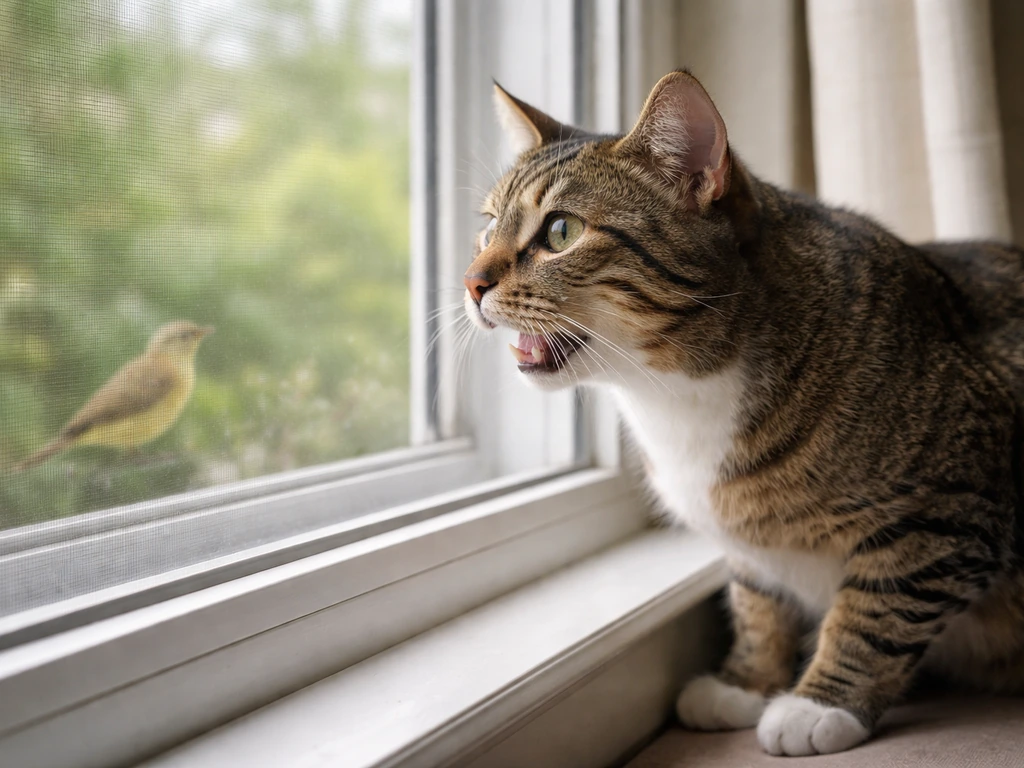
Why cats make that sound when they see birds
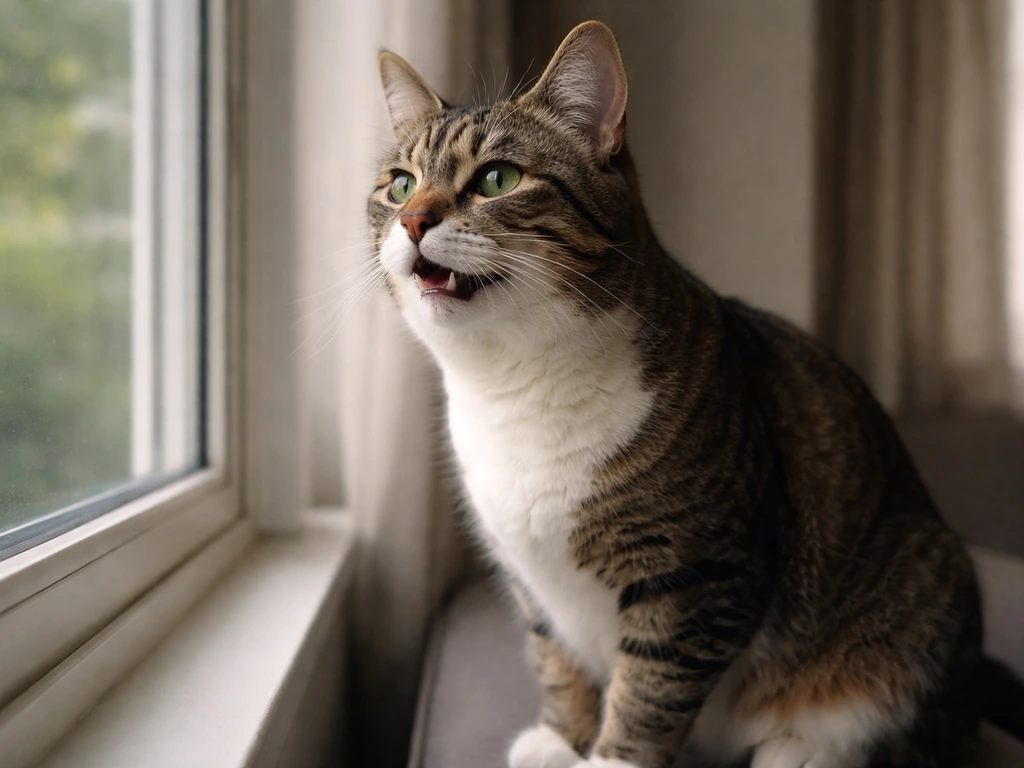
Cats are wired to hunt. When a cat sees a bird, whether that's a wild bird outside a window or a pet bird inside the house, the predatory sequence activates instantly. The brain says "prey" and the body responds: pupils dilate, the tail may twitch or go stiff, the cat crouches and locks on, and that chattering starts. The current best explanation from behaviorists is that chattering is the result of pent-up frustration when the hunt can't complete.
The prey is right there, visible, but the cat can't get to it. Some theories also suggest the sound might be instinctive prey-mimicry, a kind of luring behavior borrowed from cats in the wild that mimick bird or rodent sounds. Either way, the trigger is clear: visible prey plus an inability to act on it equals chattering.
Indoor cats tend to chatter more intensely precisely because they're always prevented from completing the hunt. The stimulus (the bird) is constantly available through windows or within the same room, but the outcome (catching it) never happens. Over time, that blocked instinct can build into a pattern of hypervigilance and overstimulation around birds specifically.
Common cat vocalizations and what they usually mean
Not every sound a cat makes at a bird is chattering. It helps to know the difference so you can gauge how heightened the cat's state actually is.
| Vocalization | What it sounds like | What it usually means |
|---|---|---|
| Chattering | Rapid, staccato teeth-clicking or jaw vibration, sometimes with a trill | Frustrated predatory excitement, prey is visible but unreachable |
| Chirping/trilling | Short, bird-like rising notes | Excitement and engagement, often slightly less intense than full chattering |
| Meowing | Standard meow, sometimes repeated | Attention-seeking or mild excitement, lower predatory drive than chattering |
| Yowling | Long, drawn-out, loud vocalization | High arousal or frustration, can signal overstimulation or stress |
| Growling/hissing | Low rumble or sharp hiss | Aggression or fear, a warning that the cat is past the threshold of calm engagement |
Chattering and chirping are the most common bird-triggered sounds and both fall into the "excited but frustrated" category. Yowling is worth paying attention to because it signals a higher arousal state. Growling or hissing, especially if paired with flattened ears, a tucked or lashing tail, or piloerection (fur standing up), means the cat has moved from excited into genuinely agitated or aggressive territory. At that point, if a pet bird is anywhere nearby, you need to act immediately.
Reading the body language alongside the sound
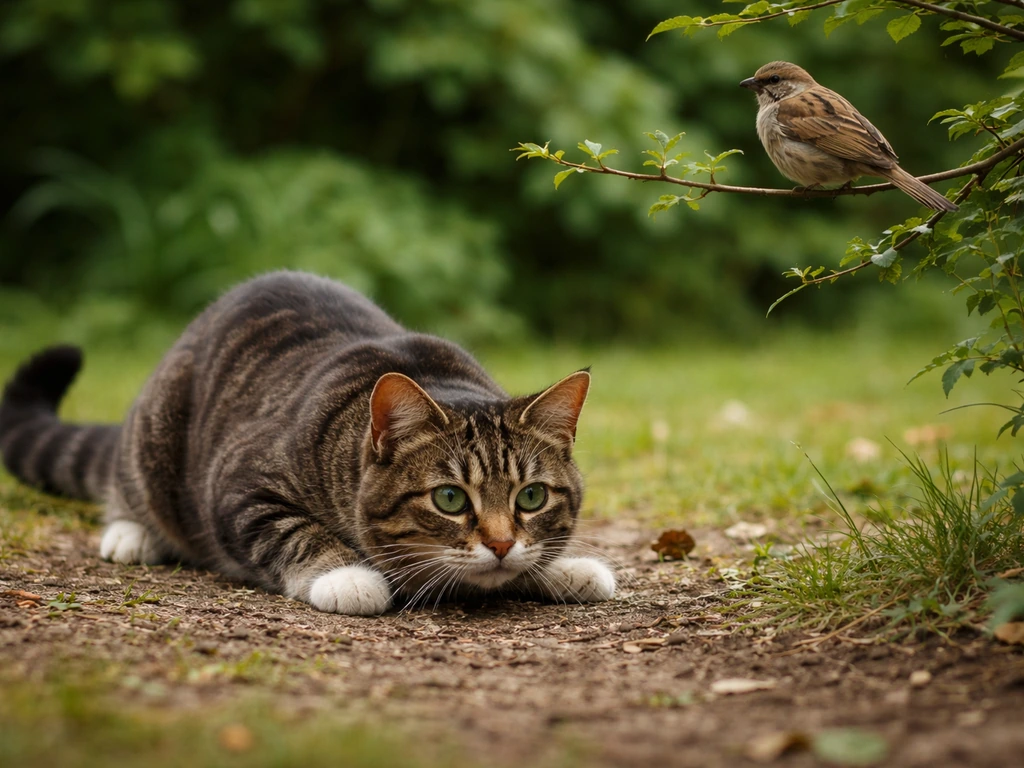
The vocalization is only part of the picture. A chattering cat with a slow-swishing tail, crouched low, and eyes fixed hard on the bird is in full predatory mode. A cat that's chattering but sitting upright and relaxed is much less of an immediate threat. To figure out how to tell if a bird is happy, look for relaxed posture, steady appetite, and normal vocalizations without panic or freezing A cat that's chattering but sitting upright and relaxed.
Look for these escalation signals: ears flat against the head, fur raised along the spine, rapid tail thrashing, body turned sideways, or a shift toward crouching and preparing to spring. Those physical cues tell you the cat has gone past passive watching and is actively planning to move toward the bird.
Bird stress and wellness signs to watch for
If you have a pet bird in the house, a cat chattering or yowling nearby is a real stressor for that bird, even if the cat never gets close. Knowing how to know if a bird is scared can help you spot stress early and intervene before it worsens. Birds are prey animals and they respond to the presence and sounds of predators with a stress response that can build up over time even when nothing physical happens.
Short-term signs that your bird is stressed by the cat include excessive screaming or repetitive chirping, going completely silent and freezing, fluffing up and sitting at the bottom of the cage, fanned tail feathers, wings held slightly away from the body, open-mouth breathing or panting, and raised head feathers. To tell if a bird is sleeping, look for relaxed posture, closed eyes, and steady breathing without signs of stress. Any of these following a cat encounter should be taken seriously.
Longer-term, chronic stress can show up more subtly. This is where it gets tricky because birds are wired to hide symptoms of illness. Watch for changes in appetite, a drop in activity level, changes in droppings (color, consistency, or frequency), or a soiled vent. You can also use appetite and feeding behavior to gauge whether a bird is hungry and whether stress or missed meals may be contributing to odd vocalizations or behavior changes in appetite.
These can be early signs that stress has begun to affect the bird's health. If you notice any combination of these signs alongside repeated cat-bird encounters, it's worth a call to an avian vet. It connects directly to broader questions about how to tell if a bird is stressed or how to know if a bird is scared, both of which can overlap with these same physical signals.
What to do right now to keep your bird safe
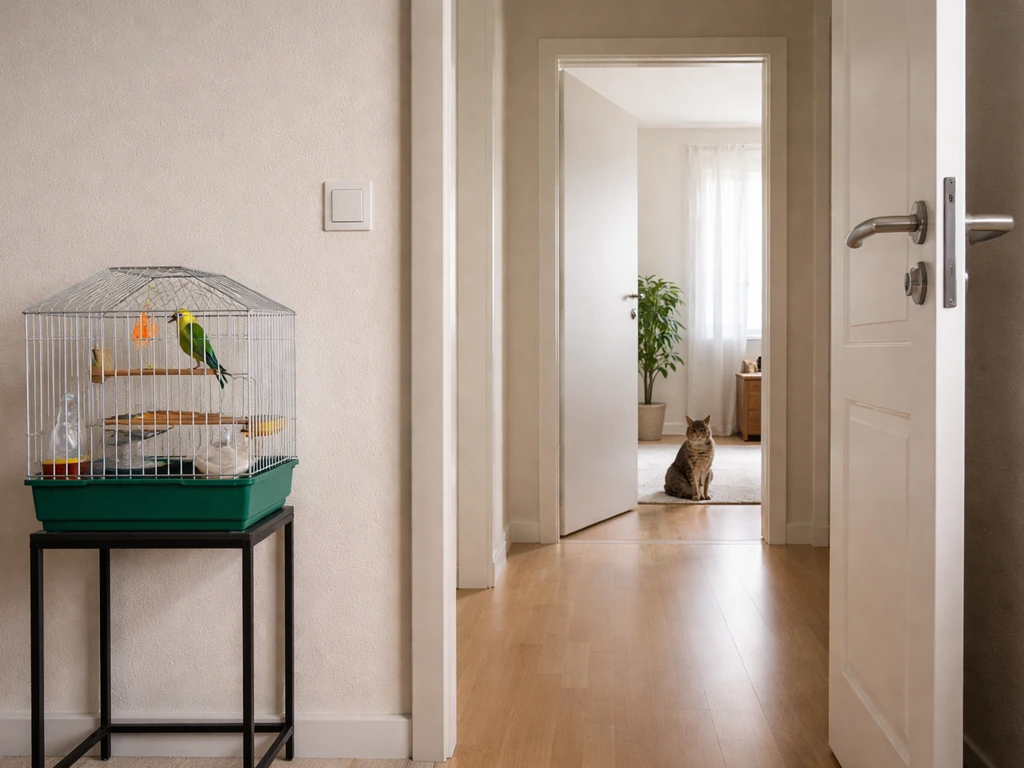
If the cat is currently chattering at your pet bird or has just done so, the first step is physical separation. Don't wait to see what happens. Move the cat to another room or put the bird's cage somewhere the cat genuinely cannot access. A closed door is the minimum. This isn't about punishing the cat. It's about giving both animals a chance to come down from that heightened state.
- Separate them immediately: close a door, move the cage to a secure room, or crate the cat if needed.
- Check the bird's body language: look for the stress signals listed above and give the bird quiet time to settle.
- Do not place the bird's cage at cat-accessible height or near windows where outdoor birds are visible.
- Evaluate your cage security: make sure the cage latch cannot be opened by a cat pawing at it.
- Watch the cat's body language before any reintroduction: the cat needs to be fully calm and disengaged before the animals are in the same space again.
It's worth noting that even a cat sitting calmly near a bird cage can be stressful for the bird. The predator is still present. Safe separation means the bird cannot see or hear the cat, not just that the cat isn't actively chattering.
Long-term training and desensitization steps
Managing this long-term takes a structured approach. The two main tools are systematic desensitization and counterconditioning, usually used together. Desensitization means exposing the cat to a very weak version of the trigger (a bird that's far away, briefly visible, or even just a recording of bird sounds at low volume) while keeping the cat under threshold, meaning calm enough to still respond to treats and cues. Counterconditioning means pairing that exposure with something the cat loves, like high-value treats or play, so the cat starts building a new association: bird nearby equals good things happen.
The key is staying under the cat's arousal threshold the entire time. The moment the cat starts chattering, fixating hard, or showing escalation signals, the stimulus is too strong. You've gone too far too fast. Step back to a weaker level of exposure and work from there.
- Start with the bird completely out of sight and the cat calm. Reward calm behavior with treats and play.
- Introduce the mildest possible version of the trigger, such as the sound of a bird from another room at very low volume, while immediately pairing it with treats.
- Gradually increase exposure over days or weeks, only moving forward when the cat stays calm at the current level.
- Use a clicker or marker word to precisely mark the moment the cat disengages from the bird cue and looks at you instead, then reward immediately.
- Practice short, frequent sessions rather than long ones. Five minutes done well beats thirty minutes that ends in overstimulation.
- Never use punishment during these sessions. It increases anxiety and makes the trigger worse, not better.
Progress is slow, and that's normal. Some cats take weeks to show meaningful change. The goal isn't to eliminate the predatory instinct entirely but to teach the cat to tolerate the bird's presence without reaching that high-arousal chattering or fixation state.
Environmental setup and enrichment to reduce the trigger
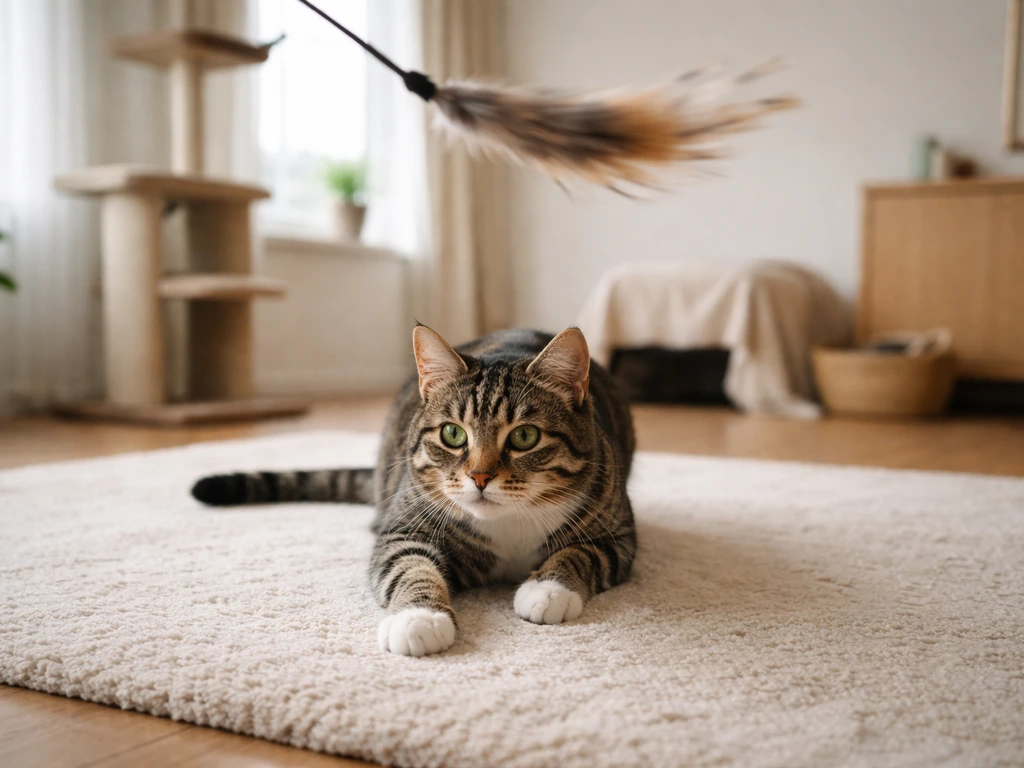
A cat that has nowhere to direct its hunting drive is going to fixate harder on any prey it can find. Enrichment is one of the most underused tools for managing bird-triggered behavior. The goal is to give the cat legal outlets for stalking, chasing, and catching so that energy has somewhere to go before the cat even sees the bird. Best Friends Animal Society emphasizes enrichment as a foundation for shelter cats, including routine use of self-play and feeding toys and focused sessions to support behavioral improvement Enrichment is one of the most underused tools for managing bird-triggered behavior..
- Do at least two focused interactive play sessions daily using wand toys or laser pointers followed by a toy the cat can "catch." This lets the hunt complete, which reduces frustration.
- Use puzzle feeders and food-dispensing toys to engage the cat's foraging instincts throughout the day.
- Set up window perches that look away from bird feeders or bird activity to give the cat visual stimulation that doesn't involve birds.
- If you have a window that overlooks bird feeders, block it or move the feeder out of sight from inside the house.
- Create vertical space with cat trees, shelves, and perches so the cat has territory to occupy and patrol indoors.
- Consider a secure outdoor enclosure (a catio) as an outlet, but position it so the cat cannot access areas where birds land or nest.
Schedule matters too. A cat that has had a solid 15-minute interactive play session before the bird's active time of day (morning and evening for most pet birds) will be calmer and less reactive. Burning off predatory energy before the trigger shows up is much easier than managing a fully amped-up cat after the fact.
For the bird's side of the equation, cage placement is everything. Keep the cage in a room the cat does not have access to, or at a height and position where the cat cannot perch nearby, watch from above, or make physical contact with the bars. CDC advises keeping pets away from bird feeders, bird baths, and surrounding areas to protect both pets and wildlife bird cannot perch nearby. A bird that can see a cat pacing or staring at it is under chronic low-grade stress, even if the cat is being quiet.
When to get professional help
Some situations go beyond what routine management and basic training can handle at home, and recognizing that point early saves a lot of stress for both animals.
On the cat side, contact a certified feline behavior specialist or a board-certified veterinary behaviorist if the cat's arousal around the bird is escalating over time rather than improving, if the chattering is accompanied by growling, hissing, or active attempts to get to the bird despite barriers, or if the cat is showing signs of broader anxiety or aggression in other contexts. A veterinary behaviorist (board-certified through the ACVB) can assess whether there's a medical component contributing to the behavior and design a structured behavior-modification plan, sometimes including medication if anxiety is a significant factor.
On the bird side, reach out to an avian veterinarian if the bird is showing any of the wellness red flags mentioned earlier, especially changes in droppings, loss of appetite, open-mouth breathing, or prolonged changes in activity or vocalizations. If you are worried about your bird's mood, learn how to tell if a bird is depressed so you can tell normal stress from deeper wellbeing concerns. Birds mask illness well, so by the time symptoms are obvious, the situation may already be serious. Don't wait it out. An avian vet can also advise on whether the bird's environment and stress level are manageable in a multi-pet household or whether a more permanent separation is the safer long-term choice.
If you're working on desensitization at home and making no progress after several weeks of consistent effort, that's also a reasonable point to bring in a professional. A certified cat behavior consultant can observe the specific dynamic between your animals and adjust the protocol in ways that generic advice can't. The goal is always a household where both animals feel safe, and sometimes reaching that point requires expert eyes on the situation.
FAQ
If my cat is quiet but stares at a bird, is that still the same predatory excitement?
Yes. When a cat is locked on prey it may also blink less, crouch lower, and “freeze” with stillness for a second before resuming chattering. A freeze plus hard stare is often a stronger escalation sign than sound alone, especially if the tail is tense or twitching fast.
Should I scold or punish my cat when it makes that chattering sound at birds?
Avoid punishment. Shouting or spraying can increase fear and intensify fixation, because the cat learns that your reactions happen during the trigger. Instead, interrupt access and, for training, change the distance or stimulus strength so the cat stays below the chattering threshold.
Can the “cat sound when see bird” happen because of my bird’s behavior, not just my cat seeing the bird?
Sometimes it does, if your bird uses similar spacing, lighting, or sounds to trigger responses. For instance, a cat may yowl more when the bird is active, when the bird is near a window, or when outdoor movement mirrors a chase. Track what time of day, cage position, and bird behavior coincide with the loudest sounds.
What’s the most common reason desensitization and counterconditioning fail?
A common mistake is desensitizing at too-strong a level. If the cat chatters, fixates, lunges, or shows escalation cues, you likely went past threshold. Back up to a weaker version (farther distance, shorter exposure, lower volume recording, or brief glimpses) and only increase intensity when the cat can eat treats calmly.
How should I time meals and training to reduce chattering when the cat sees the bird?
If the cat is chattering because it is hungry or under-stimulated, it can be harder to keep arousal down. Feed on a routine, then do a short training session when the cat is calm, and use high-value treats reserved for bird-trigger work so the cat has a stronger “bird equals good things” association.
Does it matter if my cat never reaches the bird cage, as long as it can still see or hear the bird?
If your cat can perch within line of sight or can hear the bird, stress can still build even when there is no chattering. Use both barriers: physical separation plus reduced sensory access (move the cage, block sight lines, and limit sound where possible).
My cat purrs while staring at birds. Does purring mean it’s friendly?
Purring can overlap with excitement, but it should be interpreted in context. If the cat is chirping, chattering, wide-eyed, crouched, or tail/throat posture looks hunting, treat it as predatory arousal even if it also purrs.
Will bird-trigger chattering spill over to other animals or situations?
Yes, through generalization. If the cat practices hunting behavior in one setting (window watching), it may react similarly to different “prey-like” stimuli (small pets, moving toys, fast fluttering objects). Enrichment and structured play help reduce that spillover.
When should I stop trying at home and seek a veterinary behaviorist?
If the cat shows escalating behaviors across weeks, such as repeated attempts to reach the bird, growling or hissing during barriers, inability to take treats, or agitation in other contexts, that’s a sign to involve a veterinary behaviorist. They can also rule out pain or medical causes that increase reactivity.
What bird symptoms mean this is more than temporary stress from the cat?
If your bird shows silent freezing, repeated distress calls, fluffed sitting at the cage bottom, open-mouth breathing, panting, or droppings changes after bird-cat encounters, treat it as urgent and contact an avian veterinarian. Birds can deteriorate while still appearing “okay” to the untrained eye.
Next Articles
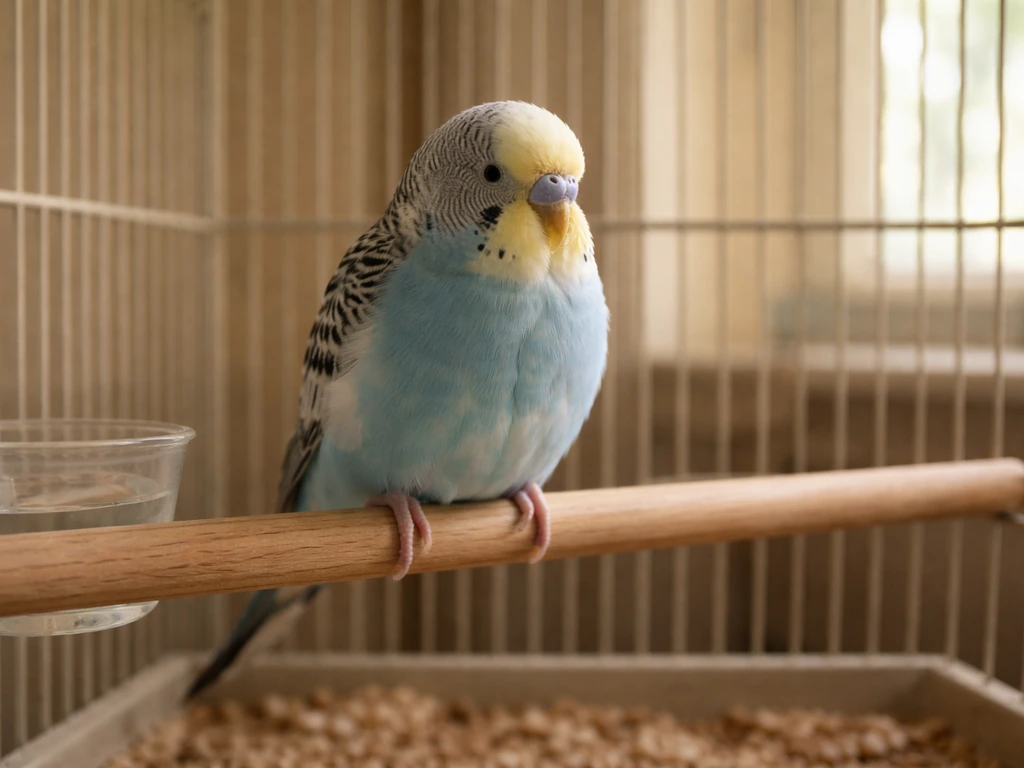
How to Tell If a Bird Is Stressed: Signs and Triage
Learn how to tell if a bird is stressed with clear body and behavior signs plus a step-by-step triage checklist.
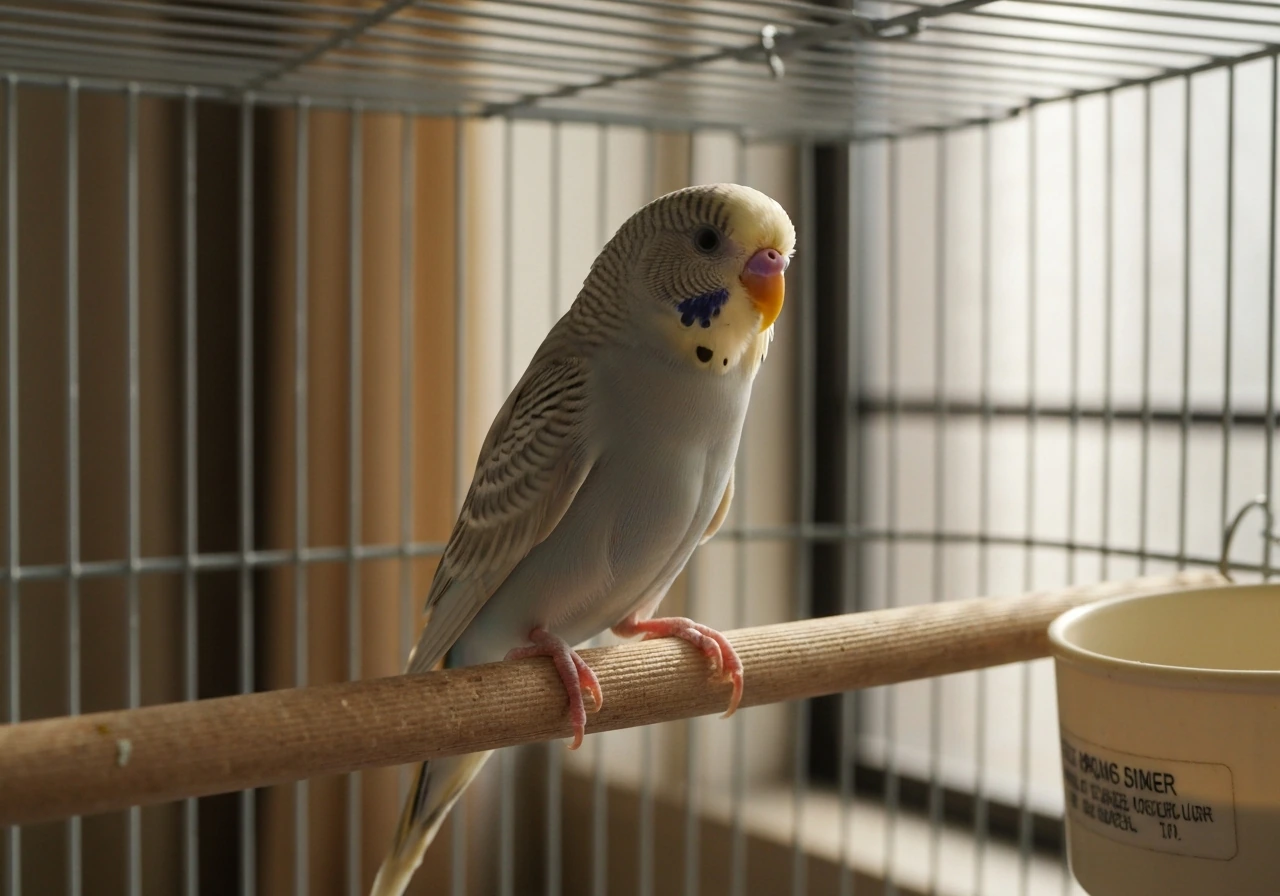
How to Tell If a Bird Is Happy: Signs and Next Steps
Learn how to tell if your pet bird is happy using body, voice, activity, grooming, appetite, and stress red flags plus n
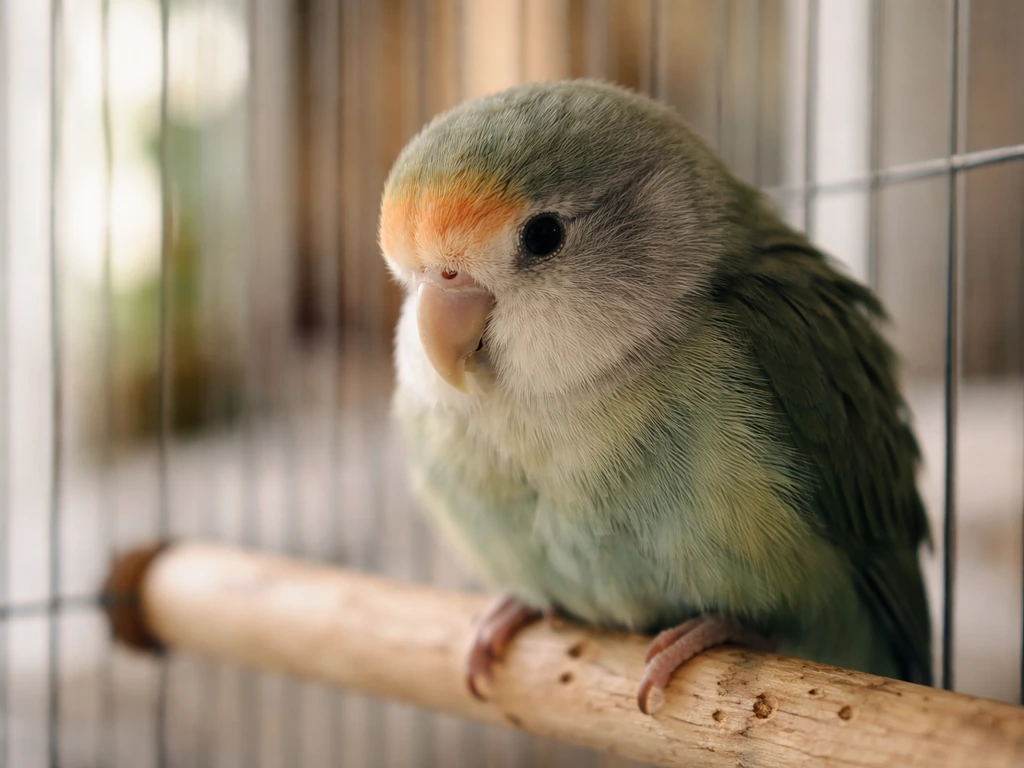
Why Is My Bird Making Whimpering Noises? What to Check
Find reasons for whimpering bird noises, quick home checks, and red flags for urgent vet care plus tracking tips.