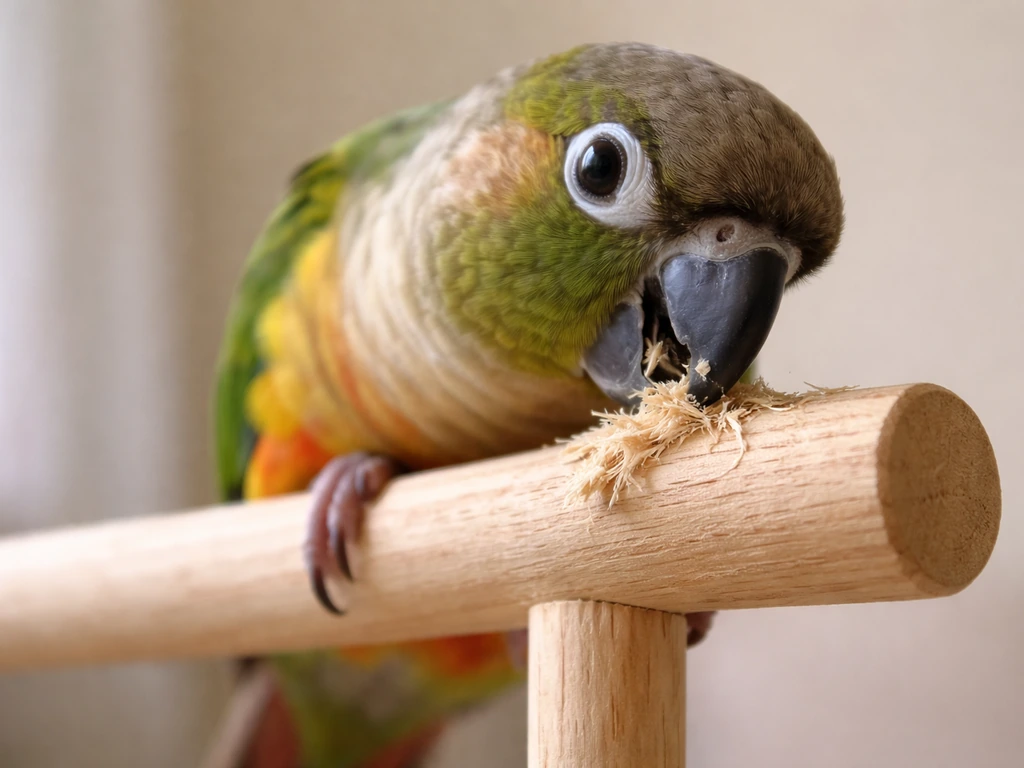
Most of the time, a bird sitting in her food bowl is doing something completely normal: exploring, foraging, playing, or simply getting comfortable in a familiar spot. But it can also be a sign of illness, pain, stress, or nesting behavior, so the key is knowing what else to look for alongside the sitting.
Why Does My Bird Sit in Her Food? Causes and What to Do

Marcus Chen
9 Jun 2026
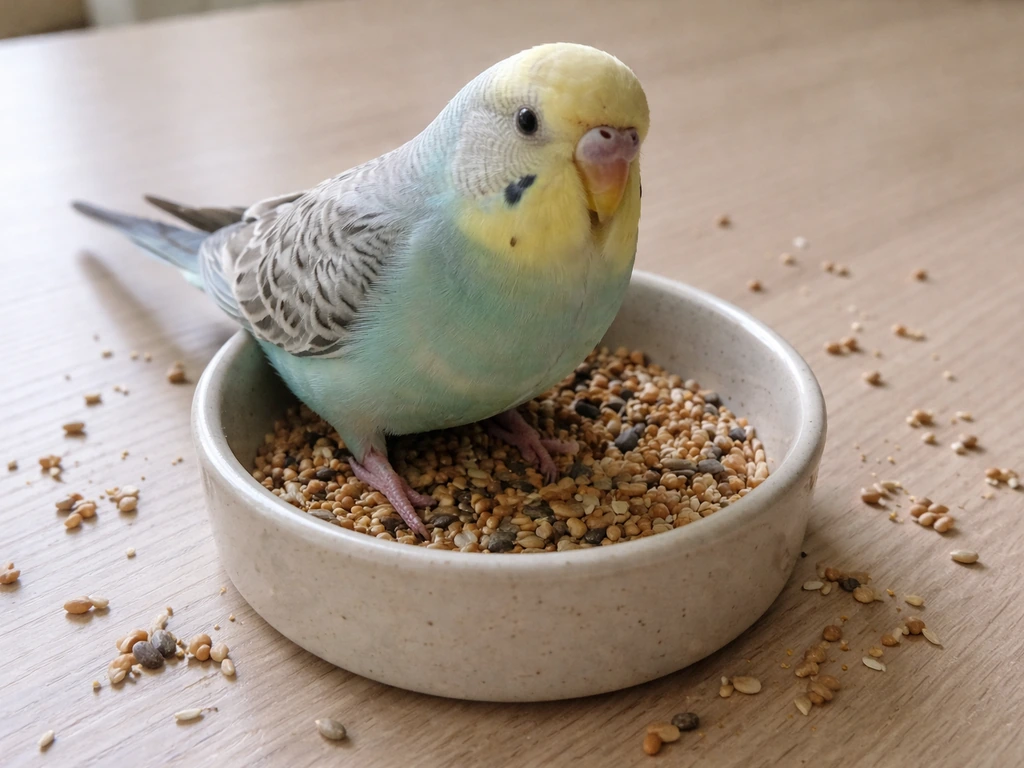
Normal reasons birds step into their food bowls
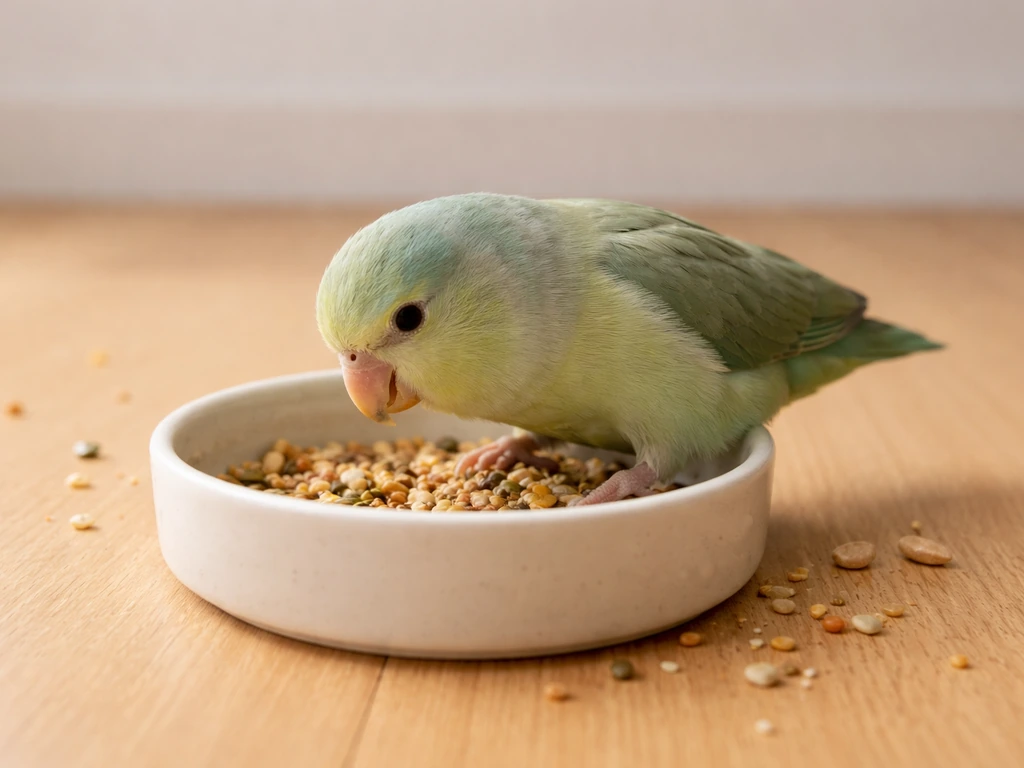
Birds are naturally curious, tactile creatures. In the wild, parrots and other pet bird species spend a huge portion of their day foraging: digging through debris, manipulating objects with their feet, and investigating potential food sources. When your bird steps into her bowl and shuffles around in the seed or pellets, she's often doing the closest thing captivity offers to that natural foraging behavior.
Research from avian veterinary organizations confirms that when food is simply presented in a static bowl, birds can actually finish 'foraging' in just a few minutes, which leaves them with unmet behavioral needs for the rest of the day. Sitting in and manipulating the bowl is one way birds fill that gap. Think of it less as strange behavior and more as your bird improvising her own enrichment.
Other benign reasons include comfort-seeking (the bowl is warm, familiar, and smells like food), playfulness (especially in younger birds or highly active species like cockatiels and budgies), and simple habit. Some birds just decide the bowl is a good perch, and they repeat it because nothing discourages them.
Behavioral triggers: stress, boredom, and nesting instincts
If your bird is spending a lot of time sitting in the bowl rather than just occasionally stepping through it, behavioral causes are worth thinking about first.
Boredom is a big one. Captive birds with limited enrichment often fixate on whatever is available, and the food bowl is always there. If your bird doesn't have much to chew, shred, or explore outside of meal time, the bowl becomes the main event. Chewing and shredding on things can be another clue that your bird is using objects to satisfy normal instinct and get relief from boredom. If your bird is also eating much more than usual, it can be a sign that the bowl is becoming her main activity or that something is going on with her health why your bird is eating so much. This connects to the same impulse that drives behaviors like chewing on everything in reach or shredding paper.
Stress can also push a bird toward the bowl. Changes in the household, a new pet, a moved cage, or disrupted routine can make a bird seek out a familiar, safe-feeling spot. The food bowl, surrounded by familiar scents and a reliable food source, can feel like a security blanket.
Nesting or territorial behavior is especially common in female birds. A hen experiencing hormonal surges may start treating the food bowl like a nest site, sitting in it low and still, sometimes shredding food or rearranging it. This is more likely in spring and early summer, or any time the bird has extended daylight hours or has been petted excessively around the back and tail. If she's fluffed, protective, or hisses when you approach the bowl, this is almost certainly the cause.
Males can also guard the food bowl territorially, especially in multi-bird households. If your bird puffs up, lunges, or vocalizes when another bird (or you) approaches the bowl, that's territorial behavior worth addressing.
Health causes that can explain sitting in food
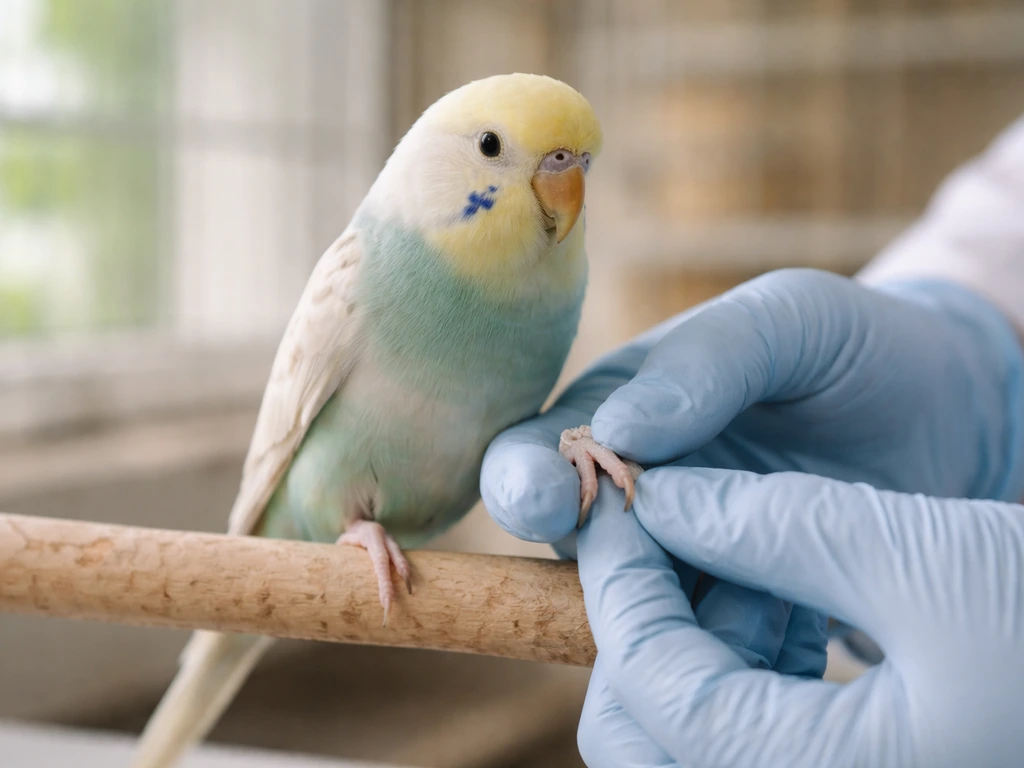
This is where you need to pay close attention. Birds are prey animals and instinctively hide illness until they can't anymore. By the time a sick bird looks obviously unwell, things can already be serious. A bird sitting low in her bowl, especially if she's fluffed up, quiet, or not eating normally, may be choosing a low-energy resting spot because she doesn't feel well.
Pain is a real possibility. Foot pain, joint issues, or an injury can make perching uncomfortable. The food bowl, especially if it's a wide shallow dish, may feel easier to rest in than a standard round perch. Watch whether she's putting equal weight on both feet and whether she's favoring one leg.
Gastrointestinal problems can draw a bird toward food without her actually eating much. If your bird is sitting in the bowl, gagging, stretching her neck, or showing signs of regurgitation, that's a GI warning sign. Vomiting and regurgitation in birds are not the same thing (regurgitation can be a bonding behavior), but if it's happening repeatedly and unprompted, combined with lethargy, it warrants attention.
Respiratory illness can also cause a bird to settle low and still. Birds with breathing difficulty expend more energy just breathing, so they conserve what they can. Open-mouth breathing, tail bobbing with each breath, a clicking or wheezing sound, or increased sternal (chest) movement are signs the respiratory system is under strain. A bird who is tired from labored breathing may end up resting wherever she can, including the food bowl.
What to check right now
Before assuming the worst or brushing it off entirely, do a quick but systematic observation. Here's what to look at today:
- Is she actually eating, or just sitting? A bird who is eating normally but resting in the bowl is very different from one who hasn't touched food and is hunched in the bowl.
- Check her droppings. Normal droppings have three distinct parts: green or brown feces, white urates, and clear liquid. Droppings that are all liquid, bright green or yellow, black, or absent are warning signs.
- Watch her breathing for 60 seconds. Is her tail moving rhythmically up and down with each breath? Is she opening her mouth to breathe or making any sound while breathing? This is urgent if yes.
- Look at her posture. Fluffed feathers combined with closed eyes, stillness, and low positioning are classic illness signals. A healthy bird sitting in the bowl will still be bright-eyed and responsive.
- Check cage temperature and humidity. If the cage is in a draft or the room is unusually cold, your bird may be seeking warmth. The ideal temperature range for most pet birds is around 65 to 85 degrees Fahrenheit.
- Assess how long this has been going on. Occasional bowl-sitting is normal. Daily or near-constant sitting in the bowl, especially with a recent onset, is more concerning.
- Look at the bowl itself. Is it too large? Is the food spoiled or stale? Has anything changed recently, like a new food type or a different bowl shape?
How to respond safely today
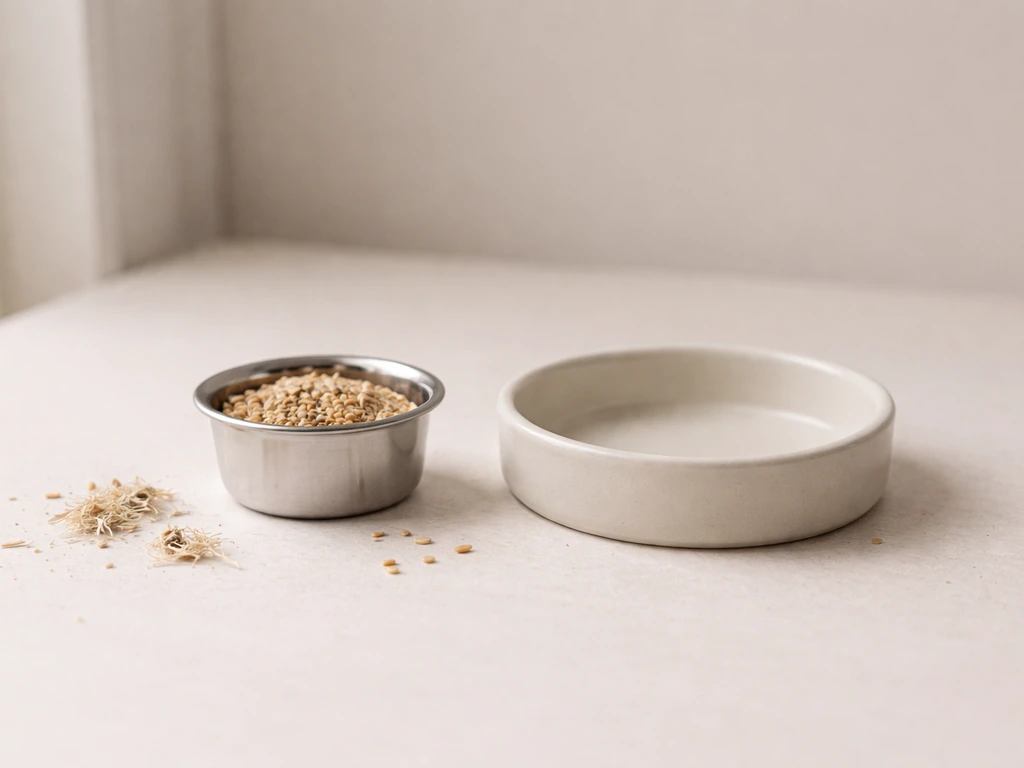
If your bird seems healthy based on the checklist above, there are several practical things you can do right away to address the behavior and improve her setup. If your question is specifically about why a bird is eating dirt, that can point to nutrient deficiencies, pica, or intestinal issues, so it is worth addressing too why is my bird eating dirt.
Adjust the bowl setup
If the bowl is large and flat, consider switching to a narrower, deeper bowl that's physically less comfortable to sit in. Some birds simply sit in wide bowls because there's room to. Moving the bowl to a different location in the cage or adding a second smaller bowl elsewhere can also shift the dynamic and encourage more natural foraging movement between spots.
Make food more interactive
Instead of serving all food in one static bowl, scatter some food inside foraging toys, wrap pieces in paper, or mix food with safe objects your bird has to dig through to find. NorthPaws Animal Hospital’s AAV “Foraging for Parrots” also recommends placing toys in feeding bowls or mixing food with items so birds must dig through the bowl to retrieve food blank" rel="noopener noreferrer">mix food with safe objects your bird has to dig through to find. Paper-eating can be another clue something is off, so it's worth looking at chewing behavior, enrichment, and any possible ingestion risk. Avian enrichment research strongly supports this approach: birds given foraging opportunities spend more time actively engaged and less time fixating on or sitting in a food bowl. Northern Oaks Bird & Animal Hospital also explains that blank" rel="noopener noreferrer">encouraging natural foraging behaviors instead of a classical static “bowl of food” presentation can reduce motivation to sit in a static bowl. Even something as simple as hiding a few pellets under a paper cup placed in the cage can redirect bowl-sitting behavior.
Keep the bowl clean
A bird sitting in the food bowl will contaminate it with droppings, foot bacteria, and dander. Clean the bowl daily with hot water and a bird-safe dish soap, and rinse thoroughly. Bacteria and mold can build up quickly in a bowl that's being used as a perch. Refresh food at least once a day, and twice daily in warm weather.
Address possible nesting triggers
If you suspect hormonal or nesting behavior, reduce daylight exposure to around 10 to 12 hours using a cage cover, avoid petting in ways that stimulate breeding (petting the back or under the wings), and remove any nest-like objects from the cage. Don't give a female bird anything that could serve as a nest cavity, including covered sleeping tents in some cases.
Add enrichment and reduce stressors
If boredom or stress seems likely, increase daily out-of-cage time, offer new toys to shred or manipulate, and keep her routine consistent. Stressors like loud TV, other pets nearby, or a cage in a high-traffic spot can all push a bird toward odd repetitive behaviors. Stability goes a long way.
When to contact an avian vet
Some of what you'll see is not a wait-and-see situation. Birds decline quickly once illness is advanced, so if you notice any of the following, contact an avian vet the same day or seek emergency care:
- Open-mouth breathing, tail bobbing with each breath, wheezing, or clicking sounds while breathing
- Persistent regurgitation or vomiting (multiple episodes, unprompted, not directed at a toy or person)
- Droppings that are watery, discolored (bright green, yellow, black), or absent
- The bird has not eaten in 24 hours or longer
- She is fluffed, eyes closed or partially closed, and unresponsive to normal stimulation
- She cannot perch and keeps falling or settling to the cage floor or bowl continuously
- Any visible injury, bleeding, or swelling around the feet or body
- Rapid, sudden onset of lethargy combined with bowl-sitting that is very out of character
If your bird just started sitting in the bowl today and all her other signs are normal (bright eyes, normal droppings, eating well, active and alert), you have time to observe and try the behavioral adjustments above. But if you're seeing even two or three items from that list, don't wait. Birds hide illness well, and what looks like a minor slump can escalate within hours.
When you do call the vet, be ready to describe how long the behavior has been happening, what the droppings look like, whether she's eating, and any other symptoms you've noticed. That information helps an avian vet triage the situation quickly and tell you whether it needs to be seen urgently.
FAQ
How can I tell the difference between normal foraging and a health problem when my bird sits in her food bowl?
Use a two-track check. If she is actively moving her feet, picking through food, and otherwise looks bright with normal droppings and steady breathing, it is more likely normal exploration. If sitting is low and still, she is quiet, not eating, fluffed, or breathing differently (tail bobbing, open-mouth breathing, clicking), treat it as possibly illness and contact an avian vet the same day.
Should I stop letting my bird go into her bowl if it seems to be a habit?
You can reduce access without creating frustration. Try using a narrower, deeper dish and add enrichment so she can forage elsewhere. If she still goes in briefly, that is usually fine, but if she stays there for long periods, fix the environment and watch closely for other symptoms.
Is it ever normal for a female bird to sit in her food bowl during nesting?
Yes, especially when hormones are active. A nesting hen may sit low, become protective, hiss when approached, or shred food and rearrange it. If daylight hours have increased or she has been getting back or tail petting, that can intensify the behavior, and you should remove nest-like items and reduce triggering handling.
Why does my bird only do this at certain times of day?
Timing often points to routine or stimulation. If it happens right after you change something (new food, moved cage, new pet, different household noise), stress or adaptation may be the driver. If it aligns with increased daylight, it can be hormonal nesting behavior. If it happens around meal time only and she quickly comes out to play, it is more consistent with normal foraging.
What if her droppings change when she sits in the bowl?
Dropping changes are a key decision point. If droppings become watery, oddly colored, smaller than usual, or show undigested food, the bowl-sitting may be connected to illness rather than enrichment. In that case, prioritize an avian vet call over further environment tweaks, especially if she is also less active.
My bird sits in the bowl but doesn’t really eat. What does that suggest?
That pattern raises concern for pain, illness, or gastrointestinal or respiratory problems rather than enrichment. Look for uneven weight on feet, head stretching, gagging, regurgitation episodes, lethargy, or breathing signs like increased chest movement. If any of those are present, do not wait to see if it passes.
Can respiratory issues cause bowl-sitting, and what breathing signs should I watch for?
Yes. When breathing is difficult, birds conserve energy and may rest in the closest available low spot, including a food bowl. Watch for open-mouth breathing, tail bobbing with each breath, wheezing or clicking sounds, and increased sternal (chest) movement. Those are more urgent than behavioral causes.
Could foot or joint pain make my bird choose the bowl as a resting place?
Yes. Wide, shallow dishes can feel more stable than perches for some birds with arthritis or injury. Check whether she favors one leg, shifts her feet frequently, or seems reluctant to step onto her usual perch. If sitting-and-splinting behavior persists, an avian vet can assess pain and mobility.
How should I adjust the bowl setup without changing everything at once?
Make one change at a time for clear cause-and-effect. Options include switching to a narrower, deeper dish, moving the bowl to a different cage location, or adding a second smaller bowl so she has more natural foraging “routes.” Then observe for a few days, while also monitoring droppings and alertness.
What enrichment works best to reduce bowl fixation?
Prioritize food-in-movement options. Scatter food or use foraging toys, paper-wrapped pieces (with safe paper supervision), or hide a few pellets under simple cage-safe items. The goal is repeated digging and manipulation, not just more sitting space, and improvements should show up as increased active foraging rather than lingering in the dish.
Do I need to change how often I clean the bowl if she sits in it?
Yes. Bowl-perching increases contamination from droppings and foot bacteria. Clean daily with hot water and bird-safe dish soap, rinse thoroughly, and refresh food at least once a day. In warm weather, refresh twice daily, and discard any food that smells stale or looks spoiled.
When should I call an avian vet urgently instead of trying adjustments first?
Call the same day or seek emergency care if the bowl-sitting started suddenly or quickly escalates, or if you see a combination of red flags such as fluffed posture, reduced appetite, low quiet behavior, abnormal droppings, gagging or regurgitation episodes, labored breathing signs, or repeated favoring of one foot. Birds can worsen fast, even if they initially look “mostly okay.”
Next Article
Why Does My Bird Chew on Everything? Causes and Fixes
Find reasons for your bird chewing everything, tell normal beak exploration from pain or stress, and get quick fixes.