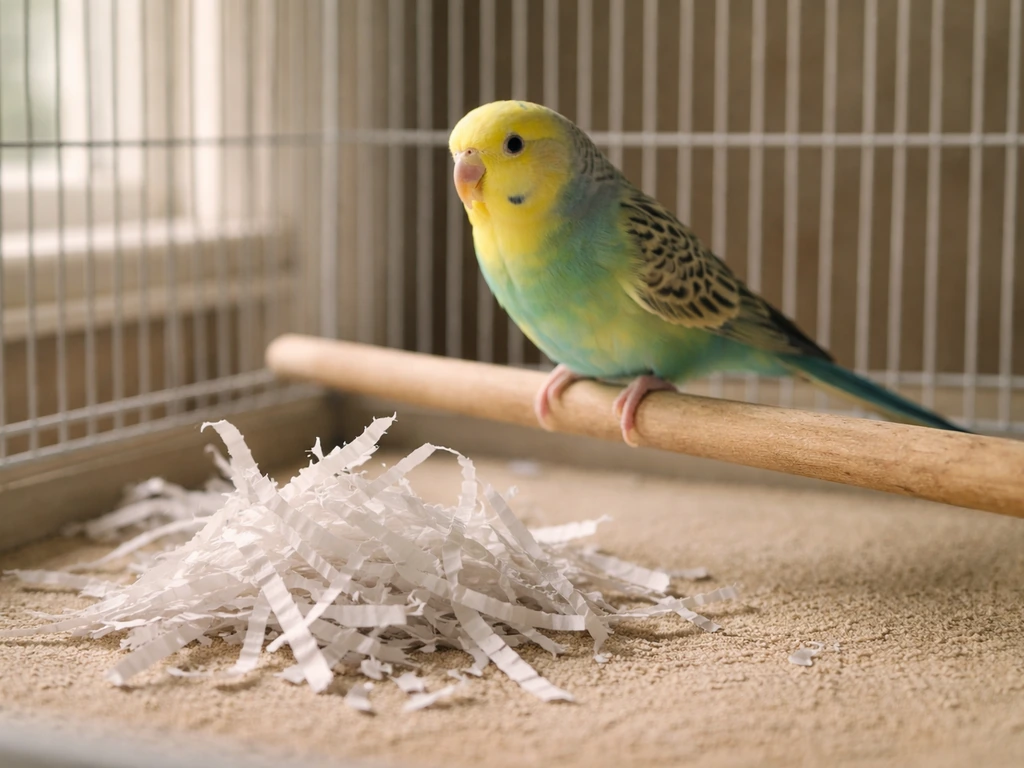
Most of the time, a bird chewing on everything is completely normal. Birds explore the world with their beaks the same way humans use their hands, and for parrots especially, chewing is a daily biological need, not a problem to fix. That said, chewing can sometimes signal boredom, stress, a cage setup that isn't meeting your bird's needs, or occasionally a health issue. The key is figuring out what your bird is actually chewing, how often, and whether anything else seems off. If you are wondering why your bird is shredding paper, start by identifying whether it is boredom, stress, or a safe enrichment need.
Why Does My Bird Chew on Everything? Causes and Fixes

Marcus Chen
4 Jun 2026
Normal chewing vs. chewing that should concern you
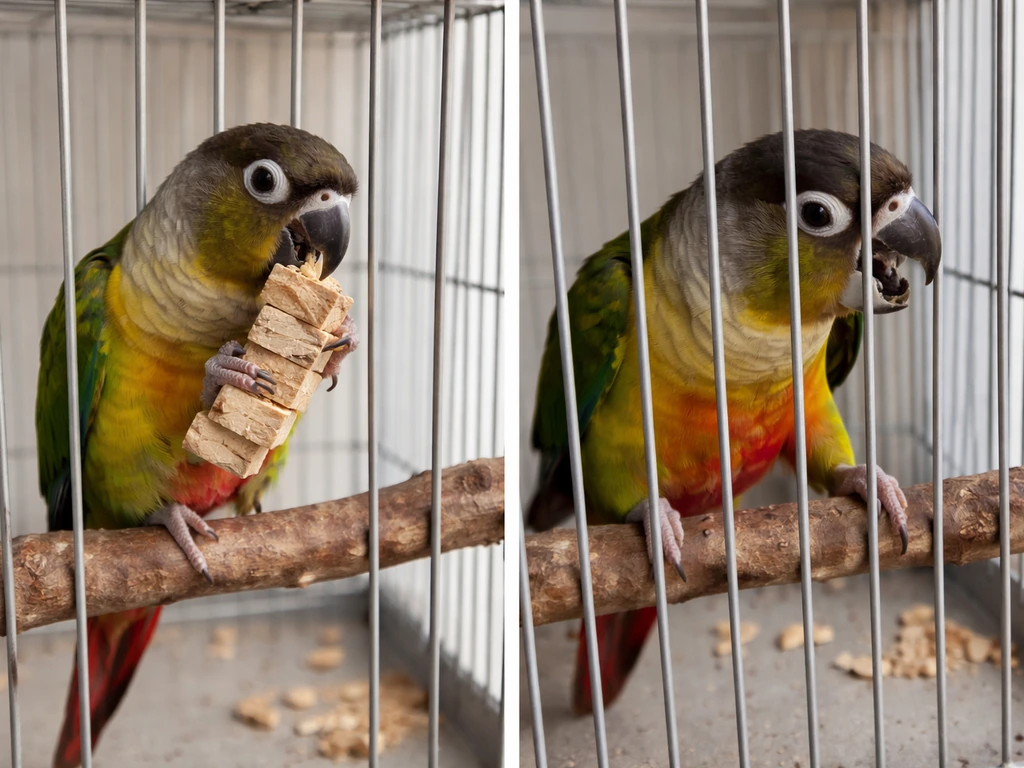
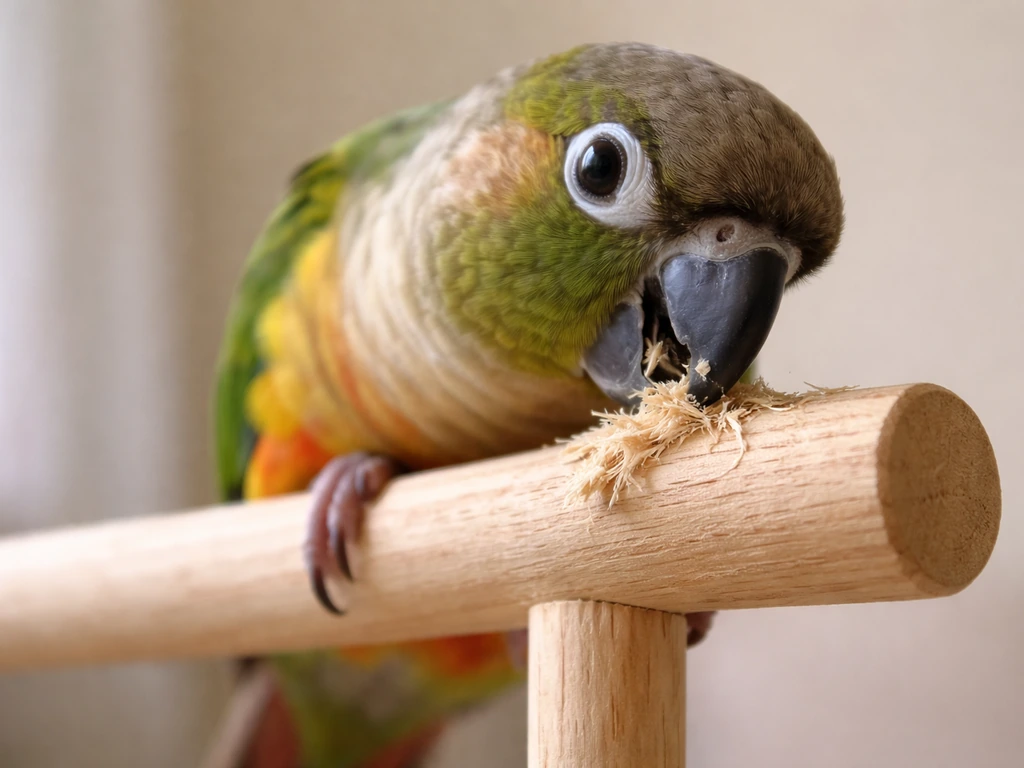
Chewing wood perches, shredding toys, gnawing on foraging items, and even nibbling on cage bars occasionally are all normal parrot behaviors. Purdue University's College of Veterinary Medicine notes that rubbing and chewing on natural wood perches is a normal part of beak maintenance because it helps shed excess dead beak layers. The Association of Avian Veterinarians describes foraging behaviors like digging, scratching, chewing, and shredding as natural activities that captive birds still need to perform. If your bird is chewing purposefully on appropriate objects, acting otherwise like themselves, eating well, and producing normal droppings, you are most likely just watching a healthy bird do bird things.
Chewing becomes a concern when it is frantic or compulsive, when it is directed at unsafe materials like coated cage bars or painted surfaces, when it is accompanied by other symptoms (lethargy, weight loss, changes in droppings or voice), or when it has replaced normal activity entirely. Feather chewing and self-directed chewing are a separate category altogether, covered below, but those almost always warrant a closer look.
Environmental reasons your bird is chewing so much
The most common reason a bird chews more than you expect is that their environment is not giving them enough to do. In the wild, parrots spend the majority of their day foraging: working for food, investigating surfaces, and manipulating objects. In a cage with a few static perches and the same two toys they have had for months, they redirect that energy somewhere. That somewhere is often your furniture, cage bars, or anything else within reach.
Boredom and lack of enrichment are the most common environmental triggers. If you’re wondering why your bird is eating so much, boredom, stress, and lack of enrichment are often the main causes to check first why is my bird eating so much. But chronic stress can also drive excessive chewing. Sources of stress for pet birds include insufficient sleep, unpredictable schedules, loud environments, feeling isolated from their flock (which is you), or a cage positioned in a corner where they cannot see what is happening around them. Any of these can push a bird into repetitive, compulsive behaviors.
Cage setup matters more than most owners realize. A cage that is too small, lacks variety in perch texture, or offers no foraging opportunity leaves a bird with nothing constructive to do with their beak. Purdue notes that owners should expect birds to eventually destroy their perches and toys, and that is actually the goal: provide things that are meant to be chewed up and replaced.
Health and discomfort reasons a bird may chew more
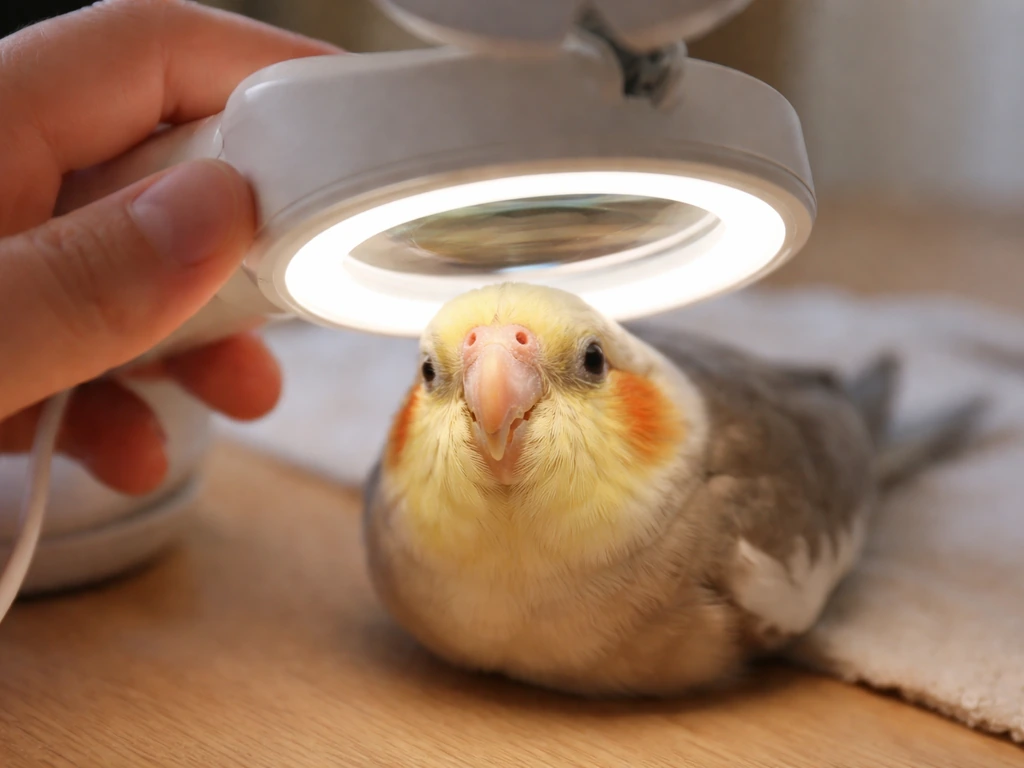
Sometimes increased chewing, especially rubbing or grinding the beak on hard surfaces, is a sign that something is physically wrong. Beak overgrowth can cause discomfort and may prompt a bird to rub or chew to try to manage it. According to PetMD, beak overgrowth can be caused by viral, bacterial, or parasitic infections of beak tissue, nutritional deficiencies, or metabolic issues like liver disease. If you notice your bird's beak looks longer than usual, misshapen, layered, or flaking abnormally, get them to an avian vet as soon as possible.
Beak injuries from trauma can also change chewing behavior. A bird with a sore or damaged beak may chew differently, avoid certain foods, or favor one side. PetMD notes that beak abnormalities can also result from congenital defects, malnutrition (especially vitamins A and D), infection, or even cancerous growths, so a vet check is always worth it if the beak looks off.
Psittacine beak and feather disease (PBFD) is a viral condition that affects beak and feather tissue and can cause abnormal beak appearance alongside feather problems. Merck notes that diagnosis is based on clinical appearance and confirmed through lab methods including PCR testing of feces, feather dander, or blood. If your bird's beak and feathers are both looking abnormal at the same time, that combination should go to a vet promptly.
Oral irritation or illness can also cause a bird to chew or mouth objects more than usual, similar to how a teething child chews. If you are wondering why your bird is eating dirt, it is often a sign of a problem to rule out, such as boredom, nutrition issues, or a mineral deficiency. If chewing seems to have started suddenly with no environmental change, health causes move up the list of suspects.
Feather chewing vs. chewing on objects: how to tell them apart
These are two very different problems. Object chewing (toys, perches, bars, furniture) is mostly a normal behavior that just needs the right outlet. Feather chewing, where the bird damages its own feathers or skin, is a much more concerning pattern that usually signals a medical or psychological problem.
The RSPCA distinguishes feather chewing (damaging the feather vane without removing the feather) from feather plucking (pulling out the whole feather). Both are different from normal molting, where feathers fall out passively. A useful tell: if you see feathers on the cage floor but your bird's coat looks fine, that is likely molting. If you see short, frayed, or missing feathers on the chest, legs, or under the wings where the bird can reach, that is chewing or plucking.
Feather destructive behavior is linked to boredom and lack of enrichment, chronic anxiety and stress, allergies, external parasites like mites or lice, skin inflammation, infections, and nutritional problems. Texas A&M's veterinary behavior experts note that time spent chewing toys and foraging items can actually reduce time spent chewing feathers, because the behaviors compete with each other. But if the feather chewing is already established, enrichment alone usually is not enough.
Best Friends Animal Society recommends that a bird with a pattern of feather chewing or plucking should be seen by an avian vet right away, because you need to rule out medical causes before any behavioral approach will work. The Royal Veterinary College goes further and states that feather plucking cases should be presented to an avian vet as a matter of urgency.
If you are not sure whether your bird is chewing objects or chewing themselves, watch them directly for a few sessions rather than just checking the cage. Some birds are very discreet about self-directed behavior.
How to redirect destructive chewing starting today
The goal is not to stop your bird from chewing. The goal is to give them better things to chew on and enough stimulation that they are not driven to chew destructively.
Add foraging opportunities
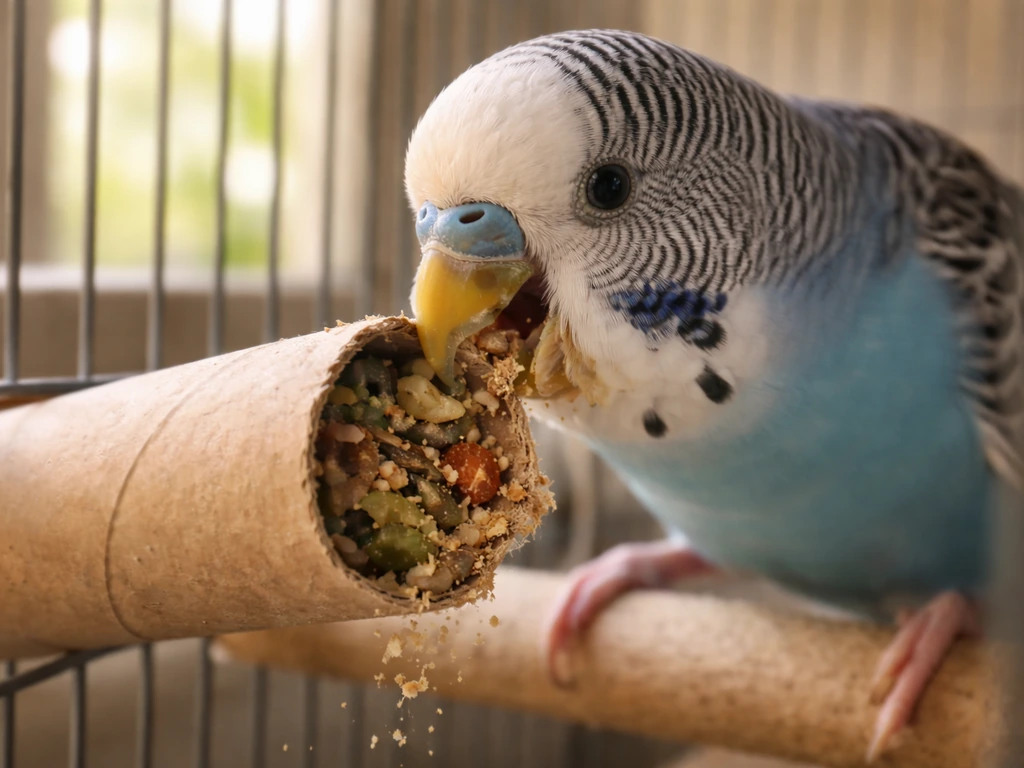
Foraging is the single most effective enrichment tool for a chewing bird. The RSPCA suggests simple homemade options: roll food inside a piece of newspaper, stuff it into a cardboard tube, or wedge treats in the cage bars so your bird has to work to get them. These give your bird a legitimate chew target that is also mentally engaging. LafeberVet recommends puzzle boxes and similar foraging devices, and suggests letting your bird watch you hide food inside at first to spark curiosity.
Rotate toys consistently
Keep several toys in the cage at once and rotate them regularly. A toy your bird has ignored for two weeks will often feel new again when you bring it back after swapping it out. The key is variety and novelty. Wood chewing toys, shreddable paper toys, and foraging toys each satisfy slightly different urges, so having a mix matters.
Do not reward destructive chewing with attention
LafeberVet warns specifically against reinforcing unwanted behaviors by giving attention when they occur. If your bird chews on something they should not and you rush over, talk to them, or even scold them, you have just made that behavior more rewarding. Instead, redirect calmly to an appropriate chew item and give attention when your bird uses it correctly.
Increase daily out-of-cage time and interaction
A bird that gets regular one-on-one time outside the cage has a much lower motivation to chew destructively from boredom or loneliness. Structured play sessions, training exercises, and simply being in the same room while you go about your day all count. Even 30 minutes of meaningful interaction can significantly shift a bird's baseline stress level.
Safe chew materials to offer and unsafe ones to remove
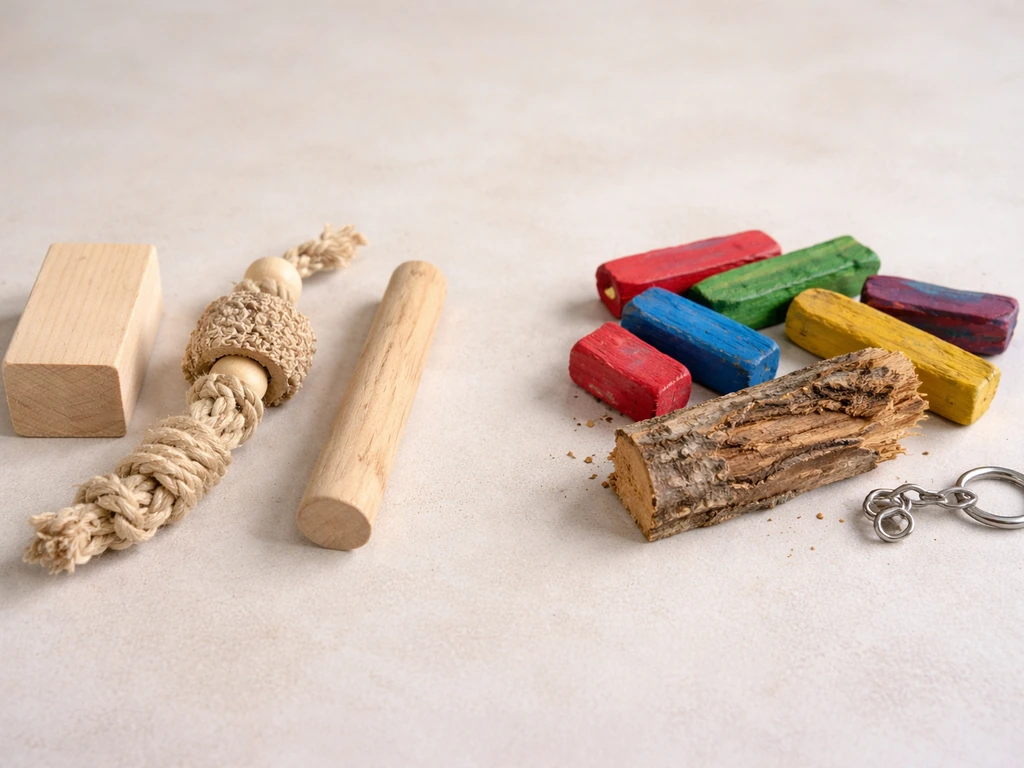
Not everything a bird will happily chew on is safe for them to chew on. This is especially important because birds can ingest small amounts of whatever they are chewing, and some common household materials are genuinely dangerous.
| Category | Safe to offer | Remove or avoid |
|---|---|---|
| Wood | Untreated softwoods (pine, balsa, willow, cork), natural wood toys and perches | Treated, stained, or painted wood; wood from unknown sources |
| Paper/cardboard | Plain cardboard tubes, unprinted newsprint, plain paper bags | Glossy paper, paper with heavy inks or adhesives |
| Metal/hardware | Stainless steel toys and hardware only | Galvanized wire and hardware (zinc coating), cage parts with flaking paint or white rust, costume jewelry, mirror backings, curtain weights |
| Household surfaces | Bird-safe foraging items, food-based chew targets | Nonstick (PTFE/Teflon) cookware fumes, lead paint surfaces, blinds with metal components |
| Toys | Species-appropriate shreddable and foraging toys from reputable bird toy suppliers | Cheap imported toys with unknown coatings or small parts that could be swallowed |
The metal hazards deserve a specific callout. Merck's Veterinary Manual identifies common bird toxicosis sources as including galvanized wire cages, galvanized toys, dishes, blinds, costume jewelry, and mirror backings. Zinc toxicosis causes anorexia, weakness, regurgitation, and gastrointestinal disease. VCA notes that by the time a bird presents with lead poisoning, they are often very sick or near death, so this is not a wait-and-see situation. If your bird has been chewing on cage bars with a powdery or rusty coating, or any metal item of uncertain composition, that is worth acting on today. The Pet Poison Helpline advises checking for flaking paint or white rust on cages as a warning sign.
PTFE (nonstick cookware coating) is a different kind of hazard. Your bird does not need to chew on it directly. Fumes released when nonstick pans overheat can cause acute respiratory failure and sudden death in birds. This is not an exaggeration. Keep birds out of the kitchen or away from any area where nonstick cookware is used.
When to call an avian vet
Chewing on its own is rarely an emergency. But certain combinations of symptoms, or chewing that is clearly self-directed or compulsive, warrant professional evaluation. Here is what to watch for: If your bird is sitting in her food, that can be a different behavior than chewing and may be linked to appetite issues, anxiety, or how she is eating.
- Any feather chewing, plucking, or self-directed chewing on skin, especially if you see bald patches or raw areas
- Beak that looks overgrown, misshapen, layered, or abnormally soft or flaky
- Active bleeding from the beak or any part of the body
- Open-mouth breathing, tail bobbing, or labored breathing at any time
- Changes in voice or vocalization (hoarse, quieter, different than normal)
- Sudden onset of new or increased chewing with no obvious environmental trigger
- Lethargy, fluffed feathers, or the bird sitting on the bottom of the cage
- Changes in droppings: watery, green, black, or significantly reduced in volume
- Anorexia or a sudden drop in food intake
- Suspected exposure to zinc, lead, or other metals through cage bar chewing or ingestion of hardware
- Any signs of trauma to the beak including injury, cracks, or difficulty eating
If you see open-mouth breathing, active bleeding, or sudden severe lethargy, do not wait. Those are urgent signs that need same-day veterinary attention. For less acute situations like an abnormal-looking beak or feather chewing without other symptoms, make an appointment soon rather than watching it for weeks. An avian vet can run blood panels, check for parasites, and assess beak and feather health in ways that are simply not possible from home observation alone.
If you have recently ruled out health issues and your bird is chewing objects, paper, or even throwing food around, those behaviors are almost always rooted in foraging instinct and boredom. You may also notice your bird chewing on nothing visible, which can look strange but is often related to the same beak maintenance behavior described above. The practical answer in most of those cases is the same: more enrichment, safer chew targets, and a closer look at their daily routine.
FAQ
How can I tell normal beak maintenance chewing from “too much” chewing?
Track it for a few days: normal chewing is usually intermittent and directed at appropriate items (toys, wood perches, foraging targets). It becomes a red flag when it is constant or frantic, happens mainly on unsafe surfaces (painted wood, bars with residue), or replaces eating, resting, preening, or play. If chewing ramps up suddenly with no environmental change, that points more toward a health issue.
Is it ever okay to let my bird chew cardboard or paper?
Yes, shredded paper and plain cardboard can be useful for chewing and shredding, but only if they are uncoated and free of dyes, glossy finishes, and adhesives that can include harmful chemicals. Start with small amounts, remove it when it gets moldy or heavily soiled, and avoid wrapping materials from food packaging unless you know the exact ingredients.
My bird chews cage bars. Does that mean they are stressed, or could it be boredom?
It can be either, and often both. Bar chewing is most strongly associated with frustration and insufficient foraging opportunities, especially if the cage lacks foraging toys, has few perches, or sits in a corner where the bird cannot engage with the household. If bar chewing is paired with visible breathing changes, weight loss, or beak changes, shift your priority to a vet check the same week.
What should I do if I accidentally reward the chewing I did not want?
Stop providing any reaction during the behavior, then immediately redirect to a correct chew target. You can still be friendly after the bird uses the right item, but avoid rushing, scolding, or talking at the moment they are chewing the forbidden surface, because attention can reinforce it even if you think you are “correcting.” Consistency matters more than intensity.
How often should I rotate toys and foraging items?
A practical rule is every 1 to 2 weeks for toys the bird ignores, and more often for highly favored items to prevent boredom through novelty loss. Also rotate categories, not just the toy brand, for example one week emphasize shreddables, another week foraging puzzles, then wood chew blocks. Keep a small “backup” stash so you can rotate quickly without buying new every time.
Can overgrown nails or a bad perch cause more chewing?
Yes indirectly. If perches are slippery, too rough, or the bird cannot comfortably position its body, it may spend more time mouthing and chewing as it searches for relief or stimulation. While chewing is often enrichment-related, it is still worth checking perch placement, perch texture variety, and nail length so the bird can rest and eat without stress on the feet.
My bird seems to chew “nothing.” What could that mean?
This is often still normal beak behavior, like rubbing or manipulating the beak when it is shedding old layers, or when the bird is grooming and mouthing at air. Confirm by watching closely for a few sessions, then check your environment for a missing opportunity such as lack of accessible chewable items. If the beak looks layered, flaking, misshapen, or growing strangely, prioritize an avian vet evaluation.
At what point should I stop trying enrichment and book an avian vet?
Book soon if chewing is accompanied by changes in droppings, voice, appetite, posture, energy, or if the beak looks abnormal (longer, misshapen, flaking, or layered). Book urgently if chewing coincides with open-mouth breathing, active bleeding, sudden severe lethargy, or evidence of a chemical or metal exposure. Otherwise, if the behavior persists beyond a couple of weeks despite improved foraging and safer chew targets, a vet check is still a good next step.
What are common household items I should remove because they can be dangerous to chew on?
Focus on any uncertain metal composition, coated surfaces, or nonstick cookware fumes risk. If your bird has access to galvanized wire or items with powdery or rusty coatings, remove them promptly. Also keep birds out of the kitchen where nonstick pans can overheat, and avoid decorative items such as jewelry, blind components, and mirror backings that may contain metal or coatings.
How can I tell if chewing is actually feather chewing or molting?
Watch the bird reach: molting usually means feathers drop without targeted damage, and you may see feathers on the cage floor while the skin looks intact. Feather chewing tends to produce frayed, short, or missing areas on accessible body parts (chest, legs, under wings). If feather problems are new or worsening, do not rely only on enrichment, because medical causes like allergies, parasites, and skin inflammation can mimic or drive the behavior.
If my bird’s chewing looks tied to stress, what is the fastest way to reduce triggers?
Start with the environment basics you can change immediately: ensure consistent sleep (no late-night stimulation), reduce unpredictable loudness when possible, and consider relocation so the cage is not in a corner where the bird feels isolated or cannot see the household activity. Then add structured time outside the cage and daily foraging opportunities so the bird has a predictable outlet for their beak-driven need.
Next Article
Why Is My Bird Shredding Paper? Causes and What to Do
Find why your bird shreds paper, what to check now, safe alternatives, and when to call an avian vet.