
Most of the time, a bird throwing food is completely normal. Birds are naturally messy eaters, and tossing, sorting, and flinging food around is part of how they interact with their environment. But occasionally, the behavior signals something worth investigating, like a feeding setup problem, boredom, or a health issue. If your bird seems to be tossing and actually consuming an unusually large amount, that can overlap with the question of why is my bird eating so much and what to check next. The key is knowing what "normal" food throwing looks like versus what should make you pay closer attention.
Why Is My Bird Throwing His Food? Causes and Fixes

Marcus Chen
11 May 2026
Normal vs. concerning food-throwing behavior
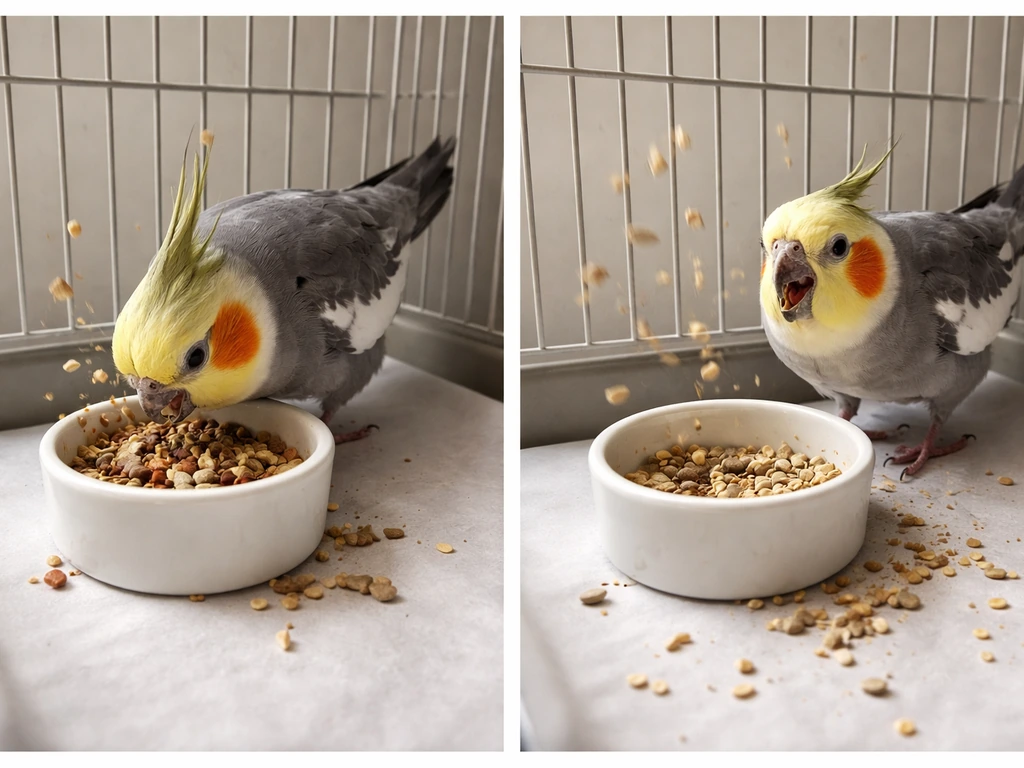
Normal food throwing is enthusiastic, frequent, and happens alongside other healthy behaviors. Your bird is eating well overall, has consistent droppings, is active, vocalizing, and engaged. The mess under the cage is bigger than you'd expect, but the bird seems happy and healthy.
Concerning food throwing looks different. The bird is flinging food but not actually eating much, or you're noticing weight loss, changes in droppings, fluffed feathers, tail bobbing at rest, or lethargy alongside the behavior. That combination means the food throwing isn't enrichment, it's a symptom.
| Sign | Likely Normal | Worth Investigating |
|---|---|---|
| Appetite overall | Still eating plenty | Reduced or absent appetite |
| Droppings | Consistent color and amount | Color changes, fewer droppings, or none |
| Energy level | Active, playful, vocal | Lethargic, fluffed, quiet |
| Breathing | Normal and quiet | Open-mouth breathing or tail bobbing at rest |
| Weight | Stable | Noticeable loss over days |
| Food throwing pattern | Ongoing, playful, messy | Sudden new behavior or obsessive |
If your bird checks all the "normal" boxes, you're almost certainly dealing with a behavioral or setup issue rather than illness. Start there.
Play, exploration, and flock dynamics are the most common reasons
Birds are intelligent, curious animals. In the wild, they forage constantly, manipulating food with their feet and beaks, tossing items to inspect them, and working to extract what they want. Pet birds do the same thing, even when their food is pre-portioned in a bowl. Throwing food is often just foraging behavior without a real foraging challenge to go with it.
Sorting is a huge part of this. Many birds, especially parrots, will dig through a seed mix to find their favorite pieces and fling everything else onto the cage floor. If you watch closely, you'll often notice a pattern: the bird is not randomly throwing food, it is deliberately picking through and discarding what it doesn't want right now.
Attention-seeking is another big one. If your bird has learned that flinging food (or tossing the food bowl) gets you to come running and react, it will repeat the behavior. If you want the specific reasons and what to look for, you can review why your bird chews on everything and how it may connect to similar behaviors flinging food (or tossing the food bowl). Birds are sharp. They figure out cause and effect quickly, and a dramatic reaction from you is rewarding for them.
In multi-bird households, food throwing can also reflect flock dynamics. A dominant bird may toss food to claim resources, or a lower-ranked bird may scatter food while trying to eat quickly before being displaced. Even if you only have one bird, you are part of its social group, and flinging food in your direction is sometimes an invitation to interact.
Food preferences, portion size, and feeder setup matter more than you might think
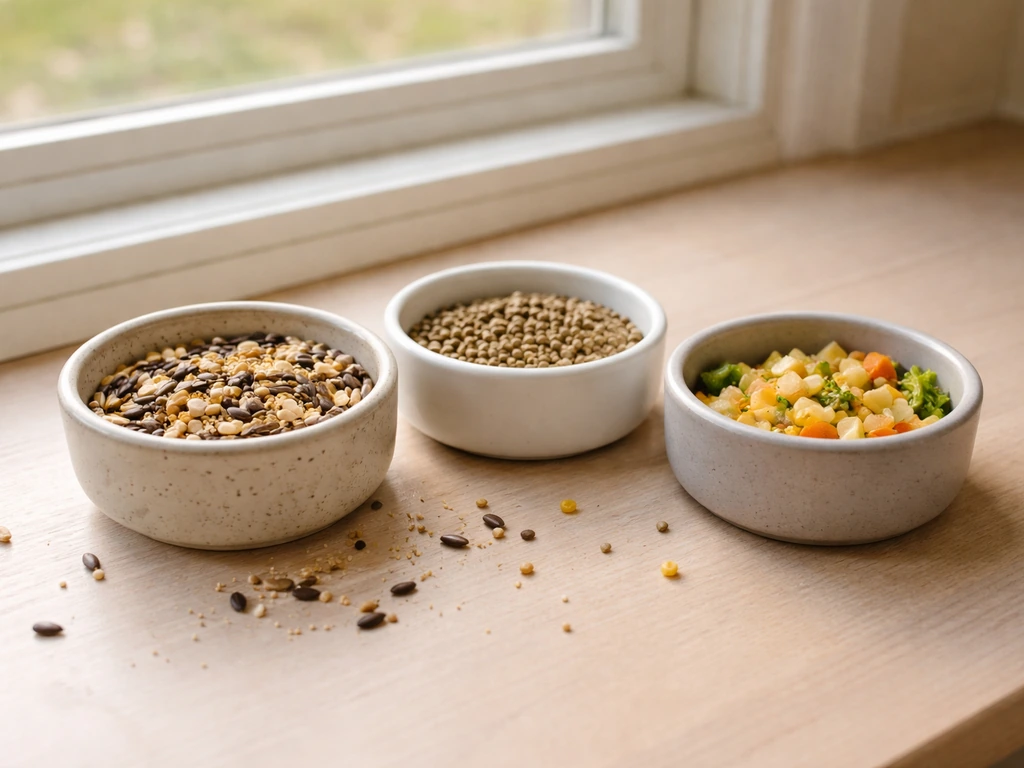
If your bird is throwing a lot of food, check what you're actually offering. A bird on a seed-heavy diet will often toss everything that isn't its preferred seed type. Pellet-fed birds sometimes do the same during a diet transition, especially if they're not yet comfortable with pellets and are hunting for familiar food underneath them.
Portion size plays a role too. Overfilling the bowl makes it easy and almost inevitable that food will spill and scatter. Birds don't have the same "clean plate" instinct we do. If the bowl is heaped, they'll dig through it without concern for what falls out. Try offering smaller, more frequent portions to see if the throwing reduces.
Bowl placement and style are worth reviewing. If the food bowl is positioned directly beneath a favorite perch, the bird may be stepping into it, sitting in it, or knocking it while moving around (if you're also wondering why your bird sits in her food, that's a related setup issue). A bowl that's too deep, too shallow, too large, or placed at an awkward height can all contribute to spillage. Many birds do better with a bowl positioned at chest height relative to their perch, not below their feet.
- Try a smaller, heavier ceramic bowl that's harder to tip or toss
- Position the bowl at the same height as your bird's chest when perching
- Avoid placing perches directly over the food bowl
- Offer smaller portions more frequently rather than one large daily portion
- If transitioning to pellets, mix gradually and watch for real eating, not just sorting
Environmental stress, boredom, and routine changes can trigger it
Birds are sensitive to their environment. A sudden increase in food throwing, especially in a bird that wasn't particularly messy before, is often tied to something that changed. New furniture, a different room arrangement, a new pet in the home, louder noise levels, or a shifted daily routine can all cause enough stress to show up in behavior changes.
Boredom is probably the most underrated cause. A bird with nothing interesting to do will create its own entertainment, and flinging food is genuinely engaging. If your bird doesn't have foraging toys, rotating enrichment, or regular out-of-cage time, throwing food fills the gap. The Parrots.org educational PDF on hide-and-seek foraging and puzzle toys discusses offering foraging and puzzle enrichment like this to encourage species-typical feeding behaviors blank" rel="noopener noreferrer">foraging toys, rotating enrichment, or regular out-of-cage time. It's similar to why birds also chew on everything or shred paper when they need more mental stimulation. Chewing on nothing can be a sign your bird is under-stimulated, stressed, or experiencing an oral discomfort that makes feeding harder chew on everything.
Perch and cage setup affect this more than people realize. If the cage is cramped, if there are too few perches, or if the perch placement forces the bird to hover awkwardly over the food bowl, it will knock food around just by moving. Check that your bird can sit comfortably at the food bowl without losing balance or gripping the bowl rim to stabilize itself.
Cover changes and light cycles matter too. Birds that aren't getting consistent 10 to 12 hours of darkness at night can become irritable and reactive during the day, including around feeding time. If your bird's sleep schedule is inconsistent, that's worth fixing before anything else.
Health-related causes you shouldn't overlook
If your bird is throwing food but not eating it, or if the behavior started suddenly with no obvious environmental trigger, health causes deserve a closer look. A bird with an upset stomach, GI discomfort, or nausea may interact with food abnormally, touching it, moving it around, and then not eating it. This can look deceptively like picky eating or play.
Oral and beak problems can make eating uncomfortable. An overgrown beak, mouth lesions, or an injury inside the mouth may cause a bird to pick up food and drop it repeatedly rather than swallow it. Watch whether your bird is attempting to eat but dropping food mid-bite, versus just flinging food around without interest.
GI issues including crop problems, bacterial infections, or parasites can cause reduced appetite, and a bird that feels off may show it by being near the food but not eating it normally. A bird with pain anywhere in its body may also behave unusually around feeding time.
The red flags to take seriously, especially in combination with food throwing, include: reduced or absent appetite over more than one day, droppings that change in color (very dark, green, or watery when not caused by a new food), open-mouth breathing at rest, tail bobbing or rhythmic pumping at rest (a sign of labored breathing), fluffed feathers during the day, and lethargy or a bird that's sitting on the cage floor. Any of these alongside food throwing moves you out of "behavioral quirk" territory and into "call the vet" territory.
What to actually do today: troubleshooting in order
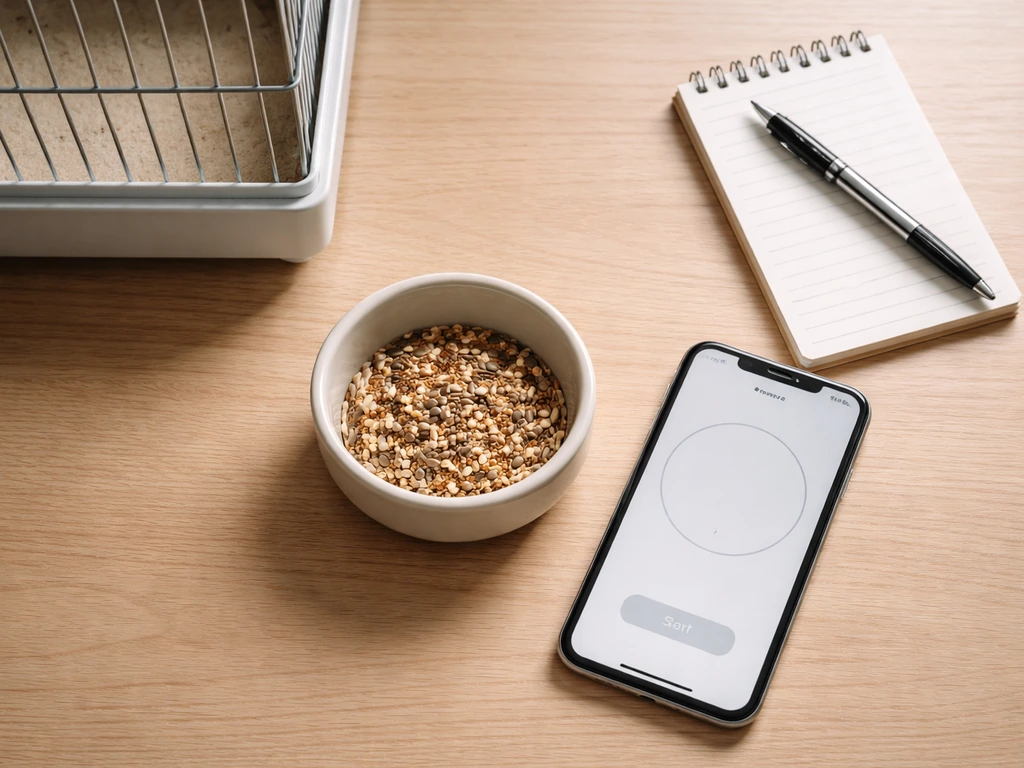
Start with observation before you change anything. Spend 10 minutes watching your bird at the food bowl. If you’re wondering why your bird is eating dirt, look for the same pattern of what it touches and whether it’s actually consuming or avoiding food. Is it eating and throwing? If your bird is specifically eating paper or chewing it along with throwing food, that can be a different (and sometimes urgent) issue to address. Or throwing without eating? Is it targeting specific foods to discard? Is it tossing the whole bowl? That one observation tells you a lot about where to start.
- Watch for 10 minutes and note whether the bird is actually eating or only throwing. Track this for one full day.
- Check the droppings. Count them, look at the color and consistency, and compare to what's normal for your bird. Fewer or oddly colored droppings are a red flag.
- Look at the bowl setup. Is it positioned awkwardly? Too full? Under a perch? Swap to a heavier, properly placed bowl today.
- Reduce the portion size and see if throwing decreases. Offer what the bird can eat in a sitting rather than a large daily heap.
- Add one foraging toy or hide a portion of food in a foraging cup. If the throwing drops, boredom was a major factor.
- Review the last week for routine changes: new sounds, people, pets, different sleep schedule, relocated cage. Address anything obvious.
- Check the beak and mouth visually if your bird allows it. Look for overgrowth, asymmetry, or anything unusual.
- If you haven't found a clear cause and the bird seems off in any other way, call your avian vet.
When to call an avian vet and what to track before you do
Call your avian vet if food throwing is happening alongside any of the health red flags above, especially reduced appetite for more than 24 hours, abnormal droppings, open-mouth breathing, tail bobbing at rest, or visible weight loss. Birds hide illness well, and by the time symptoms are obvious, things can be serious quickly.
Also call if the behavior started suddenly with no identifiable cause and hasn't resolved after a few days of troubleshooting your setup and enrichment. A sudden behavioral change in an otherwise routine bird is worth a check-in.
Before you call, tracking a few things will make the appointment much more useful. Write down when the behavior started, how often it happens, whether the bird is actually eating, what the droppings look like and how many there are per day, any recent changes in the home, and what the bird's diet includes. Your vet will ask all of this, and having it ready saves time and helps them assess the situation faster.
- When did the food throwing start, and did anything change around that time?
- Is the bird eating, or just throwing?
- How many droppings per day, and what do they look like?
- Any other symptoms: fluffed feathers, lethargy, breathing changes, or sitting on the cage floor?
- What does the current diet include, and have you recently changed it?
- How is the cage set up, including perch height and bowl position?
Most of the time, food throwing turns out to be a behavioral or setup issue that you can resolve at home. But the few cases where it signals something medical are worth catching early. If your gut says something is off, trust that, and make the call.
FAQ
How can I tell the difference between normal food throwing and my bird actually not eating?
If your bird is throwing food but still swallowing consistently, it usually falls into normal foraging or sorting. Do a quick check by observing for repeated bites followed by swallowing movements (not just picking up and dropping). If the bird consistently drops before swallowing, or avoids the food after initial grabbing, treat it as a possible discomfort or illness signal rather than “messy eating.”
What if the food throwing started suddenly, but it’s still eating some of it?
A sudden change matters more than the amount of mess. If throwing ramps up from day to day with no setup change, that raises the odds of GI upset, nausea, pain, or oral discomfort. In that situation, avoid “training it out” or changing many things at once, and instead do focused observation (eating vs. dropping, droppings, posture) for 24 hours before broad troubleshooting.
Is selective throwing normal on a seed mix, and when should I worry?
For seed diets, birds often toss the less preferred pieces, so “selective throwing” can look dramatic even when overall intake is adequate. Weighing helps more than watching alone. If your bird is losing weight, having fewer droppings, or throwing mostly without swallowing, that is when to act beyond portion and bowl adjustments.
Could stale food or hygiene be causing the throwing?
Uneaten food sitting in the cage can also make the behavior worse because birds may be rejecting stale or contaminated portions. Clean bowls daily, remove leftovers promptly, and consider offering smaller portions so fresh food is available each feeding. If throwing is paired with food avoidance, freshening the diet and cleaning can clarify whether it is a hygiene or freshness issue.
How do I know if my bird is throwing food because of bowl placement instead of preference?
Yes. If a bird is stepping into the bowl, trying to perch on it, or knocking it while repositioning, the throwing may be partly accidental. Watch from the side for “bowl contact,” then adjust height so the bird can eat without being forced to grip the rim or hover over the bowl.
Can changes to light or sleep make a bird throw more food?
Covering the cage or reducing light at the wrong times can disrupt sleep and increase irritability around feeding, which can look like “extra tossing.” Keep a consistent day-night schedule, aiming for about 10 to 12 hours of uninterrupted darkness, and avoid late-night disturbances during the period you want your bird to settle.
My bird only throws food when I’m watching, is it possibly attention-seeking?
Food throwing can be learned attention-getting. If you react immediately, retrieve the bowl, or give playtime every time the bird flings food, the behavior becomes reinforced. Try delaying attention briefly, then reward calm eating. Also reduce the “audience” effect by minimizing immediate interaction during the tossing phase.
How can I tell if food throwing is related to competition or flock dynamics?
If you have multiple birds, ensure there is enough access to food that the subordinate bird is not rushed or displaced. Provide separate feeding stations, spacing that prevents guarding, and enough time at the bowl so competition is reduced. If only one bird throws while others eat undisturbed, the cause may be dominance stress rather than diet preference.
When is food throwing more likely to be a medical problem than diet preference?
Don’t assume “picky eating” if the bird is repeatedly picking up and dropping without eating. Oral problems like lesions or an overgrown beak can cause discomfort, and GI issues can cause nausea. If throwing is paired with reduced appetite for more than 24 hours, weight loss, abnormal droppings, open-mouth breathing, tail bobbing at rest, or lethargy, contact an avian vet.