
Most birds eat more than usual for completely normal reasons: a diet that isn't filling enough, boredom, cooler temperatures, hormonal cycles, or competition with a cage mate. But a sudden, dramatic increase in appetite, especially paired with weight loss, loose droppings, or a change in energy level, can also be a sign that something is physically wrong. Figuring out which situation you're dealing with is the whole game, and you can usually narrow it down within a day or two of paying close attention.
Why Is My Bird Eating So Much? Causes and What to Do

Marcus Chen
12 May 2026
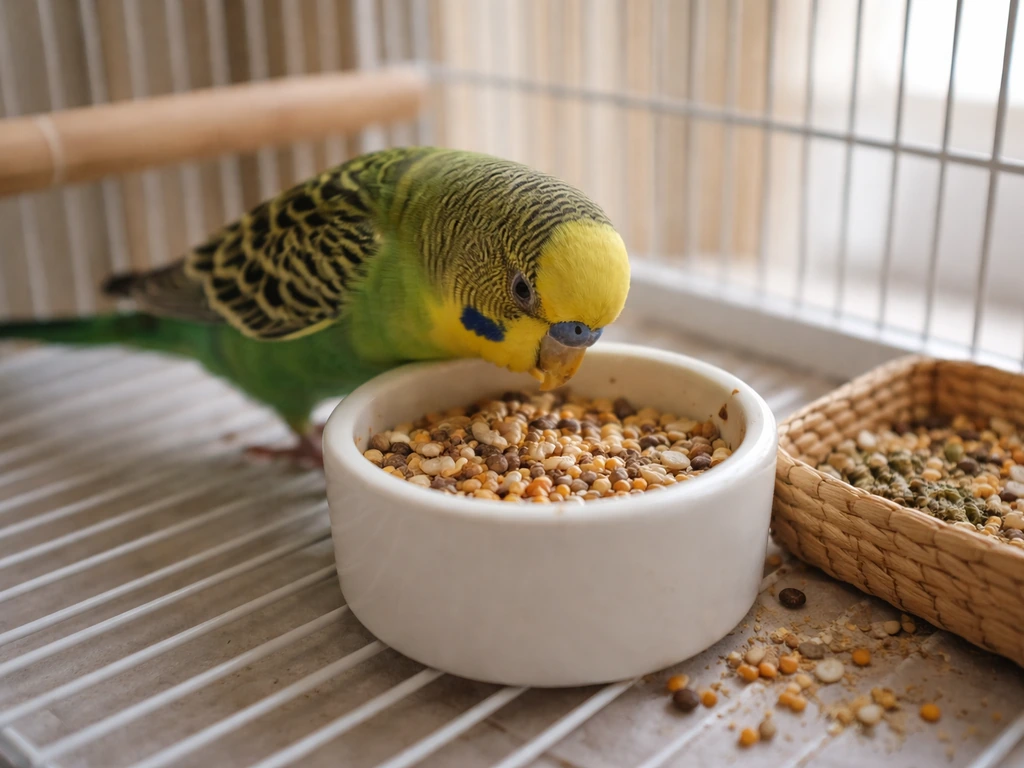
Normal vs. excessive appetite in pet birds
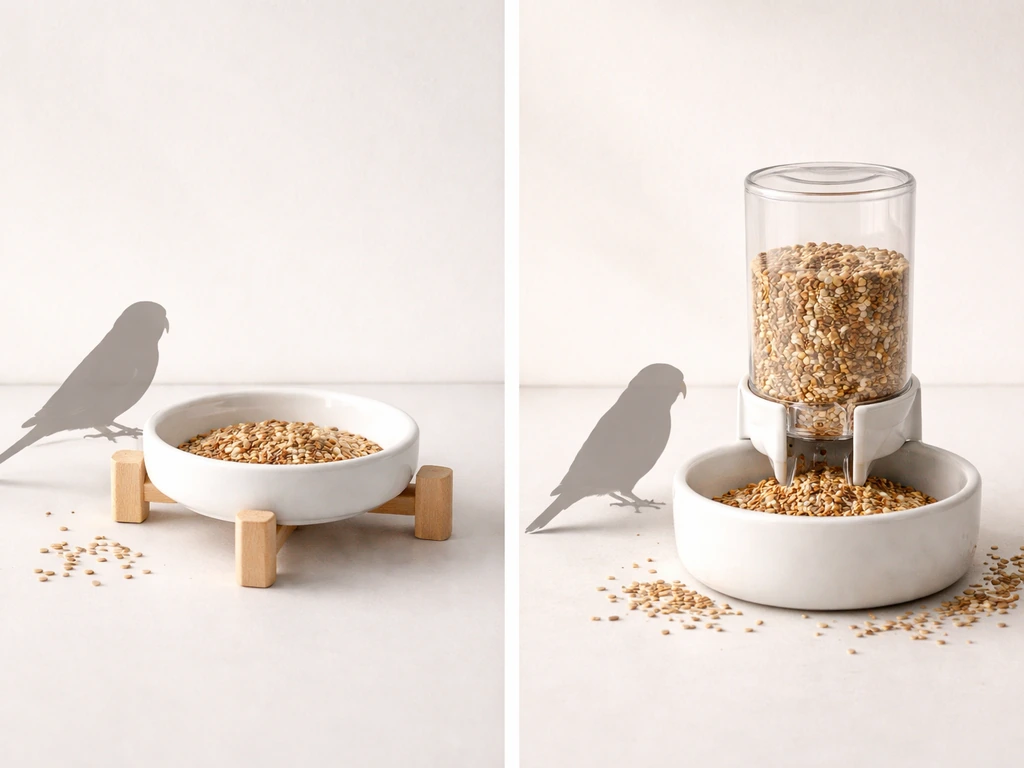
First, it helps to know what normal looks like. Most small to medium birds like budgies, cockatiels, and conures eat throughout the day in short bursts, not in one big meal. A cockatiel eating around 1.5 to 2 tablespoons of pellets plus a teaspoon or two of vegetables daily is right on track. An African grey typically manages on about a quarter to half a cup of pellets plus a couple tablespoons of chopped vegetables. If your bird is blowing past these amounts every single day and acting frantic about food, that's worth investigating.
The key distinction between normal and excessive appetite is usually what comes along with it. A bird eating more because it's growing, molting, or adjusting to a new diet will still look healthy: bright eyes, normal droppings, active and curious behavior, and steady or slightly increasing weight. A bird eating more due to illness often looks off in other ways, even if the appetite change is the first thing you notice.
Common reasons your bird might be eating more
The diet isn't satisfying enough
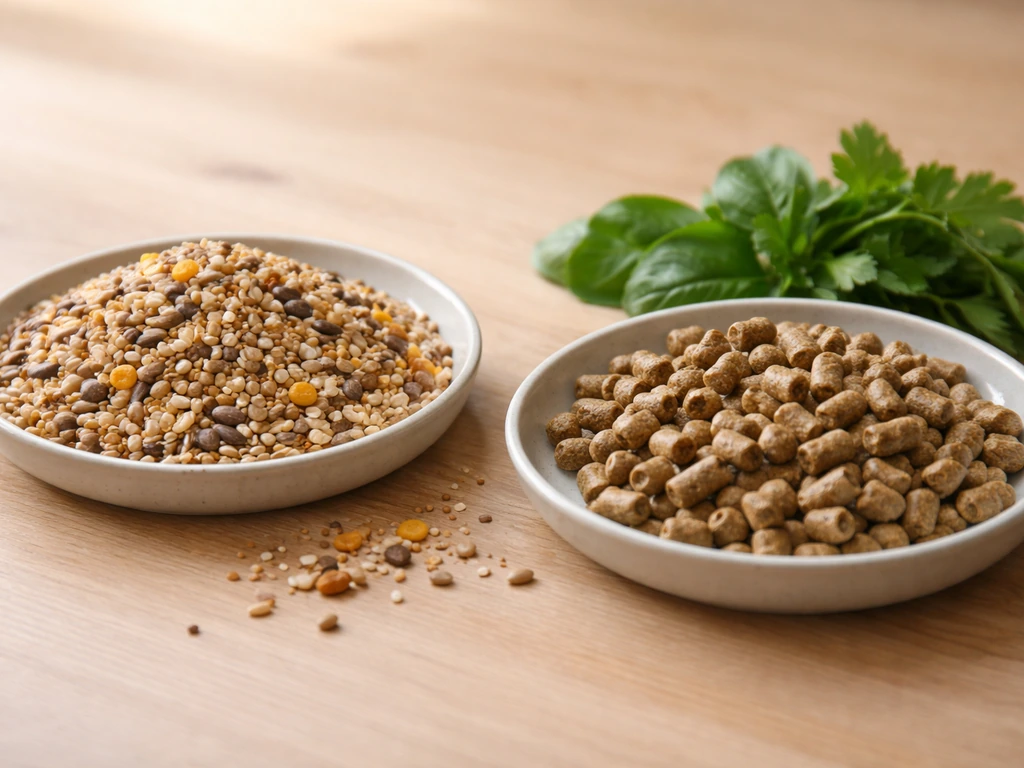
This is the single most common cause of a bird that seems constantly hungry. Seeds are calorie-dense but nutritionally shallow, so a bird on a heavy seed diet has to eat more volume to get the nutrients it needs. If your bird's bowl is mostly seeds with a few pellets scattered in, that's likely why it's always at the food dish.
A high-quality pelleted diet should make up about 60 to 70 percent of what most pet birds eat, with fresh vegetables and a little fruit filling the rest. Fruits and vegetables combined should stay at 20 to 25 percent at most. When birds switch from seeds to pellets, they often act hungrier during the transition because the texture and flavor are unfamiliar, and they're still learning to recognize pellets as food.
Boredom and lack of foraging
Wild birds spend a huge portion of their day searching for food. Pet birds in a plain cage with a full bowl right in front of them have that need completely unmet. Many birds respond by eating more, or obsessing over the food bowl, simply because there's nothing else to engage them.
Offering food in ways that take effort, like hiding pieces in foraging toys, threading greens through cage bars, or freezing vegetables in an ice block, extends the time your bird spends 'working' for its meals. Structured enrichment that encourages natural foraging and chewing behaviors is described in the PSITTACINE WELFARE INSTITUTE enrichment catalog PDF Offering food in ways that take effort.
VCA also notes that puzzle and foraging toys challenge birds to work for food, helping provide mental engagement as part of enrichment-based appetite management hiding pieces in foraging toys. This alone can visibly reduce obsessive eating behavior. You might also notice your bird chewing on cage bars or other random objects, which often shares the same boredom root.
Paper-shredding can also be a normal foraging and nesting behavior, so it helps to look at whether your bird is also eating excessively or acting differently. Chewing on paper is another common “random object” behavior, and it can point to boredom or to a need to manage your bird’s diet and environment chewing on cage bars or other random objects.
Sometimes birds eat dirt or substrate out of boredom or stress, so it helps to consider the same behavior and environment drivers as excessive appetite. If your bird chews on everything, it can be a boredom or stress behavior as much as a diet issue chewing on cage bars or other random objects.
Chewing on nothing can also show up when a bird is stressed, bored, or reacting to a change in environment, so it's worth pairing this observation with a look at their routine and surroundings chewing on cage bars or other random objects.
Temperature and seasonal changes
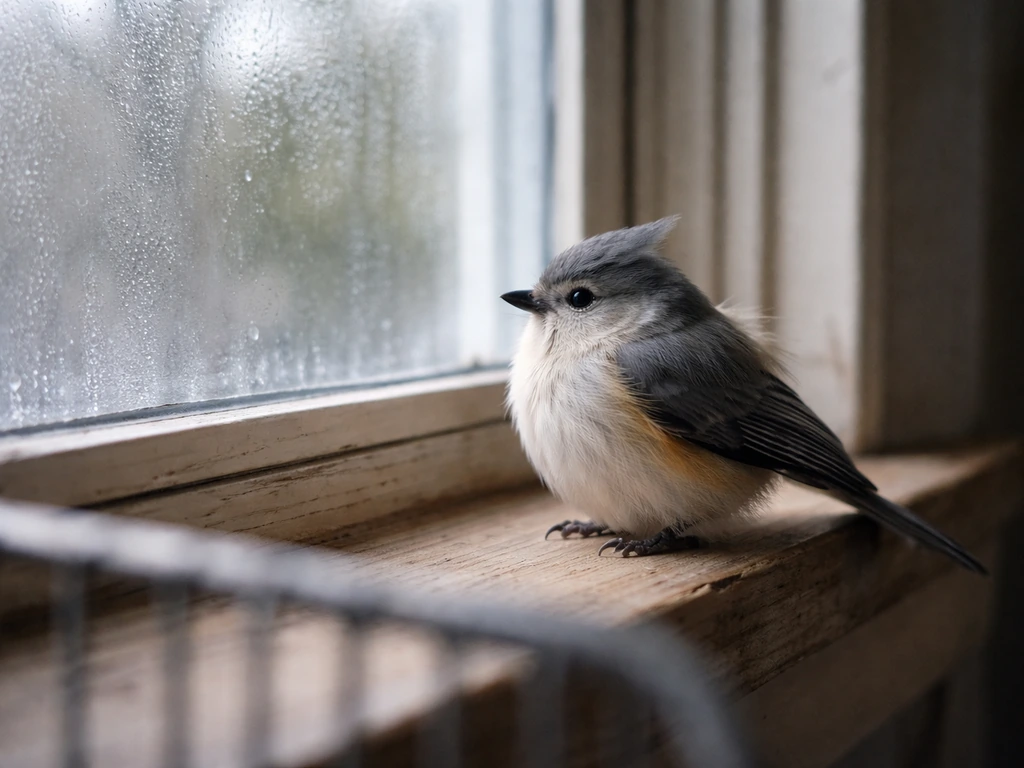
Birds burn more calories keeping warm when their environment is cooler than usual. If your home temperature dropped recently, if a window near the cage is drafty, or if the season changed, your bird may genuinely need a bit more food. This is completely normal. Check the room temperature near the cage, not just the thermostat reading across the room. Most pet birds are comfortable in the 65 to 80 degree Fahrenheit range, and anything on the cooler side of that will increase their caloric needs.
Hormones and breeding season
In spring especially, many birds go through a hormonal cycle even without a mate. Female birds preparing to lay eggs, or males showing courtship behavior, eat more as part of that cycle. You might also notice your bird regurgitating food, becoming more territorial, or being generally more intense. Increased eating during this period is usually not a problem on its own, but it's worth noting since hormonal birds can also develop health issues like egg binding if they're not in good condition.
Stress and anxiety
Some birds eat more when stressed, the same way some people do. A new pet in the house, a rearranged room, changes to your schedule, or even a new piece of furniture near the cage can trigger anxious eating. Think about what changed in the past few weeks if your bird's appetite spiked suddenly without an obvious physical cause.
Competition with cage mates
If you have more than one bird in the same cage, one may be eating frantically out of competition. Even birds that seem to get along can have a dominant-subordinate dynamic around food. The solution here is multiple feeding stations spread around the cage so both birds have access without having to fight for it.
Health red flags: when more eating points to a problem
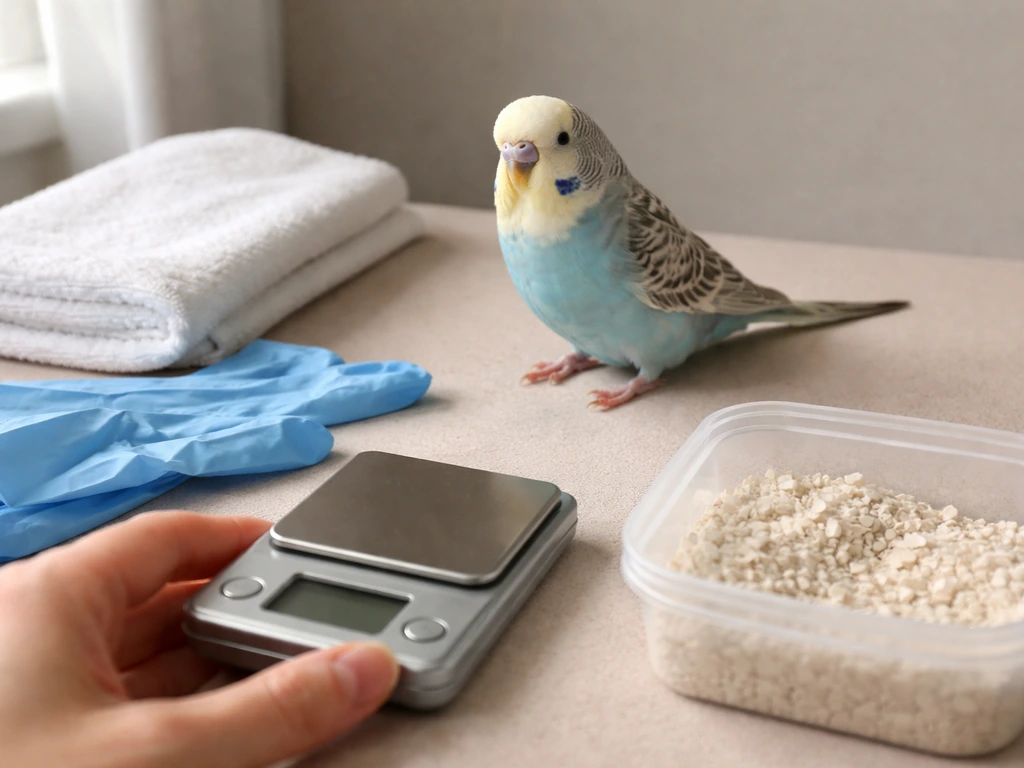
Some medical conditions directly cause increased appetite, and others cause malabsorption, meaning the bird eats more because its body isn't actually absorbing what it's consuming. Either way, the eating increase looks urgent and is almost always paired with other symptoms.
Internal parasites are a big one. Worms and other parasites compete with the bird for nutrients, so the bird eats more but still loses weight. Yeast infections like Megabacteria (also called Avian Gastric Yeast) interfere with digestion in a similar way. Proventricular Dilatation Disease (PDD), a viral illness that affects the nerves controlling digestion, causes birds to eat large amounts while visibly wasting away. Diabetes, though less common in birds than mammals, can cause polyphagia (excessive eating) along with increased thirst and frequent urination.
Thyroid issues and other metabolic conditions can also drive appetite changes. Pain from injury or internal problems sometimes causes a bird to eat compulsively as a coping response. None of these should be diagnosed at home, but recognizing the pattern, eating more while looking worse, is your signal to get professional help quickly.
Here are the warning signs that push this beyond 'probably just hungry' territory:
- Eating noticeably more but losing weight (you can feel the keel bone becoming more prominent)
- Droppings that are watery, discolored (green, black, red, or bright yellow), or much larger than usual
- Regurgitation that is frequent and not related to courtship or feeding a mate
- Lethargy, puffed feathers, or sitting at the bottom of the cage
- Increased thirst alongside the increased eating
- A bird that seems genuinely frantic around food rather than enthusiastic
- Undigested food appearing in droppings
Behavior and environment checks to pinpoint the trigger
Before assuming the worst, do a quick environment and routine review. Most of the time the answer is sitting right in front of you.
| What to check | What it tells you |
|---|---|
| Current diet breakdown (seeds vs. pellets vs. fresh food) | A seed-heavy diet almost always explains constant hunger |
| Temperature near the cage (not just room thermostat) | Drafts or cooler temps increase caloric needs |
| Recent changes to routine, cage location, or household | Stress-driven eating often follows a specific change |
| Number of birds sharing the space and feeding stations | Competition causes frantic, urgent eating behavior |
| Time of year and bird's behavior (courtship signs?) | Spring hormonal cycles drive appetite increases |
| Foraging opportunities and cage enrichment | Boredom-eating increases when the cage is bare |
| Droppings: color, consistency, volume | The clearest daily health indicator you have |
| Body weight compared to last week or month | Eating more but losing weight is the critical red flag |
Pay attention to how your bird eats, not just how much. A bird that grazes calmly throughout the day is different from one that rushes to the bowl the moment you open it and eats in a panicked, continuous way. Urgency and desperation around food are behavioral cues that something is off, whether that's dietary, environmental, or physical.
What to do today: step-by-step troubleshooting
- Weigh your bird on a digital gram scale right now and write it down. This is your baseline. Weigh again in 3 to 5 days. Weight change is the most objective data point you have.
- Look at what you're currently feeding and what percentage of it is pellets. If it's less than 60 percent, a diet imbalance is almost certainly driving the hunger. Start introducing pellets gradually alongside the current diet.
- Check the temperature at cage level, especially near windows or vents. If it's below 65°F, add warmth to the environment first.
- Look at the droppings from the past 24 hours. Normal droppings have a solid dark green or brown portion (feces), a white chalky portion (urates), and a small amount of clear liquid. If yours look significantly different, photograph them for your vet.
- Evaluate the cage for foraging opportunities. Add one new foraging activity today: wrap food in a paper cup, hide pellets in a toy, or hang a skewer of vegetables somewhere unexpected in the cage. Notice if the frantic eating behavior changes.
- If you have multiple birds, add a second feeding station on the opposite side of the cage immediately.
- Think back over the past two to four weeks. What changed? New pet, new schedule, moved the cage, changed the diet, different household sounds or activity? Match the timing of the appetite change to any environmental shifts.
- Monitor for the red flag symptoms listed above for 48 to 72 hours. If any appear, stop troubleshooting at home and call an avian vet.
When to call an avian vet and what to track
Call an avian vet, not just a general small-animal vet, if your bird is eating significantly more and losing weight at the same time. That combination is the clearest signal that the body is not absorbing or using nutrients properly, and that needs a diagnosis. Also call if the increased eating comes with any of the warning signs listed above and doesn't resolve within 48 to 72 hours of addressing obvious environmental or dietary factors.
When you call, the vet will want information. Track the following before your appointment so you're not trying to remember details on the spot:
- Daily weight in grams for at least 5 to 7 days leading up to the appointment
- Exactly what the bird eats each day, in approximate volume, and what it leaves behind
- A description or photo of the droppings from the past few days
- Any behavioral changes beyond eating: energy level, vocalization, social behavior, feather condition
- Any recent changes to diet, environment, routine, or household
- How long the increased appetite has been noticeable and whether it came on gradually or suddenly
Sudden onset is more concerning than gradual. A bird that has slowly been eating a bit more over a few weeks as the seasons changed is a very different situation from one that started eating frantically over the course of two or three days. Give your vet that timeline clearly.
Most of the time, a bird eating more than usual has a straightforward explanation that you can fix at home. If your bird is throwing food or flinging it around, it can be a sign their diet, texture, or foraging setup needs adjustment, so look for the cause alongside the appetite change. An underfilling diet, a chilly draft, springtime hormones, or a bored bird with nothing to do but stare at a food bowl will all resolve once you address the root cause. The goal is to rule those out first, monitor closely, and move quickly if the physical warning signs show up.
FAQ
How can I tell if my bird is truly “overeating” versus just eating normal smaller meals more often?
Start by watching for a pattern over 4 to 8 hours, not just counting daily bowls. Normal feeding usually looks like repeated short visits, with calm body language and consistent droppings. Panicked, continuous bowl-rush eating, gulping, or frequent emptying without normal breaks is more suggestive of a problem. If you can, weigh food before and after each day and also track daily body weight.
Is it normal for birds to eat more after I switch diets, especially from seeds to pellets?
Yes, during the first days to 2 weeks many birds seem hungrier because they do not yet recognize pellets as the new “safe” food. Reduce the stress by keeping the pellet available consistently, offering the same brand and texture, and using small, easy-to-crush pellet pieces for finicky eaters. If your bird starts dropping weight, has loose droppings, or keeps acting frantic beyond a short transition window, treat it as a medical concern rather than “diet adjustment.”
Could my bird be eating more because it is getting bullied by a cage mate, even if they seem friendly?
Yes. Birds can tolerate each other socially but still guard food. Look for one bird that arrives first, occupies the best spots, or keeps pushing the other away from the dish. A practical fix is multiple feeding stations at different heights and locations, plus splitting favorite foods so both birds have access at the same time.
What’s the best way to check if my bird is losing weight while eating more?
Use a kitchen scale that can measure in grams and weigh at the same time each day (for example, early morning before meals). Sudden appetite spikes can be misleading, because some birds “look” thinner before the scale shows it. If weight drops even slightly over 2 to 3 days, especially with urgency around food, contact an avian vet promptly.
How quickly should I respond if my bird’s appetite increases suddenly?
If the change started over 1 to 3 days, prioritize an avian vet call rather than waiting weeks. After you remove obvious triggers (drafts, obvious diet mismatch, boredom-related access issues), increased eating that does not improve within 48 to 72 hours, or any time it is paired with weight loss, loose droppings, or a change in droppings consistency, is a reason to escalate quickly.
Can boredom really make a bird eat more, and how do I prove that to myself?
Often, yes, especially when food sits in a plain bowl with no other stimulation. A good test is to introduce structured foraging (like shreddable paper in a safe way, pellet scatter, or an ice block with vegetables) and then observe whether bowl-rush behavior decreases over the next day while droppings remain normal. If appetite remains frantically high despite enrichment and appropriate diet, shift focus to health causes.
If my bird is eating more, should I automatically reduce pellets or seeds to control it?
Not on its own, because the underlying cause could be malabsorption or parasites, where restricting food may worsen weakness. Instead, confirm the diet balance you are aiming for, ensure pellets form the majority of the diet, and check whether the bird is actually getting enough vitamins and fiber. If there are warning signs like weight loss or diarrhea, get veterinary guidance before changing food amounts.
My bird is very warm and puffy, could that affect appetite?
Yes. If a bird seems overheated or unwell, it may change feeding behavior and energy level in unpredictable ways. Also consider that temperature issues are localized, drafts near windows can chill a portion of the cage even if the thermostat reads fine. Measure temperature at cage height and observe whether breathing, posture, and activity also changed.
Do internal parasites always show symptoms besides appetite increase?
Not always. Some birds eat more because they are losing usable nutrients, yet droppings may start subtly (for example, looser consistency, altered volume, or changes in urates) before dramatic changes. Weight loss despite high intake is one of the strongest clues, so track weight and droppings closely, then ask the vet about fecal testing.
When should I worry that the appetite increase is actually pain or a digestion problem?
Consider pain or digestion issues when eating becomes compulsive or frantic while the bird looks worse (reduced activity, abnormal posture, fluffed feathers, weak grip) or when it has recurrent regurgitation, abnormal droppings, or persistent wasting. In those situations, do not delay, seek an avian vet evaluation and mention the exact timeline of the appetite change.
What specific history should I bring to the avian vet besides “eating more”?
Bring: the exact start date and whether it was gradual or sudden, a rough daily amount eaten (pellets and produce), recent temperature or cage changes (drafts, new furniture, rearranged room), whether there are cage mates, and a 2 to 3 day log of body weight and droppings. If you can, include any stool photos and the bird’s activity level before and after meals.