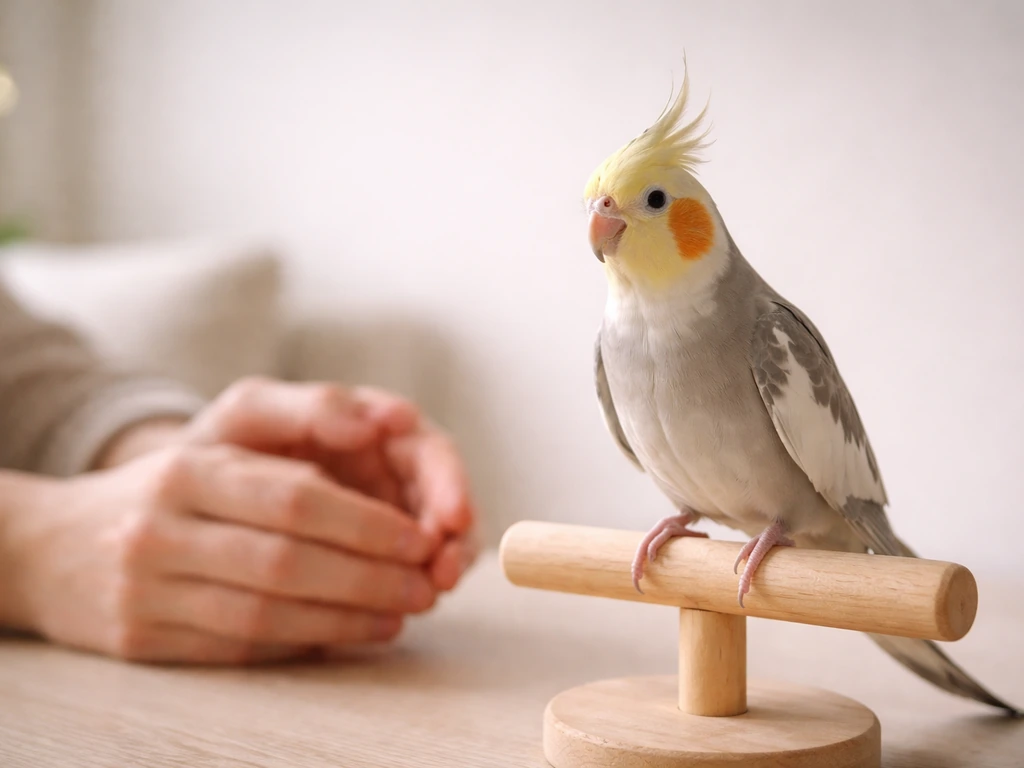
Your bird is trying to escape because something in its world feels wrong right now. That could be fear, boredom, a perceived threat, a health problem, or simply an under-stimulated bird with too much pent-up energy. Most of the time it's a behavioral or environmental issue you can fix today. But frantic, non-stop escape attempts paired with ruffled feathers, labored breathing, or changes in droppings can signal a health emergency that needs a vet call. If your bird keeps facing away from you during these escape attempts, it can point to fear, discomfort, or a possible health issue that needs a closer look why is my bird facing away from me.
Why Is My Bird Trying to Escape? Causes and What to Do

Marcus Chen
19 Jun 2026
What escape attempts usually mean (and when it's totally normal)
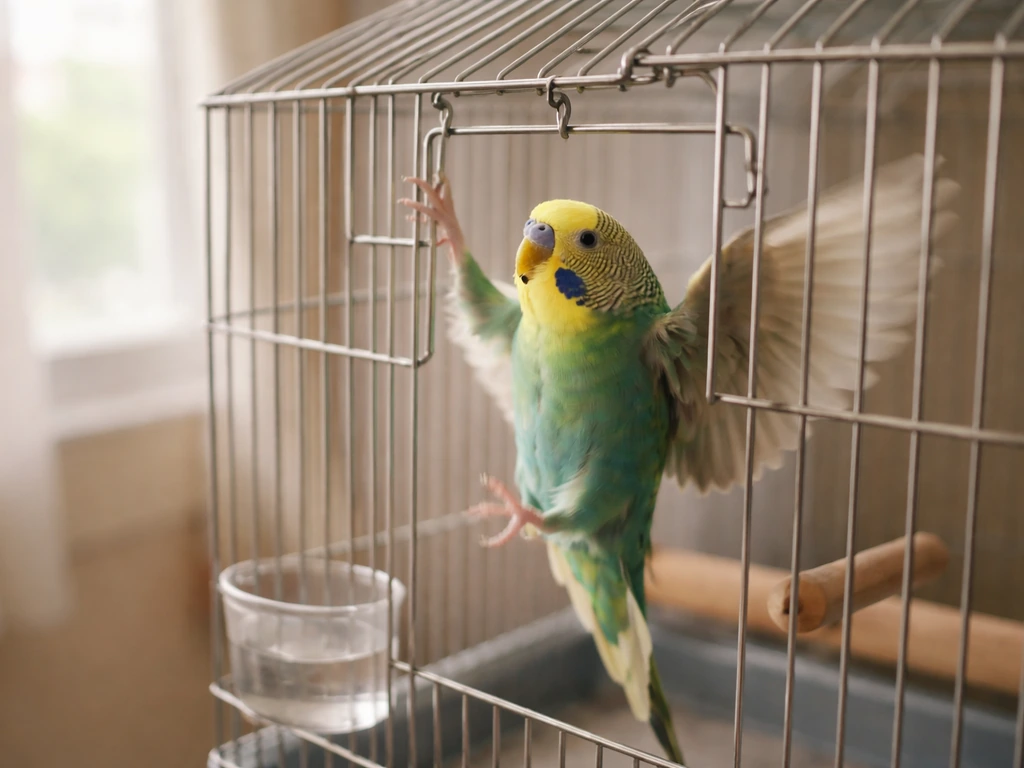
First, let's define what we're even talking about. "Trying to escape" can look like a lot of different things: frantic cage climbing, lunging at the cage door, scratching at bars, repeatedly backing off your hand, or making a beeline for the nearest window the second you open the cage. Some of these are completely normal in the right context.
A curious, healthy bird will often test cage latches, explore door edges, and try to slip past your hand during out-of-cage time. That's not panic, that's intelligence. Cockatiels, budgies, and parrots especially do this as part of normal exploratory behavior. If your bird does it occasionally, settles easily, and otherwise looks bright-eyed and active, you're probably dealing with a bored or curious bird rather than a distressed one.
What's not normal is sustained, frantic, panicky escape behavior that doesn't stop. Think: throwing itself at cage walls repeatedly, screaming continuously while climbing, or acting terrified every time you approach. That level of intensity tells you something specific has changed or is wrong. The goal of this article is to help you figure out which category your bird is in right now.
Quick safety steps to take right now before anything else
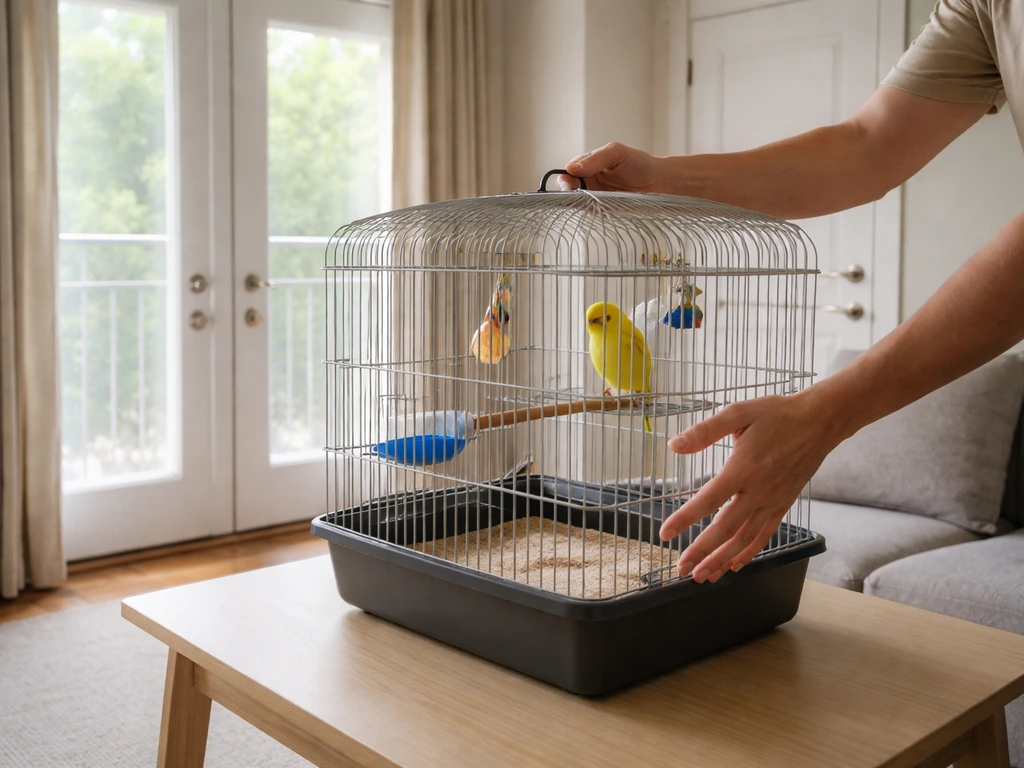
If your bird is actively panicking or you're worried it might get loose, handle the safety piece first before trying to diagnose the cause.
- Close windows, doors, and any exits from the room. If the bird gets out, an open window is the biggest danger.
- Turn off ceiling fans immediately. A bird in a panic can fly into a spinning fan faster than you can react.
- Remove immediate hazards: hot stovetops, open toilets, other pets, candles, or toxic houseplants in reach.
- Lower the lights slightly in the room. Dimmer lighting tends to calm a panicking bird faster than bright overhead light.
- If the bird is still in the cage, drape a light cloth over two sides (not fully covered) to reduce visual stimulation.
- Do not grab or chase a panicking bird. Chasing ramps up fear and increases injury risk. Speak quietly and move slowly.
- If the bird is already loose, sit down, stay calm, and let it land on its own. Offer a familiar perch or your hand at a low height. Most birds will land when they feel safe.
Once your bird is secure and the immediate risk is contained, you can actually start figuring out what's driving the behavior.
The most common behavioral reasons birds try to escape
The vast majority of escape-attempt behavior comes down to one of these triggers. Work through them systematically and you'll usually find your answer.
Fear and perceived threat
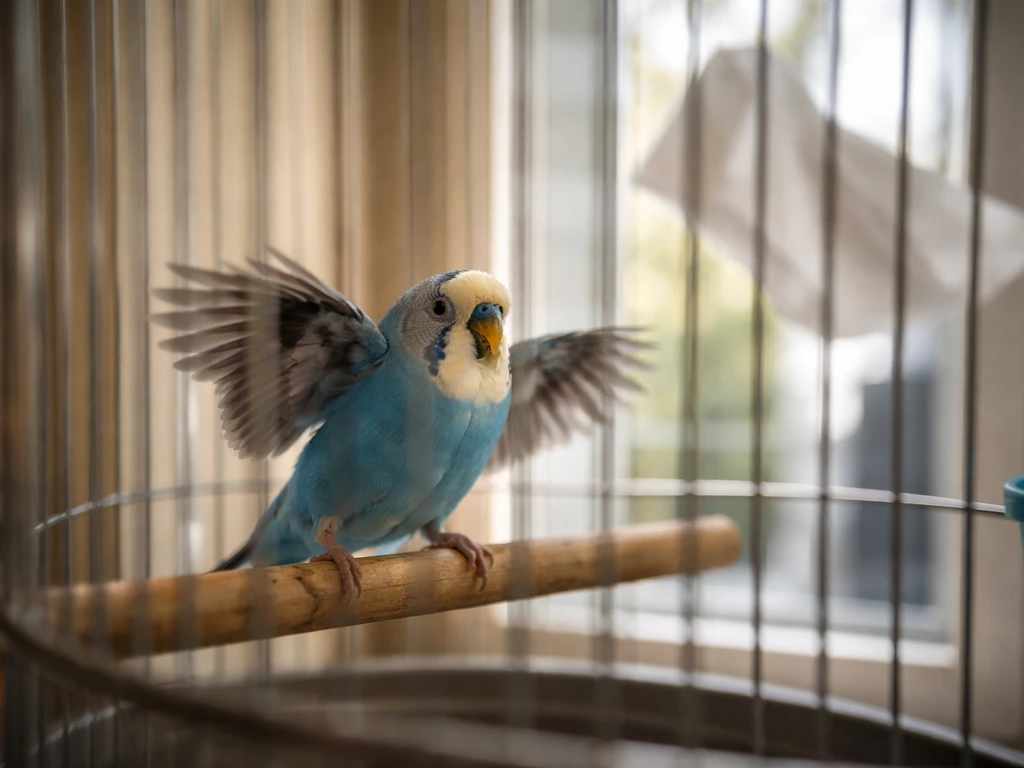
This is the number one cause of sudden, frantic cage behavior. Something scared your bird. It could be a new pet that walked past the cage, a reflection, a sudden loud noise, a stranger in the house, or even a bird of prey visible through a window. Prey animals (which all pet birds essentially are) have a deeply wired instinct to flee from perceived danger. If the trigger is obvious, remove it. If your bird is acting restless but you also notice it cannot fly properly, that can be a different issue than escape behavior and may point to injury, illness, or wing problems why can't my bird fly. If it's not, look at the bird's sightlines: what can it see from inside the cage that it couldn't see before?
Boredom and lack of enrichment
A bird with nothing to do is a bird looking for a way out. Parrots especially are highly intelligent and need mental stimulation every day. If your bird spends most of the day alone in a cage with the same three toys it's had for six months, escape-seeking is a completely logical response. The cage isn't enriching, so the bird wants out. This usually shows up as persistent, repetitive bar climbing or door testing, often at predictable times like morning or evening.
Not enough out-of-cage time or social interaction
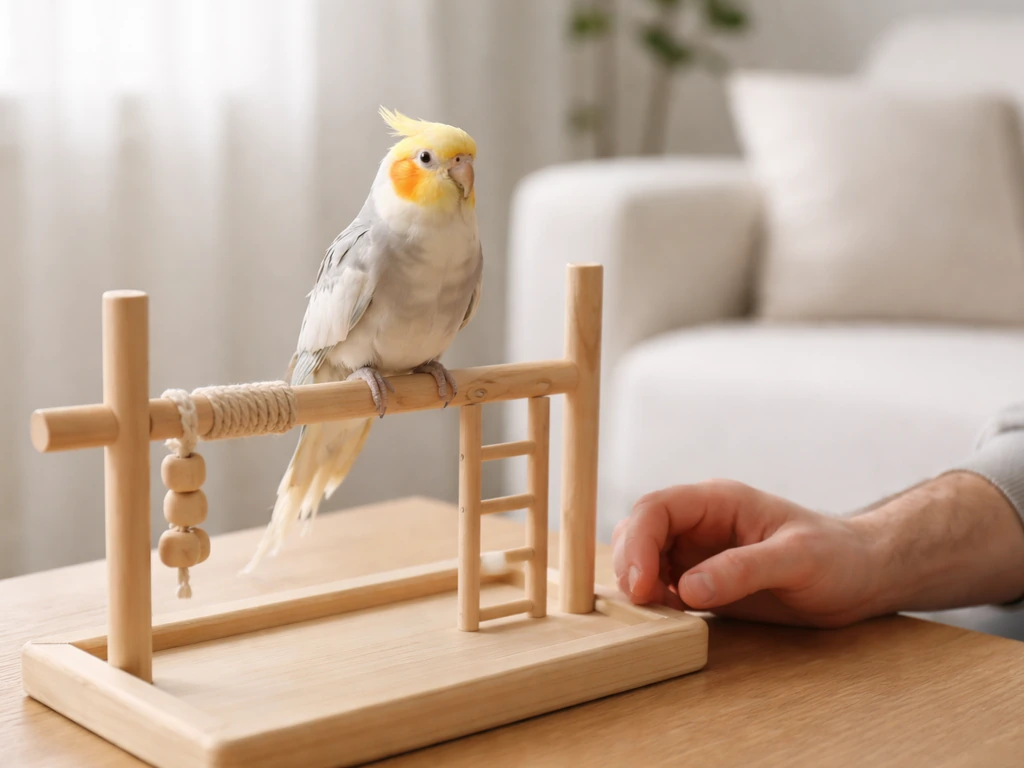
Most parrots and cockatiels need a minimum of 2 to 4 hours of out-of-cage time daily. Finches and canaries need less, but still benefit from visual stimulation and interaction. If your bird isn't getting enough social time with you (or with other birds, depending on species), it will push hard to get out. This is actually a sign of a bonded, socially engaged bird. It wants to be where you are.
Hormonal and seasonal behavior
In spring and early summer, many species experience hormonal surges tied to breeding season. This can make otherwise calm birds suddenly restless, territorial, or frantic. Cockatiels and budgies are especially prone to this. The bird may be pacing, screaming more, or trying to escape in search of a mate or nesting site. It usually passes as the season changes, but it can be intense while it lasts.
Poor handling or trust issues
If your bird backs away from your hand, lunges when you open the cage, or flies off your arm the moment it gets a chance, it may not fully trust you yet, or something has damaged that trust recently. Forced handling, accidental injuries, or even a stressful vet visit can set back a bird's comfort with humans significantly. This connects to a related behavior some owners notice: the bird consistently turns its back or faces away when approached, which is often a stress or trust signal rather than random positioning.
Cage and environment checklist: rule these out first
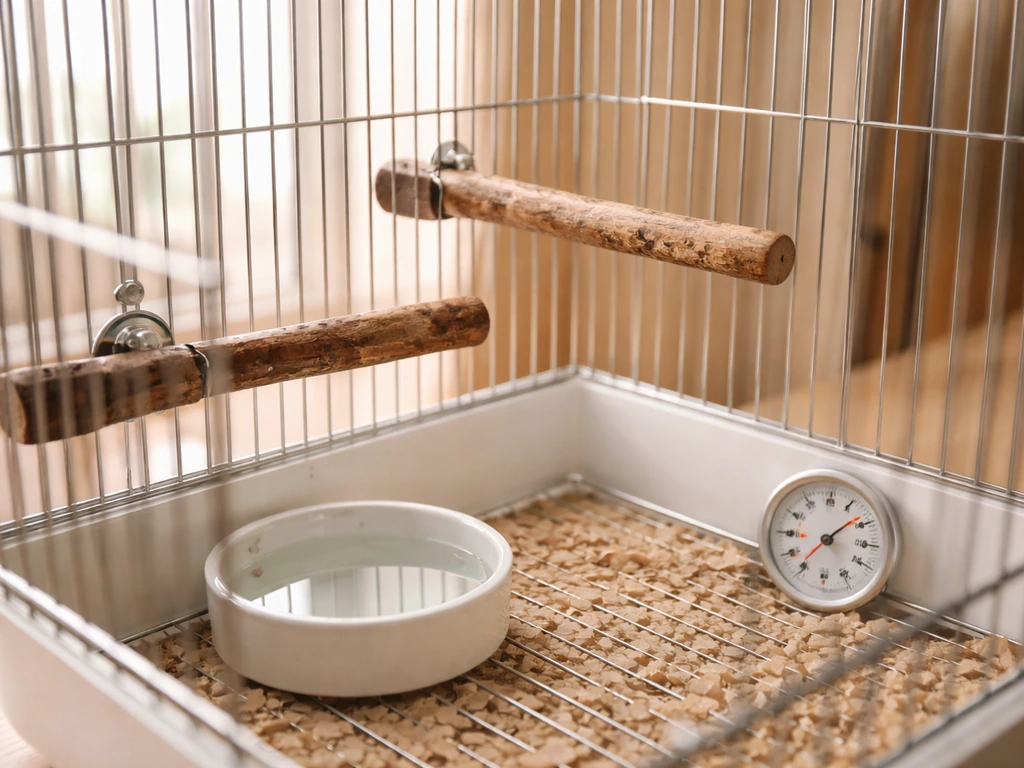
Sometimes the escape behavior isn't about the bird at all. It's about where the bird lives. Run through this checklist and fix anything that applies.
| Factor | What to check | What to fix |
|---|---|---|
| Temperature | Room should be 65 to 85°F (18 to 29°C) for most species | Move cage away from air vents, drafty windows, or exterior walls |
| Drafts | Even mild drafts cause chronic stress in birds | Check with your hand around the cage sides; use a draft guard or relocate |
| Lighting | 10 to 12 hours of consistent light/dark cycle daily | Cover the cage fully at the same time each night; use a full-spectrum lamp if natural light is limited |
| Noise levels | Sudden loud or unpredictable sounds are a major fear trigger | Move cage away from TVs, speakers, or high-traffic kitchen areas |
| Cage size | Bird should be able to fully extend and flap wings without touching bars | Upgrade cage size if the bird can't move freely; minimum bar spacing matters for each species |
| Cage placement | High-traffic areas cause stress; corner placement with one solid wall reduces anxiety | Reposition so the bird has one 'safe' wall behind it and can see the room |
| Perceived threats | Other pets, mirrors, unfamiliar objects near the cage | Remove or reposition; check what the bird can see through windows |
One thing owners often miss is the cage placement relative to windows. A bird that can see outdoor birds of prey, neighborhood cats, or even wild birds acting aggressively will stay in a near-constant low-grade stress state. That stress cumulates and eventually shows up as escape behavior.
Health red flags that can look like escape behavior
This is the part you really need to pay attention to. Sometimes frantic movement, restlessness, or repeated attempts to get out of the cage are the way your bird tells you it feels physically terrible. Birds instinctively hide illness for as long as they can, so by the time the behavior becomes obvious, something may have been wrong for a while. Even if your bird is not actively panicking, hiding can be a sign that something physical is going on why is my bird hiding.
Pain, respiratory distress, GI problems, and neurological issues can all make a bird act agitated, panicky, or desperate to move. Lafeber’s client handout also lists very serious respiratory signs such as open-mouthed breathing at rest respiratory distress. A bird with a respiratory infection may frantically change positions trying to breathe more comfortably. A bird with internal pain may press against cage bars. A bird with a neurological problem may circle, flip, or climb erratically.
How to do a fast at-home health check
You don't need a stethoscope to catch serious red flags. These five quick observations take about two minutes and can tell you a lot.
- Breathing: Watch the bird at rest from a distance. Normal breathing is quiet and invisible. If you can see the tail bobbing up and down with each breath, that's a serious red flag for respiratory distress. Open-mouth breathing at rest is an emergency sign.
- Posture: A healthy bird sits upright and alert. A sick bird often fluffs up its feathers, sits low on the perch, or tucks its head back. Hunching or wing-drooping can indicate pain or illness.
- Droppings: Check the cage bottom. Normal droppings have a firm dark green/brown portion with white urates and minimal watery liquid. Droppings that are pure liquid, bright red, black, or completely absent are warning signs.
- Energy and appetite: Has the bird eaten today? Is it responding to you, vocalizing, and moving normally? Sudden lethargy combined with not eating is always a concern.
- Eyes and face: Clear, bright eyes with no discharge. No swelling around the eyes or beak. No nasal discharge or clicking sounds when breathing.
If your bird shows tail bobbing at rest, open-mouth breathing, complete loss of appetite, or extreme lethargy alongside the escape behavior, stop troubleshooting the behavior and call an avian vet right now. Those are not behavioral issues. That's a sick bird.
What to actually do about it: fixes for today and a longer plan
Immediate fixes you can do today
- Identify and remove the most obvious fear trigger (new pet, object near the cage, outdoor predator sightline through a window).
- Rotate or add two or three new toys to the cage. Even rearranging existing toys counts as novelty stimulation.
- Schedule a guaranteed out-of-cage session today if the bird is healthy. Even 30 minutes of supervised free time in a bird-safe room makes a significant difference.
- Adjust the cage position if there are draft, light, or threat-sightline issues.
- Cover two sides of the cage to give the bird a sense of security without full darkness.
- Check the temperature and remove the cage from any direct vent airflow.
The longer-term behavior plan
One good day won't fix a bird that has been stressed or under-stimulated for weeks. Build a consistent daily routine your bird can rely on. Birds thrive on predictability: feeding at the same times, out-of-cage time at the same times, and a consistent sleep schedule with the cage covered at a set hour every night.
For birds that have trust issues or fear-based escape behavior, slow and positive is the only approach that works. If your bird’s behavior feels like it’s suddenly panicking and trying to get out of fear, you may also want to review tips for why does my bird fly away from me. Sit near the cage and talk calmly without demanding interaction. Offer treats through the bars. Let the bird come to you rather than reaching in. Over days and weeks, this rebuilds the association between your presence and safety rather than threat.
For bored or under-enriched birds, the fix is variety and activity. Foraging toys (where the bird has to work to get food), puzzle feeders, rotation of different toy types (shredding toys, foot toys, bells, mirrors for some species), and training sessions using positive reinforcement all address the root issue. Even 10 to 15 minutes of active training per day significantly reduces restlessness in intelligent species like African greys, conures, and cockatiels.
For hormonally driven escape behavior, reducing daylight hours by covering the cage for 12 hours per night is one of the most effective tools. Limiting petting to the head and neck only (avoiding back and wing stroking that can be sexually stimulating) also helps bring hormone levels down over a few weeks.
When to call an avian vet (and exactly what to tell them)
Some situations need professional help. Don't wait on these.
- Tail bobbing or open-mouth breathing at rest
- Complete refusal to eat for more than 24 hours
- Droppings that are bloody, completely liquid, or absent
- Sudden extreme behavior change with no obvious environmental trigger
- Loss of balance, circling, head tilting, or falling off the perch
- Ruffled feathers combined with lethargy lasting more than a few hours
- Escape or frantic behavior that escalates over several days despite environmental improvements
When you call, the vet will get a much better picture if you can give them specific observations rather than just "my bird seems off." Write down or be ready to share: when the behavior started, what triggers it (time of day, specific events, your approach), what the droppings look like, what the bird has eaten in the last 24 to 48 hours, any recent changes to food, cage location, household routine, or new pets or people, and a description of the bird's posture and breathing. If you can take a short video of the behavior on your phone, that's genuinely helpful for an avian vet trying to assess remotely or prepare for the visit.
Avian vets are a specialized resource, and not every general vet has the training to properly assess a bird. If you don't already have one, search for a vet who specifically sees birds or is certified by the Association of Avian Veterinarians. The sooner you find one before an emergency, the better off you and your bird will be.
FAQ
How can I tell if my bird is “testing” the cage versus genuinely panicking to escape?
Look for stopping behavior. Curiosity usually includes exploration pauses, normal breathing, and the bird resettling within minutes. Panic tends to be continuous or escalates, with repeated frantic lunging or bar scratching that does not let up when you stop moving and the room is quiet.
Should I cover the cage or change the room to calm my bird while I figure out the cause?
If the bird is trying to reach a window or door, immediate safety comes first, you can move the cage to a calmer, dimmer room for short periods. Avoid sudden full darkness for long stretches, instead use partial coverage and reduce triggers like mirrors, other pets, and loud activity.
My bird escapes the moment I open the cage. Does that mean it wants out, or does it fear me?
It can be either, but timing helps. If the bird only attempts escape during cage opening or your approach, it often indicates fear of handling or a past negative experience. If it tries the same route at predictable times even when you are not nearby, boredom, routine mismatch, or hormonal restlessness may be driving it.
What are common mistakes people make when their bird is trying to get loose?
The biggest mistakes are chasing the bird, forcing contact, and repeatedly grabbing at the same moment the bird reaches the door. This teaches the bird that escape attempts lead to more threat. Use calm, consistent approaches, offer a preferred perch or target, and let the bird choose slower pathways.
If my bird is trying to escape, is it ever caused by a window or reflection in the room?
Yes. Clear glass can look like an exit, and mirrors or shiny surfaces can trigger territorial or escape behavior. Try blocking direct sightlines to windows and reflective objects, and check whether the problem spikes when lights outside change.
How do I handle it if my bird is scared of hands but keeps backing away during escape attempts?
Focus on building a hand-neutral routine. Sit near the cage, place treats on a perch you can hold steady, and avoid reaching over the bird from above (which can read as predatory). If possible, train for short sessions where the bird steps toward you willingly, not while being cornered.
Can escape behavior be caused by something in the household air or fumes?
It can. Strong odors, smoke, aerosol sprays, scented candles, nonstick cookware fumes, or cleaning chemicals can cause respiratory discomfort and agitation. If escape attempts coincide with cooking or cleaning, stop the exposure and consider avian guidance promptly, especially if breathing looks effortful.
When should I stop troubleshooting and call an avian vet immediately?
Call right away if you see open-mouth breathing, tail bobbing at rest, marked lethargy, a sudden loss of appetite, or abnormal droppings alongside frantic escape behavior. Birds also hide illness, so if behavior is escalating over hours or includes obvious weakness, do not wait for “one more day.”
What information should I note before the vet visit if my bird is trying to escape?
Write down the start date and whether it is tied to specific times, sounds, or household events. Note posture and breathing (including how the bird holds wings), what it ate in the last 24 to 48 hours, changes in droppings color or volume, and any recent cage placement changes, new foods, or household products.
Will increasing out-of-cage time help, even if I suspect fear or injury?
Only if your bird can safely enjoy it. Increase gradually and in a controlled, bird-safe space, but if the bird has trouble perching, seems painful when moving, or cannot fly normally, do not treat it like boredom. In those cases, prioritize a vet assessment before expanding activity.
How can I reduce hormonal escape behavior safely?
Reduce light exposure by keeping a consistent 12 hours of uninterrupted dark overnight using a true cage cover, and avoid stimulating petting patterns like stroking the back or wings. Also remove or adjust nesting-like items if your species is prone to breeding aggression, but do changes gradually to avoid additional stress.
Next Article
Why Does My Bird Fly Away From Me? Fix Flight Distance
Find why your bird flies away, spot fear or health causes fast, and use trust and safety fixes to reduce flight distance