Your bird turning his back to you is almost always a form of communication, and most of the time it means he's comfortable, wants a little space, or is simply self-soothing. But it can occasionally be a sign that something physical is wrong. The key is knowing which signals go with normal behavior and which ones should push you toward calling an avian vet today.
Why Does My Bird Turn His Back to Me? What to Do Next
Marcus Chen
6 May 2026
What 'turning their back' usually means
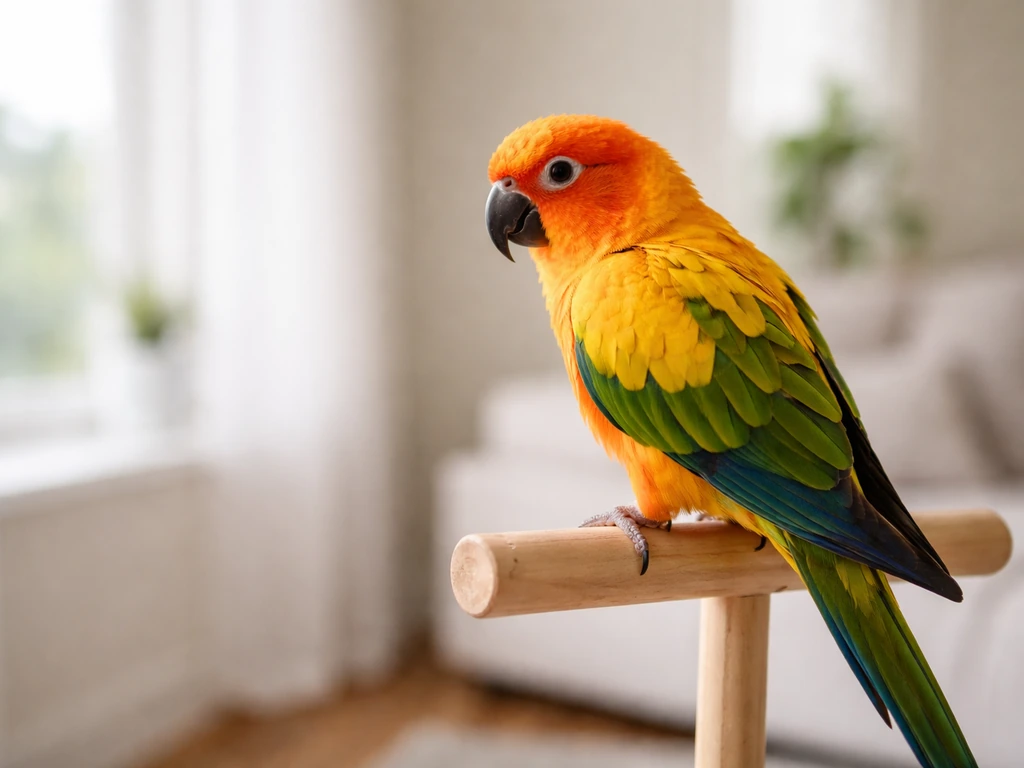
Birds don't have the facial expressions we do, so body orientation is one of their main tools for communicating. When your bird turns his back to you, he's often doing one of three things: showing he feels safe enough to not watch you, asking for a little breathing room, or trying to avoid what he sees as a mild threat.
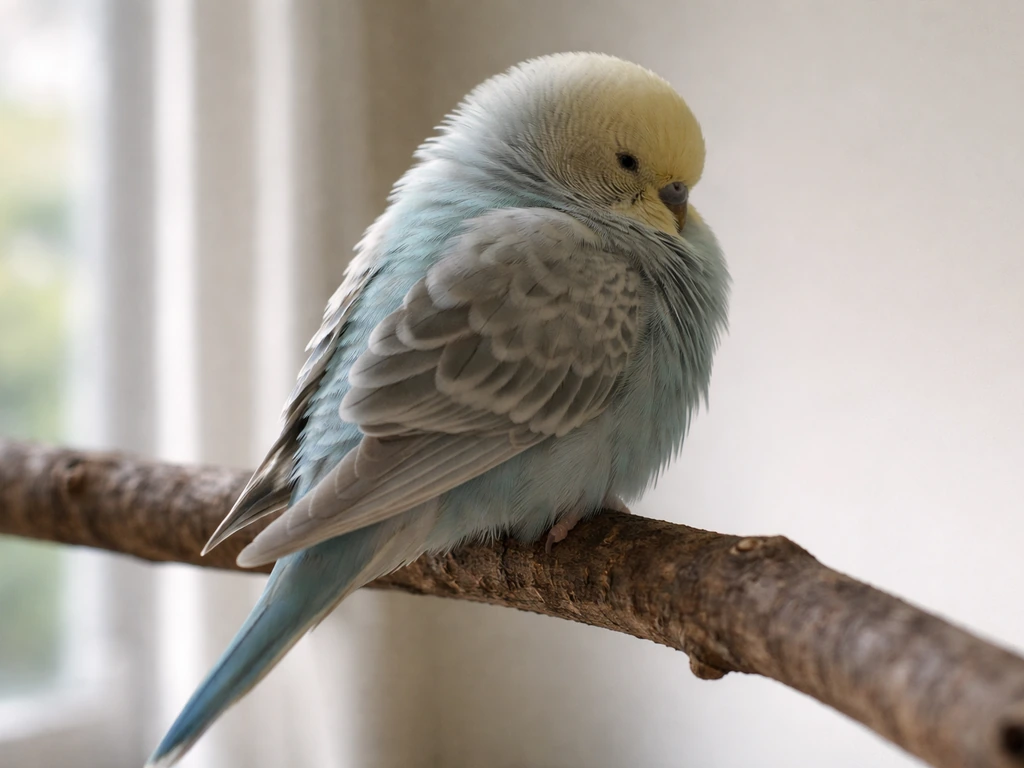
A relaxed bird that turns away, maybe fluffs up slightly, and settles into a drowsy posture is actually paying you a compliment. Prey animals like birds stay alert when they feel unsafe. Choosing to face away from you means he's decided you're not a threat right now. If your question is really about why does my bird fly away from me, the same idea applies: when your bird faces away, he may be asking for space or avoiding what feels like a mild threat. That's trust.
On the other hand, a bird that snaps around to face away the moment you reach toward him is using that movement to gain space and avoid interaction. It's a polite 'no thank you' rather than an aggressive response. Think of it as your bird's version of turning away from an awkward conversation. This behavior is closely related to what some owners describe as their bird facing away from them consistently, and it's worth reading those two behaviors together to understand the full picture.
Behavior causes worth knowing about
Once you've ruled out illness (more on that shortly), there are five behavioral reasons that explain most back-turning in pet birds.
Hormones
Seasonal hormonal shifts, especially in spring and late summer, can make a previously social bird suddenly distant or even cranky. A bird in a hormonal phase may turn away, refuse step-ups he used to do willingly, or show mild aggression if pressed. This is temporary, but it requires you to dial back physical interaction for a while and avoid petting areas like the back and wings that can increase hormonal stimulation.
Stress and overstimulation
Too much handling, too many visitors, loud environments, or a recently rearranged cage can all push a bird past his comfort threshold. Turning away is often the first signal he gives before escalating to biting or screaming. If you've recently changed something in his environment or routine, that's likely the trigger.
Fear
A bird who was startled, had a bad handling experience, or is new to a home may turn away because he genuinely doesn't feel safe facing you yet. This is especially common with rescue birds or birds that haven't been handled much. The back-turning here often comes with a tense, upright posture rather than the relaxed fluff of a comfortable bird.
Dominance and attention-seeking
Some birds, particularly larger parrots, figure out quickly that turning away gets a reaction from you. If you rush over every time he does it, you may accidentally be reinforcing the behavior. A bird who then looks back over his shoulder to check your reaction is almost certainly testing what response he can get.
Health and welfare red flags hiding behind back-turning
This is the part most owners miss. A sick bird instinctively hides illness because showing weakness in the wild invites predation. By the time a bird looks obviously unwell, he's often been sick for a while. Back-turning combined with any of the signs below is not a behavior problem. It's a medical situation.
Birds in pain often reduce vocalization, become less active, stop eating, and withdraw from interaction. For avian chlamydiosis (psittacosis or parrot fever), the Merck Veterinary Manual notes that birds may show low energy, labored breathing, eye or nose discharge, lack of appetite, and decreased vocalizing stop eating. GI discomfort from things like crop stasis or candidiasis (a crop yeast infection) can cause a bird to seem withdrawn, avoid handling, and show signs like regurgitation, a crop that stays enlarged or fluid-filled, and weight loss. Neurological discomfort can also cause unusual posturing that might look like simple avoidance.
Respiratory problems are particularly urgent. A Merck Veterinary Manual review of psittacosis symptoms in birds lists ruffled feathers, low energy, labored breathing, eye or nose discharge, lack of appetite, and decreased vocalizing. Open-mouth breathing, visible tail bobbing at rest (the tail moving up and down with each breath), increased sternal (chest) motion, and any kind of clicking or wheezing while breathing are all emergency-level signs. A bird should never need to work visibly hard to breathe. If you see that alongside back-turning, stop troubleshooting behavior and call a vet.
How to tell behavior from sickness: what to check today
You don't need a veterinary degree to do a quick wellness check on your bird right now. Run through this list and be honest with what you see.
| What to observe | Likely behavioral (okay) | Possible health concern (act on this) |
|---|---|---|
| Posture | Upright, alert, or relaxed fluff when resting | Hunched, puffed at odd times, leaning or unsteady |
| Feathers | Sleek when active, slight fluff at rest/sleep | Fluffed, ruffled, or puffed up during active hours |
| Breathing | Quiet, invisible effort, beak closed | Open-mouth breathing, tail bobbing, clicking, labored |
| Appetite | Eating normally, active at food dish | Not eating, ignoring food, or sudden drop in intake |
| Droppings | Normal color/consistency for your bird | Change in color, volume, wetness, or frequency |
| Vocalization | Chatting, singing, responding to you | Unusually quiet, no response, minimal sounds |
| Eyes and face | Bright, clear eyes, clean nares | Discharge from nares, cloudy eyes, swelling |
| Activity | Moving around cage, investigating | Sitting at the cage bottom, not perching, lethargic |
One sign alone might not mean much, but two or more from the 'act on this' column, especially alongside back-turning, means something physical is likely going on. Birds can lose significant weight in just a few days when they stop eating, so time matters.
Practical fixes and trust-building steps
If you've checked the list above and your bird looks physically healthy, then back-turning is a communication and training opportunity. Here's how to work through it.
Change your approach angle and speed
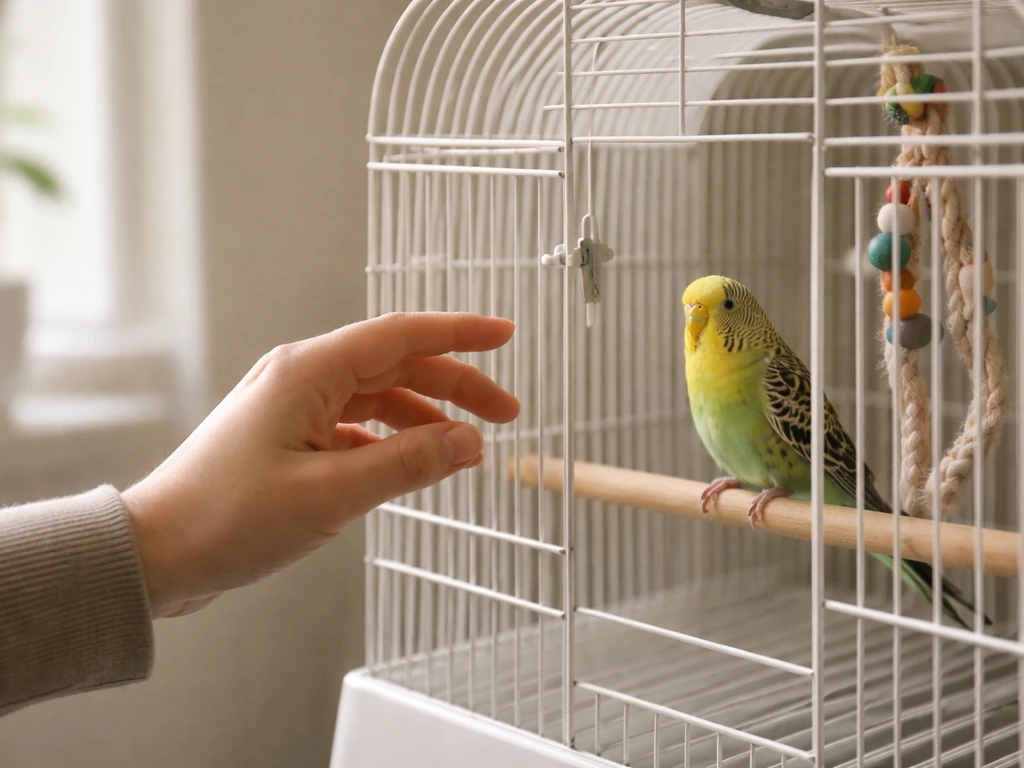
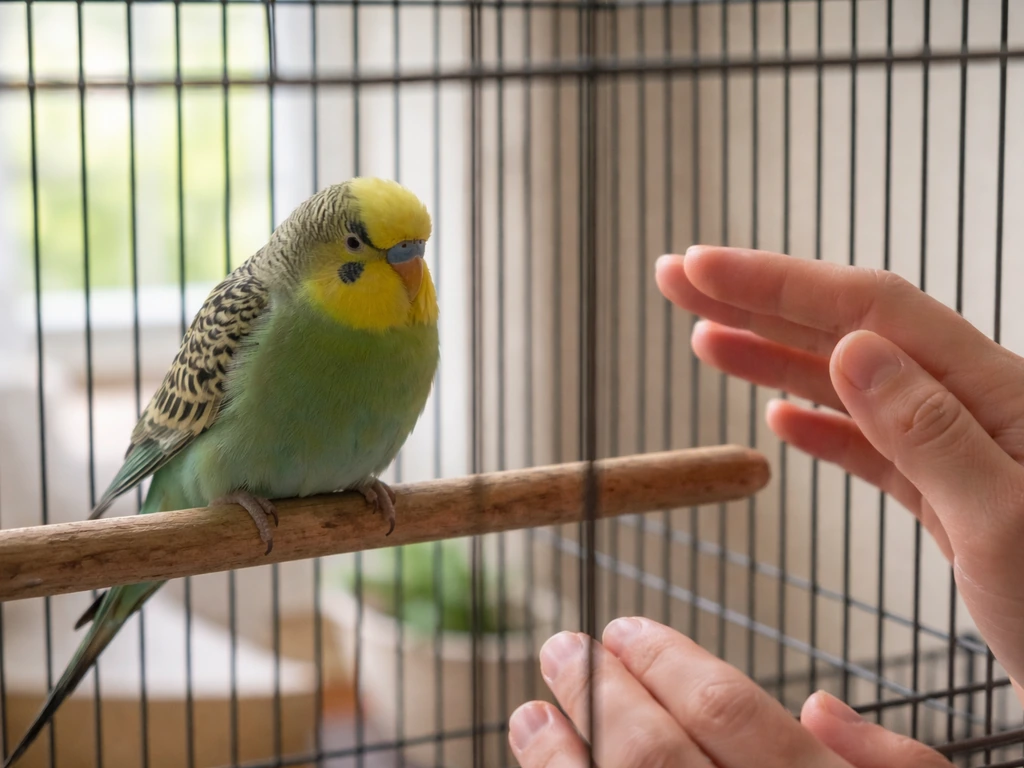
Most birds find a direct, fast approach stressful. Come at your bird from the side rather than head-on, move slowly, and talk softly as you approach. If he turns away, pause and wait. Let him get comfortable before you try again. Forcing the interaction by reaching around or following him across the perch will make things worse.
Use short, positive sessions
Keep training and handling sessions to 5 to 10 minutes, especially with a bird who's currently distant. End every session on a positive moment, before he turns away or gets frustrated. Positive reinforcement works best here: reward the behavior you want (facing you, stepping up, tolerating your presence) with a treat or verbal praise, and ignore the avoidance behavior rather than chasing it.
Teach consent-based step-up
- Stand near the cage without reaching in. Let him watch you and get used to you at this distance.
- Offer your hand or a perch near (not on) his feet. Wait. If he steps toward you, reward him.
- Only give the 'step up' cue once he's comfortable making contact voluntarily.
- If he turns away at any point, remove your hand and give him a moment. Try again in 30 seconds.
- Build up session length and contact gradually over days, not one afternoon.
Manage hormonal periods
During hormonal seasons, reduce handling to what your bird is comfortable with. Avoid petting the back, wings, or under the tail. Shorten photoperiod (light hours) to around 10 to 12 hours per day using a cover or timer, which can help reduce hormone-driven behavior. A Reddit comment about parrots suggests ensuring 10, 12 hours of darkness or sleep each night, since light exposure can be a key factor in hormonal behavior 10 to 12 hours per day. Don't take it personally if a normally social bird wants nothing to do with you for a few weeks.
Improve enrichment and routine
A bored or under-stimulated bird creates problems for himself and for you. Rotate foraging toys, introduce novel food textures, and make sure your bird has enough out-of-cage time each day. A consistent daily routine, same wake time, meal times, and interaction windows, reduces stress and makes your bird more predictable and settled.
When to call an avian vet or behaviorist
Some situations don't need a wait-and-see approach. Call an avian vet today if your bird is showing any of these alongside back-turning or withdrawal: If your bird can't fly or seems weak in flight, that's also a good reason to involve an avian vet right away Call an avian vet today.
- Open-mouth breathing or visible effort to breathe
- Tail bobbing at rest (this is a respiratory emergency sign)
- Sitting at the bottom of the cage
- Fluffed feathers during active hours, not just at sleep time
- Not eating for more than 24 hours
- Droppings that look significantly different from normal
- Regurgitation or an enlarged, squishy crop
- Sudden weakness, falling off the perch, or loss of coordination
If the back-turning has appeared suddenly in a bird who was previously social, that warrants a vet call within a day or two even if no other signs are obvious. If you are wondering why is my bird hiding, a sudden change like this is a good reason to take action quickly. If your bird is trying to escape, treat it as a possible stress or safety issue and look for the triggers behind the sudden avoidance. If you keep noticing your bird facing away from you, a vet can help rule out discomfort or medical causes call a vet. Birds mask illness well enough that subtle behavior changes are sometimes the only early warning.
If your bird is physically healthy but the avoidance behavior has been going on for weeks without improvement despite your best efforts, an avian behaviorist is worth contacting. Some ingrained fear responses or complex social dynamics need a professional to untangle, and there's no shame in that.
For most birds, though, back-turning is just bird language for 'I need a minute.' Learn to read what comes with it, adjust how you approach and interact, and give him some agency in the relationship. That usually solves the problem faster than any training technique on its own.
FAQ
Should I take my bird turning his back as a sign he’s mad at me?
It is usually not best to interpret back-turning alone as “dominance” or “disrespect.” For most birds, face-away behavior means he is regulating distance. A practical check is to look for a relaxed body (loose posture, mild fluff, settling) versus tension (upright stance, staring, rapid repositioning). Relaxed turn-away is typically a comfort signal, tense turn-away is more often a stress or discomfort signal.
What should I do if my bird turns his back when I ask for a step-up?
If your bird turns away during step-up attempts, stop reaching, move to his side, and ask again after he voluntarily reorients toward you. You can also use a perch target (place a hand or small perch near him, then reward any moment he leans in). This prevents you from unintentionally reinforcing avoidance by making him endure contact.
Does sudden back-turning mean anything different than it happening gradually?
Yes, sudden timing matters. If the back-turning is new or clearly different from his normal pattern within the last 24 to 72 hours, treat it as a possible medical or acute stress issue even if he seems mostly normal otherwise. Earlier intervention matters for birds because they can hide illness and lose weight quickly when appetite changes.
Are there specific touch areas I should avoid when my bird keeps turning away?
Avoid petting or touching the back, wings, and under the tail until you know which category it falls into. During hormonal periods or heightened stress, those areas can increase arousal or discomfort, which can make the back-turning persist. Use “distance first” training, approach from the side, and reward relaxed behavior instead of going straight to handling.
How long should I try behavior changes before I get a vet involved?
If he turns away but keeps eating, breathing normally, and remains active, you can try a low-pressure plan for 3 to 7 days: reduce handling, approach from the side, shorten sessions to 5 minutes, and increase foraging enrichment. If appetite drops, breathing looks harder, movement slows, or the behavior escalates, switch to a vet-first plan.
What breathing signs would make back-turning an emergency?
If you see open-mouth breathing, tail bobbing with each breath, increased chest motion, wheezing, clicking, or any obvious breathing effort alongside back-turning, treat it as urgent and seek an avian vet the same day. Birds should not have to visibly “work” to breathe.
My bird turns away mainly when I walk up, what does that usually indicate and how can I adjust?
If the pattern happens mostly when you approach from directly in front or when your hand enters his space, it is often an approach-sensitivity issue. Try pausing at a comfortable distance, letting him come closer, and using side-on positioning. Reward calm moments (even brief ones) to help him associate your presence with safety.
Could I be accidentally training my bird to turn away?
Many owners accidentally reinforce avoidance by responding with more chasing, reaching around him, or persistent contact right after he turns away. Instead, pause, give him a moment, then resume only if he looks calm or reorients toward you. The goal is that turning away creates space for him, not a faster push toward interaction.
How do I tell whether hormone season is the reason versus a health problem?
Yes. Hormonal cycles can shift behavior in ways that look like attitude changes. A helpful decision aid is to reduce triggers for a few weeks (limit touching, especially around sensitive areas, avoid unwanted stimulation, and use cover or a light timer to keep light exposure around 10 to 12 hours per day). Track whether he gradually improves rather than trying to force step-ups.
Which combinations of symptoms alongside back-turning should I treat as illness?
If he turns away and also becomes less vocal, less active, stops eating, regurgitates, has a persistently enlarged or fluid-like crop, or loses weight, that cluster points toward illness rather than “mood.” In those cases, skip extended training and contact an avian vet promptly, especially for GI or crop-related signs.
What if my bird’s back-turning has been going on for weeks, even with my best efforts?
If your bird has been turning his back for weeks with no improvement despite reducing handling, changing approach, and adding enrichment, it can be fear learning or an underlying discomfort you have not fully identified. An avian behaviorist can help you design a plan that matches his specific triggers and builds confidence safely.