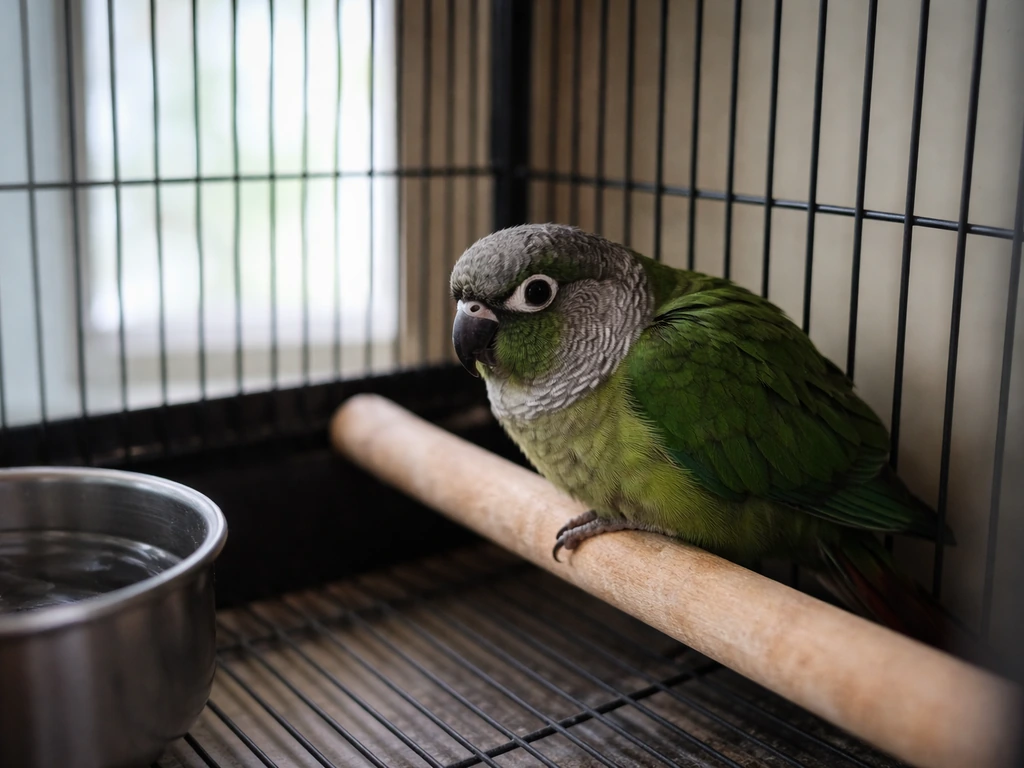
Your bird flies away from you because it feels unsafe. That might be about something you're doing (fast movements, direct eye contact, reaching over their head), something in the environment (a poorly placed cage, a new object nearby, a change in routine), or occasionally an underlying health issue making them more sensitive and defensive. Most of the time it's a trust and body-language problem you can fix with patience and a few adjustments, but it's worth ruling out illness too, especially if the avoidance started suddenly.
Why Does My Bird Fly Away From Me? Fix Flight Distance
Marcus Chen
11 Jun 2026
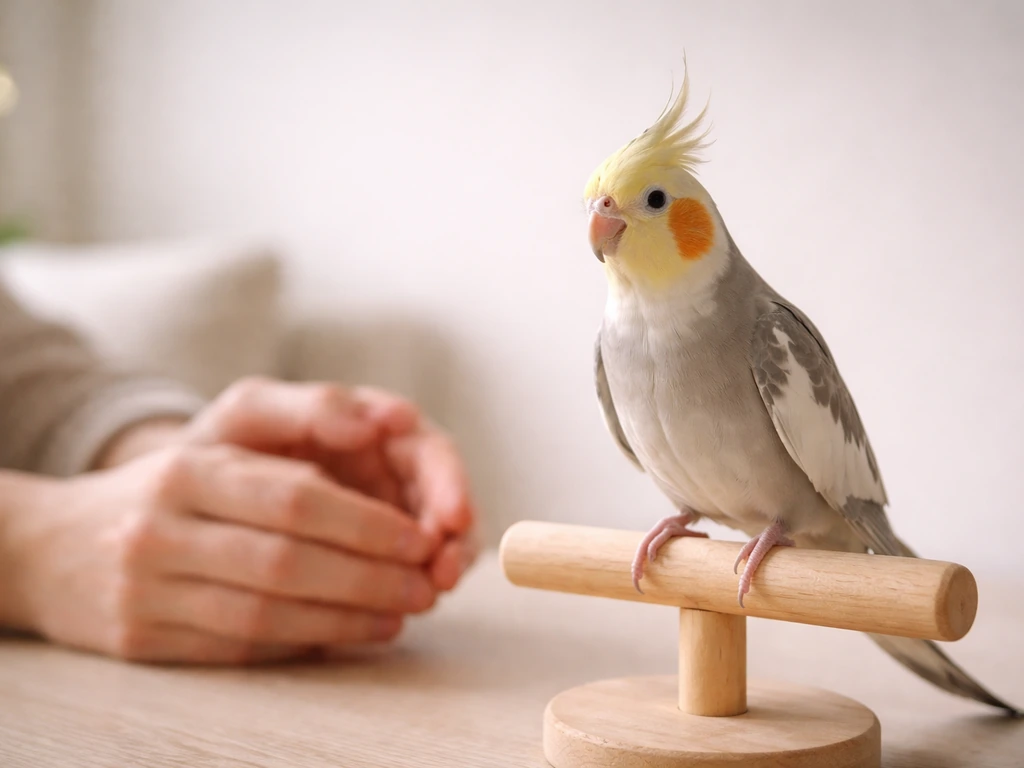
Common reasons a pet bird avoids or flies away from you
Birds are prey animals. Their first instinct when something feels threatening is to create distance. That's not personal, it's hardwired. But when your pet bird consistently flies away or retreats from you, there's usually a specific trigger you can identify.
- Fear from a past negative experience, such as rough handling, being grabbed, or a frightening event near the cage
- Not enough early socialization or hands-on time during the bird's critical developmental window
- A new person, pet, or object in the home that has unsettled them
- Overstimulation from loud noise, too much activity, or too many strangers approaching at once
- Territorial behavior, especially if the bird has claimed the cage or a specific perch as 'theirs'
- Hormonal changes during breeding season, which can make even a friendly bird suddenly skittish or defensive
- An inconsistent routine that leaves the bird feeling uncertain about when interaction will happen
- Underlying discomfort or illness that makes touch feel threatening
One thing worth noting: avoidance that has been reinforced over time tends to stick. If a bird flees, and the scary thing (your hand, a stranger) goes away, the bird learns that fleeing works. That cycle can turn a mild wariness into a deeply ingrained pattern if it isn't addressed early.
Fear and body language: how you may be triggering flight
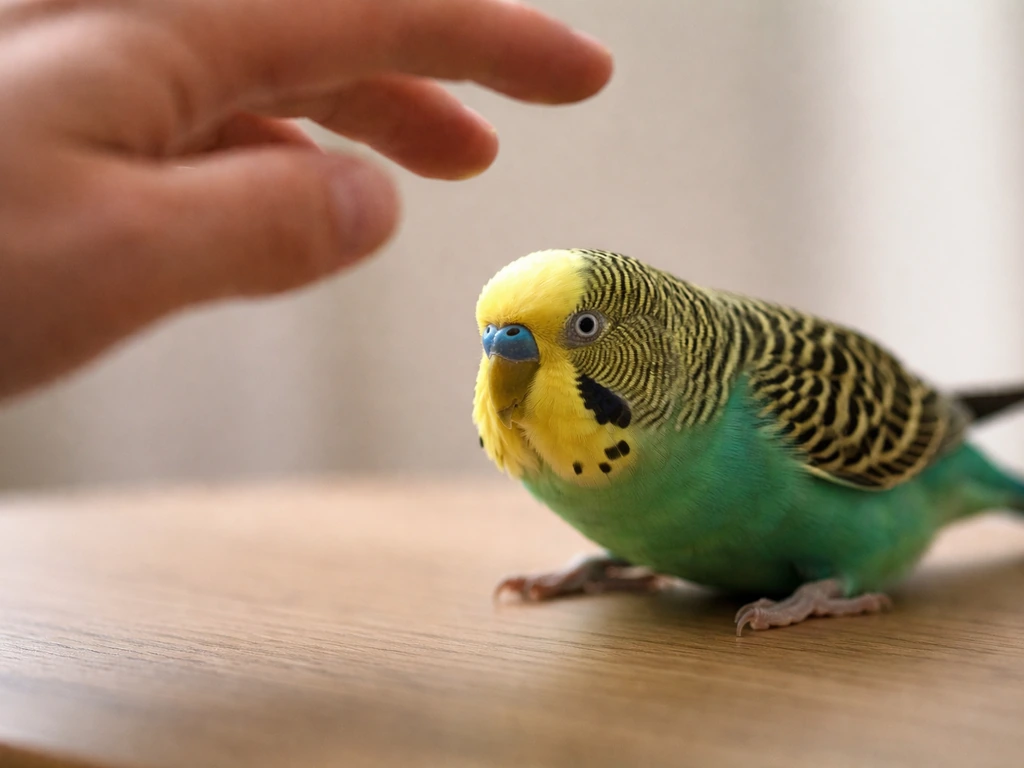
This is the most common culprit, and most owners don't realize they're doing it. Birds read body language constantly. Small things that feel normal to you can look alarming to a bird.
What triggers a flight response
- Reaching over the bird's head or from above (predators attack from above, so this is a strong fear trigger)
- Moving your hand too fast toward the cage or toward the bird
- Making direct, sustained eye contact (in bird language, a stare can signal aggression)
- Looming over the bird by standing too tall when approaching
- Wearing unfamiliar clothing, hats, or glasses that change your silhouette
- Approaching when the bird is already showing stress signals: pinned pupils, flattened feathers, a leaning-away posture, or a raised wing
- Letting strangers reach in immediately before the bird has had time to assess them
Your bird's body language will tell you when you're too close too fast. A relaxed bird has soft, slightly puffed feathers, may be vocalizing gently, and holds a comfortable upright posture. Chewy advises watching for relaxed body language cues, such as soft feathers, grooming, and a relaxed posture, and avoiding reaching into the bird's space when it's not receptive holds a comfortable upright posture. A bird about to flee or bite will flatten its feathers tight, pin its eyes (pupils rapidly dilating and contracting), lean away, or hiss. If you see those signals, stop moving forward and give the bird space. Pushing through distress signals teaches the bird that you can't be trusted to listen.
Negative experiences also create strong associations. If your hands were ever linked to something frightening (a trip to the vet, accidental pain, being grabbed during a scare), your bird may now see hands as a cue to avoid, not something to step onto. That association can extend to the cage itself, to certain toys, or to anyone who approaches with a similar posture.
Handling, trust, and training basics to keep them close
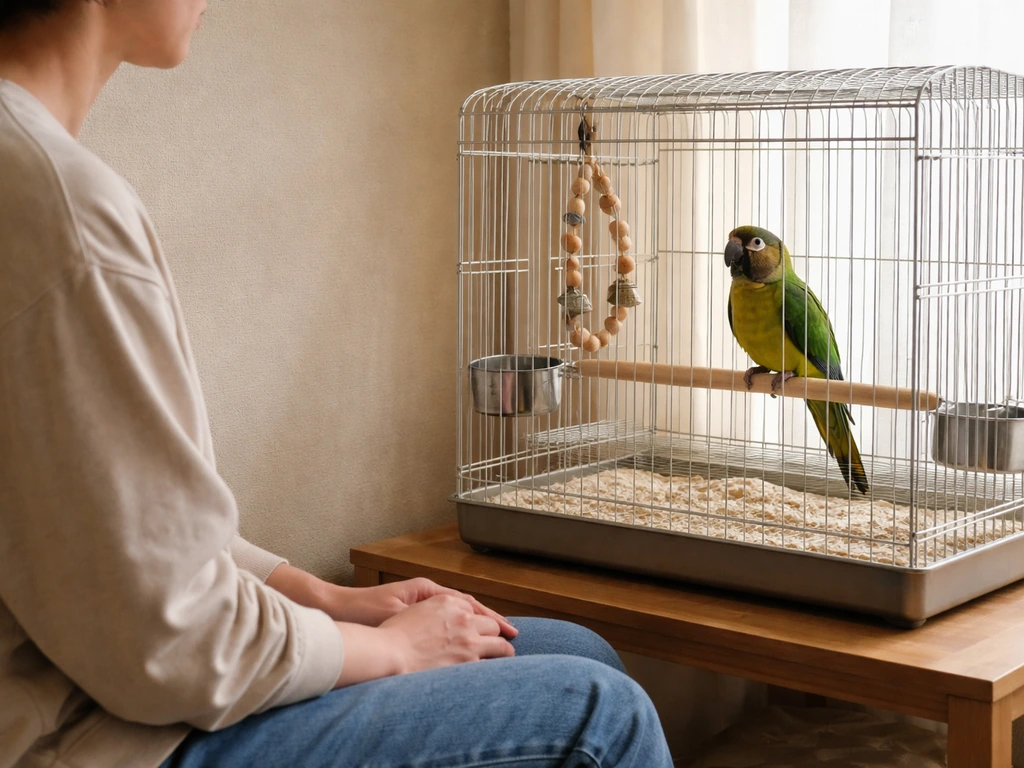
The goal isn't to force the bird to tolerate you. It's to give the bird enough good experiences with you that it chooses to stay. That shift takes time, but the steps are straightforward.
Build trust before asking for anything
Start by simply being present near the cage without trying to interact. Sit nearby, talk softly, and let the bird get used to your presence at a non-threatening distance. Offer favorite treats through the cage bars before ever reaching inside. The bird needs to associate you with good things before it will consider coming closer.
Desensitize to your hands gradually
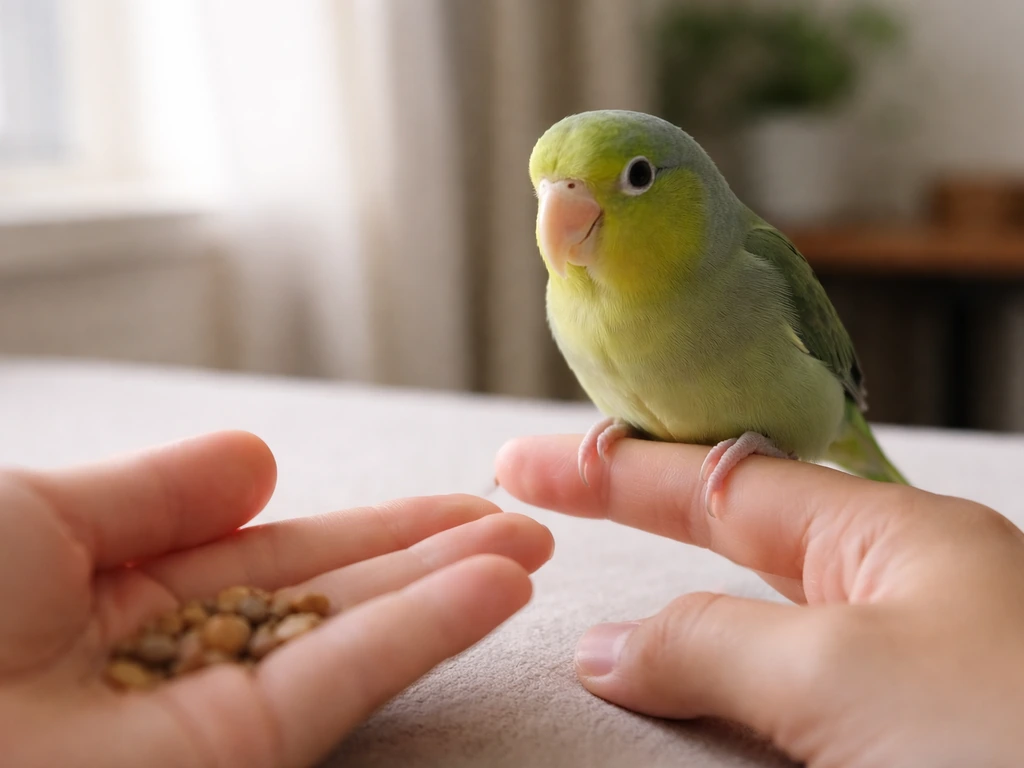
Desensitization means introducing the scary thing (your hand) at such a low intensity that the bird doesn't react with fear. You know you're at the right distance when the bird continues eating, preening, or vocalizing normally in your presence. If the bird freezes or moves away, you're too close. Back up. One practical trick: wear a sweatshirt with sleeves pulled down over your hands at first, so your hands are less visible. Gradually adjust as the bird becomes comfortable. Only move forward when the bird is calm, not when it's stressed.
Teach the step-up command
Step-up is the single most useful skill you can teach a bird, and it reframes interaction as the bird's choice rather than something done to them. Practice in short sessions, ideally just a few minutes daily, only when the bird seems relaxed and receptive. Use a consistent verbal cue in a calm tone, and reward immediately with a high-value treat. Keep early sessions very brief and end on a positive note before the bird gets frustrated. Over days or weeks, the bird begins to understand that stepping up leads to something good, which changes the whole emotional equation.
If a bird has a long history of fear around handling, normal step-up training may need to be adapted. The principle shifts from 'teach the bird to comply' to 'teach the bird to approach voluntarily.' This can take longer, but it produces a much more stable result. If you're dealing with a deeply fearful bird, working with an avian behavior specialist is worth considering.
Rules that make a real difference
- Always move slowly and predictably around your bird
- Stop and step back the moment the bird shows distress signals, don't push through
- Keep training sessions short (2 to 5 minutes) so the bird doesn't get overwhelmed
- Use favorite foods as rewards, not just praise
- Don't let strangers handle the bird unless the bird shows genuine curiosity about them first
- Avoid gloves during handling as they add a strange sensory element and can confuse the bird's response to hands
Environmental setup: perches, cage placement, and social stress
Where the cage sits and how it's set up has a bigger impact on a bird's sense of safety than most owners realize. A bird that feels exposed, cramped, or constantly startled by its environment is going to be more reactive to everything, including you.
Cage placement
The cage should be in a room where family activity happens naturally so the bird gets used to normal household sounds and movement without being overwhelmed. A living room or family room usually works well. Avoid placing the cage in the kitchen (cooking fumes and temperature swings are dangerous), in bathrooms or bedrooms where aerosols are commonly used, or near windows in direct sunlight where the bird can overheat. Drafts are also a real concern, so keep the cage away from air conditioning vents and exterior doors.
One detail that's easy to overlook: the cage shouldn't sit in the middle of constant foot traffic. Birds want to see activity, not be inside it. A position against a wall gives the bird a sense of security on at least one side, which reduces baseline stress.
Inside the cage
The cage needs to be large enough for the bird to fully stretch its wings and move naturally. Birds with too little space become stressed more easily and may become defensive of the limited territory they do have. Perches should be at different heights, since birds naturally feel more secure at higher positions. It's also worth providing a small privacy area or partially hidden corner the bird can retreat to when it wants to be left alone. This isn't the same as encouraging isolation; it's giving the bird a choice, which actually reduces overall anxiety.
Routine and social stress
Birds are creatures of routine. A sudden change in schedule, a new pet in the house, rearranged furniture near the cage, or a new person moving in can all throw a bird off and trigger more avoidance behavior. If the avoidance started around the same time as a life change, that connection is probably not a coincidence. Give the bird time to adjust and keep interactions low-pressure during the transition.
Health and wellness red flags that can look like 'running away'
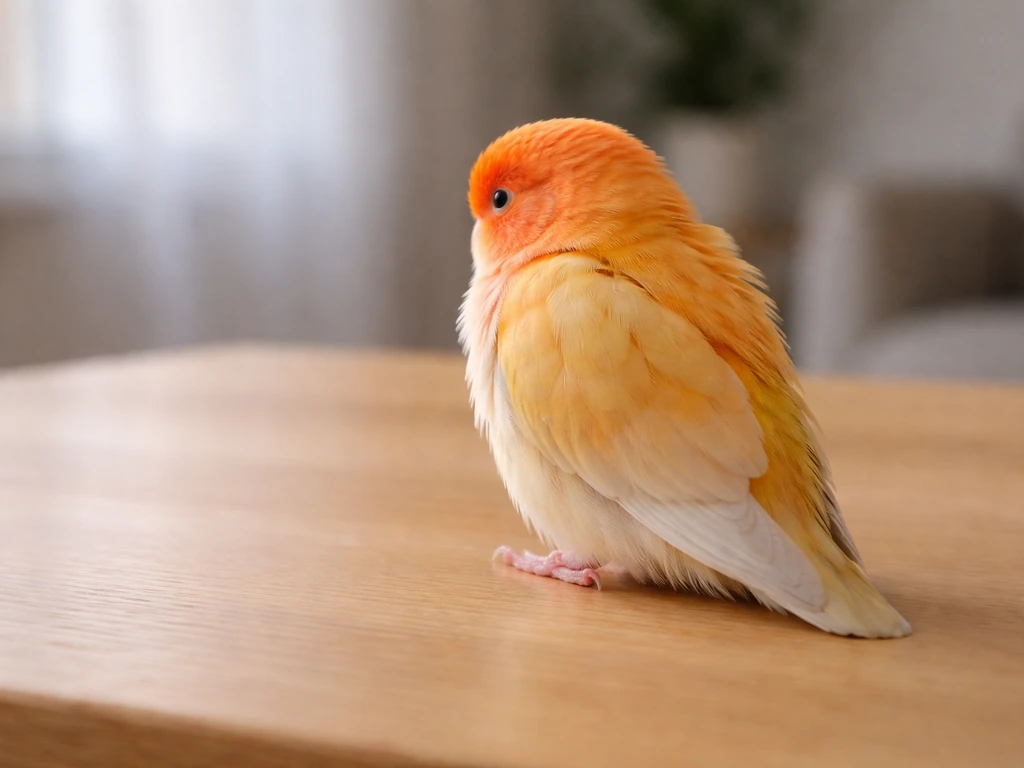
Sometimes a bird that suddenly starts avoiding contact isn't just scared. If you want more specifics, look into why your bird is hiding and what to check first. Understanding why would a bird not fly away can help you tell the difference between fear, safety needs, and health issues. It may be unwell. Birds instinctively hide signs of illness (because showing weakness in the wild is dangerous), so by the time you notice something is off, it's often worth taking seriously. Avoidance or increased sensitivity to touch can be one of the first subtle signs.
Watch for these signs alongside the flight behavior, because any of them combined with new or worsening avoidance should prompt a vet call: VCA also flags signs like fluffed feathers, labored or open-mouth breathing, tail bobbing with breathing, sneezing, and not perching for extended periods as reasons to seek prompt care prompt a vet call.
- Fluffed feathers when the bird isn't sleeping or cold (can signal fever, chills, or general illness)
- Hunched or low posture, sitting at the bottom of the cage rather than on a perch
- Labored or open-mouth breathing, tail bobbing with each breath, or audible wheezing
- Sneezing frequently or showing discharge around the eyes or nostrils
- Reduced appetite or a noticeable drop in energy and activity
- Weakness, difficulty gripping the perch, or loss of coordination
- Increased respiratory rate at rest with no obvious environmental cause
Open-mouth breathing and tail bobbing are especially urgent signs. These often indicate respiratory distress, which can escalate quickly in birds. If you see either of those, don't wait to see if it improves, contact an avian vet the same day.
It's also worth noting that if your bird seems to be hiding more than usual, or facing away from you consistently rather than just flying off, those behaviors can overlap with illness-related withdrawal. If your bird turns his back to you repeatedly, it's often a sign he's feeling unsafe or trying to increase distance facing away from you consistently. Similarly, if the bird seems desperate to escape rather than just avoid, that warrants a closer look at both the environment and the bird's physical state. If your bird seems desperate to escape, it can also be a sign of stress or an underlying health problem, so check both its environment and behavior.
Step-by-step troubleshooting plan and when to call an avian vet
Here's how to work through this systematically, starting today. If your bird keeps trying to escape despite changing your approach, this troubleshooting plan can help you narrow down why is my bird trying to escape and what to do next. Go through these steps in order before assuming the worst.
- Observe for 10 minutes without interacting. Watch the bird's posture, breathing, and energy level. Is it sitting normally on a perch, active, and alert? Or does it look fluffed, weak, or hunched? If anything looks physically off, skip to step 6.
- Check the environment. Has anything changed recently near the cage? New furniture, a different room, a new pet, a schedule change, or an unusual smell? Identify any recent changes and, where possible, reverse or minimize them.
- Audit your own approach. For the next few interactions, move slowly, approach from the side rather than above, crouch down to the bird's level, avoid direct staring, and speak softly. Note whether the flight distance changes.
- Start trust-building from scratch if needed. Spend time near the cage each day without asking anything of the bird. Offer treats through the bars. Let the bird set the pace. Do this for at least 5 to 7 days before attempting to handle.
- Introduce short, low-pressure training sessions. Once the bird is comfortable with your presence, begin step-up practice for 2 to 5 minutes a day using positive reinforcement. Stop at the first sign of stress.
- Look for health red flags. If the bird is also showing fluffed feathers, labored breathing, tail bobbing, weakness, reduced appetite, sneezing, or sitting on the cage floor, contact an avian vet promptly. Don't try to handle a bird that may be in respiratory distress.
- Track progress over two weeks. A bird working through a trust issue should show gradual improvement: shorter flight distance, calmer response to your hand near the cage, and willingness to take treats. If there is no improvement after two to three weeks of consistent effort, consult an avian behavior specialist.
- Call an avian vet if: the avoidance started suddenly with no clear cause, it's accompanied by any physical symptoms, the bird seems to be in pain when touched, or the bird is deteriorating despite your best efforts.
Most birds that fly away from their owners can be brought around with time, consistency, and a shift in how interactions are handled. The key is reading the bird's signals accurately and responding to them rather than pushing through discomfort. Steady, patient, low-pressure contact almost always works better than frequent forced handling. And if something feels off beyond simple fear, getting an avian vet involved early is always the right call. If your bird is actually unable to fly, a vet check is important because illness or injury can be the cause.
FAQ
Is it bad if my bird flies away every time I try to interact?
Not necessarily. Frequent fleeing usually means your approach cues are too intense or too fast (your distance, body angle, hand visibility, or eye contact). The fix is to pause and reduce intensity until your bird can keep eating or preening, then slowly rebuild closeness through treats and short step-up sessions.
How do I tell the difference between fear and my bird wanting space?
Fear triggers often come with strong threat posture (flattened feathers, pinning eyes, leaning away, hissing). Space-seeking is more neutral (bird moves away but posture stays relaxed, feathers not tight, and it continues normal routines). If it is calm when it retreats, give choice and avoid immediate pursuit.
What should I do if my bird flies to the back of the cage when I approach?
Back up immediately and wait. Offer a high-value treat from the outside while staying still, or toss a treat a short distance into the cage so the bird can choose to come out when ready. Avoid repeating the approach, because repeated pressure teaches the bird to flee further.
Can I train my bird to step up if it bites or looks terrified?
Yes, but avoid forcing compliance. Use a voluntary approach, start with very brief sessions, and reward any step toward your hand, even just looking or touching the perch with its feet. If bites escalate, stop and consult an avian behavior specialist because the plan may need to change to cooperative approach training.
Does eye contact really matter with birds?
Often it does. Direct, sustained eye contact plus a forward lean can read as a threat. Try side-on body positioning, softer gaze, and pause with your hands below shoulder height so the bird can feel in control rather than targeted.
Why does my bird react more to my hands than to my face?
Hands are used for grabs, vet handling, and accidental pinching or reaching over the head. Even if you never intended harm, your bird may have learned hands predict something unpleasant. Wear sleeves over hands at first, bring treats using a consistent motion, and only offer step-up when the bird is already calm.
How can I prevent the “fleeing works” habit from getting worse?
Stop chasing or closing the distance when your bird retreats. Instead, increase distance when you see early stress signals, then reattempt from farther away after the bird returns to normal behavior. Reinforcement matters, if the bird flees and you follow, you accidentally reward avoidance.
What if the avoidance started suddenly after a routine change?
Treat it like a cause-and-effect clue. Identify what changed in the previous days (new furniture near the cage, a new cleaning product or aerosol, rearranged room traffic, new person entering, pet in the home). Keep interactions low-pressure during adjustment, and consider whether any new scent, temperature shift, or noise could be triggering fear.
When should I call an avian vet instead of only doing training?
Call promptly if avoidance began suddenly and is paired with health red flags such as open-mouth breathing, tail bobbing, consistent hiding with decreased activity, or abnormal droppings. Also call if you notice sudden changes in eating, vocalization, perching balance, or sensitivity to touch, since birds hide illness until it is advanced.
Is my cage placement the cause, and how do I adjust it?
It can be. A cage in heavy foot traffic can keep stress levels high, and drafts or temperature swings can make birds reactive. Aim for a room with normal household quiet activity, place the cage near a wall for at least one secure side, avoid kitchen fumes and direct window sun, and keep it away from vents and exterior doors.
Should I cover the cage to calm my bird when it flies away?
Sometimes partial cover helps at night or during fear-provoking moments, but it should not be used as a default way to isolate the bird from you. If covering is done, it should be consistent and partial so air flow and normal light cycles are maintained, and you still work on trust through low-pressure presence and treats when the bird is out of active fear.
What is the best way to start desensitization if my bird won’t take treats?
Start even smaller. Sit farther away and talk softly, then gradually move closer in tiny increments only when the bird is relaxed enough to blink normally and keep posture loose. If treats are refused, try a different high-value food the bird likes, and offer it in a way that does not require reaching closer than your current safe distance.
Next Article
Why Is My Bird Hiding? Causes, Checklist, and Next Steps
Learn why your bird is hiding, how to spot normal vs illness signs, and what to do today and when to see an avian vet.