If your Little Live Pets bird isn't working, the first thing to figure out is whether you're dealing with a toy malfunction or a real pet bird that's acting off. If your bird scooter feels slow, start by checking the basics, then move on to the specific fixes for reduced speed why is my bird scooter slow. Those two situations call for completely different responses.
Little Live Pets Bird Not Working: Troubleshooting Guide

Marcus Chen
16 May 2026
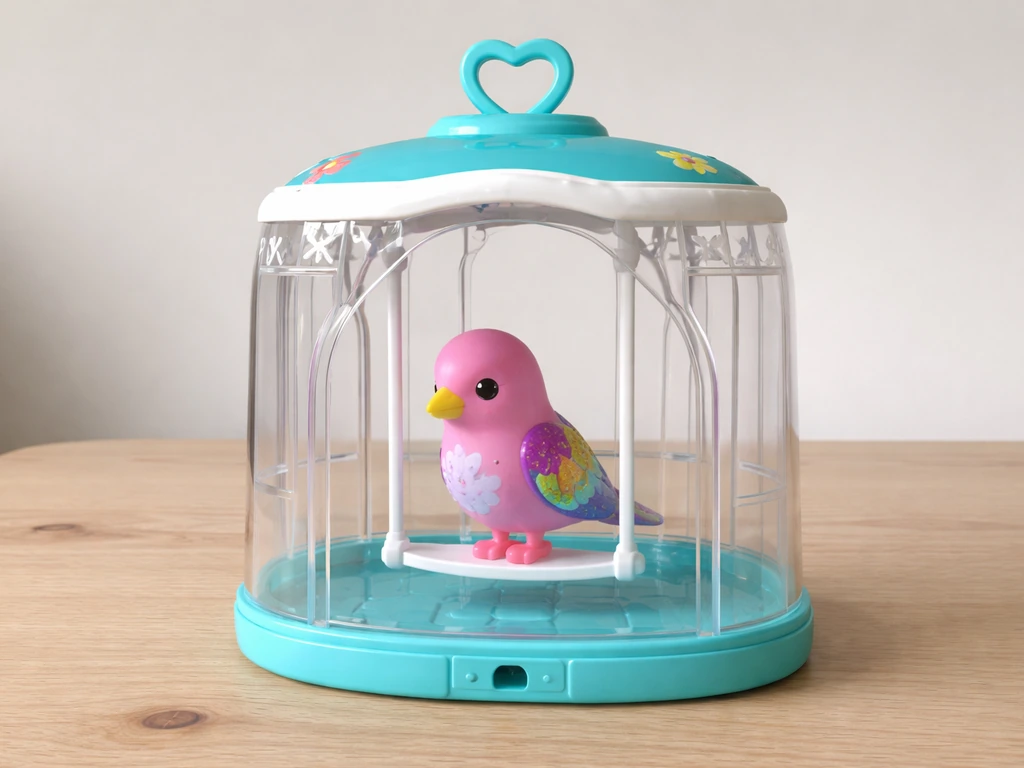
A Little Live Pets lil bird toy that won't chirp or move usually needs a battery swap, reset, or sensor check. If you meant a bird scooter toy, troubleshooting the power, charging, and sensors can help you figure out why it is not working lil bird toy that won't chirp or move.
But if you have a live pet bird that seems "not working" (meaning lethargic, not moving normally, fluffed up, or breathing oddly), that's a health situation you need to assess right now.
Quick diagnosis: what "not working" actually means here
Before you do anything else, pin down which category you're in. There are three possible situations, and each one has its own troubleshooting path.
| Situation | What you're seeing | Where to start |
|---|---|---|
| Toy/device issue | Little Live Pets lil bird won't chirp, move, or respond to touch | Battery, reset, sensor check |
| Pet bird behavior issue | Live bird is quiet, still, won't eat, or acting unusual but otherwise looks okay | Environment and routine check |
| Pet bird health emergency | Live bird is fluffed, lethargic, breathing with open beak, or on the cage floor | Avian vet contact immediately |
If you have the toy, jump to the next section for a fast device fix. If you have a live bird, skip ahead to the home checks and symptom guide. If you're unsure and your bird is on the cage floor or breathing visibly hard, treat it as an emergency and call an avian vet now.
For the toy: quick fixes for a Little Live Pets lil bird that won't respond
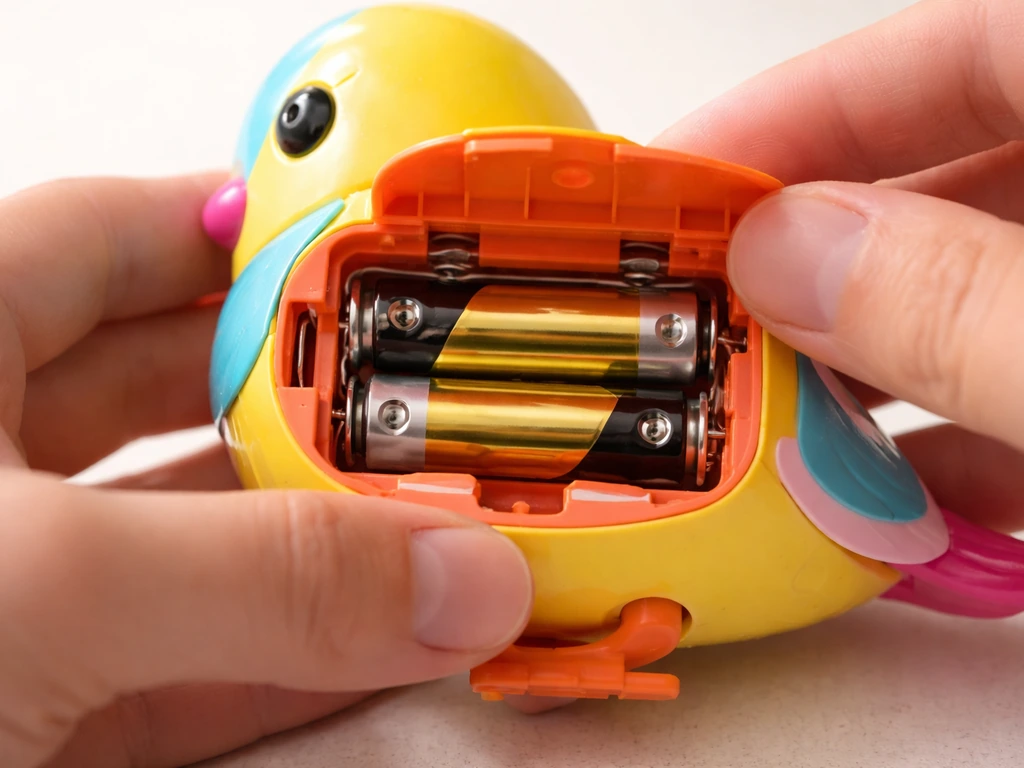
Most Little Live Pets bird malfunctions come down to a few simple issues. Work through these in order before assuming the toy is broken.
- Check the batteries first. The lil bird needs fresh batteries seated correctly with the right polarity. Old or partially drained batteries are the most common cause of no movement or no sound.
- Look for the on/off switch. Many Little Live Pets birds have a small switch on the bottom or back. Make sure it's in the ON position.
- Clean the touch sensors. If the bird responds to touch, finger oils or debris can block the sensors. Wipe the perch or sensor area with a dry cloth.
- Try a reset. Remove the batteries, wait 30 seconds, reinsert them, and power the toy back on.
- Test it on a hard, flat surface. Some models are sensitive to surface type. A soft or uneven surface can prevent the motion mechanism from triggering.
- Check for physical obstructions. A stuck wing, tail, or beak can prevent movement. Gently check that no part is jammed.
If none of that works and the toy is still under warranty, contact the manufacturer directly. For connectivity-based bird monitors and smart devices (like Bird Buddy), offline or connection issues usually mean a router restart, re-pairing the device, or reinserting the camera module to re-establish the Bluetooth connection. Those troubleshooting steps are a different category entirely from a Little Live Pets toy.
Immediate checks at home if you have a live pet bird
If your pet bird seems "not working" (meaning quiet, still, or off in some way), start with these environmental checks before assuming illness. If you can see the cage and bird clearly, you can use simple signs like normal posture and breathing to figure out whether your bird buddy is on or not how do i know if my bird buddy is on. A lot of behavioral changes in birds trace back to something fixable in the cage setup or daily routine.
Temperature and drafts
Birds are sensitive to temperature drops and drafts. Check that the cage isn't near an air vent, open window, or exterior wall that gets cold at night. Most pet birds do best between 65 and 80 degrees Fahrenheit. A bird that's cold will fluff up its feathers to conserve heat, and that's easy to misread as illness when the fix is just moving the cage.
Food and water
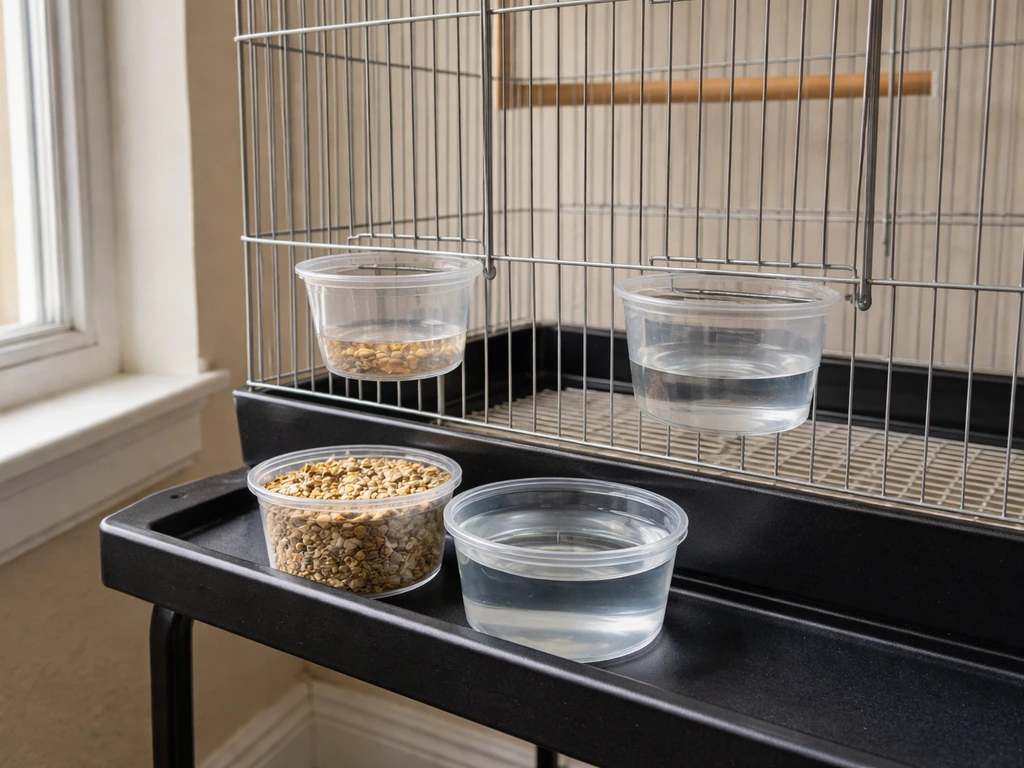
Check that fresh food and water are available and accessible. Seed cups that look full can actually be mostly empty hulls. Remove the top layer and see what's underneath. Water that's been sitting for more than a day should be replaced. Dehydration and hunger can make a bird look lethargic surprisingly fast.
Sleep and light cycle
blank" rel="noopener noreferrer">Most pet birds need 10 to 12 hours of sleep per night. A bird that isn't getting enough dark, quiet time will appear sluggish and out of sorts during the day. If your bird's cage is in a room with lights on late into the evening, or near a TV, it may simply be sleep-deprived. Cover the cage at night and make sure it gets consistent quiet darkness.
Cage placement and stressors
Look at what's around the cage. A new pet in the home, a mirror placed nearby, loud noises, or even a plant the bird finds threatening can cause stress-related behavioral shutdowns. Move the cage to a calm, stable location away from high-traffic areas if something has recently changed in the environment.
Common causes in pet birds: stress, illness signs, and behavioral red flags
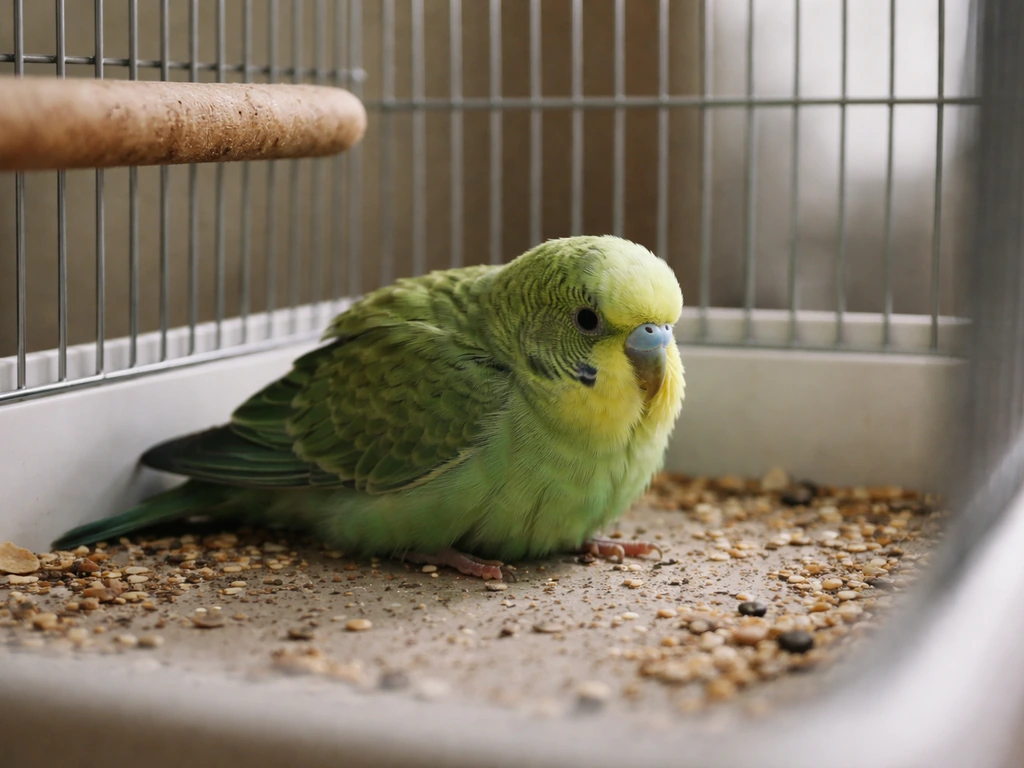
Once you've ruled out environmental issues, it's time to look more closely at the bird itself. Birds are prey animals and naturally hide illness, so by the time you notice something is off, the situation may already be progressed. That's why knowing the difference between a stress response and a health warning matters. If your main goal is capturing photos, also check whether your bird is too stressed or unwell to stay active for the camera bird not taking pictures.
Stress responses that look like illness
A stressed bird may go quiet, stop playing, or sit still for extended periods. Tail bobbing paired with fanning can be a courtship behavior in some birds, but tail bobbing that moves in rhythm with the bird's breathing is a sign of stress or respiratory effort, not a quirk. New cage mates, rearranged furniture, loud construction outside, or even a change in your own schedule can trigger a stress response. In these cases, the bird usually rebounds once the stressor is removed and the environment stabilizes.
Behavioral red flags that point to illness
- Sitting on the cage floor instead of a perch
- Eyes closed or half-closed during the day outside of normal nap time
- Feathers chronically fluffed up even in a warm room
- Reduced or absent vocalizations in a bird that is normally chatty
- Not responding to familiar people or sounds
- Visible weight loss or a prominent keel (breastbone) you can feel easily
- Changes in droppings (color, volume, consistency, or wetness) persisting beyond 12 to 24 hours
Any of these that persist for more than a day, or that appear suddenly alongside other symptoms, deserve a vet call. Birds can decline quickly once illness is visible to an owner.
Troubleshooting by symptoms
Here's how to read the specific things you're observing and what they likely mean.
Lethargy and not moving normally
A bird that's sitting low, moving slowly, or not reacting to stimuli it normally would can be sick, cold, exhausted from lack of sleep, or injured. Check temperature first, then food and water. If both are fine and the bird is still unusually still after an hour or two in a warm, quiet environment, treat it as a health concern. If the bird is lying on the cage floor or not gripping its perch, that's urgent.
Fluffed feathers
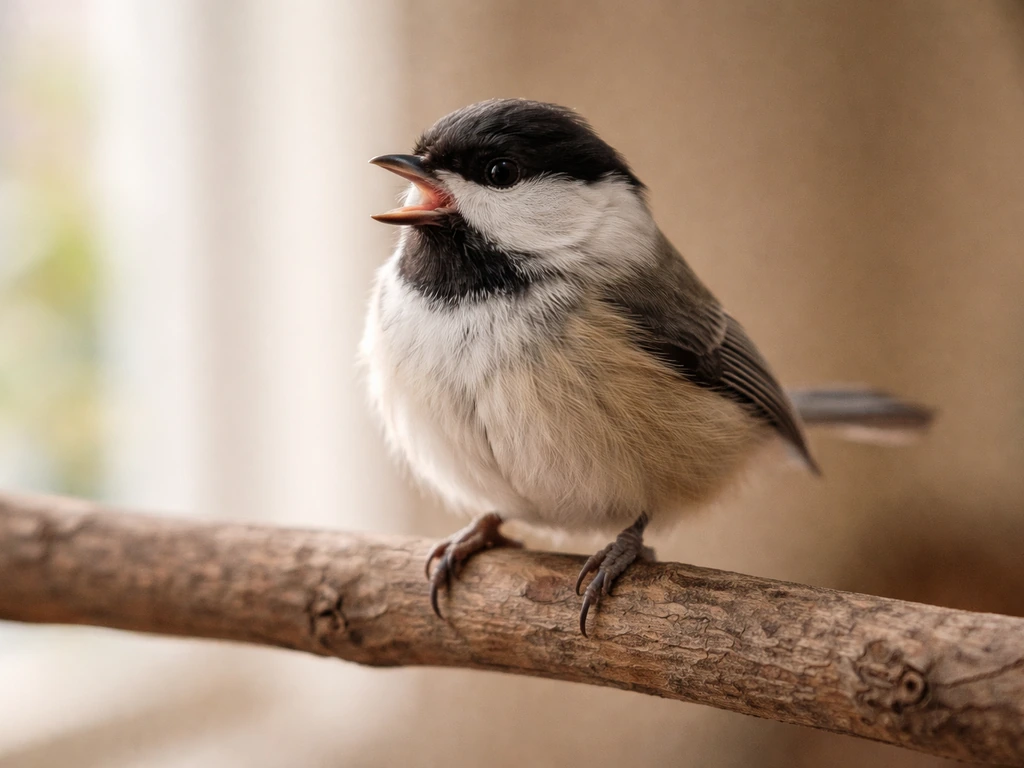
Fluffing is a bird's way of retaining body heat. A bird that's briefly fluffed after waking up or in a cooler part of the room is probably just chilly. A bird that stays fluffed all day, especially combined with closed eyes or reduced activity, is likely unwell. Check the crop (the pouch near the base of the neck) when you gently pick up the bird: if it feels empty mid-day when the bird should have eaten, or doughy and full when it shouldn't be, that's a sign worth flagging to a vet.
Breathing issues
This is the one you don't want to wait on. Breathing with an open beak in a resting bird is not normal. Neither is tail bobbing that moves in sync with each breath (a visible up-and-down motion of the tail with each inhale and exhale), wheezing, clicking sounds, or neck stretching. These are signs the bird is working hard to breathe, and that constitutes an emergency. Respiratory distress can escalate fast, and causes range from air sac mite infection to bacterial infection to toxin exposure. Don't wait overnight on breathing symptoms.
Appetite changes
A bird that's not eating is a bird in trouble. Unlike cats or dogs, small birds can deteriorate within 24 to 48 hours without food. LoveToKnow Pets notes that many birds are diurnal and that their sleep patterns differ from cats and dogs, often occurring in increments or periods [Unlike cats or dogs, small birds can deteriorate within 24 to 48 hours without food. ](https://www.
lovetoknowpets. com/birds/facts-about-how-pet-birds-sleep-what-they-need). If your bird isn't touching food it normally eats, and the food itself is fresh and well-placed, note when you last saw it eat. If you haven't seen it eat in more than 24 hours, call a vet.
A loss of more than 10% of body weight is a threshold that warrants a veterinary call even before other symptoms are obvious, though you'll need a gram scale to track this at home.
Droppings changes
Normal bird droppings have three parts: solid green or brown feces, white urates, and clear liquid urine. A change in any of these (bloody or black droppings, all-liquid consistency, very yellow or lime-green urates, extreme volume drop or increase) that lasts beyond 12 to 24 hours is worth flagging. Red or black droppings can indicate blood in the digestive or urinary tract, which needs veterinary attention the same day.
When to contact an avian vet or go to emergency care
Some situations are "watch and monitor" and some are "call right now." Here's how to tell the difference.
| What you see | What to do | Timeframe |
|---|---|---|
| Open-mouth breathing at rest | Emergency vet or avian emergency line | Immediately |
| Tail bobbing in rhythm with breathing | Emergency vet | Immediately |
| Wheezing, clicking, or labored breathing | Emergency vet | Immediately |
| Collapse, seizure, or uncontrolled bleeding | Emergency vet | Immediately |
| Blue or pale tissue around beak/feet | Emergency vet | Immediately |
| Bird on the cage floor, can't perch | Same-day avian vet | Within hours |
| Fluffed, closed eyes, no eating for 24 hours | Same-day avian vet | Today |
| Droppings significantly changed for 12-24 hours | Call avian vet for guidance | Today or next morning |
| Lethargy without breathing symptoms, eating poorly | Call avian vet for guidance | Within 24 hours |
| Quiet but eating, drinking, and perching normally | Monitor and recheck in 24 hours | Watch closely |
If you don't have an avian vet established, search for one now rather than waiting until you need one urgently. General dog-and-cat vets often don't have avian expertise, so finding a certified avian vet or exotic animal specialist ahead of time is worth the effort.
Preventing repeat issues: building a simple wellness routine
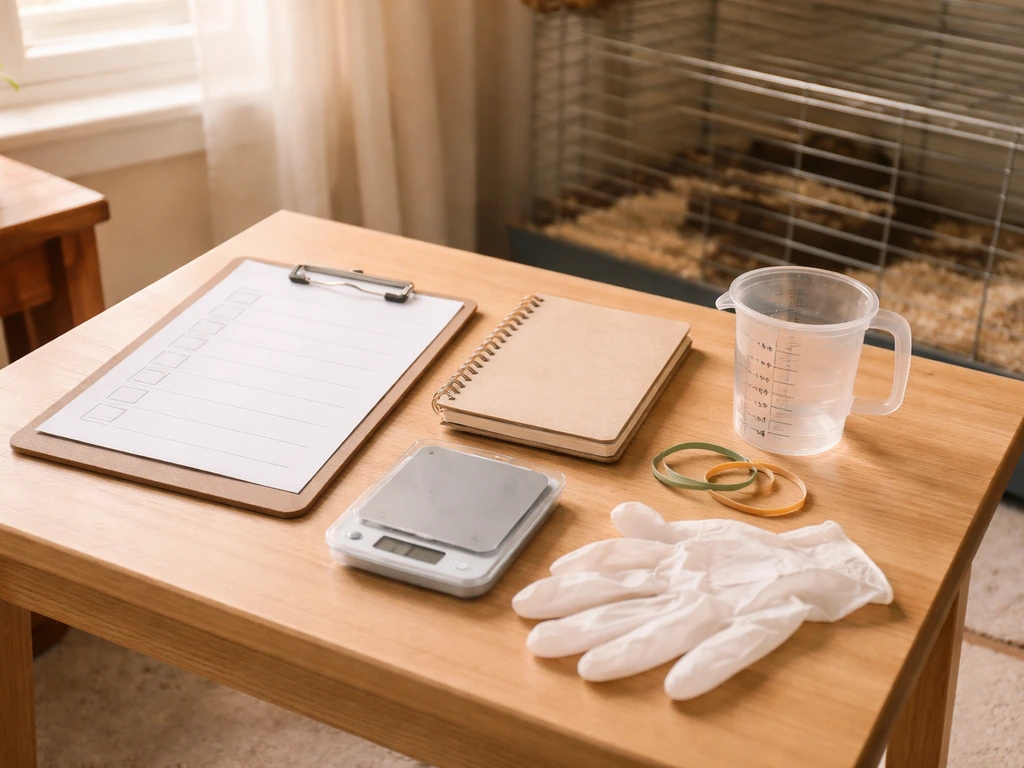
The best way to catch problems early is to build a quick daily observation habit. You don't need to be a vet to notice when something's off: you just need to know what normal looks like for your specific bird.
Daily checks to make a habit
- Look at droppings every morning before cleaning the cage tray. Note any changes in color, volume, or consistency.
- Watch the bird for a few minutes before interacting. Is it perching normally, alert, and vocalizing as usual?
- Check food and water: refill fresh water daily and verify the bird is actually eating (not just sitting next to a full dish).
- Note whether the bird's feathers look smooth and held tight to the body during active hours.
- Listen for changes in breathing sounds, especially any new clicks, wheezes, or heavy exhales.
Weekly and monthly monitoring
Weigh your bird weekly on a gram scale and keep a simple log. Small, consistent weight loss is often the first detectable sign of a health problem, and you won't catch it by looking. A monthly check of the cage environment (perch condition, air quality, any new products or candles used in the home) helps you spot potential stressors or toxin sources before they become a problem. Many birds are sensitive to non-stick cookware fumes, scented candles, and aerosol sprays, so keeping the bird's space away from the kitchen and well-ventilated is part of routine prevention.
Annual vet visits
Even a healthy-looking bird benefits from an annual wellness exam with an avian vet. Birds are good at hiding illness, and a vet can often detect early-stage problems (weight changes, early respiratory issues, nutritional deficiencies) that are invisible to the owner at home. Establishing that relationship also means you have someone to call quickly when something like this comes up, instead of searching for help in a stressful moment.
FAQ
If my little live pets bird looks “not working,” how do I know it’s a health emergency and not a routine issue?
Do not treat a fluffed, quiet, or “lying low” live bird the same way as a toy issue. If you see open-beak breathing, tail bobbing in sync with each breath, wheezing, or clicking, treat it as respiratory distress and seek an avian vet immediately (do not wait overnight).
What’s the right timing for calling a vet if my live bird isn’t eating?
Use a simple timeline: note the exact time you last saw normal eating, then compare to when the bird was last energetic and responsive. If you have not observed the bird eating for 24 hours, even if the bird is still, call an avian vet.
How much weight loss is considered serious for a small pet bird?
Yes. If you can safely weigh the bird, track body weight with a gram scale. A loss of more than 10% from baseline is a practical threshold for veterinary contact, even if other symptoms seem mild.
How can I tell whether fluffing is from being cold versus illness?
If the bird is cold, expect fluffed feathers, but the bird should still improve once warmed and left in a quiet, draft-free spot. If fluffing persists all day, or comes with reduced activity, closed eyes, or abnormal droppings, it is more than just temperature and needs veterinary advice.
How do I distinguish stress-related behavior from a real health problem?
Check how the bird is positioned: a sick or exhausted bird may sit low and react less, while stress is often more changeable and linked to an obvious trigger (new setup, loud activity, mirror nearby). If symptoms do not improve after the environment is stabilized for a day, switch from “stress” assumptions to “health concern” checks.
If my bird won’t move much for photos, when is it too risky to keep trying?
A songbird that is too stressed can be less active for photos, but a bird that is breathing abnormally or not perching normally should not be photographed. If you notice breathing effort or the bird won’t grip, prioritize care over capturing images and contact a vet.
My “little live pets bird” isn’t working, how can I tell whether it’s a toy problem or the bird itself?
For toy failures, confirm it is truly the device that is not working, not the live bird setup. For example, a toy that “won’t chirp or move” usually needs battery replacement, a reset, or a sensor check, while a live bird that is “not working” needs home environment and symptom assessment.
Is it safe to check the crop, and what should I avoid doing during troubleshooting?
Birds can panic or hide symptoms in transport or when handled. If you need to check crop feel, keep it gentle, brief, and only when the bird is calm enough to prevent injury. If the bird is already showing breathing problems or is not gripping, skip handling and contact a vet instead.
What are signs that “not working” behavior might simply be sleep deprivation?
For environmental sleep issues, cover the cage at night and keep consistent dark, quiet hours. If lights stay on late in the evening or the room has frequent nighttime activity, the bird may look sluggish the next day even without illness.
What’s the fastest way to confirm the bird is actually eating and drinking when the cups look okay?
In addition to food appearing “full,” verify freshness and access: remove the top layer of seed to confirm it is actually there, and replace water that has been sitting more than a day. If the bird looks lethargic and you cannot confirm it has fresh food and water within easy reach, treat it as urgent until proven otherwise.
Could household odors or fumes make my bird look like it’s “not working,” and what should I do right away?
If your home uses non-stick cookware, aerosols, scented candles, or heavy air fresheners, move the bird area away from the kitchen and ensure good ventilation. Fumes can cause respiratory distress, which is a “do not wait” symptom.
What should I set up in advance so I’m not scrambling if my bird suddenly gets worse?
If you do not have an avian vet established, don’t wait until symptoms are severe. Start searching for one before an emergency, and keep their contact details accessible so you can act quickly if breathing, eating, or droppings change.
Next Articles
Why Is My Bird Buddy Not Taking Pictures? Fix It Fast
Troubleshoot why your Bird Buddy won’t take pictures: power, storage, permissions, settings, Wi‑Fi, and lighting checks.
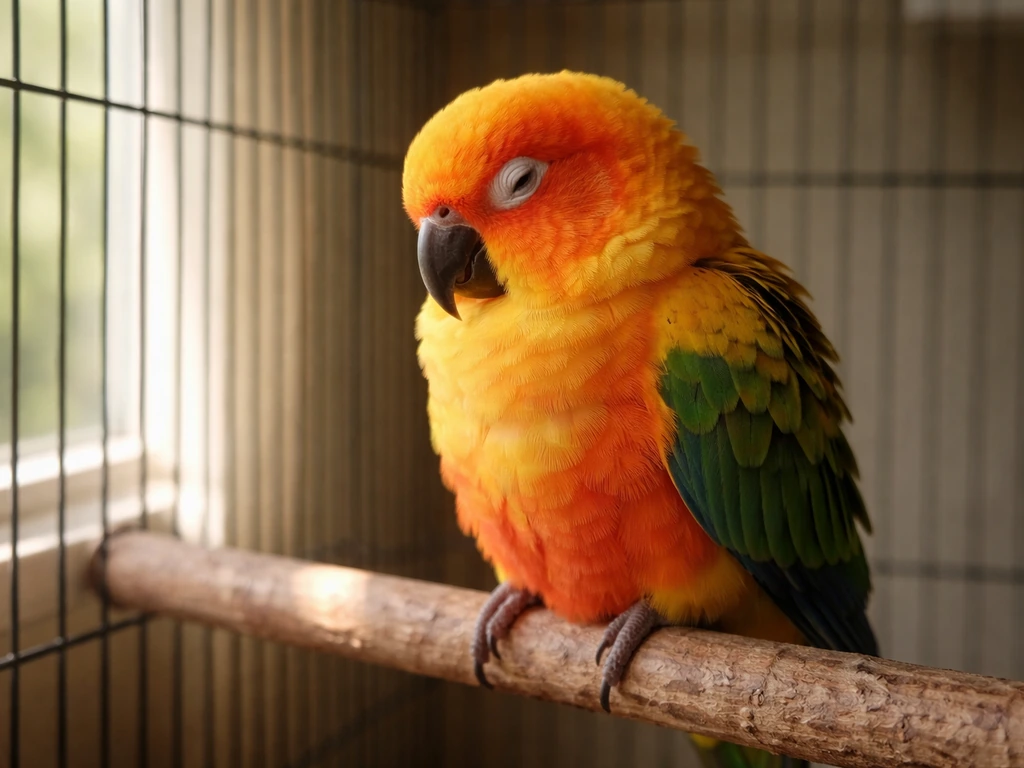
Why Is My Bird Sleeping During the Day? Causes and Quick Checks
Daytime bird sleep explained with quick at-home checks, red flags, and safe steps to improve comfort and routine.
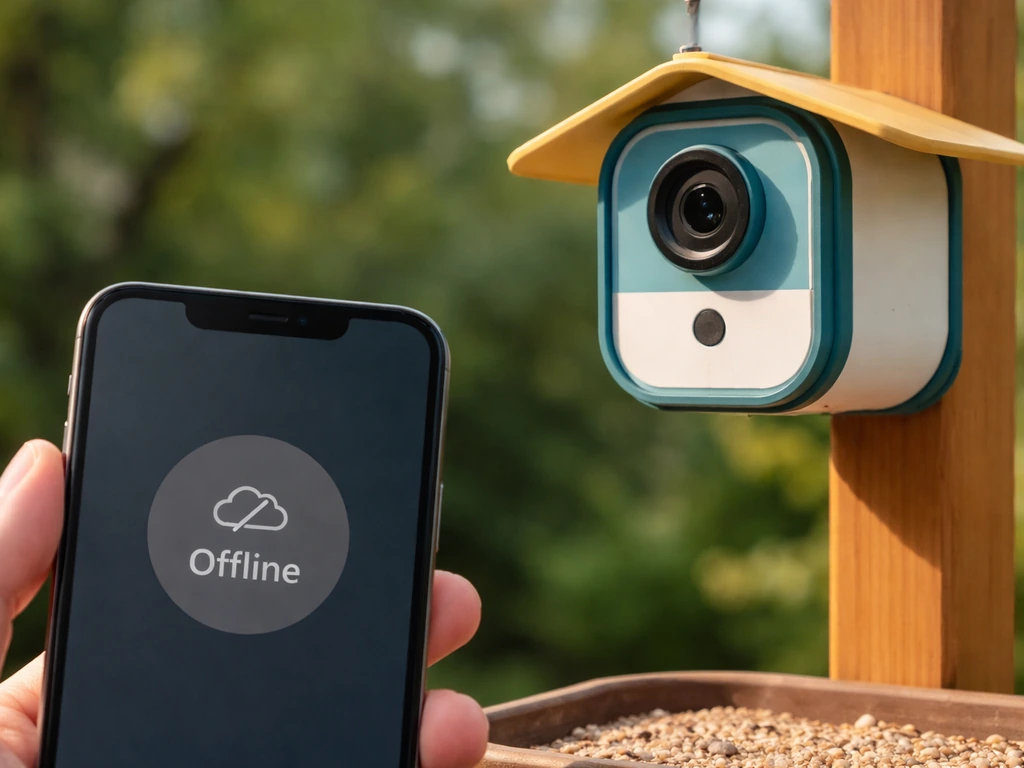
Why Is My Bird Buddy Offline? Fix Connectivity Fast
Troubleshoot Bird Buddy offline fast: power, Wi‑Fi/Bluetooth, app login, re-pairing, updates, signal fixes, and health r