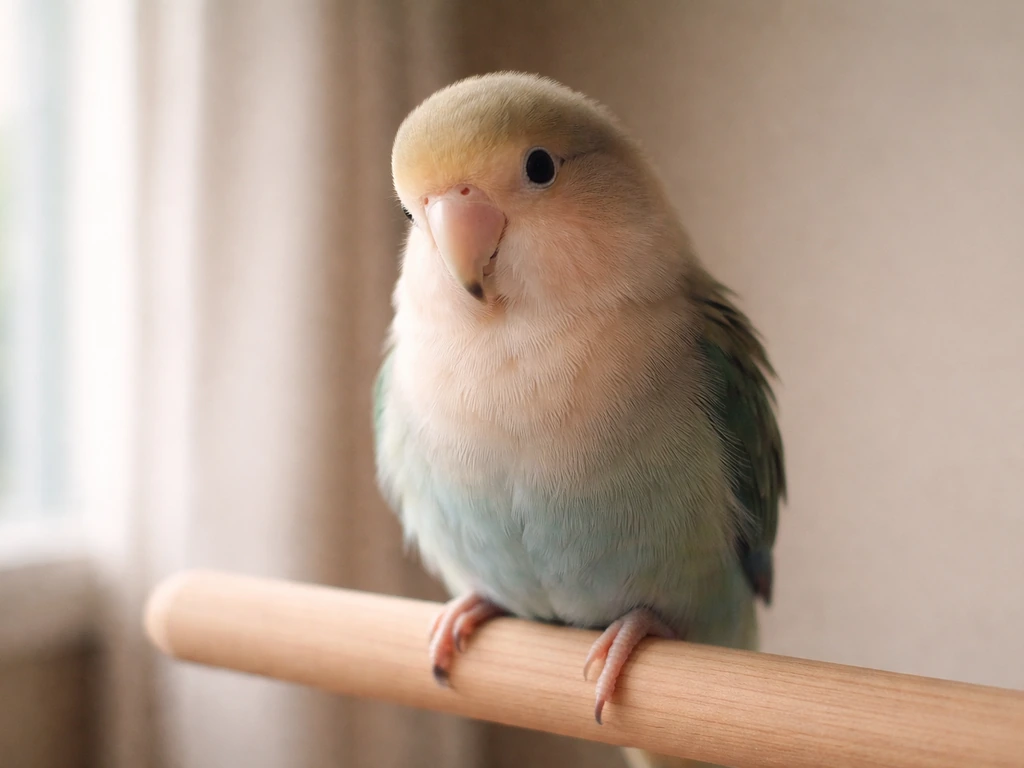
The good news is that a typical human common cold is very unlikely to infect your pet bird. The viruses that cause most human upper-respiratory infections, like rhinovirus, are species-specific. They evolved to replicate in human cells, not avian ones. That said, "very unlikely" is not the same as "impossible," and the bigger concern is not really your cold virus jumping species but rather the fact that birds can pick up their own respiratory infections, that close contact with a sick person stresses them, and that bird respiratory symptoms can escalate fast. So the right move is to reduce exposure now and watch your bird closely.
Can My Bird Catch My Cold? Risks, Symptoms, and What to Do

Marcus Chen
3 May 2026
Why Your Cold Probably Won't Spread to Your Bird
Most human colds are caused by rhinoviruses, coronaviruses (the common-cold kind, not COVID-19), or adenoviruses. These pathogens are adapted to human respiratory cells and typically cannot replicate efficiently in birds. The same goes for most strains of human influenza. There is no solid evidence that a routine seasonal cold passes from person to bird in the way, say, a cold can pass between two people sharing a room.
That said, a few important caveats apply. First, not every "cold" is the same illness. Some respiratory infections are more unusual, and some viral strains have shown broader host ranges. Second, bird flu (avian influenza) works in the opposite direction: it is a bird-origin virus that occasionally infects humans, not the other way around. If you are worried about that angle, the CDC notes that while human-to-pet transmission of bird flu is considered unlikely, close contact is still a possible risk factor, and any bird showing flu-like signs should be seen by an avian vet promptly.
How Transmission Actually Works
Even if your specific cold virus is not the direct threat, understanding the transmission pathways matters because birds are exposed to whatever is in your environment.
Respiratory Droplets and Shared Air
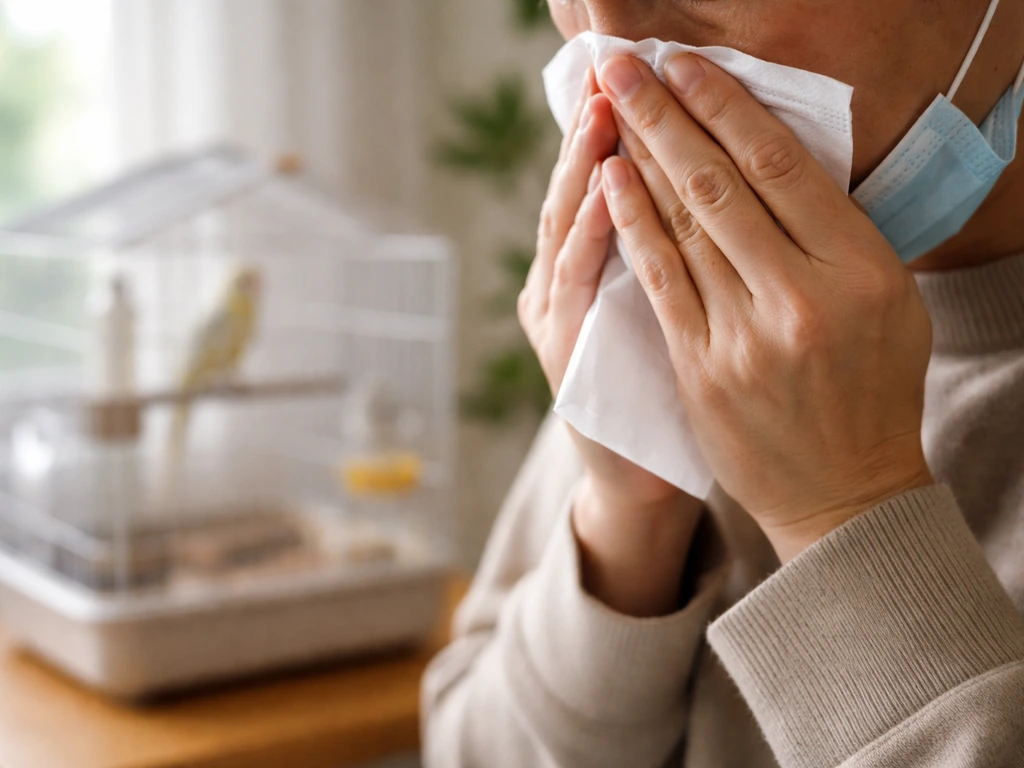
When you sneeze, cough, or breathe near your bird, you release droplets and aerosols. Even if your cold virus does not infect the bird, other microorganisms and irritants in those droplets can affect a bird's sensitive respiratory tract. Birds have extremely efficient respiratory systems and are highly sensitive to airborne particles, which is why air quality matters so much for them in general.
Hands and Surfaces
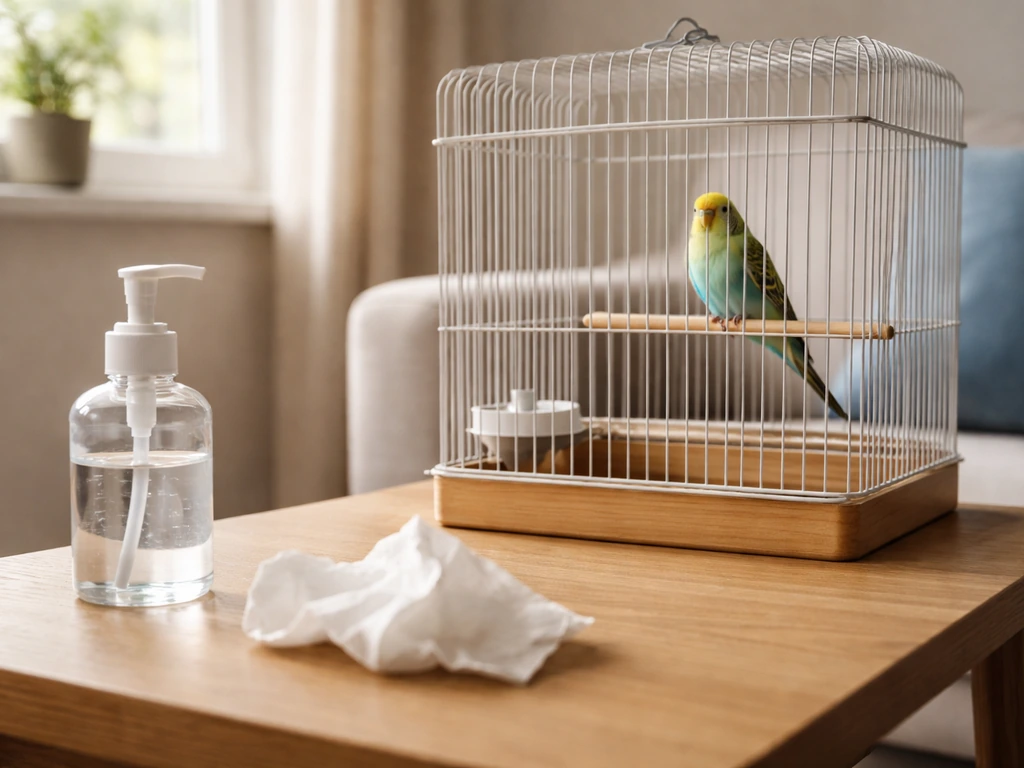
Your hands are one of the bigger contact points to think about. If you handle your bird, fill food and water dishes, or clean the cage without washing your hands first, you transfer whatever is on your skin to surfaces your bird will touch and mouth. Indirect transfer like this is worth taking seriously even when the direct airborne risk is low.
Close Contact and Stress
Handling a bird while you are sick also puts the bird under physical stress. Close face-to-face contact, breathing directly on the bird, or kissing your bird on or near the beak are the highest-risk interactions to avoid when you are symptomatic. Stress itself can suppress a bird's immune response and make it more vulnerable to its own bacterial or respiratory infections.
Bird Symptoms to Watch vs. Normal Behavior
One of the trickier parts of bird ownership is that birds naturally hide illness. In the wild, showing weakness attracts predators, so they are wired to mask signs until they cannot anymore. By the time a bird looks obviously sick, it has often been unwell for a while. Knowing what to watch for is genuinely useful.
| Behavior or Sign | Usually Normal | Potential Red Flag |
|---|---|---|
| Sneezing | Occasional sneeze (1-2 times, no discharge) | Frequent sneezing, wet discharge, or crusting around nares |
| Nasal area | Clean, dry nares | Discharge, swelling, or staining around the nostrils |
| Breathing | Quiet, effortless | Tail bobbing with each breath, open-mouth breathing, clicking sounds |
| Energy level | Active, curious, vocal at usual times | Sitting low on perch, eyes closing during the day, unresponsive to stimulation |
| Feathers | Smooth, preened, held close to body during rest | Consistently fluffed up outside of sleep, especially combined with other signs |
| Appetite | Eating regularly throughout the day | Ignoring food, reduced droppings, or droppings that look watery or off-color |
| Droppings | Consistent in color and texture for that bird | Very watery, unusually dark, or dramatically reduced in number |
| Voice | Normal chatter, calls, or songs | Unusual quietness or changes in vocalization |
It is also worth remembering that a bird can develop its own respiratory infection completely independently of your cold. If your bird starts showing symptoms while you are sick, that does not automatically mean you caused it, but it does mean you need to monitor closely and act quickly. If your cockatiel is acting off and you think, "my cockatiel bird is sick," focus on the symptoms you see and contact an avian vet if they do not improve quickly.
What to Do Today to Reduce Risk
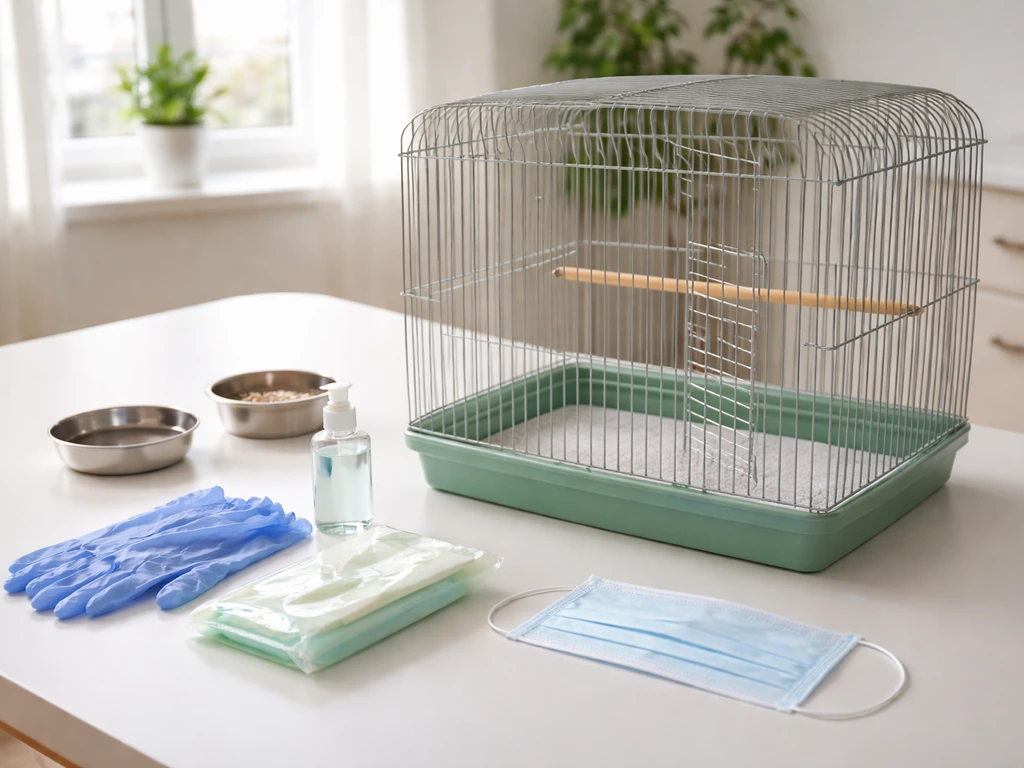
If you are currently sick or feeling symptoms coming on, here is a practical checklist you can apply right now.
- Wash your hands thoroughly before touching anything in your bird's space, including the cage, food dishes, water, and toys.
- Avoid kissing your bird or bringing your face close to its beak or face.
- If possible, ask another household member to handle feeding, water changes, and cage cleaning until you feel better.
- If you have to handle the bird yourself, wear a well-fitting mask to reduce droplet exposure.
- Increase ventilation in the room where your bird lives. Fresh, circulating air reduces the concentration of any airborne particles. Avoid pointing a direct draft at the bird.
- Skip any routines that involve close face contact, like letting your bird sit on your shoulder near your face or nibble at your lips.
- Do not share food or drinks with your bird while you are sick, including pre-chewing food.
- Disinfect cage surfaces and food/water dishes more frequently than usual, using bird-safe cleaners.
You do not need to quarantine yourself completely from your bird in another room unless you are dealing with something more serious than a typical cold. Just keep the close-contact interactions dialed back and hygiene dialed up.
How to Monitor Your Bird Over the Next Few Days
The monitoring period that matters most is the first five to seven days while you are symptomatic. Set up a simple daily check so you are not guessing.
- Each morning, note your bird's posture and activity level as soon as you uncover the cage. A bird that is slow to respond or stays fluffed up after the cover comes off deserves a closer look.
- Check food and water levels at the same time each day. A consistent drop in food consumption is one of the clearest early signals something is off.
- Look at the cage bottom. Count and describe the droppings. Changes in frequency, color, or consistency matter.
- Listen to your bird during its active periods. Is vocalization about the same as usual? Unusual quiet is a warning sign.
- Watch breathing during quiet moments. A resting bird should breathe silently with the beak closed.
- Check the nares (nostrils) for any discharge or crusting. Use good light.
If everything looks normal at day seven, you can relax your precautions. If you notice any changes at any point, trust your gut and escalate sooner rather than later. Bird health can deteriorate faster than most people expect.
When to Call an Avian Vet Right Away
Some signs mean you should not wait and see. Contact an avian vet the same day if you notice any of the following:
- Open-mouth breathing or labored breathing at rest
- Tail bobbing rhythmically with each breath
- Any clicking, wheezing, or rattling sounds when the bird breathes
- Discharge from the nares that is wet, colored, or crusted
- The bird has not eaten for more than 24 hours
- Droppings have dropped off significantly in number or changed dramatically in color or consistency
- The bird is on the cage floor and not perching
- Fluffed feathers combined with lethargy, eyes closing during the day, or complete loss of interest in surroundings
- Any rapid worsening of any symptom over a few hours
The CDC recommends taking pet birds to a veterinarian experienced with birds, meaning an avian vet specifically, for any health concerns. This is especially important for respiratory symptoms because birds can decline quickly and general-practice vets may not have the training or tools to assess avian patients accurately.
It is worth finding an avian vet in your area before you ever need one urgently. Keep the contact number somewhere easy to find. If your bird starts showing signs while you are already dealing with your own illness, having that number ready makes everything less stressful.
A Few Things Worth Clarifying
Not every sneeze or fluffed feather means your bird caught something from you. Birds sneeze occasionally just to clear dust from their nares. Some birds fluff up briefly when comfortable or resting. Context matters. If a single sneeze with no other signs is all you see, it is probably nothing. It is the pattern and combination of signs that tells the real story.
Also worth knowing: birds get their own respiratory infections, often from bacteria like Chlamydophila (which causes psittacosis) or from fungal sources, completely unrelated to human illness. If your bird develops symptoms whether you are sick or not, the cause needs to be investigated by an avian vet. blank" rel="noopener noreferrer">Psittacosis (Chlamydiosis/parrot fever) symptoms in birds commonly include ruffled feathers, low energy, labored breathing, eye and nose discharge, lack of appetite, and decreased vocalizing. If you are trying to figure out why is my bird showing symptoms, it helps to think about both your exposure and the bird's own infections. If you are wondering, “can my bird get sick from me,” the answer depends on your symptoms and the bird’s specific signs. Do not assume it was your cold and that it will pass on its own. If symptoms persist or you are unsure what is wrong with gizmo the bird, use this as a prompt to compare patterns and discuss the likely cause with an avian vet.
If you are ever unsure whether your bird is actually sick or just acting a little off, that is exactly the question worth exploring further. If you are searching for the “I think my bird is sick” meme, the key takeaway is still to monitor symptoms and contact an avian vet promptly if anything seems off i think my bird is sick meme. If you are asking, “is my bird sick,” focus on changes from normal behavior and consider an avian vet if symptoms seem serious or are getting worse whether your bird is actually sick. Learning to read your bird's baseline normal behavior is one of the most useful things you can do as an owner, and it makes spotting real problems much easier.
FAQ
If I have a cold, should I stop handling or cleaning my bird right away?
You do not need full quarantine, but during the first 5 to 7 days when you are symptomatic, minimize face-to-beak contact and avoid breathing directly on the bird. For cleaning and refilling food and water, wash your hands before and after, and consider wearing a mask if you are actively coughing or sneezing near the cage.
Can my bird get COVID-19 or “the flu” from me like a regular cold?
A typical human cold is unlikely to infect birds, but “not the same as impossible” matters. Respiratory illnesses in general can stress birds and you should reduce exposure when you feel unwell, especially if you have fever, significant cough, or fast worsening symptoms. For any bird respiratory signs, an avian vet is the right next step.
My bird has one sneeze, does that mean it caught my cold?
Usually not. A single sneeze can be normal dust clearing or a brief fluffed resting posture. The more useful signal is a pattern, for example repeated sneezing across the day plus other changes like open-mouth breathing, tail bobbing, or reduced appetite.
What are the first symptoms that suggest my bird is getting a respiratory problem, not just acting normal?
Watch for changes that persist or increase over a day, including open-mouth breathing, tail bobbing, audible wheezing or clicking, nasal discharge, sitting fluffed for long periods, decreased vocalizing, or a drop in eating. Birds can decline quickly, so if symptoms stack up, contact an avian vet the same day.
If my bird gets sick while I’m sick, how do I tell whether it came from me?
You cannot reliably determine source at home. Consider your exposure and your bird’s specific signs, but birds also commonly get their own respiratory infections independently. Assume it could be unrelated and get avian guidance, especially if symptoms do not improve promptly.
Does disinfecting the cage reduce the chance of my bird catching something from me?
It can help, but focus on what you touch and how air moves. Hand hygiene is often more important than aggressive disinfectant use. Clean soiled surfaces, avoid strong fumes near the bird, and allow any cleaners to fully dry and ventilate the area before your bird returns.
Is it safe to let my bird stay in the same room while I sleep or rest?
Often yes for a typical cold, but reduce direct airflow and close-contact exposure. If you are very congested or coughing, sleep with the cage farther from your face, keep the room ventilated, and avoid lingering near the bird during active sneezing.
What should I do if I start feeling sick, before symptoms are obvious yet?
Treat the early phase as the start of the risk window. Begin reduced contact now, especially avoid breathing directly on the bird, handle the bird less frequently, and be more consistent with handwashing before touching the cage or feeding.
When should I call an avian vet urgently instead of waiting to see if it passes?
Do not wait if your bird shows breathing difficulty, persistent fluffed posture, significant lethargy, discharge from the nares, rapid decline in appetite, or any situation where symptoms worsen over hours. Birds hide illness, so “watch and wait” can cost time.
Do stress and poor air quality make respiratory symptoms worse in birds when I’m sick?
Yes. Stress from close face-to-face contact can suppress immune response, and airborne irritants (from your breath, dust, aerosols, or smoke) can aggravate sensitive respiratory passages. Keep the environment calm, minimize aerosols, and avoid fragranced sprays or smoke when your bird is near.
Next Article
What Is Wrong With Gizmo the Bird? Fast Check and Next Steps
Fast checklist for pet bird changes like lethargy, breathing, appetite, and droppings, plus urgent vet next steps.