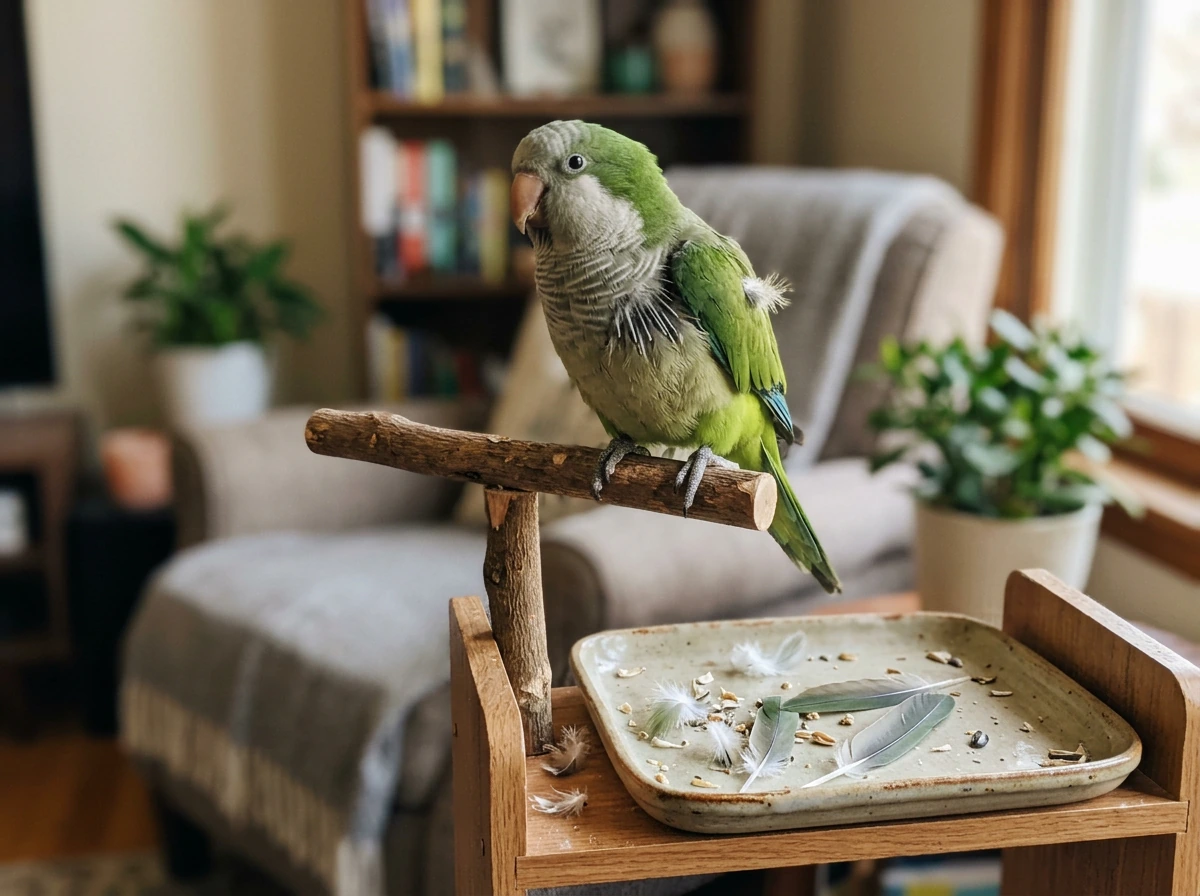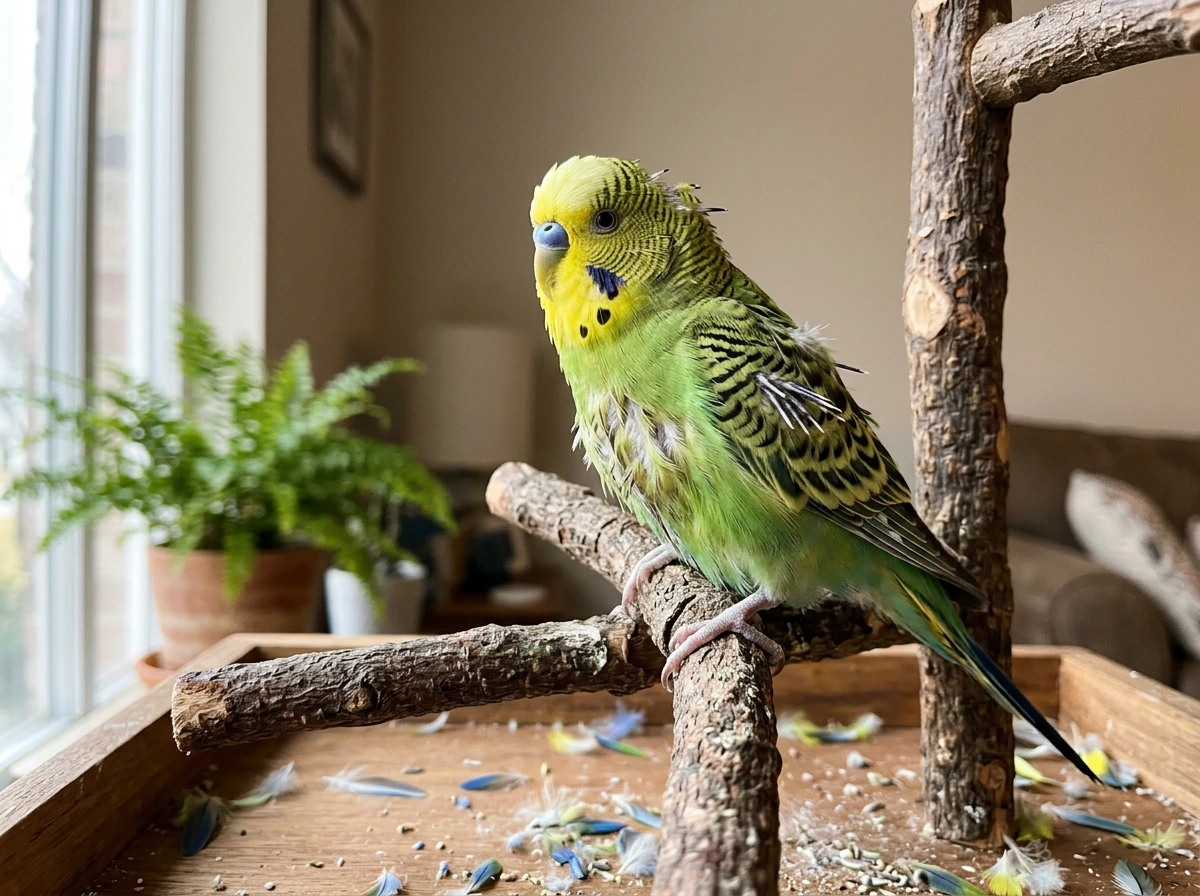
Most of the time, a bird that seems to be losing a lot of feathers is just going through a normal molt, and there is nothing wrong. Pet birds typically molt two to three times a year, and during a heavy molt the cage floor can look alarming, feathers can stick out at odd angles, and your bird may look scruffy for weeks.
Why Is My Bird Molting So Much? Causes and What to Do

Marcus Chen
2 Jun 2026
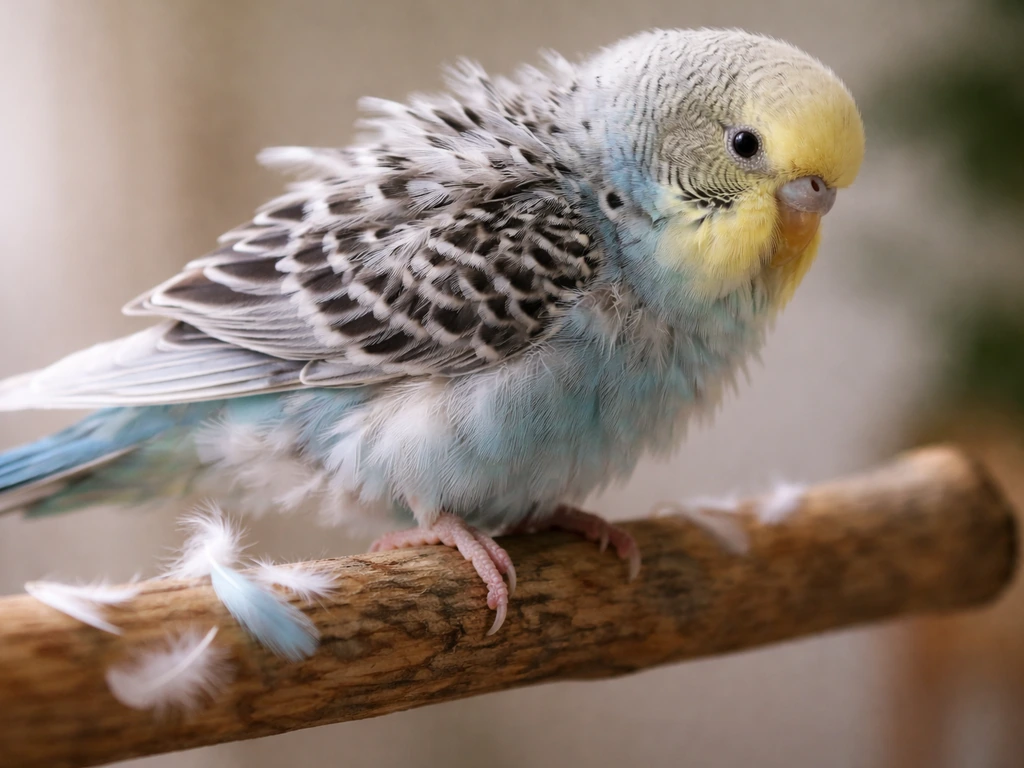
Cockatiel Cottage notes that after the first molt, healthy cockatiels typically have a normal molt about 2 to 3 times each year Pet birds typically molt two to three times a year.
That said, "a lot of feathers" can sometimes cross a line into something that needs attention, so it helps to know exactly what you're looking at before deciding whether to wait it out or call an avian vet.
Normal molt vs excessive molt: what to look for
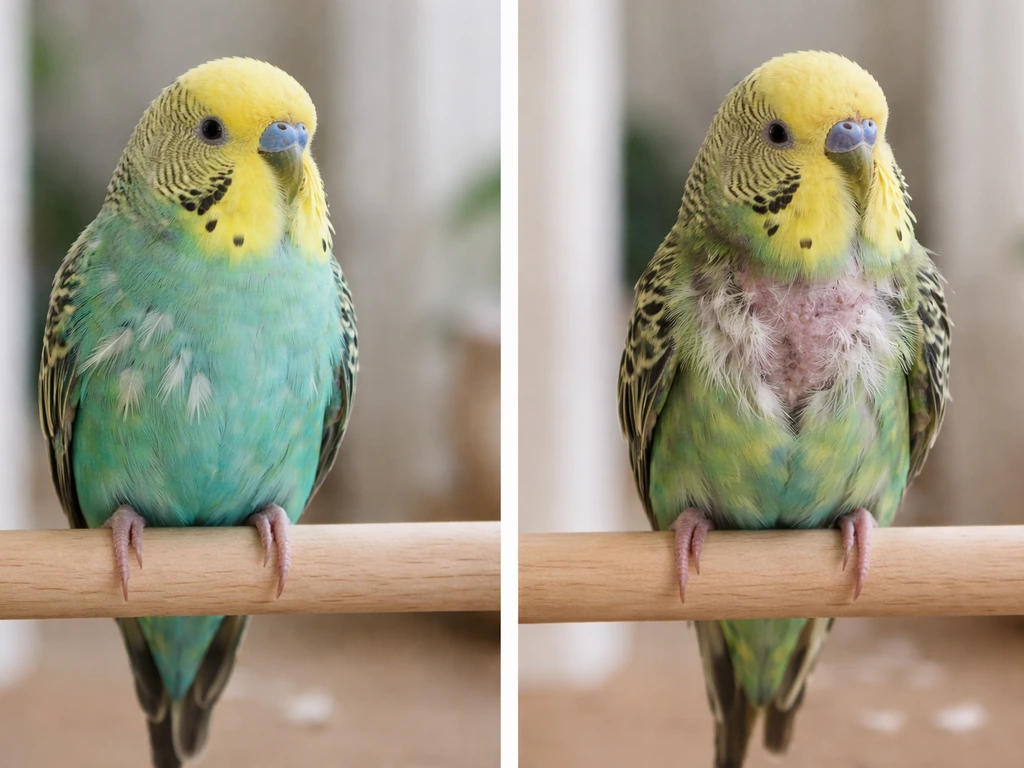
Normal molt is gradual. Feathers fall out a few at a time, and new pin feathers (the small, sheathed shafts coming in to replace them) show up right behind them. Your bird may look a bit ragged or uneven, but you should never see patches of bare skin. According to the American Association of Avian Veterinarians, normal molt should not progress to areas where skin is visibly exposed. Cockatiels, for example, typically go through a complete molt cycle in around 10 weeks, sometimes a bit longer.
Excessive or abnormal feather loss looks different. If your bird is also preening intensely, it may be plucking driven by stress or another issue, which can look like excessive feather loss why is my bird preening so much.
You might notice bald or thinning patches where skin is showing, broken or bleeding pin feathers, feathers that look ragged or chewed at the tips, or feathers missing from areas the bird can reach with its beak (like the chest and wings). If those things are paired with behavior changes, weight loss, lethargy, or the bird looking fluffed up and cold, that goes beyond a heavy molt and needs veterinary attention. If [abnormal feather loss](https://sashvets. com/wp-content/uploads/2025/09/AAV-feather-loss-and-treatment.
pdf) comes with signs like bald patches of bare skin, broken or bleeding pin feathers, weight loss, or behavior changes, it should be assessed as potentially pathological rather than normal molt.
| Sign | Normal molt | Possible problem |
|---|---|---|
| Bare skin visible | No | Yes, investigate |
| Pin feathers present | Yes, consistently | Missing or bleeding, investigate |
| Feather tips look chewed | No | Yes, investigate |
| Bird is active and eating | Yes | No, call vet |
| Cage floor covered in feathers | Yes, temporarily | Ongoing for weeks without regrowth |
| Scruffy/uneven appearance | Yes, briefly | Prolonged and worsening |
Common causes of heavy molting (season, stress, environment)
Seasonal timing is the most common reason a molt feels heavy. Wild birds molt in response to day length, and captive birds are no different. If your bird is near a window where natural light shifts with the season, or if you've recently changed the room lighting, it can trigger an earlier or more intense molt than you expected.
Inconsistent light cycles are a big one. A bird that gets sunlight until 9 pm in summer, or sits under artificial lights at irregular hours, gets a confused hormonal signal. That confusion can trigger out-of-season molts or make a molt drag on longer than it should. Disrupted light cycles are recognized as a specific trigger for abnormal feather loss in captive birds.
Stress also drives heavier molting. Common stressors for pet birds include a new pet in the home, a change in the owner's schedule, a cage that was moved, a new bird added nearby, overcrowding, and even excessive or reduced handling. Temperature swings and drafts are underappreciated triggers as well. A cage placed near an air conditioning vent, a drafty window, or a room with cleaning fumes or smoke can all push a bird's system into a stress response that shows up as accelerated feather loss.
Nutrition and light cycle fixes that reduce stress molt
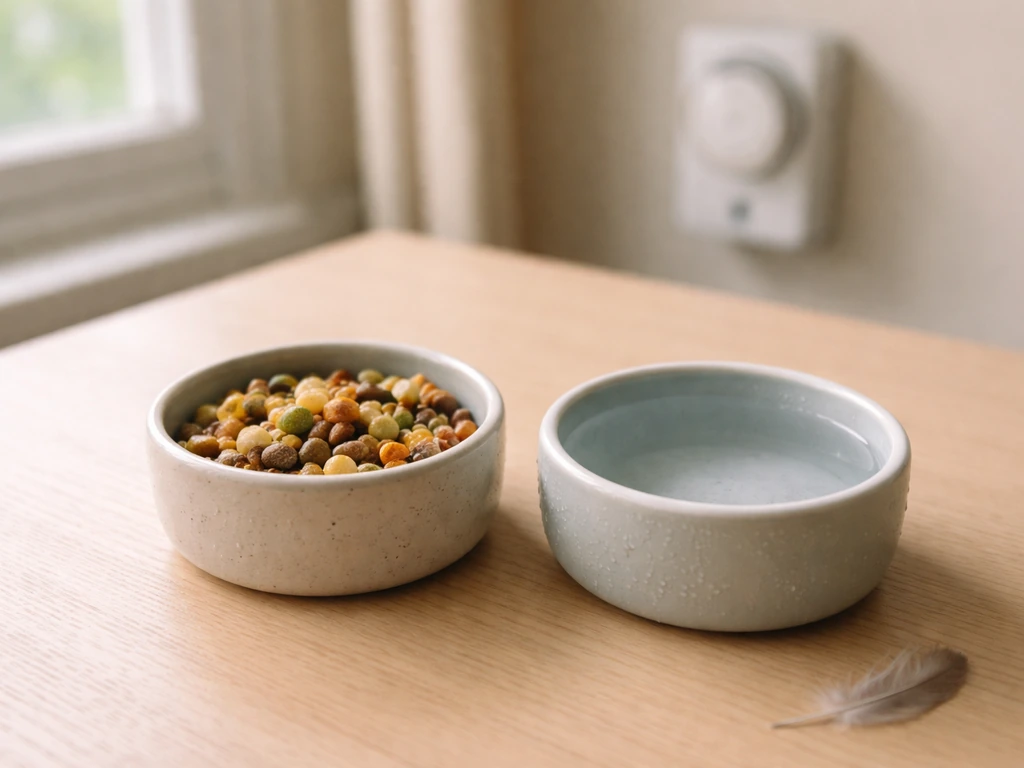
Feathers are made almost entirely of protein, so a bird going through a heavy molt needs more of it than usual. If your bird is on a seed-only diet, now is a good time to supplement with cooked egg, legumes, or a high-quality pellet that contains complete amino acids. Vitamins A and E, along with minerals like calcium and zinc, also support healthy feather development. A bird that's been undernourished can look like it's molting excessively because new feathers grow in poorly and break or fall out faster than normal.
Hydration matters more than most owners realize. Birds that don't drink enough or that don't bathe regularly tend to have drier, more brittle feathers that fall out easily and take longer to grow back in well. Offer fresh water daily and mist your bird gently two to three times a week if it tolerates it, or place a shallow dish in the cage for bathing.
For the light cycle, aim for a consistent 10 to 12 hours of light and 10 to 12 hours of darkness every day. If your home has long summer evenings, use a cage cover to create consistent darkness at the same time each night. A simple timer on a lamp can do the same job if natural light is inconsistent. Stability is the goal here, not necessarily perfect natural simulation. Once the light cycle stabilizes, molt timing typically normalizes within a few weeks.
Rule out look-alikes: plucking, parasites, skin or illness red flags
Feather plucking and molting can look similar from across the room, but they're different problems with different causes. A molting bird loses feathers passively and you'll find intact feathers on the cage floor. A plucking bird actively removes feathers and you may catch it in the act, or notice feathers that look chewed, stripped, or pulled.
If you suspect over preening instead of molting, watch for patterns where a bird repeatedly grooms the same spots and causes thinning or damaged feathers there. Plucking mostly affects areas the bird can reach with its beak, while molting affects the whole body more evenly. Plucking is often driven by stress, boredom, hormonal frustration, or medical discomfort, rather than the natural feather cycle.
Parasites like feather mites, lice, and red mites are less common than many owners assume as a direct cause of feather loss. That said, they can cause irritation that leads to scratching, chewing, and secondary feather damage. Red mites are photophobic and tend to hide during the day, emerging at night to feed, so you may not see them unless you check the cage seams and perches after dark with a flashlight. Visible small moving specks, or a bird that seems especially itchy and restless at night, are worth investigating.
Illness-related feather loss is less common but more serious. Psittacine Beak and Feather Disease (PBFD) is one example: it causes abnormal, dystrophic feathers that look pinched, clubbed, or structurally wrong, and it progresses over successive molts rather than resolving. Bacterial or fungal skin infections can cause patchy loss with redness or scaling at the skin surface. If your bird's feathers look structurally abnormal rather than just thin or missing, or if the skin beneath looks inflamed, crusty, or irritated, that's a veterinary situation rather than something to manage at home.
Since molting, plucking, and illness can overlap or happen at the same time, it's worth knowing whether what you're seeing is purely molt. If you're unsure whether it's normal, a quick review of how do i know if my bird is molting can help you spot the difference. If you are unsure whether your bird is molting or plucking, start by comparing the feather-loss pattern and any behaviors like chewing or pulling is my bird molting or plucking. The question of whether your bird is molting or plucking is important enough to think through carefully before assuming everything is fine.
At-home care checklist during a big molt (bathing, warmth, humidity)
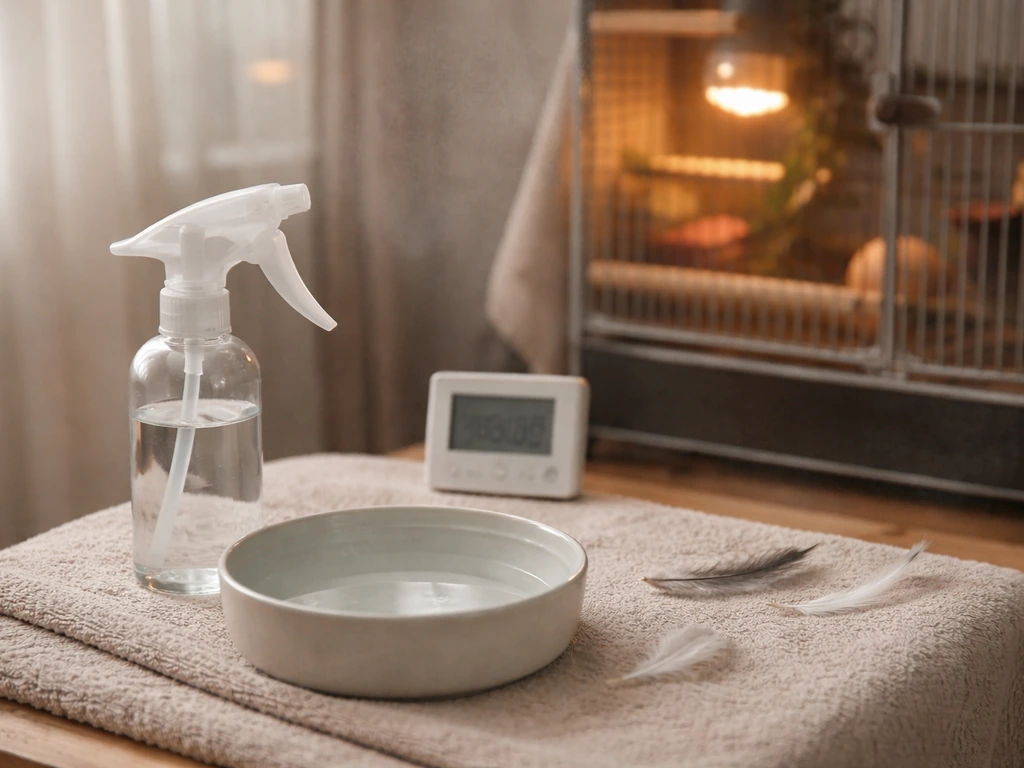
Molt is physically demanding. Your bird is essentially rebuilding its entire coat, and that takes energy and resources. Supporting it well at home makes the process faster and less stressful. If a bird doesn't preen, feathers and skin can stay dirty or irritated, which may increase the chance of problems like poor feather condition or stress-related behaviors.
- Offer a bath or gentle misting two to three times a week. Soft, moist feathers grow in more cleanly and pin feathers are less itchy when the bird is well-hydrated.
- Keep the room temperature stable, ideally between 68 and 75 degrees Fahrenheit. Molting birds are more sensitive to cold drafts because incoming pin feathers don't insulate as well as mature ones.
- Increase relative humidity if your home is dry, especially in winter. A simple humidifier near the cage helps. Dry air makes pin feathers more brittle and slows regrowth.
- Boost protein in the diet. Cooked egg (plain scrambled or hard-boiled), legumes, or a high-quality formulated pellet all provide the amino acids feathers need. Offer these several times a week during the molt.
- Avoid touching or preening pin feathers on the body. Blood feathers (pin feathers that are still actively growing) are sensitive and have a blood supply. Touching them can cause pain and bleeding. You can help your bird with head pin feathers it cannot reach itself, but be gentle.
- Minimize handling stress. Keep routines predictable. This is not the best time to introduce new birds, rearrange the cage, or make major household changes.
- Check the cage floor daily. This helps you track how much feather loss is happening and whether you're seeing whole intact feathers (normal molt) or chewed fragments (plucking).
- Keep cleaning products, aerosol sprays, scented candles, and cooking fumes well away from the cage. Respiratory irritants can amplify stress and skin inflammation during molt.
- Maintain the consistent 10 to 12 hour light/dark cycle throughout the molt until it completes.
When to call an avian vet and what to bring to the appointment
Most heavy molts resolve on their own with better nutrition, stable lighting, and reduced stress. But some situations genuinely need a vet, and it's better to call early than to wait weeks while something progresses.
Contact an avian vet if you see any of the following: patches of completely bare skin, bleeding or broken pin feathers that don't heal, feathers that grow back structurally abnormal (twisted, clubbed, pinched), the bird is losing weight or has reduced appetite, the bird seems cold, weak, or unusually quiet, the feather loss has continued for more than 10 to 12 weeks without visible regrowth, or you're seeing signs of active plucking (chewed feather shafts, the bird pulling at itself) rather than passive shedding.
When you go to the appointment, bring as much specific information as you can. A vet working through an abnormal feather loss case may want to do blood work to check liver and kidney function and rule out nutritional deficiencies, skin scrapings or biopsy to look for infection or parasites, feather pulp cytology, or PCR testing for diseases like PBFD. The more background you can give, the faster and more targeted the workup will be.
- Write down when you first noticed the heavy feather loss and whether it started gradually or suddenly.
- Take clear photos of the affected areas, especially any bare patches, broken pin feathers, or abnormal feather structure. Date the photos so the vet can see progression.
- Bring a written summary of your bird's diet, including brand names, how much, and how often. Note any recent changes.
- List any recent environmental changes: new pets, new people, a move, cage repositioning, cleaning product changes, air conditioning installation, schedule changes.
- Note whether the bird's droppings, eating habits, activity level, or vocalizations have changed at all, even subtly.
- If possible, bring a sample of shed feathers in a clean zip-lock bag. Intact shed feathers versus chewed fragments tell the vet a lot before they even examine the bird.
The goal at the appointment is to give the vet the full picture so they're not starting from scratch. Most of the time you'll leave reassured that it's a heavy normal molt and get practical guidance on support. But when it is something more, catching it early makes a real difference in outcome.
FAQ
How can I tell if my bird is truly molting versus plucking?
If you see intact feathers on the cage floor and new pin feathers near where the old ones fell, that usually points to a true molt. If instead there are chewed or stripped feather tips, bald-looking patches that appear in the same reachable areas (chest, wings, legs), or you catch the bird actively pulling, those patterns suggest plucking or self-trauma rather than normal shedding.
How long is too long for heavy molting?
A molt can look dramatic in a short window, but a full cycle should still show gradual replacement rather than worsening bare spots. If you are still seeing no visible regrowth after about 10 to 12 weeks, or the feather loss is spreading to new areas without improvement, that is a good time to call an avian vet rather than waiting it out.
What skin changes mean my bird needs to be examined?
Check for bright, inflamed, scaly, or crusted skin, or for pin feathers that break easily with visible bleeding. Normal molts should not leave areas of exposed skin. Any visible skin irritation under the feather loss is a sign to get veterinary input because infections and other skin problems can cause accelerated loss.
Could mites be causing my bird’s heavy feather loss, and how do I check?
Red mites are easiest to find at night, use a flashlight to inspect seams, cage corners, and under perches after lights out, and look for tiny moving specks. If you suspect them, also check nearby furniture and the cage area where your bird sleeps, because mites can hide off the bird during the day.
Can nutrition make a molt heavier or make feathers grow back poorly?
Yes, diets can make molt look worse. If your bird is seed-only or low on high-quality pellets, poor-quality protein and missing amino acids can lead to weak new feather growth that breaks or sheds sooner. In practice, many owners do best by switching to a balanced pellet and adding approved protein sources like cooked egg or legumes, rather than just increasing seed quantity.
Why did my bird start molting more right after changes at home?
Yes, stress triggers can overlap with molt timing. Even if light and nutrition are correct, changes like a new roommate pet, frequent schedule changes, moving the cage, or a draft from AC or a window can push the bird into a heavier shedding phase. The most useful step is to identify recent changes from the prior 2 to 6 weeks and stabilize them, not just adjust one variable.
What bathing and hydration routine actually helps during a heavy molt?
Hydration affects feather quality, but bathing can’t replace medical treatment if the feather loss pattern is abnormal. If your bird tolerates it, provide daily fresh water and gentle misting or a shallow bath a few times per week, because dry, brittle feathers can shed faster and regrow slower.
What appetite, weight, or energy signs should worry me during a molt?
Molting is energetically demanding, so appetite and body weight are key. If your bird fluffs, stays quiet for longer than usual, seems cold despite normal room temperature, or eats noticeably less, that suggests more than a routine molt and warrants an avian vet call.
What if the feather loss looks mixed, like molt plus something else?
Sometimes you can’t tell from the feather loss alone. If feather shafts are broken, skin looks irritated, feathers regrow pinched or structurally wrong, or the bird’s behavior includes active chewing and pulling at the same spots, it may be illness or plucking layered on top of molt. In those cases, a quick pattern review plus a vet exam can prevent delays.
Do I need to change cleaning or cage setup during a big molt?
Cage cleanliness matters, but focus on feather-safe hygiene. During heavy molt, remove feathers more frequently and keep the area dry to reduce irritation from debris. Use gentle cleaning methods and avoid lingering fumes, aerosol cleaners, or smoke exposure in the bird’s room.