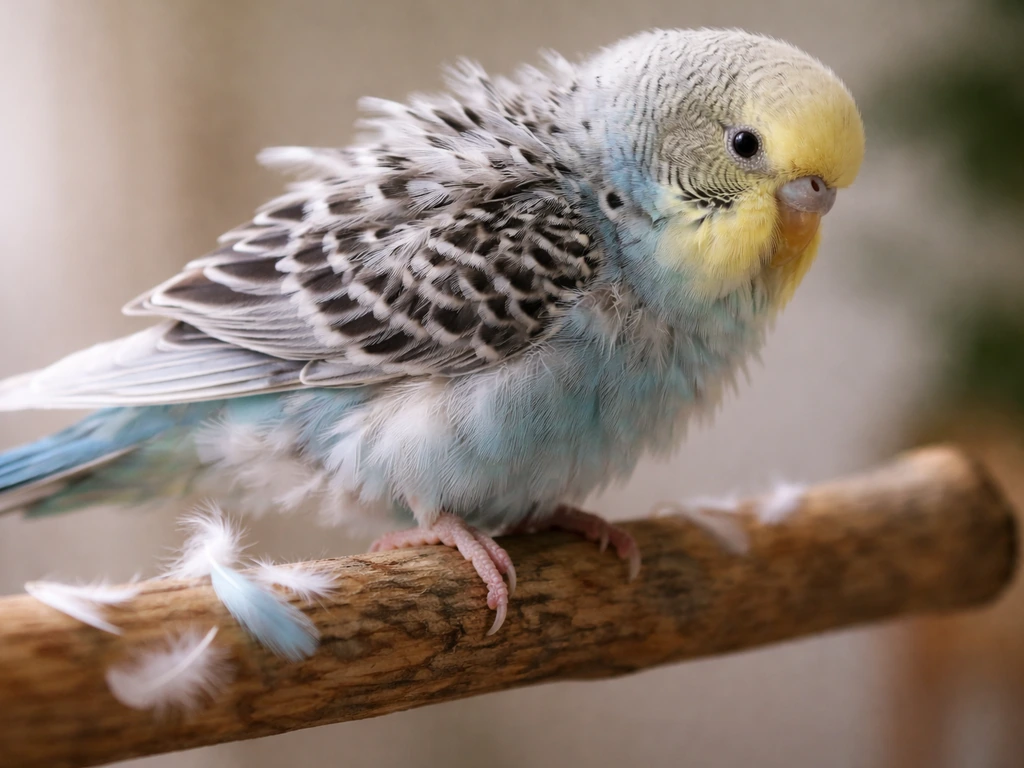
You can tell your bird is feather plucking (rather than normally preening or molting) when you see bald patches with bare, exposed skin, feathers that look chewed, frayed, or snapped rather than cleanly shed, and the behavior is repetitive and self-directed. Normal preening keeps feathers tidy. If a bird does not preen at all, feathers can look dull or unkempt and the bird may become more prone to skin irritation or feather issues over time Normal preening keeps feathers tidy.. Molting replaces feathers on a natural cycle without ever leaving raw skin. True feather plucking or feather destructive behavior goes further: the bird removes or damages feathers faster than they can regrow, and the skin underneath becomes visible. That distinction is your first and most important clue.
How to Tell If Your Bird Is Feather Plucking and What Next

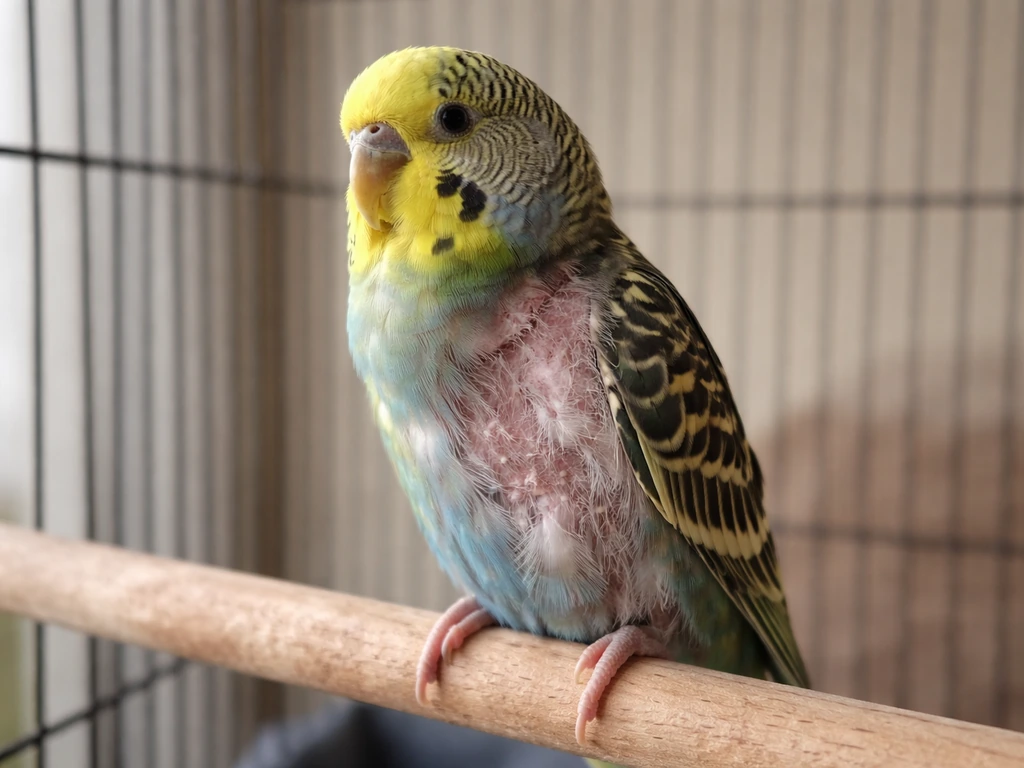
What feather plucking actually looks like
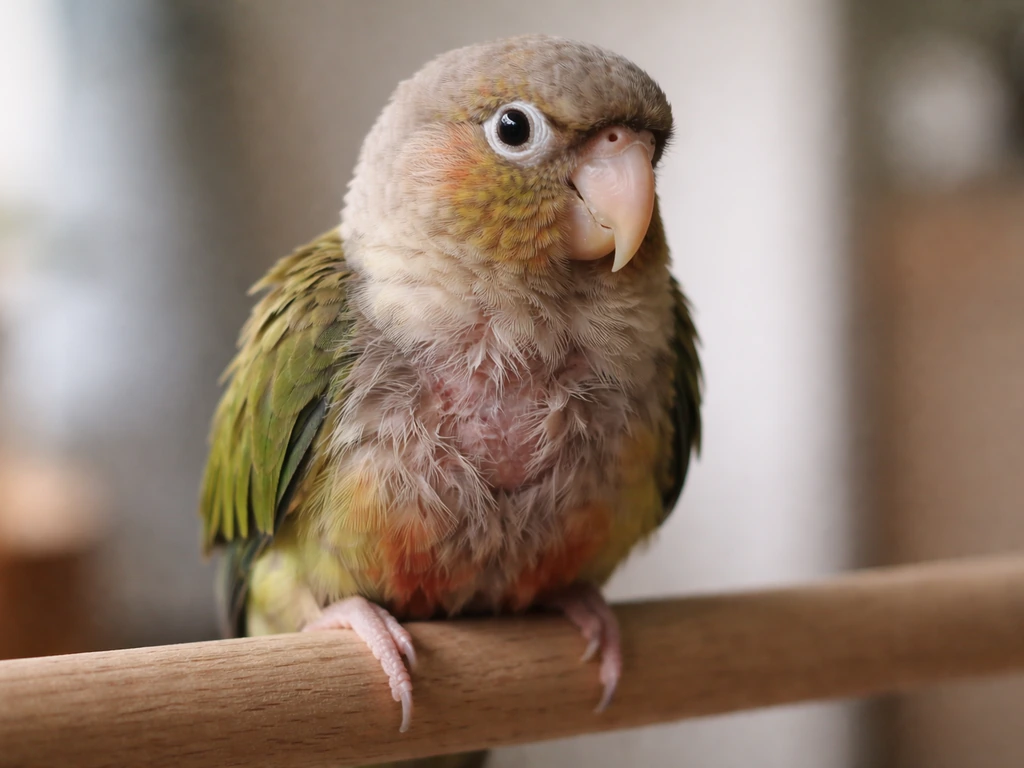
Feather plucking (also called feather destructive behavior) is a spectrum. On the mild end it looks like excessive preening that leaves feathers frayed or thin. Learning the specific signs of over preening can help you tell apart normal grooming from feather destructive behavior excessive preening. On the severe end, the bird is actively pulling feathers out entirely, sometimes with enough force to damage the follicle, and you may see open skin, pinprick bleeding, or raw patches. Anything in between counts as a problem worth taking seriously.
The clearest visual signs to look for at home are bare or bald areas where skin is visible, feathers that look broken or chewed rather than cleanly lost, and a clear pattern of damage limited to areas the bird can physically reach with its beak. The head is the one area a bird cannot pluck itself, so if you see feather loss there, another bird or external cause is involved, not self-plucking.
Feather plucking is a symptom, not a diagnosis. It can have medical causes, behavioral causes, or both at once. The goal of your home assessment is to figure out which direction to lean before deciding your next step.
How it differs from molting and over-preening
Molting is a natural, managed process where feathers shed and new pin feathers grow in. You might see more loose feathers in the cage and some thinner areas, but you should never see bare skin or progression to bald patches. If the feather loss keeps advancing and skin is becoming visible, that is not a normal molt. Over-preening sits between normal grooming and true plucking: feathers may look worn or a little ragged, but there are no bald spots and no damage to the skin. If you are unsure whether you are looking at a molt, over-preening, or something more serious, the presence of bare skin is the deciding factor.
Signs that point to stress, boredom, or environment
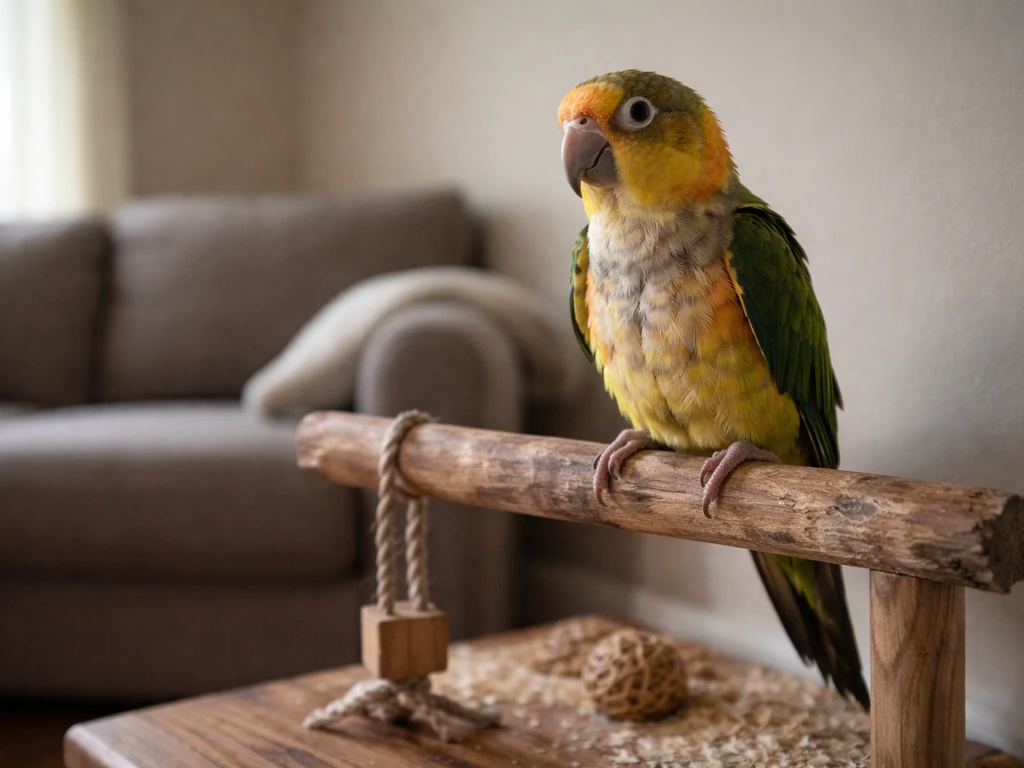
Behavioral drivers are one of the most common causes of feather plucking, and you can often spot the contributing factors by reviewing what has changed in your bird's daily life.
- Recent routine changes: a new work schedule, a move, a new pet, a new family member, or even rearranging furniture near the cage
- Social isolation or too little one-on-one time with you
- Insufficient foraging and mental stimulation during the hours the bird spends alone
- Cage placement issues: too close to a drafty window, in a high-traffic stressful area, or away from family activity entirely
- Poor or inconsistent lighting: birds do better with consistent daylight-spectrum light; erratic light cycles can disrupt their rhythm and increase stress
- Hormonal frustration, especially in spring, when breeding instincts are active but not expressed
- Boredom from a cage that is too small, lacks rotation of toys, or has no foraging opportunities
Watch your bird's behavior beyond just the feathers. A bird plucking from stress or boredom often shows other signs: reduced playfulness, more time sitting still, increased screaming or contact calls, or a general shift in personality. If your bird seems to be preening so much, it can point to stress, boredom, or an environmental trigger rather than normal grooming. These behavioral clues alongside feather damage strongly suggest the environment is a major factor.
Health clues that can cause or worsen plucking
Medical causes are always worth ruling out before you land on a behavioral explanation. A bird that starts plucking suddenly, especially without any obvious environmental change, deserves a closer health look. A normal molt can also change feather appearance, so it helps to compare what you see with typical molting patterns.
Skin and feather health issues are common drivers. Folliculitis (inflammation of the feather follicles) and dermatitis (skin inflammation) cause genuine discomfort that the bird tries to relieve by picking. Bacterial and fungal skin infections can do the same. These are not things you can diagnose visually at home, but you can look for redness, scaling, or thickened skin in the affected area.
Parasites like feather mites, red mites, and lice can damage feathers and drive itch-related picking. One sign to watch for: feather mites often cause restlessness throughout the day and especially at night. That said, parasites are actually a less common cause of feather loss than most owners assume. RSPCA Australia notes that it is often overrated to blame feather-damaging behavior or feather loss solely on external parasites, and advises having an avian vet confirm possible parasites and discuss the appropriate treatment regime. Do not assume mites without a vet confirming it.
Nutritional deficiencies, especially inadequate vitamin A and protein, can weaken feather structure and compromise immune defenses, making plucking more likely to start or harder to stop. If your bird has been on a seed-heavy diet with minimal vegetables, pellets, or variety, diet is a real candidate.
Systemic illness is the category most owners overlook. Liver disease, kidney disease, tumors, and other internal conditions can cause pain or discomfort that the bird expresses through self-directed picking. If your bird is also showing lethargy, changes in droppings, reduced appetite, or seems generally unwell alongside the feather damage, treat it as medical until proven otherwise.
Toxin exposure is another one worth a quick mental scan. Nonstick cookware fumes, scented candles, air fresheners, cleaning products, and cigarette smoke are all potential irritants that can affect a bird's skin and respiratory system, and some have been linked to feather destructive behavior.
Run a quick home check today
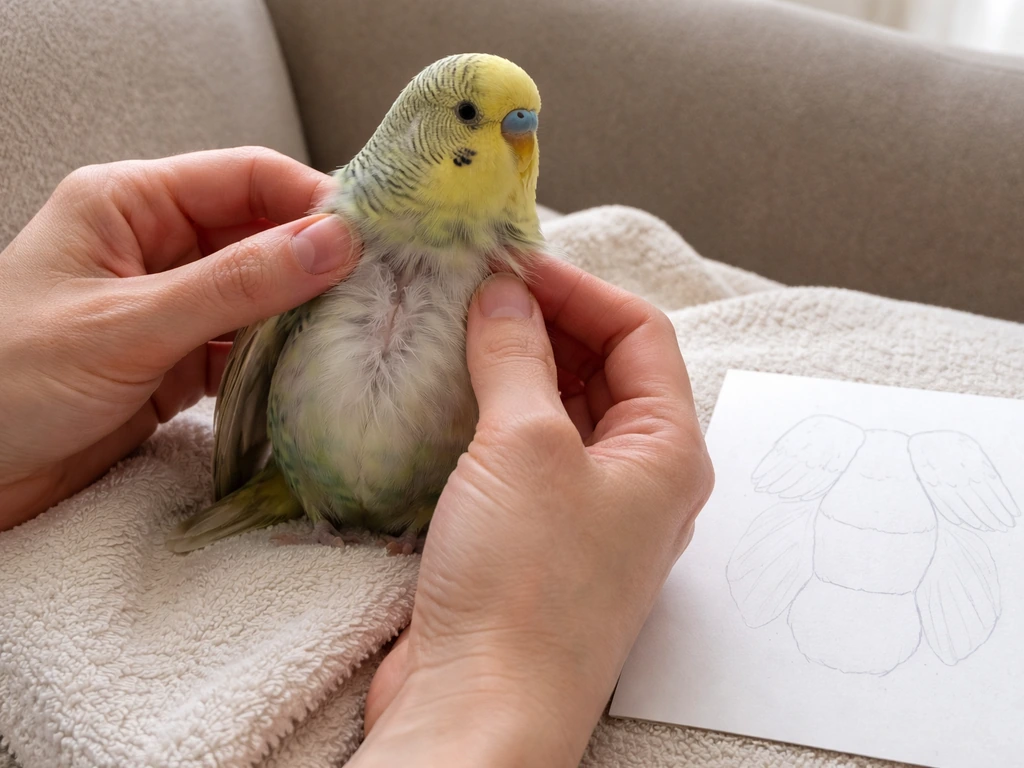
You do not need any equipment to do this. Set aside 15 minutes and work through these steps.
- Map the feather damage: Where exactly are the bare or damaged areas? Chest, belly, inner thighs, under the wings, or back? Make a note. The location matters when you talk to a vet.
- Check the pattern: Is the damage symmetrical on both sides of the body? Symmetrical patterns often suggest a systemic or hormonal cause. Localized patches may point to a skin issue or injury.
- Look at the feather condition: Are feathers chewed and frayed at the ends, snapped midshaft, or pulled out from the root entirely? Pulled-from-root feathers leave a clean follicle. Chewed or frayed feathers suggest repeated biting without full removal.
- Check for skin involvement: Is the skin underneath red, thickened, scabbed, or bleeding? Any visible skin damage pushes this toward needing a vet sooner rather than later.
- Build a timeline: When did you first notice the feather changes? Has it progressed over days, weeks, or months? Rapid progression is more urgent than a slow-developing pattern.
- Review recent changes: Think back over the last 4 to 8 weeks. New people, pets, foods, products, schedule shifts, or cage changes. Write them down.
- Check for molt: Is your bird also dropping intact feathers with no damage, and are new pin feathers coming in? That suggests an active molt running alongside whatever else is happening.
- Scan for environmental irritants: Have you used any new cleaning sprays, candles, air fresheners, or cooking sprays near the bird recently? Any new furniture with strong off-gassing?
After going through these, you should have a clearer picture: is this progressing and involving skin, or is it minor and recent with an obvious environmental trigger? That shapes what you do next.
Low-risk things you can do right now
If the plucking is mild, the skin is intact, the bird is otherwise eating and acting normally, and you can identify a likely behavioral trigger, there are several low-risk steps worth trying while you monitor.
Environment and enrichment adjustments
- Increase foraging: wrap treats in paper, hide food in puzzle toys, or change the cage layout so the bird has to work for meals
- Rotate toys every few days so the cage environment feels fresh and stimulating
- Increase your daily interaction time, even if it is just 15 extra minutes of hands-on attention or out-of-cage time
- Move the cage to a spot with more natural light and less drafts or temperature fluctuation, if it is not already there
- Review your lighting: aim for a consistent daylight-cycle light source and a reliable 10 to 12 hours of darkness for sleep
- Remove any aerosol sprays, scented candles, nonstick cookware, or air fresheners from the bird's environment
Bathing and feather support
Offering a gentle mist or shallow bath a few times a week supports normal preening and has been shown to decrease plucking in some birds. Use room-temperature water and no additives. Some birds prefer a mist from a spray bottle; others prefer a shallow dish. Try both and see what your bird responds to.
Diet review
If your bird is eating mostly seeds, this is a good time to start transitioning toward a more varied diet that includes a quality pellet base plus fresh vegetables. A deficiency in vitamin A or protein can contribute to feather problems, and improving diet is one of the lowest-risk things you can do. If you are wondering why is my bird molting so much, diet and health problems can be a big part of the answer, so use this time to spot deficiencies or other causes. Do not make abrupt changes, especially in older birds, but start introducing variety consistently.
What to track while you wait
Keep a simple daily note for one to two weeks: which areas look worse or better, whether the behavior seems to happen at specific times (mornings, evenings, during certain activities), whether the bird appears to itch or target a specific spot, and any changes in appetite, droppings, or energy. This log is genuinely useful when you do talk to a vet, and it helps you see whether things are improving or getting worse.
When to see an avian vet, and what to ask for
Some situations do not need you to wait and monitor. Go to an avian vet promptly if you see any of the following:
- Active bleeding from a plucked area that does not stop within about 2 to 3 minutes
- Open wounds, raw or ulcerated skin, or exposed tissue
- Signs of self-mutilation where the bird is going beyond feathers and damaging the skin itself
- Rapid progression of feather loss over a matter of days
- Any accompanying illness signs: lethargy, not eating, labored breathing, abnormal droppings, or weakness
- Sudden onset of plucking with no identifiable environmental trigger
Bleeding from a broken blood feather (a pin feather still vascularized) is a specific emergency. If fresh blood is dripping continuously, contact an avian vet rather than attempting to pull the feather yourself. If you notice ongoing bleeding or unusual behavior alongside feather damage, an avian veterinarian should evaluate your bird promptly fresh blood is dripping continuously.
For non-emergency situations where the plucking has been going on for more than two to three weeks, is not improving with environmental changes, or you simply cannot identify a cause, an avian vet visit is still the right move. A behavioral explanation should only be reached after medical causes are ruled out, not assumed from the start.
What a vet workup typically looks like
Knowing what to expect makes the appointment more useful. A thorough avian vet evaluation for feather destructive behavior typically includes:
| Test or Exam | What It Checks For |
|---|---|
| Full physical exam | Overall health, skin and feather condition, signs of pain or discomfort |
| Blood panel (CBC and biochemistry) | Organ function (liver, kidneys), infection markers, nutritional deficiencies, viral clues |
| Skin scraping or cytology | Parasites, bacterial or fungal skin infection, folliculitis |
| Fecal testing | Internal parasites or infection |
| Radiographs (X-rays) | Internal masses, organ enlargement, or pain sources that might not be visible externally |
| Skin biopsy (if needed) | Microscopic evaluation of skin tissue for deeper disease diagnosis |
When you go in, bring your written notes: the timeline, the feather locations affected, any recent environmental changes, your bird's current diet, and a list of any products used around the bird. Ask specifically whether the vet suspects a medical cause and what tests they recommend to rule it out. If results come back clear, ask about behavioral and environmental management options next. In some cases, after medical causes are treated, a collar may be recommended to stop the bird from accessing the damaged area while feathers regrow and the habit is interrupted.
Feather plucking is one of the more complex problems pet birds can develop, but it is also one you can approach systematically. Learning why does a bird pluck its feathers can help you decide whether you should focus on environment and behavior or rule out medical causes first Feather plucking. Start with what you can see and observe at home, make the low-risk changes, and get professional eyes on it if things are not moving in the right direction. The sooner you get clarity on whether this is behavioral or medical, the sooner your bird can start recovering.
FAQ
Can feather loss be caused by something other than self-plucking?
Yes. If you see feather loss in places your bird cannot reach with its beak, such as the back of the head, the neck, or the wings near areas it cannot comfortably target, self-plucking is less likely. In those cases, another bird, handling or rubbing injury, or an external irritant may be involved, so a vet check is the safest next step.
How can I tell molt or heavy seasonal shedding from feather plucking?
Often, you can distinguish them by checking for visible skin. True molts should not leave raw, exposed skin, and feather loss should follow a natural cycle with new pin feathers appearing later. If you are seeing bare patches that keep expanding, broken or chewed feathers, or ongoing targeting of specific reachable spots, that points more toward destructive plucking than a normal molt.
If my bird looks like it chews feathers sometimes, does that always mean plucking?
A single moment of chewing or a few loose feathers is not automatically feather plucking. What matters is repetition and progression over days to weeks. If the same areas are repeatedly targeted, and feathers look snapped or ragged rather than cleanly shed, treat it as feather destructive behavior and start tracking changes.
What skin signs suggest this is medical irritation rather than boredom?
Try to rule out itch and irritation drivers before blaming behavior. Look for redness, scaling, thickened skin, scabs, or moist or dirty feather bases in the affected area. If the skin changes are obvious or the bird seems to scratch or rub that spot, plan for a medical evaluation rather than only changing enrichment.
Are collars safe, and what should I watch for if my vet recommends one?
If you use a collar, monitor breathing and balance daily. Ensure it does not rub raw skin elsewhere, and remove it promptly if your bird cannot move normally, perch comfortably, or is becoming stressed to the point of hiding. Only use collars on guidance from an avian vet, especially for smaller birds.
What should I do if a pin feather is bleeding or looks partly broken?
Do not pull damaged feathers yourself, especially if a pin feather is still vascularized (fresh bleeding can occur). Instead, control access to the area (environmental separation or a vet-guided collar), keep the bird calm, and contact an avian vet promptly if there is bleeding that does not stop.
What kinds of environmental changes commonly trigger feather plucking?
Yes. A change in schedule, a new toy placement, a new household product, a different temperature or humidity, new flooring or air freshener, or a shift in other pets or people in the home can trigger itch and stress. The most useful approach is to list changes in the last 2 to 6 weeks and see if the feather damage started after one of them.
When should I stop trying home changes and book an avian vet instead?
If you do not know your bird’s baseline health, a “behavior-only” approach can miss underlying causes. As a practical decision rule, if feather loss is progressing, involves bare skin, or started suddenly without a clear trigger, prioritize a medical workup before concluding it is stress or boredom.
If I suspect mites or lice, should I treat immediately or wait for a vet check?
Yes, and it is common to assume mites are the cause. Parasites can drive itch, but they are less common than many owners expect. If you suspect parasites, ask the vet what they will check for (skin and feather scrapings or combings) before using treatments, since the wrong treatment can worsen skin irritation.
How should I transition my bird off a seed-heavy diet without making things worse?
Start diet transitions slowly and consistently. If your bird is older, very underweight, or already has skin irritation, ask the vet for a safe pace and acceptable pellet brands. Sudden changes can reduce appetite, and poor intake can worsen feather quality, making the situation harder to reverse.
What should I track in my 1 to 2 week note to help the vet?
A useful log includes exact areas targeted (for example, “right shoulder and upper chest”), whether skin is visible, and whether the bird plucks at specific times (like during your absence). Add appetite, droppings consistency, energy level, and any new products or household activities on the same days for easier pattern-finding.
What low-risk steps can I try first when the plucking seems mild?
If your bird’s behavior is otherwise normal but plucking is mild, low-risk steps like baths, gentle bathing routines, and a clear trigger review are reasonable to try briefly. However, if skin is becoming visible or the problem lasts beyond a couple of weeks without improvement, the safest path is to treat it as a medical-plus-behavior issue and get avian guidance.
Why Is My Bird Molting So Much? Causes and What to Do
Find why heavy bird molting happens, what to change now, how long it lasts, and when to see an avian vet.