
If your bird is losing feathers and you are not sure whether that is normal or a sign of something wrong, here is the short answer: a <span>molting bird</span> sheds old feathers symmetrically, grows visible pin feathers in their place, keeps eating and acting mostly like itself, and has skin that looks completely healthy underneath. If what you are seeing matches that picture, you are almost certainly watching a normal molt. If it does not, keep reading, because the difference matters.
How Do I Know If My Bird Is Molting? Signs and Care

Marcus Chen
23 Mar 2026
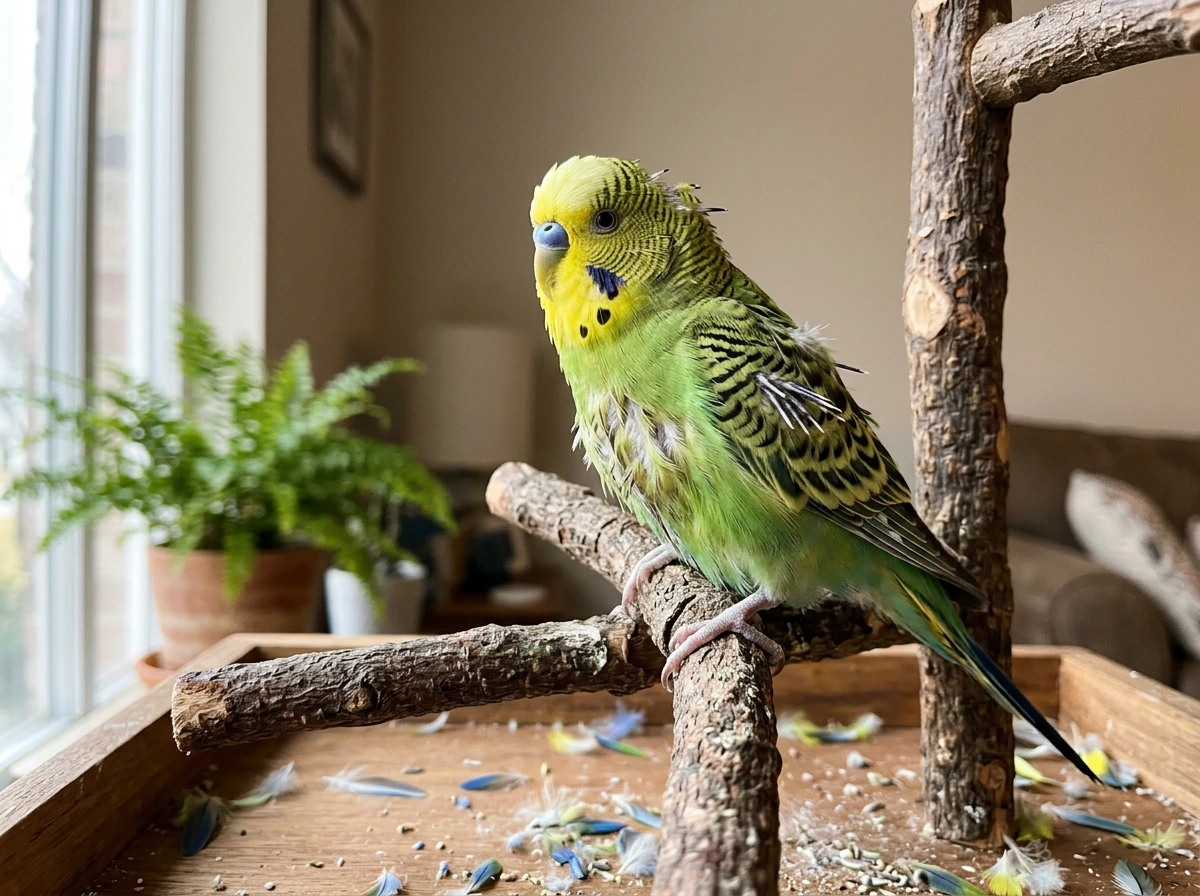
What molting actually looks like
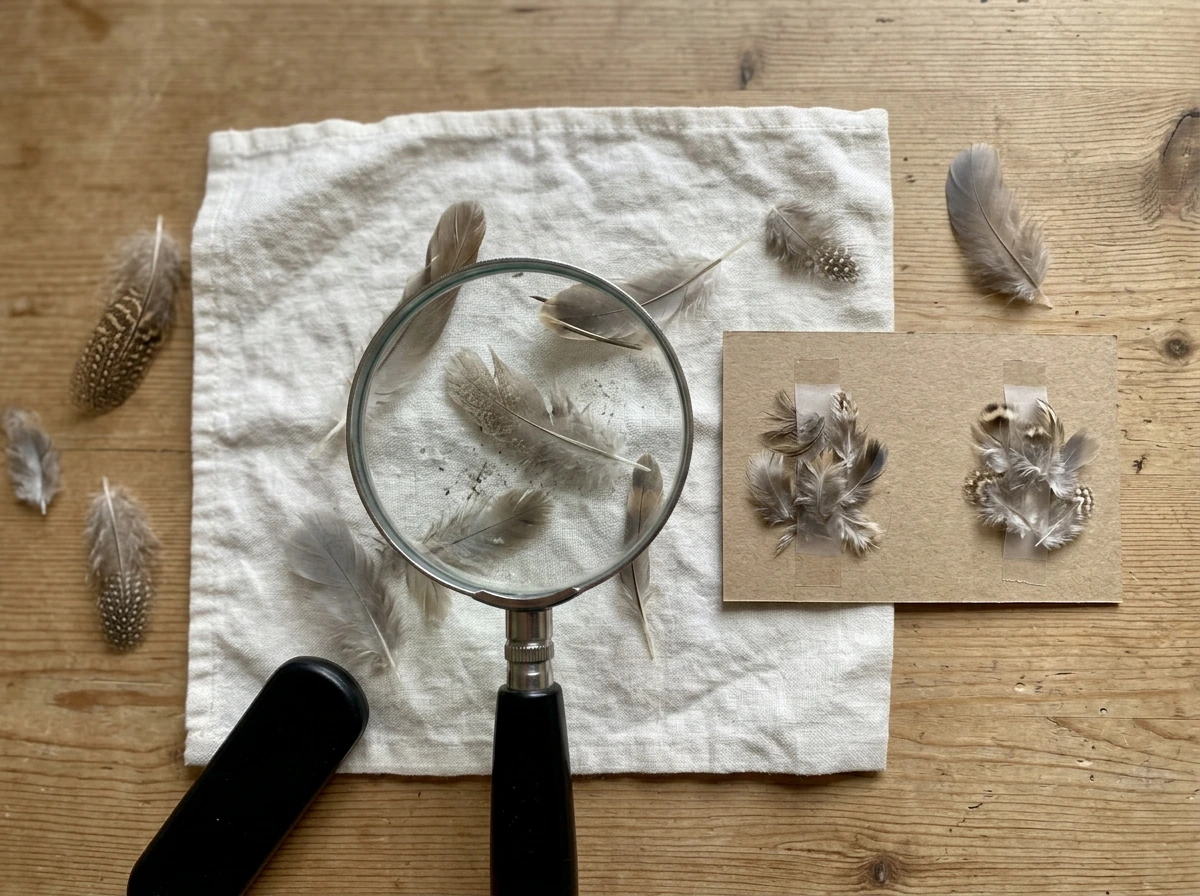
The clearest sign of a normal molt is symmetry. Feathers fall out evenly on both sides of the body, not in one concentrated patch. You will notice loose feathers at the bottom of the cage more often than usual, and if you part your bird's feathers gently, you can see small, spike-like pin feathers pushing through the skin. Those pins are the new feathers growing in, and finding them is one of the most reliable signs that you are dealing with a molt and not something else.
The skin underneath feather-loss areas should look completely normal: no redness, no open sores, no raw or ulcerated patches. Cornell's wildlife health researchers are clear on this point. Healthy skin during a molt is just skin. If what you see looks irritated or broken, that changes the picture entirely.
You may also notice more feather dust or dander around the cage during a molt. Some birds scratch or rub their heads more than usual as those pin feathers push through. That is all typical. What is not typical is a bird that is actively pulling its own feathers out or chewing on them.
When to expect a molt
Most pet birds molt once or twice a year, often in the spring and fall when daylight hours shift. That said, timing varies a lot by species, individual bird, and environment. Pet birds kept indoors under artificial lighting sometimes molt on less predictable schedules because their internal clocks are not getting clear seasonal signals.
Young birds have their first molt earlier than many owners expect. Budgies, for example, go through their first molt around 12 to 14 weeks of age, which catches a lot of new owners off guard. If you have a young bird and suddenly see pin feathers everywhere, that timing makes sense.
Hormonal shifts can also trigger molting outside of the typical seasonal window. A bird coming out of breeding condition, or one that has experienced a significant change in environment or light cycle, may start dropping feathers at what feels like a random time. This is worth knowing because a molt that seems out of season is not automatically a red flag.
In terms of duration, a single molt cycle can take anywhere from a few weeks to a couple of months depending on the species. Parakeets often complete a molt in two to three weeks. For larger parrots or birds replacing a lot of feathers at once, the process can stretch to three months or more. Texas A&M vets note a general rule of thumb of about eight weeks for feather replacement after loss, with individual variation from one to three months.
How your bird might act during a molt
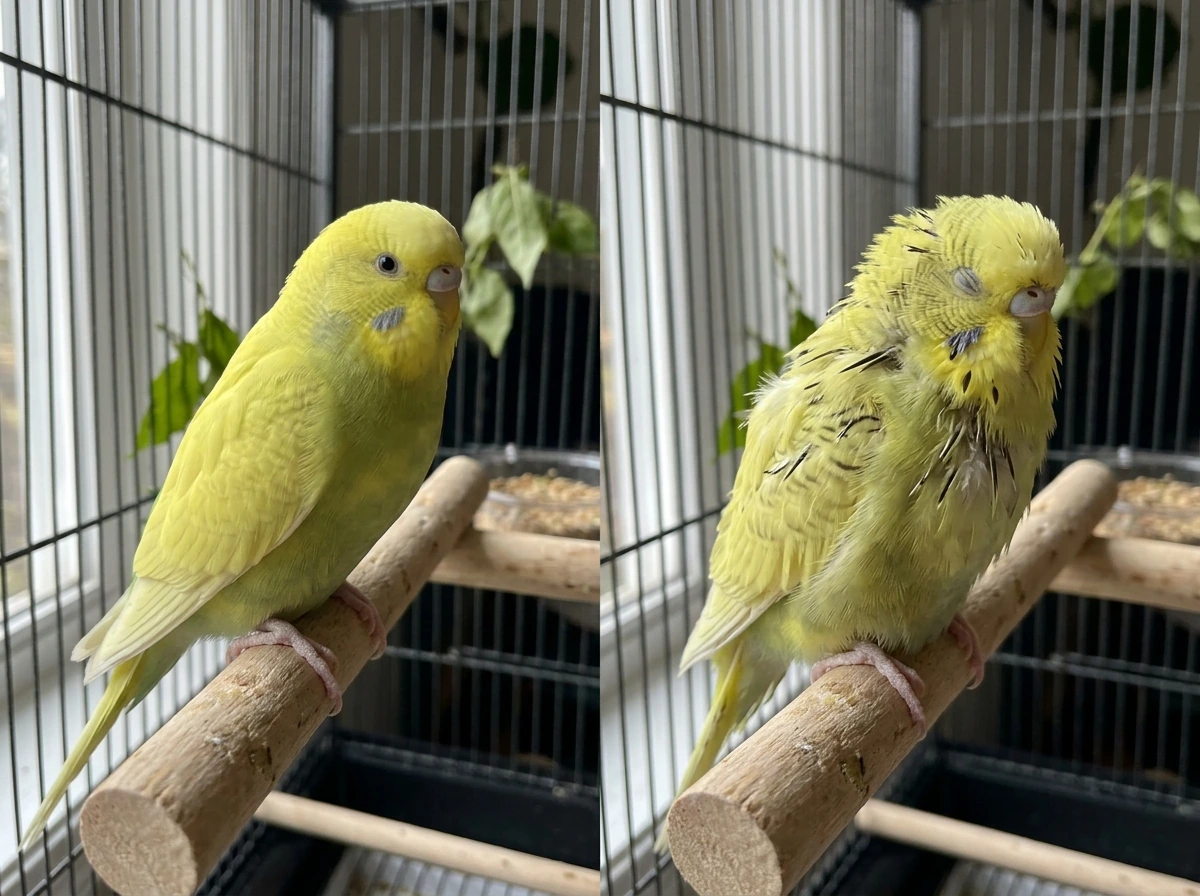
Molting is physically demanding. Growing new feathers takes real energy and nutrients, so it is normal for a molting bird to be slightly quieter than usual, a little less interested in play, or more inclined to rest. Some birds become temporarily touchier, especially about being handled around the head and neck where new pin feathers are coming in. That sensitivity is real: pin feathers have an active blood supply and can be genuinely painful if bumped or squeezed too hard.
What you should still see during a normal molt: your bird eating normally, droppings that look consistent with its usual baseline, alertness when something interesting happens, and interest in food and social interaction even if the energy level is slightly lower. A bird that completely stops eating, sits fluffed up for most of the day, or seems genuinely weak is showing you something beyond a normal molt.
Some birds get a bit grumpy and do not want to be handled as much. Respect that. Others tolerate handling fine. Both are within the normal range. The thing to watch for is a sustained behavior change, not just a few off days.
Molting vs. feather plucking vs. illness: how to tell them apart
This is the part most owners struggle with, and honestly it is the most important thing to get right. The Merck Veterinary Manual is direct about this: feather loss in pet birds has multiple causes, and distinguishing normal feather replacement from a feather-loss disorder is essential. Here is how to think through it.
| What you observe | Normal molt | Feather plucking | Illness or infection |
|---|---|---|---|
| Feather loss pattern | Symmetrical, gradual, both sides | Asymmetrical, concentrated, often on chest or legs | Can be patchy, localized, or widespread |
| Skin underneath | Looks normal, no irritation | May be raw, red, or broken | May show sores, discoloration, or swelling |
| Pin feathers present | Yes, actively growing in | Often absent in plucked areas | May be absent or abnormal-looking |
| Bird's behavior | Mostly normal, slightly low energy | May appear anxious, restless, or compulsive | Lethargic, fluffed, squinting, weak |
| Appetite | Normal or slightly reduced | May decrease if chronic | Often reduced or absent |
| Droppings | Normal | Usually normal unless chronic stress | May be abnormal in color or consistency |
| Bird observed pulling feathers | No | Yes, you may catch it in the act | Not typically self-directed |
Feather plucking in parrots is often driven by behavioral causes including boredom, sexual frustration, compulsive behavior, stress from household pets, or lack of appropriate stimulation. If the feather changes seem uneven or include sustained beak-to-feather behavior, compare them with feather plucking so you do not miss a behavioral issue. If you are wondering why does a bird pluck its feathers, behavioral triggers like boredom and stress are often to blame feather plucking.
The Merck Veterinary Manual lists all of these as documented contributors. If your bird's feather loss is concentrated in areas it can reach with its beak, and the surrounding skin looks damaged, plucking is more likely than molting. If you want to be more certain, there is a full guide on distinguishing molting from plucking that goes deeper on this if you need it.
Illness is a separate category. If feather plucking is the problem, PetMD notes that underlying health issues may be assessed with diagnostic approaches that can include bloodwork diagnosing the underlying cause may require bloodwork. VCA notes that diseases causing pain or irritation can lead to feather damage, and that diagnosing the underlying cause may require bloodwork, fecal exams for parasites, and feather or skin cultures. If your bird looks sick in addition to losing feathers, do not try to diagnose this at home.
Pin feathers: what you are looking at and what it means
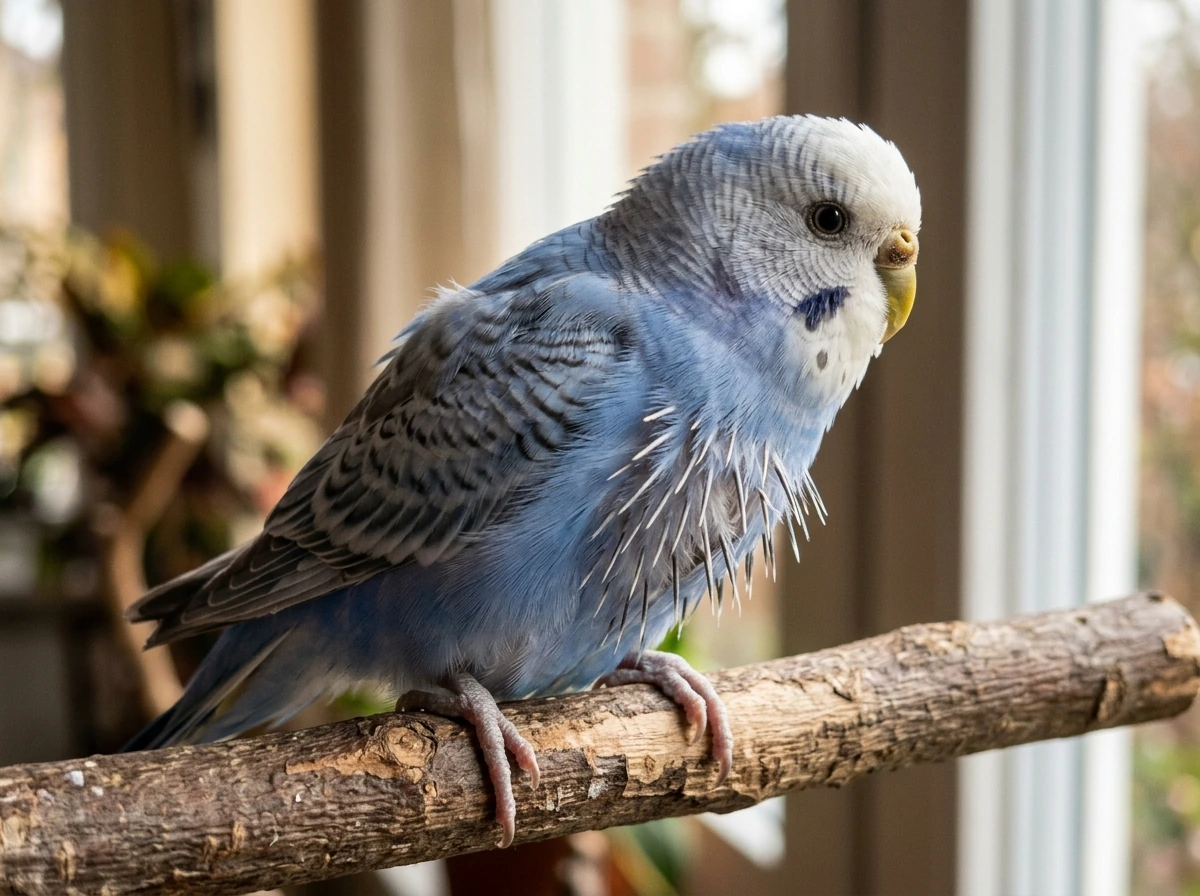
Pin feathers, also called blood feathers, are new feathers in the early stages of growth. They look like small dark spikes or quills emerging from the skin. The dark color comes from the blood supply running through them, which is how the feather gets nutrients while it develops. As the feather matures, the blood recedes from the tip down toward the base, the protective sheath (called the epitrichium) flakes off, and the feather unfurls into its final shape.
Finding pin feathers is one of the most reassuring things you can observe during what looks like a molt. It means feather regrowth is actively happening. If your bird is losing feathers but you see no pin feathers coming in anywhere on the body, that is worth paying attention to.
Because pin feathers are sensitive, your bird may flinch or pull away when you touch areas where they are growing in. This is normal. Do not force grooming or petting in those spots. If a pin feather gets broken and bleeds, apply gentle pressure and monitor it. A single broken blood feather is not usually an emergency, but repeated bleeding or a feather that will not stop bleeding warrants a call to your vet.
Pin feathers on the head and neck are the ones your bird cannot reach to preen itself. A bird with a flock partner or a trusted human often seeks gentle help unsheathing those. A bird with a flock partner or a trusted human often seeks gentle help unsheathing those. If your bird leans into you and presents its head, that is an invitation. Gentle finger pressure to help flake off the sheath on a mature pin is fine. Doing it on a fresh, dark, blood-filled pin is not.
How to support your bird through a molt
Nutrition
Feathers are made largely of protein, so a molt puts real nutritional demands on your bird. If your bird is on a seed-only diet, a molt is a good time to reconsider that. Fresh vegetables, leafy greens, legumes, and a quality pellet base give your bird the amino acids it needs to grow healthy feathers. You do not need to completely overhaul the diet overnight, but adding variety during a molt helps.
Bathing
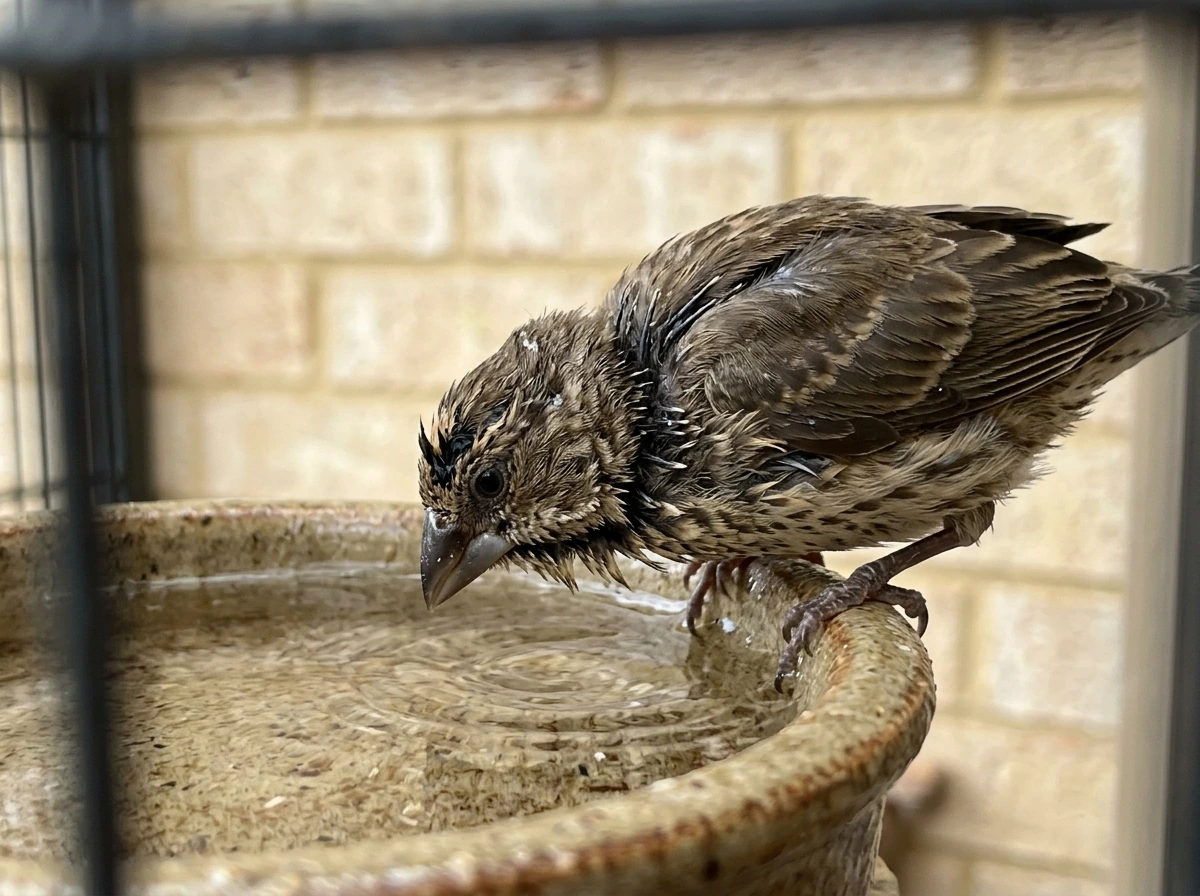
Regular bathing or misting helps a molting bird in a couple of ways. It soothes itchy skin, helps the protective sheaths on pin feathers flake off more easily, and keeps the new feathers in good condition as they emerge. Most birds benefit from a light mist two to three times a week. Avoid anything cold. Room-temperature water or a very gentle warm mist works well. Let your bird air dry in a warm, draft-free spot.
Environment and stress
Stress slows down a molt and can make the process harder on your bird. Keep the environment calm and consistent during this period. Avoid rearranging the cage, introducing new animals, or making major household changes if you can help it. Consistent sleep schedules (10 to 12 hours of dark, quiet time per night) help regulate hormones and support healthy feather cycling.
One specific note from veterinary guidance: avoid stroking your bird along its back during a molt if you are trying to keep it calm. That type of petting mimics mating behavior, can elevate hormone levels, and has been linked to increased feather-damaging behavior. Head scratches are a better choice.
Handling
Be gentle. A bird in active molt may not want as much hands-on time as usual, and that is fine. Respect its signals. Let it come to you rather than pulling it out of the cage when it is clearly uncomfortable. This is a temporary phase.
When to stop troubleshooting and call the vet
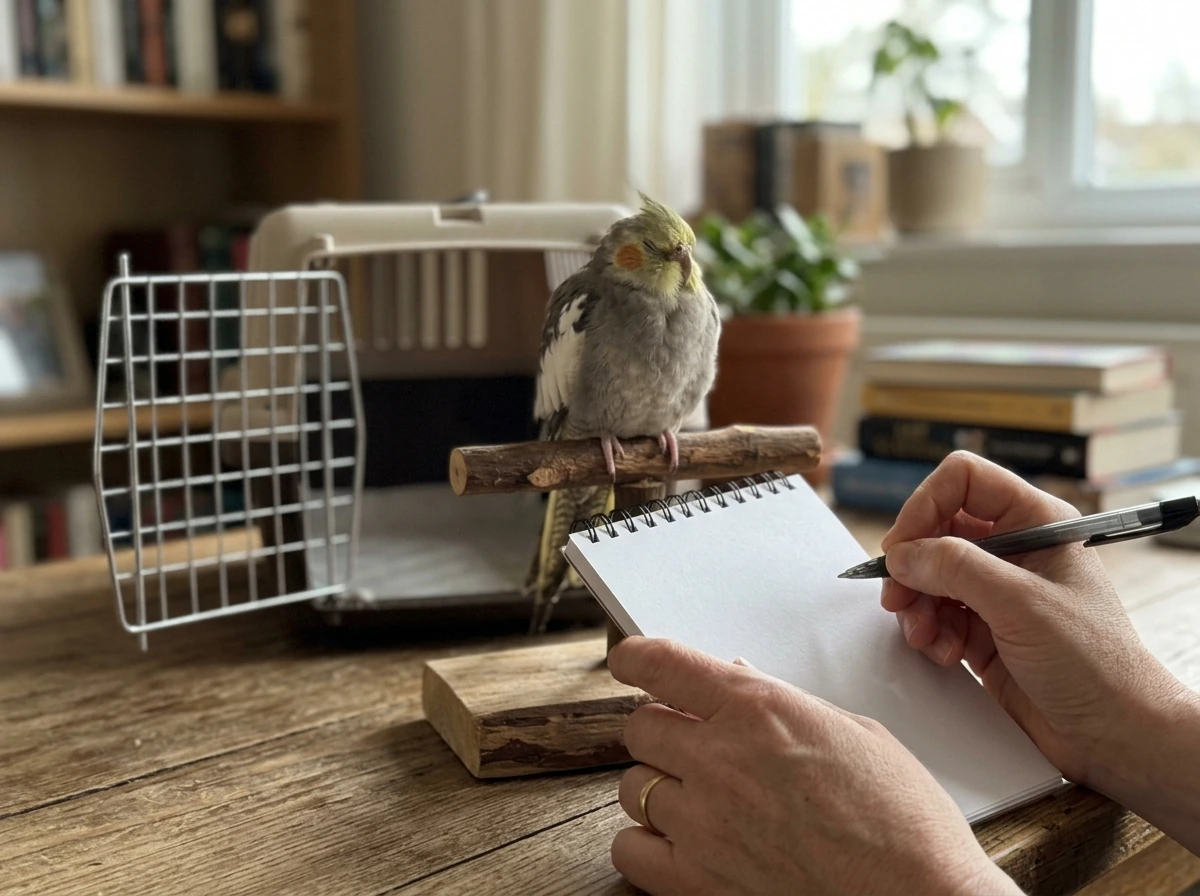
Most molts are boring in the best way: feathers fall, pins come in, the bird is a little grumpy for a few weeks, and then it looks great again. But there are specific signs that mean you need professional input, not more googling.
- Your bird is fluffed up and staying that way for most of the day, especially combined with squinting or half-closed eyes
- Bald patches are not filling back in after several weeks, or new feathers are not appearing at all
- You can see open skin, raw areas, bleeding, or visible sores
- Your bird is clearly pulling, chewing, or breaking its own feathers
- Appetite has dropped significantly and stayed down for more than a day or two
- Droppings have changed in color, consistency, or volume and are not bouncing back
- Your bird seems weak, uncoordinated, or is spending time on the cage floor
- The feather loss is happening very fast, affecting large areas at once, or looks nothing like the symmetrical pattern you would expect from a molt
Any one of those signs, especially in combination, is your cue to contact an avian vet. VCA notes that diagnosing the underlying cause of feather problems may require bloodwork, fecal testing for parasites, and cultures for bacterial or yeast infections. That kind of workup is not something you can replicate at home, and the earlier a real problem gets caught, the easier it is to treat.
If you are specifically unsure whether what you are seeing is a molt or feather plucking (is my bird molting or plucking? If you want help narrowing it down right away, follow the checklist for how to tell if your bird is over preening <a data-article-id="000127B4-23B1-4B72-B165-37AF27D7C052">is my bird molting or plucking?. </a>), there is more detailed guidance on that distinction worth reading through before your vet appointment, so you can describe what you have been observing as clearly as possible. The more specific you can be about where the loss is occurring, whether you have seen your bird pull feathers, and how long it has been going on, the more useful that information will be to your vet.
The bottom line: if your bird is losing feathers symmetrically, growing pin feathers, eating well, and acting mostly like itself, you are watching a normal molt. Give it good food, regular misting, a low-stress environment, and some patience. If anything on that red flag list above applies, make the call.
FAQ
My bird is losing feathers, but only on one side. Can that still be a normal molt?
Normal molts are usually fairly even on both sides. If you see a strong one-sided patch, check for access to that area (behavioral plucking) and for irritation (redness, scabs, crusting). One-sided loss should raise the odds of something other than a typical molt, especially if pin feathers are missing in the same region.
How can I tell if a feather drop is from a molt versus a broken feather or damage?
Molting typically comes with regrowth signals (pin feathers) appearing around the same time. If you find snapped shafts or only shed pieces without any new pin growth, it may be physical damage, stress-related chewing, or skin irritation. Look at the skin where the feather was, open or raw spots point away from normal molt.
Is it normal for my bird to stop preening completely during a molt?
Many birds groom less while pin feathers are tender, but a total lack of grooming combined with other red flags (weakness, loss of appetite, persistent fluffed posture) is not something to assume is just molt. If your bird cannot preen because of sensitivity, you may see head and neck areas becoming messy, and that is different from overall inactivity and illness.
Do I need to change anything about lighting or schedule to prevent a molt from getting worse?
Since timing can be influenced by light, you can aim for consistent daily lighting and sleep (about 10 to 12 hours dark for many pet birds) to support predictable feather cycling. However, do not abruptly change lighting intensity or introduce new timers during an active molt, because additional environmental stress can make feather regrowth harder.
Should I increase protein or supplements when my bird is molting?
A molt increases protein demands, so adding variety (leafy greens, legumes, and a quality pellet base plus vegetables) helps more than random supplement stacking. Avoid high-dose supplements unless your avian vet recommends them, because excess certain vitamins and minerals can be harmful even when the bird seems to be “using” them.
What bathing routine is safest for a molting bird that has very sensitive pin feathers?
A light mist with room-temperature water, 2 to 3 times per week, is usually enough. Avoid forcing wetting with sprays that soak the blood-feather area deeply if your bird flinches strongly. Keep the environment warm and draft-free until fully air-dry to prevent chilling.
If I see pin feathers, does that guarantee it is molting and not plucking?
Pin feathers are a strong sign that regrowth is happening. Still, plucking can co-occur with feather regrowth, especially if a bird targets reachable areas with its beak. The key distinctions are skin condition (healthy vs damaged) and behavior (active chewing or pulling).
My bird is bleeding from a pin feather. When is that an emergency?
A single broken blood feather may bleed and then settle, but you should monitor it closely. Repeated bleeding, bleeding that will not stop, spreading redness, significant lethargy, or a wound that looks deeper than a small nick are reasons to contact an avian vet promptly.
How long should I expect pin feathers or the molt to last?
For many pet birds it can range from a few weeks up to a couple of months, depending on species and how many feathers are being replaced. If feather loss continues beyond the expected timeframe without any new pins appearing, or if the bird’s condition worsens, that is a signal to investigate other causes.
My bird is fluffed and quieter, but still eating. Is that always normal?
Mild fluffed resting and reduced play can be typical because feather growth is energy demanding. The safer sign is maintaining appetite and consistent droppings with normal alertness at least part of the day. If the bird is weak, breathing seems abnormal, droppings change markedly, or eating stops, treat it as more than normal molt.
Can stress make feather loss look like molting even if it is not?
Yes. Stress can contribute to feather-damaging behaviors and can disrupt normal cycling, so you may see feather issues that are not purely a healthy molt. If feather loss ramps up after a household change (new pet, moving cages, schedule disruption), focus on stress reduction and consider vet evaluation if skin looks irritated or behavior suggests plucking.
Should I help remove the pin feather sheath (epitrichium) on my bird?
Gentle help can be appropriate only when the pin is mature enough that the sheath naturally flakes off with minimal resistance, and only on areas the bird cannot reach. Avoid working on very fresh, dark, blood-filled pins, because you can cause bleeding or pain. If you are unsure, leave it and let the bird progress naturally or ask your avian vet for guidance.
What information should I gather before calling an avian vet about suspected molt versus plucking?
Track where the loss is happening (which body parts and whether it is symmetrical), whether you have seen pin feathers or any bleeding, and how long it has been going on. Note behavior, especially whether the bird is pulling feathers with the beak, rubbing excessively in one spot, or showing a sustained change in appetite or activity.