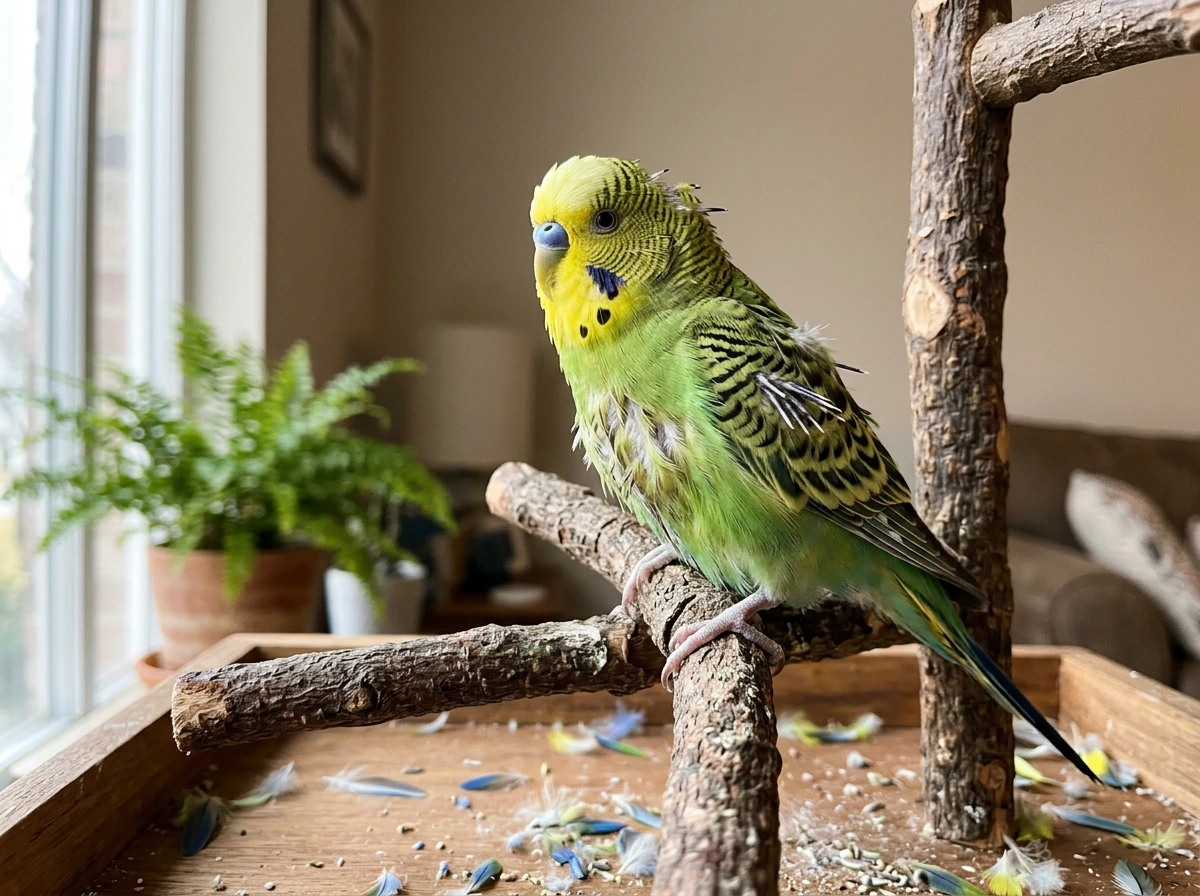
If you are staring at your bird and wondering whether those missing feathers are normal or a problem, here is the short answer: molting leaves clean, symmetrical gaps with new pin feathers visibly growing in, and your bird acts mostly like itself. Plucking leaves ragged, patchy, or bald areas, often on the chest, wings, or legs, with no new growth coming in, and your bird may seem stressed, restless, or off. That is the core difference. The rest of this guide will help you confirm which one you are actually dealing with and tell you exactly what to do next.
Is My Bird Molting or Plucking? Quick Signs and Next Steps

Marcus Chen
23 Mar 2026
What normal molting actually looks like
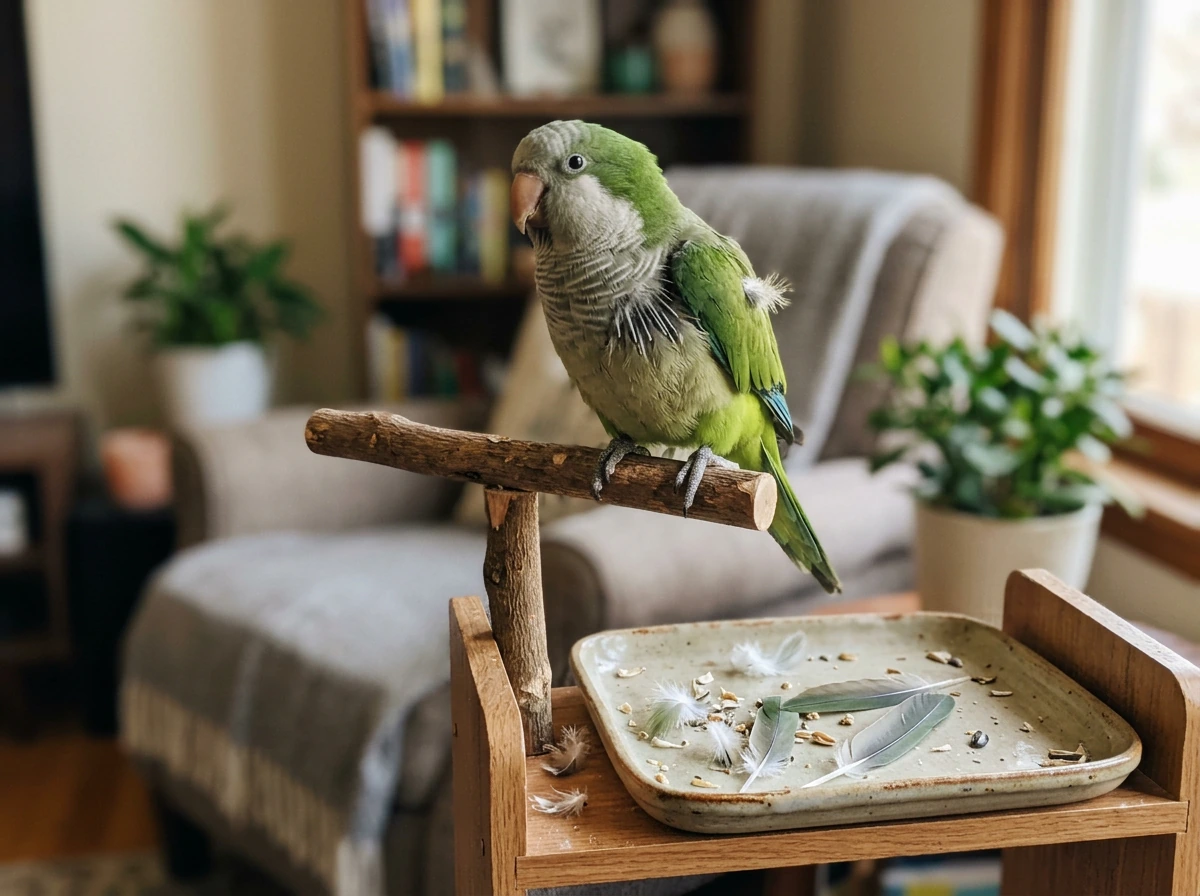
Molting is your bird's natural feather replacement cycle. Old feathers fall out and new ones grow in to replace them. It happens gradually and in a pattern, not all at once, so your bird can still fly and stay warm throughout the process.
The timing varies by species. Some birds, like cockatiels and certain Old World parrots, often go through noticeable molts in late summer or early fall. Many companion parrots molt once or twice a year, and indoor birds can molt more irregularly due to artificial lighting and temperature. If feather loss lines up with a seasonal shift, that is a meaningful clue.
During a healthy molt, you will typically see:
- Loose feathers at the bottom of the cage, especially down and contour feathers
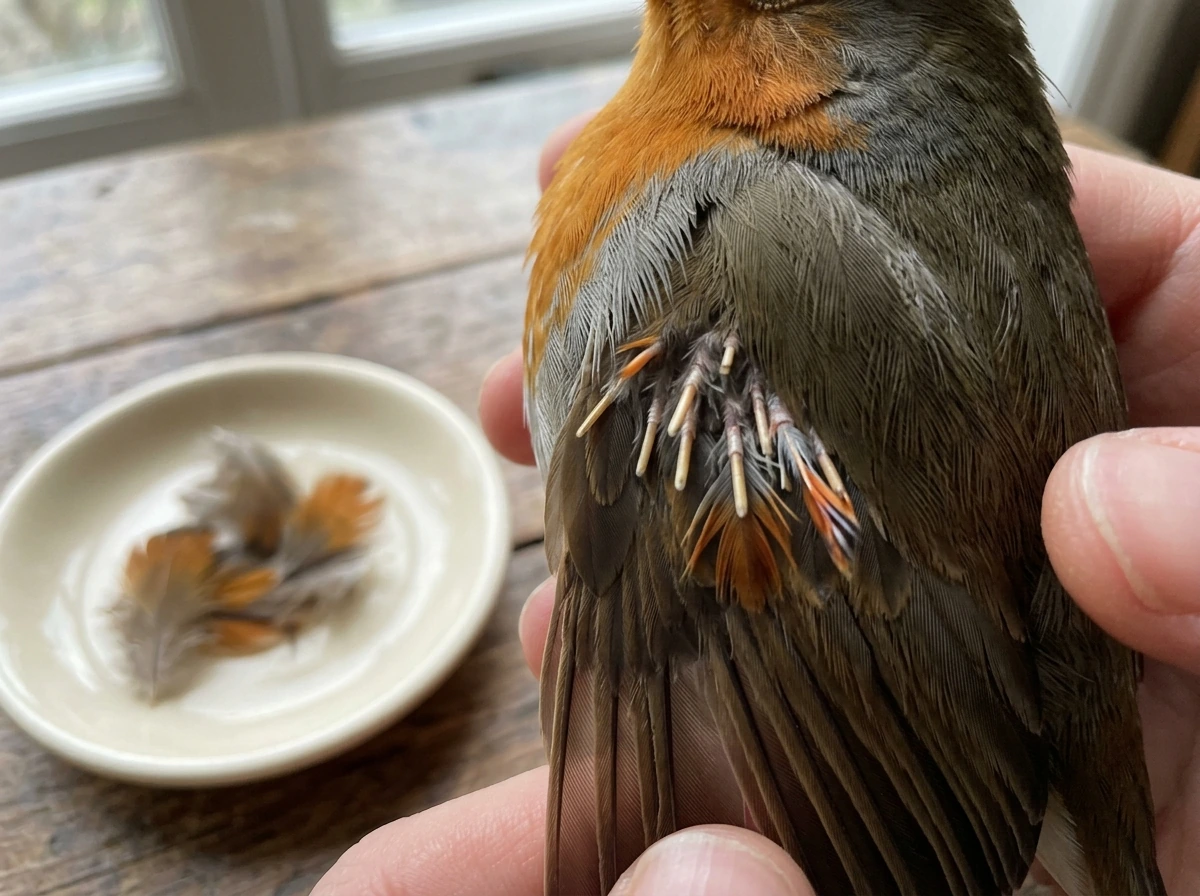
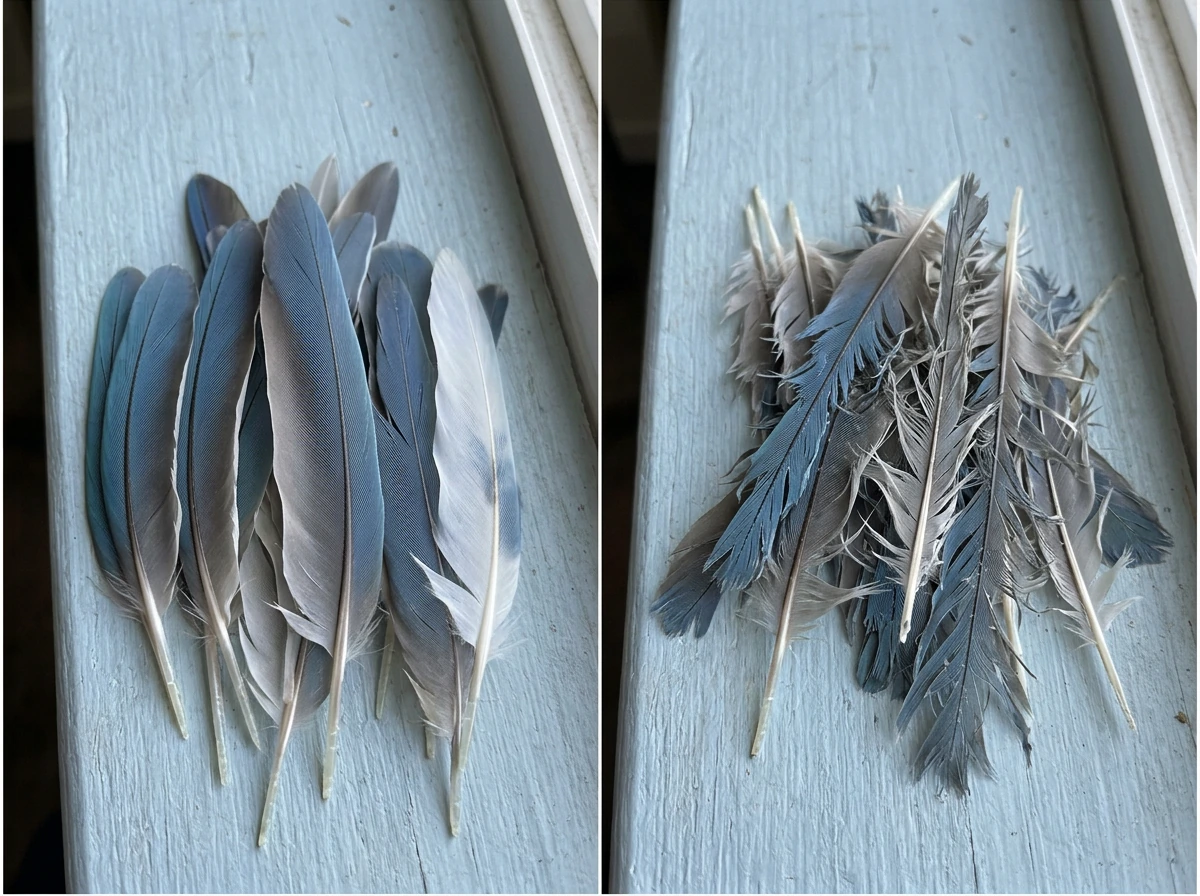
- Pin feathers (also called blood feathers) emerging from the skin, which look like small, waxy, dark-tipped spikes
- Feather loss that is fairly even on both sides of the body, not concentrated in one spot
- A slightly scruffy or disheveled appearance as new feathers push through
- Possible mild irritability when you touch new pin feathers, since they are sensitive and still have a blood supply
Beyond those signs, a molting bird should behave normally. It should eat well, be active, vocalize as usual, and not obsessively groom one area. A molt is not a health crisis, it is just a bit untidy for a few weeks.
What plucking actually looks like
Feather plucking (also called feather-destructive behavior) is when a bird actively removes its own feathers, either by pulling them out at the root or by chewing and breaking them off. Merck Veterinary Manual notes that feather plucking, also called feather destructive behavior, can range from mildly excessive preening to severe self-mutilation, and it stresses distinguishing abnormal feather loss from normal molting.
Once you spot the pattern, you can compare it to normal molting and decide what to do next feather plucking. It is not the same as normal preening if it is not molting. It can help to compare normal feather grooming habits with what over preening looks like. The distinction matters because plucking can escalate, and in severe cases birds move from feather damage to actual skin damage.
why is my bird preening so much, and it is not molting. Over-preening can be a sign of stress, skin irritation, or preen gland problems, so it helps to know what patterns to look for preening so much. The distinction matters because plucking can escalate, and in severe cases birds move from feather damage to actual skin damage. why is my bird molting so much
The visual signs of plucking are usually pretty clear once you know what to look for:
- Bald or thinning patches that are asymmetrical or localized, often on the chest, flanks, inner wings, or upper legs
- Broken, chewed, or ragged feather shafts rather than clean dropped feathers
- Stub feathers or feathers that look abnormal, constricted, or clubbed
- No pin feathers coming in to replace what was lost, or pin feathers that get pulled out immediately
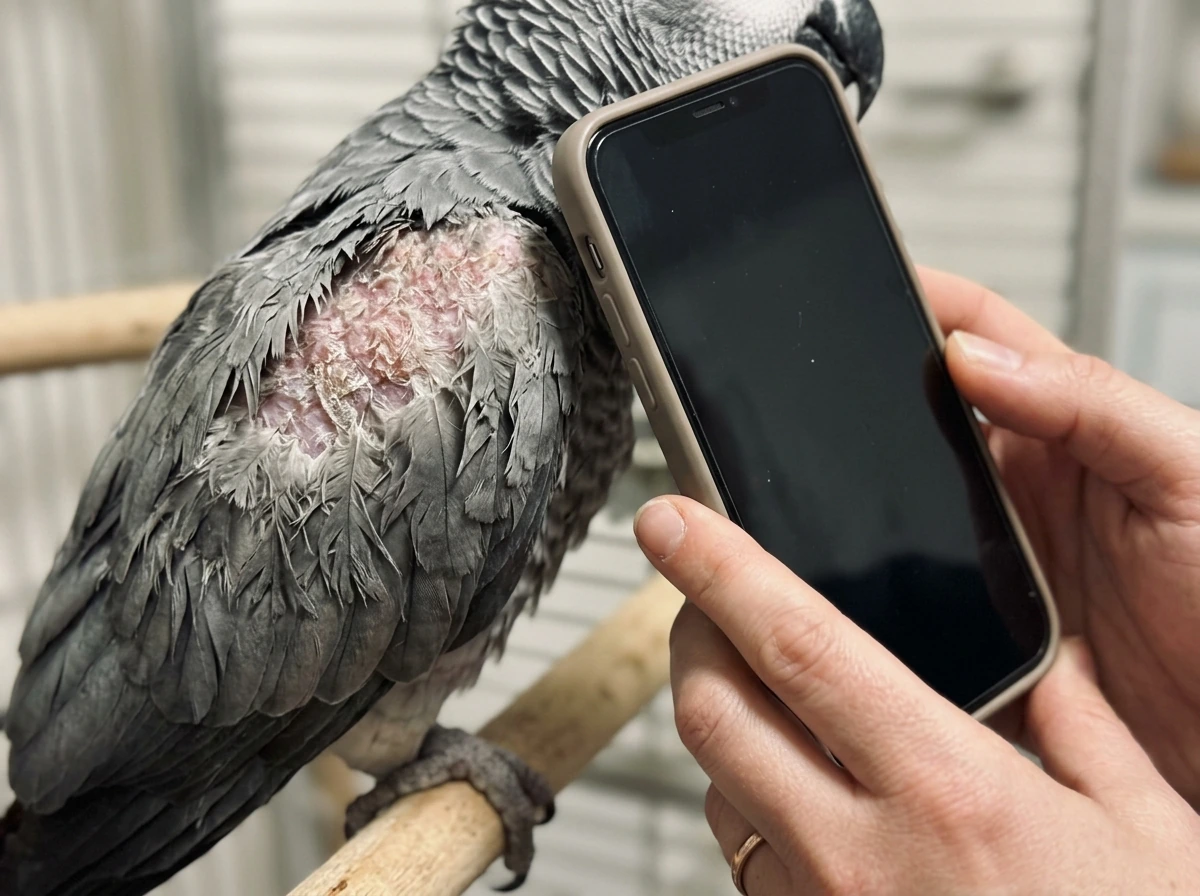
- Reddened, irritated, or thickened skin in the affected areas
- The bird actively grooming one spot for long stretches, far beyond normal preening
- Feather debris that looks bitten or torn rather than naturally shed
One important note: the head is usually spared in self-plucking because most birds cannot reach it with their beaks. If your bird has feather loss on its head, another bird in the cage may be the cause, or the issue could be a skin condition or parasite rather than self-plucking.
Warning signs that point toward illness, not just plucking
Sometimes feather loss is a symptom of something medical, not just a behavioral issue or a normal molt. This is important to catch early. Plucking and illness can exist together, or the feather loss can be driven entirely by an underlying medical problem.
Watch for these red flags alongside any feather changes:
- Lethargy or unusual stillness (a sick bird often sits fluffed and quiet)
- Loss of appetite or changes in droppings (color, consistency, or volume)
- Visible skin changes: redness, swelling, crusting, scaling, or open wounds
- Blood in or around feather shafts
- Abnormal pin feathers that look constricted, stunted, or dark when they should be clear
- Sneezing, nasal discharge, or labored breathing
- Weight loss (you can often feel this by gently checking the keel bone prominence)
- Intense scratching or rubbing against cage bars, which can signal mites or skin irritation
Depluming mites are one underappreciated cause of feather loss with heavy irritation. These mites burrow into the base of feather shafts and cause significant discomfort, leading birds to pull feathers out. They are too small to see without magnification, so you would not spot them on a casual inspection. If your bird seems genuinely itchy and agitated, not just preening, that is worth flagging to a vet.
Systemic illness, skin infections, hormonal issues, malnutrition, toxin exposure, and even cancer can all present with feather loss. That is a long list, but the takeaway is simple: if the feather changes come with behavioral or physical signs of illness, do not wait and see.
Your at-home checklist to sort this out today
Run through this checklist right now. It will help you land on a working answer within a few minutes of observation.
- Look at the feathers on the cage floor. Are they whole and clean, or chewed and broken? Clean whole feathers point toward molting.
- Check your bird's body for symmetry. Is feather loss balanced on both sides, or concentrated in one area? Symmetrical and even suggests molting. Patchy and one-sided suggests plucking.
- Look for pin feathers. Can you see tiny spiky new feathers emerging in the bare areas? If yes, molt is much more likely. If the bare skin looks smooth with nothing coming in, that is a plucking flag.
- Watch your bird for 10 minutes without interacting. Is it picking at one spot repeatedly? Is it pulling at feathers, not just smoothing them? Active targeted grooming beyond normal preening is a plucking sign.
- Check the head. If feather loss is on the head, it is almost certainly not self-plucking.
- Take photos now, from multiple angles, and note the date. You will want a baseline to compare against in 5 to 7 days.
- Think back: did anything change in the last few weeks? New pet, new schedule, moved cage, new person in the house, dietary shift? Timing of a change can be a major clue.
- Check the season and your bird's history. Has it done this before at the same time of year? Seasonal molts repeat.
After going through that list, give it 5 to 7 days of daily observation and photo documentation. A true molt will show clear [pin feather growth](/feather-and-skin-problems/how-do-i-know-if-my-bird-is-molting) within that window. Plucking will either stay the same or get worse. If it gets worse, or if any illness signs appear, move faster.
Molting vs plucking at a glance
| Feature | Normal Molting | Feather Plucking |
|---|---|---|
| Feather appearance on cage floor | Whole, clean feathers | Broken, chewed, or ragged feathers |
| Pattern of loss | Symmetrical, gradual, spread across body | Patchy, localized, often chest/wings/legs |
| Pin feather growth | Visible and growing in bare spots | Absent or pulled out immediately |
| Skin condition | Normal, no redness or irritation | Reddened, irritated, possibly raw |
| Bird behavior | Normal eating, energy, vocalizing | Repetitive grooming, restless, possibly lethargic |
| Head involvement | Can be affected | Almost never (bird can't reach its own head) |
| Timing | Seasonal or cyclical pattern | Often linked to a stressor or change |
| Illness signs present | No | Possibly yes, especially if medical cause |
Common reasons birds start plucking
Once you have ruled out molting, it helps to think about what might have triggered the plucking. The causes fall into two broad categories: medical and behavioral. A vet has to rule out medical causes first, but behavioral and environmental triggers are worth examining in parallel.
Stress and social issues
Birds are sensitive to changes in their social environment. A new pet, a person moving out, a change in your schedule, or a new cage location can all be enough to trigger feather-destructive behavior. Over-bonding to one person (sometimes called mate bonding) can cause jealousy or anxiety when that person is not available. If another bird in the cage is plucking your bird's feathers, that is a separate social problem worth addressing immediately.
Boredom and lack of stimulation
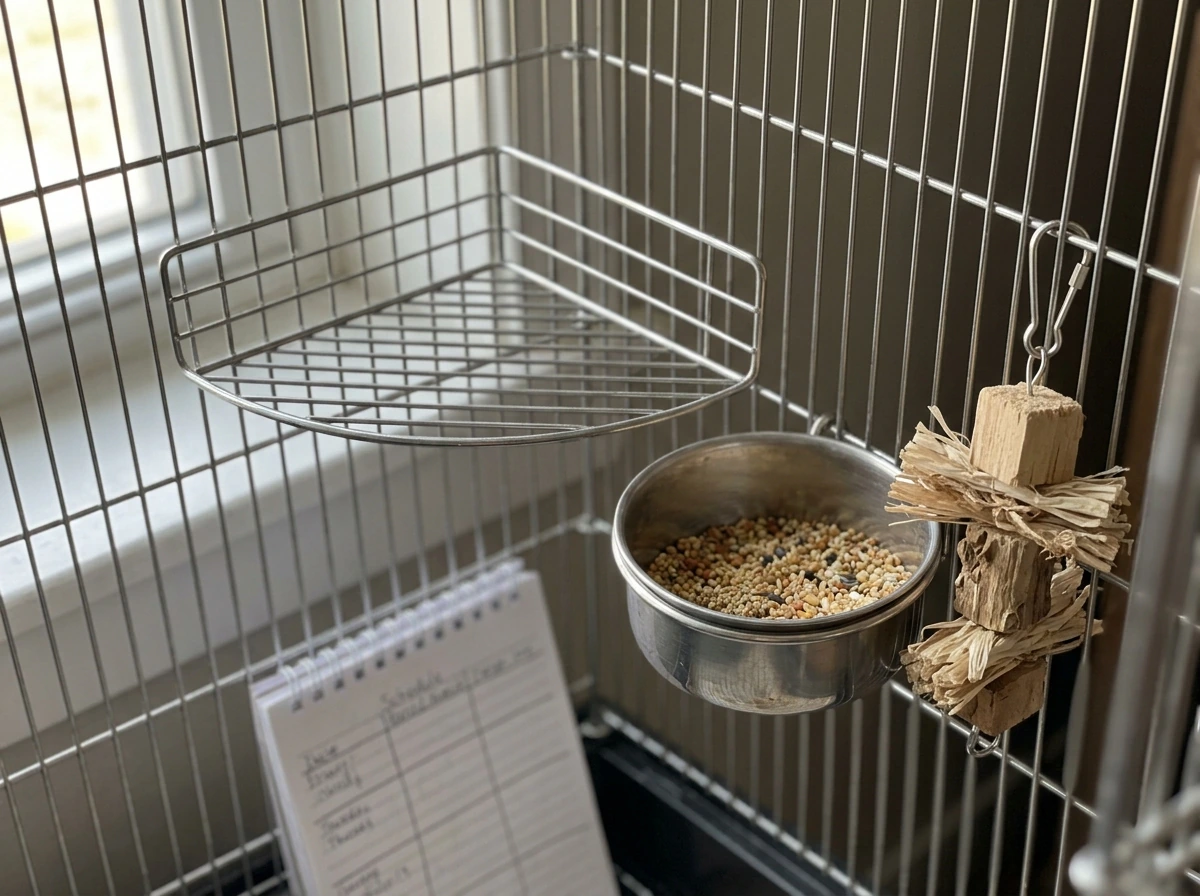
Birds need mental engagement during the day. A bird left alone for long hours with no foraging opportunities, no enrichment toys, and little interaction can develop compulsive behaviors, and feather plucking is one of the most common. This is especially true for species like African greys, cockatoos, and macaws, which are highly intelligent and need consistent stimulation.
Sleep deprivation
Birds need 10 to 12 hours of uninterrupted sleep each night, ideally on a consistent schedule. A bird that is not getting enough quality sleep is more likely to develop behavioral problems, including feather plucking. If your bird's cage is in a room with late-night activity, light, or noise, that could be a contributing factor worth correcting right away.
Diet deficiencies
A seed-only diet is not nutritionally complete for most companion parrots. Seeds are deficient in vitamin A, protein (specifically amino acids like lysine and methionine), and calcium. These deficiencies can directly affect feather quality and skin health, and they can contribute to conditions that make plucking more likely. If your bird eats mostly seeds, that is a husbandry issue worth addressing regardless of whether plucking is happening. Feathers need adequate sulfur-containing amino acids and overall nutritional balance to grow in properly.
Environmental irritants
Some birds develop skin irritation from airborne chemicals in the home. Tobacco smoke residue, perfumes, hairspray, and other aerosolized products can irritate a bird's skin and respiratory system. If these are present in your home, they belong on your mental list of possible contributing factors.
Preen gland problems and hormonal factors
A blocked or infected preen gland (uropygial gland) can cause localized irritation near the base of the tail, leading to excessive attention to that area. Hormonal shifts, especially during breeding season, can also trigger over-preening or plucking in some birds. These are medical issues that need vet evaluation.
What to do right now
Start with these steps today, regardless of whether you are leaning toward molt or plucking:
- Take clear photos of the affected areas from multiple angles and save them with today's date. Do this daily for the next week.
- Write down anything that changed in the last 4 to 6 weeks: new people, pets, furniture, schedule shifts, dietary changes, cage moves, or anything else different.
- Check the sleep situation. If your bird is not getting 10 to 12 hours of dark, quiet sleep on a consistent schedule, fix that tonight. It is a low-effort change with real impact.
- Look at the diet. If your bird is mostly eating seeds, start introducing a high-quality pellet alongside fresh vegetables. Do not make a sudden swap, but begin the transition.
- Remove any obvious environmental irritants from the room: candles, air fresheners, aerosol sprays, tobacco smoke.
- Add enrichment. Rotate foraging toys, introduce new textures, and increase your interaction time if possible.
- Do not punish or react dramatically to the plucking behavior. Attention, even negative attention, can reinforce it in some birds.
- If you see a wound, raw skin, blood, or the bird seems unwell in any way, skip the waiting period and call an avian vet now.
When to call an avian vet and what to ask
Some situations should not wait. Call an avian vet if: The Association of Avian Veterinarians (AAV) offers a Find-A-Vet search tool to help you locate an avian veterinarian in your community Call an avian vet if:.
- The feather loss is rapid and spreading over days rather than weeks
- You can see raw skin, wounds, or blood
- Your bird is lethargic, not eating, or has changed droppings
- The bird is scratching or rubbing intensely, suggesting a parasite or skin problem
- Feather loss is on the head (ruling out self-plucking)
- You have tried environmental adjustments for 2 to 3 weeks with no improvement
- The plucking is escalating or the bird appears distressed
When you call, ask specifically for an avian veterinarian or one with exotic bird experience. Not all general vets have the background to properly evaluate feather disorders. Bring your photos and your notes about when the behavior started and what changed beforehand.
At the appointment, a thorough avian vet will typically want to do a physical exam and may recommend a blood panel (CBC and biochemistry), skin cytology, fecal testing, and possibly radiographs. These tests help rule out the medical causes: infections, parasites, hormonal problems, malnutrition, and systemic illness. Medical causes have to be ruled out before the plucking can be called behavioral, so do not skip this step if the vet recommends it.
Useful questions to ask at the visit: Is there any skin irritation or infection visible? Should we test for parasites? Could diet be contributing? Are there any signs of a systemic issue? What would a behavioral treatment plan look like if medical causes are ruled out?
Feather plucking that catches a medical cause early is far easier to treat than one that has been going on for months. If you are unsure, err toward calling sooner rather than waiting it out.
FAQ
Can a molt ever look patchy, or is patchiness always plucking?
It is normal for a molt to look “uneven” but it should still be more symmetrical and you should see progressive pin feather growth. If you have bald, ragged patches that are widening and the bird is chewing or pulling from the same spot repeatedly with no pins, that pattern fits plucking more than a molt.
What if the feather loss is mainly on the legs, feet, or tail, does that change how I should judge molting vs plucking?
If the feather loss is on the feet, legs, or under-tail area and your bird is constantly chewing at the skin or shafts, plucking becomes more likely. In a molt, you usually see new feather tips emerging at least somewhere in the affected region, not just skin chewing.
My bird has dark feathers and I cannot clearly see pin feathers. How can I confirm molting vs plucking?
Pin feathers are not always easy to see in every species or on dark plumage. A helpful confirmation is whether pins appear within 5 to 7 days of the gap appearing and whether the bird’s activity and appetite stay largely unchanged. If there is no sign of regrowth and the bird’s grooming behavior is escalating, plan for plucking and rule out medical causes.
My bird is preening a lot. When is that still normal during a molt versus a warning sign?
Do not mistake “lots of preening” for molting. During a healthy molt, birds may preen a bit more because feathers are loose, but they typically do not focus intensely on one hotspot all day. Continuous attention to one area, picking at the base, or skin irritation suggests destructive behavior or a medical issue.
My bird is losing feathers on its head. Does that mean it is plucking?
If feather loss includes the head or face, self-plucking is less likely because most birds cannot reach those areas. Check for aggression or sibling/buddy picking, inspect the cage for biteable contact points, and consider mites or skin problems that can still affect the face.
What symptoms mean I should treat this as medical rather than waiting to see if it is “just” molt or stress?
Even if it seems behavioral, you should seek an avian vet if the feather loss is accompanied by itch, redness, scabs, weight loss, lethargy, diarrhea, coughing, or rapid worsening. Feather problems can be mixed, meaning a bird can be itchy from parasites or dermatitis and then develop compulsive plucking.
If it might be stress plucking, how long should I try environmental changes before getting a vet exam?
Try a simple environmental correction for 2 to 4 days while you arrange a vet if needed: consistent sleep window (10 to 12 hours), reduce late-night light and noise, and increase daytime foraging and chew options. If the bird continues to worsen or you see new skin damage, do not keep adjusting environment alone.
If diet could be contributing to plucking, what is the practical next step and what should I track?
Yes, diet can be a major contributor to both feather quality and itchy skin. A common next step is to transition from seed-heavy feeding to a nutritionally complete pellet plus measured fresh foods appropriate for the species, then track whether skin and feather growth improve over weeks. Avoid sudden, drastic changes without guidance if your bird is prone to selective eating.
How can I tell if cage mates are causing the feather loss instead of my bird doing it to itself?
If another bird is involved, you may notice broken or missing feathers in the same direction, feather “tags” that look chewed off, and an escalation when the birds are together. Separate the birds temporarily if there is active picking, and ask the avian vet about treating any secondary skin irritation.
What is the fastest “decision point” for when I should schedule the avian vet appointment?
If the behavior is new or rapidly progressing, it is safer to treat it as urgent even if you suspect molt. Feather-destructive behavior can escalate quickly into skin injury, and parasites or infections can also worsen. When in doubt, schedule the avian exam earlier rather than waiting for the full month-long molt timeline.
Next Article
How Do I Know If My Bird Is Molting? Signs and Care
Learn the signs of molting, how it differs from plucking, and when to call an avian vet for care.