
Your bird probably won't let you pet him because he doesn't feel safe enough yet, not because he dislikes you. If your bird is biting or attacking you, you may also want to look at the specific causes behind why is my pet bird attacking me. Most pet birds, even hand-raised ones, need to build trust before they'll tolerate or enjoy being touched. The good news is that this is almost always fixable with the right approach, the right timing, and a little patience. The exception is when avoidance is sudden or paired with signs of illness, and that's when you stop training and call an avian vet instead. Yawning can also be a comfort or stress signal during petting, so it's important to watch his other body language and stop if he seems unsettled.
Why Won’t My Bird Let Me Pet Him? Fix Fear and Trust
Likely reasons your bird avoids petting
There's rarely just one reason a bird refuses touch, but these are the most common culprits worth thinking through before you do anything else.
- He's new to your home and hasn't settled in yet. Lafeber recommends not trying to play with a new bird right away at all. Give him time to decompress first.
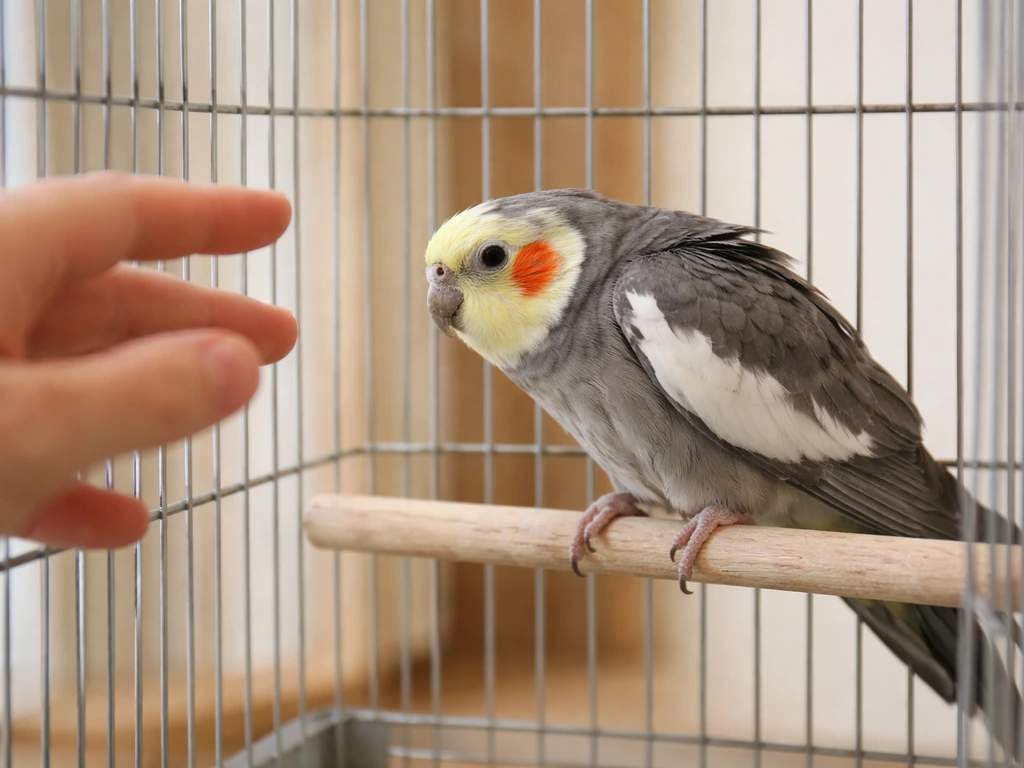
- He's not comfortable with hands specifically. Many birds are fearful of human hands even when they're otherwise calm. The hand is big, it moves fast, and it comes from above, which mimics a predator approach.
- You're approaching from an angle or direction that startles him. Coming at a bird from overhead or from his blind spot triggers a fear response almost every time.
- He's only tolerant of certain body areas. Most birds prefer head and neck contact; touching the back, wings, or vent area can feel invasive or can even trigger mating behaviors.
- He's going through a hormonal period. During breeding season, birds can become territorial, bite more, and refuse contact they usually accept. Hand-raised birds sometimes direct this behavior at their owners because they've bonded to them as a mate.
- He's bored or under-stimulated. The Merck Veterinary Manual notes that birds without enough enrichment develop behavior problems including biting and increased defensiveness, which naturally reduces their tolerance for petting.
- He's in pain or feeling unwell. This is the one you don't want to miss. A bird that suddenly stops tolerating touch after previously accepting it may be protecting a painful area or feeling too ill to handle interaction.
How to read bird body language (fear, aggression, discomfort)
Before you try to touch your bird at all, learn what he's telling you. Birds give clear signals; the problem is most owners don't catch them until the bird bites. ThinkParrot makes this point directly: if you consistently miss the early warning signs, the bird skips the warnings and goes straight to biting. Reading body language is the single most important skill in this whole process.
Signs your bird is afraid
- Leaning or moving away from your hand
- Crouching low on the perch
- Wide eyes, sometimes with pupils dilated
- Rapid, shallow breathing
- Flattened feathers pressed tightly against the body
- Backing into a corner or the side of the cage
Signs your bird is agitated or aggressive
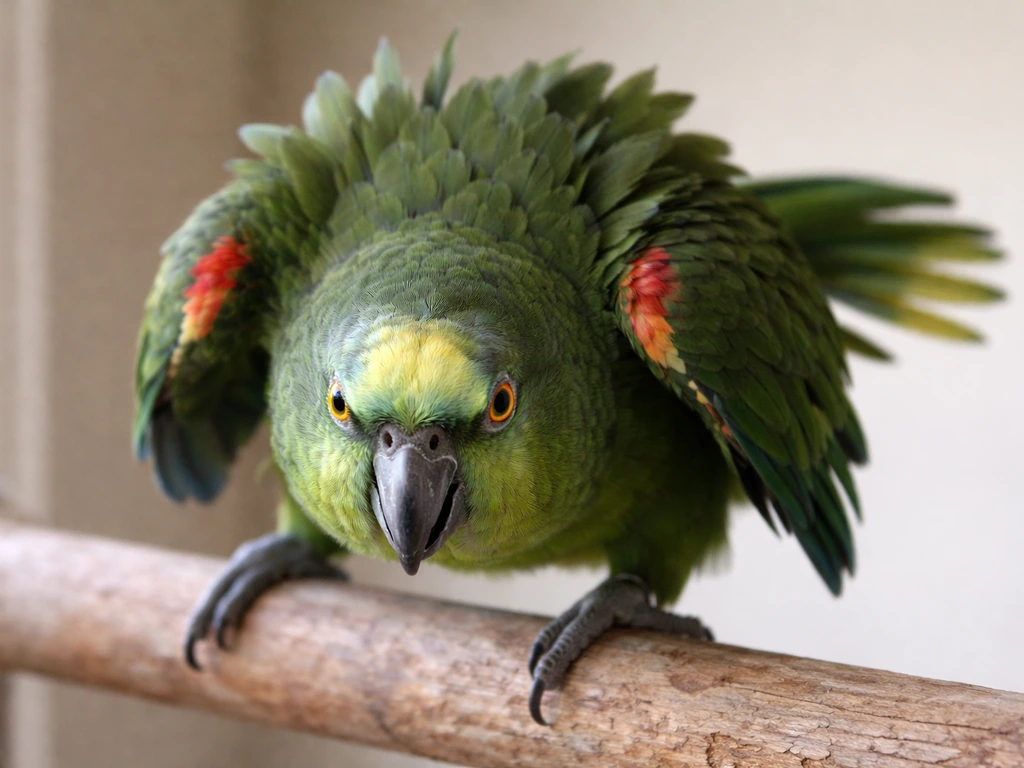
- Head lowered and pushed forward (crouching posture with intent)
- Tail feathers fanned out or flared
- Feathers ruffled or hackled along the neck
- Pupil dilation (eye pinning), especially combined with tail fanning
- Beak open, lunging forward
- Crest fully erect in cockatoos and cockatiels (context matters here; it can mean excitement too, so look at the whole picture)
Signs of discomfort or illness (different from behavioral signals)
- Fluffed feathers when the room isn't cold
- Sitting at the bottom of the cage
- Tail bobbing with each breath
- Open-mouth breathing at rest
- Swelling around the eyes
- Reluctance to move at all, not just away from your hand
The difference matters. A bird showing fear or aggression signals is telling you something about his comfort level with the interaction. A bird showing illness signals needs a vet, not a training session. If you see the second set of signs, skip the rest of this article and go to the vet section at the bottom.
Today's troubleshooting checklist and quick fixes
Run through this checklist right now, before your next interaction. A lot of petting problems have fast, practical fixes once you identify the specific trigger.
- Check how long you've had the bird. If it's been less than a few weeks, stop trying to pet him and just focus on being present near the cage without demands. Let him adjust.
- Look at how you're approaching. Are you coming from above, fast, or directly at his face? Switch to a slow, low, side approach. Let him see your hand coming from a distance.
- Notice which part of him you're trying to touch. If you've been going for the back, wings, or belly, stop. Stick to head and neck only for now.
- Check the time of day. Birds are often more defensive first thing in the morning and during breeding season peaks. Try interacting during a calm mid-morning window instead.
- Think about what changed recently. New cage placement, new household member, loud nearby events, or a change in your routine can all spike defensiveness temporarily.
- Check his diet and environment. An under-stimulated, poorly nourished bird is a more defensive bird. Is he getting variety, foraging opportunities, and enough out-of-cage time?
- Watch for the illness signs listed above. If any of them are present, call an avian vet today.
How to earn trust: desensitization and consent-based handling
The goal isn't to get your bird to tolerate petting. It's to get him to choose to engage with you. That's a real distinction. A bird that tolerates touch because he's given no other option is a bird that will eventually bite. A bird that leans into your hand is one you've actually built a relationship with. The Merck Veterinary Manual notes that pet birds that aren’t stimulated enough can develop behavior problems like biting, screaming, or pulling out feathers.
Start with presence, not hands
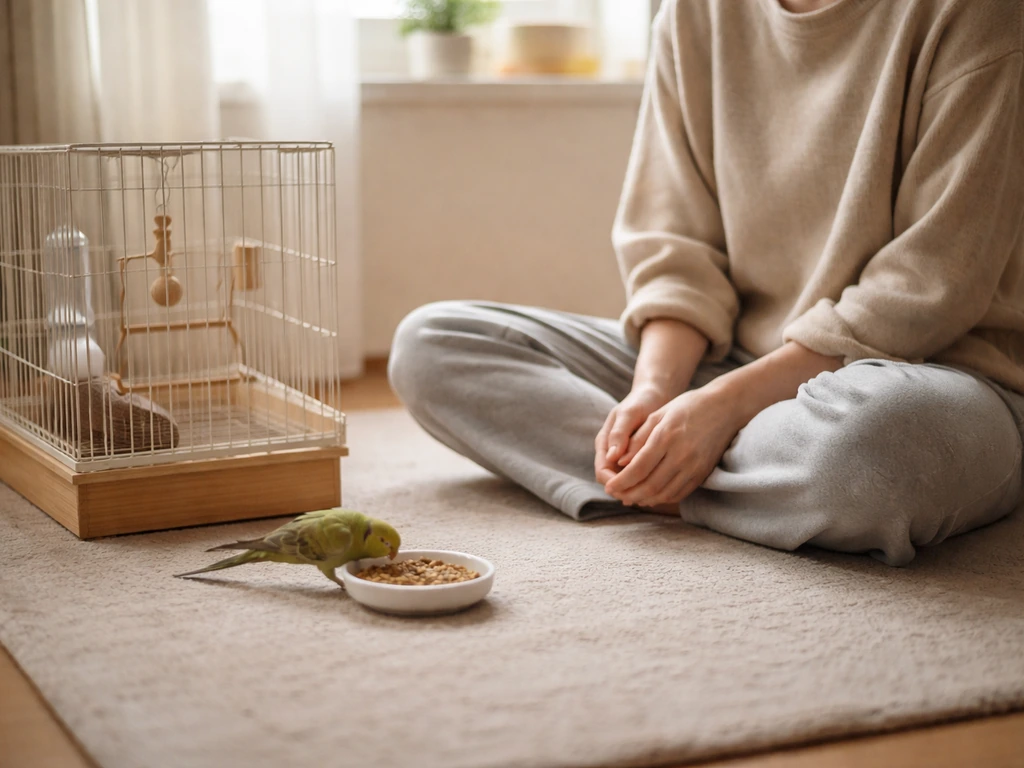
Sit near the cage and talk quietly. Read out loud, watch TV nearby, eat near him. Let him get used to you existing in his space without any demands attached. This phase can take days or a few weeks depending on the bird. Don't rush it.
Introduce the hand slowly
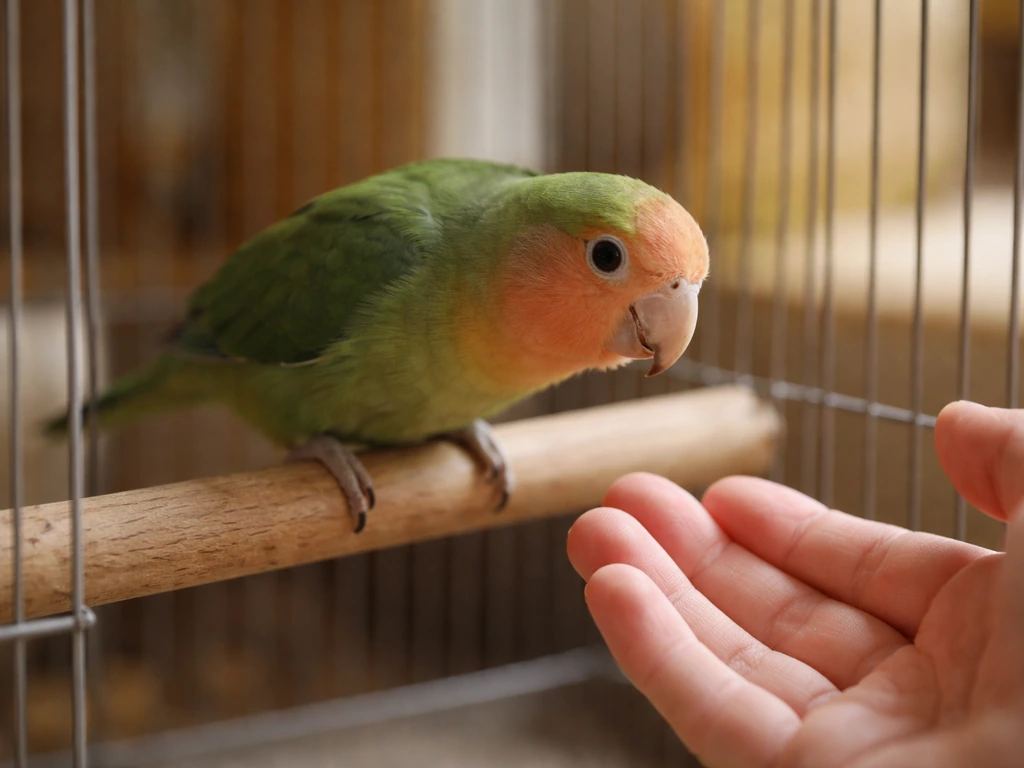
Once he's comfortable with your presence, start introducing your hand at a distance, not inside the cage. Hold it still, at the level of his perch, not above it. Pair the sight of your hand with something good: a favorite treat placed near where your hand is resting. PetMD describes this kind of approach as shaping behavior in small steps, pairing your hand's appearance with a high-value reward so the hand stops being threatening and starts predicting good things.
Use a perch before your bare hand
If your bird is hand-shy, use a short perch or stick instead of your bare hand for step-up training first. PetMD recommends presenting the perch in a firm, steady way so the bird learns it's stable and predictable. PetMD also recommends step-up training by pairing your bird’s sight of your hand with the “Step up” cue and delivering a special treat only when the bird sees your hand at the open cage door, described as shaping behavior in small steps presenting the perch in a firm, steady way. Once he's stepping onto the perch reliably, you can work toward transitioning to your bare hand.
Target training as a trust-builder
Target training is one of the best tools here. You teach the bird to touch his beak to a small stick or object on cue, and you reward him each time. It gives him a job, it gives you a way to move him and engage him without forcing physical contact, and it builds a communication channel between you. LibertyWings describes how you can adjust the target stick distance based on the bird's comfort, shortening it if he recoils so the exposure level stays within his tolerance. Parrots.org suggests holding the target stick in one hand and treats in the other, rewarding the moment he orients toward the target at all. Over sessions, you build toward closer contact naturally.
Let the bird initiate contact
Once he's comfortable near your hand, hold still and wait. If he leans toward you or steps toward your hand on his own, that's consent. Reward it, then stop. Keep sessions very short and always end on a positive moment. Over time, he'll start associating your hand with positive outcomes he chose to engage with, which is the foundation you want.
Where and when petting can work (and safer alternatives)
Not all petting is equal, and choosing the right spot and the right moment makes a huge difference, especially early in the trust-building process.
The safest spots to pet a bird
Stick to the head and neck. PetMD and the Environmental Literacy Council both point to this area as the starting point. Most birds accept gentle scratching around the head, behind the crest, and along the sides of the neck. These areas feel natural to a bird because flock members preen there for each other.
Avoid the back, wings, and vent area, especially if the bird is already skittish or if it's breeding season. The Environmental Literacy Council notes that these areas can trigger mating-related behaviors in birds, which can lead to hormonal frustration and increased defensiveness over time. These areas can also be linked to sexual arousal that the bird cannot discharge comfortably, which may show up as avoidance, irritation, or aggression mating-related behaviors in birds. There's a whole separate topic around how certain petting patterns cause hormonal stress in birds, and it's worth understanding if you have a parrot species.
The best times to try
- When the bird is calm, not when he just woke up or is wound up from activity
- After he's eaten and had some out-of-cage time
- When the environment is quiet and predictable
- Not during breeding season peaks if he's been particularly defensive
Alternatives to petting that still build the bond
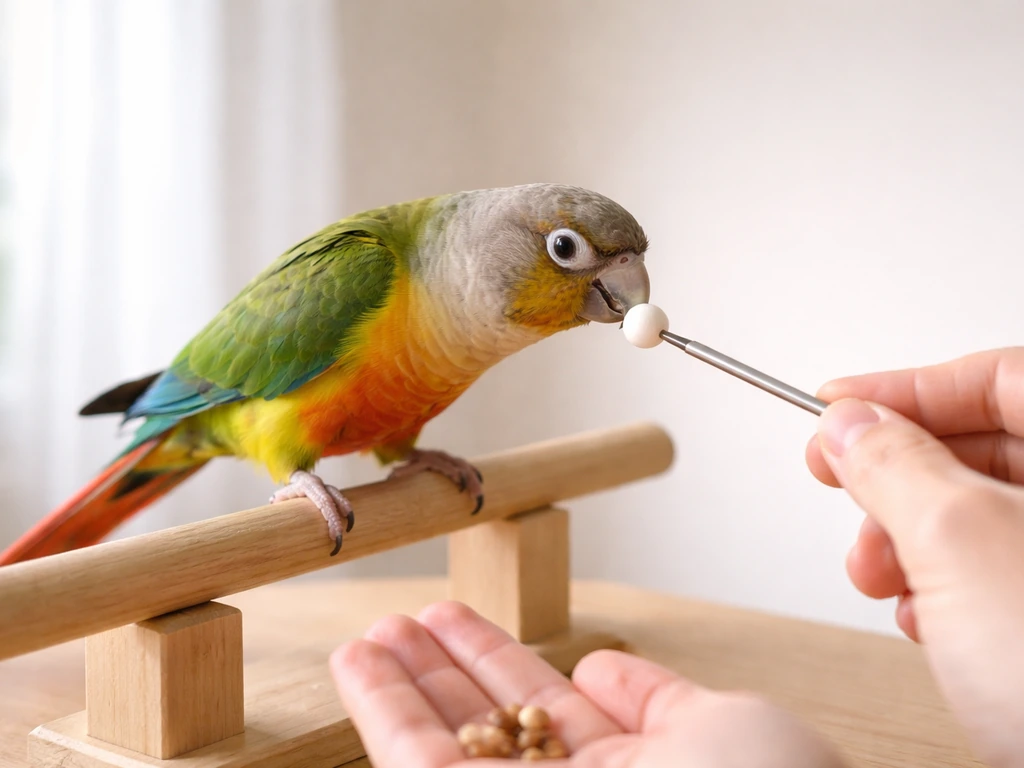
- Target training sessions (frequent, short, positive)
- Talking and singing near him without touch demands
- Offering treats by hand so he approaches you voluntarily
- Letting him climb on you without attempting to pet him yet
- Playing near him and letting him watch
What to avoid when your bird won't allow touch
Some of the most common instincts people have when a bird refuses petting are exactly the wrong moves. These behaviors reliably make the problem worse.
- Chasing or following the bird when he moves away. This teaches him that moving away doesn't work, so he escalates to biting.
- Forcing contact by holding him down or trapping him against the cage. This destroys trust fast and can cause lasting fear of hands.
- Reaching over the bird's head or from above. This triggers the predator response almost every time.
- Pulling your hand back sharply when he lunges. A slow, calm withdrawal is fine; a fast jerk teaches him that lunging works and gets a reaction.
- Punishing or scolding biting. Lafeber is clear on this: if the bird learns you don't respond to warning signs, biting becomes his primary communication tool. Your job is to read the earlier signals, not to punish the bite.
- Overhandling before trust is established. More handling pressure does not create more trust. It creates more defensiveness.
- Ignoring body language. If he's giving you warning signals (see the body language section above) and you push through anyway, you're teaching him that warnings don't matter.
When to suspect pain or illness and seek avian vet help
A sudden change in a bird's behavior toward handling is a red flag worth taking seriously. PetMD states directly that a sudden increase in biting can be a sign of pain or discomfort and recommends a veterinary exam to rule out medical causes. If your bird used to tolerate petting and now doesn't, that change is the signal, not just the behavior itself. If you’re wondering why does my bird hate me, start by ruling out illness or pain because sudden shifts in handling behavior can have a medical cause.
Birds hide illness well. By the time they show obvious signs, they've often been unwell for a while. This is why combining behavioral changes with physical appearance checks matters so much.
Contact an avian vet promptly if you see any of these
- Open-mouth breathing at rest (Lafeber calls this very serious)
- Tail bobbing with each breath, which signals respiratory effort
- Fluffed feathers when the room is warm and the bird hasn't just bathed
- Swelling around the eyes or face
- Sitting at the bottom of the cage or reluctance to move
- Sudden aggression or refusal to be handled after a period of normal tolerance
- Wheezing, clicking, or any audible breathing abnormality
- Discharge from the nostrils or eyes
UPenn's avian triage guidance notes that refusal of normal handling and unusual behavior can both relate to illness or pain, and that handling a sick bird should always be approached with caution. If you're seeing multiple items from that list above, don't wait to see if it resolves. Birds deteriorate quickly when unwell.
If your bird passes the health check and the issue is purely behavioral, you're in the right place with the trust-building steps above. If your bird seems like it hates you, go through the same steps based on fear, discomfort, and consent-based handling rather than trying to force petting my bird hates me what can i do. Most birds do come around with consistent, low-pressure, positive reinforcement-based interaction. It just takes longer than most people expect, and the timeline is always set by the bird, not the owner.
FAQ
What should I do if my bird lets me pet once, then suddenly pulls away or bites the next time?
Treat it as a cue that the trigger changed (for example, session was too long, the spot felt different, he was already stressed, or he is uncomfortable with your posture). End the next session immediately when he shows early signs, shorten the distance or duration, and restart pairing your hand with a high-value reward. If the shift is abrupt and happens repeatedly, consider an avian vet check for pain or discomfort.
Is it okay to hold my bird in my hand even if he is resisting?
No. Restraint teaches fear rather than consent, and it can increase future biting. Use step-up training (perch or stick), target training, and give him an exit. If he leans away or freezes, step back and reward calm orienting instead of trying to “push through.”
My bird is not tame yet. How can I tell whether he is afraid versus overstimulated or hormonal?
Fear usually looks like retreat, crouching, tail tucked, wide eyes, or repeatedly moving away. Overstimulation often shows as sudden hyperactivity, head bobbing, or increasing irritability during petting. Hormonal frustration is more likely during breeding season and may come with stronger avoidance or quick escalation when you scratch sensitive areas. If you notice seasonal patterning or reactions to head scratches that then worsen quickly, avoid petting there and focus on training that keeps contact minimal.
Where is the safest place to start petting if my bird accepts contact but seems unsure?
Start on the head and neck only, and use very light, brief touches that end before he asks for more. Behind the crest and along the sides of the neck are often the first reliable areas. Skip the back, wings, and vent area entirely, especially if he is skittish or you suspect breeding-season behavior.
My bird yawns during petting. Does that mean he is comfortable, or should I stop?
Yawning can be comfort or stress, so don’t rely on it alone. Look for the rest of the body language: relaxed feathers and leaning in support continuing briefly, while turning away, stiff posture, or escalating vocalizations mean stop and back up to a distance-training step. Shorten the session either way until you understand the pattern.
How long should I wait between training sessions if petting is going badly?
Keep sessions short and frequent rather than long and stressful (for example, a couple minutes of low-pressure work). If he is not tolerating your hand at perch height, move back a step in difficulty and only progress when he chooses calm, voluntary engagement. If biting escalates after attempts, pause training for the day and resume later at a lower threshold.
What treats should I use for building trust during hand introductions?
Use a high-value, easy-to-hold treat your bird reliably loves, and keep portions small so the session stays positive. If your bird loses interest in the treat or becomes more aggressive while eating, reduce the intensity (more distance, slower movement) and confirm the treat is appropriate for your bird’s diet needs.
Can I teach my bird to enjoy petting faster using clicker or target training?
Yes, target training often speeds the process because it gives him a clear job and you can control exposure without forcing touch. A good approach is to reward orientation toward the target immediately, then gradually reduce the distance and only add touch after he consistently chooses engagement. Avoid adding petting on top of the work if he still shows hesitation.
How do I handle it when my bird bites but then acts normal right after?
Don’t treat it as “over” or ignore the bite. Birds often bite when they are signaling a boundary too late, so use the bite as feedback to prevent the next attempt from reaching that threshold. Reset to distance training, shorter sessions, and lower intensity. If bites are sudden or increasing, rule out pain first with an avian vet exam.