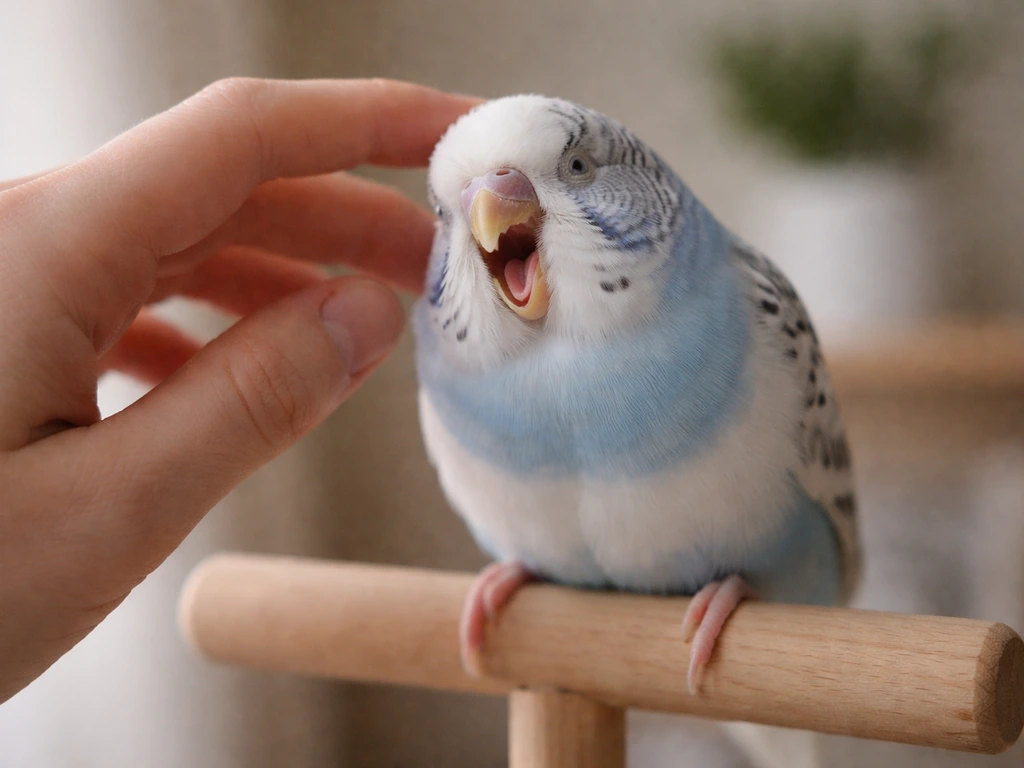
Petting a bird below the neck, especially on the back, wings, or vent area, mimics what a mate would do during courtship. Your bird's brain reads that touch as a sexual cue, releases hormones in response, and starts preparing for mating. ScienceDirect Topics also describes how mating signals in birds can include female solicitations like [crouching or tail raising to expose the cloaca](https://www. sciencedirect.
How Petting a Bird Can Lead to Sexual Frustration

Marcus Chen
17 May 2026
com/topics/agricultural-and-biological-sciences/notiomystis-cincta), such as in the dunnock. When mating never happens, the hormonal drive has nowhere to go. That leftover tension is what people mean when they say a bird is 'sexually frustrated,' and it can show up as mounting, persistent crouching, regurgitating food at you, screaming, or feather plucking. If your bird yaws or stretches when you pet him, it can be another sign that the touch is turning into sexual arousal yawn.
Why petting can trigger sexual arousal in pet birds
Birds have a hormonal pathway called the HPG axis (hypothalamus-pituitary-gonadal axis) that responds quickly to social and physical cues. In the wild, a bird would only receive body-contact grooming from a mate during courtship. When you stroke your bird's back, sides, belly, or vent area, the nervous system interprets it as a mating advance and signals the body to ramp up reproductive hormones. The Merck Veterinary Manual specifically flags back-stroking as a trigger that 'simulates mating behavior' and can measurably increase hormone levels, even in companion parrots who have never encountered another bird.
This response happens fast. The bird does not decide to become aroused. The body reacts first, and behavior follows. Cockatoos and cockatiels are especially sensitive to this effect, but it applies across most parrot species and many other pet birds. The more frequently you pet in those zones, the more consistently the hormonal cycle is triggered, and the harder it becomes to break.
The frustration part comes from the mismatch. Your bird's body is primed for mating, but there is no mate, no nest, and no way to complete the cycle. The unresolved hormonal pressure has to go somewhere, and it often comes out as restless, repetitive, or escalating behavior.
What 'sexual frustration' actually looks like in everyday life
The behaviors you are most likely to notice are not subtle. Birds in a hormonally aroused or frustrated state tend to show a cluster of signs, and once you know what to look for, the pattern becomes obvious.
- Crouching low and fanning the tail to expose the vent area (a solicitation posture)
- Mounting your hand, arm, a favorite toy, or another object and making pumping movements
- Regurgitating food onto you, a toy, or a mirror (this is courtship feeding, directed at a perceived mate)
- Wing pumping or quivering wings while making soft contact calls
- Guarding you, their cage, or a corner aggressively and biting anyone who approaches
- Screaming for your attention persistently, especially when you leave the room
- Feather plucking or over-preening, particularly around the vent, chest, or under the wings
- Seeking out and nesting in dark enclosed spaces like boxes, drawers, or cabinets
Not every bird will show all of these, and the mix varies by species. Cockatiels often crouche and regurgitate. Cockatoos may scream and become clingy and then bite without warning. African greys and Amazon parrots sometimes become territorial to the point of attacking family members they previously tolerated. If your bird is biting or attacking you, that can be part of the same hormonal escalation and frustration pattern described here attacking family members. If your bird suddenly seems 'obsessed' with you or one particular spot in the house, hormonal escalation is usually worth considering.
Arousal vs. actual health and stress red flags
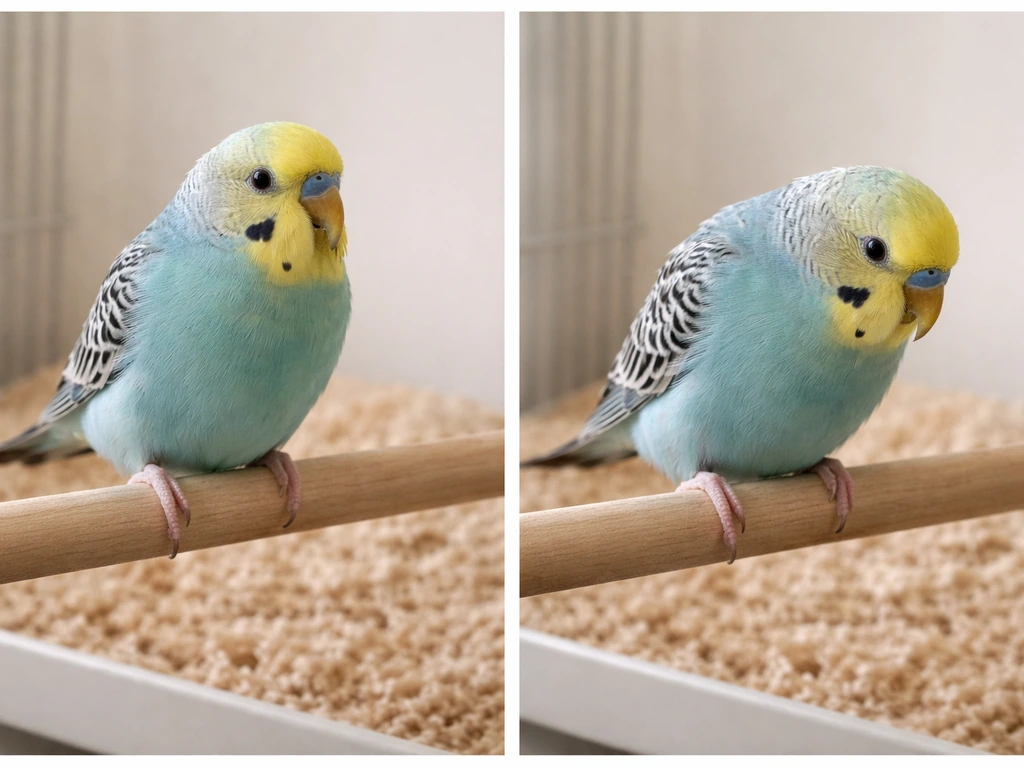
This is where it gets important to pay close attention, because some of the behaviors and physical signs that look like sexual frustration can also be symptoms of illness. Getting this distinction wrong means either over-worrying about normal behavior or missing a genuine health problem.
| Sign | Likely hormonal/behavioral | Possible medical red flag |
|---|---|---|
| Regurgitation | Calm, directed at you or a toy, bird seems comfortable afterward | Repeated, not socially directed, accompanied by head shaking, straining, or crop distension |
| Feather plucking | Around vent, chest, or base of tail; bird otherwise active and eating | Skin damage, bleeding, plucking on the head (which birds cannot self-pluck), rapid progression |
| Screaming/aggression | Seasonal, tied to longer daylight hours or petting sessions | Sudden onset with no seasonal pattern, accompanied by lethargy or appetite changes |
| Crouching/posturing | Happens during or just after petting, bird recovers quickly | Persistent posturing with labored breathing or tail-bobbing at rest |
| Vomiting vs. regurgitation | Regurgitation is controlled, food comes from the crop smoothly | True vomiting involves head shaking, undigested food, and leaves the bird looking unwell |
| Lethargy | Not typical of hormonal arousal alone | Always a red flag, especially with weight loss or fluffed feathers at rest |
Egg binding is a specific risk worth knowing about for female birds. A hen who is hormonally stimulated but cannot pass an egg can go into a life-threatening situation within hours. Signs include straining, a swollen abdomen, sitting fluffed on the cage floor, and sudden weakness. This is a vet emergency, not something to manage at home.
When in doubt, use this rule: if the behavior is new, sudden, or comes with any physical symptoms like weight loss, labored breathing, abnormal droppings, or visible skin changes, call your avian vet before assuming it is hormonal.
What to do today: change how and where you pet
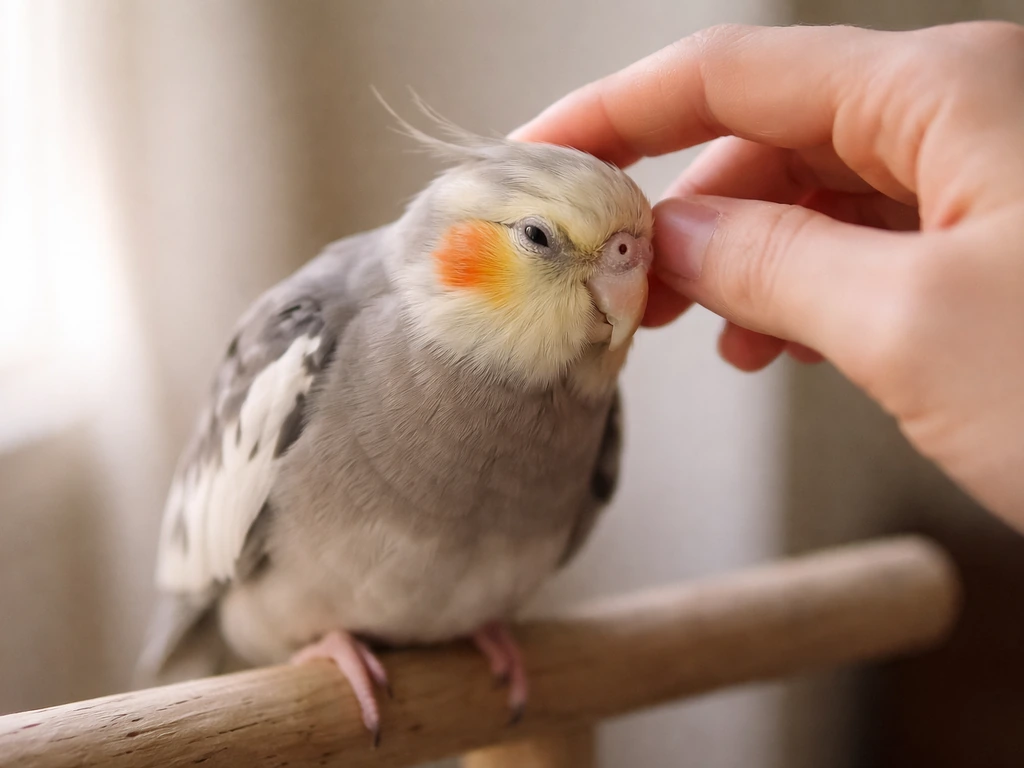
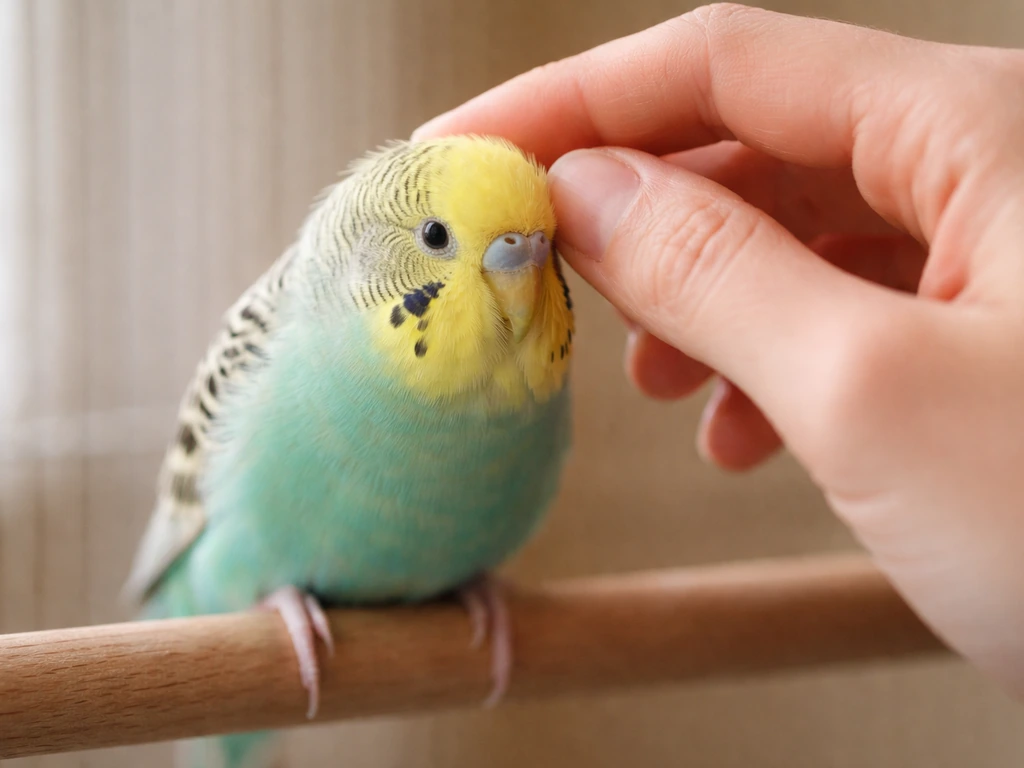
The most immediate thing you can do is change your petting habits starting with your very next interaction. Limit touch to the head and neck only. That means the top of the head, behind the crest if your bird has one, and around the cheeks and neck. These are the areas birds groom each other socially without it being a sexual cue. Petting below the neck, including the back, wings, belly, and especially the vent area, is what triggers the hormonal response, so stop there.
If your bird actively pushes into your hand or redirects your fingers toward their back or vent, gently withdraw and offer head scratches instead. Do not reward the solicitation by giving them what they are asking for. It feels mean in the moment, but continuing to pet in those areas is what keeps the cycle going.
Also look at what else might be acting as a trigger today. Remove or put away any mirrors in or near the cage. Take out nest boxes, snug huts, or tent-style perches that feel like nesting spots. If your bird has been dragging items into a corner and sitting in them, block access to that area. Move the cage to a different location if the bird has been guarding a particular wall or corner aggressively.
A quick checklist to run through right now:
- Stop all petting below the wings immediately
- Remove mirrors from the cage and immediate environment
- Take out nest boxes, snuggle huts, tents, or any enclosed sleeping spots
- Block access to cabinet interiors, drawers, or dark corners the bird has been exploring
- Note what time of day the worst behaviors occur and whether they follow a petting session
- Write down any physical symptoms you have noticed (regurgitation, feather condition, droppings) to share with a vet if needed
Redirecting the energy: enrichment, routine, and how you spend time together
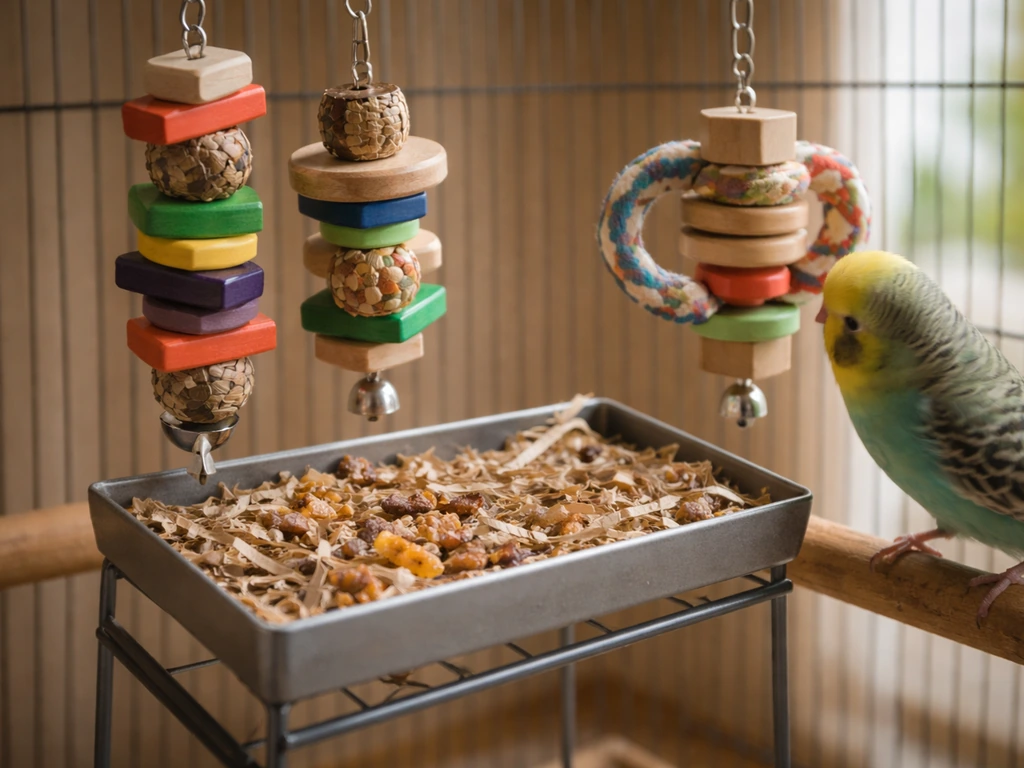
Cutting off the trigger is step one, but you also need to give your bird something to do with all that restless energy. Boredom and lack of stimulation make hormonal escalation worse, and a bird that is busy and engaged is less likely to fixate on you as their only outlet.
Rotate toys regularly, ideally every few days, so the cage feels novel. Foraging toys are especially useful because they occupy the bird's attention for extended periods. Think about adding shredding materials, puzzle feeders, or food hidden inside paper cups or rolled paper. Bathing or misting your bird a few times a week also helps physically and gives a different kind of sensory experience that is not sexually charged.
Change how you interact rather than how much. Short, frequent interaction sessions (5 to 10 minutes several times a day) work better than one long session where the bird gets increasingly stimulated and then crashes when you leave. End interactions on a calm note before the bird escalates. If you notice posturing, crouching, or wing quivering starting, calmly return the bird to the cage or a play stand and walk away without drama. Do not try to soothe or comfort those specific behaviors because attention, even negative attention, can reinforce them.
If your bird seems excessively bonded to you to the point of distress when you leave, that obsessive attachment is often part of the same hormonal picture. Encouraging the bird to spend time on a play stand doing independent activities helps break the pattern gradually.
Preventing it from coming back: environment, light, and long-term habits
Hormonal cycles in pet birds are heavily driven by day length. Extended daylight hours are one of the most powerful triggers for nesting and reproductive behavior. If your bird is exposed to 14 or more hours of light per day (including artificial light in the evenings), that alone can keep them in a near-constant hormonal state. Aim for 10 to 12 hours of light per day and cover the cage consistently at the same time each evening. This single change can significantly reduce the intensity and frequency of hormonal cycles over weeks.
Keep the environment consistent and less nest-like long-term. Do not reintroduce snuggle huts or tents even after things calm down. If your bird starts exploring a cabinet or closet and looking comfortable in it, close it off. Providing a perch or sleep spot that is open and elevated (rather than enclosed and dark) gives the bird a safe resting place without encouraging nesting instincts.
Watch for seasonal patterns. Many birds have predictable windows, often spring and fall, when hormonal behavior ramps up. If you know your bird tends to escalate in spring, you can proactively manage light exposure and limit petting triggers in the weeks before it typically starts rather than reacting after the cycle is already underway.
Avoid feeding behaviors that mimic pair bonding. Feeding your bird from your mouth or hand-feeding soft, mushy foods can act as a social trigger similar to courtship feeding. It is fine to hand-feed treats, but keep it simple and short rather than prolonged and intimate.
When to bring in a professional
Most birds respond well to handling changes, environmental adjustments, and light management within a few weeks. But there are situations where you should not try to manage this on your own.
- Feather plucking that is causing skin wounds or bare patches, especially if it is spreading or not tied to a clear seasonal pattern
- Regurgitation that is frequent, not socially directed, or accompanied by weight loss, head shaking, or visible distress
- Aggression so severe that handling the bird safely is no longer possible
- A female bird who is laying eggs repeatedly, straining, or showing any signs of difficulty passing an egg
- Hormonal behavior that does not respond at all to environmental changes after four to six weeks of consistent effort
- Any sudden change in behavior alongside physical symptoms like lethargy, fluffed feathers, abnormal droppings, or appetite loss
An avian vet can rule out medical causes first, which matters because some of the same signs (feather destruction, aggression, regurgitation) can come from infections, nutritional deficiencies, or internal conditions that have nothing to do with hormones. A proper workup might include bloodwork, a crop check, or imaging. A workup for feather-destructive behavior may include a CBC, biochemical profile, viral testing, skin biopsy, radiographs, and/or endoscopic examination feather-destructive behavior workup may include bloodwork, viral testing, skin biopsy, radiographs, or endoscopic examination. Once medical causes are ruled out, a vet or avian behaviorist can help you build a management plan specific to your bird.
In persistent cases that do not respond to environmental and behavioral management, vets may discuss hormonal treatments. Deslorelin acetate implants, for example, work by reducing the production of sex hormones through negative feedback on the HPG axis. It is not a first-line option and it is not appropriate for every bird, but it exists, and it is worth asking about if you are struggling with a bird whose quality of life is genuinely being affected.
The bottom line is that this is a solvable problem for most birds. It starts with understanding what your touch communicates to them, making some adjustments to how and where you pet, and rethinking the environment. If you are dealing with a bird that does not want to be petted, this is often part of the same hormonal-matching problem and can be managed by adjusting your approach why won't my bird let me pet him.
Birds that seem difficult or 'obsessed' during hormonal cycles are not broken. They are responding normally to signals that their body is reading as mating cues. Change the signals, and the behavior usually follows. If your bird seems like it hates you during these hormonal cycles, that can actually be misread, and it helps to review why does my bird hate me as a related possibility before you assume it is purely arousal-related behavior.
FAQ
If my bird is fine with head scratches, does that mean the problem is only from petting the vent and back?
Mostly yes. Head and neck grooming cues are usually non-sexual, so if only belly, wings, or vent contact ramps up behavior, it points to location as the main trigger. Still, watch for other cues like nesting spots, long light exposure, or courtship-like feeding, since those can keep hormones elevated even when you avoid the vent.
My bird sometimes regurgitates at me during petting, but only for a second. Is that still sexual frustration?
It can be. Even brief regurgitation during or right after touch often reflects arousal, not just attention-seeking. If it repeats over multiple sessions, escalates into crouching or biting, or comes with other hormonal signs, treat it as hormonally driven and stop any touch that happens to occur in sexual zones during that window.
How can I tell the difference between hormonal behavior and pain, illness, or neurologic issues?
Look for patterns that are triggered by predictable cues (certain petting spots, mirrors, specific corners, time of day) and that improve after removing those cues. Illness is more likely when the change is sudden without a clear trigger, or when you see physical red flags like weight loss, abnormal droppings, swollen belly, labored breathing, hunched posture, or new feather loss in spots unrelated to mating.
Is it okay to let my bird “ask” for back or belly scritches if I stop before they fully crouch?
Avoid giving partial continuation in sexual zones. Even if you stop right before the most obvious behavior, you may still be reinforcing the cue by repeatedly initiating the hormonal response. A better approach is to immediately redirect to head scratches and independent activities when solicitation starts.
Do mirrors count as a petting trigger too, or only as a nesting cue?
Mirrors act like a social stimulus, so they can contribute to both arousal and nesting drive, depending on the bird. If your bird spends more time preening, crouching, or vocalizing near the mirror, remove it or relocate the cage temporarily and re-evaluate after the behaviors change.
What if my bird becomes aggressive specifically when I try to pick them up or move them off a preferred spot?
That can still fit hormonal escalation, especially if the aggression is tied to a particular perch, corner, or “guarded” area. The edge case to consider is pain or territorial injury to that spot. If aggression is new, escalating quickly, or paired with limping, fluffed sleeping, or refusal to eat, prioritize a vet visit rather than only behavior changes.
Can rubbing the cheeks and face around my bird be risky, even if I avoid the vent and back?
Usually face and cheek contact is safer than vent or back stroking, but some birds still find close, prolonged contact sexually stimulating. If your bird starts crouching, quivering wings, or persistent calling after face touching, shorten sessions and shift to brief, calm scratches rather than continuous grooming.
How fast should behavior improve after I change petting, toys, and light?
Many birds show noticeable changes within a few weeks, especially after removing triggers and adjusting day length. If nothing changes after about 3 to 4 weeks, or if symptoms worsen, it is a sign to get medical causes ruled out and ask an avian vet or behavior specialist to refine the plan.
Should I restrict all handling during hormonal cycles?
Not necessarily. The key is redirecting from sexual zones and avoiding reinforcement of posturing or crouching. You can keep short, predictable interactions, and end sessions calmly before escalation. If the bird becomes distressed when you leave, focus on independent play on a stand rather than reducing contact to zero.
Is hand-feeding or offering soft foods from my mouth likely to make the problem worse?
Mouth-to-mouth feeding and prolonged intimate feeding can reinforce pair-bond or courtship dynamics. Hand-feeding is fine, but keep it brief, use simple treats, and avoid routines that look like sustained regurgitation or nest-like feeding rituals.
Are hormonal treatments like deslorelin implants ever considered before changing the environment?
They are typically not first-line. Most cases improve with light management, removing nesting cues, changing petting zones, and increasing enrichment. A common decision point is when a bird’s quality of life is severely affected despite several weeks of consistent management, or when you cannot safely implement the environmental controls and a vet confirms no medical cause.
Next Article
Why Does My Bird Yawn When I Pet Him? Causes and What to Do
Bird yawns when petted: tell relaxation vs stress or pain, what to try today, and when to see an avian vet.