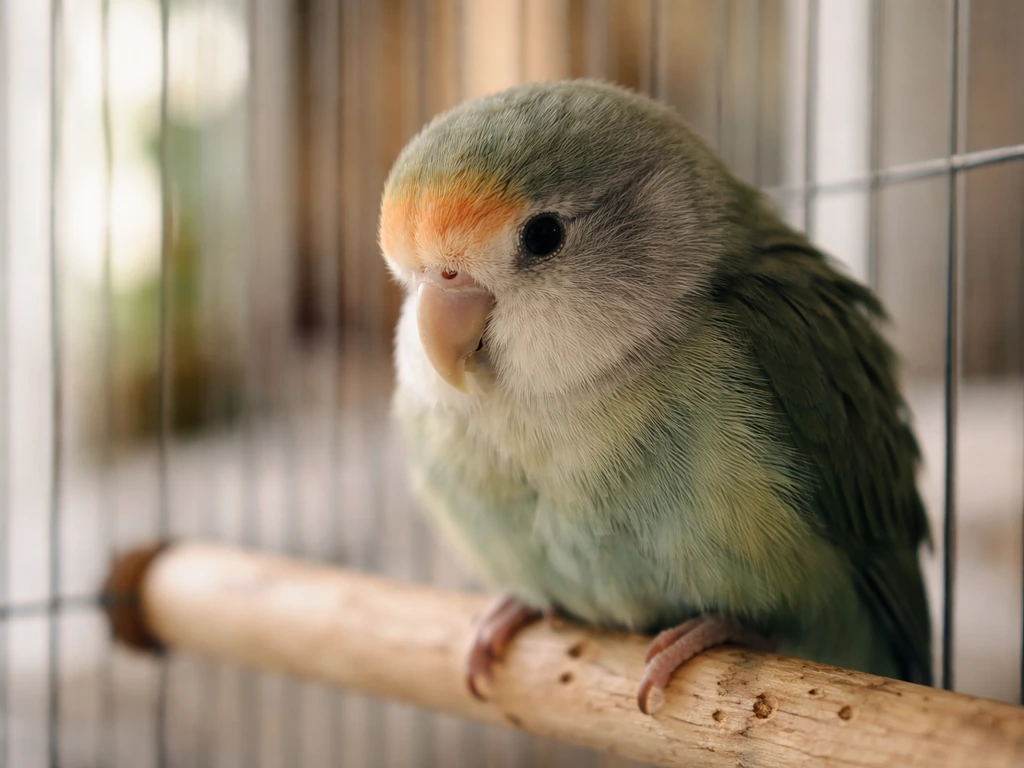
Your bird almost certainly does not hate you. What looks like hate is almost always fear, overstimulation, hormonal aggression, stress, or an unmet need that your bird has no other way to communicate. Birds are prey animals with a very narrow comfort zone, and when that zone gets crossed, they bite, lunge, scream, or shut down. Understanding what is actually driving the behavior is the first step to fixing it. If you are searching for “my bird hates me what can i do,” focus first on the likely triggers, like fear, overstimulation, stress, or unmet needs, then make small adjustments you can keep consistent.
Why Does My Bird Hate Me? Causes and Quick Fixes
Marcus Chen
4 May 2026
What "bird hate" usually really means
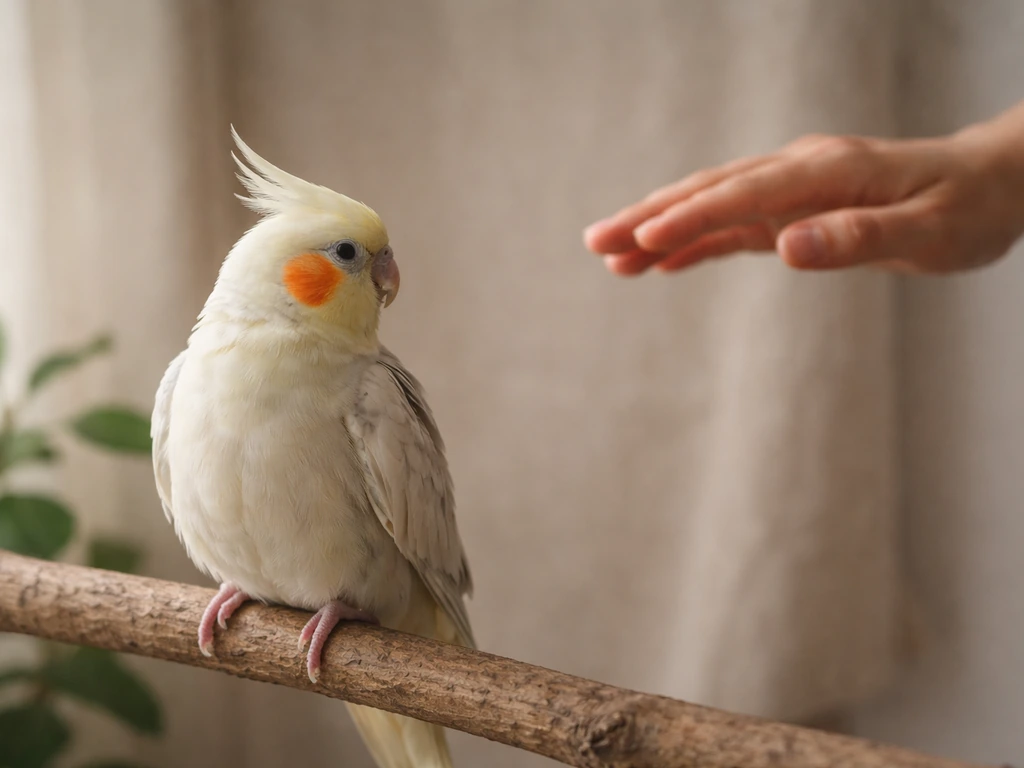
Birds do not hold grudges the way humans imagine. When your bird flies at your face or bites hard enough to draw blood, it is reacting to something in its environment or internal state, not plotting revenge. The four most common drivers are fear, overstimulation, hormones, and stress.
- Fear: A bird that was not socialized young, was rehomed, or had a bad experience with hands will treat your approach as a threat, full stop.
- Overstimulation: Petting too long, in the wrong spots, or too intensely floods a bird's nervous system. What started as enjoyable contact tips into irritation quickly, and the bite is the bird's only off switch.
- Hormones: Seasonal hormonal surges (typically spring and fall) can turn a sweet bird into a biting machine almost overnight. This is normal biology, not a personality change.
- Stress: Cage placement near a window with predators, unpredictable schedules, too little sleep, too much noise, or a new pet in the house all create chronic low-grade stress that shows up as aggression or withdrawal.
The important thing to hold onto is that all of these are addressable. None of them mean the relationship is broken beyond repair.
Common triggers you might not have noticed
Most aggression has a specific trigger that happens just before the bite or screaming fit. Once you identify it, you can adjust. Here are the ones that come up most often.
Handling mistakes
Approaching too fast, reaching over the bird's head (which mimics a predator strike), forcing a step-up when the bird is saying no, or grabbing a frightened bird all erode trust fast. Even well-meaning handling can train a bird to dread your hand if it consistently feels cornered.
Lack of trust and consistency
Birds are creatures of routine. If your schedule is unpredictable, your energy is inconsistent (calm one day, rushed the next), or different family members handle the bird very differently, your bird cannot build a reliable picture of you as safe. Trust requires consistency over time, not just a few good sessions.
Boredom and lack of enrichment
A bored bird is a stressed bird. Without enough mental and physical stimulation, birds redirect that energy into screaming, feather destruction, and aggression. If your bird's cage is bare, out-of-cage time is short, and interactions are mostly passive, boredom is a prime suspect.
Environment and cage placement
A cage near an exterior window can expose your bird to cats, hawks, or even squirrels passing by, triggering constant low-level panic. High-traffic areas with unpredictable noise and movement are similarly stressful. The cage location matters more than most people realize.
Reading what your bird's body is actually saying
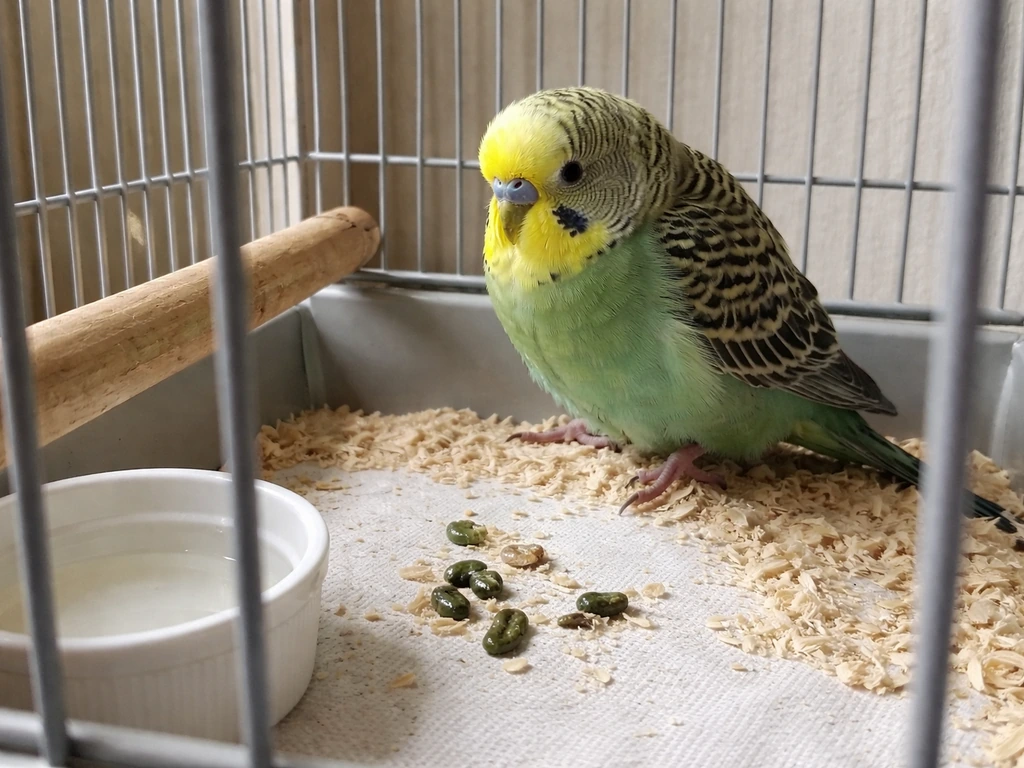
Before you can fix the problem, you need to read the warning signs your bird is already giving you. Birds communicate clearly, but with body language rather than words. Here is a practical breakdown.
| Behavior | What it likely means | What to do |
|---|---|---|
| Pinning eyes (pupils rapidly dilating and contracting) | High arousal, excitement, or agitation | Slow down, give space, do not push for contact |
| Feathers slicked tight against body | Fear or threat response | Back off immediately, let the bird settle |
| Tail fanning or flicking | Irritation or overstimulation | Stop what you're doing, end the interaction calmly |
| Wing flicking or raising wings | Warning signal, do not come closer | Respect the signal, step back |
| Lunging or open beak toward you | Active threat, bite is next | Remove your hand or move away without sudden jerking |
| Biting and holding | Extreme distress or defensive aggression | Stay calm, do not yell or jerk, wait for release |
| Screaming when you leave the room | Separation anxiety or attention-seeking | Address with scheduled out-of-cage time and training |
| Turning back to you, fluffing, refusing to step up | Avoidance, low trust | Do not force it, use target training to rebuild |
| Hissing | Fear or territorial aggression | Treat like a lunge, give space |
A pattern of biting or avoiding that seems to appear with no warning usually means you missed the earlier, subtler signals. Start watching for pinning eyes and tail flicks before you ever get to the lunge.
Things you can do right now to start turning it around
You do not need to wait weeks to see improvement. These are adjustments you can make today that will start changing the dynamic almost immediately.
Build a predictable daily routine
Set consistent wake-up and cover times, feeding times, and out-of-cage windows. Even something as simple as a 10-to-15-minute structured interaction at the same time every morning gives your bird a framework for trusting you. Predictability is calming for birds.
Fix your approach and step-up technique
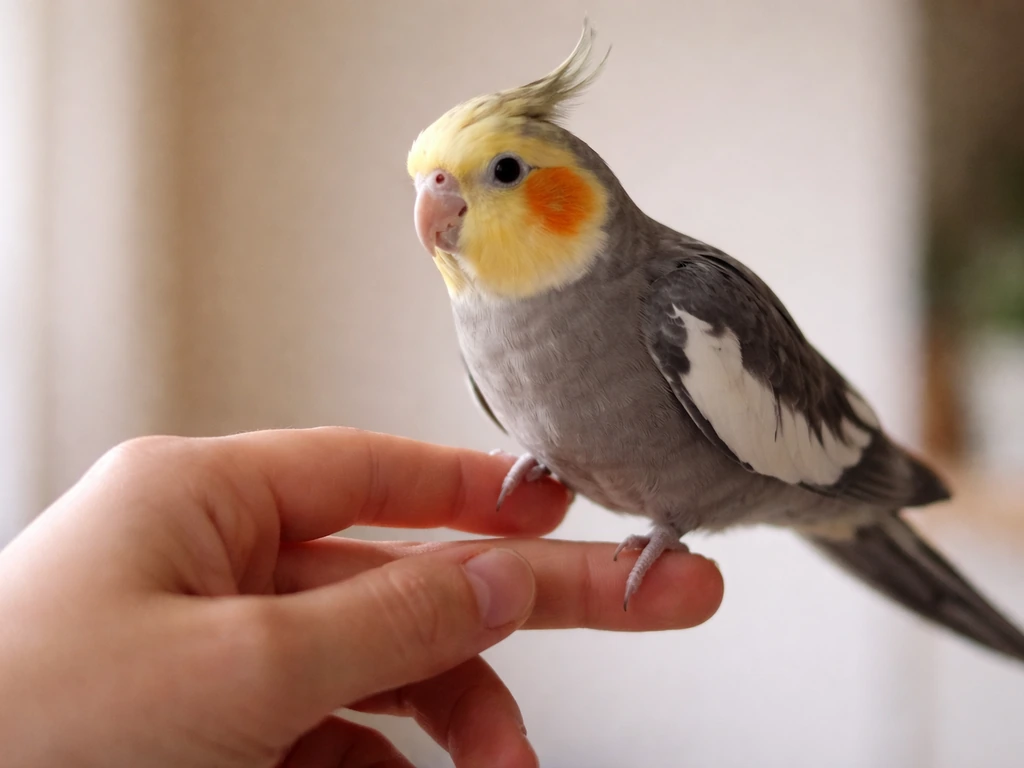
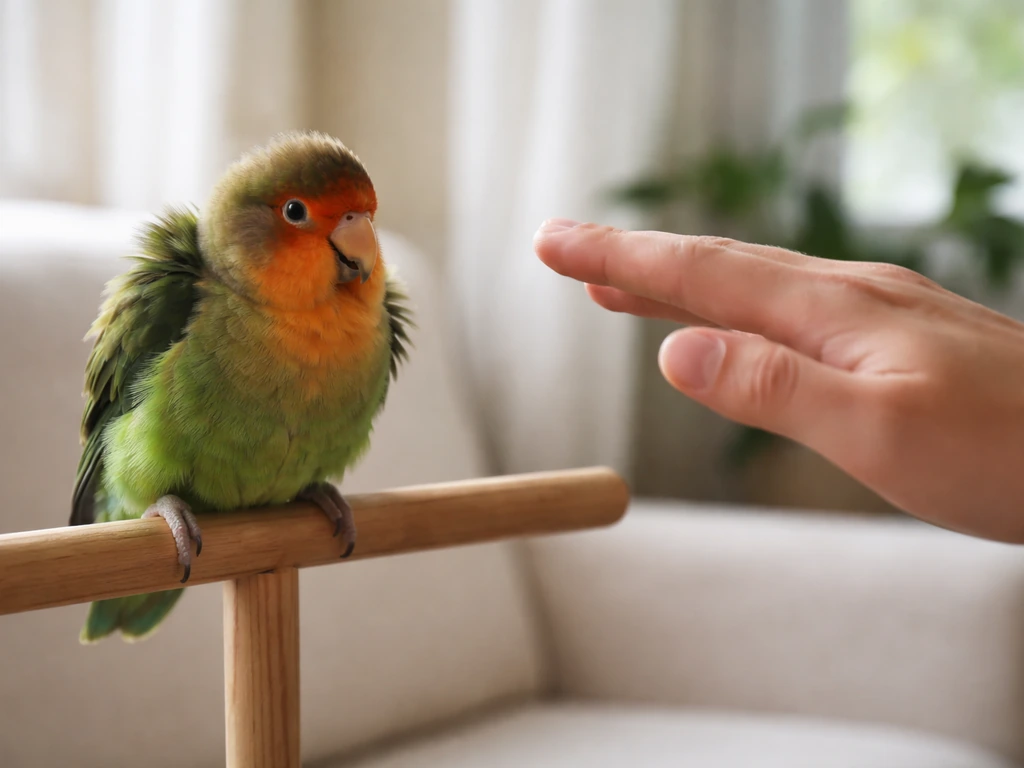
When asking for a step-up, present your hand confidently and steadily in front of and just below the bird's belly, right where the body meets the legs. A hesitant, wavering hand reads as threatening. Do not hover your hand above the bird. Move slowly, speak softly, and if the bird says no (turns away, feathers tight, backs up), honor that and try again in a few minutes.
Start target training
Target training is one of the most effective tools for rebuilding trust with a bird that is fearful or aggressive. The concept is simple: you ask your bird to touch a target object (like the tip of a chopstick or a commercial target stick) with its beak. The moment it touches the target, you mark the behavior with a click or a short verbal marker like "good," then immediately deliver a small treat.
The bird is choosing to participate to earn the reward, which means the entire interaction is on its terms. That cooperative framework is what shifts the relationship. Start with the target at a comfortable distance, not shoved in the bird's face, and keep sessions to two or three minutes so you end before the bird gets bored or frustrated.
Add enrichment to the cage and daily routine
Rotate foraging toys so there is always something new to investigate. Hide treats in paper cups, wrap food in paper, or use commercial foraging toys. Add perches of varying textures and diameters. Give your bird at least one or two hours of supervised out-of-cage time daily if possible. A mentally occupied bird is a significantly calmer bird.
Respect the no
Every time you force an interaction your bird is refusing, you confirm that it has no control over what happens to its body. That is the fastest path to a biter. If your bird says no today, walk away, come back in ten minutes, and try again on its terms. Yawning during petting is often a sign your bird is stressed or overstimulated, so it is a cue to slow down and adjust the interaction pet him. Over time, a bird that learns its signals are respected usually becomes more willing to engage.
When the problem might actually be a health issue
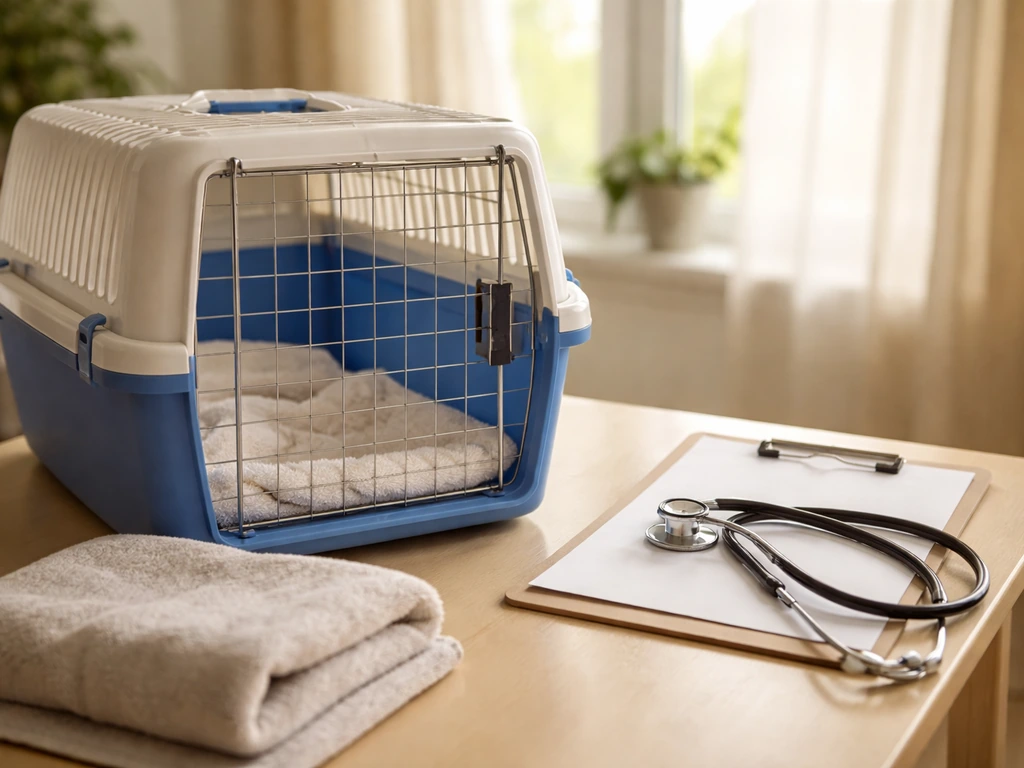
This is a section a lot of owners skip, and it matters. A bird in pain or dealing with an underlying illness often shows it through aggression or withdrawal. If your bird's personality shifted suddenly rather than gradually, health should be your first thought, not a behavioral one.
Watch for these signs alongside the aggression or avoidance: If you notice respiratory concerns like open-mouth breathing or tail bobbing, VCA Animal Hospitals recommends contacting a veterinarian Watch for these signs alongside the aggression or avoidance:.
- Changes in droppings: color shifts (very dark, green, or red urates), unusual amounts of liquid, or a big change in frequency
- Changes in appetite: eating less, leaving food it normally loves, or eating significantly more than usual
- Energy changes: sleeping more than usual during daylight hours, sitting fluffed on the cage floor, or reluctance to move
- Respiratory signs: tail bobbing with every breath, clicking or wheezing sounds, open-mouth breathing
- Physical signs: weight loss you can feel when you hold the bird (the keel bone feels sharp), discharge from nostrils or eyes, asymmetrical posture
- Changes in voice: a bird that has gone quieter than normal or sounds hoarse
A bird that is experiencing pain anywhere in its body, whether from an internal infection, an injury, a GI problem, or something neurological, has no way to tell you except by acting out or shutting down. If aggression came on suddenly with no clear environmental cause, treat it as a possible health issue until you can rule that out.
When you really do need to call an avian vet
Some situations go beyond what adjustments to routine and training can fix. See an avian vet (not just a general small-animal vet, as birds need a specialist) if you notice any of the following:
- Sudden personality change with no clear environmental trigger, especially in a bird that was previously calm and social
- Any of the health red flags listed above alongside behavioral changes
- Feather destruction (plucking or barbering) that has started or worsened
- Seizure-like episodes, loss of balance, or a head tilt
- The bird is sitting at the bottom of the cage or is unable to perch
- Aggressive behavior that is escalating rapidly despite consistent, appropriate handling
- Suspected injury, even minor, since birds hide pain and small wounds can worsen quickly
Hormonal aggression that is severe and recurring is also worth a vet conversation. There are management strategies and in some cases medical options that your avian vet can walk you through.
Keeping things on track long-term
Once you start making progress, the goal is to avoid slipping back into the patterns that created the problem. A few habits make a big difference over months and years.
- Keep your daily routine consistent. Birds that can predict when feeding, interaction, and sleep happen stay calmer baseline.
- Do short positive sessions every day rather than long infrequent ones. Five focused, good-experience minutes beats a 40-minute session that ends in a bite.
- Keep a loose mental note of your bird's baseline: normal poop appearance, normal energy, normal appetite, normal feather condition. When something shifts, you'll catch it early.
- Continue rotating enrichment so the cage stays stimulating. What is novel today is boring in two weeks.
- Avoid known triggers consistently. If your bird always reacts badly to a specific hat, shirt color, or object, remove the variable rather than trying to desensitize it all at once.
- Revisit your handling technique regularly. It's easy to get sloppy when things are going well, and small handling mistakes creep back in.
If you are also dealing with related issues like your bird refusing to be petted, reacting strangely during petting, or becoming aggressive at certain times of year, those are usually connected threads worth exploring individually. If your bird’s reaction during petting looks sexual or hormonal, it can still be a sign of overstimulation or unmet needs rather than “enjoyment.” reacting strangely during petting. You may also be wondering, “why won't my bird let me pet him,” and the same drivers like fear, overstimulation, stress, hormones, and pain can be behind that behavior. Biting, screaming, and avoidance are often part of the same picture, and solving one tends to shed light on the others.
The bottom line is that a bird showing hostility is a bird that needs something it is not getting, or is dealing with something that hurts. It is not a character flaw in you or the bird. With consistent, respectful handling, a bit of target training, and a close eye on health, most birds make real progress. Start with one or two changes today and build from there.
FAQ
Why does my bird bite me but not other people?
If your bird only bites when you approach certain people, the cause is often learned fear or uneven handling. To troubleshoot, track who feeds, cleans, and handles, then standardize your approach (same timing, same voice, same step-up request). If the bird settles faster with one person after a routine change, you can pinpoint the specific trigger rather than assuming it is “personality hate.”
What should I do immediately when my bird refuses step-up or lunges?
Stop treating “no” as a moment to persist. If the bird turns away, fluffs, pins eyes, or backs up, end the session and reset later the same day (about 10 to 20 minutes). Repeated forced handling teaches the bird that warnings do not matter, and it escalates faster than most owners expect.
How can I tell fear aggression from territorial aggression?
Normal territorial behavior can look like aggression, but true fear-driven aggression usually includes rapid retreat, stiff posture, and intense eye pinning before the bite. A quick test is to observe from a short distance without engaging, if the bird paces and settles when you back off, it is likely fear or overstimulation. If it aggressively defends a location and remains otherwise calm when you are farther away, it may be territorial and needs boundary training.
Could my scent or cleaning products be making my bird aggressive?
Birds can react negatively when they smell like perfumes, lotions, or smoke, especially during close contact before you even touch them. Try washing hands with unscented soap, avoid applying fragranced products before handling, and keep cooking smells and cleaning fumes away from the bird’s room. If bites spike after you shower or use a new product, scent is a likely trigger.
My bird seems affectionate but still bites during petting, is that hate?
For many parrots, “love bites” still come with a clear ask, like breeding-season hormones or overstimulation from being touched in one specific spot. If your bird nips during petting and then pulls away or shows half-closed eyes followed by sudden biting, it often means the interaction timing is too long, not that affection is wrong. Offer shorter sessions and stop at the first warning signs.
When should I suspect pain or illness instead of training issues?
Yes. If the aggression is sudden, differs from your bird’s baseline, or comes with breathing changes, fluffed posture, reduced appetite, limping, or a new reluctance to perch, treat it as possible pain first. Arrange an avian vet visit and avoid major handling in the meantime, since discomfort can make even familiar routines unsafe.
Why is my bird aggressive at certain times of day?
If the bird only bites during specific times, like mornings, after a loud event, or just before you clean, the trigger is often anticipation and overstimulation. Use a simple log for 7 days, note time, sounds, lighting changes, and who is present, then compare patterns. Adjust the environment first (reduce noise, dim lights briefly, slow approach) before changing training tactics.
I tried target training but my bird got more aggressive, what went wrong?
Target training works best when the reward is immediate and the session ends early. If you find yourself “chasing” the bird’s beak toward the target or increasing pressure to get results, it can backfire and increase fear. Keep distance comfortable, use very small treats, and stop while the bird is still engaged.
How do I know my bird is actually improving, not just tolerating me?
Many owners miss the fact that partial bite avoidance can still be progression. If your bird is moving away less, biting less hard, or warning you earlier with tail flicks, that is progress. Focus on measurable changes, like frequency and intensity, and keep all fixes consistent for at least a few weeks before assuming it is not working.
Could seasonal hormones or lighting be behind the aggression?
Yes, especially if you have seasonal hormone changes or a light schedule that shifts. Ensure consistent day length, avoid letting lights spill in late at night, and reduce mating cues like constant access to dark nesting-like spaces or heavy chewing opportunities during breeding season. If aggression spikes during warmer months, discuss hormone management with an avian vet.
Next Article
Why Is My Bird Making Whimpering Noises? What to Check
Find reasons for whimpering bird noises, quick home checks, and red flags for urgent vet care plus tracking tips.