
Most of the time, a bird yawning while you pet him is completely normal. It usually means he's relaxed, maybe a little sleepy, and comfortable enough around you to let his guard down. Think of it the way you'd think about a dog sighing when you scratch behind its ears. That said, yawning can occasionally be a sign of mild overstimulation, throat irritation, or a respiratory issue, so knowing what else to look for in the moment makes all the difference.
Why Does My Bird Yawn When I Pet Him? Causes and What to Do

Marcus Chen
12 May 2026
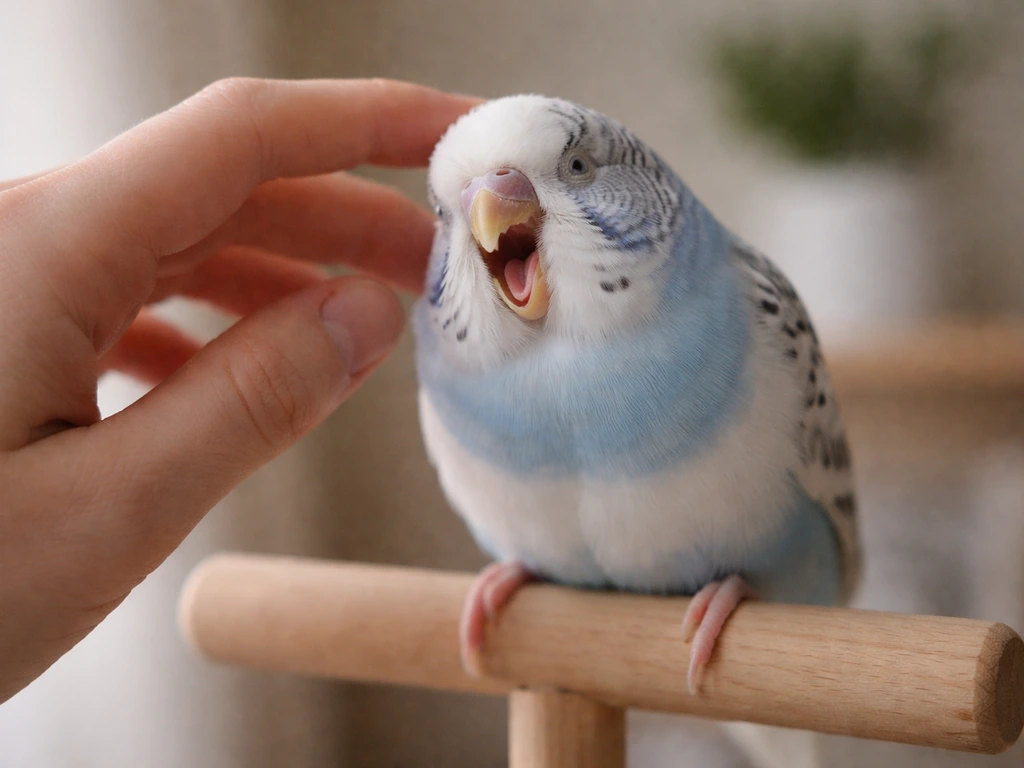
What bird yawns usually mean during petting
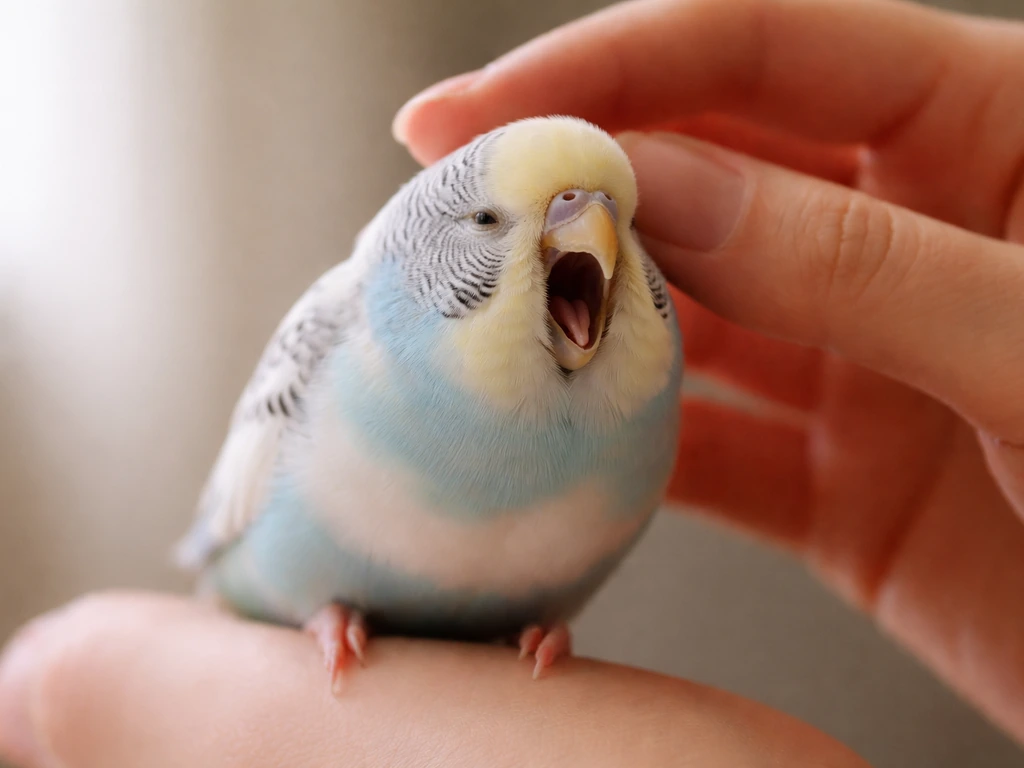
When a bird yawns during handling, the most common explanation is simple comfort. Petting slows your bird down, lowers his alertness, and triggers a relaxed, drowsy state, which is exactly the kind of situation that produces yawns in most animals. Budgies, cockatiels, and parrots all yawn as a normal behavioral state, and yawning is even contagious among birds in the same household, much like it is among people. Audubon also discusses research and observations showing that birds may yawn more often when they are around other birds, suggesting yawn contagion or social matching can be normal behavior yawning is even contagious among birds in the same household.
Beyond relaxation, there are a few other normal reasons your bird might yawn during petting. He might be adjusting his crop or throat after eating (birds sometimes yawn to reposition the crop). He might simply be bored or sleepy, especially during low-stimulation evening handling. Some birds also yawn as a response to a satisfying head scratch, almost like a stretch reflex. A Petco Q&A specifically describes a cockatiel opening its mouth wide during neck petting and continuing briefly after stopping, which owners tend to describe as a preferred behavior, not a concerning one.
Where it gets more nuanced is when yawning is a response to overstimulation or mild discomfort rather than contentment. If your bird seems like he hates you, it can be a sign he is overstimulated, so check for stress cues and adjust how you handle him overstimulation or mild discomfort. Some birds yawn when they've had enough handling but haven't escalated to biting or flying off yet. It can be an early, quiet signal that the session has gone on too long, the touch is in the wrong spot, or your bird is feeling slightly anxious. Catching that signal early and giving him a break prevents the interaction from souring.
Comfort vs stress: body language clues to check
The yawn itself doesn't tell you much in isolation. What tells you everything is what the rest of your bird's body is doing at the same time. A yawning bird that is otherwise relaxed looks very different from one that's stressed or uncomfortable.
Signs the yawn is a comfort signal: If your bird is attacking or suddenly biting, that can be a sign of stress or overstimulation rather than comfort, and it's worth reviewing body-language cues.
- Eyes are half-closed or slowly blinking
- Feathers are slightly puffed in a relaxed, rounded way (not tightly slicked down)
- He leans into your hand or stays close rather than pulling away
- He's quiet or making soft contact sounds
- His posture is loose, not crouched or tight
- He's willing to step up calmly when offered your finger
- Tail is still or moving gently, not rapidly bobbing
Signs the yawn might be a stress or discomfort signal:
- Eyes are wide open and darting, or he keeps looking for an exit
- Feathers are slicked tightly against the body (not relaxed puffing)
- He shifts his weight, leans away, or turns his head away from you
- He's making alarm calls, hissing, or grinding his beak in a tense way
- His body feels rigid under your fingers
- He refuses to step up or immediately flies off when given the chance
- Yawning is paired with rapid or visible breathing
Eye pinning paired with tail wagging typically signals excitement rather than stress, which is worth knowing if your bird seems animated rather than fearful. The key question is: does your bird choose to stay near you, or is he tolerating the interaction? A bird that actively seeks out petting sessions and then yawns during them is almost certainly just comfortable. A bird who seems tense throughout but yawns is worth paying closer attention to.
Health possibilities that can look like yawning
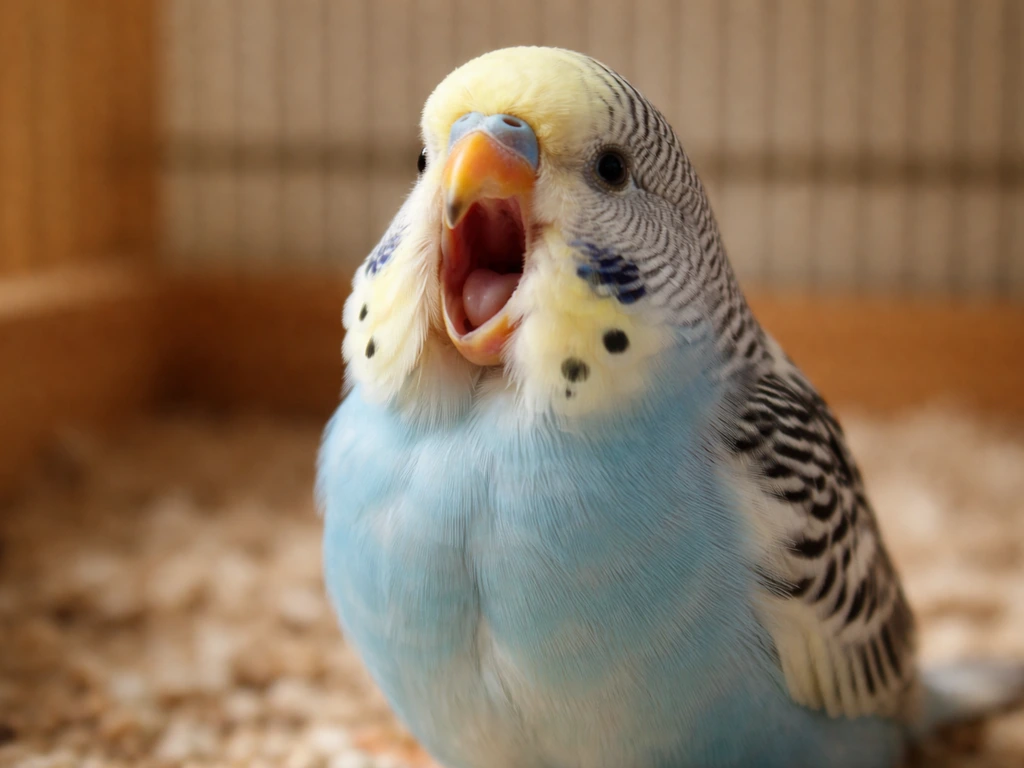
This is where it's worth slowing down and looking more carefully. A few health conditions can produce mouth-opening behaviors that look like yawning but are actually signs of something going on physically. The distinction usually comes down to frequency, context, and whether other symptoms are present.
Respiratory issues are the most important one to rule out. Birds with breathing difficulty (dyspnea) sometimes open their mouths repeatedly as they try to get more air. Unlike a relaxed yawn that happens once or twice and then stops, respiratory mouth-opening tends to be repetitive, may come with audible breathing sounds like wheezing or clicking, and is often accompanied by tail bobbing where the tail moves up and down with each breath. This is a veterinary concern, not a wait-and-see situation. SpectrumCare also advises seeing a vet immediately if your pet bird is breathing hard or opening its beak in a way that suggests respiratory trouble This is a veterinary concern, not a wait-and-see situation..
Temperature discomfort is another possibility. If your bird is too warm, he may open his beak slightly and press his feathers tightly against his body, which can look like a panting yawn. This is different from a cold bird, who will puff up to trap warmth. If the room is warm or your bird is in direct sunlight, rule out heat as a factor before assuming the mouth-opening is petting-related.
Tracheal irritation or a partial obstruction can also produce repetitive gulping or yawn-like movements. So can dry air, environmental irritants like candles, cooking fumes, or air fresheners, and respiratory infections. If the yawning is specifically new, frequent, or happening outside of petting sessions too, take it seriously.
One more thing worth mentioning: some birds make a regurgitation or vomiting motion that can be confused with a big yawn during petting. If you're petting down your bird's back and he starts making exaggerated neck/head movements, this can be a hormonally driven response to what the bird perceives as mating-like touching. Sometimes petting can also be interpreted by a bird as sexual or mating-like stimulation, which may lead to signs of frustration.
Stroking a bird along the back can stimulate hormone responses, and what looks like a stretch or yawn might actually be the beginning of a regurgitation display directed at you as a bonded partner. It's not dangerous, but it's useful to recognize, and reducing back-stroking in favor of head and neck petting is generally a good adjustment.
Quick at-home adjustments for safer, calmer petting
If you're noticing yawning during petting and want to make sure you're handling your bird in the most comfortable way possible, here are some straightforward changes you can make today. If your bird also refuses to let you pet him, that can point to fear, overstimulation, or an ill-at-ease body language pattern worth addressing right away why your bird won’t let you pet him.
- Shorten your sessions. Keep petting to a few minutes at a time rather than long continuous handling. Watch for the first yawn as a possible cue to pause and let him reset.
- Stick to the head and neck. Most birds enjoy petting on the head, behind the crest, and around the ears. Avoid long strokes down the back, which can trigger hormonal responses.
- Give him the option to leave. Hold your bird near a perch or your shoulder so he can step away if he wants. A bird who chooses to stay is much more likely to be comfortable.
- Approach more slowly. Fast movements, reaching from above, or starting in areas he's sensitive about can put a bird on edge before the petting even begins.
- Use a pre-petting cue. Talk softly before you reach for him, give him a second to acknowledge you, and let him lean in rather than immediately placing your hand on him.
- Check the environment. Make sure the room temperature is comfortable (not too warm), there are no drafts, and you haven't recently used candles, air fresheners, or cooking sprays that could irritate his throat.
- Watch for diet factors. If your bird seems to yawn frequently after eating soft or sticky foods, he may be adjusting his crop, which is normal. Make sure he has access to fresh water.
- Reduce background noise and chaos. Loud environments during handling can increase anxiety, which makes it harder for your bird to settle into a comfortable state.
When to worry and contact an avian vet
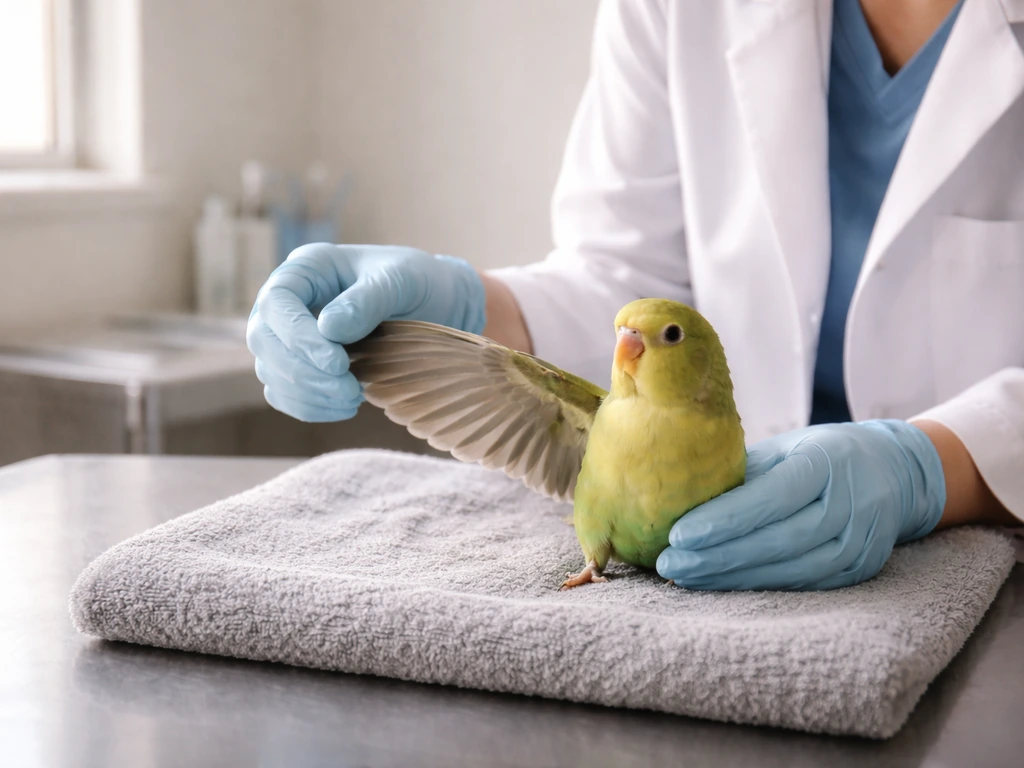
A single relaxed yawn during petting is not a reason to call the vet. But there's a clear set of signs that should push you toward getting professional eyes on your bird sooner rather than later. Birds hide illness well, so by the time symptoms are obvious, things have often been going on for a while.
Contact an avian vet if the yawning is accompanied by any of the following:
- Open-mouth breathing at rest (not just during or right after petting)
- Tail bobbing that happens with each breath
- Audible breathing sounds like wheezing, clicking, or squeaking
- Sneezing more than once or twice, especially with nasal discharge
- Fluffed feathers that persist throughout the day, not just after a nap
- Lethargy, sitting on the cage floor, or falling off the perch
- Reduced appetite or changes in droppings
- Any sudden change in behavior, voice, or activity level
When you call the vet, be ready to describe: when the yawning started, how often it happens, whether it's only during petting or at other times too, what the rest of his body language looks like, any environmental changes in the last few weeks (new foods, new cleaning products, change in temperature), and whether he's eating and drinking normally. If your bird is showing signs of discomfort or stress, you may also want to look into why does my bird hate me and what to do to improve trust how often it happens. The more specific you can be, the faster the vet can narrow things down. If you're seeing open-mouth breathing, tail bobbing, or significant lethargy, treat it as urgent and don't wait for a routine appointment.
Monitoring checklist: what to note and how long to watch
If the yawning is new or you're not sure whether it's normal, spend three to five days tracking what you observe before drawing conclusions. Here's what to pay attention to:
| What to observe | What to note | Watch for this long |
|---|---|---|
| Yawn frequency | How many times per petting session, and does it happen outside of petting too? | 3 to 5 days |
| Breathing quality | Any sounds, visible effort, tail movement with each breath? | Immediate and ongoing |
| Body posture during petting | Relaxed and leaning in, or tense and pulling away? | Each session |
| Feather position throughout the day | Brief puffing only, or staying fluffed for hours? | Daily check |
| Appetite and droppings | Eating normally? Droppings look typical in color and consistency? | Daily |
| Environmental factors | Temperature, drafts, new products used in the home? | Check once, then as needed |
| Behavior outside petting | Active and alert, or sleeping more than usual? | Daily |
| Yawn context | Only during petting, or also after eating, in the morning, randomly? | 3 to 5 days |
If after five days the yawning is only happening during calm petting, your bird looks relaxed and healthy in all other ways, and there are no other symptoms, you can feel confident this is a normal comfort behavior. If anything on the list above is off, or if you're unsure, an avian vet check is always the right call. Birds are small and can decline quickly, so erring on the side of caution is the smarter move when something feels off.
FAQ
How can I tell if the yawn is just relaxation versus mild overstimulation?
Use a before-and-after check. If your bird looks comfortable during the petting, stays near you, and returns to normal alertness right after you stop, it is usually relaxation. If the yawn ramps up as you keep petting, your bird seems tense, or he starts giving other stress cues (leaning away, fluffed posture, foot shuffling), treat it as early overstimulation and end the session sooner.
Does it matter where I pet him if he yawns?
Yes. Many birds respond best to head and neck touch, while back-stroking can trigger mounting-like or mating-like behavior, including regurgitation motions that can resemble yawning. If yawning or exaggerated neck movements increase when you pet the back, switch to shorter head/neck sessions and avoid prolonged stroking until you see calmer body language.
What should I do immediately when my bird yawns repeatedly while I’m petting him?
Pause and observe breathing and posture for 30 to 60 seconds. Stop petting, move your bird to the most comfortable spot in the room, and check for audible breathing, tail bobbing with each breath, or ongoing mouth opening after you stop. If you see repetitive mouth-opening, audible sounds, or lethargy, contact an avian vet promptly rather than waiting for a routine visit.
Can yawning be contagious among pet birds, and should I separate them?
Contagious yawning can happen in bird groups, especially when one bird is already relaxed or sleepy. If the rest of the flock looks normal and the yawning is brief and context-based (like during quiet time), separation is usually unnecessary. Only separate if one bird’s yawning comes with respiratory signs, persistent mouth-opening, or other symptoms.
My bird yawned once, then started biting later. Does that mean the yawn was stress?
Not necessarily, but it is a warning sign to pay attention to the trajectory. A single relaxed yawn can be comfort, but if the bird escalates from yawning to sudden biting, it often means the session went too far or the touch became unwanted. Shorten future sessions, reduce intensity, and stop at the first clear shift toward tense body language.
How often is “too often” for petting-related yawns?
As a rule of thumb, occasional brief yawns that only occur during calm handling and stop when you end petting are generally fine. If yawning becomes frequent, increases over multiple sessions, happens outside petting, or you notice other symptoms (changes in appetite, posture, breathing sounds), that crosses into “needs evaluation” territory.
Could mouth-opening look like yawning if my bird is too hot?
Yes. Heat discomfort can cause beak-parting with pressed, tightly held feathers (a more “hunkered down” heat posture), which may resemble panting or a yawn-like motion. Check room temperature, avoid direct sunlight, and make sure your bird has access to shade and normal drinking. If mouth-opening persists or you see labored breathing, get veterinary advice.
What environmental triggers should I rule out if yawning is new?
Consider recent changes like new cleaning products, scented sprays, candles, cooking fumes, air fresheners, or significant humidity changes. Also think about dust from bedding changes. If mouth-opening increases during times you are not petting, or it starts soon after an environmental change, treat it as an air irritation possibility and remove the trigger.
How can I tell apart regurgitation motions from a normal yawn during petting?
Regurgitation motions often involve exaggerated head and neck movements and may include posture changes related to courting or mating behavior. A relaxed yawn is usually brief and ends quickly with the bird continuing normal comfort. If you see repeated neck/head bobbing or food-like content, stop back-stroking, switch to head/neck petting, and discuss hormone or pairing behavior with an avian vet if it is excessive.
Is it safe to keep petting if he yawns, or should I stop every time?
If the yawn is brief and he remains relaxed, it is usually okay to keep petting for a short moment. However, the safest approach is “observe and adjust.” If you notice increased tension, repeated mouth-opening, or reluctance to continue, stop immediately and end the session on a calm note.
When should I call an avian vet versus monitor for a few days?
Call sooner if the mouth-opening is repetitive, happens outside petting, comes with audible breathing, tail bobbing with breathing, significant lethargy, or any refusal to eat or drink. If it is truly a one-off or only brief during calm handling and your bird otherwise seems normal, monitoring for several days with notes on frequency, timing, and posture is reasonable, but err on the side of an avian check if anything feels off.