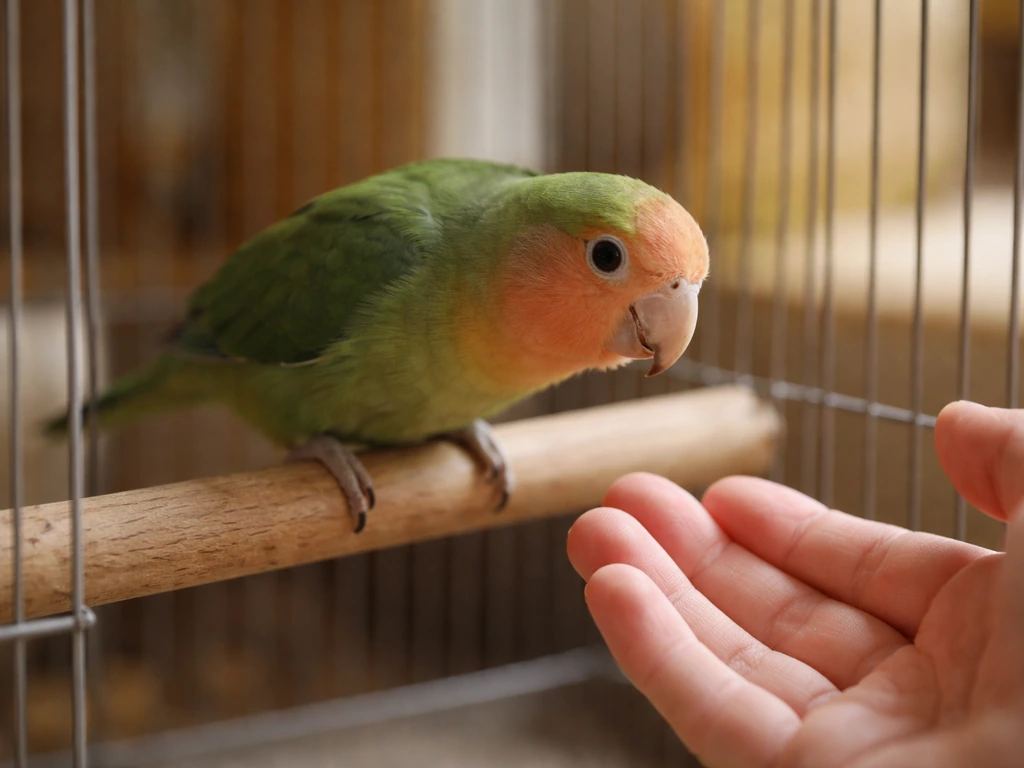
Your bird is attacking you because something in its world has shifted: hormones, fear, pain, overstimulation, or a learned habit that biting gets results. The good news is that in most cases this is fixable, and you can take meaningful steps today to stay safer and start turning things around.
Why Is My Pet Bird Attacking Me? Causes and What to Do
Marcus Chen
11 Jun 2026
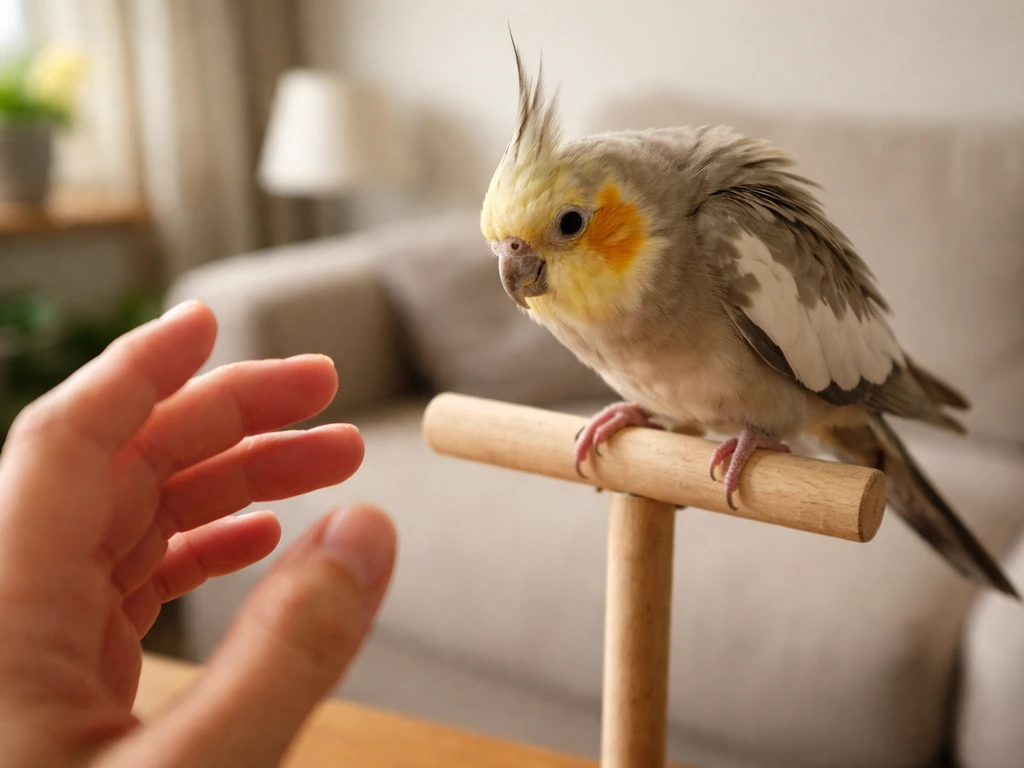
Immediate safety and bite prevention today
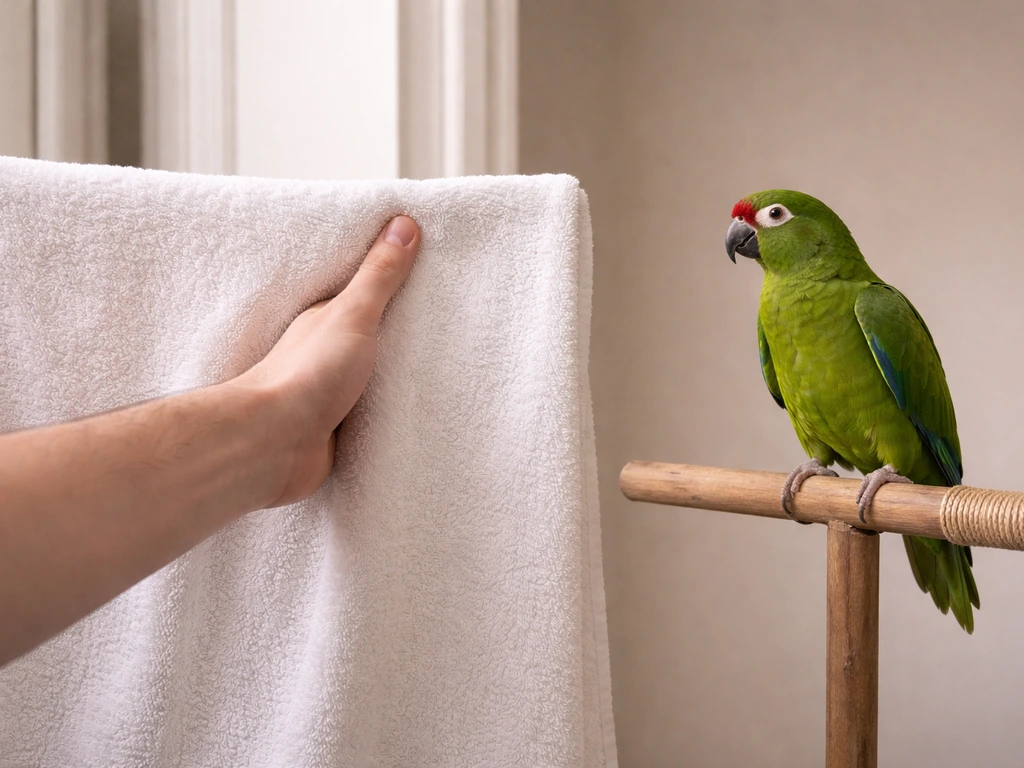
Before you try to figure out why the biting is happening, protect yourself right now. A bird bite to the finger, hand, or face can be serious, especially from larger parrots. Thick gloves can protect your hands during a tense interaction, but they also blunt the sensory feedback that helps you read the bird, so use them as a short-term safety net rather than a long-term solution.
The single most useful thing you can do immediately is stop pushing through. If your bird is biting or lunging, do not keep putting your hand in front of it. Calmly return the bird to its cage, close the door, and walk away for at least 15 to 20 minutes. This is not defeat. It breaks the cycle before the bird gets more worked up, and it prevents you from accidentally reinforcing the biting by giving the bird exactly what it wants (your withdrawal, your attention, or just the chance to keep biting).
- Keep your face away from any bird showing aggression, regardless of size.
- Approach from a calm angle, never from above or fast, which reads as a predator swoop.
- If the bird has latched on, do not yank away sharply. Move your hand gently toward the bite to reduce pressure, then calmly disengage.
- Use a perch or a wooden dowel as a step-up target instead of your bare finger during tense periods.
- Never punish or yell. It escalates the bird's state and breaks trust faster than almost anything else.
What "attacking" can mean: interpreting bird body language
Birds almost never bite without warning. The problem is that the warning signs are easy to miss if you do not know what to look for. Learning to read your bird's body before a bite lands is one of the most practical skills you can build.
The clearest pre-bite signals include feathers on the nape standing up, feathers pulled tight against the body, eye pinning (the pupil rapidly contracting and expanding), tail fanning or flaring, the head lowered and body leaning forward horizontally, and the beak held open. Any one of these means the bird is in a heightened state. A combination of them means a bite is very likely coming. Do not stick your finger toward a bird showing pinned eyes, it is one of the most reliable warning signs there is.
Lunging without contact is also a message. Some birds lunge to bluff, but treat every lunge as a real warning. If you back off every time a bird lunges, you may accidentally teach it that lunging works, so the goal is to respond calmly and neutrally rather than with a big reaction, and then manage the situation so the lunge was not needed in the first place.
It also helps to think about what "attacking" is actually doing for the bird. Is it getting you to leave the cage area? Getting your attention? Getting you to put it down? Identifying what the bird gains from biting tells you a lot about why it is doing it.
Common behavioral causes: hormones, territory, guarding, and overstimulation
Hormonal and breeding season aggression
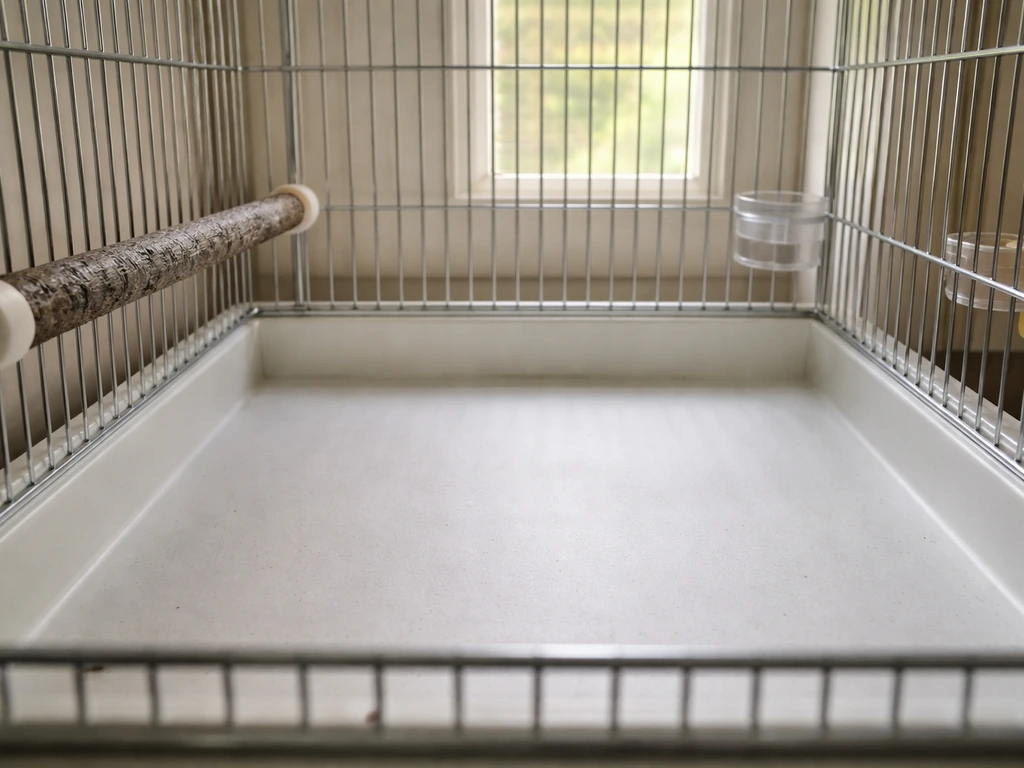
This is one of the most common reasons a previously sweet bird suddenly seems to have flipped a switch. If you are wondering why does my bird hate me, start by checking for hormone and territorial triggers like breeding-season changes or cage guarding. During breeding season, which in captivity can be triggered by longer daylight hours, a warm environment, or certain foods, hormones drive birds toward territorial and mate-protective behavior. You might also notice increased paper shredding, seeking out dark enclosed spaces, regurgitating food for people or toys, and general restlessness. A bird in full hormonal mode can become aggressive toward the people it usually likes, and it may bond intensely to one person while attacking everyone else.
To reduce hormonal triggers, remove any "nesting" items from the cage: shredded paper it is hoarding, dark boxes, tents, or cozy huts. Rearrange the cage interior and consider moving the cage to a different location. Shortening light exposure to around 10 to 12 hours per day can also help dampen the hormonal response over time.
Territorial and resource guarding
Many birds treat their cage as their territory and will defend it aggressively. A bird that is perfectly calm on your shoulder might bite the moment you reach into its cage. This is not the bird being mean. It is doing what birds do: protecting its space. The fix here is to work on interactions away from the cage as much as possible and to avoid reaching into the cage when the bird is inside if it is currently reactive.
Overstimulation
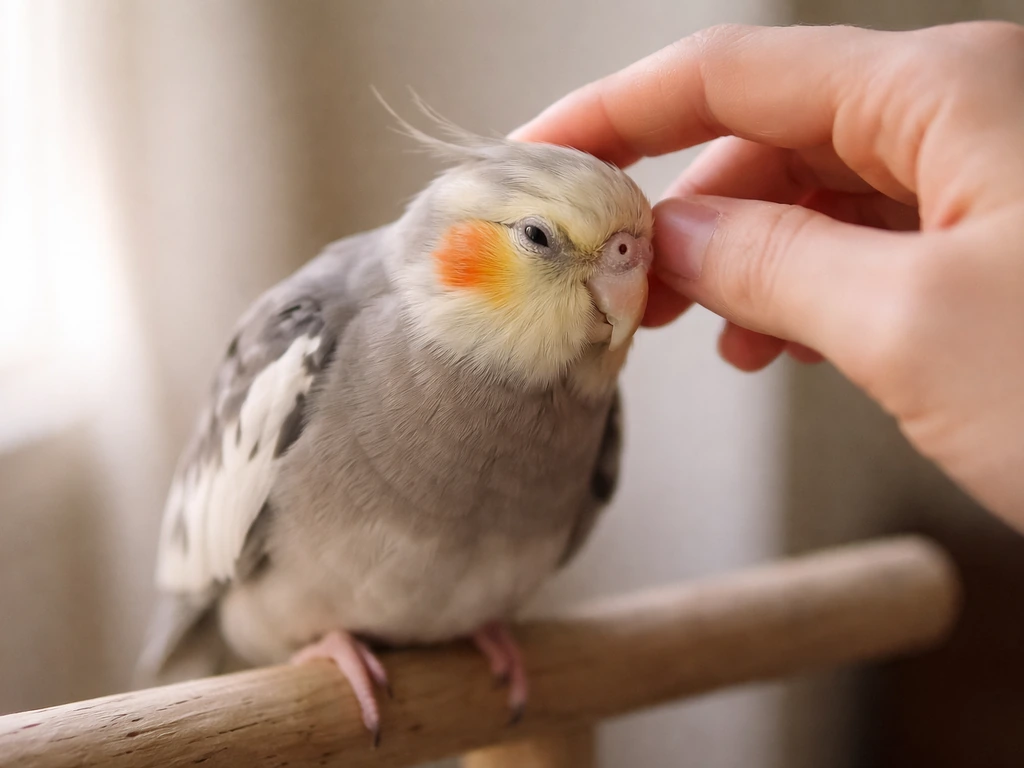
Petting sessions that go too long, or that involve certain sensitive areas, can push a bird past its tolerance threshold. Birds can go from visibly enjoying contact to biting within seconds. Watch for the early warning signs during petting: feathers ruffling, posture shifting, eye pinning. In some cases, intense or prolonged petting can contribute to sexual frustration during hormonal surges.
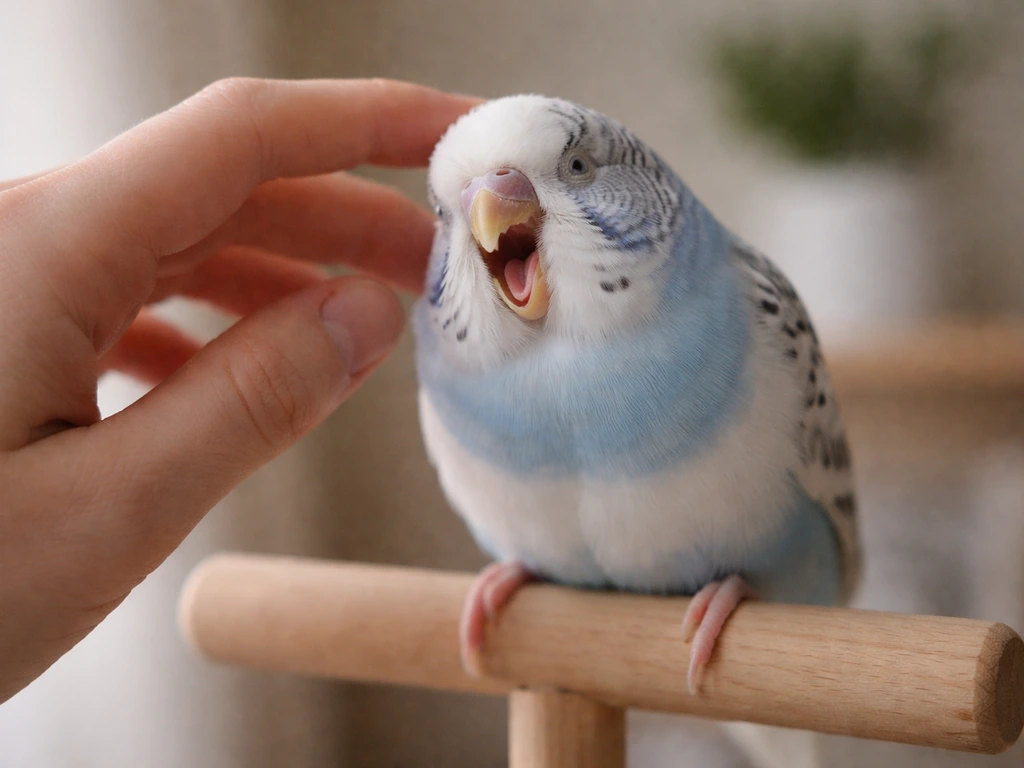
When you see them, stop before the bite happens. Return the bird to its cage calmly and let it settle. Some birds yawn or open their beak when you pet them, and that can be a sign they are unsure or overstimulated rather than relaxed, so stop and reassess their comfort level. The handling session just ended on a neutral note, which is far better than ending it with a bite.
Learned biting habits
Some birds have simply learned that biting works. If a bird bites and gets put back in its cage when it wanted to stay out, or gets attention, or gets you to stop doing something it disliked, the biting got reinforced. This can build into a habit over weeks or months without anyone realizing it is happening. Unlearning it takes patience but it absolutely can be done.
Fear, pain, or illness red flags that can look like aggression
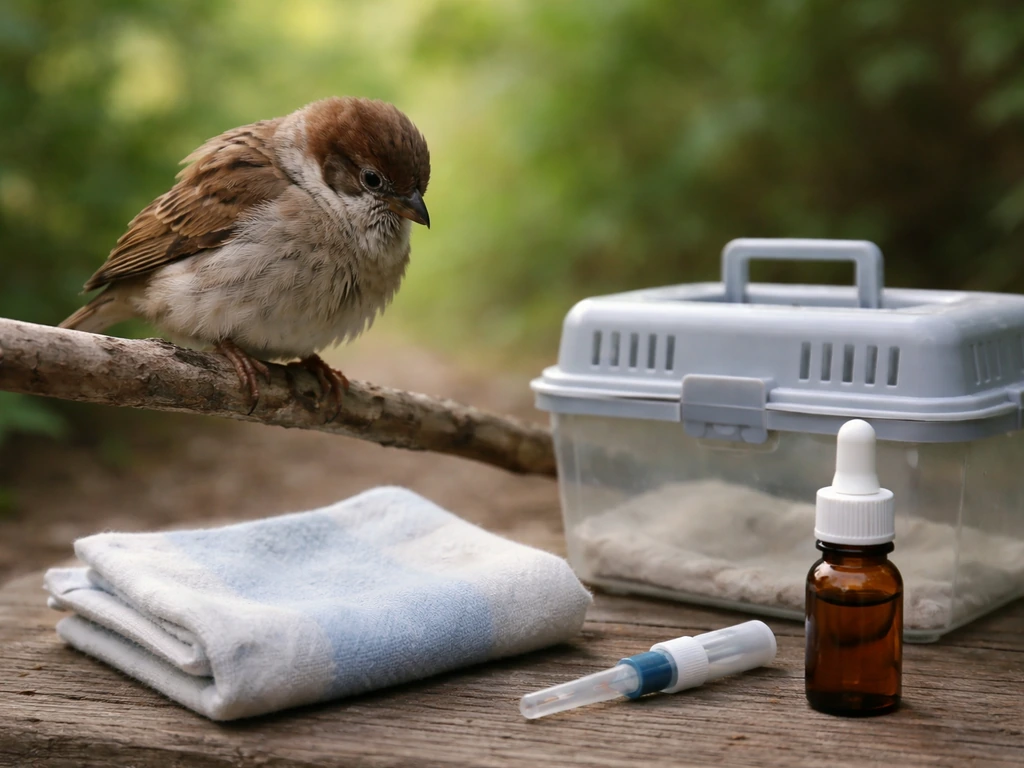
This is the section where you need to slow down and really pay attention, because aggression caused by pain or illness looks behaviorally identical to aggression from hormones or stress, but the underlying cause is completely different and potentially urgent.
Birds are hardwired to hide illness for as long as possible, because showing weakness in the wild is dangerous. By the time a bird looks visibly sick, it may have been unwell for a while. A sudden change in behavior, including new or worsening aggression, can be one of the earliest signs that something physical is wrong.
Fear-based aggression is also common and often misread. A bird that was poorly socialized, had a traumatic experience, or is in a new environment may bite out of genuine fear rather than dominance or hormones. Fear biting often comes with a bird that looks small and tense, feathers pulled tight, trying to back away or hide rather than actively pursuing you.
Watch carefully for these red flags that suggest something more than a behavioral issue:
- Fluffed or ruffled feathers when the bird is not sleeping, especially combined with lethargy
- Reduced or no appetite, or a sudden change in what the bird will eat
- Sitting on the cage floor or reluctance to perch normally
- Tail bobbing, labored breathing, or open-mouth breathing at rest
- Changes in droppings: color, consistency, or much less than usual
- Reduced vocalization in a bird that is normally noisy
- Wing droop on one or both sides
- Any active bleeding, swelling, or asymmetry in the body
- Sudden onset aggression in a bird with no previous history of biting
Any of these alongside aggression should move "avian vet appointment" to the top of your list, not the bottom.
Step-by-step troubleshooting and environment or routine changes
Work through this in order. Start with the simple environmental checks before moving into training, because sometimes a small change in the setup solves the problem without any formal retraining.
- Check light exposure. If your bird is getting more than 12 hours of light per day (including artificial light in the evening), reduce it. This is one of the most effective levers for hormonal aggression.
- Remove nesting triggers. Take out any cozy enclosed spaces, fabric tents, boxes, or materials the bird has been shredding and hoarding. Rearrange the cage interior.
- Move the cage if needed. If it is in a high-traffic, noisy, or chaotic area, a calmer location may reduce baseline stress significantly.
- Review your handling routine. Are sessions too long? Too unpredictable? Try shorter, more consistent interactions at predictable times of day.
- Look at diet. A diet high in fatty seeds can worsen hormonal behavior. If the bird is mostly on seeds, consider gradually transitioning to a more balanced pellet-based diet with fresh vegetables.
- Assess who it attacks. Is it everyone, or just specific people, or just near the cage? This narrows the cause considerably.
- Track when biting happens. Time of day, what you were doing just before, who was in the room. Patterns often become obvious within a few days of logging.
Training and desensitization strategies to stop biting
Once you have ruled out illness and made the environmental adjustments, consistent training is how you create lasting change. The core principle is simple: biting should never get the bird what it wants, and calmer behavior should always get it something good.
Target training as a foundation
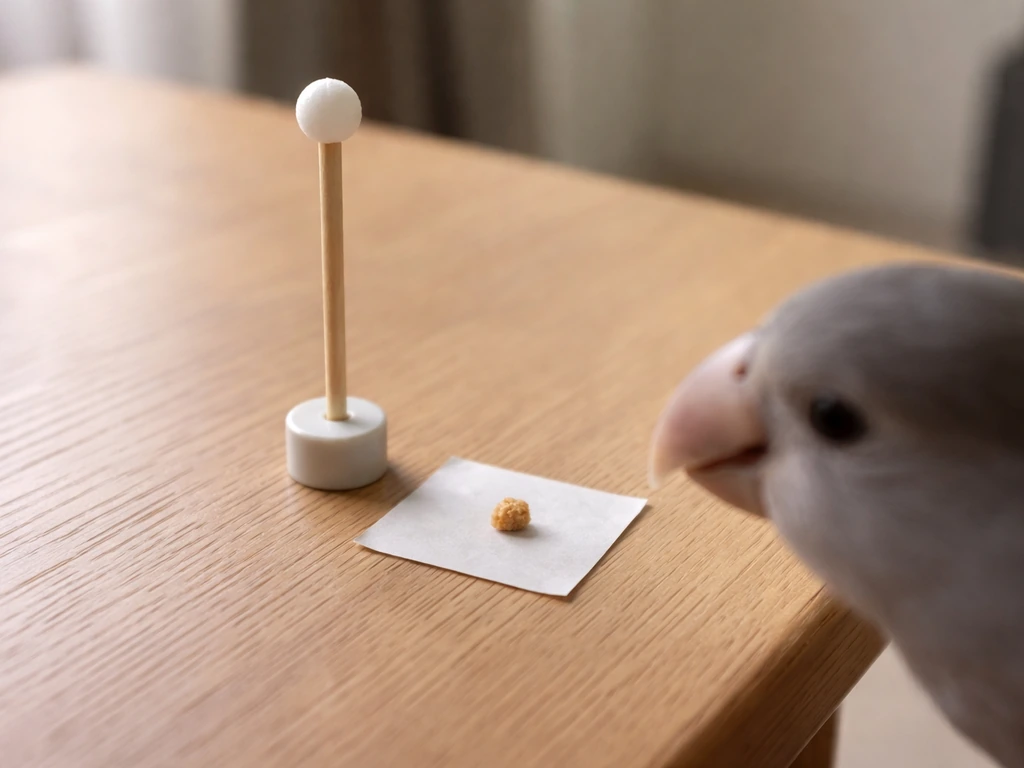
Target training, where you teach the bird to touch its beak to the end of a stick or chopstick for a treat, is the most practical starting point. It gives the bird something specific to do with its beak that is not biting you, it builds positive associations with your presence, and it gives you a way to guide the bird onto a perch or your hand without direct physical pressure. A few short sessions of 3 to 5 minutes per day is plenty.
Differential reinforcement: replace biting with something else
The goal is to identify a behavior you want the bird to do instead of biting, and then consistently reward that behavior while removing the reward that biting used to get. CCPDT’s hierarchy describes differential reinforcement of alternative behavior as a key procedure, reinforcing an acceptable replacement behavior while removing the maintaining reinforcer for problem behavior differential reinforcement of an alternate behavior.
For example, if the bird was biting to get you to back away from the cage, you practice approaching calmly, rewarding the bird with a treat for staying calm, and never retreating in response to a lunge. This is called differential reinforcement of an alternate behavior, and it is one of the most effective tools available for changing bird behavior without any punishment.
Desensitization and counterconditioning for fear-based biting
If the biting is rooted in fear, you need to change the bird's emotional response to whatever it is afraid of, not just its behavior. This means very gradual exposure at a distance or intensity that does not trigger a fearful reaction, paired with something the bird loves (a favorite treat, calm praise). The key word is gradual. Rushing this process makes things worse. Start at whatever distance or level of interaction the bird can tolerate without tensing up, and only move closer or increase intensity over multiple sessions when the bird is clearly relaxed.
Step-up practice and consent-based handling
Work on step-up cues using positive reinforcement, treating the bird for voluntarily stepping onto your hand or a perch. Give the bird opportunities to choose, and reward those choices. A bird that steps up because it wants to is a bird that has less reason to bite. If the bird consistently refuses, respect that for now and go back to target training to rebuild the positive association.
Consistency matters more than intensity here. Five calm minutes every day will outperform a single long session once a week. Keep your own energy low and neutral, because birds read your body language too, and a tense handler often produces a tense bird.
When to call an avian vet or behavior specialist and what to document
Contact an avian vet promptly if: the aggression started suddenly with no obvious environmental trigger, especially if the bird is showing any of the physical red flags listed above. Pain, illness, and hormonal disorders are all medical issues that training cannot fix. A bird biting because something hurts needs a vet, not a training plan.
Also consider an avian vet if the aggression is severe or escalating despite several weeks of consistent management and training efforts. An avian vet can rule out hormonal imbalances, nutritional deficiencies, or underlying illness, and may refer you to a certified avian behavior specialist if a physical cause is ruled out.
Before your appointment, document the following. This will make the visit much more productive:
- When the aggressive behavior started and whether there was any event that coincided with it (new pet, moved house, change in schedule, new bird, new person in the home)
- Frequency and severity: how many times per day or week, how hard the bites are, whether there is breaking of skin
- Who gets bitten (specific person, everyone, strangers only)
- What triggers the biting as specifically as you can observe it (cage approach, petting, being picked up, specific times of day)
- Any physical signs you have noticed: changes in droppings, appetite, activity level, vocalization, posture, or feather condition
- Current diet, light schedule, and cage setup
- What you have already tried and how the bird responded
A short video of the aggressive behavior, if you can safely capture one, is worth bringing. Vets and behavior specialists can spot things in a clip that are hard to describe in words.
The bigger picture here is that aggression is communication. Your bird is not trying to be your enemy. If you are wondering why your bird hates you, focus first on ruling out fear, pain, or illness and then use consistent, reward-based bite prevention Your bird is not trying to be your enemy.. It is telling you something is off, whether that is physical discomfort, emotional stress, hormonal overload, or a learned habit that got reinforced accidentally. Understanding which category applies to your bird is the first step toward fixing it, and most of the time, it is absolutely fixable.
FAQ
How can I tell if my bird is bluffing a lunge or actually about to bite?
Treat every lunge as a real warning, but you can watch for timing and body combination. Bluff lunges often look more “jerky” or stop short without the full pinned-eye posture, tail flare, and forward lean. If you see pinned eyes plus feathers tight to the body and the beak held open, back away immediately and do not offer your hand to see what happens.
What should I do right after a bite so I do not accidentally train the bird to bite again?
After a bite, end the interaction neutrally and calmly (return it to the cage or give space), then pause for at least 15 to 20 minutes before resuming anything. Avoid talking loudly, sudden petting, or bringing your face close to “check” the bird, those reactions can become attention or continuation rewards even if you did not intend them.
Is it ever okay to punish or scold a biting bird?
For most cases, punishment and scolding increase stress and can worsen fear-based aggression. If the bird is motivated by hormones, fear, pain, or learned reinforcement, punishment can make the bird more likely to bite sooner. The safer approach is management to prevent reinforcement plus reinforcement of calm, alternate behaviors.
Can a bird bite my hand and then act normal right after? Does that mean it is not serious?
Not necessarily. Some birds cycle between heightened arousal and brief “reset” moments, so the behavior can look isolated even when the underlying cause is illness, injury, or hormonal surges. If aggression is new, escalating, or paired with physical red flags, prioritize an avian vet even if the bird seems fine a few minutes later.
My bird is only aggressive during specific times of day, what should I check first?
Check for predictable triggers like morning hunger, changes in lighting, bedtime routines, or cleaning noise that may overstimulate the bird. If it clusters around dawn or breeding-season months, hormone and light exposure patterns may be driving it, in which case removing dark nesting items and shortening light exposure can help over time.
What if my bird only bites when I reach into the cage, but is calm on a perch?
This strongly suggests cage-guarding or territory defense. Avoid reaching into the cage when it is inside and reactive, and shift your routine so you handle the bird from outside the cage using step-up cues or target training. Consistent, away-from-the-cage interactions prevent the bird from needing to “manage” you by biting.
How long should I wait before I contact an avian vet for sudden aggression?
If aggression started suddenly with no clear environmental or routine change, or it is escalating despite consistent management and training, book an avian vet promptly. Do not wait weeks if you notice any physical red flags like labored breathing, swelling, discharge, abnormal droppings, limping, tail bobbing, or clear pain when touched.
Can sexual frustration be the cause even if my bird is not mating or laying eggs?
Yes. Birds can show reproductive-related aggression during hormonal surges without visible breeding behavior. Intense preference for one person, restlessness, regurgitation, heightened clinginess, and increased shredding plus sudden irritability can fit. In that case, remove nesting items and watch petting duration closely, stopping before the bird’s tolerance threshold is exceeded.
How do I handle it if my bird bites during step-up practice?
If the bird bites when you offer your hand, pause and switch to target training first, using a stick or chopstick for a treat touch. Do not repeatedly “test” the bird’s bite threshold with your hand. You want voluntary stepping to be associated with reward, and a calm approach to consistently prevent your bird from escalating to get you to back off.
What does “document a video before the vet visit” mean if I cannot safely record?
If capturing video is risky, prioritize safety and skip filming. Instead, write down the time, what you were doing right before the bite, how long it lasted, whether there were body signals like eye pinning or tail fanning, and any physical changes you noticed (droppings, appetite, breathing, posture). If possible, have someone else film from a safe distance while you maintain calm, neutral body posture.
Are there common training mistakes that make biting worse?
Yes. Common mistakes include continuing to try to pet after early warning signs appear, retreating dramatically after a lunge, and using the hand as a “teaching tool” when the bird is already aroused. Another is inconsistent routines, if sometimes biting gets the bird attention or access to what it wants, it can take longer to unlearn the behavior.