
Your bird is scared of your hands because hands look and move like predators from a bird's perspective. Even tame, hand-raised birds can develop hand fear from a single bad experience, a sudden movement, or inconsistent handling. The good news is that hand fear is one of the most fixable bird behavior problems, and you can start making real progress today with a few changes to how you approach, reward, and interact with your bird every single session. Clinginess can also show up when a bird feels safest near you, so matching your reassurance and routine to your bird’s comfort level is key why is my bird so clingy.
My Bird Is Scared of My Hands: Fix Fear With Steps
Marcus Chen
5 Jul 2026
Why birds fear hands in the first place
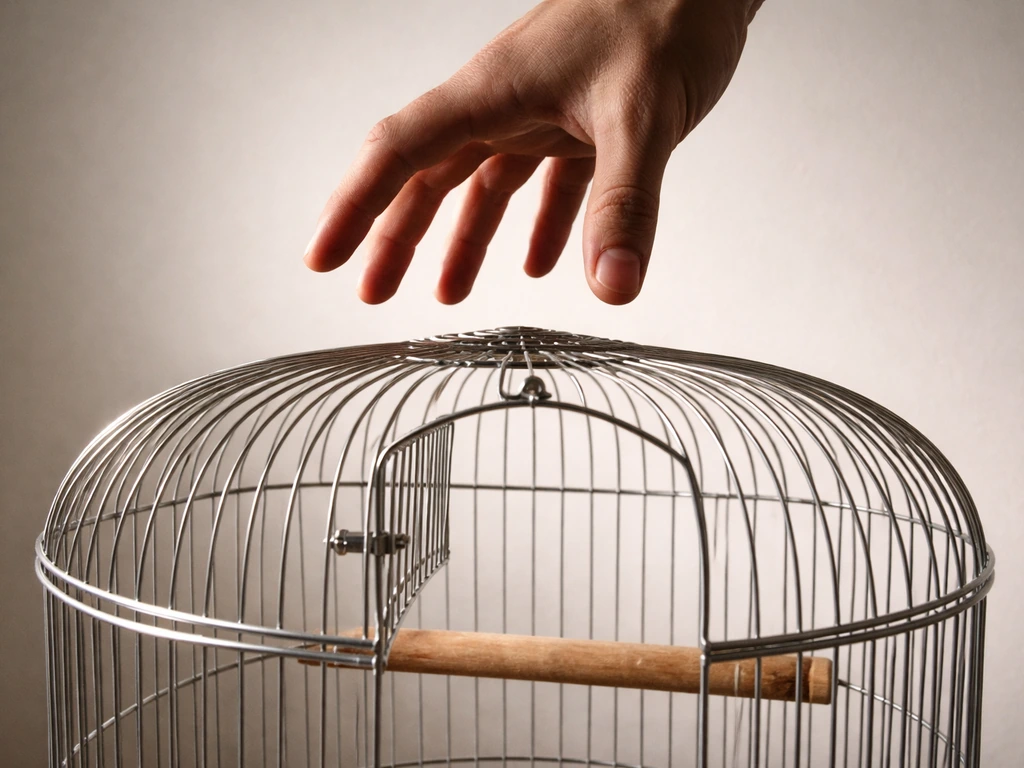
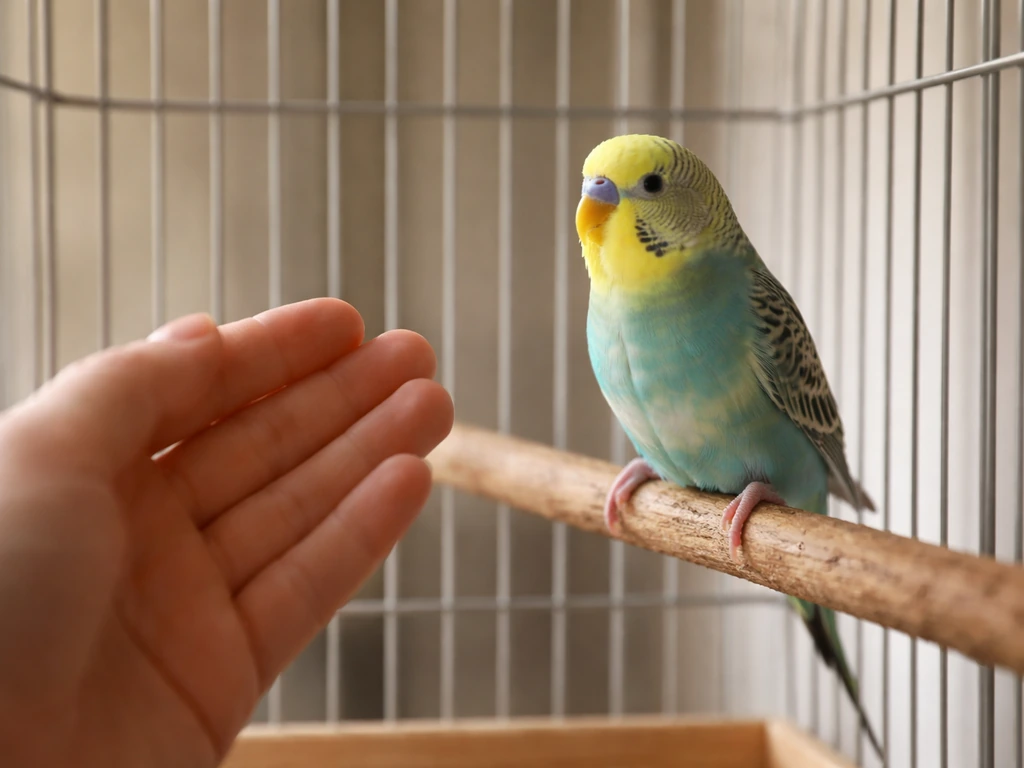
Birds are prey animals. In the wild, a large object moving fast toward them from above or in front almost always means danger. Your hand, especially when it reaches into a cage or moves quickly, triggers that exact same survival response. This is hardwired instinct, and it applies even to birds that were bred in captivity and have never seen a hawk in their lives.
On top of the instinct, learned experiences stack up fast. One episode of being grabbed, startled, or restrained can be enough to create lasting hand fear. According to avian vet Dr. Laurie Hess, if a bird reacts by biting and the hand gets pulled away quickly, the bird actually learns that biting works, which reinforces the fear and the defensive behavior together. Overstimulation during handling, being forced onto a hand when unwilling, or inconsistent contact where sometimes hands are fine and other times they mean something scary, all compound the problem over time.
Environmental stress plays a role too. A bird that is sleep-deprived, living near loud noises, or dealing with cage placement issues may become generally fearful, and hands become just one more threat in an already overwhelming world. If your bird seems scared of a lot of things, not just your hands, that broader picture matters and is worth reading about separately. If your bird is scared of everything, it may be reacting to broader anxiety and not just one specific trigger like your hands.
Read the signals: body language that tells you your bird is scared
Before you do anything with your hands, you need to know what scared actually looks like on your specific bird. Fear and excitement can look similar to new owners, and pushing a scared bird will set you back significantly.
Signs your bird is afraid or uncomfortable include:
- Feathers slicked tight against the body (the opposite of relaxed puffed feathers)
- Eyes wide and pupils pinned small, darting around the room
- Backing away, climbing to the far corner of the cage, or pressing into a wall
- Freezing completely still (a prey response called tonic immobility)
- Open-beak threat display or lunging before contact even happens
- Rapid breathing or visible tail bobbing while at rest
- Screaming or alarm calls when your hand appears
- Biting hard without any warning nip first
A relaxed bird, by contrast, will have loose, slightly puffed feathers, soft eyes, and may lean toward you or step onto your hand without hesitation. If you see even one fear signal, stop what you are doing. Continuing to approach a bird showing these signs is the fastest way to undo weeks of progress.
Quick safety steps for today: how to approach without making things worse
Before you start any formal training, change how you physically interact with your bird right now. These adjustments reduce the chance of a bite today and stop you from accidentally reinforcing the fear.
- Slow everything down. Move your hands in slow, low arcs rather than reaching straight toward the bird. Approach from the side, not from above, which mimics a predator dive.
- Announce yourself. Talk softly as you approach so the bird has a moment to register that it's you and not a threat.
- Never reach into a dark cage. Turn on a light first, let the bird see you, and open the cage door before your hand goes anywhere near it.
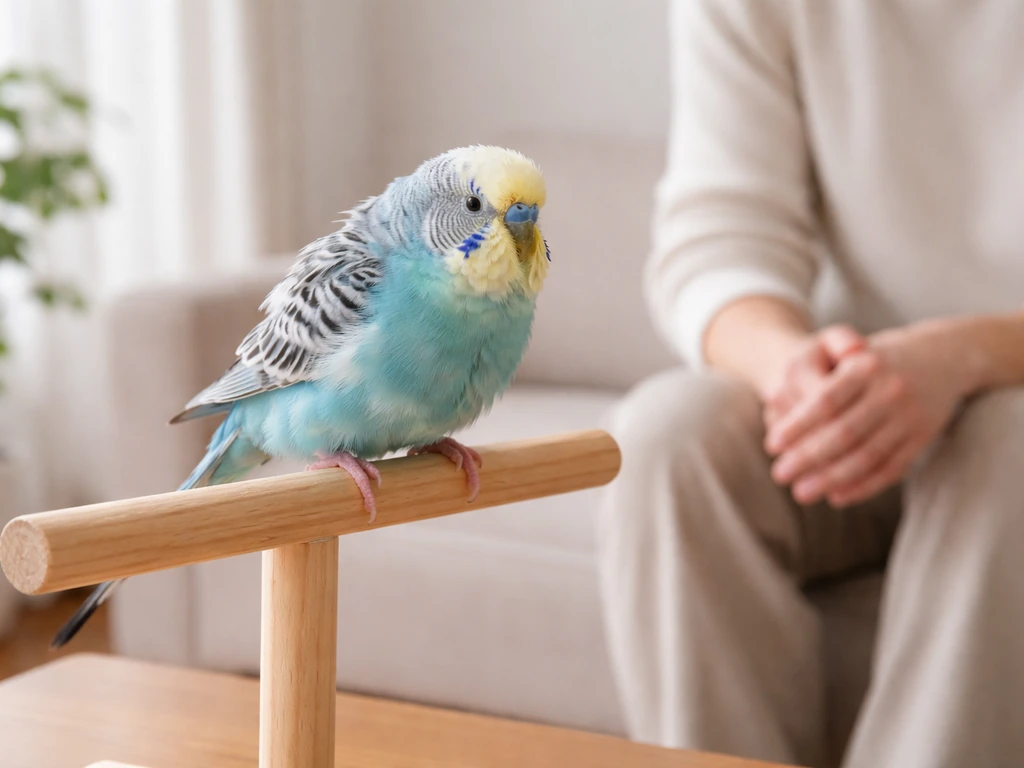
- Use a perch for step-ups instead of your bare hand if the bird is very reactive. A T-perch or stick lets the bird practice stepping up onto something without the fear of skin contact.
- Do not force it. If the bird moves away, let it. Chasing or cornering a bird to make it step up teaches it that your hands trap and restrain. Give the bird a moment to calm, then try again with less pressure.
- If a bite happens, stay calm. Slowly and calmly lower your hand to a surface and let the bird step off, then walk away briefly. Do not yell, pull away sharply, or overcorrect. A dramatic reaction teaches the bird that biting produces an interesting and powerful result.
Target training is one of the most useful tools at this stage. Teach your bird to touch a chopstick or pen tip with its beak for a treat. This redirects the beak away from biting, gives the bird something it controls, and builds positive associations with you in the same session, all without your hand being the main point of focus.
The trust-building plan: desensitization and counterconditioning step by step
This is the core training plan. Desensitization means you expose your bird to a very mild version of the scary thing (your hand, at a distance where the bird is calm) and then increase the intensity so gradually that the bird barely notices the change. Counterconditioning means you pair each exposure with something the bird genuinely loves, usually a high-value treat, so the bird's emotional reaction to your hand starts to shift from fear to anticipation.
These two techniques work together and they work very well on birds, but only if you follow the bird's pace, not your own schedule. Start only when your bird is comfortable, follow the bird’s pace, stay calm and avoid fast hand movements, and stop if the bird seems distressed.
Phase 1: hands exist, and good things happen nearby
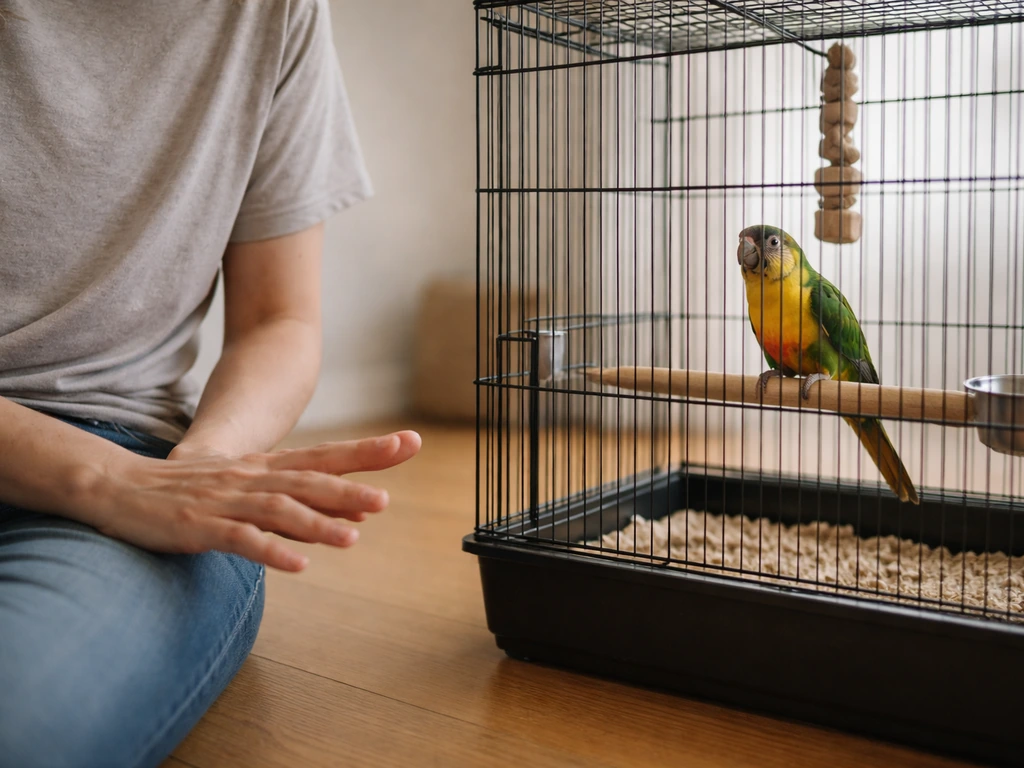
Start by simply sitting near the cage with your hands visible but still. Do not reach in. Just let your bird see your hands at a distance where it stays calm and curious rather than fearful. While your hands are visible, drop a favorite treat into the food bowl or toss one gently into the cage from outside. The goal is for your bird to form the association: hands appear, treats appear. Do this for a few days, multiple short sessions per day.
Phase 2: hands move closer, treats follow
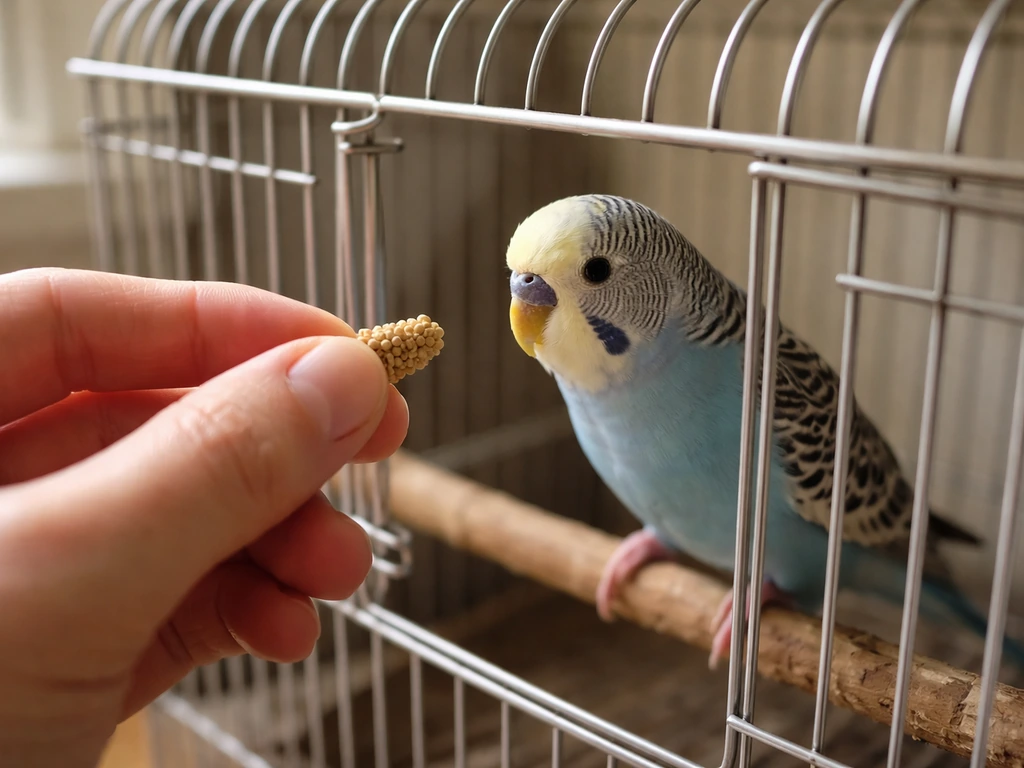
Once your bird is relaxed with stationary hands nearby, slowly start moving them. Hold a treat between your fingers and present it just outside the cage bars. Let the bird come to you. If it does not approach within about 30 seconds, move slightly back, wait for calm, and try again. You are looking for the bird to make the choice to move toward your hand, not for you to move toward it.
Phase 3: hands inside the cage, bird has a choice
Once the bird takes treats regularly through the bars, open the door and hold a treat just inside the cage doorway. Your hand enters the bird's space but stays low and still. Reward any approach. Build to offering treats from your palm, then from fingers, and eventually to offering your finger as a perch while a treat is your other hand. Keep sessions under five minutes and always end before the bird shows any fear signals, even if you have to stop after one successful interaction.
The timeline for this varies a lot. A bird with mild hand fear from inconsistent handling might progress through all three phases in two weeks. A bird with a history of being grabbed or abused may take months. Both are normal. The only rule is that you never move to the next phase until the current one is consistently stress-free.
Daily routine changes that make the training stick
Training sessions matter, but what happens the other 23 hours of the day matters just as much. A few consistent daily habits will dramatically speed up how quickly your bird stops fearing your hands.
- Keep handling sessions at the same time each day. Birds are creatures of routine and predictability lowers their baseline stress, which makes them more receptive to training.
- Position the cage where the bird can see you going about your normal life from a safe distance. A bird that watches you move around, talk, cook, and read throughout the day gets hundreds of calm exposures to human activity without any pressure.
- Reduce sudden noises and light changes near the cage, especially during the hours your bird sleeps. Startled birds carry that stress forward into interactions the next day.
- Make sure the cage is at eye level or just below. A bird whose cage is very low feels more vulnerable, while one placed too high can develop dominance behaviors. Eye level is the sweet spot for reducing fear and fostering connection.
- Give your bird choices whenever possible. Choice reduces stress. Let the bird decide when to approach, when to step up, and when to end the session. A bird that has some control over its interactions is far less likely to bite or flee.
- Use the highest-value treat your bird likes exclusively for hand training. If your bird gets millet all day from the food bowl, it will not be motivated enough to overcome fear for a piece of millet from your fingers. Reserve the best rewards for hands-only interactions.
When the fear might actually be stress or a health issue
Hand fear that comes on suddenly in a bird that was previously comfortable with you is a different situation from a bird that has always been cautious. A sudden shift in behavior, especially fear or aggression that appears out of nowhere, is one of the more reliable signals that something else is going on, either a significant stressor in the environment or a health problem. If your bird has suddenly become aggressive, it is especially important to look for stress triggers or health issues before continuing any hand-training appears out of nowhere.
Contact an avian vet if you notice any of these alongside the hand fear:
- Changes in droppings: unusual color, watery urates, or undigested food in the droppings
- Appetite changes: eating much less, or losing interest in favorite foods
- Changes in sleep: sleeping far more than usual, sleeping on the cage floor, or sleeping on two feet when the bird normally perches on one
- Breathing changes: tail bobbing at rest, open-mouth breathing, clicking or wheezing sounds
- Posture changes: hunching, fluffing up for long periods, or a drooping tail
- Sudden and severe aggression that is out of character and does not match anything covered in normal fear or territorial behavior
Birds hide illness very well because showing weakness in the wild is dangerous. By the time behavioral changes appear, a health issue can already be advanced. If your bird's sudden hand fear comes with any of the above signs, skip straight to an avian vet visit rather than trying to train through it. Training a sick or pain-affected bird is not only ineffective, it can worsen the situation.
If the fear is more about generalized anxiety than hands specifically, the bird may be reacting to broader environmental or social stressors. Similarly, if the hand fear comes bundled with biting, lunging, and territorial behavior around the cage, that pattern overlaps with what many owners describe when their bird suddenly becomes aggressive, which has its own contributing causes worth considering separately.
Troubleshooting when things are not going as planned
My bird will not take treats from my hand at all
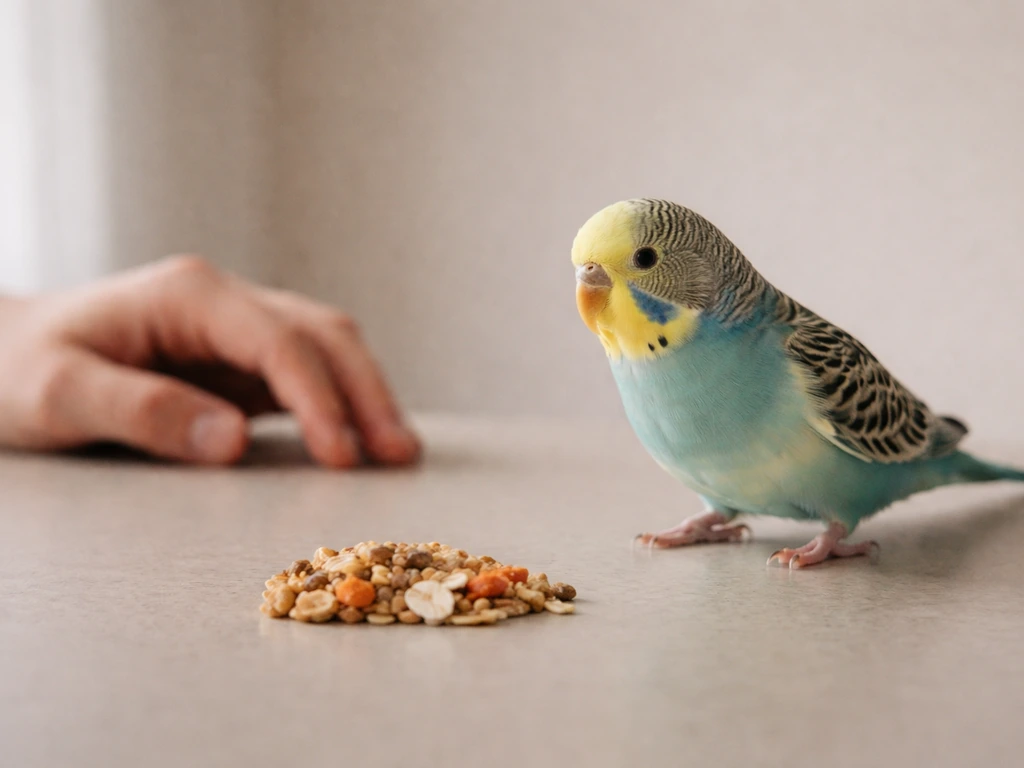
This usually means one of two things: the treat is not valuable enough, or your hand is still too close. Try leaving the treat on a flat surface and moving your hand back until the bird eats it, then gradually shorten the distance over many sessions. Also experiment with treat options. Some birds respond to millet, others to a small piece of almond, a bit of egg, or a piece of their favorite fruit. Find what your specific bird goes wild for and save it exclusively for this.
My bird bites every single time my hand appears
You are starting too close. If the sight of your hand inside the cage produces a bite, go back to having your hands visible outside the cage at a distance. Work at whatever distance keeps the bird calm and curious rather than reactive, even if that means sitting three feet away from the cage for a week. You cannot rush past this stage without paying for it later.
We were making great progress and now the bird is back to being scared
Regression is completely normal and does not mean you failed. It often happens after a vet visit, a change in the home environment, a new person handling the bird, or a single startling event. When it happens, go back two phases in your training plan, not one. Rebuild the foundation quickly and the bird will usually return to its previous level faster than it took the first time. Do not try to push through regression by adding pressure.
I have been at this for months with no improvement
If you have been consistent, patient, and following the steps above for several months and see no measurable progress, it is worth considering two things. First, rule out any underlying health or stress issues with an avian vet. Second, reach out to a certified avian behavior consultant. Behavior professionals who specialize in birds can often identify exactly where the training is breaking down in just one or two sessions, and the investment is usually far less time than continuing to work on a plan that is not clicking.
The most important thing to hold onto is that hand fear in birds is not permanent and it is not a reflection of how much your bird likes you. It is a learned response to a perceived threat, and learned responses can be changed with the right approach, the right pace, and enough consistency. If you want step-by-step guidance, focus on desensitization and counterconditioning so your bird learns that your presence predicts calm, safe interactions hand fear in birds is not permanent. Most birds, even those with significant histories of fear, can get to a place where stepping onto a hand feels safe and even good.
FAQ
How can I tell whether my bird is scared of my hands or just excited to get treats?
Watch what happens when you pause. Fear usually makes the bird freeze, lean away, stiffen, or stare intensely, and it may take treats reluctantly. Excitement typically looks loose and forward-moving, with quick interest and easier approach. If you see any fear signals, stop and revert to the last distance where the bird stayed calm, even if it will delay progress.
Is it okay to try training my bird every day even if it has shown fear during the last session?
You can train daily, but only at a level the bird can handle. If your bird reacted during the session, reduce the intensity for the next one (more distance, slower hand movement, fewer attempts). Forcing the same exercise again right away is a common reason birds develop stronger hand fear.
What should I do if my bird bites when my hand is just outside the cage bars?
Go back to a phase where your hands are only visible and your bird is relaxed enough to eat treats from the bowl or take tosses. Then rebuild using distance as your control, meaning you bring your hand in only as far as the bird can tolerate. Avoid the mistake of “rewarding after the bite,” because the bird may learn that biting makes your hand come back quickly.
Should I remove my bird from the cage to work on hand fear?
Not for this specific issue, especially early on. Working inside the cage doorway or with the bird free to choose approach helps preserve predictability and control. If you must move the bird for medical reasons, do it with veterinary guidance, since handling itself can deepen hand fear if the bird is already sensitized.
My bird steps onto my hand sometimes, then suddenly snaps. Why the inconsistency?
Inconsistency often comes from uneven timing, too-quick hand movement, or the bird being slightly stressed from other factors (sleep loss, noise, a new routine, or the bird not feeling well). If snapping happens after success, treat it as a regression trigger: step back two phases and ensure sessions stay under five minutes, ending before fear signs appear.
What if my bird only shows hand fear with one person or even one hand position?
That pattern suggests the cue is specific, not general. Try varying what you control: use the same hand posture every time, keep your height low, and keep your movement slow and consistent. If only one caregiver can’t get it right, focus on the handler’s technique, not the bird, because inconsistent approaches can quietly reinforce fear.
Which treats should I use, and how do I know if they are truly “high value”?
Use something your bird works for quickly and looks forward to. If your bird ignores a treat during training but eats it later, it is not valuable enough in that moment. Reserve the chosen treat exclusively for training and avoid mixing options until the bird is reliably responding, then you can swap if progress stalls.
How close can I get my hand, and how do I measure “too close”?
Use the bird’s real-time reaction as your measuring tool. If your bird’s body stiffens, eyes harden, or the bird backs away, you are too close for that session. Increase distance by a noticeable amount and rebuild gradually by tiny changes over multiple sessions, not by big jumps.
What’s the safest way to progress from feeding through the bars to offering fingers as a perch?
Progress only when the bird is consistently approaching calmly with the door closed or with your hand just inside. When you introduce fingers, keep the finger steady and low, offer it for a short moment, and reward only calm approach. If the bird starts to lunge or hesitate, wait for calm and try again later, otherwise revert to earlier steps.
My bird’s fear got worse after a vet visit. Should I keep training or pause?
Pause or reduce intensity immediately if fear appears after a visit or a new handling event. Use the regression rule: go back two phases in your training plan, rebuild at the easier distance, and avoid adding pressure. If the bird seems painful or unusually lethargic, contact the avian vet before resuming training.
When is it time to stop behavior training and contact an avian vet?
Seek an avian vet promptly if hand fear is sudden and comes with other signs such as changes in droppings, appetite, weight, posture, breathing, or hiding. Birds often mask illness, so a behavioral change plus any physical clue should override training attempts. If you suspect pain, do not “train through it.”
How long should it take before I see measurable progress?
Progress varies widely based on how long the fear has existed and what caused it. Mild cases may improve within weeks when the bird is consistently calm at your current distance, while birds with a history of grabbing or restraint can take months. A practical benchmark is whether your bird can tolerate the same step with fewer fear signals across several sessions, not whether it steps onto your hand on day one.
Can I use desensitization and counterconditioning on my own schedule, or do I need a specific routine?
You can keep it flexible, but the bird needs predictable pacing. Consistency matters more than session length, so aim for short sessions multiple times per day and always stop while the bird is still calm. Skipping days can slow learning, but overdoing long sessions can backfire faster than skipping.
My bird is scared of my hands and also lunges and bites at the cage. Does that change the plan?
Yes, it suggests the bird’s fear may be broader or may include territorial behavior around the cage. Return to simpler, lower-intensity work (hands visible from a safe distance, treats tossed from outside, slower approach timing) and pay close attention to body language during every attempt. If the pattern escalates despite appropriate pacing, consider getting help from a certified avian behavior consultant.
Next Articles
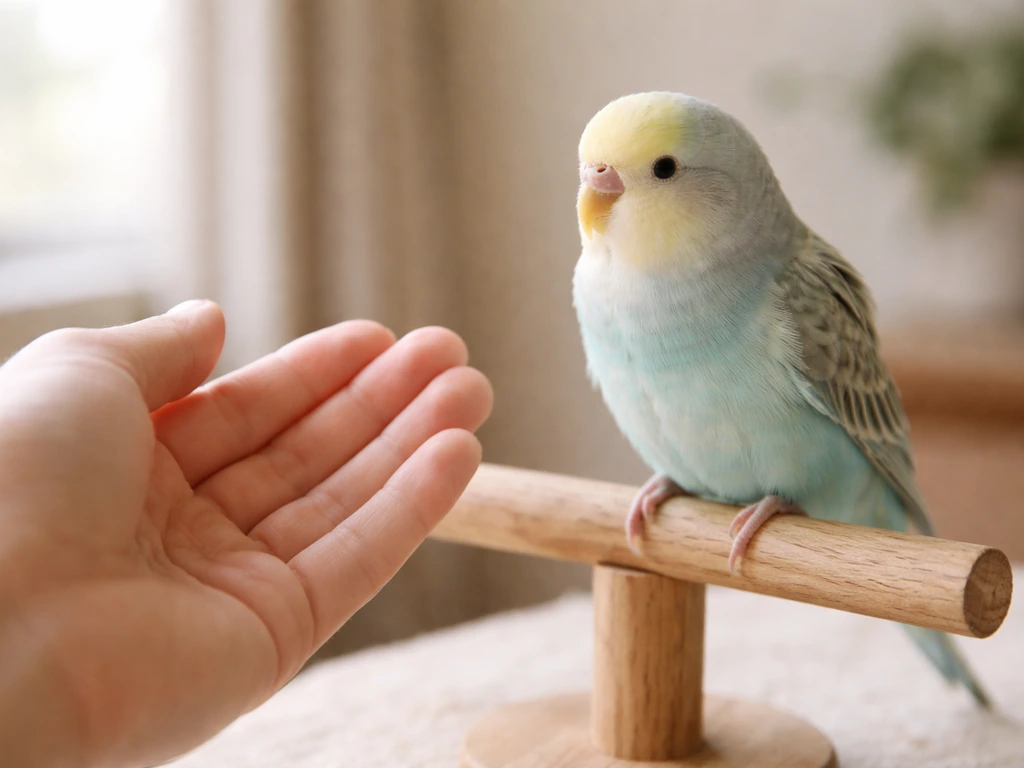
Why Is My Bird So Clingy? Causes and What to Do Now
Pinpoint causes of sudden clingy bird behavior and do quick home checks, red flags, and next steps for care.
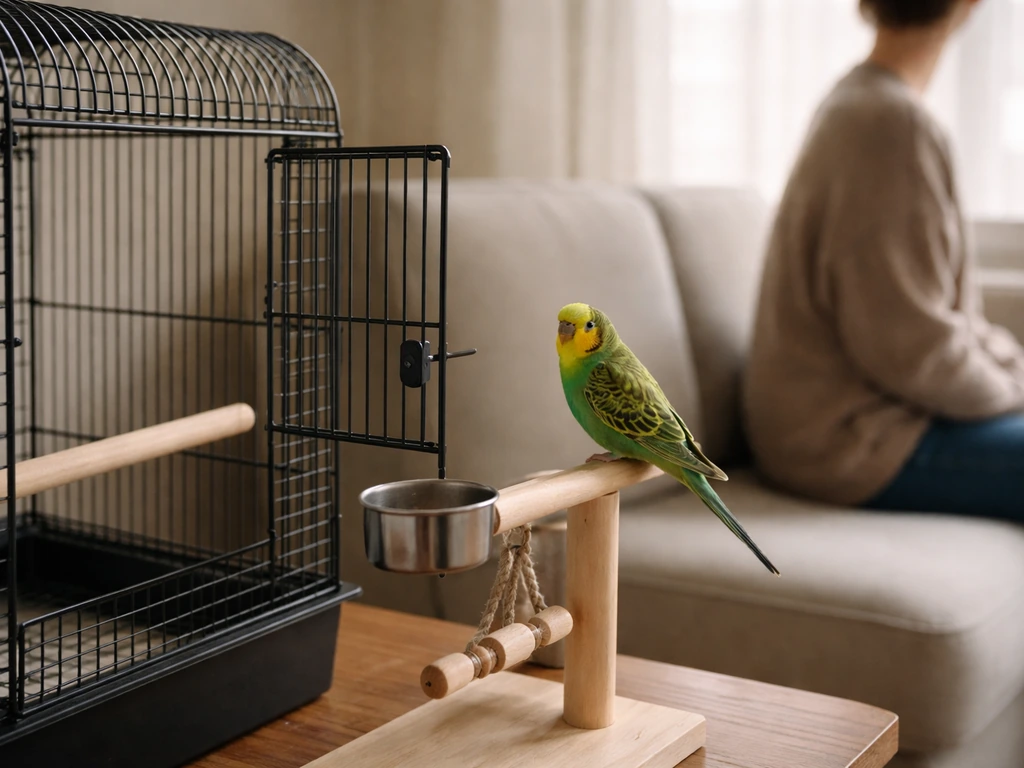
What to Do If Your Bird Is Scared of You: Step Plan
Find causes and follow a step-by-step plan to build trust with a scared bird using calm routines, training, and health c
Why Is My Bird Suddenly Scared of Me? Causes and Fixes
Find why your bird suddenly fears you and get step-by-step fixes, trigger checks, body-language tips, and vet red flags.