Yes, your bird can absolutely bond with you, and there are specific, observable behaviors that tell you whether that bond is real and strong. Birds don't love the way humans do, but they form genuine attachments rooted in trust, comfort, and preference. If your bird chooses to be near you, relaxes its feathers around you, and seeks your attention voluntarily, that is bird love in every meaningful sense.
Does My Bird Love Me? Signs of Bonding and a Simple Quiz

Marcus Chen
2 May 2026
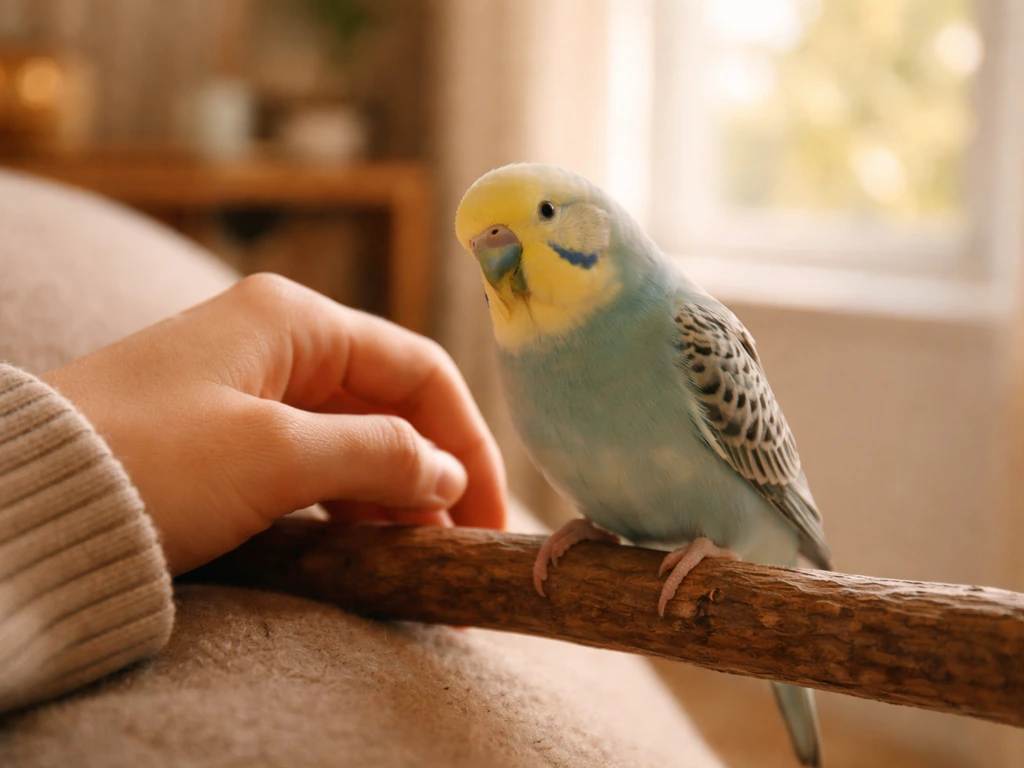
What 'love' actually means for a bird
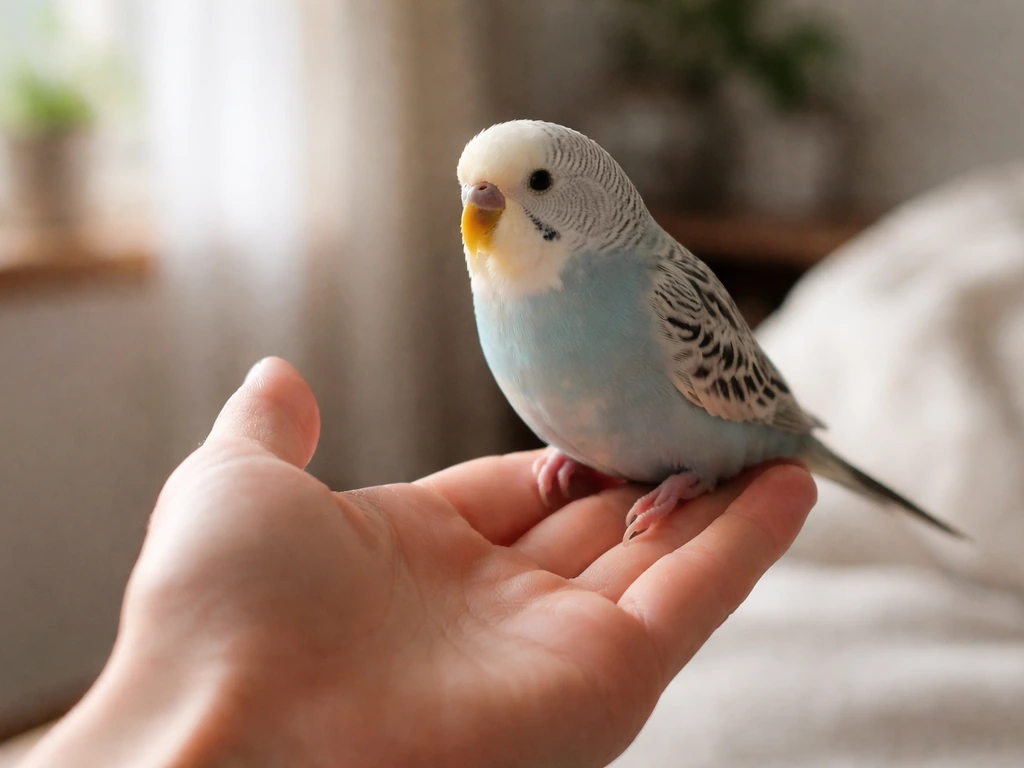
Birds are flock animals. In the wild, their survival depends on staying close to trusted companions, reading each other's body language, and maintaining social bonds through proximity and mutual grooming. When a pet bird treats you like a trusted flock member, that is their version of deep affection.
It is worth being honest about one thing though: bird attachment is not the same as human romantic or parental love, and it is important not to push the relationship in that direction. The RSPCA specifically advises that the healthiest human-bird bond is built on respect and trust, not on behaviors like feeding from your mouth or heavy cuddling sessions that can blur the bird's social boundaries and lead to frustration, screaming, or aggression down the line. Think of your bird as a close, trusted companion rather than a dependent partner, and the relationship tends to go much better for both of you.
The good news is that real bird attachment is easier to see than most people realize. You just need to know which behaviors to look for.
Signs your bird genuinely knows and trusts you
These are the behaviors that, taken together, show a bird is bonded to you and comfortable in your presence. One or two of these on their own can mean different things depending on context, but if you are seeing several of them regularly, your bird almost certainly considers you a safe, trusted presence.
- Flies or walks toward you voluntarily when you enter the room, without being coaxed
- Relaxed, slightly fluffed feathers when perched near you (not puffed-up sick-looking, but loose and content)
- Grinds its beak softly when settling near you (a classic contentment signal)
- Allows you to approach without moving away, turning its back defensively, or crouching
- Preens itself in front of you (a sign it feels safe enough to be 'off guard')
- Solicits head scratches by lowering its head or leaning into your hand
- Makes soft contact calls or quiet chattering specifically when you are nearby
- Steps up onto your hand calmly and without hesitation
- Falls asleep near you or partially closes its eyes when you are present
- Regurgitates food toward you (this is actually a high-trust bonding behavior in birds, not a health concern if it happens occasionally in a relaxed context)
Pay special attention to whether the bird initiates contact. A bird that approaches you on its own terms is showing genuine preference. A bird that only tolerates your presence is a different story, and that distinction matters when assessing the bond.
When it is not love: fear, stress, and overstimulation
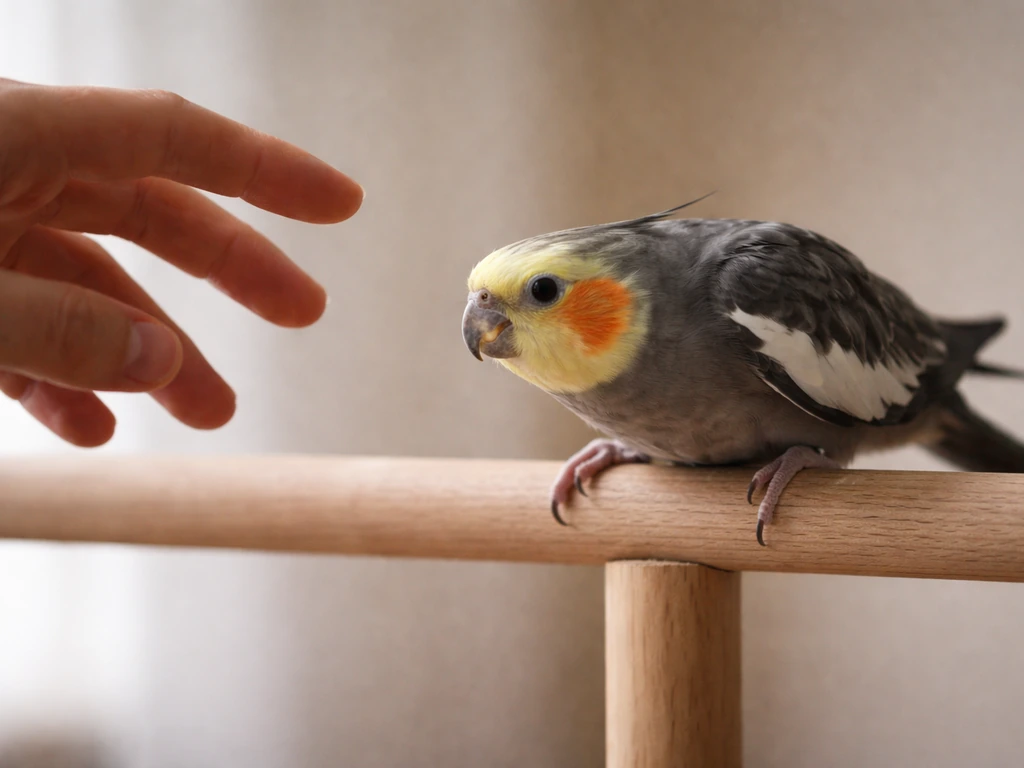
Some birds learn to perform certain behaviors not because they enjoy them but because they have figured out it leads to less discomfort. This is important to recognize honestly. A bird that sits on your shoulder but is tense, feathers tight, eyes wide, is not comfortable, it is coping. Sometimes yawning can also be linked to boredom, overstimulation, or stress, so it is worth pairing that clue with the rest of your bird's body language why does my bird keep yawning. Here is what stress and fear actually look like.
- Hissing, lunging, or biting when you reach for it
- Feathers held tight against the body, not relaxed
- Wings held slightly away from the body at rest
- Tail fanning or rapid tail bobbing
- Crouching low or trying to make itself small
- Panting or rapid, visible breathing at rest
- Repetitive, agitated screaming or screeching specifically when you approach
- Feather plucking or over-preening, especially after handling sessions
- Freezing completely still when touched rather than leaning in
Overstimulation is also easy to miss. Many birds have a clear threshold for physical contact, and when you push past it, they bite or become agitated. That is not aggression from a bad bird, it is communication. PetMD notes that biting is frequently stress or fear-related rather than dominance. If your bird bites only after extended petting sessions, it is telling you it has had enough, and respecting that signal actually builds trust faster than pushing through it.
What to do: if you are seeing consistent stress signals, step back from forced contact entirely for a few days. Let the bird set the pace. Sit near it without interacting, talk softly, offer treats without demanding anything in return. Trust rebuilds slowly but it does rebuild.
It is also worth noting that hissing at specific people or situations is a topic that comes up often among bird owners, and it usually has a clear reason behind it. Understanding what triggers hissing can help you address the root of the stress rather than just the symptom.
How health problems can look like behavior problems
This is the most important thing to rule out before you interpret any behavior as bonding-related or emotional. Birds are prey animals, which means they hide illness until they can no longer manage it. By the time a sick bird looks obviously unwell, it has often been struggling for a while. VCA advises treating any deviation from your bird's normal behavior as a potential health issue and contacting a veterinarian promptly rather than waiting.
Before you assess whether your bird loves you, run through this quick health screen. If any of these are present, the priority is a vet visit, not a bonding assessment.
| Sign to check | What it might mean | Action |
|---|---|---|
| Open-mouth breathing at rest | Serious respiratory distress | Vet immediately |
| Tail bobbing with each breath | Labored breathing, possible infection | Vet immediately |
| Reduced appetite or not eating | Illness, pain, stress | Vet within 24 hours |
| Lethargy, sleeping more than usual | Advanced illness (birds hide it) | Vet same day |
| Puffed up and not interacting | Illness or severe cold stress | Vet same day |
| Wheezing, clicking, or rasping sounds | Respiratory infection | Vet immediately |
| Sudden aggression with no trigger | Pain, neurological issue, hormones | Vet to rule out medical cause |
| Feather destruction or plucking | Stress, skin condition, nutritional deficiency | Vet to rule out physical causes first |
A bird that is lethargic and unresponsive is not being calm and affectionate with you. A bird that stops eating is not just being picky. These are red flags. Once you have confirmed your bird is healthy, then behavioral and bonding assessments become meaningful.
Score your bond: a quick checklist to do right now
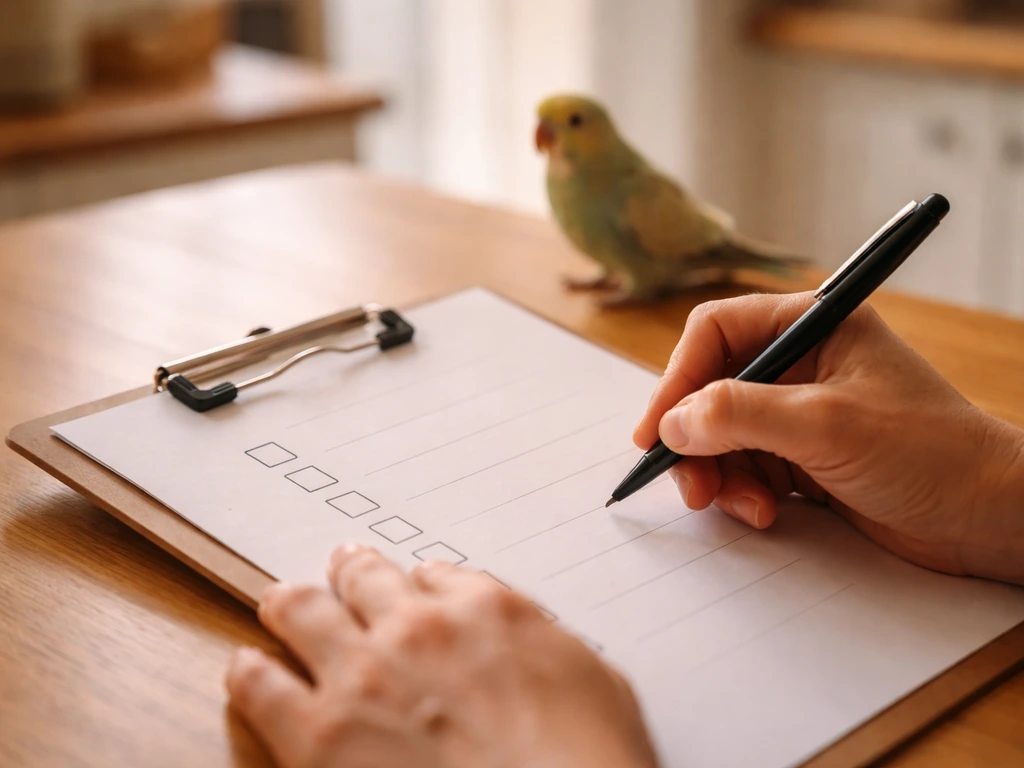
Go through this list and give yourself one point for each behavior you have genuinely observed in the last week, not just once ever but as a regular pattern.
- My bird moves toward me voluntarily when I enter the room
- My bird steps up onto my hand without hesitation or fear signals
- My bird relaxes its feathers and grinds its beak when near me
- My bird makes soft, content vocalizations specifically around me
- My bird allows me to scratch its head and leans into contact
- My bird preens itself or partly closes its eyes when I am sitting nearby
- My bird eats normally and behaves consistently whether I am present or not (no fear-eating or hiding food)
- My bird has sought me out today without me prompting it
- My bird shows no consistent hissing, biting, or fleeing specifically around me
- My bird's behavior around me has been stable or improving over the past month
8 to 10 points: Strong bond. Your bird is clearly comfortable with you and shows genuine attachment. Keep doing what you are doing and keep respecting its signals. 5 to 7 points: Building bond. There is real trust here but room to grow. Focus on choice-based interaction and consistent daily routines. 3 to 4 points: Early stages or rebuilding. The bond is fragile or you are working back from some stress. Slow down, reduce pressure, and use the step-by-step plan below. Under 3 points: The relationship needs attention. This could be a new bird, a previous negative experience, health issues, or mismatched handling. Rule out health problems first, then start from scratch with trust-building basics.
How to strengthen your bond this week, step by step
The fastest way to build a stronger bond is to make every interaction feel safe and predictable for your bird. Here is a practical daily plan you can start today.
Day 1 to 2: Just be present
Sit near your bird's cage without trying to interact. Read, work, or just talk softly. Let your bird observe you being calm and non-threatening. This alone builds familiarity. If your bird calls to you or moves toward you, acknowledge it warmly but do not rush.
Day 3 to 4: Introduce treat-based interaction
Offer a favorite treat through the cage bars or by hand, with no strings attached. You are not asking for anything yet. You are just teaching the bird that your hand near them predicts good things. PetMD recommends using a favorite treat that is only available during these focused sessions so the bird learns to associate you with something genuinely rewarding.
Day 5 to 6: Practice 'step up' calmly
Once your bird is taking treats comfortably, start working on 'step up' with your hand or a perch. Use a calm verbal cue, reward immediately, keep sessions short (five minutes maximum), and always end on a success. 'Step up' is genuinely one of the most trust-building exercises you can do because it gives the bird a predictable, low-pressure way to interact with you. It also makes handling less stressful for both of you if a vet visit ever becomes necessary.
Day 7 and beyond: Give your bird choices
Open the cage door and let the bird decide when and whether to come out. If it does, great. If it does not, that is fine too. Respecting that choice is what builds the kind of trust that leads to a bird that wants to be with you. RSPCA frames the healthiest bird relationships as built on the bird's ability to make choices, not on forced contact or over-handling.
Consistency matters more than duration. Ten minutes of calm, positive interaction every day beats an occasional hour-long session that ends in biting and stress. Predictable routines, a calm voice, and respecting your bird's 'no' signals will do more for your bond than any single technique.
When to get professional help
Some situations go beyond what daily trust-building can fix, and knowing when to ask for help is part of being a good bird owner.
See an avian vet if your bird's behavior has changed suddenly without an obvious cause, if it is showing any of the health red flags listed above, if it has started feather plucking or self-injuring, or if it has stopped eating. LafeberVet notes that birds hide illness until it is advanced, so sudden behavioral changes often have a medical component worth ruling out. Do not wait this one out.
Consult an avian behavior specialist if your bird is consistently fearful or aggressive despite patient, positive handling, if it is showing what looks like obsessive or repetitive behaviors, or if the bonding situation has become genuinely distressing for the bird (lots of screaming, self-harm, severe avoidance). A certified avian behaviorist can review your bird's full history, including housing situation, daily routine, and specific triggers, and give you a structured plan that goes well beyond general advice.
The Association of Avian Veterinarians recommends discussing home handling routines and environmental adjustments with your vet even before behavioral problems become serious. AAV also offers bird-owner resources that recommend regular veterinary care and help owners find appropriate avian veterinary support. Building that relationship early means you have a trusted resource when you need one.
If your bird's behavior seems inconsistent, like it is friendly with you but refuses to engage with a new person, or it is suddenly acting differently around someone specific, those patterns also deserve attention. If your bird repeatedly refuses to meet Louie, it is often a clear sign of fear, stress, or a specific trigger around that person refuses to engage. Birds pick up on tension and changes in their environment more than most owners realize, and addressing the context often resolves the behavior.
FAQ
If my bird talks a lot near me, does that mean it loves me?
Frequent vocalizing can mean attention-seeking, excitement, or simply social comfort, but it is not proof of bonding by itself. Look for accompanying relaxed body language, voluntary closeness, and approach behavior, not just sound. If vocalizing spikes with agitation or it is accompanied by tail flicking, pinned eyes, or lunging, it is more likely stress or overstimulation.
My bird screams when I leave the room. Is that love or separation anxiety?
It usually indicates distress or a strong social preference, but birds can scream for different reasons, including boredom, routine disruption, or fear of being alone. Separation issues are more plausible when the screaming is consistent, happens only when you are gone, and improves when you reestablish predictable routines (same times, same voice, same calm pre-departure cues). If behavior change is sudden, rule out health problems first.
How do I tell the difference between bonding and fear coping?
Fear coping often shows tension signs like tight feathers, wide eyes, holding very still, tail down, or sudden freezing, then abrupt retreats. Bonding looks more like relaxed posture, loose feathers at times, gentle curiosity toward you, and gradual approach. A practical test is whether the bird chooses contact and whether it seeks you after calm periods, not only during feeding or high stimulation.
My bird bites during step up sometimes. Does that mean it does not love me?
Biting during handling is often a signal that the bird has reached its contact threshold, not a lack of attachment. If bites happen during longer sessions or after repeated cues, reduce the session length and reward earlier in the process. Use short, consistent steps (just one step up, immediate treat), and stop before the first signs of tension appear.
Should I let my bird sleep near me to strengthen the bond?
It can help familiarity and perceived safety, but only if your bird is clearly calm in that setting. If your bird becomes restless, wakes frequently, or shows startle behavior when you move, it may be too stimulating. Also avoid handling during sleep, and provide the bird a choice to retreat to its cage whenever it wants.
What if my bird is affectionate with me but ignores visitors completely, is that normal?
Yes, it is common. Birds often form stronger bonds with the person who provides predictable routines and reads their signals. If your bird consistently avoids or hisses at specific people, the trigger is usually scent, voice, clothing habits, or body language, not personal dislike. Keep introductions structured (quiet room, treat opportunities without forced approach), and do not punish avoidance signals.
Can a bonded bird still not want to be touched at all?
Absolutely. Many birds are bonded but tactile boundaries are strict, especially with prey animal instincts. If your bird approaches and accepts treats but tenses during petting, trust is still strong, just expressed through proximity rather than contact. Focus on choice-based interactions like offering a perch, letting the bird decide when to step up, and rewarding calm behavior near you.
Is mouth-feeding or hand-feeding always a bad idea for bonding?
Not automatically, but it can blur boundaries for some birds. The risk is that the bird may learn that your mouth equals contact, then escalate demands or get frustrated when contact is not immediate. If you do any mouth-to-bird behavior, keep it rare, avoid during stressful times, and use treats that are offered in a consistent, low-pressure way to reinforce calm association.
How long does it usually take before I can trust that my bird is truly bonded?
It varies by age, prior experiences, and how quickly you become predictable. A useful approach is the “pattern over time” rule, when several bonding behaviors show up regularly over the week or two, not just after good days. If you see no progress after health is confirmed and you have a consistent routine, it is reasonable to adjust your plan or involve an avian professional.
What health signs mean I should not interpret behavior as bonding yet?
Any change from baseline that affects eating, energy level, or posture should come first, such as lethargy, refusal to eat, unusual drooping, labored breathing, or sudden major behavior shifts. Because birds hide illness, treat “deviation” as a medical signal rather than an emotional one. When in doubt, schedule an avian vet visit before continuing bonding experiments.
Do different bird species bond differently with humans?
They do. Cockatiels, budgies, and many parrots can form strong attachments with consistent daily interaction, but the expression style differs (some prefer step up and training cues, others prefer quiet proximity). Your best guide is still your individual bird’s choices and thresholds, even within the same species.
What is a simple way to increase bonding without overstimulating my bird?
Use very short daily sessions focused on predictability: sit calmly near the cage, offer a preferred treat with no pressure, then stop as soon as your bird remains calm. If the bird shows tension, end the session early and try again later. This prevents the common mistake of “long sessions because you want bonding,” which can backfire if you exceed the bird’s contact tolerance.
Next Articles
Why Is My Bird Hissing at Me? Causes and What to Do
Understand why your bird hisses, spot body-language and triggers, and get step-by-step fixes plus vet warning signs.
Why Does My Bird Keep Yawning? Causes and What to Do
Learn why your bird keeps yawning, how to spot normal versus sick signs, and what to do today.
Is My Bird Trying to Mate With Me? Signs and Fixes
Learn why your bird mounts, rubs, regurgitates, or woos, how to reduce hormonal cues, and when to see an avian vet.