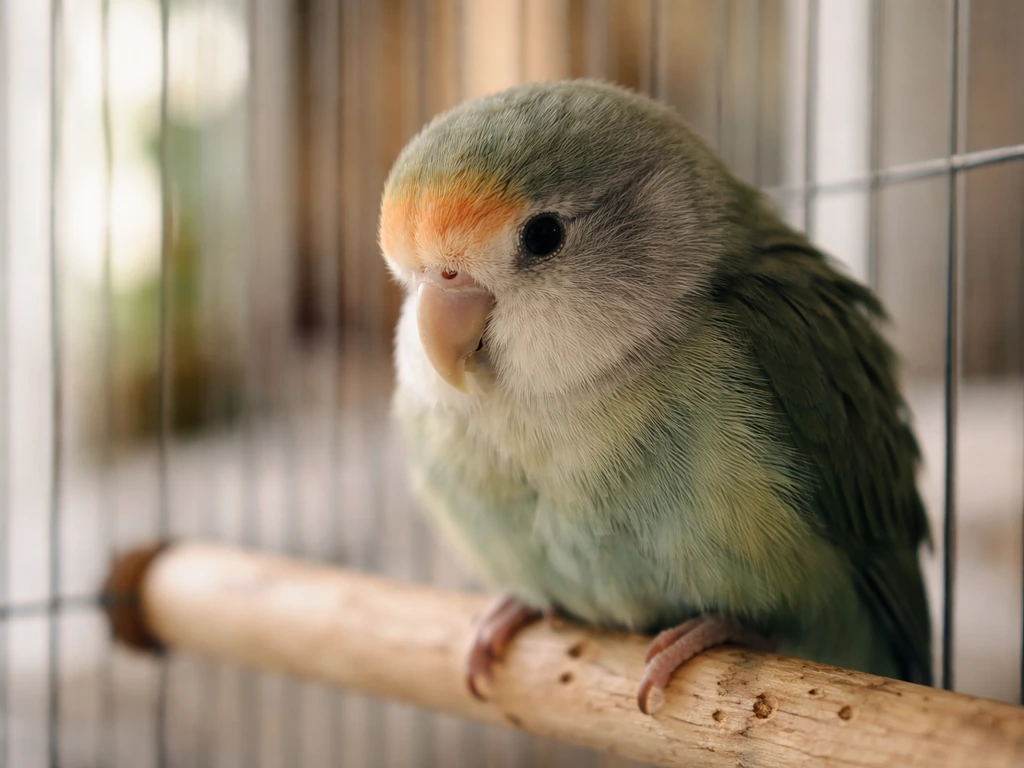
Your bird refused to meet Louie, and now you want to know why. The short answer: it's almost always communication, not stubbornness. Birds can't tell you they're scared, uncomfortable, or in pain, so they show you through their body and their behavior. Chewy’s bird body language overview similarly explains that stressed birds may puff up, lean away, and show other tension cues through their body language blank" rel="noopener noreferrer">show you through their body and their behavior. When a bird backs away, hisses, bites, or simply shuts down around a specific person, that's information worth taking seriously. Hissing can have different causes, so it helps to understand what your bird is trying to communicate hisses.
Why Did the Bird Refuse to Meet Louie? Causes and Steps

Marcus Chen
18 Apr 2026
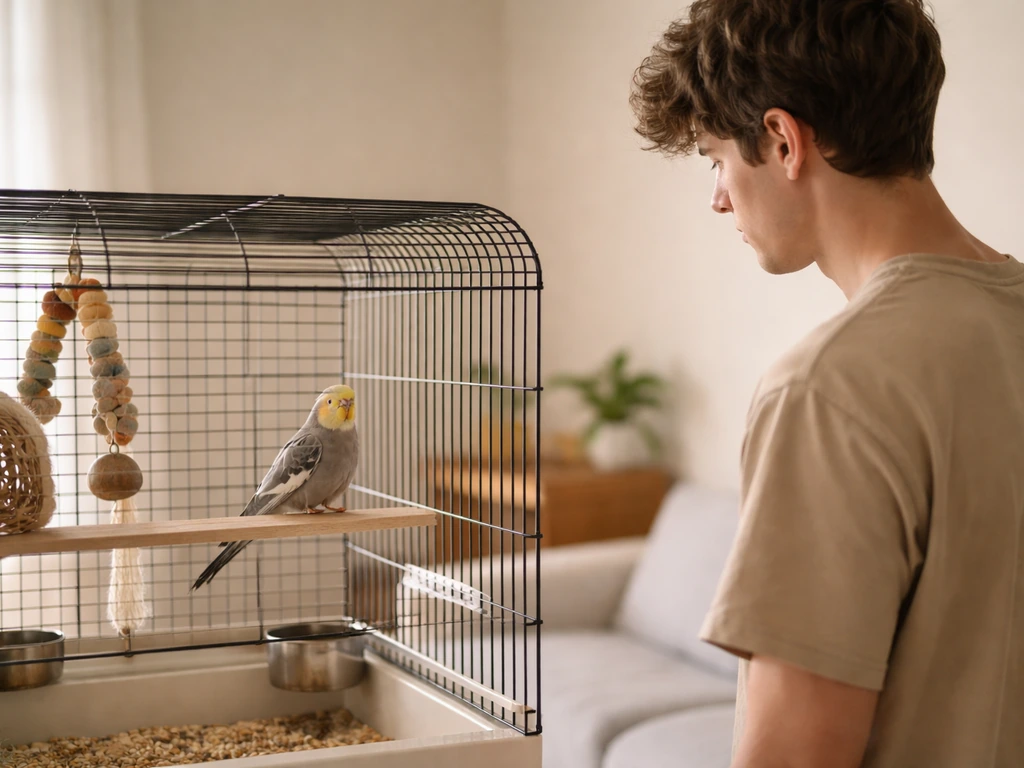
What 'refusing to meet Louie' actually looks like
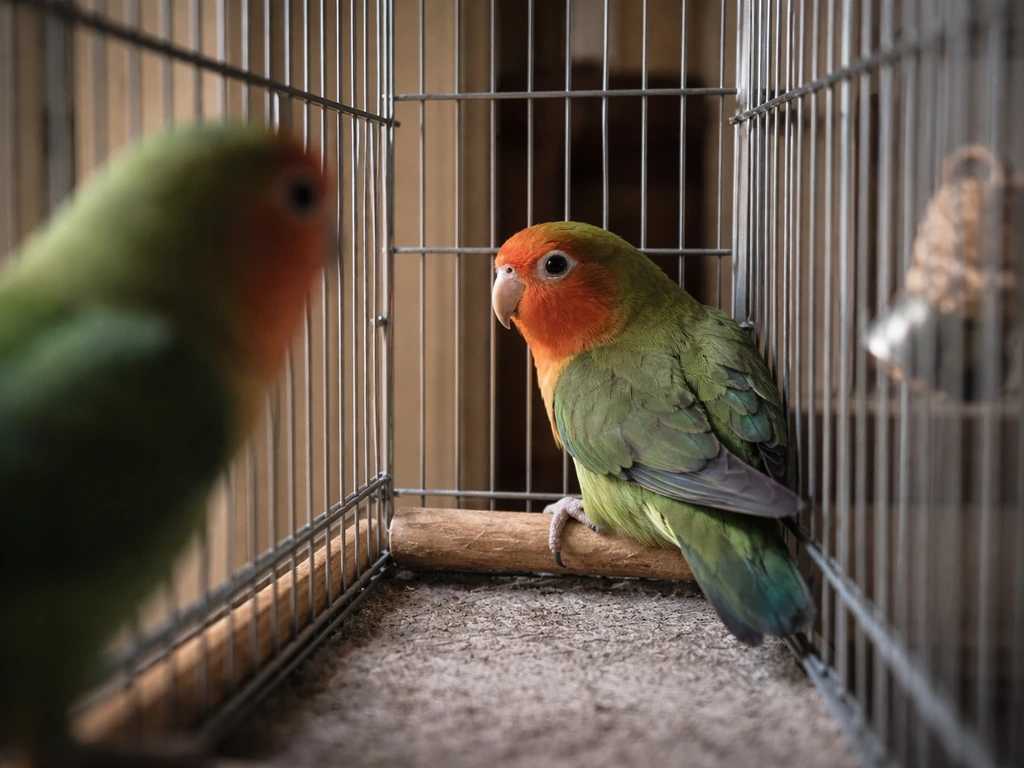
Before you can fix the problem, it helps to name exactly what you're seeing. 'Refusing to meet' can mean a lot of different things depending on the bird, and each variation carries a slightly different message.
- Backing away or retreating to the far side of the cage when Louie approaches
- Flattening feathers tight against the body (a fear/submission posture) or, conversely, puffing up to appear larger
- Turning the back or actively looking away
- Hissing, growling, or screaming specifically when Louie is near
- Lunging at or biting when Louie attempts to interact
- Tail flicking rapidly (a sign of agitation or irritation)
- Cowering, crouching low, or trembling
- Freezing completely and going very still
- Stepping off or refusing to step up for Louie even when the bird normally steps up easily
Notice whether the bird behaves this way only around Louie or around everyone. If it's Louie-specific, behavioral causes are the most likely explanation. If the bird is avoiding everyone and seems generally off, health is where you should look first.
The most common behavioral reasons birds refuse a person
Fear of something new
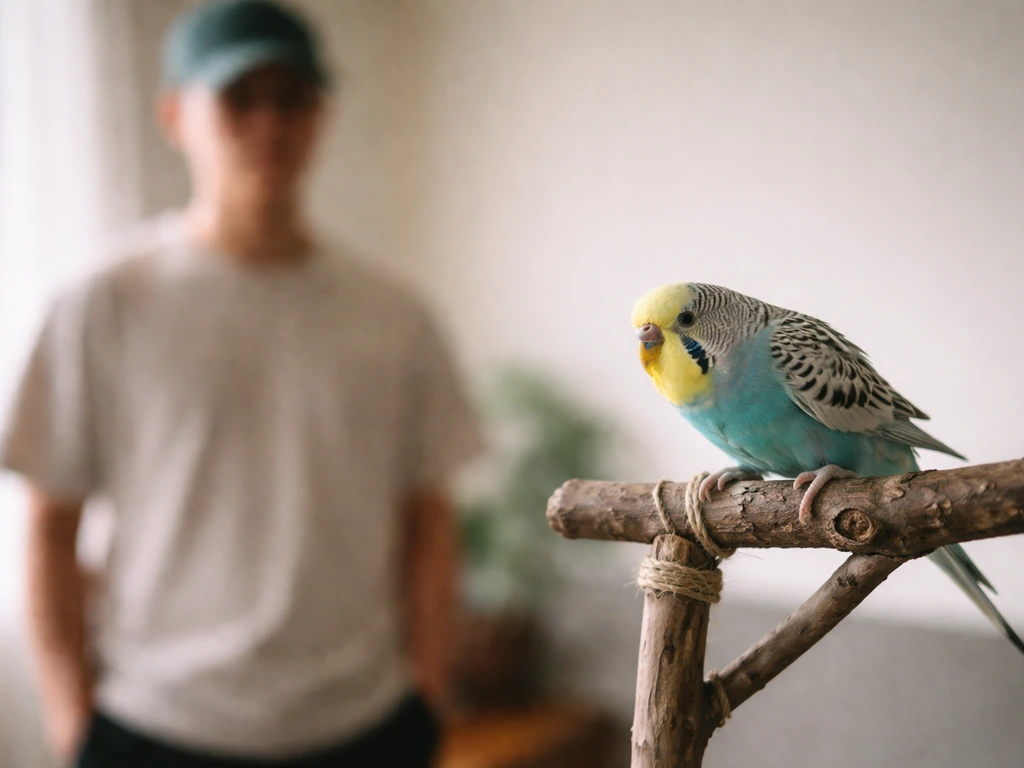
Birds are prey animals, which means anything unfamiliar is treated as a potential threat until proven otherwise. Louie might be wearing a hat, a strong cologne or perfume, a large or bulky jacket, or loud footwear. Louie might move quickly, speak loudly, or approach directly and at eye level, all of which read as predator behavior to a bird. Even a new hairstyle or glasses can genuinely unsettle a bird that knows someone well.
Stress from the environment
If the meeting is happening in a noisy room, near other pets, under harsh lighting, or at a time of day when the bird is normally winding down, the bird is already on edge before Louie walks in. The interaction then becomes associated with that stress, and the bird starts connecting Louie's presence with feeling uncomfortable.
Territorial bonding and the 'favorite human' effect
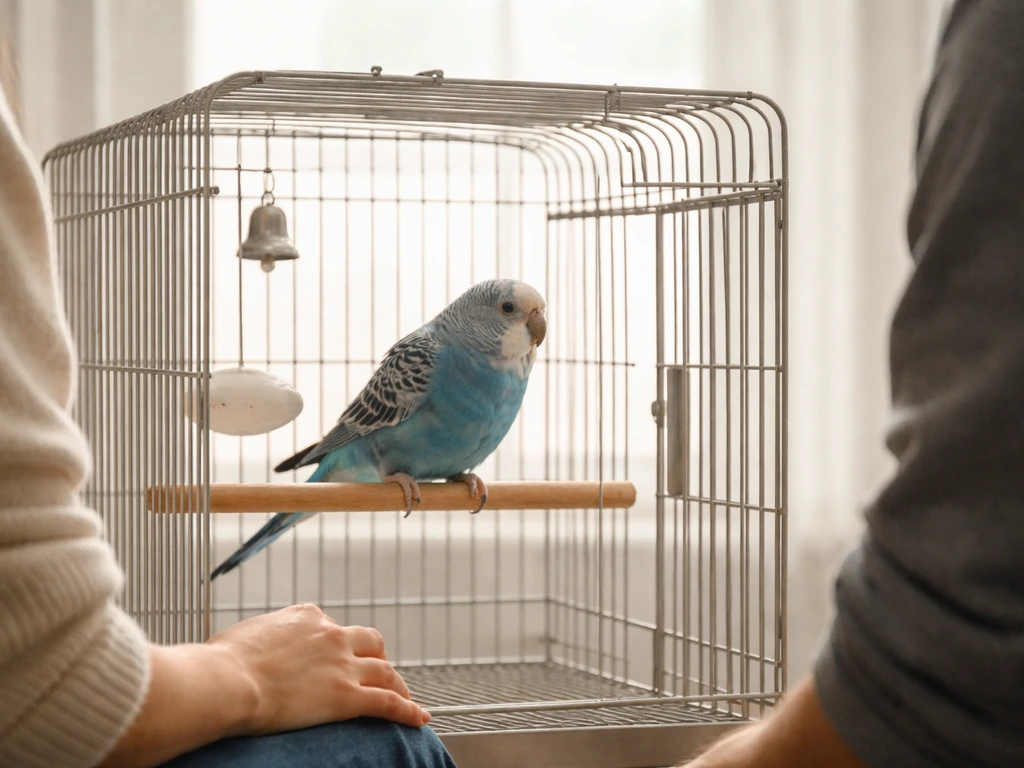
Many pet birds bond intensely with one person and become openly hostile toward anyone they perceive as a rival or intruder. If your bird has chosen you as its flock mate, it may genuinely feel threatened by Louie's attempt to interact, especially if you are present during the meeting. This kind of guarding behavior is common in parrots and can look dramatic, but it's usually normal bonding taken to an extreme rather than an unpredictable personality flaw.
A bad history or previous negative experience
If the bird was startled, mishandled, grabbed, or simply frightened by someone who resembles Louie in some way (voice pitch, physical size, gender, clothing style), it can carry that association for a long time. Rescue birds and birds with unknown backgrounds are especially prone to this kind of learned fear response.
Health and discomfort reasons that can look like 'refusing'
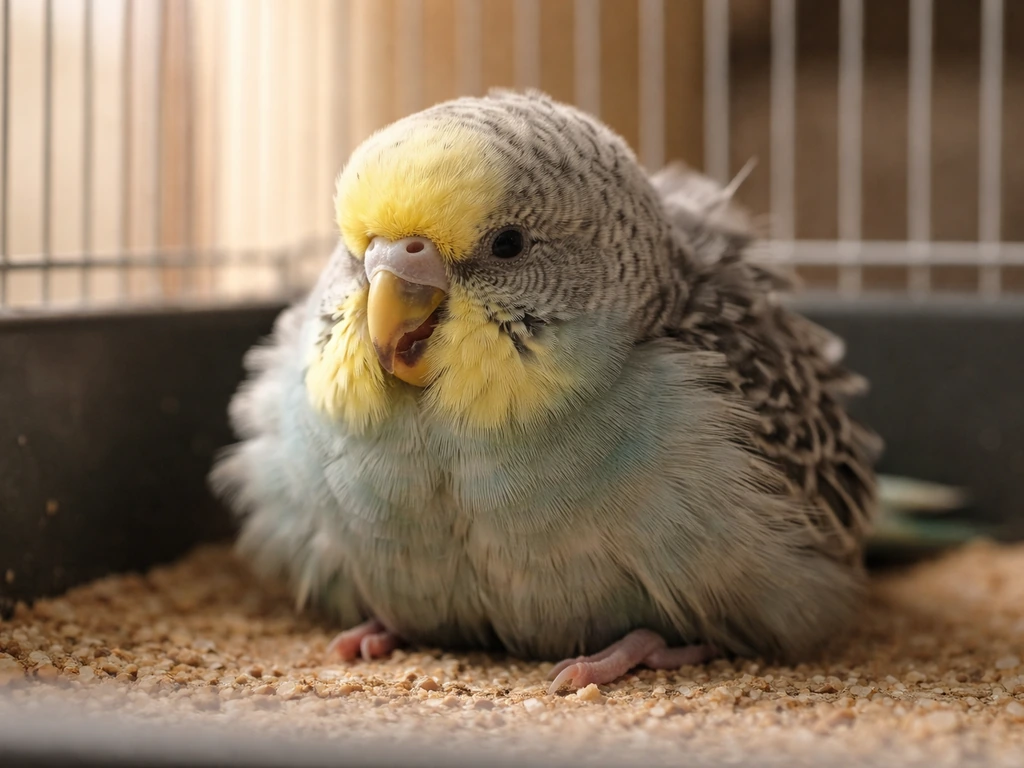
This is the piece a lot of owners miss. A bird that is in pain, feeling unwell, or struggling to breathe is going to be irritable, avoidant, and much quicker to bite. If the refusal behavior came on suddenly, or if your bird is normally friendly with new people, put health at the top of your list before blaming the behavioral causes above. Yawning in birds can be a sign of stress, boredom, or discomfort, so it helps to look at the context and any other body language why does my bird keep yawning.
- Respiratory discomfort: A bird working hard to breathe has no patience for social interactions. Even mild irritation can make the bird withdrawn and defensive.
- Pain or physical discomfort: Arthritis, an injury, or internal issues can make a bird reluctant to be handled by anyone, and especially unwilling to engage with an unfamiliar person.
- Hormonal behavior: During breeding season, birds can become dramatically more territorial, bonded to one person, and aggressive toward others. This can look like a sudden personality change.
- GI upset or appetite changes: A bird that is nauseous or uncomfortable after eating may be quieter, more irritable, and less interested in social interaction.
- Lethargy from illness: A sick bird conserves energy and withdraws. What looks like 'refusing to meet Louie' may actually be the bird telling you it doesn't feel well.
What to watch for right now: body language and health clues
Spend a few quiet minutes observing your bird before and after any attempted interaction with Louie. You're looking for two categories of information: signs that this is a behavioral/emotional response, and signs that something physical may be wrong.
Behavioral and body-language signals
- Tail flicking or fanning: irritation or agitation, often directed at a specific stimulus
- Feathers flattened tight: fear or submission
- Feathers puffed with eyes half closed: the bird feels unwell or is sleeping at an unusual time
- Hissing and lunging: active defensive aggression, consistent with territorial behavior or fear
- Panting or flapping with no physical exertion: high stress response
- Freezing completely: extreme fear response (this can escalate quickly)
- Vocalization changes: unusual screaming, growling, or going completely silent
Health red flags to check immediately
These are the signs that should make you stop and assess whether the bird needs veterinary attention rather than a socialization plan. Tail bobbing, where the tail moves visibly up and down with each breath, is a key sign that a bird is working hard to breathe and warrants prompt attention. Open-mouthed breathing while the bird is at rest (not after exercise or in heat) is considered a very serious warning sign. Other red flags include frequent sneezing, any discharge from the nostrils, eyes, or mouth, gasping, coughing, labored breathing with high-pitched or clicking noises, a persistently fluffed and sleepy appearance, reduced droppings or obvious changes in droppings, and a bird that has stopped eating or is eating far less than usual.
Practical steps you can take today
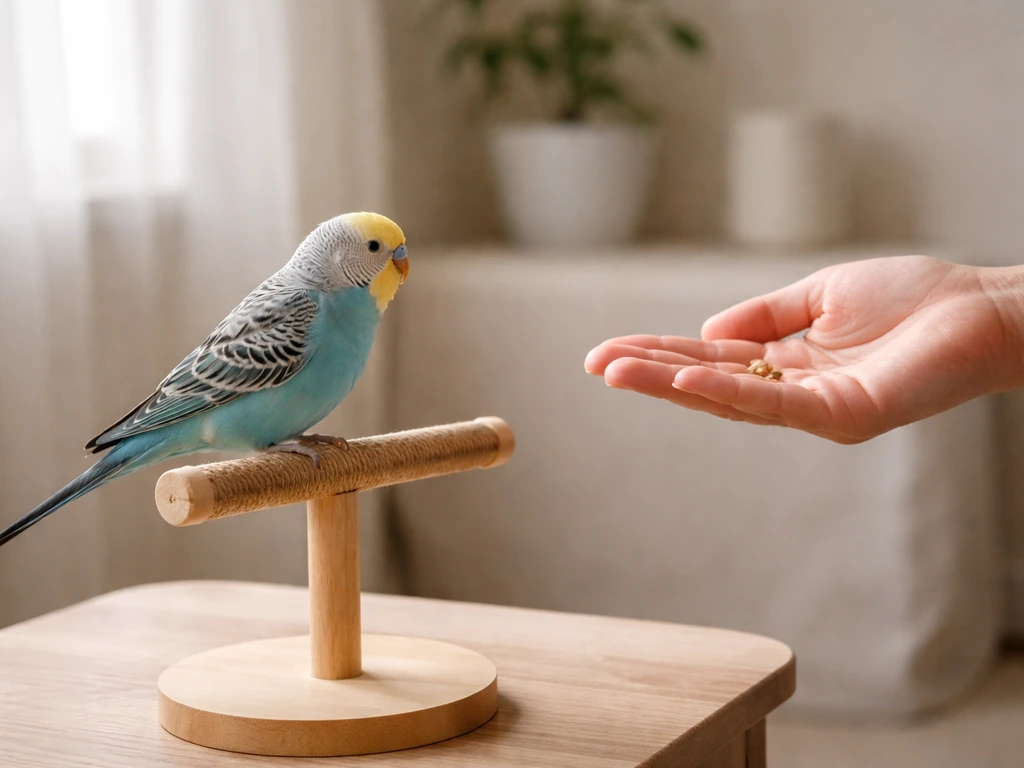
Once you've ruled out or addressed any urgent health concerns, here is how to actually move forward with helping the bird accept Louie over time. These steps are designed to put the bird in control of the process, which is the only approach that works reliably. Positive reinforcement training principles are often recommended to help companion parrots make comfortable, reliable associations over time blank" rel="noopener noreferrer">Parrot training.
- Start with distance: Have Louie simply be present in the room at a non-threatening distance, ideally sitting sideways rather than facing the bird directly. No reaching, no eye contact, no rushing toward the cage.
- Use scent acclimation: Have Louie leave a worn item (a soft cloth or an item of clothing) near the cage for a day or two before any direct interaction attempt. This lets the bird process the scent without the stress of a person being there.
- Let Louie be the treat giver: High-value food offered from a calm, stationary hand at the side of the cage (not thrust directly at the bird) builds positive association faster than almost anything else. The bird decides when and whether to approach.
- Drop the direct approach entirely for now: Louie should avoid making direct eye contact, speaking loudly, or reaching for the bird. Ask Louie to talk softly to you rather than to the bird at first, so the bird hears the voice as non-threatening background rather than a direct social demand.
- Adjust the environment: Make sure the meeting space is quiet, the cage is in a location where the bird feels secure (not in a corner with no view of the room, but also not in a high-traffic, loud area), and there are no other pets nearby.
- Practice choice-based step-up training: If the bird normally steps up for you, work on reinforcing that behavior regularly so the bird is confident and comfortable with handling generally. Do not try to force Louie into a step-up situation until the bird is voluntarily approaching Louie at the cage.
- Keep sessions short: Five minutes of neutral, positive exposure is worth more than a thirty-minute forced interaction. End every session on a calm note before the bird shows stress signals.
Behavioral vs. health problem: how to tell which one you're dealing with
| What you observe | More likely behavioral | More likely health-related |
|---|---|---|
| Avoidance is only with Louie | Yes, fits the pattern | Less likely unless Louie triggers stress |
| Normal with you and others | Strongly suggests behavioral | Would expect general withdrawal if ill |
| Sudden onset with no new people | Less likely | Check for illness immediately |
| Tail bobbing or open-mouth breathing | Not a behavioral sign | Yes, seek vet care promptly |
| Fluffed and sleepy during the day | Can occur with extreme stress | Common sign of illness, prioritize this |
| Appetite and droppings normal | Supports behavioral cause | Normal appetite makes illness less likely |
| Hissing, lunging, vocalizing loudly | Classic fear/territorial response | Less typical of illness alone |
| Came on after a specific event with Louie | Very likely behavioral | Unlikely unless the event caused injury |
If you're still unsure after going through the table above, default to checking health first. A bird behaving unusually is always worth a closer look, and you can always address the behavioral side once you know the bird is physically well.
When to call an avian vet right away
Some signs should not wait for a scheduled appointment. Contact an avian vet promptly if you see any of the following, regardless of whether the bird is also refusing to interact with Louie:
- Open-mouthed breathing at rest
- Visible tail bobbing with each breath
- High-pitched, clicking, or labored breathing sounds
- Discharge from nostrils, eyes, or mouth
- Frequent sneezing or gasping
- Coughing or respiratory sounds you haven't heard before
- The bird is fluffed, eyes half closed, and barely moving during its normal active hours
- Droppings have changed significantly in color, consistency, or volume
- The bird has not eaten in more than 24 hours
- You suspect an injury (fall, bite from another pet, collision with a window)
Birds hide illness very effectively because showing weakness in the wild makes them a target for predators. By the time obvious symptoms appear, the bird is often already quite unwell. This means acting quickly when you do notice something matters a lot.
Building long-term habits that prevent this from happening again
The birds that handle introductions to new people best are ones that have been socialized consistently from early on, have a stable daily routine, and have been taught that humans are generally a source of good things rather than stress. A few habits make a real difference here.
- Establish a consistent daily routine for feeding, out-of-cage time, and sleep. Birds that know what to expect are less reactive to new stimuli.
- Regularly introduce the bird to new (calm, patient) people before it becomes a big event. Short, low-pressure exposures build generalized confidence over time.
- Reinforce step-up and handling skills regularly, not just when you need them. A bird that steps up reliably for you is easier to advocate for and easier to keep safe in stressful situations.
- Avoid forcing interactions. Every forced interaction that goes badly makes the next introduction harder. Every positive, choice-based interaction builds trust.
- Keep annual or biannual checkups with an avian vet. Catching health issues early means they're less likely to manifest as sudden behavioral changes that confuse everyone.
- Pay attention to the bird's reactions to different people and make mental notes of what seems to trigger stress (voice pitch, quick movements, specific clothing). This makes you a better advocate for the bird when guests visit.
It's also worth knowing that some birds are simply more selective than others. A bird that hisses at strangers (a topic worth understanding in its own right) or seems to be testing whether you truly love them is expressing a real social and emotional life, not being difficult. If you're also wondering whether the behavior means the bird doesn't care, you can compare it with this guide on does my bird love me as a related consideration. Understanding those signals is what helps you respond in a way that actually helps rather than making things worse.
The bottom line: your bird refusing to meet Louie is almost never random. It's either a completely understandable fear or territorial response that you can work through with patience and the right approach, or it's the bird telling you something is physically wrong and it needs help. Check for health red flags first, address the environment and the introduction style second, and give the bird time and choice in the process. Most birds come around when they're not being pushed. If your bird seems to be mating or mounting behavior around you, that can be a different but related body-language cue to watch for too is my bird trying to mate with me.
FAQ
How can I tell whether the refusal is about Louie specifically or just the situation around the visit?
Pick a single, repeatable “safe routine” for Louie visits, then keep everything else stable (same room, same time window, same cage position, same volume of talking). If the bird only reacts during specific conditions, the fix is usually environmental timing or stimulus load, not socialization effort.
What should I avoid doing when my bird refuses to meet Louie?
Do not force contact, reach toward the bird, or require eye-level approach. Use distance instead, with Louie staying still and quiet, then rewarding calm behavior from a distance (through cage bars or near the cage). If the bird escalates during these attempts, pause and reassess for pain or breathing issues.
If Louie wants to help, what body language and approach should they use?
Have Louie skip eye contact, fast movements, and direct looming. A common mistake is thinking “friendly energy” means moving closer, but for prey animals that read as pursuit. Better approach is letting the bird approach first, while Louie offers neutral presence and, if tolerated, a treat placed where the bird chooses to take it.
Louie wears different clothes sometimes, could that be the reason, and how do I pinpoint the trigger?
If the bird is normal at home but refuses only during Louie’s visits, start with a “trigger list” (clothing, perfume, hat, hairstyle, voice pitch, footwear sounds). Change one factor at a time across separate sessions so you do not accidentally teach the bird to associate more than one new thing with the stress response.
How long should introductions take, and how often should I try?
If Louie is new to the bird, plan short sessions (for example, a few minutes) and end before the bird shows escalation. Aim for “tolerate Louie’s presence” goals first, not immediate handling, because progress usually comes from repeated calm exposures rather than one long try.
My bird is refusing to meet Louie, but I’m not sure it’s an emergency. What signs mean health comes first?
A drop in appetite plus refusal to interact, unusual sleepiness or persistent fluffed posture can indicate illness even if the bird is still breathing okay. If droppings change or eating noticeably drops for more than a short window, treat it as a health concern and contact an avian vet rather than continuing social trials.
What if my bird knows Louie but still refuses after Louie changed appearance or voice?
Some birds accept people they recognize but remain suspicious of “new” versions of that person (different voice tone, different clothing, different gender presentation, or a mask). If Louie recently changed appearance, repeat the calm-distance protocol and use gradual consistency so the bird can re-associate Louie with safety.
How do I handle territorial or guarding behavior toward Louie?
If the bird becomes aggressive around Louie, you may need to treat it like a territorial pattern: Louie should avoid stepping into the bird’s landing or chosen cage space, and the bird should not be forced to “make room.” Redirect by having Louie participate from a safer zone while you manage the bird’s access to perches and areas.
Louie resembles someone who previously scared the bird. Will the fear go away, and how should I retrain it?
A learned fear can fade, but only with low-stress exposure. Use a gradual approach that starts with Louie observing at distance, then gradually reduces distance only when the bird stays calm. If the bird is still showing fear each time despite changes in approach, consider discussing behavior plus a medical check with an avian vet.
How can I document progress or backslides so I know what to change?
Track intensity and timing. For each attempt, note what happened right before the refusal (arrival, hat/perfume, voice volume, movement, door opening sounds) and how long it lasts afterward. If intensity increases over weeks, stop the process and reassess health and environmental triggers before trying again.
Next Article
Why Is My Bird Making Whimpering Noises? What to Check
Find reasons for whimpering bird noises, quick home checks, and red flags for urgent vet care plus tracking tips.