
Yes, your bird is probably trying to mate with you, or at least treating you like a mate. It sounds strange, but it's one of the most common things pet bird owners deal with, and it's completely fixable once you understand what's driving it. This guide will walk you through exactly what's happening, how to tell normal bonding from a hormonal problem, and what you can change today to bring things back to a healthy balance.
Is My Bird Trying to Mate With Me? Signs and Fixes

Marcus Chen
20 Apr 2026
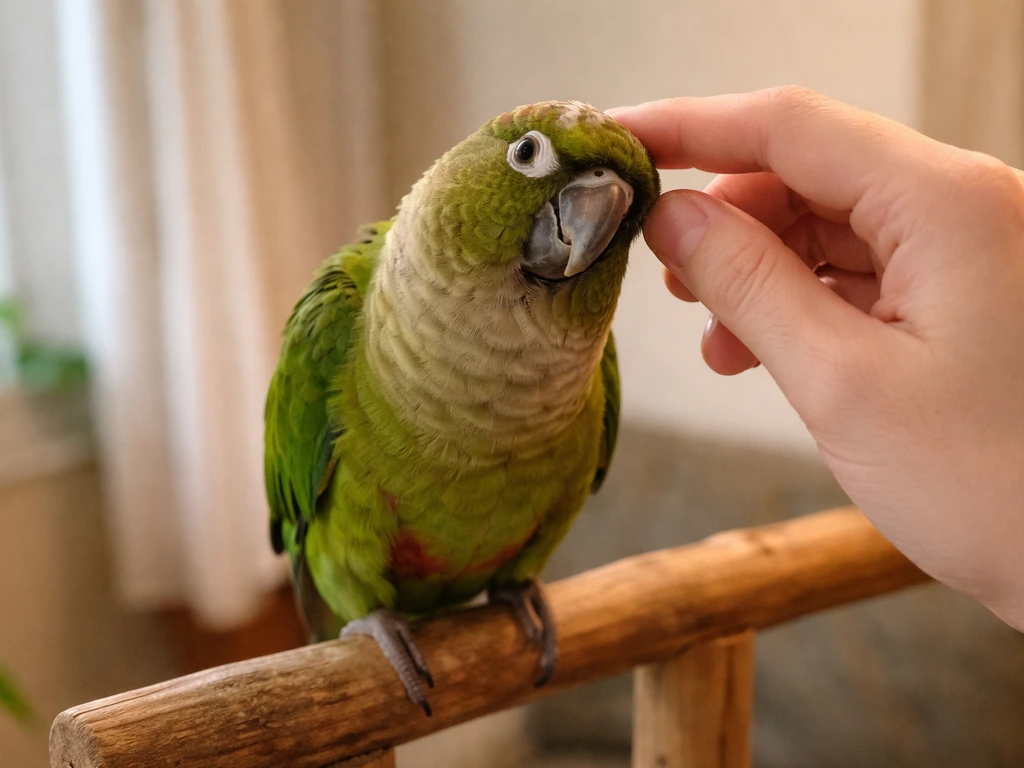
Why your bird may show mating-like behavior toward you
In the wild, birds mate seasonally. Longer days, warmer temperatures, and available nesting sites are the signals that tell a bird's body to start producing breeding hormones. But pet birds live in your home, where the lights stay on longer, the temperature is stable year-round, food is always available, and there's often a soft, cozy hiding spot somewhere nearby. All of those things look like perfect breeding conditions to your bird's brain.
On top of that, your bird has bonded with you. You're its flock, its companion, and in many cases its chosen mate. When hormones kick in, that bond becomes the target. Your bird isn't confused or broken. It's doing exactly what its instincts tell it to do, just aimed at the wrong species.
Many parrots show the most reproductive behavior in spring and early summer when daylight naturally increases, but indoor birds can cycle into hormonal behavior at almost any time of year if household lighting keeps their days long. Age matters too. Once a bird reaches sexual maturity, which varies by species but can happen as early as one year old in smaller birds, hormonal surges become part of life.
Common signs that look like 'trying to mate' (and what they mean)
These behaviors can overlap with normal affection and excitement, so it helps to know what each one actually signals.
| Behavior | What it usually means | When it becomes hormonal |
|---|---|---|
| Regurgitation toward you | A sign of deep affection — birds feed mates this way | Frequent, deliberate, aimed at your face or hand |
| Mounting or rubbing against you | Sexual behavior, plain and simple | Any time this happens, it's hormonal |
| Tail wagging (side to side) | Excitement, happiness at your return, or pre-defecation | Combined with other mating signals, it may be part of 'wooing' |
| Following you everywhere | Strong bonding behavior | Excessive and obsessive following often signals pair-bonding fixation |
| Beak grinding | Contentment, especially before sleep | Usually not mating-related on its own |
| Crouching and spreading wings | Soliciting mating — direct mating posture | Always hormonal when paired with other signs |
| Regurgitating on objects | Treating toys or mirrors as mates | Hormonal, especially if frequent |
| Increased vocalizations or 'wooing' | Calling for a mate | Common during hormonal surges |
Regurgitation deserves a special mention because it gets misread a lot. When your bird brings up food and tries to offer it to you, that's courtship feeding, which is one of the most common behaviors in a sexually excited bird. It's different from vomiting. Regurgitation is typically controlled and deliberate. Vomiting is forceful, often sprays the material around, and is usually a medical problem. If you're not sure which you're seeing, that distinction matters, and I'll come back to it in the health section.
Tail wagging is another one that gets confusing. A quick side-to-side wag often means your bird is happy to see you or is getting ready to defecate. In context with mounting, crouching, or regurgitation, it can be part of the mating sequence. But on its own, it's usually just excitement. Context is everything with bird body language.
Is it normal bonding or harmful hormonal behavior?
This is the real question, and the honest answer is that it depends on frequency and intensity. A bird that occasionally regurgitates for you, follows you around, and stays close is showing affection and strong bonding. That's healthy and normal. A bird that is constantly mounting, regularly regurgitating, becoming aggressive toward other people, pulling feathers, or refusing to engage with anything except you has crossed into hormonally driven behavior that can actually harm its health over time. If you’re wondering why your bird refuses to meet Louie, the same hormonal triggers and bonding dynamics discussed here can explain the change in behavior.
Chronic hormonal stimulation puts real physical stress on a bird's body. In female birds, it can lead to chronic egg laying, which depletes calcium and can cause egg binding, a genuinely dangerous medical emergency. In male birds, sustained hormonal arousal can lead to aggression, frustration, and stress-related health issues. So while the behaviors themselves might look harmless, letting them continue unchecked is not a neutral choice.
One thing worth checking: how you're interacting with your bird. Petting a bird on its back or under its wings mimics the physical contact birds use during mating. If you're stroking your bird's back regularly, you are likely reinforcing sexual behavior, even if that was never your intention. Limiting petting to brief head scratches and avoiding the back and under-wing areas is one of the most important adjustments you can make.
If you're curious about the deeper question of whether your bird genuinely loves you versus just seeing you as a mate, that's a nuanced topic worth exploring on its own. Many bird owners ask, “does my bird love me,” and the answer usually comes down to whether the behavior is gentle bonding or hormone-driven fixation. There's a meaningful difference between a bird that feels genuine companionship with you and one that's locked into a hormonal fixation.
Quick fixes you can try today
You don't need to overhaul everything at once. Start with these changes today and you should see a noticeable difference within a week or so.
Change how you're petting your bird
Stop petting your bird's back, sides, and under-wing areas entirely. Scratch the head and around the beak only. These are the areas birds preen each other on as friends. Back and wing contact is what mates do, and it sends the wrong signal. Keep petting sessions short and non-intense rather than long, slow strokes.
Remove anything that looks like a nest
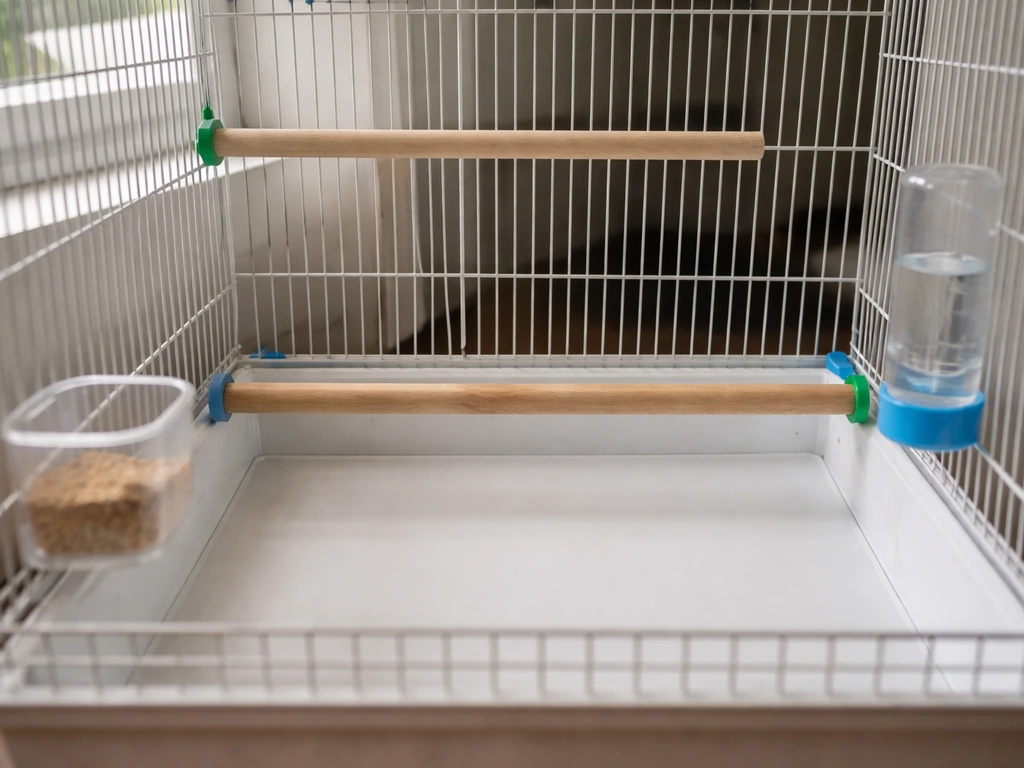
Go through the cage and the room and pull out anything your bird might be treating as a nesting site. This includes tents, huts, cozy boxes, soft fabric toys, tissue paper, shredded paper, and blankets it can burrow into. Soft huts and tent-style perch covers are especially problematic because they mimic nest cavities almost perfectly. If your bird has been spending time behind couch cushions or in drawers, block that access today.
Cover or remove mirrors
Mirrors can trigger hormonal behavior because your bird may treat its own reflection as a potential mate. If there's a mirror in or near the cage, remove it for now. If your bird has been interacting with reflective surfaces like glass doors or windows, limit that access too.
Ignore or redirect mating behaviors
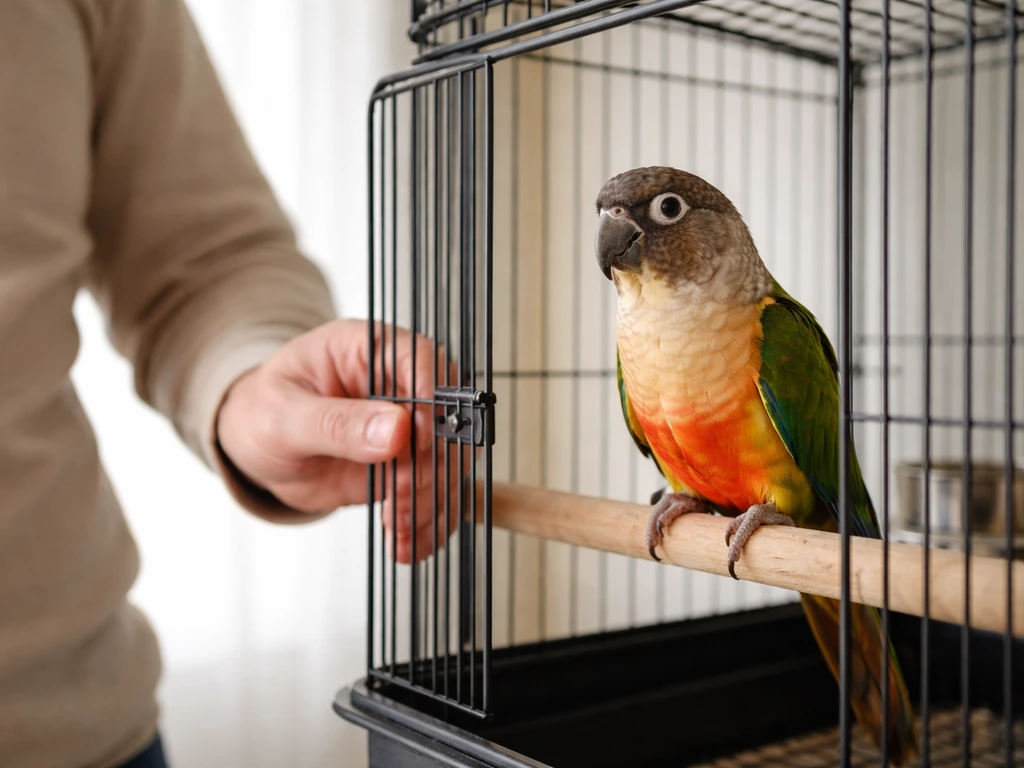
When your bird mounts, rubs, or regurgitates toward you, gently put it back in its cage or on a neutral perch and walk away. Do not react with attention, scolding, or laughter. Any attention, even negative attention, can reinforce the behavior. The goal is to make mating attempts completely unrewarding. Separately, redirect the bird to a foraging toy or a training session to give it something productive to do.
Start adjusting the light schedule today
If your bird is getting more than 12 hours of light per day, that alone can sustain hormonal behavior. Start covering the cage earlier tonight. The target is 10 to 12 hours of light followed by 12 to 14 hours of quiet darkness. Use a breathable cage cover and keep the covered area calm and away from noise and TV light. Even a partial first-night adjustment is worth doing now.
Long-term prevention: reduce hormonal triggers and nesting cues
The quick fixes above address the immediate triggers. These longer-term habits keep hormonal behavior from cycling back every few months.
Maintain a consistent light and sleep schedule
A consistent 10 to 12 hour uninterrupted sleep period every night is one of the most effective tools for hormonal stability. This means the same bedtime and wake time every day, not just during hormonal episodes. Irregular light exposure keeps the bird's hormonal system in an activated state. If your household schedule makes this hard, a lamp on a timer and a consistent cage cover routine can do most of the work automatically.
If your bird is in the middle of a hormonal surge, some guidance recommends dropping to as few as 8 hours of light per day temporarily. After about a week of consistent darkness increases, many owners see a sudden and dramatic drop in breeding behavior. Once things calm down, you can settle into the 10 to 12 hour light routine as the new normal.
Keep the cage environment neutral
Once you've removed nesting cues, keep them out permanently during hormonal seasons. Rotate toys regularly to keep the environment novel and engaging without accidentally introducing anything that encourages nesting. Foraging toys, puzzle feeders, and varied perch textures are all good long-term additions because they give the bird's brain something to focus on other than mating.
Spread the social bond around
A bird that interacts exclusively with one person is more likely to fixate on that person as a mate. If possible, have other household members spend regular time with the bird. Different voices, handling styles, and interaction patterns prevent the single-person pair bond from becoming absolute. This doesn't mean ignoring your bird. It means making sure its social world is a little wider.
Be consistent with interaction limits
The head-scratch-only petting rule and the no-reaction-to-mating-behavior rule need to be consistent across everyone in the household. If one person reinforces the behavior while another tries to redirect it, the bird will keep trying. Get everyone on the same page about what contact is okay and what gets ignored.
When to worry: health, stress, and when to see an avian vet
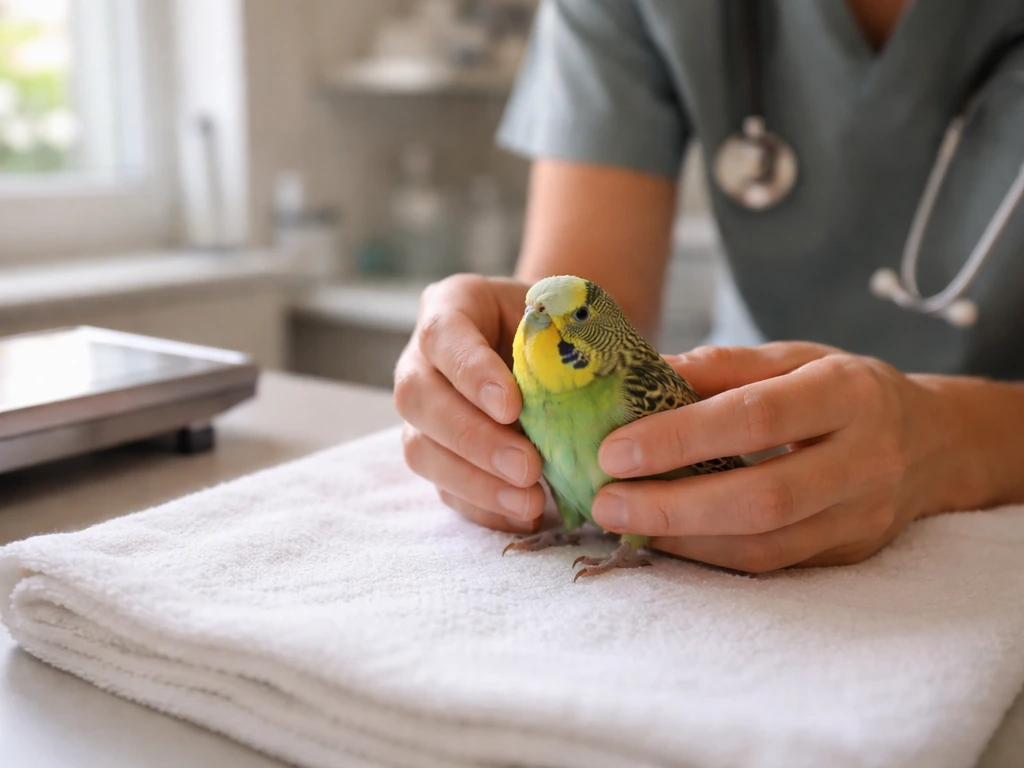
Most mating-like behaviors are behavioral and hormonal, not medical. Most mating-like behaviors are behavioral and hormonal, not medical why does my bird keep yawning. But some overlap with genuine health problems, and a few warrant urgent attention.
Regurgitation vs. vomiting
Controlled regurgitation aimed at you or a toy is almost always courtship behavior. Vomiting looks different: the material gets thrown around, the bird shakes its head, and the episode seems involuntary. If the vomit is sprayed over your bird's head feathers, if the crop looks swollen or fluid-filled, if the bird seems weak or is losing weight, or if there's any blood, contact an avian vet immediately. Do not wait on those signs.
Egg binding in female birds
If you have a female bird and she is straining, tail wagging combined with visible effort, sitting fluffed on the cage floor, or showing abdominal swelling, she may be egg-bound. blank" rel="noopener noreferrer">Egg binding is a medical emergency. The bird will typically become noticeably ill within 24 to 48 hours of the egg getting stuck. This is not something to manage at home. Call an avian vet the same day.
Breathing changes are always urgent
Open-mouth breathing, tail bobbing while breathing (different from the excited side-to-side wag), and any visible labored breathing are signs that need same-day veterinary attention. These are not mating behaviors. They indicate respiratory distress or other serious illness.
Aggression, feather damage, and appetite changes
Some hormonal birds become genuinely aggressive, biting hard and lunging without warning. If this is new behavior for your bird, it's worth a vet check to rule out pain as a contributing factor. Birds in pain or discomfort can also become aggressive. Feather plucking or barbering alongside mating behaviors suggests the bird is under significant stress. And if your bird stops eating or drinking, that's always a reason to call your vet, regardless of what other behaviors are present.
A quick note on hissing: if your bird has started hissing at you alongside other mating-like behaviors, it may be guarding a perceived nesting territory rather than simply trying to mate. That's a related but slightly different behavioral issue that often resolves with the same environment and light adjustments.
The short version of when to call a vet
- Vomiting (not controlled regurgitation), especially if material is sprayed or the crop looks swollen
- A female bird straining, tail bobbing with effort, or sitting on the cage floor fluffed up
- Open-mouth breathing or tail bobbing during breathing
- Sudden aggression that is uncharacteristic for your bird
- Feather destruction or plucking alongside behavioral changes
- Any loss of appetite or noticeable weight loss
- Lethargy or weakness at any point
The behavioral changes described in this article are manageable at home in most cases. Adjust the light, remove the nesting cues, change how you're handling your bird, and stay consistent. Most owners see real improvement within a week or two. But if anything on that list above appears, skip the home adjustments and go straight to an avian vet. Some things just need professional eyes.
FAQ
How can I tell if my bird is courting me versus just being excited and friendly?
Look for a pattern and specific “mate sequence” behaviors. Courting is more likely when mounting or crouching happens along with regurgitation and frequent close-following, and when the bird seems highly focused on you. Friendly excitement is usually more general (approaching, vocalizing, happy energy) and doesn’t escalate into repeated mounting or consistent regurgitation.
My bird keeps mounting other birds or toys too. Does that still mean it’s trying to mate with me?
Not necessarily, but it still indicates hormonal or mating-like behavior. If mounting is directed at toys, perches, or another animal, it usually means your bird’s hormones are triggered and it is practicing mating behavior on whichever target is available, including you. The same fixes (nest cues, light control, and no-reward response) apply.
What should I do during a mating attempt if I need to move my bird for safety?
Do it calmly and quickly without engaging. Gently relocate the bird to its cage or a neutral perch, then step away. Avoid talking, laughing, scolding, or “punishing,” because any reaction can become the reinforcement. If you’re handling differently than usual, use consistent routes and short sessions to reduce stress.
Is it okay to let my bird regurgitate into a bowl or onto a toy instead of toward me?
Often it can reduce reinforcement toward you, because it gives the bird a target for the courtship feeding behavior. Still, avoid encouraging repeated feeding exchanges. Redirect promptly after the first attempt, and focus on foraging toys or puzzle feeders so the bird’s brain stays busy without cycling into courtship.
Do I need to stop all petting, or are there specific areas I should avoid?
You don’t have to eliminate all touch. The article’s key point is to stop contact that mimics mating, specifically back, sides, and under the wing. Keep handling to brief head scratches and around the beak, and keep sessions short and not overly intense.
If I cover the cage for fewer hours to avoid stressing my bird, will it still work?
Consistency matters more than perfection. The goal is an uninterrupted dark block of about 10 to 12 hours, if possible. If you can only manage less at first, start earlier and aim to reduce total light gradually, because irregular schedules can keep the hormonal system activated even when you do “some” darkness.
Should I remove nesting items permanently, or only during hormonal season?
If your bird reliably shows hormonal behavior when nesting cues are available, keep those items out during the times it tends to flare, and consider leaving them out year-round for birds with frequent episodes. Also rotate toys, but be cautious not to replace removed items with new “nest-like” items such as huts, cozy boxes, or fabric that can be burrowed into.
Why does my bird get worse when I’m home more often?
You may be unintentionally increasing opportunities for reinforcement. More time together can mean more chance for back petting, more attention during mounting, and a stronger single-person bond. Also, your activity can lead to your bird following and staying close, which makes target-directed courtship more likely.
Could my bird’s mating behavior actually be aggression or territory guarding?
It can be, especially if there’s hissing or defensive body language. If the bird’s behavior includes aggressive lunging, guarding a perceived “nest” spot, or clear signs of threat, treat it as a behavioral issue related to territory as well as hormones. If you’re seeing respiratory signs or sudden illness, skip home adjustments and get an avian vet check.
How long should it take before I see improvement after making changes?
Many owners see a noticeable reduction within one to two weeks once light exposure is corrected, nesting cues are removed, and reinforcement is stopped. If the behavior doesn’t ease at all after that window, re-check whether any nest-like items or mirror/reflection triggers are still accessible, and consider an avian vet consultation to rule out medical contributors.
What if the behavior is new after I changed something at home, like adding a tent or a new lamp?
That’s a strong clue. New nesting cues, reflective surfaces, or longer light exposure can trigger hormonal surges quickly. Remove the likely trigger and keep a stable sleep routine. If the change is sudden with symptoms like breathing difficulty, weight loss, or abnormal vomiting, contact an avian vet rather than waiting.
When should I stop trying to manage this at home and call an avian vet immediately?
Call right away if you suspect egg binding in a female (straining, abdominal swelling, persistent effort), if regurgitation seems involuntary with forceful vomiting or signs like weakness, weight loss, blood, or a swollen fluid-filled crop, or if you see open-mouth breathing or labored breathing. Also get urgent help if biting is new and severe, feather plucking is intense, or the bird stops eating and drinking.