
A cockatiel shaking is not automatically a crisis. Most of the time it's something simple: they're cold after a bath, excited to see you, or just ruffling their feathers back into place after a stretch. But shaking can also be a sign of pain, illness, or a neurological problem, and those situations do need prompt attention. The key is figuring out which type of shaking you're seeing, and what else is going on with your bird at the same time.
Why Is My Cockatiel Bird Shaking? Troubleshooting Guide
Marcus Chen
30 Jun 2026
Quick check: what kind of shaking is it?
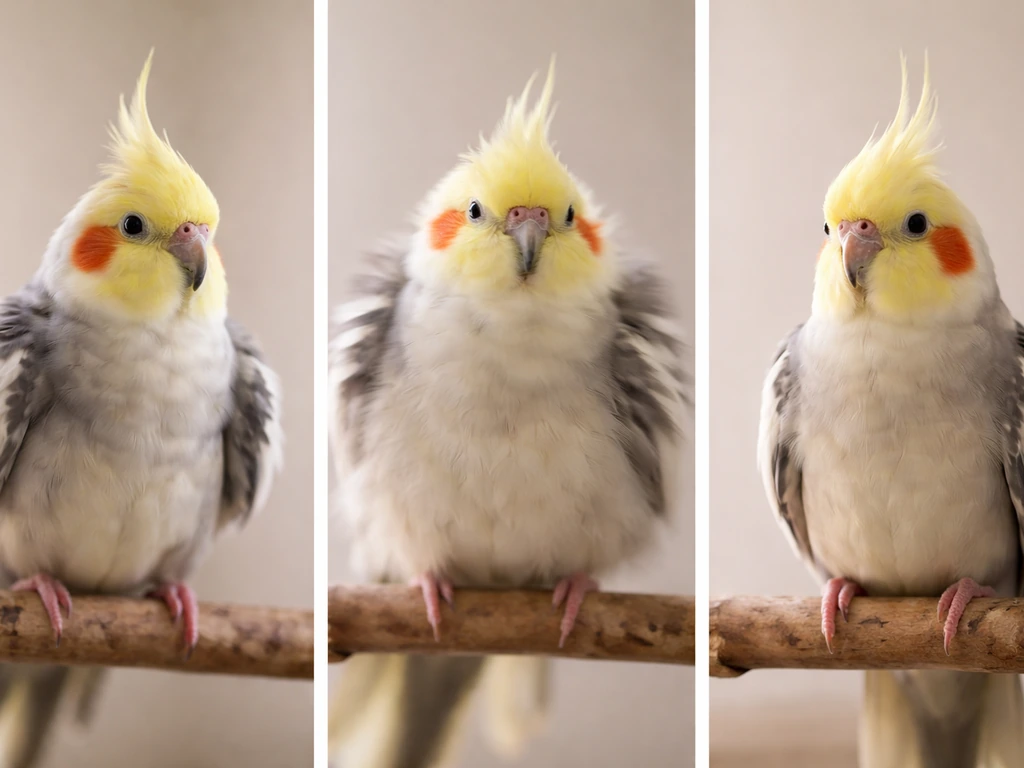
Before you panic, take a close look at what your cockatiel is actually doing. Not all shaking looks the same, and the type of movement tells you a lot about what's happening.
| Type of Movement | What It Looks Like | Usually Means |
|---|---|---|
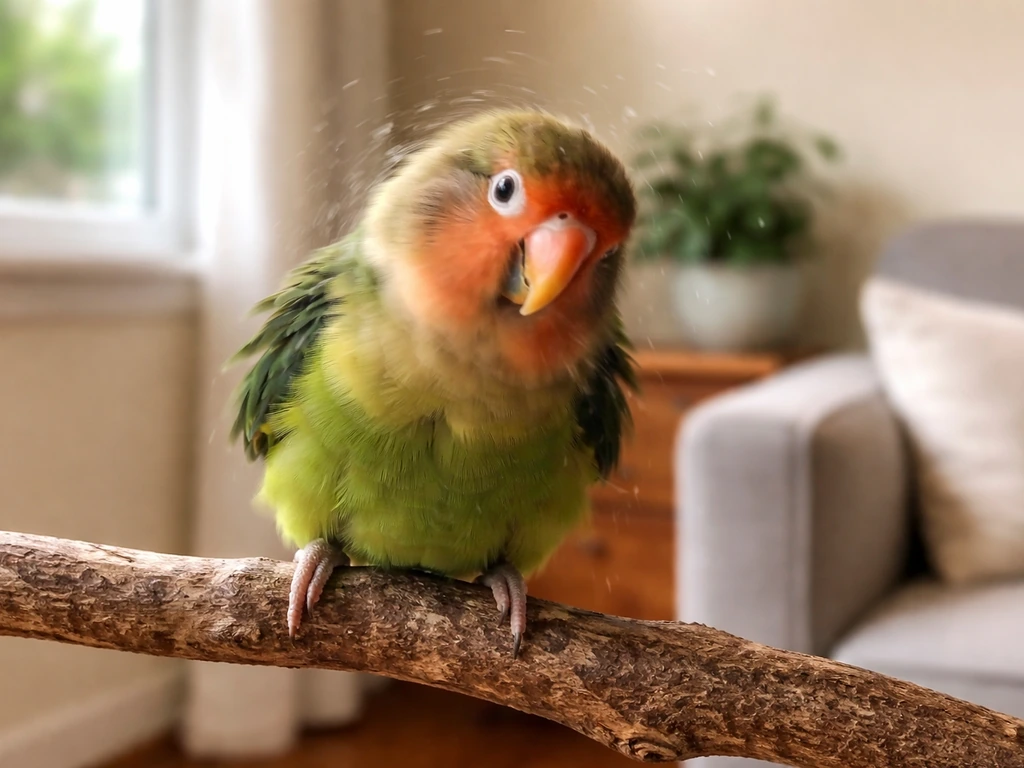
| Feather ruffle or flutter | Quick, full-body shake that resets the feathers; over in 1-2 seconds | Normal — relaxing, drying off, or resettling after activity |
| Shiver | Rapid, repetitive trembling of the body or wings; may last several seconds to minutes | Cold, wet, scared, or early illness sign |
| Tremor | Fine, involuntary muscle quiver; may affect the head, legs, or whole body; often continuous | Neurological, metabolic, toxic, or pain-related — needs vet attention |
| Wing or leg twitch | One limb jerking or held at an odd angle | Possible injury, nerve issue, or muscle cramp — watch closely |
| Head bob or tail wag | Rhythmic up-down head movement or tail pump | Often normal: contentment, digesting food, or communication |
If your bird did a quick full-body shake and then went back to normal behavior, you can almost certainly relax. If the trembling is persistent, fine, and your bird looks unwell in any other way, treat it more seriously. Duration and context matter just as much as the movement itself.
Common non-serious reasons cockatiels shake
They're cold or wet
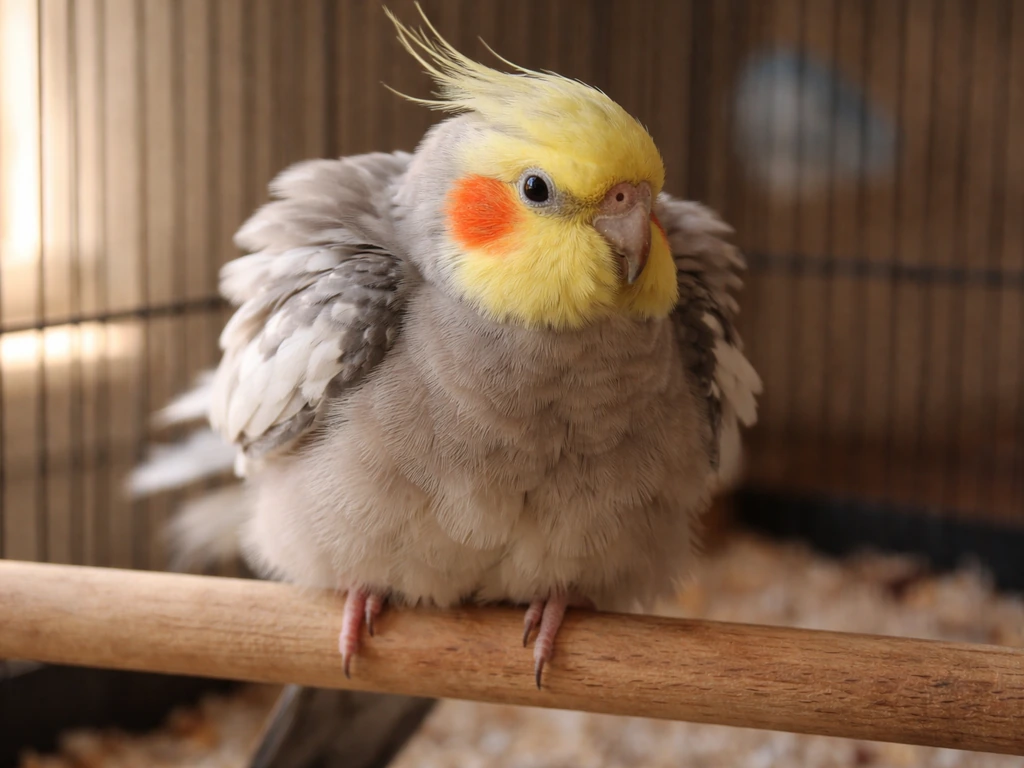
This is the most common reason. Cockatiels shiver when they're chilly, and if your bird just had a bath, a misting, or got splashed, shaking helps push airflow through the feathers to dry them faster. You'll often notice the feathers slightly puffed during this process. As long as your bird is alert, moving around, and the shaking stops within 15-20 minutes as they warm and dry, this is completely normal. If they stay cold-looking for longer than that, move them to a warmer spot.
Stress or anxiety
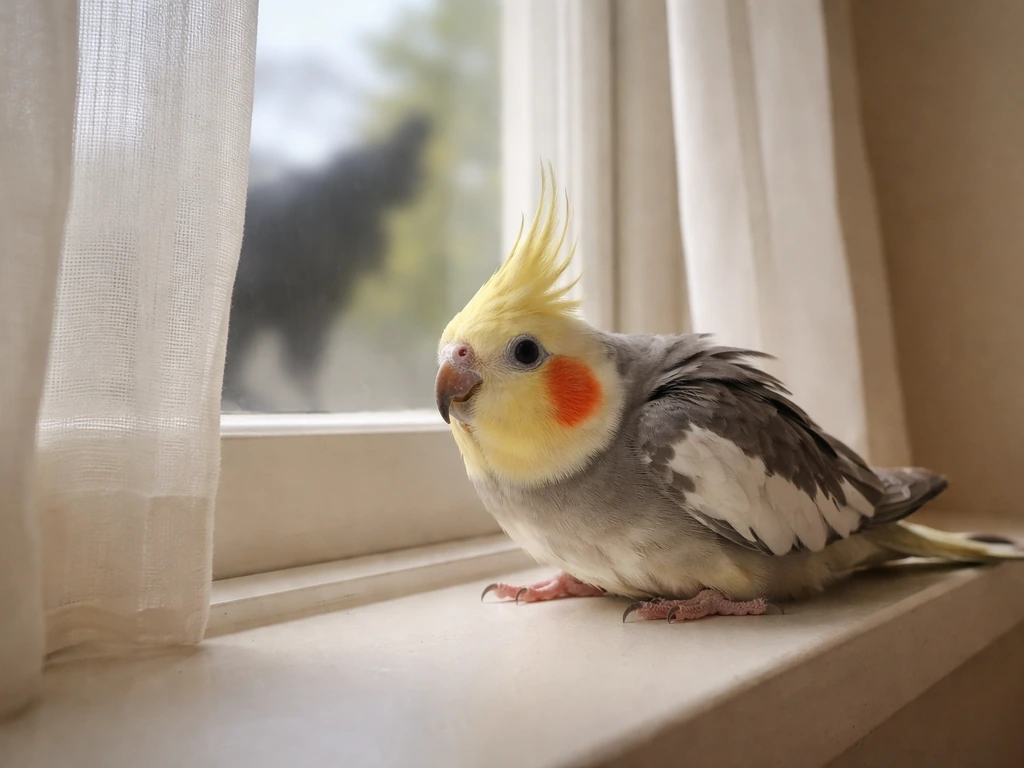
A scared cockatiel will tremble. This happens when they see a predator (even something outside a window that looks threatening), when there's a loud noise, a new person in the room, or a sudden change in routine. A stress-shiver usually comes with other obvious fear signals: flattened feathers, wide eyes, alarm calls, or trying to flee. It should settle down once the perceived threat is gone.
Excitement or overstimulation
Some cockatiels quiver with excitement when they see their favorite person walk in, when they hear a song they love, or when they're very worked up during play. This is a happy, alert shaking: the bird is upright, engaged, vocalizing, and otherwise acting completely normal. It's short-lived and usually tied to an obvious trigger.
Post-activity resettling
After flying, climbing, preening, or a big stretch, cockatiels often do a full-body ruffle and shake to resettle their feathers. Think of it like a person rolling their shoulders after getting up from a chair. It's over in a second and the bird moves right along.
Dust bathing behavior
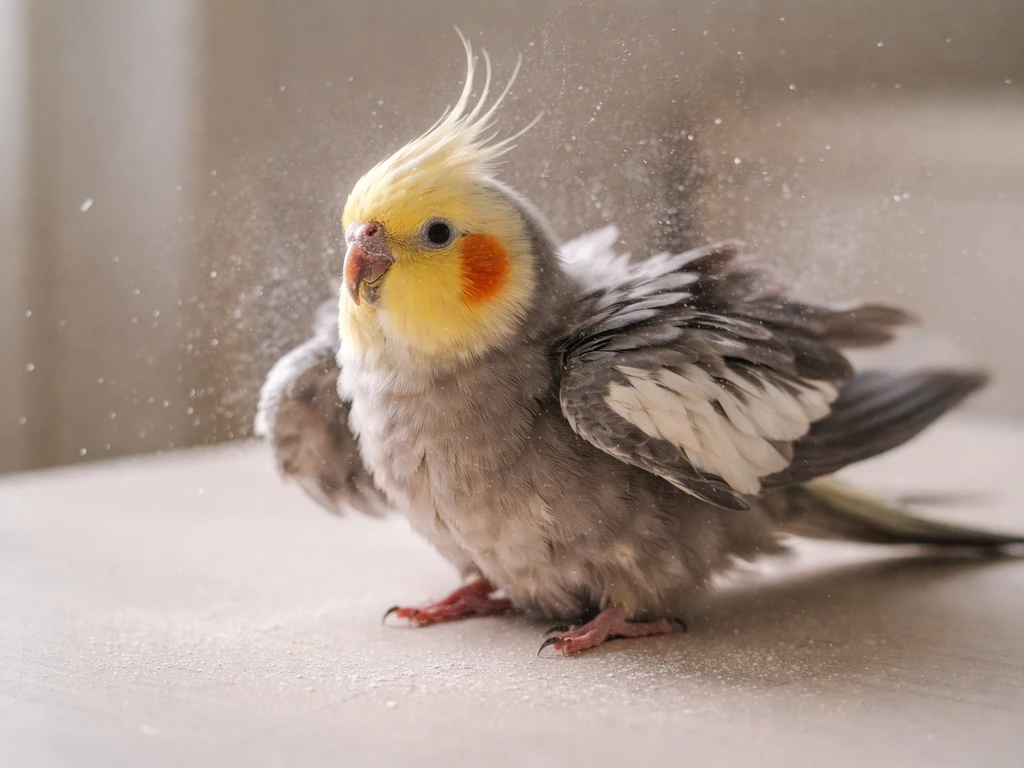
Cockatiels naturally produce a fine white powder (from powder-down feathers) and sometimes shake their feathers to spread it or to shake excess dust off. If you notice a fine white dust around your bird's area, this is normal cockatiel biology. The shaking that goes with it is brief and the bird appears completely comfortable.
Health-related causes you should take seriously
Illness or infection
When a cockatiel is sick, blank" rel="noopener noreferrer">shivering on the perch is one of the first signs you'll see. If your cockatiel’s tail shaking comes along with other signs like fluffed feathers or reduced activity, treat it as a potential illness and contact an avian vet why is my bird shaking his tail. It often pairs with fluffed feathers, closed or half-closed eyes, a hunched posture, and reduced activity. Respiratory infections, bacterial infections, and parasitic illness can all cause this presentation. Birds hide illness well until they can't anymore, so if your bird looks unwell and is shaking, don't wait too long to call a vet.
Hypothermia
True hypothermia goes beyond being a little chilly after a bath. Signs include constant shivering, puffed plumage, closed eyes, very slow or depressed behavior, and sometimes rapid, shallow breathing. If your bird is puffed up and shaking, also look for other signs like closed eyes, hunched posture, reduced activity, or constant shivering, since these can point to hypothermia or illness that needs prompt attention puffed plumage. This is an urgent situation. Cockatiels do best in environments between 65 and 80 degrees Fahrenheit, and temperatures below 60°F for a prolonged period can be dangerous.
Pain or physical discomfort
A bird in pain may tremble, shift weight, or hold a wing or leg in an odd position. If your cockatiel recently had an injury, a fall, or any physical event and is now shaking, pain should be on your radar. Pain-related shaking tends to persist and often comes with a change in posture or reluctance to move.
Neurological or metabolic problems
Fine, uncontrollable tremors that don't match any obvious trigger (no bath, no fear, no excitement) can signal a neurological issue, vitamin or mineral imbalance (especially calcium or vitamin D deficiency), heavy metal toxicity, or organ disease. Tremors and seizure-like behavior in birds can be linked to neurologic, metabolic, or toxic problems, and may require same-day veterinary care same-day vet care. These tremors are often continuous or recurrent, and the bird may also have trouble balancing, appear weak, or seem confused. This is a same-day vet situation.
Toxic exposure
Cockatiels are extremely sensitive to airborne toxins: non-stick cookware fumes (PTFE/Teflon), scented candles, air fresheners, cleaning product fumes, and smoke can all cause acute neurological symptoms including tremors, weakness, and seizures. If trembling came on very suddenly and you have any of these things in use nearby, treat it as an emergency.
The symptom combo checklist: what else to look at right now
Shaking on its own doesn't tell the full story. Run through this checklist and note what you observe alongside the shaking, because this combination of signs is exactly what an avian vet will ask you about.
- Posture: Is the bird sitting upright and alert, or hunched over and sleepy-looking on the perch?
- Feathers: Normal and smooth, or puffed up and fluffed even in a warm room?
- Breathing: Normal and quiet, or tail bobbing with each breath, open-mouth breathing, or clicking/wheezing sounds?
- Eyes: Bright and open, or half-closed, sunken, or showing discharge?
- Appetite: Eating and drinking normally, or ignoring food and water?
- Droppings: Normal (dark green/gray solids with white urates and clear liquid), or unusual color, very watery, or absent?
- Balance: Steady on the perch, or wobbling, gripping tightly with both feet, or falling?
- Vocalizations: Talking/chirping as usual, or quiet, distressed calls, or completely silent?
- Discharge: Any fluid around the nostrils, eyes, or beak?
- History: Any recent bath, fright, change in diet, new household product, or fall?
If the shaking is isolated and everything else on that list checks out as normal, you're most likely looking at a benign cause. If two or more items on that list are off, take it seriously. It's also worth knowing that puffed-up posture combined with shaking is covered in depth in the context of birds that are both fluffed and trembling, which shares some overlap with what you're seeing here.
What to do right now at home
Check and adjust the temperature
The first thing to do is make sure your bird is warm enough. Move the cage away from air conditioning vents, drafty windows, or fans. Aim for a room temperature between 70-80°F. If your bird is wet from a bath, offer a warm (not hot) area to dry off in: direct gentle sunlight through a window works well, or you can set a heating pad on low under one side of the cage so your bird can choose to move toward it. Never cover the entire cage when warming a bird, and never use a heat lamp close enough to cause overheating.
Reduce stress and stimulation
If your bird seems frightened or overstimulated, lower the activity level around them. Move them to a quiet room, cover three sides of the cage with a light cloth to reduce visual triggers, and lower your voice. Avoid handling a trembling bird unless you need to check for injury, since handling adds more stress to an already stressed animal.
Observe and record what you're seeing
Pull out your phone and take a short video of the shaking. Note the time, what your bird was doing before it started, how long it lasts, and whether it stops on its own. Check the food and water to see if they've been used recently. Look at the droppings at the bottom of the cage for any changes. This documentation takes about five minutes and will be genuinely useful if you end up calling a vet.
Check the environment for hazards
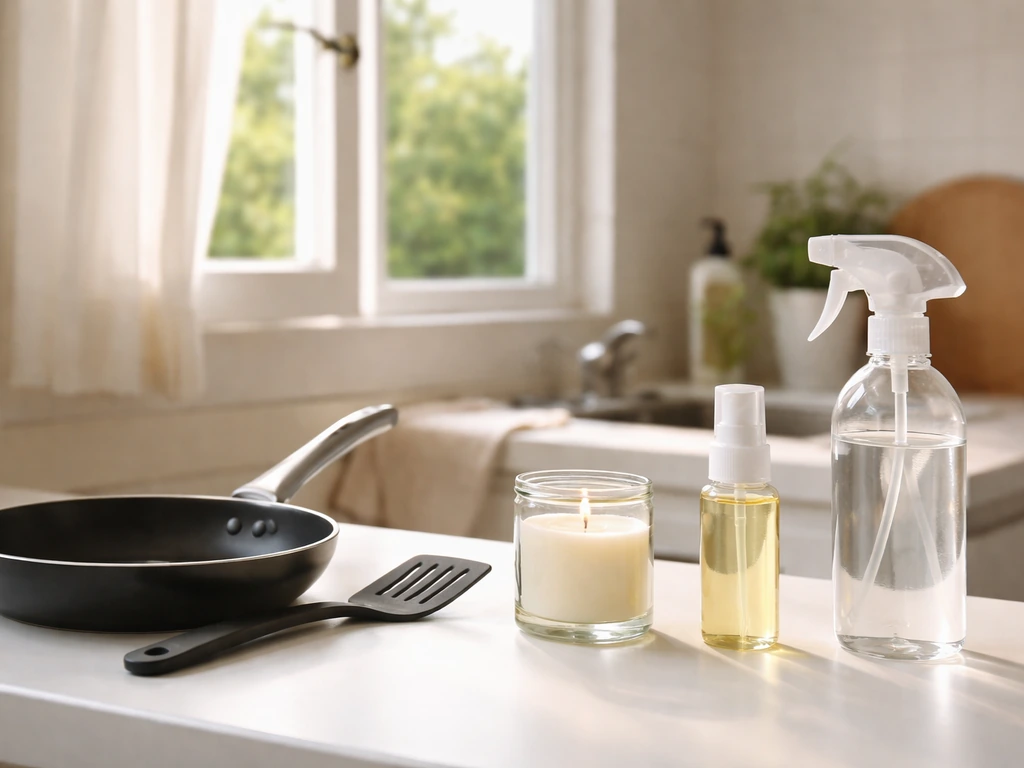
Walk through the room and think about what's been different today. Did you cook with non-stick pans nearby? Use a new cleaning spray? Light a scented candle? Open a window near traffic fumes? Any of these could explain sudden trembling. Ventilate the room immediately and move your bird to clean air if you suspect an airborne toxin.
When to call an avian vet urgently vs. when to monitor
Here's the practical split: some situations need a vet today, and some are safe to watch for 12-24 hours before deciding.
| Call the vet today (or go to emergency care) | Safe to monitor for now |
|---|---|
| Tremors that are continuous, fine, and unrelated to any obvious trigger | Brief shaking right after a bath that stops within 20 minutes |
| Shaking combined with open-mouth breathing, tail bobbing, or wheezing | Quick feather ruffle after a stretch, then back to normal behavior |
| Falling off the perch, loss of balance, or inability to grip | Mild shiver after being startled, settles when the trigger is gone |
| Seizure-like episode: twitching, loss of consciousness, collapse | Excited quivering when you walk in, bird is alert and active otherwise |
| Sudden onset after possible toxic exposure (fumes, smoke, chemicals) | Shaking paired with post-bath fluffing in an otherwise healthy, active bird |
| Shaking plus no eating or drinking for more than 12-24 hours | |
| Shaking plus abnormal droppings (very watery, black, blood-tinged) | |
| Any shaking in a bird that is already known to be sick or elderly |
When in doubt, call an avian vet and describe what you're seeing over the phone. Most avian vets or their staff can help you triage on the spot and tell you whether to come in same-day or monitor at home. It's always better to make the call and be reassured than to wait when something is genuinely wrong.
How to prepare for the vet visit
What to bring and document
The most valuable thing you can bring is a short video of the shaking, ideally captured in natural lighting so the vet can clearly see the movement type and your bird's posture. Bring the video even if the shaking has stopped by the time you get there.
- Video of the shaking episode (even 15-20 seconds is helpful)
- Notes on when it started, how often it happens, and how long each episode lasts
- Your bird's normal diet: brand and type of pellets or seeds, any fresh foods, supplements
- Any recent changes at home: new foods, products, visitors, rearranged cage
- Any past medical history or previous vet visits
- A fresh dropping sample if droppings look abnormal (small sealed container works fine)
- The brand of any air fresheners, cleaning products, or cookware used in the past 48 hours
Questions worth asking your vet
- Could this be a nutritional deficiency, and should I be supplementing calcium or vitamin D?
- Is there anything in my bird's environment I should eliminate as a precaution?
- Should I have bloodwork done to rule out infection or organ issues?
- What signs should I watch for at home after today's visit?
- If this happens again, what's the threshold for coming back in?
Preventing recurrence based on what you found
Once you know the likely cause, prevention becomes straightforward. If your bird gets cold after baths, set up a warm drying spot as part of your bathing routine. If stress is the trigger, identify and reduce the specific stressor: cover the cage during high-traffic times, move the cage away from the TV, or give your bird a more predictable daily schedule. If the vet finds a nutritional gap, switch to a pellet-based diet with variety rather than a seed-only diet, which is deficient in many key vitamins and minerals. And if toxic exposure was even a remote possibility, go non-stick-free in your kitchen and switch to unscented, bird-safe cleaning products.
A shaking cockatiel is your bird communicating something. Most of the time it's minor and resolves on its own. But when you go through the checklist, watch for the red-flag combinations, and respond quickly when something doesn't feel right, you're doing exactly what a good bird owner should do. Trust your gut: if it looks wrong, make the call.
FAQ
How long is too long for normal shaking after a bath or misting?
A brief shake to dry off is usually over within 15 to 20 minutes as the bird warms up and becomes alert again. If your cockatiel stays puffed, keeps shivering continuously, or looks lethargic beyond that window, move to a warmer area and contact an avian vet for guidance.
What’s the difference between shaking from being cold and shaking that could be neurological?
Cold-related shivering is typically tied to a clear trigger (bath, misting, draft) and gradually resolves as the bird warms. Neurological-type tremors often come without an obvious cause and can be recurrent or continuous, sometimes with balance trouble, weakness, or confusion, which warrants same-day veterinary advice.
My cockatiel shakes but still eats normally. Should I still worry?
Eating and active posture lower the odds of an emergency, especially if the shaking is linked to excitement, routine, or a quick feather-resettling moment. Still watch closely for additional changes such as reduced activity, fluffed feathers, closed eyes, tail bobbing, or abnormal droppings, because birds can mask illness until those signs appear.
Is it safe to warm my cockatiel with a heating lamp?
Avoid heat lamps close enough to overheat the bird. If you use supplemental heat, provide a choice by warming one side of the cage and keep it gentle, for example, a low heating pad under one side. Never cover the entire cage, and stop warming if the bird looks distressed or pants.
Should I cover the whole cage when my cockatiel is shaking from stress or fear?
For fear-related shaking, the goal is reduced stimulation, not full isolation or overheating. Covering three sides with a light cloth can help, keep the room quiet, and lower your voice, but ensure airflow and avoid blocking all movement options within the cage.
What droppings changes matter when a bird is shaking?
Look for more than just normal variation. Watch for reduced droppings, watery urine, changes in color that persist, or unusually dark, pale, or mucus-like droppings, especially if shaking is paired with fluffed posture or low energy. Those combinations increase the chance of illness and make a vet call more urgent.
Could shaking be caused by something in the home even if I did not notice a toxin?
Yes. Airborne fume exposure can happen quickly and may be overlooked, for example, using non-stick cookware, running scented products, or having smoke drifting in from outdoors. If trembling started suddenly and you have any plausible fume source, move the bird to clean air immediately and contact an avian vet for triage.
When should I call a vet today versus monitoring at home for a day?
Call today if the shaking is persistent, uncontrollable, paired with puffed plumage and closed eyes, includes reduced activity or breathing changes, or suggests pain, poisoning, or neurological symptoms. If shaking is brief and the bird otherwise looks completely normal, monitoring for 12 to 24 hours can be reasonable, but document with a short video and be ready to call if anything changes.
What should I do right now while waiting for the vet or deciding whether to monitor?
Make a quick safety check, remove drafts, and ensure a comfortable room temperature (roughly 70 to 80°F). If the bird is wet, provide a warm drying option. Keep the environment calm and reduce handling, then start a video and note timing, triggers, and any posture or droppings changes.
Should I handle my cockatiel to stop the shaking?
Handling usually increases stress, so avoid grabbing or restraining unless you need to check for injury or obvious danger. Instead, lower stimulation, warm or cool appropriately based on context, and use observation and a video to help determine the cause.
If I suspect vitamin or mineral imbalance, what’s the safest next step before changing supplements?
Do not guess with high-dose supplements, because excess can be harmful. Use diet changes that are consistent with a balanced formulation, such as moving to a pellet-based diet with appropriate variety, and rely on an avian vet if tremors are fine, ongoing, or associated with weakness or balance issues.
Next Articles
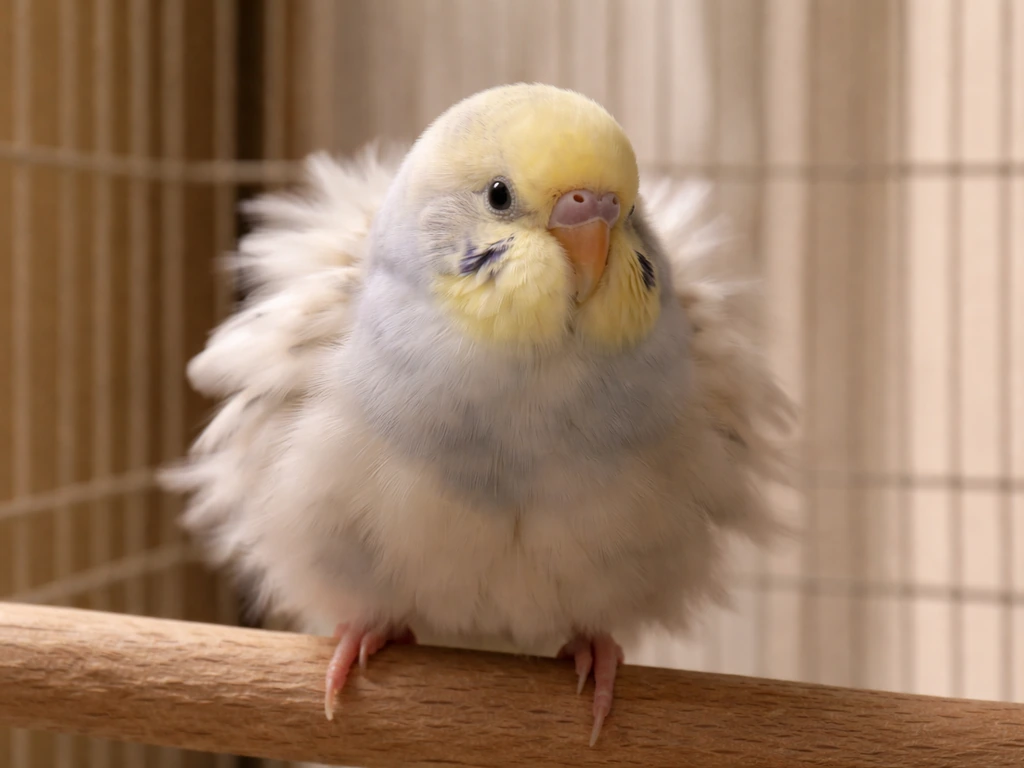
Why Is My Bird Puffed Up and Shaking? What to Check Now
Quick checklist for why your bird is puffed up and shaking, including normal causes, red flags, and next steps.
Why Is My Bird Shaking His Tail? Causes and What to Do
Identify why your bird shakes his tail, tell normal behavior from stress or illness, and get next-step care.
Why Is My Bird Shaking His Head? Causes and What to Do
Why your bird keeps shaking his head, likely causes, at-home checks, and red flags for urgent vet care.