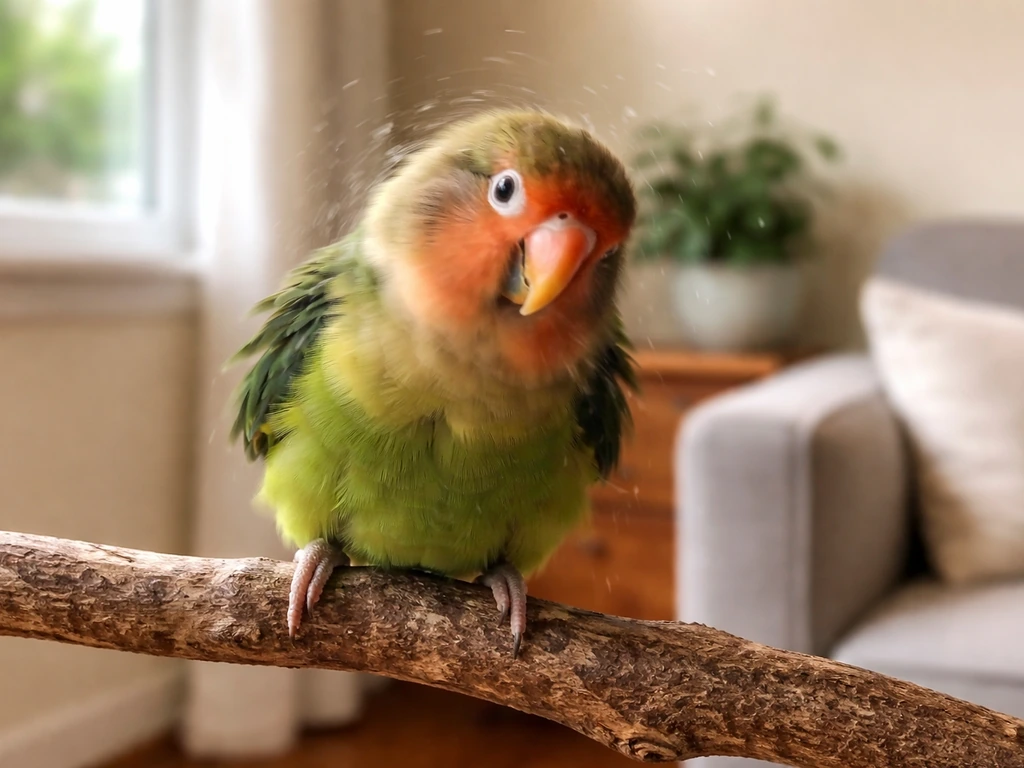
A bird shaking his tail is usually nothing to worry about. Most of the time it's a quick stretch, a happy wiggle after a good scratch, or a little courtship display. But tail shaking that happens with every breath, paired with fluffed feathers, open-mouth breathing, or a bird sitting low on the cage floor, is a different story entirely and needs a vet the same day. The key is knowing which situation you're actually looking at.
Why Is My Bird Shaking His Tail? Causes and What to Do

Marcus Chen
22 May 2026
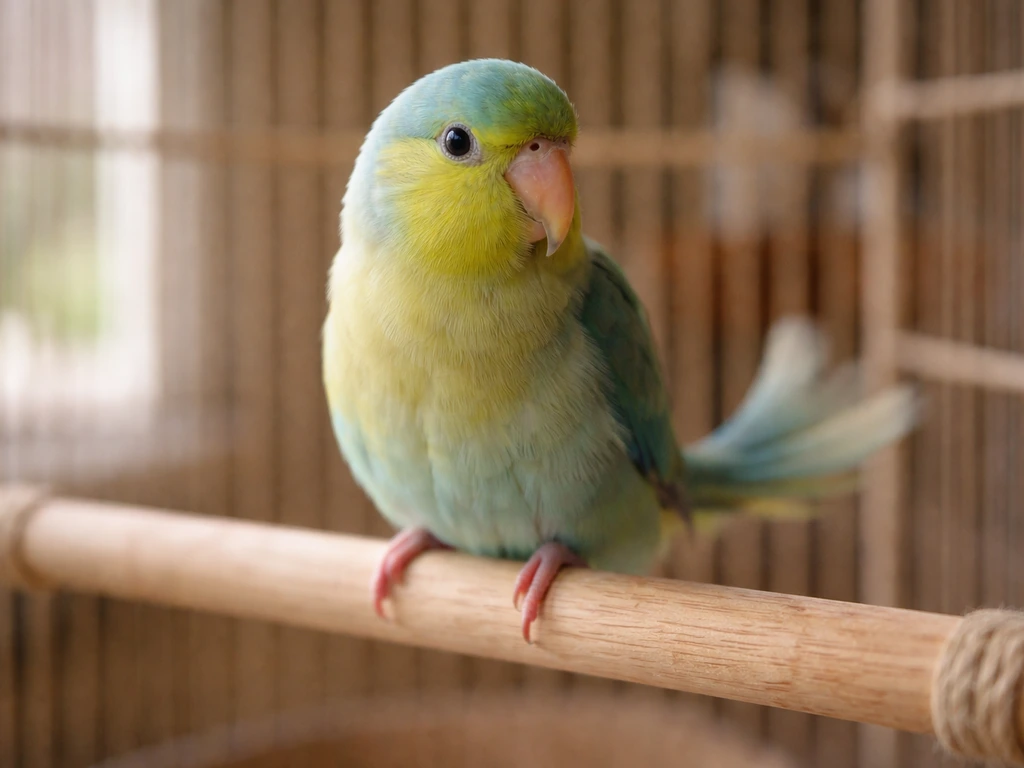
What tail shaking usually means (the normal stuff)
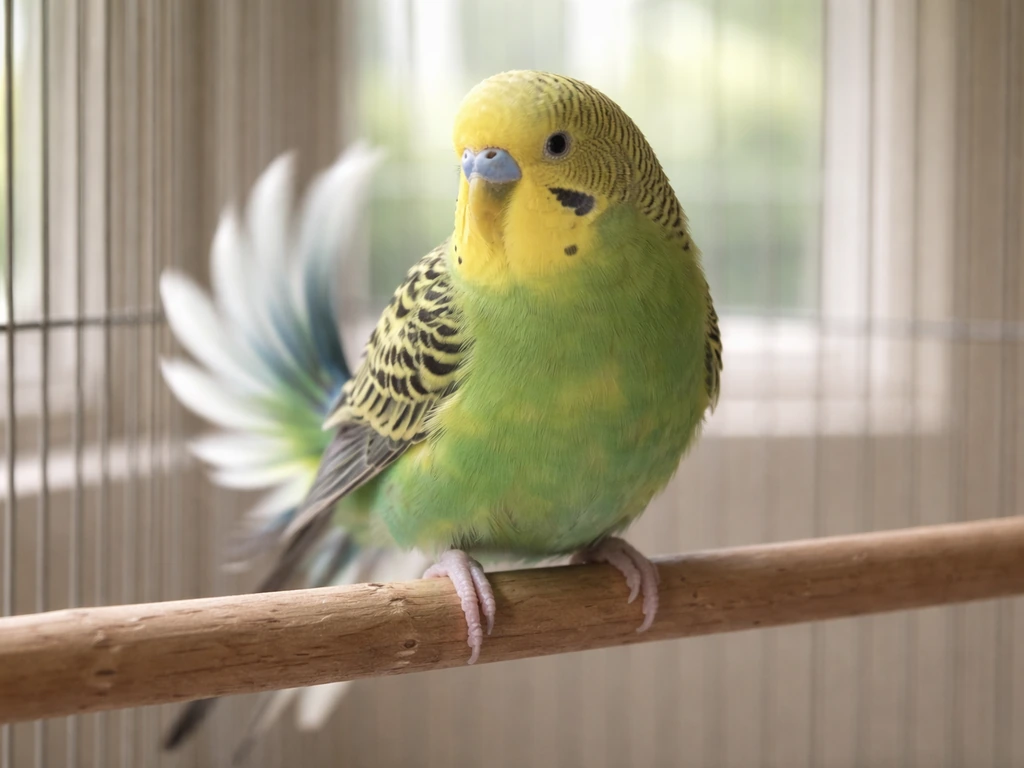
Most tail movements in pet birds are completely normal communication or just physical repositioning. Here are the most common reasons you'll see a healthy bird shaking or wagging his tail:
- Stretching and repositioning: Budgies and other small birds regularly stretch one wing and the leg on the same side, and a little tail shake often comes with it. It's the bird equivalent of standing up from your desk after sitting too long.
- Excitement and happiness: Many birds give a quick tail wag when you walk into the room, when they hear a favorite sound, or right after a good head scratch. It's a greeting or an expression of contentment.
- Courtship and mating displays: Male budgies in particular get very animated around a female, with head bobbing, feather fluffing, and tail movements all part of the performance. Females may lift and wag their tail during successful wooing. If you have a single bird, he may direct this display at a mirror, a toy, or you.
- Post-bath shaking: A vigorous tail shake after a bath or misting is just the bird drying off and resettling his feathers. This is completely normal.
- Stress or fear response: A bird that feels threatened may shake or tremble, including the tail. This usually comes with other obvious stress signals like wide eyes, frozen posture, or alarm calls.
Context matters a lot here. A tail shake that lasts a second or two and then stops, in an otherwise alert, active bird, is almost always benign. The bird is communicating or just moving around. It's worth noting that shaking behavior in other forms, like a bird shaking his whole body after a bath or a cockatiel trembling for other reasons, tends to follow its own set of causes, so the full picture of what your specific bird is doing matters.
Health causes that involve tail shaking
The most serious reason a bird shakes his tail is respiratory distress. When a bird is working hard to breathe, the blank" rel="noopener noreferrer">tail bobs up and down visibly with each breath. It's the body recruiting extra muscles to move air in and out. This is called tail bobbing, and it's one of the clearest emergency signs in pet birds. Vets, including those at university avian triage programs, specifically look for this pattern as a marker of a bird in trouble.
Respiratory problems aren't the only cause though. Tail bobbing or repetitive shaking can also show up with:
- Egg binding: A female bird struggling to pass an egg may strain visibly, sit on the cage bottom, and show tail wagging or bobbing alongside abdominal straining and open-mouth breathing. This is an emergency.
- Gastrointestinal discomfort: GI problems can cause straining or abdominal effort that shows up as tail movement, usually alongside changes in droppings.
- Coelomic masses or fluid buildup: Anything putting pressure inside the body cavity can produce breathing effort and tail bobbing even without primary lung disease.
- Generalized illness or pain: A sick bird may shake or tremble. Pain from any source, internal or external, can cause restlessness and unusual movement.
- Cardiovascular or blood issues: Anemia or heart problems can mimic respiratory distress, including the tail-bob pattern.
The common thread in the concerning cases is that the tail movement is repetitive and rhythmic, tied to breathing or straining, and doesn't stop after a moment. It's not a quick wiggle. It's a consistent effort that keeps happening.
Check these things right now
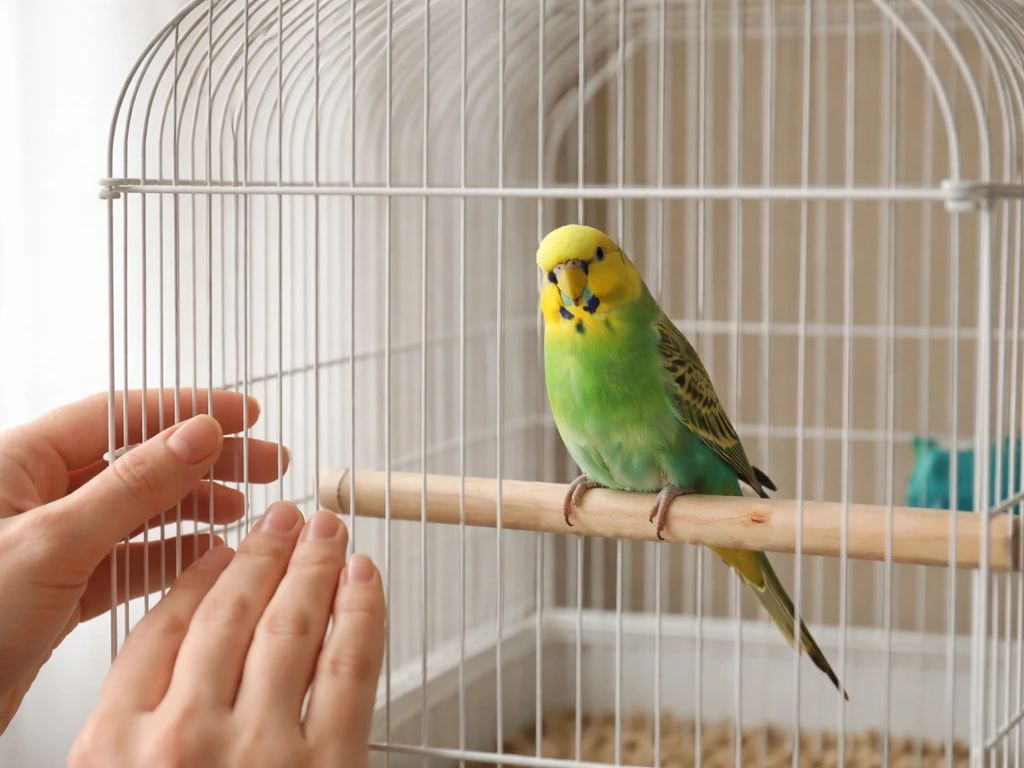
Before you decide whether to call a vet or relax, spend two to three minutes watching your bird carefully. You're looking for a cluster of signs, not just the tail movement on its own.
Posture and position
Is your bird sitting upright and alert on a perch, or is he hunched, fluffed up, or sitting on the cage floor? If your bird is puffed up and shaking, that posture plus tail bobbing can point to respiratory distress, so take the breathing signs seriously. A healthy bird stays on his perch. A bird on the floor of the cage is a serious warning sign. Fluffed feathers combined with closed eyes in the middle of the day also suggests something is wrong.
Breathing
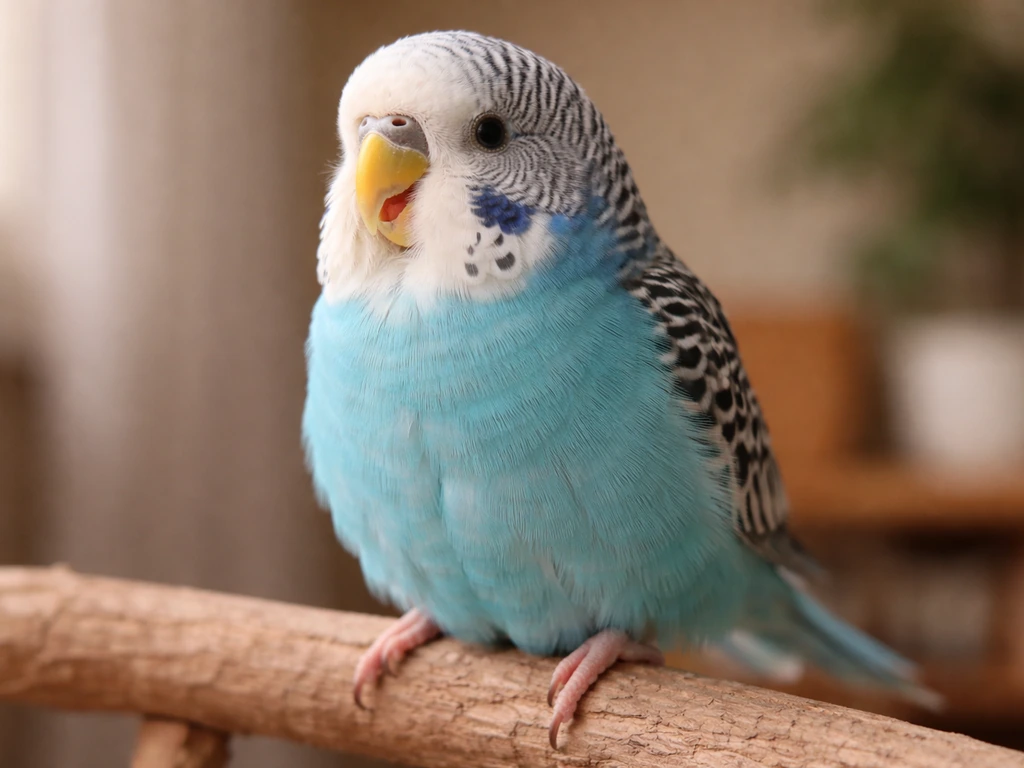
Watch the chest and tail for about 30 seconds. Is the tail moving up and down with every single breath? Is the bird breathing with his mouth open? Can you hear wheezing, clicking, or a raspy sound? Is the chest heaving more than normal? Any yes here puts you in urgent territory.
Droppings
A healthy bird's droppings have three parts: a green or brown formed stool, white or beige urates, and a small amount of clear liquid urine. Look at the cage floor under the bird's favorite perch, where droppings concentrate. If the stool is unformed and watery (sometimes described as pea-soup consistency), very dark green-black (which can indicate digested blood), red or black (possible blood), or if the volume has dropped sharply, that's a problem. Changes in droppings paired with tail shaking push the situation toward needing a vet. dvm360 notes that birds with gastrointestinal problems may present with diarrhea, which can help owners distinguish GI-type signs when tail shaking is coupled with changes in droppings GI problems may present with diarrhea.
Appetite and activity
Has your bird eaten today? Is he interacting with you, moving around the cage, vocalizing? A bird that's gone quiet, stopped eating, or is just sitting there unresponsive is not doing well. Birds hide illness instinctively, so by the time they stop eating or become inactive, things have often been wrong for a while.
Other symptoms
Check for any discharge from the nostrils or eyes, vomiting or regurgitation that isn't directed at a toy or person (which can be normal courtship behavior), visible swelling anywhere, or signs of injury. In female birds, look for a visibly swollen or distended abdomen, which can point to egg binding.
Home troubleshooting steps to work through
If your bird looks bright, alert, and the tail movement is occasional and not tied to breathing, work through these steps before worrying further.
- Check the temperature: Birds are sensitive to cold drafts and overheating. The room should be comfortable, roughly 65–80°F for most small pet birds. Make sure the cage isn't near a drafty window, air conditioning vent, or in direct hot sun.
- Check air quality: Cooking fumes, non-stick cookware (PTFE/Teflon), scented candles, air fresheners, cleaning sprays, and cigarette smoke can all irritate or harm a bird's respiratory system. If anything was recently used near the cage, ventilate the room and move the bird temporarily.
- Review recent changes: Did you bring home a new bird, rearrange the cage, introduce a new toy, change the cage location, or alter the feeding routine? Stress from environmental changes can trigger anxious behavior including trembling and restlessness.
- Look at the sleep schedule: Birds need 10–12 hours of dark, quiet sleep. A bird that's sleep-deprived from too much noise or light at night may be irritable, stressed, or off in behavior.
- Assess cage setup: Make sure perches are secure and sized appropriately so the bird isn't constantly working to grip them. Instability on a perch can cause shaking. Also ensure there's no other pet (cat, dog) stressing the bird from outside the cage.
- Start a symptom log: Write down what you saw, when, how long it lasted, what the bird was doing before, and what his droppings and appetite look like. This becomes very useful if the behavior continues or escalates.
- Monitor for 12–24 hours: If the tail shaking is infrequent, brief, and the bird is otherwise normal, watch closely for a day. Take a short video if you can. If anything worsens, skip waiting and contact a vet.
Red flags: when to call the vet today, not tomorrow
Some combinations of symptoms mean you should not wait and watch. Get your bird to an avian vet the same day, or to an emergency animal hospital if your regular vet isn't available, if you see any of the following:
- Tail bobbing that moves in rhythm with every breath, especially at rest
- Open-mouth breathing for more than a few seconds
- Wheezing, clicking, or rattling sounds when breathing
- Fluffed posture with closed or half-closed eyes during the day
- Sitting on the cage floor or too weak to perch
- Blue or pale coloring around the beak or skin
- Collapse, seizure, or loss of consciousness
- Uncontrolled bleeding or visible trauma
- Complete refusal to eat for more than 24 hours
- Straining in the abdomen (especially in a female bird)
- Visibly swollen abdomen
- Droppings that are bloody, black, or completely absent
- Any sudden, dramatic change in behavior or alertness
It's worth being direct about cost here: an urgent avian exam in the US typically runs $250–$900 depending on what's needed, and hospitalization or advanced imaging can push that to $1,000–$3,500 or more. That's a real consideration, but birds deteriorate fast. A bird that seems borderline in the morning can be in serious trouble by afternoon. If you're seeing multiple red flags at once, erring on the side of going in is the right call.
One important note: if breathing distress is suspected, keep handling to an absolute minimum. Stress makes respiratory emergencies worse. Keep the bird calm and warm during transport and don't take him out of his carrier unnecessarily while waiting for care.
What to tell the vet when you call or arrive
Vets who work with birds will ask a specific set of questions, and having answers ready speeds things up significantly. Before you call or walk in, try to have this information:
| What the vet will want to know | What to have ready |
|---|---|
| When did the tail shaking start? | Specific time or day, and whether it's constant or comes and goes |
| What does the breathing look like? | Whether it's tied to breathing, any sounds, mouth open or closed |
| Droppings changes | Color, consistency, frequency, and when you first noticed any change |
| Appetite | When the bird last ate normally and how much |
| Other symptoms | List of everything else you've noticed, even if it seems minor |
| Environmental history | Any new products, birds, pets, foods, or location changes in the last 2 weeks |
| Smoke or fume exposure | Cooking sprays, cleaning products, candles, air fresheners, cigarette smoke |
| Species, age, and sex | Especially important for female birds given egg binding risk |
| Video or photos | Short clips of the tail movement and any other concerning behavior |
A short video is genuinely one of the most useful things you can bring. Birds often look better in the exam room than they do at home because the adrenaline of a new environment temporarily masks symptoms. A video of what you saw at home gives the vet something concrete to work with. Thirty seconds of clear footage, even shot on a phone, is more useful than a detailed verbal description.
The bottom line is this: a quick tail shake in an active, eating, alert bird is almost certainly normal. But tail shaking that's rhythmic, persistent, and paired with any other symptom from the red flag list is your cue to act fast. If you’re seeing shaking in your cockatiel along with breathing changes, it can be a sign of respiratory distress and should be checked by an avian vet cockatiel bird shaking. When it comes to birds, the window between 'something seems off' and 'this is a crisis' can be very short, and the sooner you get eyes on the problem, the better the outcome tends to be.
FAQ
How can I tell if the tail shaking is just excitement or something like respiratory distress?
Yes, sometimes. Tail shaking can be part of courtship or excitement, but if you notice it happening every breath, with mouth breathing, open mouth, or wheezing, treat it as respiratory distress rather than behavior. The key check is whether the motion stops when breathing calms.
What if my bird keeps shaking his tail but seems otherwise okay?
If the tail movement continues in a steady rhythm for more than a minute or keeps returning each time the bird breathes, it is more concerning than a quick one-off wiggle. Also look for ongoing changes like fluffed feathers, hunched posture, or droppings changes during the same period.
Is it ever normal for a bird to shake his tail while sitting on the cage floor?
Use a simple rule: a healthy bird should be able to perch normally and stay active. If your bird is spending time on the cage floor, sitting very low, or repeatedly fluffing up, assume more than mild discomfort and monitor breathing closely. In those cases, contacting an avian vet the same day is safer than waiting.
Could temperature or drafts be the reason my bird is tail shaking?
Chills, drafts, and overheating can change breathing effort and posture, which may make tail bobbing look more frequent. Still, temperature issues should not cause mouth breathing, wheezing, or rhythmic tail movement with each breath. If you suspect temperature, adjust the environment and watch for respiratory sounds.
My bird shakes his tail after he moves around, is that usually harmless?
Some birds do a brief tail shake during repositioning, for example after climbing, stretching, or moving to a new perch. If the shaking happens right after a movement and then stops, and the bird is eating, alert, and breathing normally, it is usually not an emergency.
What changes in droppings matter most when tail shaking is happening?
Yes, droppings can help you decide faster. If you see watery or unformed droppings, a major color shift to very dark green-black, or blood-red or black stool, combine that with tail bobbing as a strong reason to get an exam rather than waiting to see if it passes.
Should I wait and see if the breathing-related tail bobbing improves after I offer food?
If your bird is breathing with an open mouth, you hear clicking or wheezing, or the chest is heaving more than usual, do not delay to “test” the bird with food or activity. Keep stress low, keep the bird warm, and get to an avian emergency service when these signs are present.
What’s the best way to record the symptoms for the vet?
A video helps because birds can mask symptoms during the exam visit. Record from a stable angle showing the tail and chest, capture at least one full minute, and include sound if possible. If you can, also note what happened right before the shaking started (sleeping, bathing, exertion).
What should I do while waiting for the vet if tail shaking looks like breathing trouble?
Yes. Stress can worsen respiratory distress, so avoid handling, extended cooing, or repeated repositioning while you are deciding. During transport, keep the bird in a calm, dark carrier, provide warmth with a safe cover that does not block airflow, and minimize noise.
At what point does it move from monitoring to urgent care?
If a single brief tail shake is paired with normal breathing and normal droppings, it is often safe to monitor for a short period. But if you see a cluster, such as rhythmic tail bobbing plus fluffed feathers, mouth breathing, abnormal stool, reduced appetite, or weakness, prioritize urgent care and do not rely on “he seems fine right now.”
Next Article
Why Is My Bird Shaking His Head? Causes and What to Do
Why your bird keeps shaking his head, likely causes, at-home checks, and red flags for urgent vet care.