
Birds make a huge range of noises, and most of them are completely normal. But when a sound is new, sudden, or just feels off, your instinct to investigate is right. The key is figuring out whether you're hearing a vocalization (something your bird is choosing to do) or a breathing sound (something your bird can't control). If your bird's crunching noises line up with inhale or exhale, treat them as breathing or respiratory sounds rather than intentional vocalizations breathing sound. If you're wondering why is my bird acting weird, use this guide to sort vocalizations from breathing sounds first. That single distinction shapes everything you do next. If you are hearing guinea pigs chirp like a bird, the sound often signals excitement, stress, or changes in their environment, so it helps to know the context behind the noise why do guinea pigs chirp like a bird.
Why Is My Bird Making Weird Noises? Quick Triage Guide

Quick triage: what kind of noise is it?
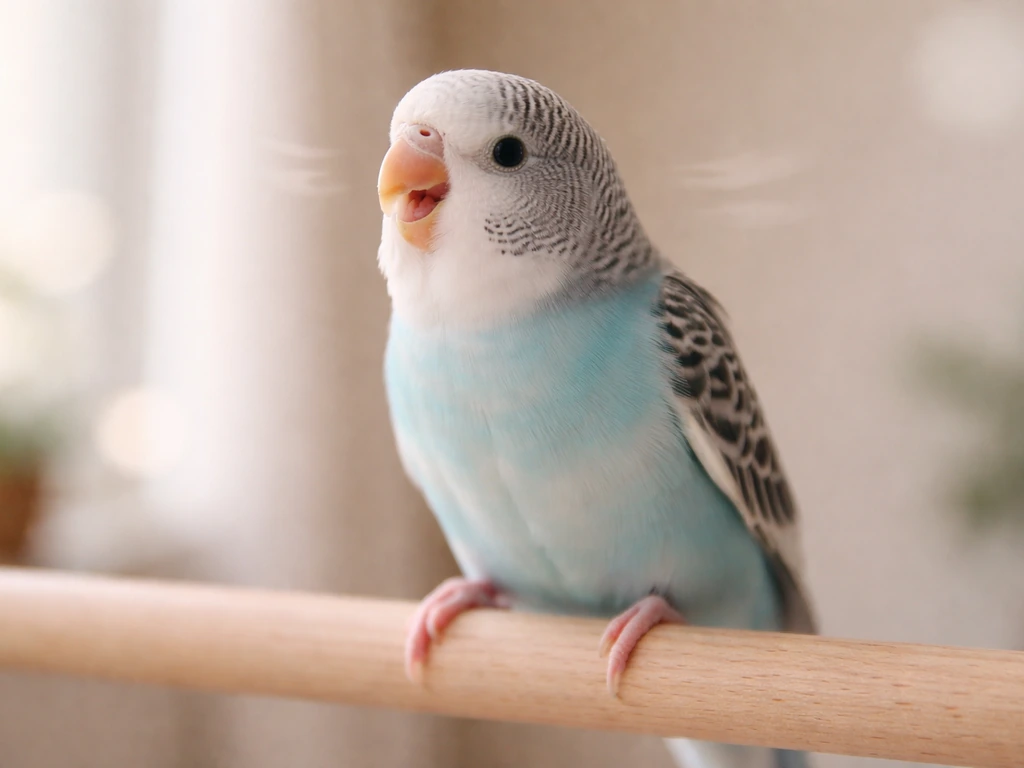
Before you do anything else, listen carefully and watch your bird at the same time. Vocalizations are sounds your bird makes intentionally: chirping, chattering, contact calls, screaming, squeaking, clicking with the beak. Breathing sounds are tied directly to each inhale or exhale and often happen even when the bird is sitting quietly. If the weird noise syncs with your bird's breathing rhythm, that's the more urgent category.
Here's a rough breakdown of common sounds and their most likely category:
| Sound | Category | Urgency level |
|---|---|---|
| Chirping, chattering, contact calls | Vocalization | Usually normal |
| Screaming or loud repeated calling | Vocalization | Monitor for stress/boredom |
| Soft squeaking or whimpering | Vocalization | Monitor; can signal distress |
| Beak clicking or grinding | Vocalization/mechanical | Usually normal (contentment or beak maintenance) |
| Wheezing or wet-sounding breath | Breathing sound | See a vet soon |
| High-pitched squeak with each breath | Breathing sound | See a vet urgently |
| Clicking sound with each breath | Breathing sound | See a vet urgently |
| Open-mouth breathing with noise | Breathing sound | Emergency — act now |
| Tail bobbing with each breath | Breathing sign | Emergency — act now |
Tail bobbing (the tail moving visibly up and down in time with each breath) is not a sound, but it almost always accompanies serious respiratory noises. VCA also specifically highlights respiratory signs like tail bobbing, where the tail moves up and down with each breath. If you see it, treat the situation as urgent regardless of what the noise sounds like.
Common causes by noise type
Vocalizations that sound weird but usually aren't dangerous
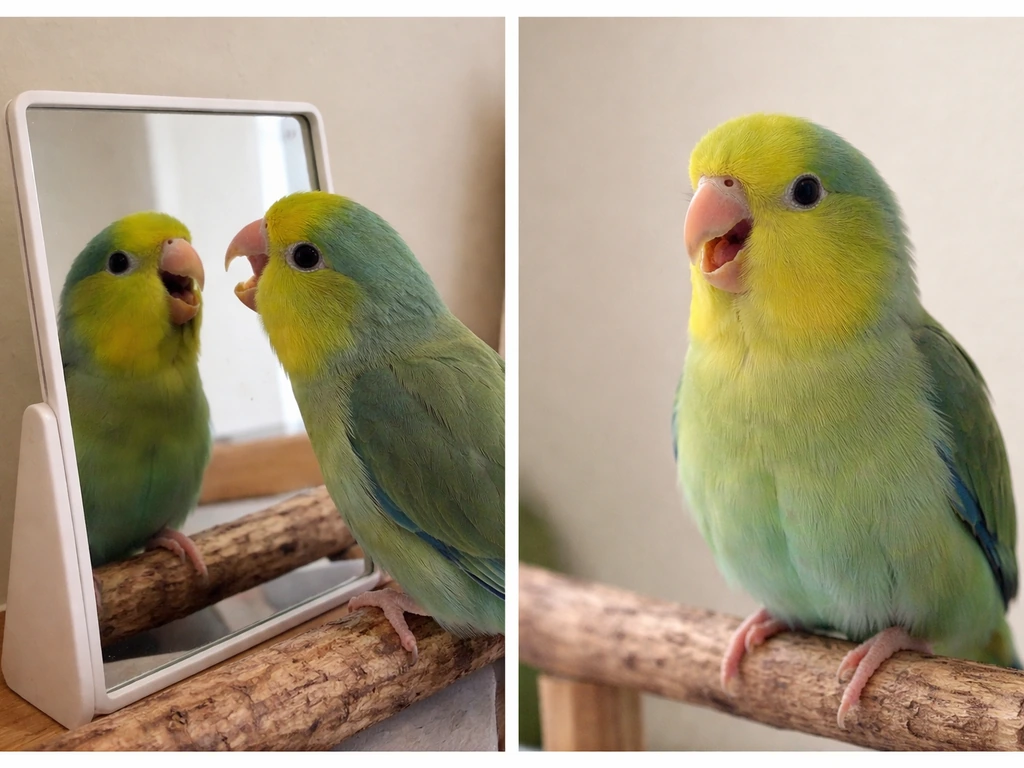
Contact calls are how birds check in with their flock (which includes you). If your bird starts making unfamiliar repetitive calls when you leave the room, that's almost certainly a contact call. It can sound strange if your bird is experimenting with new sounds or copying noises from the environment. Stress and boredom can also push birds into louder, more frantic vocalizing. A bored bird with insufficient stimulation may escalate to screaming, and attention patterns can make this worse: if you rush over every time the bird screams, you inadvertently reinforce the behavior.
Hormonal periods can produce surprising sounds too. During breeding season, many birds become louder, more insistent, and produce calls their owners have never heard before. This is normal, though it can feel alarming the first time. Squeaking noises are often just part of a bird's vocal range, though they can also be a sign of anxiety or a bid for attention. If your bird is making squeaking noises specifically, that topic deserves its own look. Similarly, soft whimpering sounds or clicking noises that aren't tied to breathing are their own category worth understanding in more detail. Soft whimpering noises can be part of normal vocal range, but they may also point to stress or an underlying breathing issue.
Breathing and respiratory sounds that need attention
Wheezing, wet or gurgling breath sounds, and any clicking or high-pitched squeak that happens with each breath are not normal vocalizations. IVIS advises that once a bird has settled in the exam or cage, there should be no open-mouthed breathing, marked tail bobbing, increased respiratory effort, or audible respiratory noise once a bird has settled in the exam cage, there should be no open-mouthed breathing or increased respiratory effort. These are signs that something is affecting the airway, lungs, or air sacs. Tracheal or syringeal disease (the syrinx is a bird's voice organ) can cause voice changes alongside those sounds. Heavy air sac mite infestations in species like finches and canaries can cause high-pitched clicking sounds and open-mouth breathing. Upper respiratory infections from bacteria, viruses, or fungi can produce wet, noisy breath. In all these cases, the sound is a symptom, not a choice the bird is making.
Fumes and airborne toxins are another major cause of sudden respiratory noise. Bird respiratory tracts are extraordinarily sensitive to chemical vapors. Non-stick cookware overheated on a stove, aerosol cleaning products, spray deodorant, hairspray, scented candles, plug-in air fresheners, and even strong perfumes can trigger labored breathing very quickly. If the weird noise started suddenly after you used something sprayed or heated in the kitchen, move the bird to fresh air immediately and treat it as a potential emergency.
Red flags that mean act now
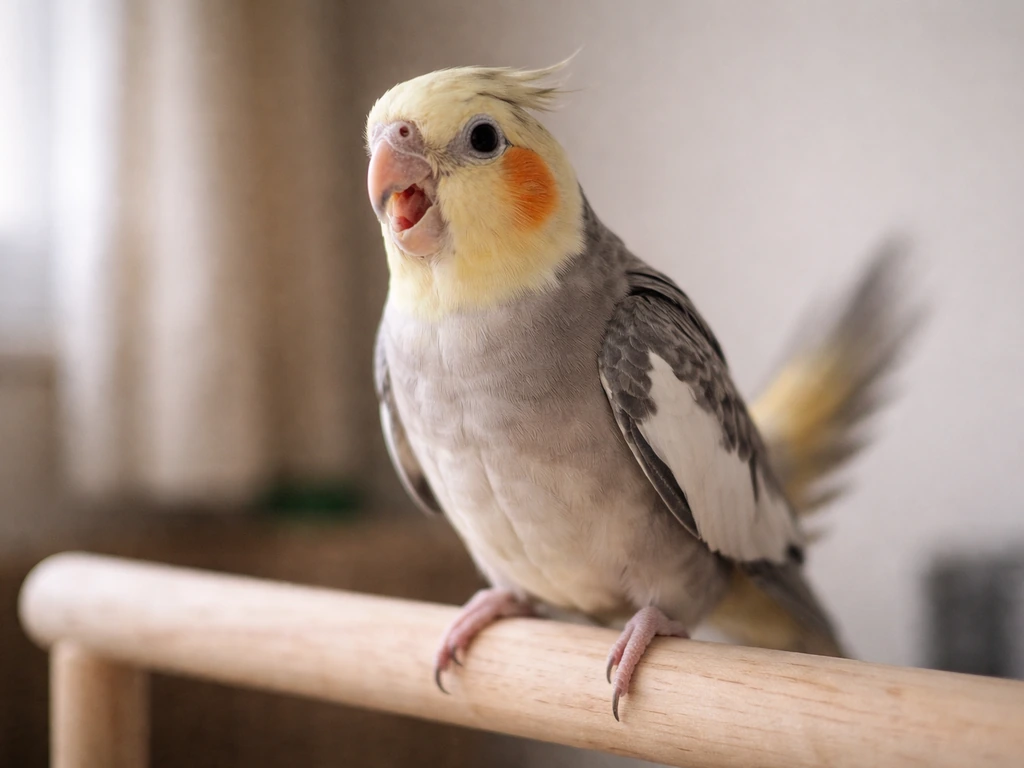
Some signs combined with an unusual noise mean you should not wait to see how things develop. Call an avian vet or go to an emergency exotic animal clinic the same day if you see any of the following:
- Open-mouth breathing at rest (not after exercise or extreme heat)
- Tail bobbing visibly up and down with each breath
- A clicking or high-pitched squeak that occurs with every breath
- Wheezing, rattling, or wet gurgling sounds when breathing
- Discharge from the nostrils or eyes, or swelling around the face
- Blue or gray discoloration around the beak or skin (cyanosis)
- Whole-body effort to breathe, with the body rocking or heaving
- The bird is fluffed up, sitting low on the perch, or on the cage floor
- Sudden onset after exposure to any fume, spray, or smoke
- Significant drop in appetite, droppings that look very different, or visible weight loss alongside the noise
A bird that is genuinely struggling to breathe can deteriorate fast. Birds hide illness instinctively, so by the time you can clearly see distress, the situation is often already serious. Do not wait overnight to see if it improves.
What to check at home right now
If your bird doesn't have any of the red flags above, do a systematic check of the environment before assuming everything is fine. Many weird noises have a fixable environmental cause.
- Air quality: Have you used any sprays, cleaning products, or cooked with non-stick pans in the past 24 hours? Even products used in another room can travel. Remove the bird to a well-ventilated area and ventilate the space.
- Temperature: Is the room too cold or drafty? Drafts from windows, air conditioning vents, or fans blowing directly on the cage are a common stressor and can trigger respiratory symptoms. Most birds do best between 65 and 80°F; sick birds need it warmer, around 80 to 85°F.
- Humidity: Very dry air (below about 40% humidity) can irritate airways. A room humidity target of roughly 40 to 50% is appropriate for most pet birds.
- Cage placement: Is the cage near a kitchen, bathroom, laundry room, or garage where fumes or cleaning products are used? Relocate if needed.
- Recent changes: New furniture, new cleaning routine, new candles, new pets, rearranged furniture, or a change in your schedule? Birds are sensitive to environmental and routine changes, which can trigger stress vocalizations.
- Cage condition: Are perches the right diameter for your bird's feet? Uncomfortable perches cause stress. Is the cage clean? Mold or bacteria in a dirty cage can affect respiratory health.
- Observation of the bird itself: Check droppings (consistency, color, volume), look at feather condition, notice whether the bird is eating and drinking normally, and watch how it holds its body. A bird sitting with feathers puffed up and eyes half-closed is telling you something is wrong.
Step-by-step next actions and when to call a vet
Here is exactly what to do in order, starting today:
- Rule out fumes first. If there's any chance the noise started after a spray, fume, or smoke exposure, move the bird to clean air immediately. This is the one situation where speed matters most.
- Record the sound. Use your phone to take a short video of your bird making the noise. Try to capture the sound alongside the bird's body posture and any visible breathing effort. This footage is genuinely useful to a vet.
- Check for red flags. Go through the list above. If any of them are present, call an avian vet now. Look specifically for a vet who sees birds (not all general practice vets do), or find the nearest exotic animal emergency clinic.
- If no red flags: do the environmental checklist above. Fix any obvious issues (move the cage away from drafts, improve ventilation, remove scented products from the room).
- Monitor closely for 24 hours. Note whether the noise is getting better, worse, or staying the same. Keep watching for red flag signs to develop.
- If the noise continues beyond 24 to 48 hours with no clear cause, book a non-emergency vet appointment anyway. Unexplained persistent noises in birds should be evaluated in person.
- When you call or visit the vet: bring your phone video, describe when the sound started, any recent changes in the home, and report what you observed about appetite, droppings, activity level, and posture.
Finding an avian vet before there's a crisis is genuinely worth doing. The Association of Avian Veterinarians has a vet-finder tool, and many exotic animal clinics will also see birds. Having that contact saved in your phone means you're not searching for a vet at 10pm when your bird is in distress.
Preventing weird noises and supporting your bird's normal behavior
Many repeat issues come back to a few consistent environmental factors. Keeping the air around your bird's cage clean is the single most important thing you can do. That means no aerosol sprays of any kind near the bird, no non-stick cookware overheating in an open kitchen, and no scented plugins or candles in the room. Guinea pigs can also make unexpected noises, and the safest approach is to check for breathing or distress first before assuming it's normal chatter Guinea pigs make bird noises. Check temperature and humidity regularly, especially in winter when heating systems dry out the air.
For behavioral noise (screaming, attention-seeking calls, stress vocalizations), enrichment and routine are the main tools. Birds that have foraging opportunities, toys that rotate regularly, and consistent daily interaction from their owners are far less likely to develop problem screaming. Reinforce quiet or calm moments with attention rather than responding to screaming, because running over to stop the noise teaches the bird that screaming works.
Schedule annual wellness checks with an avian vet even when your bird seems healthy. Respiratory infections and other issues that produce weird noises are much easier to treat when caught early, and a vet will establish a baseline for your bird's normal weight, droppings, and overall condition. That baseline makes it much easier to catch problems quickly later on.
Finally, trust your instincts as an owner. You know what your bird normally sounds like. If something sounds wrong to you, it's worth investigating. The combination of watching for red flags, checking the environment systematically, and having an avian vet contact ready means you'll rarely be caught off guard, and your bird will be better off for it.
FAQ
How can I tell if the weird noises are coming from breathing or from the beak (vocalizations)?
Yes, but the timing matters. If the sound consistently starts or worsens as your bird breathes, it is more likely a respiratory or airway issue. If it happens during specific moments like greeting you, preening, or when you leave the room, it is more likely a vocalization. If you can record a short video and loop it, look for synchronization with inhale or exhale to decide how urgent it is.
Why does my bird make weird noises right after I cook or spray something?
Start by ruling out an environmental trigger before trying to interpret the sound. If it began right after cooking, cleaning sprays, scented products, or using aerosols, move the bird to fresh air immediately and ventilate the room. Even if the bird seems alert, treat sudden respiratory noise as urgent until you have eliminated airborne irritants.
If I am unsure whether it is an emergency, how should I decide how quickly to call an avian vet?
If the sound is tied to breathing and you notice open-mouth breathing, tail bobbing, or repeated wet/gurgling breath, do not wait for a next-day appointment. Birds can deteriorate quickly and they hide symptoms early. If you only see mild, short contact-calling behavior with no breathing signs, you can monitor, but any progression or new breathing pattern still warrants same-day vet advice.
Can my bird still be sick even if it seems otherwise normal and calm?
A quiet bird with a sudden “new” sound can still be sick, especially with wheezing, clicking on each breath, or wet sounds. Do not rely on overall activity level alone. Use the body language cues you can see, such as breathing effort, tail position, and whether the sound tracks inhale and exhale.
My bird seems stressed, can stress alone cause the weird noises?
Stress can absolutely create unusual vocalizing, but it should not create noisy, wet, or breath-synchronized sounds. For stress-related noise, look for patterns like calling when you leave, louder vocalizing during routine changes, or escalating screaming when you respond immediately. If the sound matches breathing rhythm, focus on health and airway causes first.
If the noises seem behavioral, what should I change in my routine first?
If your bird is making contact calls or experimenting with new sounds, they often improve once the environment stabilizes. Avoid “competing” with screaming by constantly rushing over. Instead, use calm, consistent attention when your bird is quiet, and reduce sudden stimuli (loud TV changes, new pets in the room, or rearranged cage placement).
Could mites or infections cause weird noises that start off mild?
Sometimes mites or infection can cause subtle changes before they become obvious. Use quick checks, not guesswork: observe breathing pattern, watch for open-mouth breathing, and note whether the sound repeats with each breath. If you have a species that is prone to mites, or you see frequent head shaking, itchy behavior, or mouth breathing, prioritize veterinary evaluation.
My bird makes soft squeaks sometimes, are those always a problem?
Yes, humming, squeaking, and soft whimpering can be normal vocal range for some birds. The key distinction is whether it remains consistent and not breath-linked. If the squeak or click appears only during inhale or exhale, treat it as airway related rather than “just vocal behavior.”
What if the weird noises started after cleaning the room or the cage?
If your bird’s cage is in a high-dust area, near a kitchen, or in a room with lingering smells, cleaning can make things worse if fumes are released. Choose bird-safe cleaning methods, avoid aerosol cleaners entirely, and let the room air out before the bird returns. If the weird noise began after cleaning, fresh air and stopping any products used is the first step.
How should I document the noises so a vet can triage them faster?
Recording helps. Use your phone’s video, then play it back and look for repeatability (does it happen each inhale, each exhale, or in bursts independent of breathing). If possible, note the time, what you were doing, and whether any environmental changes happened in the prior hour.
Should I get my bird checked even if the noises are happening but my bird still seems okay?
Annual wellness checks are useful even when sounds seem normal, but baseline data matters most for birds that are prone to respiratory issues. Ask your avian vet to document what “normal” sounds like for your specific bird, including typical breathing patterns and common seasonal vocalizations. That way, a change later is easier to interpret.